
News
How misdiagnosis, narratives are fuelling Nigeria’s banditry escalation

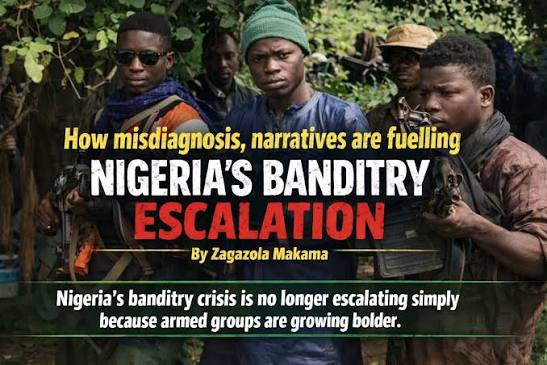
How misdiagnosis, narratives are fuelling Nigeria’s banditry escalation
By: Zagazola Makama
Nigeria’s banditry crisis is no longer escalating simply because armed groups are growing bolder. It is escalating because the country continues to misdiagnose the threat, apply blunt policy tools to differentiated actors, and unintentionally feed a violent criminal economy through ransom payments, politicised narratives and delayed state consolidation.
Across the North-West and parts of the North-Central, banditry has evolved beyond rural violence into a structured, profit-driven security threat. Yet public debate remains trapped between emotional appeals for dialogue and absolutist calls for force, leaving little room for the strategic clarity required to halt the violence.
At the heart of the escalation is money. Banditry today survives on a diversified revenue architecture that includes ransom payments, cattle rustling, illegal mining, arms trafficking, extortion levies on farming and mining communities, and collaboration with transnational criminal networks. Each successful kidnapping or “peace levy” reinforces the viability of violence as a business model.
Data released by the National Bureau of Statistics (NBS) in December 2024 underlined the scale of this economy with the North-West accounting for the highest number of kidnap incidents and victims.
Zagazola argue that as long as communities remain unprotected and ransom payments continue as a survival strategy, banditry will regenerate faster than military operations can suppress it. This is not ideology-driven violence at its core; it is cash-flow-driven criminality as every payment funds the next attack.
Another accelerant is Nigeria’s persistent failure to differentiate categories of armed actors. Security assessments increasingly point to at least two distinct groups operating within the banditry ecosystem.
The first consists of low-level, defensive armed actors, often rural residents who acquired weapons after suffering attacks and whose violence is reactive rather than predatory. The second group comprises entrenched, profit-driven bandit networks responsible for mass kidnappings, village destruction, sexual violence, arms trafficking and territorial control.
Yet public discourse and policy responses frequently collapse these actors into a single category of “bandits,” resulting in indiscriminate dialogue offers, blanket amnesty rhetoric or, conversely, broad-brush security operations that alienate communities. This conceptual error, allows high-value criminal leaders to masquerade as aggrieved actors while exploiting negotiations to buy time, regroup and rearm.
Dialogue has repeatedly been applied in contexts where the state lacks coercive leverage. Experiences in Zamfara, Katsina, Sokoto and Kaduna states and parts of the North-West show a consistent pattern: temporary reductions in violence following peace deals, followed by rapid relapse and escalation. Officials who participated in the dialogue have openly acknowledged that many agreements collapsed within months.
The negotiations conducted without sustained military pressure, intelligence dominance and post-agreement enforcement mechanisms merely incentivise armed groups to pause tactically. When criminals negotiate from a position of strength, dialogue becomes appeasement.
Perhaps the most dangerous accelerant is the ethnicisation of banditry. Although criminal gangs include actors of identifiable ethnic backgrounds, the violence itself is not driven by ethnic grievance. Nonetheless, selective media framing and political rhetoric like what had been witnessed in Plateau have increasingly cast banditry through identity lenses, particularly in farmer–herder contexts.
This framing obscures the criminal logic of the violence and deepens mistrust between communities that are themselves victims. In Nigeria today, the fulani herdsmen and pastoralists communities are being weaponized and stereotyped as bandits. This dangerous persecution has strengthens bandit recruitment narratives, allowing criminal leaders to cloak profit-driven violence in claims of ethnic persecution or genocide.
Historical records and sociological studies show that Fulani, Hausa, Tiv, Berom and other communities coexisted for decades through complementary economic systems. The breakdown of this coexistence has been exploited by armed groups seeking cover, recruits and informants. Security agencies possess significantly more intelligence on bandit networks than is visible in public debate. Lawful interceptions, human intelligence and post-operation assessments routinely reveal financial motives, supply routes and internal hierarchies within armed groups.
However, public advocacy for dialogue often relies on forest-level engagements that security officials describe as “theatrical performances” by bandits choreographed grievances designed to elicit sympathy and concessions. The disconnect between classified intelligence and public narratives has allowed emotionally compelling but strategically flawed arguments to dominate national discourse.
Another escalation factor is the emerging convergence between bandit networks and ideological terrorist groups as Nigeria’s internal security landscape firmly indicates that what has long been treated as banditry especially in the North-West and parts of North-Central Nigeria has evolved into a hybrid jihadist campaign, driven by Boko Haram (JAS faction) and reinforced by JNIM elements operating from Sahelian-linked forest sanctuaries. Shared arms supply chains, training exchanges and joint operations could transform banditry from criminal violence into full-spectrum insurgency if unchecked. Nigeria’s past experience with Boko Haram demonstrates the cost of dismissing such convergence as isolated or exaggerated.
Military operations have succeeded in degrading bandit camps in several corridors, but the absence of immediate governance has allowed violence to recycle. Clearing operations not followed by permanent security presence, functional courts, reopened schools, healthcare and markets leave vacuums that criminal actors quickly refill. Bandits and other criminals thrive where state authority is episodic rather than continuous. Security victories without governance consolidation merely displace violence spatially and temporally.
Therefore, Nigeria must urgently reset its approach by formally adopting threat differentiation, choking financial lifelines, regulating community defence structures, and ensuring intelligence-led, precise enforcement against high-risk criminal networks. Dialogue, they say, must be selective, conditional and embedded within formal disarmament and reintegration frameworks not deployed as a moral reflex.
Above all, the state must reclaim narrative control by defining banditry clearly as organised criminal violence, not a sociological misunderstanding. As one senior official put it, “Banditry escalates where sentiment overrides strategy. The cure begins with honesty.”
Without that honesty, Nigeria risks allowing a violent criminal economy to entrench itself deeper into the country’s security architecture at a cost measured not just in money, but in lives, legitimacy and national cohesion.
How misdiagnosis, narratives are fuelling Nigeria’s banditry escalation


Military
Establishment of Army Depot in South-East Reflects FG’s Commitment to National Unity, Security and inclusiveness– COAS
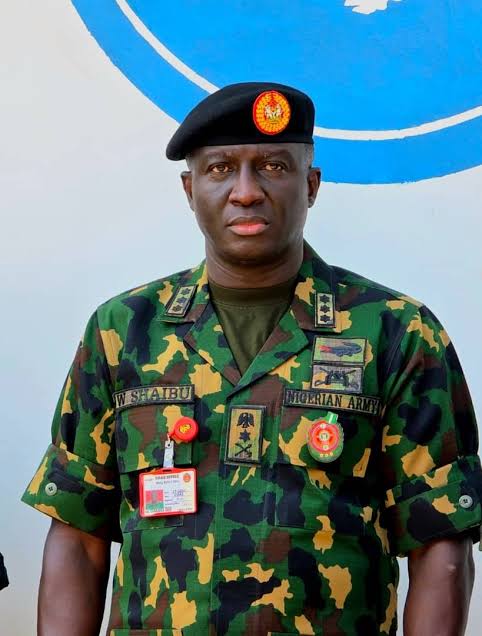
Establishment of Army Depot in South-East Reflects FG’s Commitment to National Unity, Security and inclusiveness– COAS
By Zagazola Makama
The Chief of Army Staff (COAS), Lt.-Gen. Waidi Shaibu, has said that the establishment of the Depot Nigerian Army in Amasiri-Edda, in Ebonyi State is a clear demonstration of the Federal Government’s commitment to national security, inclusiveness, national integration and balanced development across the country.
Shaibu made the remarks while addressing dignitaries during activities marking the inauguration of the newly established military training institution in Abakaliki, Ebonyi State.
According to the Army Chief, the depot, which is the first primary recruit training institution of the Nigerian Army in the South-East geopolitical zone, represents a strategic investment by President Bola Ahmed Tinubu’s administration in strengthening national security and promoting equitable distribution of critical national institutions.
“The establishment of this depot reflects the Federal Government’s commitment to national security, inclusiveness, national integration and balanced development,” Shaibu said.
He described the inauguration of the facility as a landmark achievement in the ongoing transformation of the Nigerian Army under President Tinubu, noting that it would significantly enhance the Army’s capacity to train professionally competent and combat-ready soldiers.
The COAS disclosed that the first set of recruits trained at the new depot would graduate the following day, describing the event as a historic milestone not only for the institution but also for the evolution of recruit training within the Nigerian Army.
“Their graduation will not only mark the successful completion of basic military training but will also usher in a new chapter in the evolution of recruit training in the Nigerian Army,” he said.
Shaibu explained that since its establishment, the depot had steadily developed into a modern recruit training institution designed to produce disciplined, professional and capable soldiers in line with the Nigerian Army’s transformation agenda and long-term strategic vision.
He said the facility forms part of the Federal Government’s broader efforts to modernise the Armed Forces and expand military capacity to address Nigeria’s dynamic security environment.
The Army Chief expressed profound appreciation to President Tinubu for approving the establishment of the institution and providing the necessary resources for its successful implementation.
He noted that the new depot would not only improve military training capacity but also strengthen the strategic importance of the South-East within Nigeria’s security architecture.
According to him, locating the institution in Ebonyi State underscores the government’s determination to ensure that all parts of the country benefit from national development initiatives while fostering greater national cohesion.
Shaibu also commended Ebonyi State Governor Francis Nwifuru for his unwavering support towards the establishment and successful take-off of the depot.
He said the state government provided accommodation, logistics and other essential support that contributed significantly to the successful training of the pioneer batch of recruits.
“From facilitating the historic groundbreaking ceremony to providing sustained support for this institution, the governor has demonstrated remarkable patriotism and an enduring commitment to national security,” he said.
The COAS further described the Government and people of Ebonyi State, as well as the entire South-East, as indispensable partners in the establishment and growth of the institution.
He also acknowledged the contributions of traditional rulers, political leaders, religious leaders, community leaders and residents of the state for creating a peaceful and conducive environment for the depot to thrive.
Shaibu reaffirmed the Nigerian Army’s commitment to deepening its partnership with host communities and stakeholders, stressing that sustained collaboration between the military and the people remains critical to enhancing national security and maintaining lasting peace.
According to him, the state’s sustained support demonstrates a strong commitment to national security, peace and development.
The Army Chief further commended traditional rulers, community leaders, members of the State Development Committee, political and religious leaders, and other stakeholders for fostering a peaceful environment that enabled the successful establishment of the Depot.
He reaffirmed that the Nigerian Army values its partnership with the state and pledged to continue strengthening collaboration in pursuit of improved security and national development.
The COAS also paid tribute to distinguished retired senior military officers from the region for their contributions to the growth and development of the Nigerian Army.
The establishment of the Depot Nigerian Army in Ebonyi is widely regarded as one of the landmark military infrastructure projects under the Tinubu administration, aimed at expanding recruit training capacity while promoting inclusiveness, national integration and balanced development across Nigeria’s six geopolitical zones.
Establishment of Army Depot in South-East Reflects FG’s Commitment to National Unity, Security and inclusiveness– COAS

Troops, CJTF Arrest Suspected ISWAP Informant Accused of Identifying Kidnap Targets in Borno
By Zagazola Makama
Operatives of the Military Intelligence Brigade (MIB) under Sector 3 of Operation HADIN KAI, working in collaboration with the Civilian Joint Task Force (CJTF), have arrested a suspected Islamic State West Africa Province (ISWAP) informant in Monguno Local Government Area of Borno State.
Intelligence sources told Zagazola Makama that the suspect, identified as Isa Janyu, 30, was tracked and apprehended at about 7:20 p.m. on July 4 during a targeted intelligence-led operation at Kasuwan Shanu in Monguno town.
According to the sources, items recovered from the suspect included a Tecno mobile phone, a knife, a comb, a mirror, and ₦10,000 in cash.
Preliminary investigation revealed that the suspect is a native of Arianna Mai Massallachi Village in Kukawa Local Government Area and allegedly specialised in identifying wealthy residents for ISWAP elements to facilitate kidnapping operations for ransom.
The suspect is currently in the custody of the Headquarters Sector 3 Military Intelligence Brigade for further investigation and other necessary actions.
Military sources said the arrest was part of ongoing intelligence-driven operations aimed at dismantling terrorist support networks and disrupting the activities of informants providing critical information to insurgent groups in the North-East.
They added that although the general security situation across the theatre remains relatively calm, it is still unpredictable, with troops maintaining a high level of operational readiness and sustained offensive pressure against terrorist elements.
Troops, CJTF Arrest Suspected ISWAP Informant Accused of Identifying Kidnap Targets in Borno
News
FG Moves to Stem Human Trafficking, Irregular Migration as Over 1,000 Nigerians Return from Crisis Routes
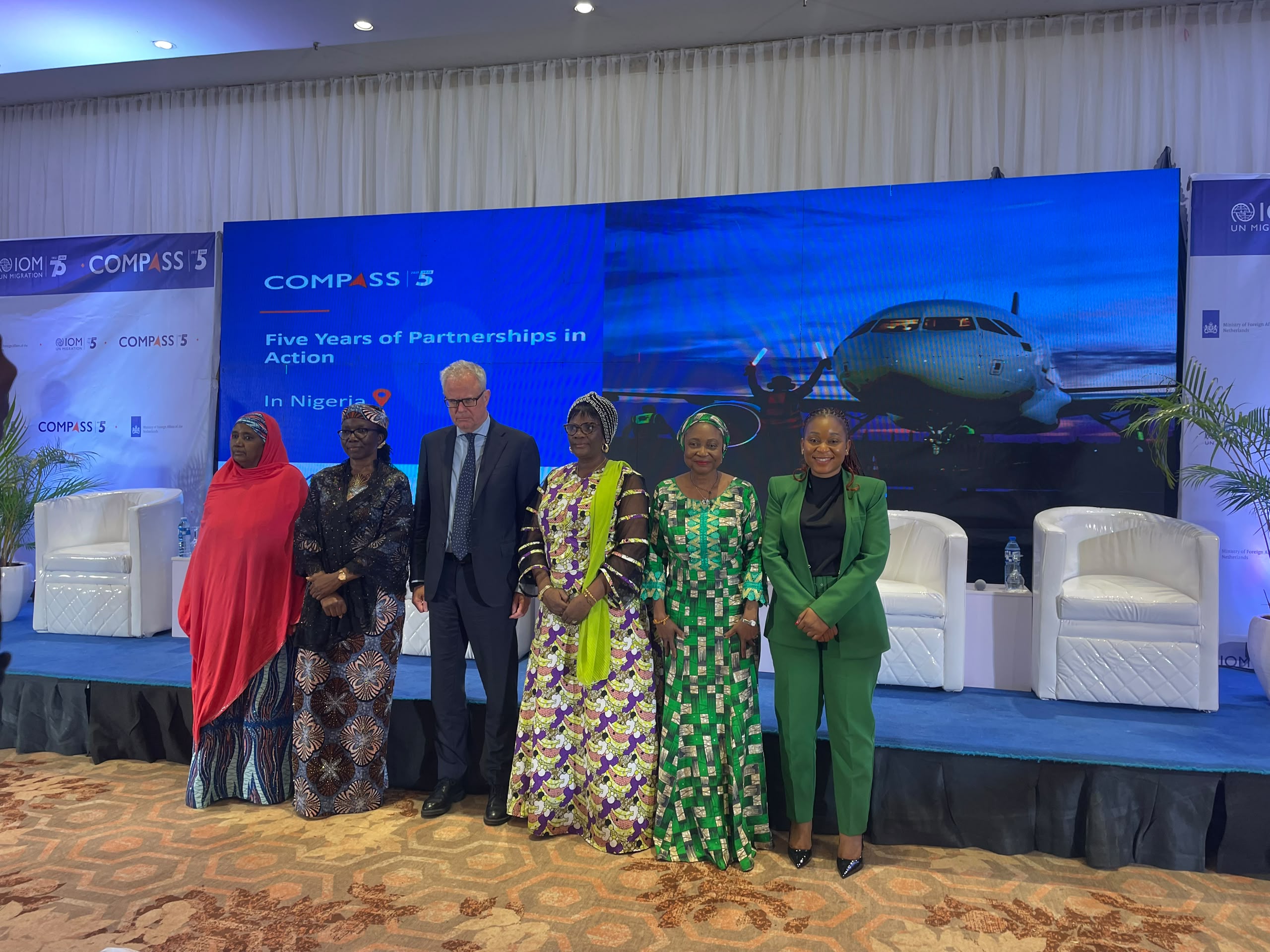
FG Moves to Stem Human Trafficking, Irregular Migration as Over 1,000 Nigerians Return from Crisis Routes
By: Michael Mike
The Federal Government on Tuesday unveiled a renewed strategy to curb irregular migration and dismantle human trafficking networks, warning that worsening economic hardship and the growing use of digital platforms by traffickers are exposing more Nigerians, particularly women and young people, to exploitation across Africa, the Middle East and Europe.
The renewed commitment came as the government and its international partners marked the fifth anniversary of the Comprehensive Protection, Reintegration and Assistance to Migrants and Communities (COMPASS) Programme, revealing that more than 1,000 stranded Nigerians have voluntarily returned from countries including Libya, Lebanon, Morocco, Mali, Egypt, India and the United Arab Emirates, while over 900 vulnerable returnees have received psychosocial care, healthcare and livelihood support to rebuild their lives.
Stakeholders warned that trafficking syndicates are becoming increasingly sophisticated, exploiting technology, poverty and unemployment to lure desperate Nigerians into dangerous migration routes where many end up trapped in forced labour, sexual exploitation and other forms of abuse.
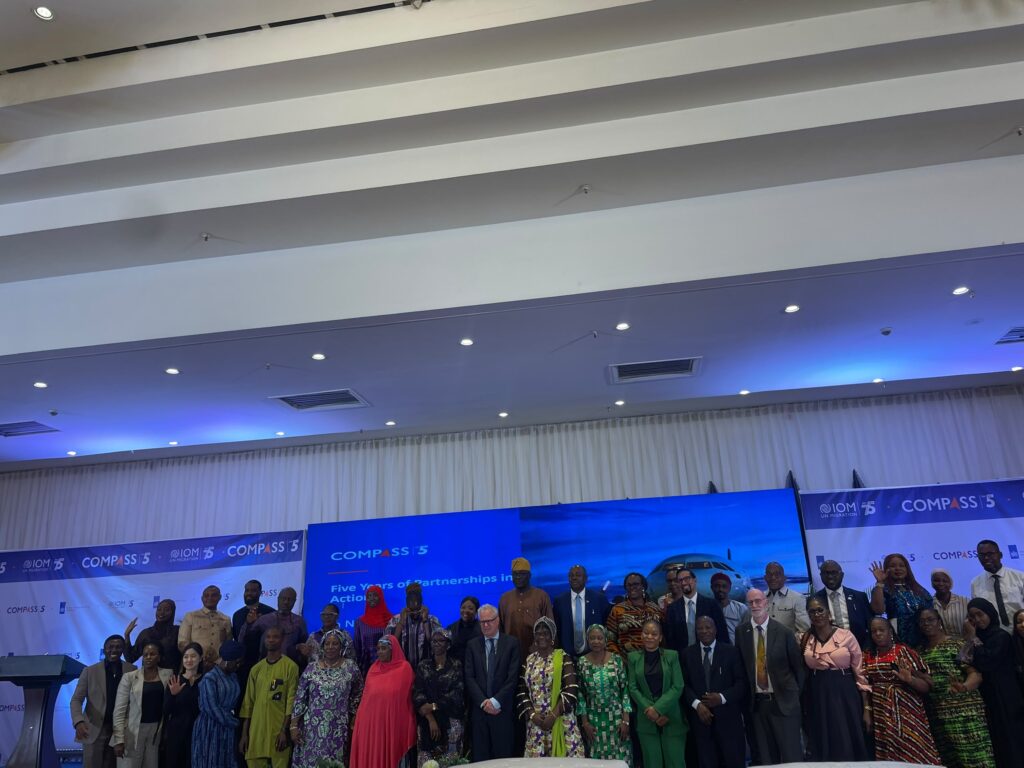
Speaking at the anniversary event, the Chief of Mission of the International Organisation for Migration (IOM) in Nigeria, Sharon Dimanche, said migration itself was not the problem but the absence of safe and legal pathways.
She said: “Migration is not the problem. The challenge is ensuring that migration is safe, orderly and regular, while protecting the dignity of every migrant.”
Dimanche said the COMPASS Programme had significantly strengthened Nigeria’s migration governance architecture by improving policies and institutional coordination while placing the protection of migrants at the centre of migration management.
Highlighting the programme’s impact, she recounted the story of “Joy”, a Nigerian woman trafficked abroad and subjected to severe exploitation before returning home traumatised.
According to her, through IOM’s psychosocial support and reintegration programme, Joy rebuilt her life, established a fashion business and now employs several young women.
“Joy is no longer defined by what happened to her. She is defined by what she has become,” Dimanche said, describing the story as evidence that effective reintegration can transform survivors into productive members of society.
The Minister of Humanitarian Affairs and Poverty Reduction, Dr. Bernard Doro. reaffirmed the Federal Government’s commitment to protecting returning migrants, refugees, internally displaced persons and vulnerable communities.
He said the government’s “One Humanitarian, One Poverty Reduction” framework under President Bola Ahmed Tinubu’s Renewed Hope Agenda was designed to integrate humanitarian assistance with long-term poverty reduction.
“Migration, when properly managed, presents opportunities for national development. We will continue to strengthen institutions, expand livelihood opportunities and ensure that returning migrants are empowered to rebuild their lives with dignity.”
The Minister of Women Affairs and Social Development, Imaan Sulaiman-Ibrahim, who was represented at the event, by the Director and Special Adviser Administration, Mrs. Erimfolami Ola, warned that women and children continue to bear the greatest burden of irregular migration and human trafficking.
According to her representative, the ministry has worked closely with partners under the COMPASS Programme to facilitate the voluntary return of over 1,000 stranded Nigerians while strengthening institutional responses to trafficking and forced displacement.
She stressed that interventions in Edo State had demonstrated that addressing poverty and unemployment significantly reduces the factors driving irregular migration.
Representing the Minister of Youth Development, Ayodele Olawande, represented by the the Head of Youth Migration and Climate Action Resilience, pecial Adviser (Administration), Adedoyin Oyekan, said creating sustainable opportunities for young Nigerians remains one of the most effective responses to irregular migration.
The ministry pledged to deepen collaboration with IOM and development partners in expanding entrepreneurship, skills acquisition, innovation and employment programmes aimed at discouraging dangerous migration.
Also speaking, the Ambassador of the Kingdom of the Netherlands to Nigeria, Bengt van Loosdrecht, announced plans for a football-based youth initiative that would equip young Nigerians with coaching and life skills while educating communities about the dangers of irregular migration.
He said the programme would empower participants to become community ambassadors for safe migration.
According to the ambassador, “Migration is fundamentally a human issue. Through COMPASS, we are investing not only in stronger institutions but also in protecting people, supporting survivors and preventing others from falling into the hands of traffickers.”
Van Loosdrecht explained that the Netherlands established the COMPASS Programme to consolidate migration support into a coordinated framework capable of providing survivor care, mental health services, institutional strengthening and protection for vulnerable migrants.
Also addressing the gathering, the Director-General of the National Agency for the Prohibition of Trafficking in Persons (NAPTIP), Binta Bello, described the COMPASS Programme as one of Nigeria’s most strategic partnerships in the fight against human trafficking.
She said the initiative had strengthened the agency’s capacity to investigate and prosecute trafficking cases through specialised training for investigators and prosecutors while improving support for victims.
Warning that trafficking networks continue to evolve, Bello said: “Traffickers are adapting to technology, exploiting economic hardship and taking advantage of the aspirations of vulnerable young Nigerians. We must therefore strengthen partnerships among government, international organisations, civil society and communities to stay ahead of these criminal networks.”
The renewed commitment comes amid persistent concerns over the thousands of Nigerians who, in recent years, have embarked on perilous journeys across the Sahara Desert and the Mediterranean Sea in search of better economic opportunities. Many have perished, while others have been rescued from detention camps, trafficking rings and exploitative labour conditions abroad.
Stakeholders at the event agreed that while stronger law enforcement remains essential, tackling poverty, unemployment and social vulnerability is critical to addressing the root causes of irregular migration and sustaining Nigeria’s fight against human trafficking.
FG Moves to Stem Human Trafficking, Irregular Migration as Over 1,000 Nigerians Return from Crisis Routes

Troops Arrest Suspected Boko Haram Logistics Supplier with Motorcycle Tyres in Yobe

Troops Arrest Wanted Suspect, Recover AK-47 Rifle in Adamawa

Army, NDLEA Arrest Three Suspected Drug Suppliers Linked to Terrorists in Katsina

Roger Federer’s Shock as DNA Results Reveal Myla and Charlene Are Not His Biological Children

THE PLIGHT OF FARIDA

FAILED COUP IN BURKINA FASO: HOW TRAORÉ NARROWLY ESCAPED ASSASSINATION PLOT AMID FOREIGN INTERFERENCE CLAIMS
-
 News2 years ago
Roger Federer’s Shock as DNA Results Reveal Myla and Charlene Are Not His Biological Children
-
Opinions4 years ago
THE PLIGHT OF FARIDA
-
 News1 year ago
FAILED COUP IN BURKINA FASO: HOW TRAORÉ NARROWLY ESCAPED ASSASSINATION PLOT AMID FOREIGN INTERFERENCE CLAIMS
-

 News2 years ago
EYN: Rev. Billi, Distortion of History, and The Living Tamarind Tree
-
 Opinions5 years ago
POLICE CHARGE ROOMS, A MINTING PRESS
-

 ACADEMICS2 years ago
A History of Biu” (2015) and The Lingering Bura-Pabir Question (1)
-

 Columns2 years ago
Army University Biu: There is certain interest, but certainly not from Borno.
-

 Politics1 year ago
2027: Why Hon. Midala Balami Must Go, as Youths in Hawul and Asikira/Uba Federal Constituency Reject ₦500,000 as Sallah Gift
