
Politics
The Silent Strategy: Why Kashim Shettima Is the Defining Force Behind the Tinubu Ticket in 2027

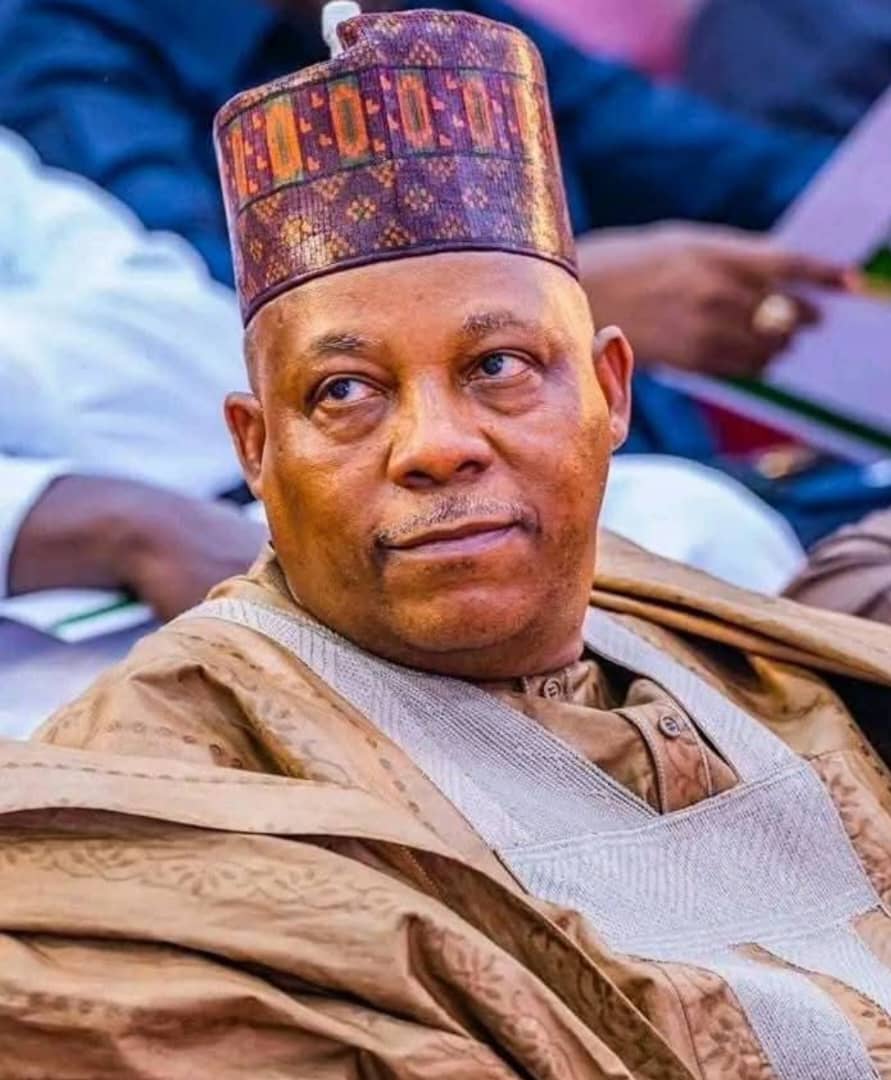
The Silent Strategy: Why Kashim Shettima Is the Defining Force Behind the Tinubu Ticket in 2027
By: Dr. James Bwala
In Nigerian politics, visibility is often mistaken for strength. Candidates who appear frequently on television, speak at rallies, issue bold promises, and dominate social media are commonly assumed to be the most politically active. Yet elections are not won by public appearances alone. Behind every successful political movement are networks, negotiations, strategy, organization, and patient groundwork that may not always be visible to the public.
This situation is why the claim that the All Progressives Congress is not campaigning for 2027 deserves closer examination. While Peter Obi appears across the country and Atiku Abubakar continues to speak about his plans for Nigeria, it would be a mistake to assume that the APC is inactive or that the Tinubu administration has surrendered the political space. Much of the party’s work may be taking place quietly, away from the noise of rallies and social media declarations. At the center of that quiet political strategy is Vice President Kashim Shettima, whose role may prove decisive in shaping the future of the Tinubu ticket.
The argument that Shettima is the soul of the Tinubu ticket is not based merely on loyalty or personal admiration. It is rooted in the realities of Nigerian political calculations. The vice president brings regional balance, political experience, administrative knowledge, and an understanding of the complex networks that influence national elections. Shettima has a deep understanding of the blueprints, and his contribution may not always generate dramatic headlines, but political success is often built through precisely such less visible efforts.
Those who judge political campaigns only by public appearances risk misunderstanding how power operates. Campaigning does not begin and end with rallies. It includes consultation with stakeholders, engagement with governors, coordination with party structures, dialogue with traditional leaders, relationship-building with religious and community organizations, and efforts to maintain unity within a broad political coalition. These activities may not trend online, but they can determine the outcome of an election.
The APC’s apparent silence may therefore be strategic rather than accidental. A party in government does not necessarily need to respond to every accusation or compete in daily verbal exchanges. Its political advantage includes access to state institutions, visibility through governance, contact with elected officials, and the ability to point to policies and projects already undertaken. While opposition figures may focus on promises and criticism, the governing party can campaign through a combination of performance, organization, and political alliances.
This does not mean that every action of the government should be accepted without scrutiny. Democracy requires accountability, and citizens have the right to question government policies, economic conditions, and political decisions. However, criticism should not be confused with electoral victory. A party can face public frustration and still win an election if it maintains internal unity, builds effective alliances, and presents a credible narrative to voters. Conversely, an opposition movement can attract large crowds and intense online support without converting that enthusiasm into sufficient votes.
The political strength of Kashim Shettima lies partly in his ability to operate within this complex environment. As a former governor, he understands the relationship between national politics and grassroots structures. He is familiar with the language of party organization, the importance of regional confidence, and the demands of managing competing interests. His experience in Borno also gives him a distinctive connection to the politics of the North, while his position as vice president enables him to participate in national engagement.
Shettima also brings an important dimension to the Tinubu ticket: the ability to complement, rather than duplicate, the president’s political identity. President Bola Tinubu is widely recognized as a forceful political strategist with a long history in Lagos politics and national coalition-building. Shettima, by contrast, contributes a different background and style. The strength of a political ticket often depends on whether its members can reach different audiences and reassure different constituencies. A successful ticket must be broad enough to unite people who may not share the same regional, religious, or political outlook.
This complementary relationship may become particularly important in 2027. Nigeria is a country of immense diversity, and no serious presidential campaign can rely on one region or one political personality. The Tinubu-Shettima ticket must appeal to voters across the South, the North, urban centers, rural communities, young people, business interests, traditional institutions, and organized political structures. Shettima’s role may be crucial in maintaining confidence among northern stakeholders and communicating the administration’s message in regions where political expectations are especially complex.
The opposition’s visible activity should not be dismissed. Peter Obi has developed a strong national following, particularly among young voters and citizens who desire a new political direction. His message of reform, competence, accountability, and economic transformation resonates with many Nigerians. Atiku Abubakar, meanwhile, remains an experienced national politician with an established network and a long record of presidential ambition. His continued public engagement demonstrates that the opposition space is active and competitive.
Nevertheless, visibility is not the same as organization. Peter Obi’s influence must eventually be translated into polling-unit structures, local coordination, coalition-building, and broad geographical support. Atiku must also overcome the challenges that have affected opposition politics in the past, including rivalry among leaders, divided platforms, personal ambition, and the difficulty of building a united front. Speaking about what they will do for Nigeria is important, but elections are won when political messages are supported by disciplined structures capable of mobilizing voters.
This is where the APC may have an advantage. The party has experienced officeholders at the federal and state levels, a national political structure, and access to influential actors across the country. If these resources are properly coordinated, the party can remain competitive even when its campaign activities appear less dramatic than those of its opponents. Its greatest challenge, however, will be internal. No amount of quiet strategy can compensate for division, poor communication, unpopular decisions, or failure to respond to public concerns.
The effectiveness of Shettima’s role will therefore depend on how well the administration combines political organization with governance. Nigerians are not likely to vote solely on the basis of party slogans or regional calculations. Economic hardship, unemployment, insecurity, inflation, public services, and trust in government will significantly influence the electorate. Political strategy may help secure alliances, but performance will determine whether those alliances remain convincing.
The APC’s opponents may be misjudging the political waters if they believe that the absence of constant rallies means the absence of preparation. However, the APC would also be misjudging the electorate if it assumes that quietness alone will produce victory. Silence can be strategic, but it must eventually be followed by a clear record, a persuasive message, and a credible plan for the future. The party cannot expect Nigerians to reward hidden efforts that do not produce visible improvements in their lives.
The phrase “the ghost is working in silence” captures the idea of political activity that is not immediately visible. Networks are being maintained. Alliances are being negotiated. Party leaders are assessing their positions. Stakeholders are calculating their interests. Communities are observing the government’s direction. Such processes may not appear on the front pages every day, but they form part of the foundation of electoral politics.
If the APC succeeds in coordinating these silent efforts, Atiku may face serious difficulties in converting his public engagement into a winning coalition. Peter Obi may also discover that popularity, especially among a passionate section of the electorate, must be matched by nationwide structure and strategic alliances. The shock awaiting the opposition may not be that it lacked public attention, but that it underestimated the capacity of a governing party to organize quietly while appearing publicly restrained.
Still, political predictions should be made with humility. No candidate is guaranteed victory, and no party should assume that past success will automatically be repeated. Nigerian voters are increasingly politically conscious, more willing to challenge established parties, and more attentive to issues of competence and accountability. The electorate cannot be treated as a passive audience that will simply follow party calculations. Citizens will judge the administration by what they experience and by whether its promises match reality.
For the Tinubu ticket, Kashim Shettima’s importance will therefore be measured not only by his ability to work behind the scenes but also by his capacity to communicate, build trust, defend the administration’s record, and help shape a political coalition that reflects Nigeria’s diversity. He must be more than a quiet strategist. He must also be an effective bridge between the government and citizens, between the president and party structures, and between national policy and regional expectations.
The central lesson is that political noise should never be confused with political power. Peter Obi’s visibility and Atiku Abubakar’s public promises are important parts of the 2027 contest, but they do not tell the whole story. The APC may be pursuing a different method—one based on quiet mobilization, institutional relationships, coalition-building, and the use of governing power. In that strategy, Kashim Shettima may be the critical figure whose influence becomes fully apparent only when the election draws near.
Those who are campaigning against President Tinubu and chanting “Tinubu Must Go” have every democratic right to do so. But they should not assume that public anger automatically translates into electoral victory. Nor should they overlook the political work taking place beyond the cameras. The coming contest will be decided not by who shouts the loudest, but by who builds the strongest national structure, offers the most convincing account of governance, and mobilizes voters most effectively.
The opposition may continue to rant today and tomorrow. The APC may continue to appear restrained. Yet beneath the surface, political calculations are already taking shape. If Shettima and the Tinubu camp succeed in turning silent organization into visible results and electoral mobilization, their opponents may indeed be shocked by the outcome. The “ghost” may be working quietly—but in politics, silence becomes powerful only when it is supported by strategy, performance, unity, and a clear understanding of the people.
- James Bwala, PhD, writes from Abuja.
- The Silent Strategy: Why Kashim Shettima Is the Defining Force Behind the Tinubu Ticket in 2027


Politics
2027 and the “Bamayi” Syndrome: How Dark Social Media Networks Are Shaping the Opposition’s Battle Against Tinubu and Shettima

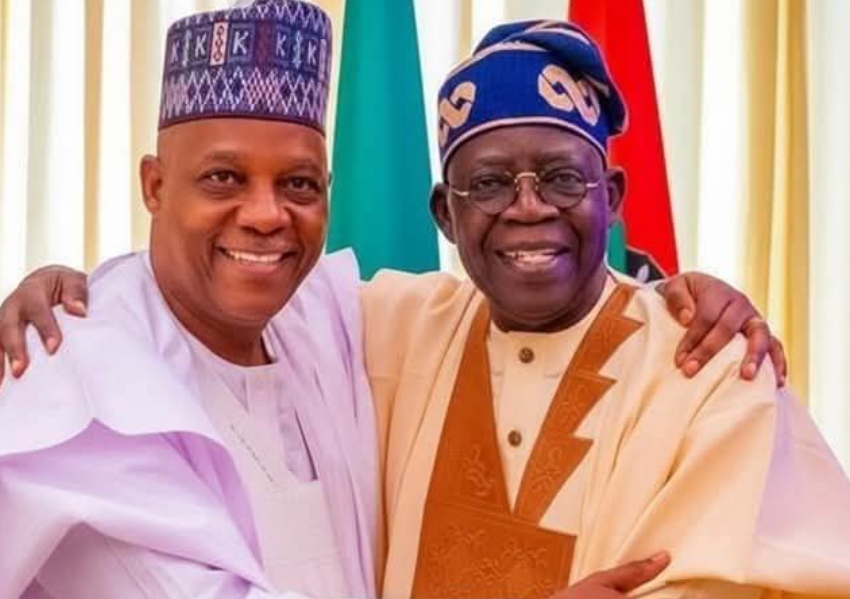
2027 and the “Bamayi” Syndrome: How Dark Social Media Networks Are Shaping the Opposition’s Battle Against Tinubu and Shettima
By: Dr. James Bwala
As Nigeria moves toward the 2027 general election, political communication is already becoming as important as political policy. Parties are competing not only through manifestos, rallies, interviews, and traditional advertising, but also through carefully edited videos designed for rapid circulation on social media. Among the most disturbing examples is the alleged use of “Bamayi” chants to portray Nigerians as openly hostile to President Bola Ahmed Tinubu and Vice President Kashim Shettima at campaign rallies.
The issue is not simply whether such chants occurred at a particular gathering. The deeper concern is the alleged manipulation of real rally footage to create a false impression of widespread rejection. According to this pattern, social media editors record an entire rally, remove or mute the original voices of supporters, and insert a chant taken from another gathering. The resulting video appears authentic because it contains real images from the rally. It may not show the obvious signs of artificial intelligence, computer-generated faces, or synthetic voices. Yet it can still be deceptive because the sound has been disconnected from the images.
This method represents a dangerous new phase in Nigerian political propaganda. It combines real events, selective editing, emotional messaging, and the power of dark social networks. If allowed to spread unchecked, it could inflame political tensions, mislead voters, damage reputations, and weaken public confidence in elections. Nigerians, political parties, journalists, and technology platforms must therefore treat this phenomenon as a serious democratic threat rather than dismissing it as ordinary campaign propaganda.
READ ALSO: https://newsng.ng/borno-apc-fires-up-2027-campaign-the-mandate-is-clear-deliver-the-numbers/
The alleged strategy is relatively simple but highly effective. A political rally is recorded in full. The original audio, which may include speeches, music, applause, chants, or ordinary crowd noise, is removed. A different audio track—perhaps a chant of “Bamayi”—is then inserted. The video is presented as if the new chant was made by the crowd shown in the footage. Because the images are genuine, many viewers assume that the entire recording is genuine. The deception is hidden not in the picture but in the relationship between the picture and the sound. An example is the JOS, Monguno rally, and some videos across some social media platforms, and they are already in Maiduguri to make more for the home state of Nigeria’s vice president, Kashim Shettima.
This distinction is important. Public discussions about manipulated media often focus on artificial intelligence. People have learned to look for distorted faces, unnatural movements, strange voices, or other technical errors associated with deepfakes. However, political deception does not require sophisticated technology. Traditional editing tools can produce highly persuasive misinformation. A real video with a false soundtrack may be more convincing than an AI-generated video because it appears ordinary and familiar. It does not need to invent a crowd; it only needs to misrepresent what that crowd said.
The alleged use of footage from one rally, such as the Jos gathering, to promote a chant recorded elsewhere illustrates the problem. A viewer who watches a short clip without context may conclude that the crowd in Jos was chanting against the president and vice president. The viewer may share it immediately, adding an angry caption such as “Tinubu rejected in Jos” or “Nigerians have spoken.” Once distributed through WhatsApp groups, Facebook pages, TikTok accounts, X communities, and other platforms, the original source may become impossible to identify. The video then acquires a life of its own.
READ ALSO: https://newsng.ng/borno-apc-fires-up-2027-campaign-the-mandate-is-clear-deliver-the-numbers/
This is where dark social becomes politically significant. Dark social refers to content shared through private or semi-private channels where the public cannot easily observe its origin, reach, or influence. WhatsApp groups are especially powerful in this regard. A misleading clip can move from a political operative to a group administrator, from the administrator to hundreds of members, and from those members to other groups. Each recipient may see it as a personal recommendation from a trusted contact rather than as formal party propaganda.
The strength of this system lies in trust and repetition. Nigerians are more likely to believe a message forwarded by a family member, religious associate, colleague, or friend than an anonymous political advertisement. Repeated exposure can create the impression that an event is widely known and accepted, even when it began with a small, coordinated network. By the time fact-checkers respond, the emotional impact may already have been achieved.
The political calculation behind such a strategy is clear. An opposition movement seeking to weaken the ruling All Progressives Congress may believe that images of angry crowds can damage the popularity of President Tinubu and Vice President Shettima. The objective may be to create the impression that the government has lost legitimacy across the country. If citizens repeatedly encounter videos suggesting that supporters are chanting “Bamayi” at ruling-party rallies, they may begin to assume that the administration is facing a national revolt.
READ ALSO: https://newsng.ng/borno-apc-fires-up-2027-campaign-the-mandate-is-clear-deliver-the-numbers/
That assumption can have several consequences. It can reduce public confidence in the ruling party, encourage supporters to respond aggressively, and provoke arguments along regional, ethnic, or partisan lines. It may also influence undecided voters who interpret crowd reactions as evidence of electoral momentum. Political campaigns have always used symbols of popularity—large crowds, enthusiastic applause, endorsements, and public celebrations. Manipulated rally videos are a digital version of the same strategy, but they can be produced and distributed faster, with greater reach and less accountability.
However, the fact that an opposition group may benefit from such content does not mean that every opposition member is involved, or that every “Bamayi” video is fabricated. Responsible analysis must distinguish between verified evidence and political suspicion. It is possible for genuine criticism to occur at a rally. It is also possible for supporters to chant slogans that party leaders did not expect. The existence of manipulated videos should not become an excuse for dismissing all criticism of the government. Nor should accusations of opposition involvement be made without evidence.
This is why verification is essential. A video must be examined in its original form, not merely through a shortened social media version. Investigators should compare the audio with other recordings from the same rally, study crowd reactions, identify whether lips and sound match, and check whether the inserted chant appears in footage from another event. The location, weather, clothing, banners, stage design, and sequence of speeches can help determine whether the audio belongs to the images. Journalists and fact-checkers should also seek the complete recording from multiple independent sources.
READ ALSO: https://newsng.ng/borno-apc-fires-up-2027-campaign-the-mandate-is-clear-deliver-the-numbers/
Political parties have a special responsibility in this environment. The ruling party must not respond to manipulation with its own manipulation. It should communicate evidence calmly, publish original footage where possible, and cooperate with credible fact-checking organizations. Opposition parties, likewise, must understand that short-term propaganda can cause long-term damage. A party that wins attention through deception may eventually lose public trust when its methods are exposed. Democracy depends on competition, but it also depends on minimum standards of honesty.
Social media editors and influencers must recognize that editing is not neutral when it changes the meaning of an event. A video producer may argue that no image was fabricated. Yet removing the original audio and replacing it with a different chant can still mislead viewers. Ethical editing requires clear disclosure. If sound has been added, reconstructed, or taken from another rally, the video should say so. Without such disclosure, the audience is being invited to believe a false connection between the crowd and the chant.
Technology companies also have a role to play. Platforms should improve systems for identifying manipulated audio and recycled political content. They should preserve original upload information, label altered videos, and restrict the rapid forwarding of demonstrably false political material during election periods. WhatsApp and similar platforms have already introduced limits on bulk forwarding, but more transparency is needed. Researchers and election monitors should be able to study how political content spreads without compromising users’ privacy.
READ ALSO: https://newsng.ng/borno-apc-fires-up-2027-campaign-the-mandate-is-clear-deliver-the-numbers/
Voters, too, must develop stronger digital habits. Before sharing an emotional political video, citizens should ask basic questions: Who first posted it? Is the full version available? Does the sound match the crowd’s movement? Are independent media organizations reporting the same event? Could the video have come from another rally? Does the caption make a claim that the recording itself does not prove? A few seconds of caution can prevent thousands of people from becoming unwilling distributors of misinformation.
The danger of the “Bamayi” syndrome goes beyond one chant or one election cycle. It reflects a broader crisis in which political actors can manufacture public moods without inventing entire events. They can take genuine images, attach false meanings to them, and circulate the result through trusted personal networks. This form of manipulation is particularly dangerous because it exploits the authority of reality. Viewers are not being shown a completely fictional scene; they are being encouraged to misunderstand a real one.
Nigeria’s 2027 election will likely be contested in a difficult economic and political environment. Citizens will have genuine grievances, parties will make serious accusations, and public emotions will be intense. In such circumstances, manipulated rally videos can act as accelerants. They can transform dissatisfaction into outrage, disagreement into hostility, and political competition into social conflict. The country cannot afford an election in which voters are mobilized by fabricated crowd reactions.
READ ALSO: https://newsng.ng/borno-apc-fires-up-2027-campaign-the-mandate-is-clear-deliver-the-numbers/
The proper response is not censorship of legitimate political speech. It is greater accountability, transparency, and media literacy. Parties should commit publicly to rejecting manipulated footage. Journalists should investigate viral claims instead of merely repeating them. Platforms should act quickly against proven deception. Civil society groups should monitor campaign content, and citizens should resist forwarding material simply because it confirms their political preferences.
The “Bamayi” controversy should therefore be treated as a warning. Democracy is not protected only at polling stations; it is also protected in the information spaces where citizens form opinions before voting. If political actors are permitted to turn real rallies into false narratives through audio substitution and coordinated dark-social distribution, Nigerians may be choosing leaders based on events that never happened as presented.
* James Bwala, PhD, writes from Abuja
2027 and the “Bamayi” Syndrome: How Dark Social Media Networks Are Shaping the Opposition’s Battle Against Tinubu and Shettima
Politics
2027: Unmasking the Double Standard Behind Seyi Tinubu and Amir Kashim Shettima’s Participation
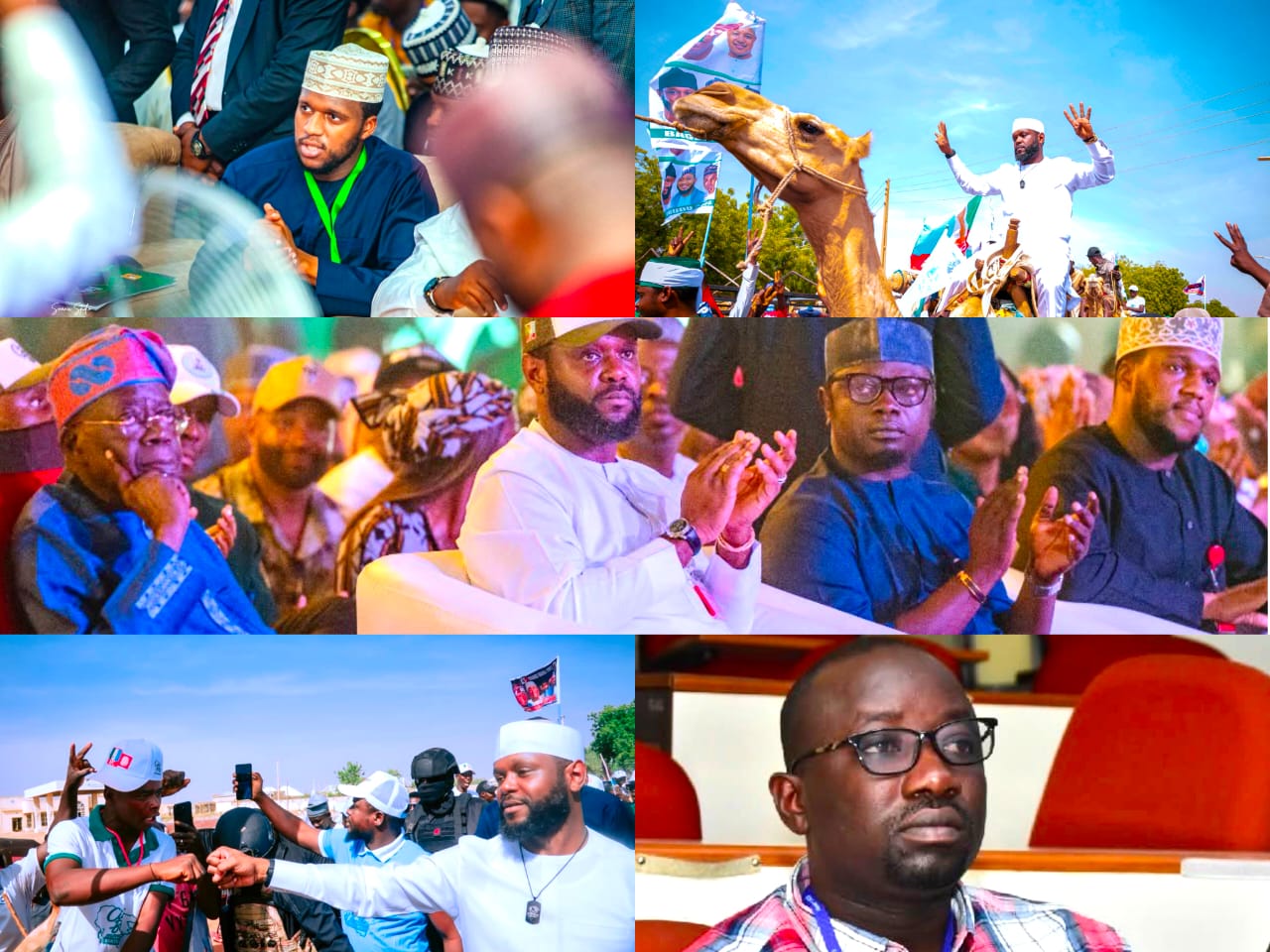
2027: Unmasking the Double Standard Behind Seyi Tinubu and Amir Kashim Shettima’s Participation
By Abubakar M. Kareto
In Nigeria’s ever-heated political discourse, few things attract sharper criticism than the visible involvement of a leader’s child in campaign activities. Suddenly, words like dynasty, entitlement, and nepotism fill the air. Yet a calm, objective look at reality reveals a much simpler truth. Seyi Tinubu and Amir Kashim Shettima are actively participating in political campaigns to support their parents in retaining office, doing precisely what any supportive and loyal child would do. Public participation remains a fundamental right for every citizen, and the fierce, knee-jerk outrage directed at their engagement exposes a profound level of misplaced cynicism and partisan hypocrisy.
Seyi Tinubu’s energetic mobilisation through the City Boy Movement and Amir Kashim Shettima’s active presence in rallying youth ahead of upcoming electoral cycles represent a natural expression of family loyalty and civic duty. Critics often resort to cynical distractions, questioning whether these young men are the ones actually contesting an elective post. Such queries are not only unnecessary; they are intellectually lazy. Neither Seyi Tinubu nor Amir Kashim Shettima has ever declared a run for public office. They are simply mobilising for their parents, performing the natural support and solidarity anyone would extend to their own family. Their active engagement is an exercise of support, not a self-serving ballot entry, making the resulting public outrage entirely hollow.
This principle of family support and legacy stewardship extends far beyond politics into virtually every professional sphere of human endeavor. In global corporate business empires, multi-generational legal chambers, and specialized medical practices, children routinely step in to support, manage, or expand enterprises built by their parents. When the child of a renowned surgeon assists in running a family hospital, or when the offspring of an accomplished industrialist joins a corporate board to protect shared institutional values, society does not scream nepotism; it recognizes stewardship, dedication, and continuity. Proximity to a craft naturally breeds expertise and a desire to preserve hard-won milestones, making professional or political support a universally accepted standard of loyalty.
Consider the United States for a broader historical perspective on political continuity and institutional resilience. George H.W. Bush served as President, and his son, George W. Bush, later occupied the same office following a rigorous democratic contest. No serious American commentator argued that the younger Bush had no right to enter politics or to support his father’s vision. The same country produced the political legacies of the Kennedys, the Roosevelts, and the Clintons. Democracy did not collapse under these famous names. Instead, voters decided based on performance and preference, proving that electorate scrutiny remains the ultimate safeguard.
Closer to home, look at the music world and cultural preservation. Fela Anikulapo-Kuti remains one of Africa’s greatest cultural and political voices. His sons, Femi and Seun Kuti, did not abandon the family craft because critics might shout dynasty. They continued the tradition, refined it, and built their own distinct musical legacies. No one of goodwill has ever suggested that Femi or Seun should have chosen a different profession simply because their father was a giant. Continuity of passion, mentorship, and skill was celebrated rather than condemned by society.
When examining public critique objectively, a profound hypocrisy underpins the anti-participation narrative. If leaders’ children chose to step back, remain entirely detached, and avoid public service or grassroots mobilisation, the very same critics would launch a barrage of cynical counter-attacks. They would loudly demand to know where the leaders’ children are hiding, accusing them of elitism or aloofness. Public commentators would ask why politicians are shielding their own families while allowing or using underprivileged citizens and poor children as political foot soldiers on the streets. Stripped of emotion, fairness dictates a simple conclusion: citizens cannot hypocritically condemn leaders’ children for participating in politics to support their parents, while simultaneously attacking them if they chose not to. The outrage is entirely manufactured; active participation is an expression of civic duty, not a crime.
A famous name can certainly open doors, secure platforms, and attract initial attention, but it cannot manufacture sustained public goodwill or electoral victory. In a democracy, the electorate retains the ultimate veto power. Ultimately, it is left for Nigerians to decide whether they are convinced or not when making their choice on election day. Voters evaluate candidates based on tangible outcomes, governance track records, and responsiveness rather than mere lineage, meaning that children of public figures must ultimately work twice as hard to prove their individual competence in the public arena.
Intelligent political analysis requires separating genuine governance malfeasance from predictable partisan anxieties and emotional bias. Familial association is never a disqualifier for civic participation. Whether in corporate enterprises, legal practices, musical dynasties, or unfolding Nigerian political alignments, children leveraging networks to support their parents represent loyalty and active citizenship. They do not bypass democracy because they simply exercise their fundamental right to participate in it while enriching the broader national conversation.
Abubakar M. Kareto is a Public Affairs Analyst and Strategic Communications Specialist focusing on governance, political economy, and public policy across Nigeria and Africa. He can be reached via X (@amkareto) or email (amkareto@gmail.com).
2027: Unmasking the Double Standard Behind Seyi Tinubu and Amir Kashim Shettima’s Participation

APC gubernatorial candidate Wali promises to sustain youth development if elected in Yobe
By: Yahaya Wakili
Yobe state APC governorship candidate Alhaji Baba Malam Wali mni has assured that, if elected, his administration would sustain the development initiatives of Governor Buni, particularly those focused on youth development, economic empowerment, and improved living standards.
Baba Wali stated this today in Gadaka while flagging off the distribution of 500 empowerment items for youths and women in zone B on behalf of Governor Mai Mala Buni CON, COMN.
Wali said the initiatives reflected the government’s commitment to creating economic opportunities for the people, especially youths, by equipping them with the means to become self-reliant and productive members of society.
He maintained that the distribution of the empowerment items was designed to support beneficiaries in establishing sustainable means of livelihood.
The governorship candidate seeks reelection of President Bola Ahmed Tinubu GCFR and other APC candidates, citing examples of the developmental projects and programs initiated in the state and the country as a whole.
Baba Malam Wali further called on the people to come out and massively vote for Asiwaju and all other party candidates and emphasized that continuity would remain a guiding principle of Buni’s administration with renewed attention to programs that create opportunities for young people and enable them to contribute meaningfully to the state’s economic growth.
The distribution of the 500 items, which include 200 motorcycles, 100 tricycles (Jega), and 100 sewing machines, with beneficiaries cutting across youths and women, among others, is geared towards promoting inclusive economic participation and addressing unemployment through practical empowerment interventions.
APC gubernatorial candidate Wali promises to sustain youth development if elected in Yobe

JBS $2.5bn Nigeria investment raises alarm over land loss, pollution, smallholder farmers’ survival

Kogi Group Rejects 16-Year Power Retention Agenda, Demands Rotation, EFCC Probe of Ex-LG Chairmen

Tribute: Three decades after His Demise Uncle Alaba’s Positive Dreams For Mushin and The Entire Lagos Still Unfulfilled

Roger Federer’s Shock as DNA Results Reveal Myla and Charlene Are Not His Biological Children

THE PLIGHT OF FARIDA

FAILED COUP IN BURKINA FASO: HOW TRAORÉ NARROWLY ESCAPED ASSASSINATION PLOT AMID FOREIGN INTERFERENCE CLAIMS
-
 News3 years ago
Roger Federer’s Shock as DNA Results Reveal Myla and Charlene Are Not His Biological Children
-
Opinions5 years ago
THE PLIGHT OF FARIDA
-
 News2 years ago
FAILED COUP IN BURKINA FASO: HOW TRAORÉ NARROWLY ESCAPED ASSASSINATION PLOT AMID FOREIGN INTERFERENCE CLAIMS
-
 Opinions5 years ago
POLICE CHARGE ROOMS, A MINTING PRESS
-

 News3 years ago
EYN: Rev. Billi, Distortion of History, and The Living Tamarind Tree
-

 ACADEMICS3 years ago
A History of Biu” (2015) and The Lingering Bura-Pabir Question (1)
-

 Columns3 years ago
Army University Biu: There is certain interest, but certainly not from Borno.
-

 Politics1 year ago
2027: Why Hon. Midala Balami Must Go, as Youths in Hawul and Asikira/Uba Federal Constituency Reject ₦500,000 as Sallah Gift
