
Politics
The Silent Strategy: Why Kashim Shettima Is the Defining Force Behind the Tinubu Ticket in 2027

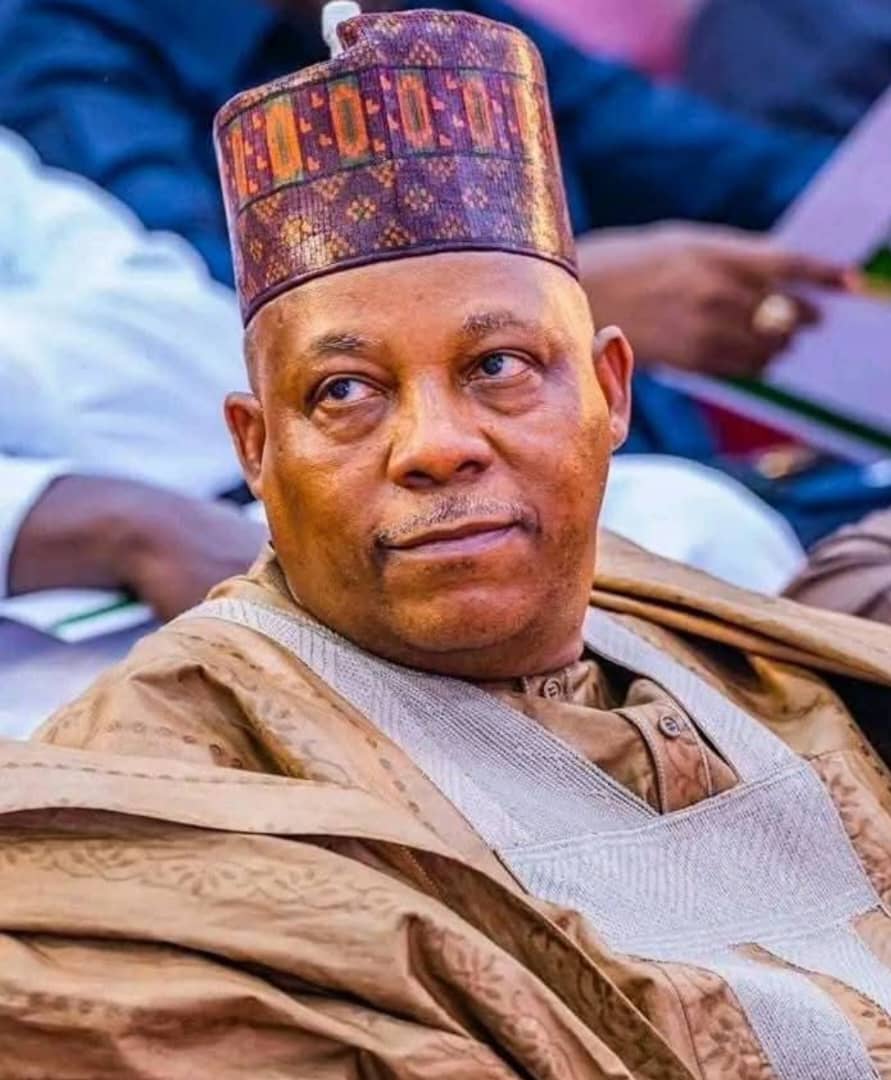
The Silent Strategy: Why Kashim Shettima Is the Defining Force Behind the Tinubu Ticket in 2027
By: Dr. James Bwala
In Nigerian politics, visibility is often mistaken for strength. Candidates who appear frequently on television, speak at rallies, issue bold promises, and dominate social media are commonly assumed to be the most politically active. Yet elections are not won by public appearances alone. Behind every successful political movement are networks, negotiations, strategy, organization, and patient groundwork that may not always be visible to the public.
This situation is why the claim that the All Progressives Congress is not campaigning for 2027 deserves closer examination. While Peter Obi appears across the country and Atiku Abubakar continues to speak about his plans for Nigeria, it would be a mistake to assume that the APC is inactive or that the Tinubu administration has surrendered the political space. Much of the party’s work may be taking place quietly, away from the noise of rallies and social media declarations. At the center of that quiet political strategy is Vice President Kashim Shettima, whose role may prove decisive in shaping the future of the Tinubu ticket.
The argument that Shettima is the soul of the Tinubu ticket is not based merely on loyalty or personal admiration. It is rooted in the realities of Nigerian political calculations. The vice president brings regional balance, political experience, administrative knowledge, and an understanding of the complex networks that influence national elections. Shettima has a deep understanding of the blueprints, and his contribution may not always generate dramatic headlines, but political success is often built through precisely such less visible efforts.
Those who judge political campaigns only by public appearances risk misunderstanding how power operates. Campaigning does not begin and end with rallies. It includes consultation with stakeholders, engagement with governors, coordination with party structures, dialogue with traditional leaders, relationship-building with religious and community organizations, and efforts to maintain unity within a broad political coalition. These activities may not trend online, but they can determine the outcome of an election.
The APC’s apparent silence may therefore be strategic rather than accidental. A party in government does not necessarily need to respond to every accusation or compete in daily verbal exchanges. Its political advantage includes access to state institutions, visibility through governance, contact with elected officials, and the ability to point to policies and projects already undertaken. While opposition figures may focus on promises and criticism, the governing party can campaign through a combination of performance, organization, and political alliances.
This does not mean that every action of the government should be accepted without scrutiny. Democracy requires accountability, and citizens have the right to question government policies, economic conditions, and political decisions. However, criticism should not be confused with electoral victory. A party can face public frustration and still win an election if it maintains internal unity, builds effective alliances, and presents a credible narrative to voters. Conversely, an opposition movement can attract large crowds and intense online support without converting that enthusiasm into sufficient votes.
The political strength of Kashim Shettima lies partly in his ability to operate within this complex environment. As a former governor, he understands the relationship between national politics and grassroots structures. He is familiar with the language of party organization, the importance of regional confidence, and the demands of managing competing interests. His experience in Borno also gives him a distinctive connection to the politics of the North, while his position as vice president enables him to participate in national engagement.
Shettima also brings an important dimension to the Tinubu ticket: the ability to complement, rather than duplicate, the president’s political identity. President Bola Tinubu is widely recognized as a forceful political strategist with a long history in Lagos politics and national coalition-building. Shettima, by contrast, contributes a different background and style. The strength of a political ticket often depends on whether its members can reach different audiences and reassure different constituencies. A successful ticket must be broad enough to unite people who may not share the same regional, religious, or political outlook.
This complementary relationship may become particularly important in 2027. Nigeria is a country of immense diversity, and no serious presidential campaign can rely on one region or one political personality. The Tinubu-Shettima ticket must appeal to voters across the South, the North, urban centers, rural communities, young people, business interests, traditional institutions, and organized political structures. Shettima’s role may be crucial in maintaining confidence among northern stakeholders and communicating the administration’s message in regions where political expectations are especially complex.
The opposition’s visible activity should not be dismissed. Peter Obi has developed a strong national following, particularly among young voters and citizens who desire a new political direction. His message of reform, competence, accountability, and economic transformation resonates with many Nigerians. Atiku Abubakar, meanwhile, remains an experienced national politician with an established network and a long record of presidential ambition. His continued public engagement demonstrates that the opposition space is active and competitive.
Nevertheless, visibility is not the same as organization. Peter Obi’s influence must eventually be translated into polling-unit structures, local coordination, coalition-building, and broad geographical support. Atiku must also overcome the challenges that have affected opposition politics in the past, including rivalry among leaders, divided platforms, personal ambition, and the difficulty of building a united front. Speaking about what they will do for Nigeria is important, but elections are won when political messages are supported by disciplined structures capable of mobilizing voters.
This is where the APC may have an advantage. The party has experienced officeholders at the federal and state levels, a national political structure, and access to influential actors across the country. If these resources are properly coordinated, the party can remain competitive even when its campaign activities appear less dramatic than those of its opponents. Its greatest challenge, however, will be internal. No amount of quiet strategy can compensate for division, poor communication, unpopular decisions, or failure to respond to public concerns.
The effectiveness of Shettima’s role will therefore depend on how well the administration combines political organization with governance. Nigerians are not likely to vote solely on the basis of party slogans or regional calculations. Economic hardship, unemployment, insecurity, inflation, public services, and trust in government will significantly influence the electorate. Political strategy may help secure alliances, but performance will determine whether those alliances remain convincing.
The APC’s opponents may be misjudging the political waters if they believe that the absence of constant rallies means the absence of preparation. However, the APC would also be misjudging the electorate if it assumes that quietness alone will produce victory. Silence can be strategic, but it must eventually be followed by a clear record, a persuasive message, and a credible plan for the future. The party cannot expect Nigerians to reward hidden efforts that do not produce visible improvements in their lives.
The phrase “the ghost is working in silence” captures the idea of political activity that is not immediately visible. Networks are being maintained. Alliances are being negotiated. Party leaders are assessing their positions. Stakeholders are calculating their interests. Communities are observing the government’s direction. Such processes may not appear on the front pages every day, but they form part of the foundation of electoral politics.
If the APC succeeds in coordinating these silent efforts, Atiku may face serious difficulties in converting his public engagement into a winning coalition. Peter Obi may also discover that popularity, especially among a passionate section of the electorate, must be matched by nationwide structure and strategic alliances. The shock awaiting the opposition may not be that it lacked public attention, but that it underestimated the capacity of a governing party to organize quietly while appearing publicly restrained.
Still, political predictions should be made with humility. No candidate is guaranteed victory, and no party should assume that past success will automatically be repeated. Nigerian voters are increasingly politically conscious, more willing to challenge established parties, and more attentive to issues of competence and accountability. The electorate cannot be treated as a passive audience that will simply follow party calculations. Citizens will judge the administration by what they experience and by whether its promises match reality.
For the Tinubu ticket, Kashim Shettima’s importance will therefore be measured not only by his ability to work behind the scenes but also by his capacity to communicate, build trust, defend the administration’s record, and help shape a political coalition that reflects Nigeria’s diversity. He must be more than a quiet strategist. He must also be an effective bridge between the government and citizens, between the president and party structures, and between national policy and regional expectations.
The central lesson is that political noise should never be confused with political power. Peter Obi’s visibility and Atiku Abubakar’s public promises are important parts of the 2027 contest, but they do not tell the whole story. The APC may be pursuing a different method—one based on quiet mobilization, institutional relationships, coalition-building, and the use of governing power. In that strategy, Kashim Shettima may be the critical figure whose influence becomes fully apparent only when the election draws near.
Those who are campaigning against President Tinubu and chanting “Tinubu Must Go” have every democratic right to do so. But they should not assume that public anger automatically translates into electoral victory. Nor should they overlook the political work taking place beyond the cameras. The coming contest will be decided not by who shouts the loudest, but by who builds the strongest national structure, offers the most convincing account of governance, and mobilizes voters most effectively.
The opposition may continue to rant today and tomorrow. The APC may continue to appear restrained. Yet beneath the surface, political calculations are already taking shape. If Shettima and the Tinubu camp succeed in turning silent organization into visible results and electoral mobilization, their opponents may indeed be shocked by the outcome. The “ghost” may be working quietly—but in politics, silence becomes powerful only when it is supported by strategy, performance, unity, and a clear understanding of the people.
- James Bwala, PhD, writes from Abuja.
- The Silent Strategy: Why Kashim Shettima Is the Defining Force Behind the Tinubu Ticket in 2027


Politics
THE JARAMOGI ODINGA OF NIGERIA? How Shettima Put Leadership, Respect, and Political Responsibility at the Heart of His Message to Atiku


THE JARAMOGI ODINGA OF NIGERIA? How Shettima Put Leadership, Respect, and Political Responsibility at the Heart of His Message to Atiku
By: Dr. James Bwala
Political competition is an essential feature of democracy. It allows citizens to compare ideas, assess records, and choose leaders according to their interests and convictions. However, political competition loses its democratic value when it becomes a contest in personal ridicule, deliberate misrepresentation, or disrespect for public institutions. In this context, Vice President Kashim Shettima’s response to former Vice President Atiku Abubakar’s repeated reference to President Bola Ahmed Tinubu simply as “Bola” raises an important question: should political disagreement permit the systematic reduction of a sitting president to an informal or supposedly dismissive name?
Shettima’s statement—that “you can call him Bola or Adekunle if you like; the truth is that he is the president and commander in chief of the armed forces of Nigeria”—is persuasive because it shifts attention from personal familiarity to constitutional authority. His broader remarks, however, including his references to Atiku’s political history and comparisons with other figures, reveal the dangers of responding to provocation with further personal attacks. The central principle remains clear: Nigerian political discourse should be based on respect for institutions, honest criticism, and accountability rather than mockery and name-calling.
The title and office of the president are not merely ceremonial. Under Nigeria’s constitutional system, the president is the head of the federal executive branch and commander in chief of the armed forces. Whether citizens admire or oppose the president, the office carries legal authority and national significance. Addressing the occupant of that office with appropriate recognition is therefore not necessarily an expression of personal support. It is an acknowledgment of the institution itself.
This distinction is particularly important in a democracy. A citizen may strongly criticize the president’s economic policies, security record, appointments, or political decisions while still recognizing the constitutional authority of the presidency. Indeed, democratic criticism becomes more effective when it is directed at policies and conduct rather than expressed through personal humiliation. Calling a public official by a familiar name may appear harmless in private conversation, but when used repeatedly in a political campaign to diminish the status of the office, it may contribute to a broader culture of disrespect.
Atiku Abubakar, as a former vice president and a major political figure, has every right to challenge President Tinubu’s administration. He may argue that the government has failed to meet expectations, that its economic reforms have increased hardship, or that its policies require reconsideration. Such arguments should be answered with facts, evidence, and alternative proposals. Reducing the president to a first name, however, does not strengthen the criticism. It risks making political debate appear driven by resentment rather than reason.
Shettima’s response is therefore justified to the extent that it defends the dignity of the presidency. His declaration that he would refer to Atiku as “a former vice president” demonstrates the principle of acknowledging a person’s public status. This is not a demand that Nigerians surrender their freedom of expression. Instead, it is a reminder that responsible political language can preserve disagreement without destroying civility.
Respect is especially important in a country as diverse and politically sensitive as Nigeria. Political leaders speak not only to their immediate supporters but also to millions of citizens who may interpret their words as permission for confrontation. When senior politicians exchange insults, their followers may imitate that conduct in more aggressive forms. Online abuse, threats, tribal stereotyping, and political intolerance can develop from the normalizing of contempt at the highest level.
Leadership therefore imposes a duty of restraint. A person seeking the presidency should demonstrate an ability to disagree without constantly degrading opponents. This is not weakness. On the contrary, restraint signals confidence, maturity, and respect for the electorate. Citizens deserve political leaders who can explain why a policy is wrong, why an election strategy is flawed, or why a government has failed, rather than leaders who rely principally on ridicule.
Nevertheless, Shettima’s own remarks must also be examined critically. In responding to Atiku, he reportedly referred to Atiku’s repeated presidential contests and stated that he was not Abraham Lincoln, while also making a comparison involving Raila Odinga. Although political leaders may use historical comparisons to make rhetorical points, such statements can distract from the stronger constitutional argument. If the purpose is to defend respect for public office, the response should avoid language that appears to ridicule another public figure.
The principle of civility must apply equally to government supporters and opposition figures. It cannot be demanded from one side while being ignored by the other. President Tinubu’s supporters should not condemn disrespect toward the presidency and then engage in personal abuse of opposition leaders. Likewise, opposition politicians should not demand accountability while using language designed only to provoke or delegitimize the government. A healthy political culture requires consistency.
There is also a difference between personal familiarity and institutional disrespect. In some contexts, a politician may use a first name because of a long-standing personal relationship. Such usage is not automatically offensive. However, when the name is used in a public political dispute with the apparent intention of reducing the person’s stature, the meaning changes. Language is shaped by context, tone, and purpose. The question is not merely whether “Bola” is the president’s given name, but whether its use is intended to recognize him as a national leader or to portray him as unworthy of formal respect.
Political leaders should also remember that titles are not substitutes for accountability. Calling President Tinubu “Mr. President” does not mean that citizens must approve of his policies. Similarly, addressing Atiku as “former vice president” does not mean that his criticisms should be ignored. Respectful language and rigorous scrutiny can coexist. In fact, they should coexist. Democracy requires both recognition of authority and the freedom to question how that authority is exercised.
Shettima’s reference to Atiku’s many presidential contests also invites a broader reflection on political ambition. Repeated participation in elections is not, by itself, proof of failure or dishonor. Many democratic leaders contested several times before achieving office, while others remained influential without winning the highest position. The legitimacy of a political career should be judged by ideas, conduct, service, and adherence to democratic rules—not merely by the number of attempts made.
For this reason, personal references to the age, electoral history, or perceived ambitions of opponents should be used cautiously. They may energize a political crowd, but they rarely help citizens understand the real issues before the country. Nigeria faces serious challenges: inflation, unemployment, insecurity, weak public services, corruption, ethnic mistrust, and declining confidence in public institutions. These problems require serious debate. Time spent trading insults is time diverted from discussing practical solutions.
The inauguration of a campaign council is an occasion for mobilization, but it should also be an opportunity to define the character of the campaign. A campaign should tell citizens what a party intends to do, how it will do it, and why its program deserves support. If the campaign becomes primarily a platform for attacking opponents, the electorate may be left with slogans instead of plans. Political communication should persuade citizens through vision and performance, not merely through derision.
Supporters of President Tinubu can make a stronger case by highlighting measurable achievements, explaining difficult reforms, acknowledging genuine hardships, and presenting credible plans for improvement. They do not need to depend on insults directed at Atiku or any other opponent. Similarly, Atiku and his supporters can build a more convincing opposition by presenting detailed alternatives and demonstrating how their proposals would address national problems. Criticism is most powerful when it is specific, factual, and connected to the daily experiences of citizens.
Ultimately, the controversy surrounding the use of “Bola” reflects a larger crisis in Nigerian political communication. Public discourse has increasingly become personal, emotional, and hostile. Political actors often treat every criticism as an attack on their identity, while supporters assume that defending their party requires abusing its opponents. This pattern weakens democratic culture. It makes compromise difficult, encourages misinformation, and shifts attention away from governance.
The appropriate standard should be simple: criticize policies, question decisions, challenge records, and expose wrongdoing—but do not deliberately demean public offices or reduce political disagreement to personal humiliation. The president should be respected as president, even when his administration is opposed. Former leaders and candidates should also be treated with dignity, even when their records are criticized. Respect does not eliminate accountability; it creates the conditions in which accountability can be pursued constructively.
Vice President Shettima is right to insist that President Tinubu’s constitutional position deserves recognition. However, the most persuasive defense of that position would be one expressed with restraint and supported by evidence. The same standard applies to Atiku Abubakar and every other political actor. Nigeria does not need louder insults; it needs better arguments, stronger institutions, and leaders capable of disagreeing without destroying mutual respect.
The future of Nigerian democracy will depend not only on who wins elections but also on how political leaders behave while seeking power. A nation is strengthened when its leaders respect offices, honor legitimate criticism, and place national interest above personal rivalry. The president is more than a first name, and an opposition candidate is more than a target for ridicule. Both represent important parts of a democratic system that must be protected through responsible speech and principled conduct.
*James Bwala, PhD, writes from Abuja
THE JARAMOGI ODINGA OF NIGERIA? How Shettima Put Leadership, Respect, and Political Responsibility at the Heart of His Message to Atiku
Politics
Borno Politics: Power, Continuity, and the Fight for Democratic Space Ahead of 2027 Elections

Borno Politics: Power, Continuity, and the Fight for Democratic Space Ahead of 2027 Elections
By: Dr. James Bwala
The political tension in Borno State is being shaped by two closely connected developments: the strategic emergence of Engr. Mustapha Gubio as the All Progressives Congress (APC) consensus candidate for the 2027 governorship election, and the growing backlash against Governor Babagana Zulum over the controversial arrest of individuals associated with the #TinubuMustGo campaign. Together, these developments reveal a deeper contest over political succession, party control, public accountability, and the limits of democratic expression in a state still recovering from years of insecurity.
The APC’s decision to endorse Gubio, reportedly supported by Governor Zulum and Vice President Kashim Shettima, has strengthened the ruling party’s political position. At the same time, the arrests linked to an anti-government campaign have generated criticism and raised concerns about whether political stability is being pursued at the expense of civil liberties. Although the APC’s consensus strategy may offer organizational advantages, its long-term success will depend on whether the party can combine continuity with openness, development with accountability, and political strength with respect for democratic rights.
Engr. Mustapha Gubio’s selection is significant because it reflects the APC’s desire to present the 2027 election as a referendum on continuity. As a former Commissioner for Works and a figure associated with the Ministry of Reconstruction, Rehabilitation, and Resettlement, Gubio is positioned as a candidate whose experience corresponds closely with Borno’s central needs. The state continues to face the consequences of insurgency, displacement, destroyed infrastructure, disrupted education, weakened local economies, and the difficult task of rebuilding public trust. A candidate with direct experience in reconstruction can therefore argue that he understands the practical requirements of post-conflict governance.
READ ALSO: https://newsng.ng/tinubus-2027-gamble-why-shettima-remains-his-running-mate/
This is a powerful political message. Rather than presenting the 2027 election as a choice between an established government and an uncertain alternative, the APC is likely to frame it as a choice between ongoing reconstruction and the risks of interruption. Such a strategy allows the ruling party to emphasize roads, schools, hospitals, housing, resettlement, public institutions, and economic recovery. It also enables Gubio to claim that his participation in previous reconstruction efforts gives him an advantage over opponents who may lack comparable administrative experience.
The argument for continuity is especially persuasive in a state where development projects are closely connected to security and social stability. Rebuilding destroyed communities is not merely an infrastructure exercise. It involves restoring livelihoods, encouraging displaced residents to return, strengthening local government institutions, expanding access to education and healthcare, and creating conditions in which citizens can once again participate in economic life. If the APC can demonstrate measurable progress in these areas, its candidate will benefit from a strong incumbency narrative.
Gubio’s selection also appears to be a deliberate attempt to prevent the internal divisions that often weaken ruling parties before elections. Governorship contests can produce bitterness among aspirants, create rival political blocs, and trigger defections. When a party conducts a highly competitive primary without managing the grievances that follow, opposition parties may exploit the resulting divisions. The consensus arrangement is intended to prevent this outcome by settling the succession question early and presenting a united front.
READ ALSO: https://newsng.ng/tinubus-2027-gamble-why-shettima-remains-his-running-mate/
From the APC’s perspective, this is a rational political strategy. A consensus candidate can reduce campaign costs, limit destructive competition, and make it easier for party leaders to coordinate their political structures. It also offers aspiring politicians the opportunity to negotiate roles within a broader arrangement rather than engaging in an open contest that produces permanent winners and losers. If party leaders succeed in maintaining discipline, Gubio’s candidacy could become the center of an extensive coalition involving elected officials, party executives, traditional institutions, business interests, and grassroots mobilizers.
However, consensus politics can produce stability only when it is perceived as legitimate. If party members or citizens believe that the candidate was imposed without meaningful consultation, the appearance of unity may conceal resentment. Political agreement among powerful actors is not necessarily the same as broad public acceptance. The APC must therefore demonstrate that its consensus process was credible, transparent, and responsive to the interests of ordinary party members. Otherwise, dissatisfied politicians may remain within the party while quietly undermining the campaign.
The reported backing of Governor Zulum and Vice President Shettima gives Gubio a further advantage. Their support provides access to institutional networks, political experience, campaign resources, and a broad alliance within the APC. Governor Zulum remains an influential figure in Borno politics, while Vice President Shettima brings national visibility and strong political connections. Their joint support signals that Gubio is not merely an individual candidate but the chosen representative of a powerful political arrangement.
READ ALSO: https://newsng.ng/tinubus-2027-gamble-why-shettima-remains-his-running-mate/
This institutional backing could make it difficult for opposition parties to compete effectively. Elections are not won solely through popularity; they also depend on organization, funding, messaging, agents, logistics, coalition-building, and the ability to mobilize voters across diverse communities. A candidate supported by the governor and the vice president is likely to inherit a well-developed political structure. Opposition parties, by contrast, may face limited resources, internal disagreements, weak grassroots organization, and difficulty presenting a credible alternative to the ruling party’s reconstruction agenda.
Nevertheless, political machinery cannot eliminate public dissatisfaction. It can mobilize supporters, but it cannot permanently conceal governance failures. The APC will still need to answer questions about unemployment, poverty, insecurity, the condition of internally displaced persons, the effectiveness of resettlement programs, access to education, and the distribution of development projects. The more powerful the ruling party becomes, the greater the expectation that it should provide clear evidence of performance.
This is where the controversy surrounding the arrests linked to the #TinubuMustGo campaign becomes politically important. The campaign, regardless of its ideological position or popularity, represents a form of political expression. The reported arrest of individuals associated with it has triggered criticism because citizens in a democracy should not be treated as criminals merely for expressing opposition to a government or political leader. Where arrests are made, authorities have a responsibility to explain the legal basis, present credible evidence of wrongdoing, and ensure that suspects receive due process.
READ ALSO: https://newsng.ng/tinubus-2027-gamble-why-shettima-remains-his-running-mate/
Supporters of the government may argue that the arrests were necessary to prevent disorder, protect public security, or stop inflammatory activities. Borno’s history of violent conflict makes security a serious concern, and government officials cannot ignore credible threats. However, security arguments must not become a blanket justification for suppressing dissent. There is an important difference between peaceful political criticism and conduct that genuinely threatens public safety. A government committed to democratic legitimacy must distinguish between the two.
The backlash against Governor Zulum therefore extends beyond the specific arrests. It reflects a wider concern about the relationship between security governance and political freedom. In a state that has experienced terrorism and instability, citizens may accept certain security measures when they are lawful, necessary, and proportionate. They are less likely to accept arbitrary arrests, political intimidation, or the use of state power against peaceful critics. Such actions can deepen distrust and create the impression that the government fears public debate.
The controversy also creates a challenge for Gubio’s campaign. If the APC presents itself as the party of stability and continuity, it must clarify what kind of continuity it represents. Continuity in rebuilding infrastructure and restoring communities may be welcomed. Continuity in suppressing criticism would be far more damaging. Opposition parties will likely use the arrests to argue that the ruling party wants political control without accountability. They may portray Gubio’s endorsement as part of a broader effort to consolidate power and silence opposition before the election begins.
READ ALSO: https://newsng.ng/tinubus-2027-gamble-why-shettima-remains-his-running-mate/
For this reason, the APC should not dismiss the backlash as a temporary political disturbance. It should treat it as a warning. A government that commands strong institutional support can afford to be more confident in its response to criticism. It should investigate the circumstances surrounding the arrests, communicate openly with the public, and ensure that law enforcement agencies operate within constitutional limits. Transparency would not weaken the government; rather, it would strengthen its credibility.
The opposition also has responsibilities. It must not exploit public anger through misinformation, incitement, or reckless claims. A credible opposition should offer practical alternatives on security, reconstruction, education, healthcare, agriculture, job creation, and democratic reform. Criticism becomes politically persuasive when it is supported by facts and accompanied by a realistic program of government. Without this, opposition parties may remain dependent on the ruling party’s mistakes rather than building genuine public confidence.
Ultimately, the political contest in Borno State will be decided by more than party endorsements. The APC has gained an early advantage through the selection of a candidate with relevant experience, the promise of continuity, and the backing of influential leaders. Its consensus strategy may limit internal conflict and give Gubio a strong organizational platform. However, political strength is not a substitute for legitimacy. The party must still convince citizens that continuity will produce better lives, not merely preserve political control.
READ ALSO: https://newsng.ng/tinubus-2027-gamble-why-shettima-remains-his-running-mate/
The #TinubuMustGo controversy reinforces this point. Development and democracy cannot be separated. A state may rebuild roads and public buildings while weakening trust if citizens feel unable to criticize those in power. Conversely, political freedom without effective governance cannot address the material hardships facing communities. Borno requires both: sustained reconstruction and respect for constitutional rights.
The most persuasive path for the APC is therefore to combine its strongest political asset—continuity—with a clear commitment to accountability. Gubio should define his campaign through measurable development targets, public engagement, and an inclusive vision that extends beyond party loyalists. Governor Zulum and other party leaders should demonstrate that political stability does not require the suppression of legitimate dissent. The opposition, for its part, should transform criticism into a credible alternative rather than rely solely on controversy.
Borno State stands at an important political crossroads. The APC’s early consolidation has unsettled opposition parties and positioned Gubio as a formidable contender for 2027. Yet the same concentration of political power has intensified scrutiny of the government’s conduct.
- James Bwala, PhD, writes from Abuja.
Borno Politics: Power, Continuity, and the Fight for Democratic Space Ahead of 2027 Elections

Tinubu’s 2027 Gamble: Why Shettima Remains His Running Mate
By: Dr James Bwala
Many Nigerians are still wondering about President Bola Tinubu’s decision to retain Vice President Kashim Shettima as his running mate for the 2027 presidential election. They speak about religious balance and often relate to Atiku Abubakar and the coalition’s ticket. But it never reflects a strategic calculation built on loyalty, competence, electoral strength, and political stability that the Tinubu team put into consideration in their blueprints. Rather than altering a partnership that has remained relatively free of internal conflict, the All Progressives Congress (APC) appears determined to preserve a joint ticket that has already been tested in a competitive election and established a working relationship within the administration. Shettima’s continued presence offers Tinubu a combination of personal trust, administrative capacity, northern political influence, and institutional continuity.
In a political environment where alliances can easily weaken under pressure, the relationship between Tinubu and Shettima has stood out for its apparent cohesion. Since the 2023 campaign, the two leaders have demonstrated strong early loyalty and a willingness to coordinate their political and governmental responsibilities. This absence of public friction is politically significant. Presidential tickets are not merely electoral arrangements; they are partnerships that must survive campaign pressures, policy disagreements, public criticism, and competing political interests. By retaining Shettima, Tinubu is signalling that the existing partnership remains useful, dependable, and capable of supporting the administration’s objectives through the 2027 election.
One of the most important reasons for Shettima’s retention is his loyalty to President Tinubu. Political loyalty is often assessed not just through public declarations but also through the consistent conduct of a political ally during challenging times. Since becoming vice president, Shettima has largely maintained a supportive and coordinated public posture towards the president. He has not attempted to create an independent power centre that competes with the presidency, nor has he publicly challenged the administration’s central direction. Instead, he has played the role of a trusted deputy who reinforces the president’s agenda.
This type of loyalty is particularly valuable in a presidential system. A vice president occupies a position that can either strengthen or destabilise an administration. If the relationship between the president and vice president becomes strained, political disagreements may expand into public controversy, factional competition, and institutional paralysis. Tinubu’s decision to retain Shettima suggests that he values the stability created by a loyal deputy. The president knows the importance of maintaining unity at the highest level of government, especially as he prepares for another demanding national campaign.
Shettima’s loyalty also has political importance beyond his relationship with Tinubu. His continued support helps reassure influential political actors who participated in the formation of the 2023 ticket. Replacing him could create uncertainty among members of the APC, regional stakeholders, and northern political networks that supported the original arrangement. By maintaining the partnership, Tinubu reduces the likelihood of resentment among those who may interpret a change as a rejection of an established alliance.
Competence is another major factor behind Shettima’s retention. As a former governor of Borno State, Shettima brought executive experience to the vice presidency. His background in managing a state affected by serious security and humanitarian challenges gave him practical knowledge of public administration, crisis management, and political negotiation. These experiences have enabled him to operate as more than a ceremonial deputy. He has represented the administration at major national and international events, defended government policies, and participated in efforts to explain the administration’s economic and development goals.
A competent vice president can provide the president with flexibility, as we all have been witnessing recently. The president cannot personally attend every meeting, regional engagement, diplomatic event, or policy discussion. Shettima’s capacity to represent Tinubu and articulate the government’s stance enables the administration to maintain an active and visible presence across various platforms. His experience and public speaking skills have made him a useful political representative for the government.
Adding to this, Shettima’s competence has been important in sustaining public confidence in the administration’s policy direction. The Tinubu government has pursued difficult reforms, including changes to fuel subsidy arrangements, economic management, and efforts to attract investment. Such policies have generated debate and public concern. A vice president who understands the administration’s objectives and can explain them coherently contributes to political reassurance. Retaining Shettima therefore allows Tinubu to preserve an experienced partner who is already familiar with the government’s policy framework.
Shettima’s electoral record in Borno State is also a major asset. His success in maintaining a strong political base in Borno demonstrates his ability to organise support and mobilise voters. Borno is not only politically significant because of its population and location; it is also symbolically important as one of the states at the centre of the North-east geopolitical zone. A vice presidential candidate who commands loyalty in the region can contribute substantially to a national campaign.
The North-east remains an important component of Nigeria’s electoral calculations. The region contains millions of voters and has historically played a decisive role in presidential elections. Tinubu’s choice of Shettima in 2023 helped create a ticket that could appeal to voters across regional and religious lines. Retaining him for 2027 allows the APC to continue benefiting from the political networks already developed in the region. Changing the candidate could require the party to rebuild trust, renegotiate alliances, and persuade influential local actors to support a new arrangement.
Shettima’s electoral success in Borno is also evidence of organisational strength. Political campaigns depend not only on popular appeal but also on structures capable of registering supporters, communicating with voters, coordinating party officials, and ensuring turnout on election day. Shettima’s influence gives the APC an established foundation in the North-east. That foundation may be especially valuable in a close election, where a few percentage points in key states can determine the national outcome.
Beyond Borno, Shettima provides access to a formidable northern political structure. His background, relationships, and experience have connected him to governors, legislators, traditional leaders, party officials, community organisations, and influential political figures across the northern region. Selecting a new running mate cannot easily replace these networks. Political structures are built over years through trust, shared interests, negotiations, and repeated cooperation. Keeping Shettima enables the APC to rely on an existing network instead of beginning again with an unfamiliar candidate.
This northern structure strengthens Tinubu’s national coalition. Nigeria’s political system requires presidential candidates to build broad alliances across regions and communities. A candidate who performs strongly in one part of the country but lacks acceptance elsewhere may struggle to win a nationwide election. Shettima helps Tinubu maintain the regional balance that was central to the 2023 campaign. His presence communicates continuity to northern voters while allowing Tinubu to present the joint ticket as a national partnership rather than a temporary electoral arrangement.
Another reason for retaining Shettima is the absence of significant internal friction between the president and vice president. Political observers have often seen disagreements between presidents and their deputies in Nigeria and elsewhere. Such tensions can weaken public confidence, encourage factionalism, and distract governments from their responsibilities. In contrast, the Tinubu-Shettima relationship has been characterised by public coordination and a shared presentation of the administration’s priorities.
The value of this unity cannot be overstated. An administration facing economic pressures, security concerns, and public criticism needs a leadership team that can communicate with one voice. Internal disagreements are inevitable in any government, but they become dangerous when they are allowed to dominate public discussion. The apparent cooperation between Tinubu and Shettima has helped the administration project a degree of stability. Retaining the ticket preserves that image and assures party members that the leadership remains aligned.
The Presidency and the leadership of the House of Representatives have emphasised that continuity is necessary to strengthen stability and confidence in the administration’s policy direction. This argument is persuasive because governments require time to implement major reforms. Replacing the vice presidential candidate could lead to political speculation about changes in policy, priorities, and internal power relationships. Even if a new running mate were personally capable, the change could create questions about the unity of the administration and the future of its reform agenda.
Continuity does not automatically guarantee good governance, but it can support effective governance when the existing partnership is functional. Tinubu and Shettima have already developed methods of cooperation, understood their respective responsibilities, and established relationships with key officials. A new running mate would need time to develop the same level of coordination. In a political system already facing complex challenges, avoiding unnecessary disruption is a reasonable strategic choice.
The partnership with the First Lady’s Renewed Hope Initiative further reinforces the case for continuity. Shettima’s cooperation with the initiative connects the vice presidency to programmes focused on social development, women, youth, health, and community welfare. This relationship has helped broaden the administration’s public image beyond economic and political issues. It demonstrates that the presidency is working through complementary channels to address the social consequences of national challenges.
Maintaining a coordinated relationship among the president, vice president, and the First Lady’s initiative can help the administration present a unified vision. It also allows programmes to continue without the confusion that might follow a major change in the leadership structure. Political stability is not only about elections and party organisations; it also concerns the continuity of programmes that affect citizens directly.
Also, the decision to retain Shettima reflects the APC’s desire to avoid unnecessary political risks. The submission of nomination forms by the party indicates confidence in the existing ticket and suggests that party strategists believe the partnership remains electorally viable. A change in running mate could produce several risks: disagreements among party leaders, dissatisfaction among northern stakeholders, competition among aspirants, and uncertainty among voters. It might also encourage opponents to portray the change as evidence of instability within the administration.
No political arrangement is without risk, but replacing Shettima would introduce risks that the APC does not need to accept. He is already known to voters, has an established political base, understands the administration’s agenda, and has demonstrated loyalty to Tinubu. As the 2027 campaign councils are set to hit the ground running, the strategies from the blueprints are already speaking success for the APC. The opposition drops in the APC with Nyesome Wike of the People’s Democratic Party (PDP), Governor Charles Soludo of Anambra State and his counterpart from Osun State, Ademola Adeleke, and Tinubu, Shettima, and the APC will surely dance in 2027.
* James Bwala, PhD, writes from Abuja.
Tinubu’s 2027 Gamble: Why Shettima Remains His Running Mate

THE JARAMOGI ODINGA OF NIGERIA? How Shettima Put Leadership, Respect, and Political Responsibility at the Heart of His Message to Atiku

Centre Urges Presidential Candidates to Commit to Fiscal Reforms

Nigeria’s Nutrition Accountability Gap Persists as Child Stunting Hits 40%

Roger Federer’s Shock as DNA Results Reveal Myla and Charlene Are Not His Biological Children

THE PLIGHT OF FARIDA

FAILED COUP IN BURKINA FASO: HOW TRAORÉ NARROWLY ESCAPED ASSASSINATION PLOT AMID FOREIGN INTERFERENCE CLAIMS
-
 News3 years ago
Roger Federer’s Shock as DNA Results Reveal Myla and Charlene Are Not His Biological Children
-
Opinions5 years ago
THE PLIGHT OF FARIDA
-
 News1 year ago
FAILED COUP IN BURKINA FASO: HOW TRAORÉ NARROWLY ESCAPED ASSASSINATION PLOT AMID FOREIGN INTERFERENCE CLAIMS
-
 Opinions5 years ago
POLICE CHARGE ROOMS, A MINTING PRESS
-

 News3 years ago
EYN: Rev. Billi, Distortion of History, and The Living Tamarind Tree
-

 ACADEMICS3 years ago
A History of Biu” (2015) and The Lingering Bura-Pabir Question (1)
-

 Columns3 years ago
Army University Biu: There is certain interest, but certainly not from Borno.
-

 Politics1 year ago
2027: Why Hon. Midala Balami Must Go, as Youths in Hawul and Asikira/Uba Federal Constituency Reject ₦500,000 as Sallah Gift
