
News
Abdulsalami Urges National Unity Against Insecurity, Warns Against Politicising Terrorism

Abdulsalami Urges National Unity Against Insecurity, Warns Against Politicising Terrorism
By: Michael Mike
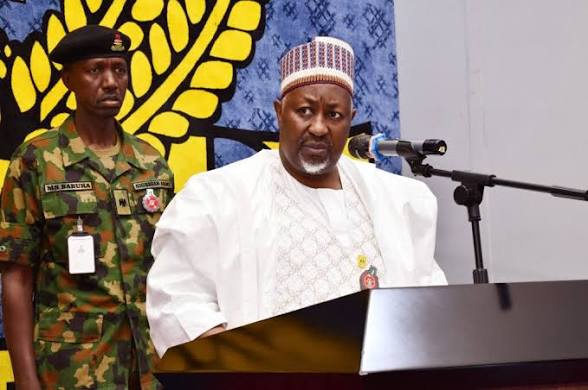
Former Head of State, Abdulsalami Abubakar, has called on Nigerians to unite in the fight against insecurity, insisting that defeating terrorism and other forms of criminality cannot be left to security agencies and government alone.
Abdulsalami, who made the appeal in a statement issued to mark his 84th birthday, expressed deep concern over the worsening security situation across the country and said every Nigerian has a stake in restoring peace and stability.
Reflecting on the state of the nation, the former military leader said the recent death of retired Major General Abubakar Rabe and the killings of many other Nigerians by criminal elements underscored the urgent need for collective action against insecurity.
According to him, his decades of military service, including participation in the Nigerian Civil War and peacekeeping operations abroad, had given him a profound appreciation of the sacrifices required to preserve national unity and security.
While acknowledging that several countries are grappling with economic and security challenges, Abdulsalami stressed that Nigeria must remain steadfast in supporting efforts aimed at maintaining law and order.
He commended the Armed Forces and other security agencies for their commitment in confronting terrorism and insurgency but maintained that citizens also have critical roles to play in defeating criminal groups threatening the country’s unity.
“It is clear that the success of attaining this objective must be inclusive. The armed forces and all other security agencies have been very strong in the fight against terrorism. But this is not their fight alone. Every citizen has a stake, and it is my plea that Nigerians unite to fight against terror,” he said.
The former Head of State blamed the politicisation of security issues for worsening the crisis, warning that divisive narratives and selfish interests had weakened efforts to address the country’s security challenges.
He further decried the spread of misinformation and fake news on social media, saying the circulation of false narratives and propaganda was emboldening terrorists and other criminal groups.
“Propaganda for political and other selfish gains is also giving oxygen to terrorist groups. The use of fake news on social media to propagate false narratives has served to encourage terrorists and other criminal groups. The success of one terrorist group encourages another, and unless we have a rethink, we will continue to promote this crisis,” he stated.
Abdulsalami urged Nigerians to set aside ethnic, religious and political differences and rally behind the government and security agencies in the fight against criminal elements, noting that terrorists and bandits do not discriminate on the basis of identity.
“Let us join forces with government and security agencies at all levels to defeat these evil ones, who do not recognise ethnicity, religion, political party, communal life, or other forms of identity,” he said.
He also encouraged members of the armed forces and other security personnel to remain resolute despite the enormous challenges confronting them and called on authorities to sustain decisive measures aimed at ending insecurity and preventing further loss of lives.
Reaffirming his commitment to the unity and progress of Nigeria, the elder statesman said he still dreams of a peaceful and prosperous country that future generations can proudly inherit, while urging citizens to remain calm, law-abiding and vigilant and offering prayers for families of security personnel and other victims who lost their lives in the line of duty.
Abdulsalami Urges National Unity Against Insecurity, Warns Against Politicising Terrorism


US Tightens Sanctions on Cuba, Targets Tourism Ministry in Fresh Pressure Campaign
By: Michael Mike
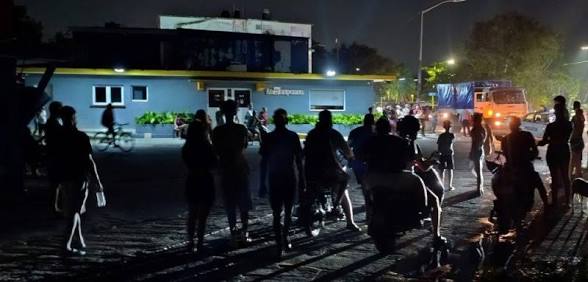
The United States has expanded its sanctions against Cuba, targeting the country’s Ministry of Tourism and nine other state-linked entities in a fresh escalation of Washington’s decades-long economic pressure campaign against the Caribbean nation.
The latest measures, announced by the U.S. State Department, add 10 Cuban entities to Washington’s sanctions list, extending restrictions to organisations involved in tourism, fuel imports, exports and foreign trade operations. Among those sanctioned are ENETEC S.A., Coreydan S.A. and the Foreign Trade Business Group (GECOMEX), all of which play roles in Cuba’s international commercial and energy sectors.
The move marks another step in the Trump administration’s efforts to tighten economic restrictions on Havana, with the Ministry of Tourism—one of Cuba’s most important foreign exchange earners—becoming a key target. The sanctions were imposed under an executive order signed by President Donald Trump on May 1, broadening the administration’s authority to increase pressure on the Cuban government.
U.S. Secretary of State Marco Rubio said Washington would continue deploying economic and diplomatic measures as part of its policy toward Cuba, maintaining that the sanctions are intended to hold the Cuban government accountable.
The Cuban government, however, condemned the latest restrictions, describing them as an attempt to deepen the country’s economic crisis and intensify what it calls the U.S. economic, commercial and financial blockade that has been in place for more than six decades.
Havana argued that the new sanctions seek to discourage foreign companies and investors from doing business with Cuban state institutions, particularly those linked to strategic sectors such as tourism and energy.
The sanctions come at a time when Cuba is grappling with one of its worst economic crises in decades, characterised by persistent shortages of fuel, electricity, food and medicines, soaring inflation and a wave of outward migration. Cuban authorities have consistently blamed the U.S. embargo for worsening the country’s economic hardship, while Washington argues that Cuba’s centrally planned economy and government policies are primarily responsible for the crisis.
The latest U.S. action also follows renewed international criticism of the embargo at the United Nations. Earlier this month, the UN General Assembly overwhelmingly adopted a resolution calling for an end to the U.S. embargo against Cuba, with 136 member states voting in favour, nine—including the United States and Israel—voting against, and 30 abstaining.
The General Assembly has adopted similar resolutions annually for more than three decades, reflecting broad international opposition to the embargo. Although the resolutions are not legally binding, they have consistently underscored the diplomatic isolation of the United States on the issue.
Relations between Washington and Havana have remained tense since the United States imposed sweeping sanctions following the 1959 Cuban Revolution led by Fidel Castro. While some restrictions were eased during the Barack Obama administration, relations deteriorated again under President Donald Trump, who reinstated and expanded sanctions aimed at limiting Cuba’s access to foreign currency and international financing.
The Biden administration retained many of those restrictions, and Trump’s return to office has been accompanied by a renewed commitment to intensify pressure on Havana.
Cuban officials warned that the expanded sanctions would further strain the country’s fragile economy and increase hardship for ordinary citizens, accusing Washington of pursuing a policy designed to force political change on the island. The United States has consistently rejected that characterization, insisting that its sanctions are aimed at the Cuban government and entities linked to it rather than the Cuban people.
The latest measures are expected to further complicate Cuba’s efforts to attract foreign investment and revive its tourism industry, one of the country’s principal sources of revenue as it struggles to recover from years of economic contraction and declining international visitor arrivals.
US Tightens Sanctions on Cuba, Targets Tourism Ministry in Fresh Pressure Campaign
CDHR Condemns Fresh U.S. Sanctions on Cuba, Urges Humanitarian-First Approach
By: Michael Mike
The Committee for the Defence of Human Rights (CDHR) has condemned the latest expansion of United States economic sanctions against Cuba, describing the measures as a humanitarian crisis that continues to inflict hardship on ordinary citizens rather than political leaders.
In a statement issued on Tuesday, the rights organisation said the recent decision by the U.S. government to extend sanctions to additional Cuban institutions, including the Ministry of Tourism and other strategic entities, represented a further escalation of a policy that has adversely affected the Caribbean nation for decades.
The group argued that while countries may pursue foreign policy objectives, such actions should not come at the expense of fundamental human rights, insisting that “humanity must come before politics.”
CDHR maintained that the sanctions have contributed to worsening shortages of food, medicine, fuel and medical supplies, while also limiting Cuba’s access to humanitarian assistance and international financial services.
According to the organisation, the burden of the restrictions falls disproportionately on vulnerable groups, including children, the elderly, persons living with disabilities and low-income families struggling to meet their daily needs.
The organisation further warned that the cumulative impact of the sanctions continues to strain Cuba’s healthcare system, economy, transportation network, energy sector and access to basic social services, threatening the welfare and dignity of millions of Cubans.
It stressed that rights such as access to food, healthcare, development and national self-determination are guaranteed under international human rights law and should not become casualties of geopolitical disputes.
“Human rights cannot be selectively defended. They must apply equally to every individual and every nation. The protection of human life must always take precedence over political disagreements or ideological differences,” the statement read.
The rights group urged the United States government to review its policy towards Cuba and adopt measures that place greater emphasis on protecting the Cuban people’s rights to life, health, food and development.
It also called on Washington to respect Cuba’s sovereignty, territorial integrity and political independence in line with the principles of the United Nations Charter and international law.
Beyond its appeal to the United States, CDHR urged the United Nations, humanitarian organisations, civil society groups and the wider international community to intensify diplomatic engagement and humanitarian support to alleviate the suffering of the Cuban people.
The organisation argued that dialogue, constructive engagement and international cooperation offer more sustainable solutions to disputes between nations than economic restrictions that deepen poverty and limit access to essential services.
The statement was jointly signed by the National President of CDHR, Comrade Yinka Folarin, and the organisation’s General Secretary, Comrade Idris Afees.
The latest reaction follows the U.S. government’s recent decision to widen sanctions against additional Cuban entities as part of Washington’s long-running policy towards Havana. The U.S. embargo on Cuba, first imposed in the early 1960s after the Cuban Revolution, has remained one of the world’s longest-running sanctions regimes. While successive U.S. administrations have differed on the degree of engagement with Cuba, the broader embargo has remained in place despite repeated calls by the United Nations General Assembly for its removal, with many countries arguing that the restrictions have significant humanitarian and economic consequences for the Cuban people.
CDHR Condemns Fresh U.S. Sanctions on Cuba, Urges Humanitarian-First Approach
2030 SDGs at Risk as Nigeria, UN Push Private Capital to Bridge Massive Funding Gap
By: Michael Mike
With less than four years left to achieve the 2030 Sustainable Development Goals (SDGs), the Federal Government and the United Nations on Monday warned that Nigeria cannot meet the ambitious global targets through public funding alone, calling for an urgent mobilisation of private capital and innovative financing to avert a widening development gap.
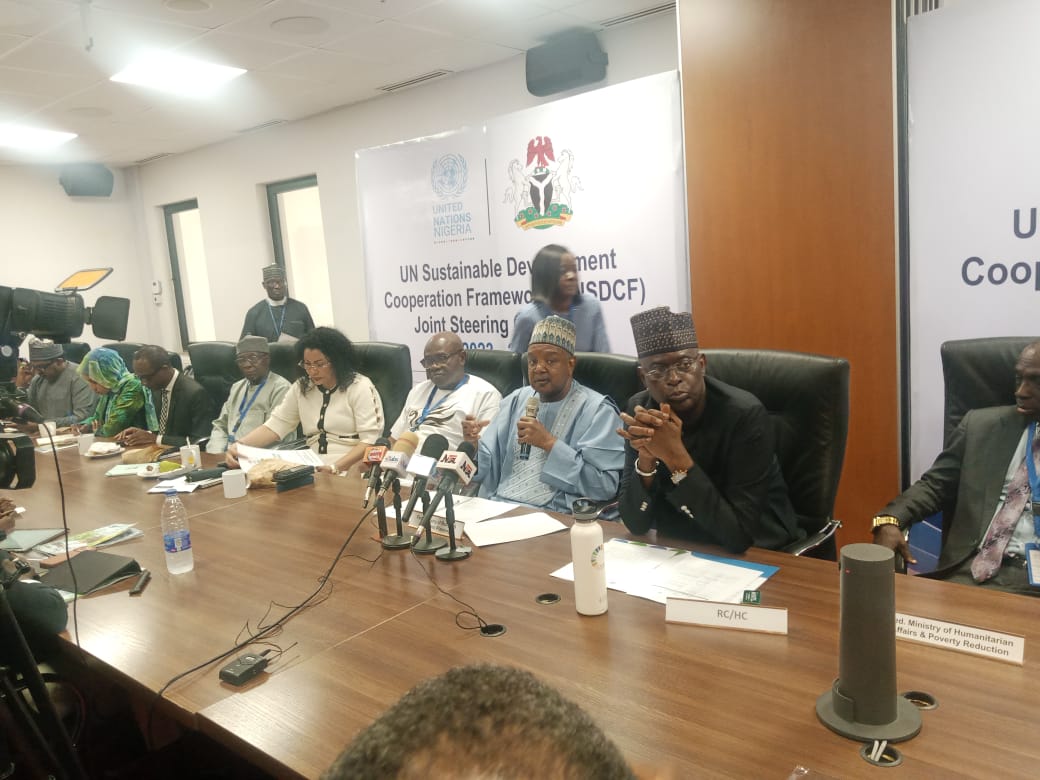
The warning came on Monday at the United Nations Sustainable Development Cooperation Framework (UNSDCF) Joint Steering Committee Meeting in Abuja, where top government officials, heads of UN agencies, development partners, labour unions, civil society organisations and the private sector reviewed Nigeria’s progress and mapped out strategies to accelerate implementation of the SDGs.
At the heart of the discussions was the growing concern that dwindling public resources, rising humanitarian needs, climate shocks and persistent poverty could derail Nigeria’s commitment to ending extreme poverty, improving healthcare, expanding education and building resilient communities before the 2030 deadline.
United Nations Resident Coordinator in Nigeria, Mohamed Fall, said the country had reached a defining moment that demands stronger partnerships, greater policy coherence and alternative financing mechanisms capable of unlocking large-scale investments.
He described the United Nations Sustainable Development Cooperation Framework (2023–2027) as the blueprint guiding collaboration between the UN and Nigeria in implementing the SDGs, the National Development Plan and President Bola Tinubu’s Renewed Hope Agenda.
“The framework is anchored on four interconnected pillars—people, prosperity, peace and planet. Prosperity cannot happen without peace, and peace cannot endure without development. Opportunities must be accessible to all, while protecting vulnerable populations and the environment remains essential,” Fall said.
Despite mounting challenges, Fall said the partnership had delivered measurable results across critical sectors.
According to him, more than two million vulnerable Nigerians received humanitarian assistance, including cash transfers during lean seasons, while about 2.6 million people benefited from disaster risk reduction programmes aimed at strengthening resilience against emergencies and climate-related shocks.
He disclosed that nearly one million children suffering from severe acute malnutrition received life-saving treatment in 2025, with cure rates approaching 90 per cent.
The UN official also revealed that about 40 million children benefited from Vitamin A supplementation, while regional preparedness plans were strengthened to improve responses to Ebola and Mpox outbreaks.
Fall further stated that approximately 190 million children were reached through polio vaccination campaigns, describing the Presidential Declaration on National Health Insurance as a major milestone towards expanding healthcare access and guaranteeing sustainable financing for vulnerable citizens.
In the education sector, he said 6.8 million children were reached through school-based programmes across 18 states, while over 66,000 out-of-school children were successfully returned to classrooms.
He added that more than nine million Nigerians gained access to improved water, sanitation and hygiene services, with another 4.2 million benefiting from initiatives promoting healthier and safer communities.
However, despite these gains, Minister of Budget and Economic Planning, Senator Atiku Bagudu, warned that the scale of financing required to achieve the SDGs had outgrown governments’ fiscal capacity.
“The reality is that the Sustainable Development Goals require more resources than governments alone can provide. We must unlock private capital and mobilise innovative financing mechanisms that can support development at scale,” Bagudu said.
He noted that Nigeria’s ongoing macroeconomic reforms had released resources previously consumed by inefficient subsidy regimes, creating additional fiscal space for investments in health, education and social development.
Bagudu stressed that sustainable poverty reduction would depend on expanding access to finance, skills and economic opportunities.
“There is no reason why hardworking Nigerians should remain poor if they have access to the right skills, financing and opportunities. Together with development partners, we can create the scale required to transform livelihoods and communities,” he added.
Also speaking, the Minister of Humanitarian Affairs and Poverty Reduction, Dr. Bernard Doro said the Federal Government had strengthened coordination of poverty reduction efforts through the One Humanitarian, One Poverty Response System (OHOPRS), a national platform designed to harmonise humanitarian interventions, social protection programmes and poverty alleviation initiatives across all levels of government and development partners.
He also highlighted the National Poverty Intelligence Lab, which provides real-time multidimensional poverty data to support evidence-based policy decisions and improve the targeting of interventions.
“The Renewed Hope Agenda and the 2030 Agenda share the same vision—ending poverty, expanding access to healthcare and education, strengthening food security, empowering women and youth, and building resilient communities,” the minister said.
Minister of State for Budget and Economic Planning, Dr. Doris Uzoka-Anite, called for stronger institutional coordination, better project preparation and innovative financing models capable of bridging Nigeria’s widening development financing gap.
She also urged the media to sustain public awareness of ongoing efforts to achieve the SDGs and promote accountability in the implementation of development programmes.
Adopted by all United Nations member states in 2015, the Sustainable Development Goals comprise 17 interconnected global targets aimed at ending poverty, eliminating hunger, improving healthcare and education, promoting gender equality, combating climate change and fostering sustainable economic growth by 2030.
Nigeria has integrated the SDGs into its National Development Plan and the Renewed Hope Agenda. However, implementation has been hampered by funding shortages, insecurity, inflation, climate-related disasters and growing humanitarian needs.
The United Nations Sustainable Development Cooperation Framework (2023–2027) serves as the primary platform through which the UN system supports Nigeria’s development priorities. As the countdown to 2030 enters its final phase, policymakers are increasingly turning to blended finance, private-sector investment and innovative funding mechanisms to close what experts describe as a multi-billion-dollar financing gap threatening the attainment of the SDGs.
2030 SDGs at Risk as Nigeria, UN Push Private Capital to Bridge Massive Funding Gap

US Tightens Sanctions on Cuba, Targets Tourism Ministry in Fresh Pressure Campaign

CDHR Condemns Fresh U.S. Sanctions on Cuba, Urges Humanitarian-First Approach

Troops Foil Militia Attack on Plateau Community, Deploy Ambush Along Escape Routes

Roger Federer’s Shock as DNA Results Reveal Myla and Charlene Are Not His Biological Children

THE PLIGHT OF FARIDA

FAILED COUP IN BURKINA FASO: HOW TRAORÉ NARROWLY ESCAPED ASSASSINATION PLOT AMID FOREIGN INTERFERENCE CLAIMS
-
 News2 years ago
Roger Federer’s Shock as DNA Results Reveal Myla and Charlene Are Not His Biological Children
-
Opinions4 years ago
THE PLIGHT OF FARIDA
-
 News1 year ago
FAILED COUP IN BURKINA FASO: HOW TRAORÉ NARROWLY ESCAPED ASSASSINATION PLOT AMID FOREIGN INTERFERENCE CLAIMS
-

 News2 years ago
EYN: Rev. Billi, Distortion of History, and The Living Tamarind Tree
-
 Opinions5 years ago
POLICE CHARGE ROOMS, A MINTING PRESS
-

 ACADEMICS2 years ago
A History of Biu” (2015) and The Lingering Bura-Pabir Question (1)
-

 Columns2 years ago
Army University Biu: There is certain interest, but certainly not from Borno.
-

 Politics1 year ago
2027: Why Hon. Midala Balami Must Go, as Youths in Hawul and Asikira/Uba Federal Constituency Reject ₦500,000 as Sallah Gift
