
News
CDHR Condemns Fresh U.S. Sanctions on Cuba, Urges Humanitarian-First Approach

CDHR Condemns Fresh U.S. Sanctions on Cuba, Urges Humanitarian-First Approach
By: Michael Mike
The Committee for the Defence of Human Rights (CDHR) has condemned the latest expansion of United States economic sanctions against Cuba, describing the measures as a humanitarian crisis that continues to inflict hardship on ordinary citizens rather than political leaders.
In a statement issued on Tuesday, the rights organisation said the recent decision by the U.S. government to extend sanctions to additional Cuban institutions, including the Ministry of Tourism and other strategic entities, represented a further escalation of a policy that has adversely affected the Caribbean nation for decades.
The group argued that while countries may pursue foreign policy objectives, such actions should not come at the expense of fundamental human rights, insisting that “humanity must come before politics.”
CDHR maintained that the sanctions have contributed to worsening shortages of food, medicine, fuel and medical supplies, while also limiting Cuba’s access to humanitarian assistance and international financial services.
According to the organisation, the burden of the restrictions falls disproportionately on vulnerable groups, including children, the elderly, persons living with disabilities and low-income families struggling to meet their daily needs.
The organisation further warned that the cumulative impact of the sanctions continues to strain Cuba’s healthcare system, economy, transportation network, energy sector and access to basic social services, threatening the welfare and dignity of millions of Cubans.
It stressed that rights such as access to food, healthcare, development and national self-determination are guaranteed under international human rights law and should not become casualties of geopolitical disputes.
“Human rights cannot be selectively defended. They must apply equally to every individual and every nation. The protection of human life must always take precedence over political disagreements or ideological differences,” the statement read.
The rights group urged the United States government to review its policy towards Cuba and adopt measures that place greater emphasis on protecting the Cuban people’s rights to life, health, food and development.
It also called on Washington to respect Cuba’s sovereignty, territorial integrity and political independence in line with the principles of the United Nations Charter and international law.
Beyond its appeal to the United States, CDHR urged the United Nations, humanitarian organisations, civil society groups and the wider international community to intensify diplomatic engagement and humanitarian support to alleviate the suffering of the Cuban people.
The organisation argued that dialogue, constructive engagement and international cooperation offer more sustainable solutions to disputes between nations than economic restrictions that deepen poverty and limit access to essential services.
The statement was jointly signed by the National President of CDHR, Comrade Yinka Folarin, and the organisation’s General Secretary, Comrade Idris Afees.
The latest reaction follows the U.S. government’s recent decision to widen sanctions against additional Cuban entities as part of Washington’s long-running policy towards Havana. The U.S. embargo on Cuba, first imposed in the early 1960s after the Cuban Revolution, has remained one of the world’s longest-running sanctions regimes. While successive U.S. administrations have differed on the degree of engagement with Cuba, the broader embargo has remained in place despite repeated calls by the United Nations General Assembly for its removal, with many countries arguing that the restrictions have significant humanitarian and economic consequences for the Cuban people.
CDHR Condemns Fresh U.S. Sanctions on Cuba, Urges Humanitarian-First Approach



News
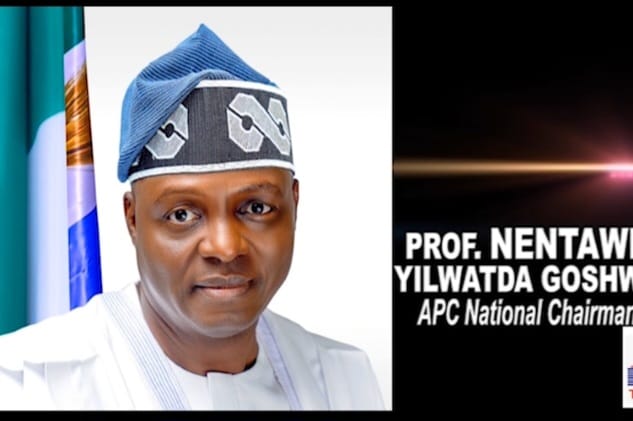
APC Launches Statewide Medical, Surgical Outreach in Taraba to Celebrate Prof. Nentawe Yilwatda’s 58th Birthday
APC Launches Statewide Medical, Surgical Outreach in Taraba to Celebrate Prof. Nentawe Yilwatda’s 58th Birthday
By: Michael Mike
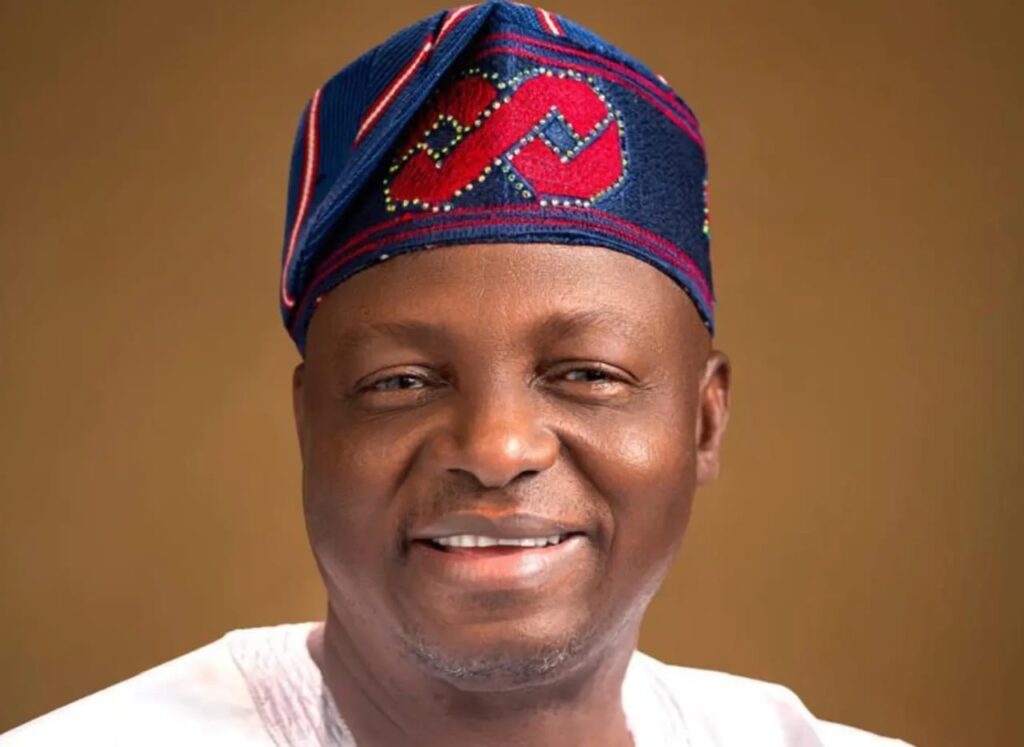
The All Progressives Congress (APC) has commenced a statewide medical and surgical outreach in Taraba State as part of activities marking the 58th birthday of its National Chairman, Professor Nentawe Yilwatda Goshwe.
The humanitarian initiative, organised under the party’s Renewed Hope agenda, is designed to provide free, quality healthcare services to thousands of residents across Taraba State’s three senatorial districts, with a focus on expanding access to medical care for vulnerable and underserved communities.
Paradigm News gathered at the First Referral Hospital, Sunkani, Ardo Kola Local Government Area in the Northern Senatorial District of Taraba State that the first phase of the outreach commenced at about 12:00 noon on August 3 and will run through August 7, 2026, offering five days of free, quality healthcare services. The official flag-off ceremony is scheduled for August 8, 2026, at the Federal Medical Centre (FMC), Jalingo, the state capital.
The outreach offers a comprehensive package of healthcare services, including free medical consultations and health screening, the provision of medicines and wound care, free and subsidised surgical procedures, emergency medical support, patient counselling, and health education aimed at promoting healthy living among residents.
To ensure equitable access across the state, healthcare teams have been deployed to designated medical facilities in the three senatorial districts.
In the Southern Senatorial District, services are being provided at the Federal University Teaching Hospital, Wukari, and General Hospital, Takum. In the Central Senatorial District, beneficiaries are receiving treatment at General Hospital, Bali, and General Hospital, Gembu. In the Northern Senatorial District, designated centres include General Hospital, Bambur, Karim Lamido Local Government Area, and the First Referral Hospital, Sunkani, Ardo Kola Local Government Area.
The medical outreach is being implemented in collaboration with the Taraba State Ministry of Health and the Libertad Health Foundation, reflecting a partnership aimed at improving healthcare delivery and reducing the burden of medical costs on citizens.
The initiative underscores the APC’s commitment to translating the Renewed Hope agenda into tangible social interventions that directly improve the lives of Nigerians through accessible healthcare services.
The campaign also carries the message, “Healing Lives, Restoring Hope, Building Healthier Communities,” while promoting the ideals of “Free Medical Services for All,” “Together We Celebrate Life and Service,” and “Renewed Hope, Better Health, Stronger Taraba.”
Residents across Taraba State are expected to benefit significantly from the programme, which seeks to improve health outcomes through preventive care, medical treatment, surgical interventions, and public health education.
The outreach forms part of activities marking Professor Nentawe Yilwatda Goshwe’s 58th birthday, with organisers describing the initiative as a demonstration of compassionate leadership and a commitment to improving the well-being of the people through quality healthcare services.
APC Launches Statewide Medical, Surgical Outreach in Taraba to Celebrate Prof. Nentawe Yilwatda’s 58th Birthday

Nigeria, Israel Renew Security, Trade Alliance as Envoy Bows Out
By: Michael Mike
Nigeria and Israel have reaffirmed their commitment to deepen cooperation in security, defence, trade, agriculture, technology, healthcare and innovation, as both countries moved to strengthen bilateral relations during the valedictory visit of Israel’s outgoing Ambassador to Nigeria, Michael Freeman.
The renewed commitment was made on Monday when Ambassador Freeman paid a farewell visit to the Minister of Foreign Affairs, Ambassador Bianca Odumegwu-Ojukwu, at the ministry’s headquarters in Abuja.
The meeting underscored both nations’ resolve to expand collaboration in combating insecurity, boosting food production, promoting technological innovation and increasing trade, with Israel pledging sustained support for Nigeria’s development priorities.
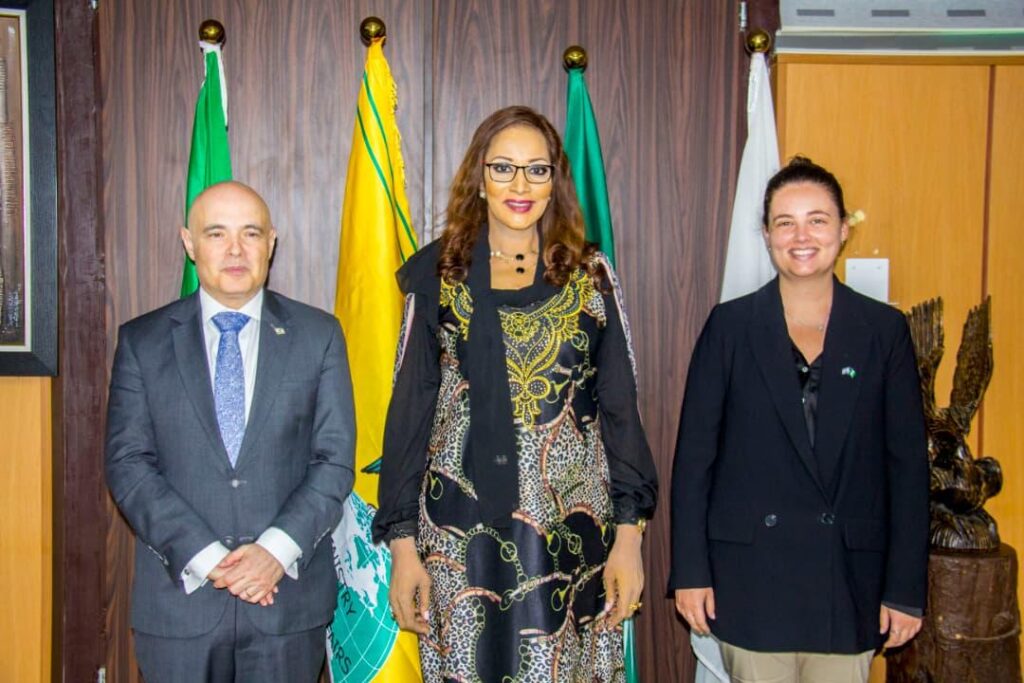
Speaking during the meeting, Odumegwu-Ojukwu commended the Israeli envoy for deepening relations between the two countries during his tenure, saying he had built a solid foundation for even stronger engagement.
“I know you are here at a critical period. Under you, everybody saw that there’s a lot of understanding. You’ve made the job so easy for your successor,” the minister said.
She disclosed that the Federal Government was seeking stronger collaboration with Israel in counter-terrorism, intelligence gathering, information sharing, security financing and the training of security personnel, while also looking to benefit from Israel’s expertise in border security to curb cross-border crimes.
According to her, security remains at the heart of President Bola Ahmed Tinubu’s development agenda, stressing that sustainable economic growth cannot be achieved without a secure environment.
She cited the recent rescue of the abducted Oriire schoolchildren by Nigerian security forces as evidence of ongoing efforts to tackle insecurity across the country.
The minister also highlighted opportunities for greater collaboration in technology and innovation, urging stronger partnerships between Nigerian startups and Israeli technology companies.
“When Nigerian ingenuity meets Israeli innovation, remarkable achievements become possible,” she said, adding that Nigeria was keen to leverage Israeli expertise in water management and modern agricultural technology to improve food security.
Responding, Ambassador Freeman described Nigeria as “an amazing country” blessed with warm and hospitable people, while reaffirming Israel’s commitment to expanding cooperation in innovation, agriculture, healthcare, education, security and skills development.
“We are more than willing to work with Nigeria. We know that after the elections, things will be a lot easier. We are committed to defence and security cooperation with Nigeria,” he said.
Freeman also observed that bilateral trade between both countries, currently estimated at about $200 million annually, falls short of its full potential and expressed confidence that both governments would work towards significantly increasing trade and investment in the coming years.
Nigeria and Israel have maintained diplomatic relations for decades, with cooperation spanning agriculture, security, health, education and technology. Israel is globally recognised for its advances in precision agriculture, water conservation, cybersecurity and innovation, areas that Nigeria hopes to leverage as it seeks to diversify its economy, strengthen national security and accelerate sustainable development.
Nigeria, Israel Renew Security, Trade Alliance as Envoy Bows Out
AT DELTA STATE ECONOMIC AND INVESTMENT SUMMIT 2026:
VP Shettima Encourages Cycle Of Competition Among States For Growth, Prosperity
**Attributes subnationals’ proactive economic awakening to President Tinubu’s stronger economic reset
By: Our Reporter
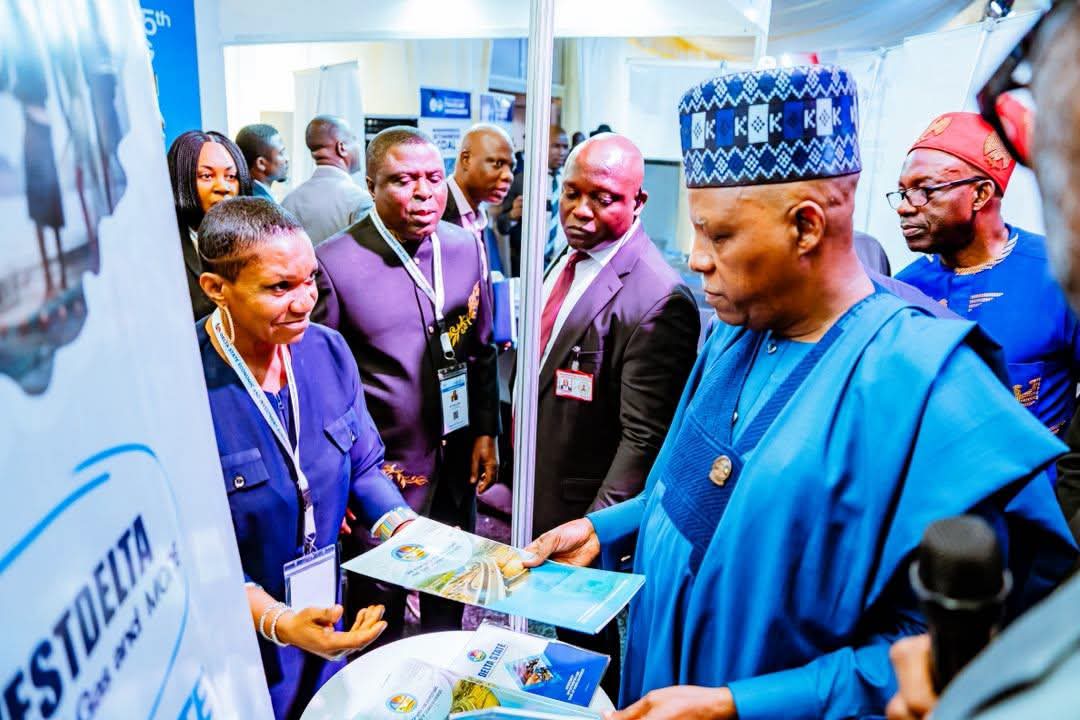
The Vice President, Senator Kashim Shettima, has endorsed the healthy cycle of competition among the 36 states of the federation, saying it is necessary to actualise Nigeria’s quest for prosperity, economic growth, human dignity, and job opportunities.
This, he said, is evident in the quality and ambition of the investment summits organised by the states across the country, emphasising that the nation’s strength lies in the proactive economic awakening of its subnational governments rather than just the government at the centre.
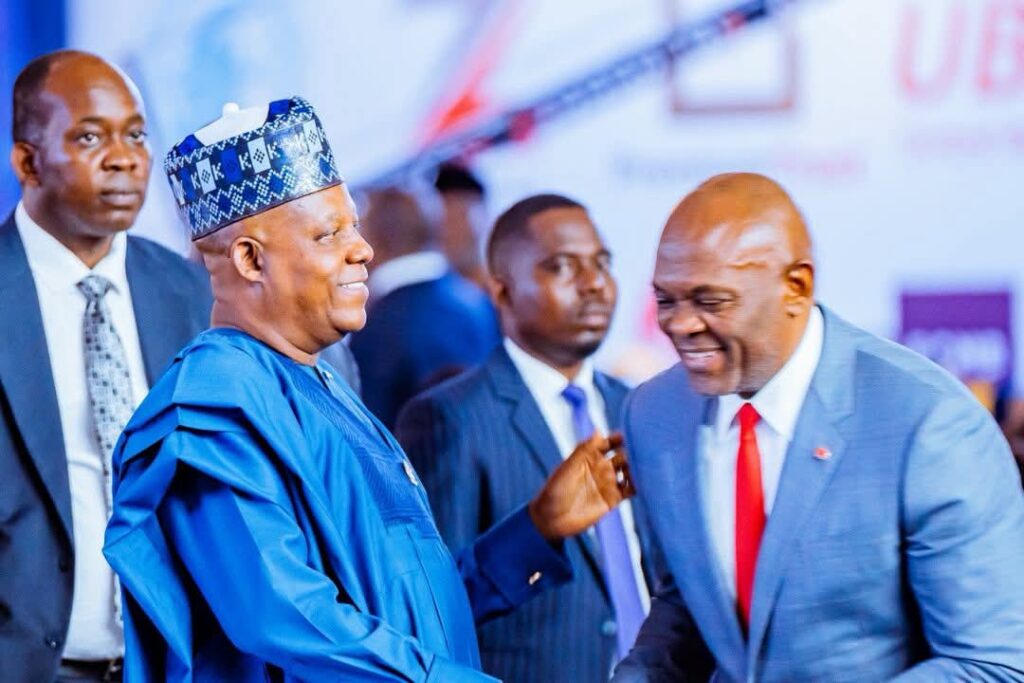
Senator Shettima, who stated this on Monday in Asaba, the Delta State capital, during the state’s Economic and Investment Summit 2026, reiterated the need for states to transition from basic asset documentation to practical execution and job creation.
“The cycle of competition among our states is now evident in the quality and ambition of the investment summits convened across the federation. Every state possesses immense promise, but each must define a trajectory unique to its history, geography, people and comparative advantage.
“This is the race we must welcome: a race that proclaims growth rather than conflict, a race in which the prize is employment, prosperity and human dignity, a race for the future,” he said.

The Vice President stated that the cycle of competition among states as well as the attendant economic and investment summits stems from the strong economic foundation laid by President Bola Ahmed Tinubu, which has increased federal allocations for local development.
His words: “This season of summits owes itself to two developments. The first is the stronger foundation laid by the economic reset of His Excellency, President Bola Ahmed Tinubu, GCFR, which has placed far larger allocations in the hands of state governments to pursue their internal development agendas.
“The second is that no state wishes to be trapped in the dilemma of having money but not knowing how to spend it. For rescuing us from that dilemma, I believe Mr President deserves a round of applause.”

VP Shettima recalled the promise made by the Tinubu administration to place the nation on the path of growth, noting that it is the reason each meeting had become “another platform for turning that promise into enterprise.”
Noting that every host state contributes to the nation’s commercial ambition, he said, “One highlights agriculture, another minerals, technology, ports, energy or tourism. In that healthy rivalry, Nigeria discovers the full measure of her wealth.”
The Vice President acknowledged that Nigeria is currently on the right path in its growth and development trajectory, citing the reports of international ratings agencies like Fitch, S&P and Moody’s as confirmation of what he described as the nation’s “direction of travel.”
He applauded Delta State Governor Sheriff Francis Orohwedor Oborevwori’s “bold leap towards a greater Delta and for creating a platform that matches the ambition of his people,” stressing that the state has advantage that is larger than its oil wealth.
The state’s advantage, the VP noted, lies in its conviction behind the economic and investment summit “that the future of a people cannot be deposited in a single commodity.
“Diversification is an instinct of economic self-preservation and a measure of the quality of leadership. A government that prepares for life beyond oil understands that resources may finance progress, but only ideas, institutions and enterprise can sustain it,” he added, expressing confidence in Governor Oborevwori’s ability to lead “Delta into a new era of productive expansion.”
VP Shettima assured investors, entrepreneurs, financiers, captains of industry, innovators and development partners at the summit that the federal government “stands ready to support credible investments, strengthen enabling institutions and work with the state to remove obstacles to enterprise.”
Earlier, Governor Oborevwori said the summit is the result of the bold step he took last year when he led his cabinet members to China and Brazil to harness investment opportunities for Delta State.
He noted that the summit is designed to connect ideas with capital and maximize the comparative advantages inherent in the state’s socio-economic potential.
He thanked the Vice President for the honour of gracing the summit, lauding his exemplary leadership and the vital role he is playing in advancing the nation’s collective good.
Also speaking, the Governor of Anambra State, Prof. Charles Soludo, expressed solidarity with his Delta State counterpart, agreeing that from a macroeconomic standpoint, Nigeria has stabilized and is now on the rise.
He, however, maintained that Nigeria will require foreign capital to thrive, even as he called for networking among stakeholders, adding that “deals are the real thing” at any economic summit.
On her part, Director-General of the World Trade Organization, Dr. Ngozi Okonjo-Iweala, congratulated the state governor on the developmental strides his administration is making, observing that despite the current global disruptions, there are significant opportunities for Delta State, Nigeria, and the entire African continent to maximize.
The former Finance Minister called for fiscal prudence, lower trade costs, improved execution, and a stronger maintenance culture in the state and Nigeria at large.
For his part, the Minister of Finance and Coordinating Minister of the Economy, Taiwo Oyedele, said states and local governments are now receiving unprecedented revenues due to President Tinubu’s Renewed Hope Agenda, which has helped to establish macroeconomic stability.
He called on states and entrepreneurs to play their respective roles in driving the nation’s shared prosperity.
For his part, Founder and Chairman of Heirs Holdings, Chief Tony Elumelu, congratulated the governor on his efforts to develop the state, saying Delta State is now safe and hospitable for investment.
He promised to partner with the state government to make electricity distribution more accessible and affordable for the people.
For his part, the Guest Speaker, Prof. P.L.O. Lumumba, urged stakeholders to recognize that oil and all of Africa’s assets must be fully utilized.
He called on Africa to move towards a “symbiotic relationship” with foreign jurisdictions rather than “parasitic relationships,” stressing that Africans should be seen as investors, while Brazil, China, Europe, and the United States should be regarded as partners of goodwill.
AT DELTA STATE ECONOMIC AND INVESTMENT SUMMIT 2026:

APC Launches Statewide Medical, Surgical Outreach in Taraba to Celebrate Prof. Nentawe Yilwatda’s 58th Birthday

Nigeria, Israel Renew Security, Trade Alliance as Envoy Bows Out

AT DELTA STATE ECONOMIC AND INVESTMENT SUMMIT 2026:

Roger Federer’s Shock as DNA Results Reveal Myla and Charlene Are Not His Biological Children

THE PLIGHT OF FARIDA

FAILED COUP IN BURKINA FASO: HOW TRAORÉ NARROWLY ESCAPED ASSASSINATION PLOT AMID FOREIGN INTERFERENCE CLAIMS
-
 News2 years ago
Roger Federer’s Shock as DNA Results Reveal Myla and Charlene Are Not His Biological Children
-
Opinions4 years ago
THE PLIGHT OF FARIDA
-
 News1 year ago
FAILED COUP IN BURKINA FASO: HOW TRAORÉ NARROWLY ESCAPED ASSASSINATION PLOT AMID FOREIGN INTERFERENCE CLAIMS
-

 News2 years ago
EYN: Rev. Billi, Distortion of History, and The Living Tamarind Tree
-
 Opinions5 years ago
POLICE CHARGE ROOMS, A MINTING PRESS
-

 ACADEMICS2 years ago
A History of Biu” (2015) and The Lingering Bura-Pabir Question (1)
-

 Columns2 years ago
Army University Biu: There is certain interest, but certainly not from Borno.
-

 Politics1 year ago
2027: Why Hon. Midala Balami Must Go, as Youths in Hawul and Asikira/Uba Federal Constituency Reject ₦500,000 as Sallah Gift
