
News
About 170,0000 Complaints of Human Rights Violations Received Nationwide in January- NHRC


About 170,0000 Complaints of Human Rights Violations Received Nationwide in January- NHRC
By: Michael Mike
About 170,000 complaints of human rights violations were received across the country, the National Human Rights Commission has revealed.
Speaking at the presentation of the January 2025 Human Rights Situation Dashboard on Friday, the Executive Secretary of NHRC, Dr. Tony Ojukwu said though this was a decrease from the figure in December, 2024 but however much higher than what was recorded in January 2024.
He said: This month (January) we received 169,850 complaints from our 38 offices, a stark reminder that human rights violations persist in diverse forms and at an alarming scale. Each of these complaints represents a person, a family, or a community seeking justice, accountability, and relief.
He explained that the 169,850 complaints represent over 100% decrease from
December 2024 complaints and over 1000% increase compared to January 2024.
He noted that: “Our duty is to ensure that these voices are not just heard, but that tangible action follows. The complaints and our observatory show us that the human rights ecosystem continues to be
challenging. In the North-East, we are seeing the resurgence of Boko Haram and in the North West banditry and insurgency continue to challenge our communities. Violence and criminalities in the South East are assuming alarming dimensions impacting on human rights.
“While our efforts have led to significant interventions, the persistence of these violations raises critical questions: Are our systems strong enough to prevent recurring abuses? Are we bridging the gaps between violations and meaningful remedies? Are we holding perpetrators accountable while protecting survivors from further harm? What is our policy for the protection of
civilians and mitigation of harm during conflict?”
Ojukwu added that: “As we engage with this month’s trends, let us focus on strengthening preventive measures,
closing protection gaps, and enhancing collaboration with state and non-state actors to reinforce human rights protections at every level. Our responsibility is not just to document human rights violations but to drive real, lasting change in governance, security, and social justice. It is our
fervent hope that this dashboard will ignite the required change to build the Nigeria of our dreams.
“Our dear partners, colleagues and gentlemen of the media, I will like to reiterate that 2025 is a milestone year for the National Human Rights Commission as it marks its 30th anniversary of its
establishment, having been established in 1995. We have witnessed over the last three
decades, a human rights trajectory which indicates progress even though at a slow pace. But we must not give up as governments as national and state level continue to adopt legal, policy and institutional frameworks to achieve human rights for all.”
He insisted that: “The revival of the local government National Human Rights Commission system through their new autonomy is a game changer. It is pertinent that the role of the ‘Office of the Citizen’ should not be jettisoned. For every successful society, the role of the civil society to hold government to account and the role of the media to ‘torchlight’ governance and shine light on our leaders can never be over-emphasised.”
About 170,0000 Complaints of Human Rights Violations Received Nationwide in January- NHRC


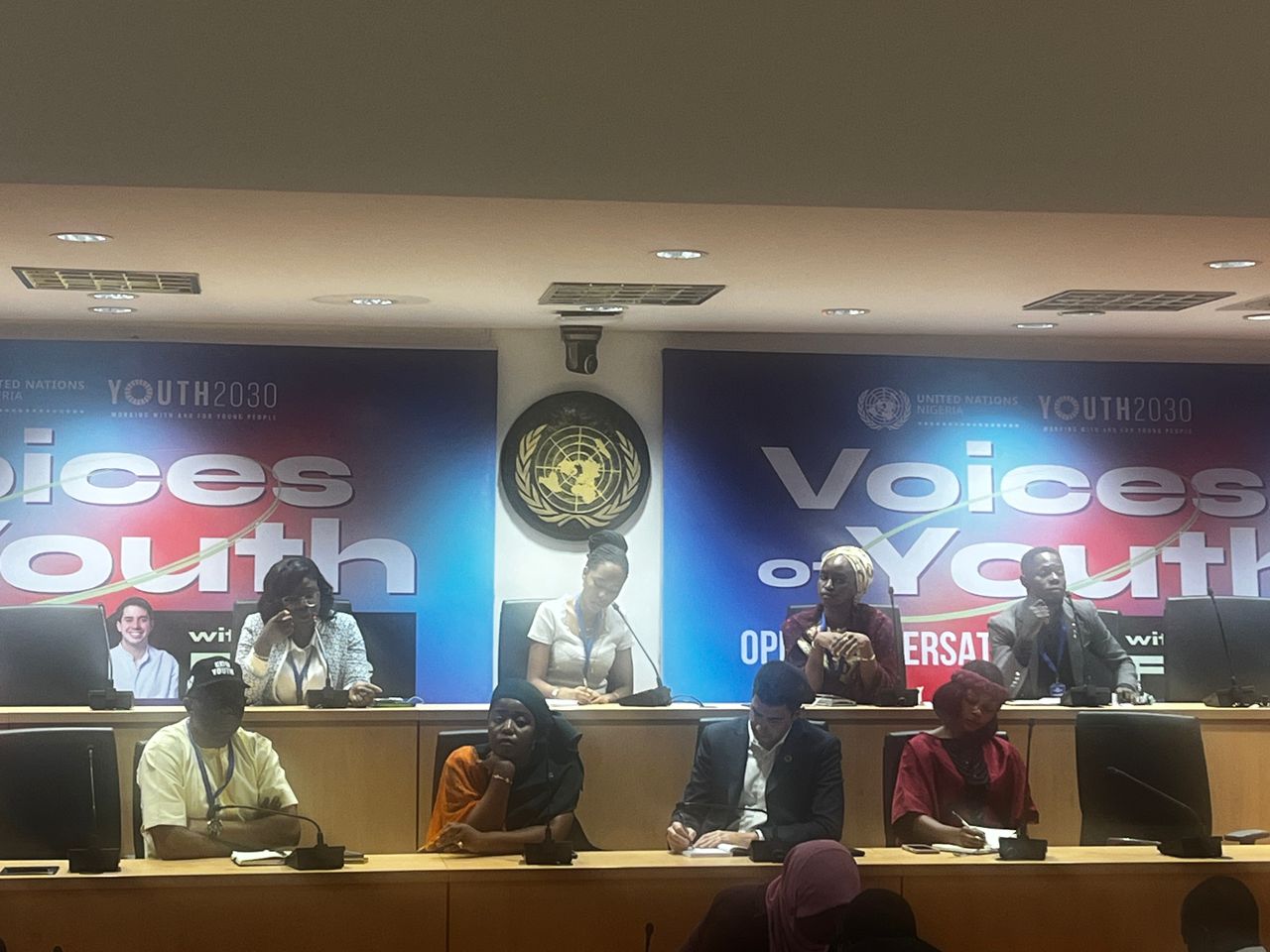
Youth Exclusion Could Derail Development Goals, UN Issues Urgent Warning
By: Michael Mike
A senior United Nations official has issued a strong warning that governments and institutions risk deepening instability and policy failure if they continue to sideline young people, insisting that meaningful youth inclusion is now a critical condition for peace, stability, and sustainable development.
Speaking in Abuja at an interactive session with youth, the United Nations Assistant Secretary General for Youth Affairs and Head of UN Youth Affairs, who is currently on an official visit to Nigeria, Mr. Felipe Paullier, said global institutions are failing to evolve at the pace required to match today’s rapidly changing realities, particularly the demographic shift driven by an unprecedented youth population.
The event, themed “Open-Door Youth Engagement,” convened youth-led organizations, young women’s groups, youth peacebuilders, innovators, students, young professionals, persons with disabilities, and underserved youth communities for an interactive dialogue with representatives of the Government and the United Nations.
According to Paullier, young people now represent the largest, most educated, and most interconnected generation in history, especially in developing countries like Nigeria. However, this demographic advantage is being undermined by persistent gaps in access to quality education and limited opportunities for meaningful participation in governance.
He noted that: “Engaging young people in policy is not just an option—it is a condition if we want to achieve peace, stability, and effective solutions.”
He said the UN acknowledged a growing disconnect between policy formulation and real-world impact, describing the process of closing this gap as complex but urgent.
He admitted that while global frameworks exist, including the United Nations Sustainable Development Goals (SDGs) and youth-focused strategies, implementation at the national level remains inconsistent.
LHe emphasized that governments must move beyond rhetoric and adopt clear, actionable commitments that integrate youth voices into decision-making processes.
He said central to this effort is the UN’s broader development roadmap, which includes commitments to embed youth participation not only at global levels but also within country-level governance and policy execution.
Addressing concerns over the sustainability of policies, he warned that many initiatives fail because they are not designed to endure or adapt over time. The solution, the official argued, lies in institutionalizing youth engagement rather than treating it as a temporary or symbolic exercise.
He noted that nearly half of the world’s population under 30, and significantly higher percentages across Africa, the stakes are even higher for countries on African continent.
He said: “Youth engagement should not be seen as a project—it must be embedded at the heart of governance, financing, and development planning.”
The UN also called for increased investment in youth-driven innovation, noting that young Nigerians are already transforming sectors such as agriculture, technology, and the creative economy through ingenuity and entrepreneurship.
Youth Exclusion Could Derail Development Goals, UN Issues Urgent Warning
News
Nigeria’s Skills Crisis Deepens as Government, Experts Push Urgent Overhaul of Technical Education

Nigeria’s Skills Crisis Deepens as Government, Experts Push Urgent Overhaul of Technical Education
By: Michael Mike
Growing concerns over Nigeria’s widening skills gap took centre stage in Abuja on Wednesday, as education stakeholders warned that the country risks undermining its industrial ambitions without a radical overhaul of its technical training system.
At a high-level session of the BEAR III Programme convened by United Nations Educational, Scientific and Cultural Organisation (UNESCO), the Federal Ministry of Education Nigeria acknowledged that current training models are failing to keep pace with the rapidly evolving demands of industry—particularly in agro-processing, a sector seen as critical to job creation and economic diversification.
Director of Technology and Science Education, Mrs. Patricia Ogungbemi,, delivered a blunt assessment: Nigeria is producing graduates who are increasingly disconnected from the realities of modern workplaces.
While investments in infrastructure and technology have grown, she warned that the human capacity needed to drive those systems remains weak.
“There is a dangerous mismatch between what is taught and what is required,” she said. “Machines are evolving, industries are advancing, but the workforce is not keeping up at the same speed.”
Ogungbemi pointed to emerging trends such as automation, smart packaging, and sustainable production systems, noting that many Technical and Vocational Education and Training (TVET) institutions have yet to integrate these realities into their curricula.
She described the ongoing Labour Market Analysis (LMA) as a critical diagnostic tool, but stressed that data alone would not solve the problem without decisive policy action and sustained funding.
“What we are confronting is not just a training issue—it is a structural challenge that affects productivity, competitiveness, and national growth,” she added.
The warning comes amid rising youth unemployment and growing frustration among employers who say graduates often lack practical, job-ready skills.
Stakeholders at the event argued that unless Nigeria urgently retools its education system to prioritise hands-on, industry-driven learning, sectors like agro-processing—despite their vast potential—may struggle to absorb the millions entering the labour market each year.
Kano State Commissioner for Education, Ali Makoda, reinforced the urgency, describing work-based learning as a “non-negotiable pathway” to addressing the crisis.
According to him, states are beginning to recognise that traditional classroom models alone cannot solve unemployment challenges.
“We must embed learning within the workplace,” he said. “The future of education is not just in classrooms, but in factories, farms, and production lines.”
Makoda said Kano State is scaling up partnerships with industry players to ensure students gain real-world experience before graduation, aligning training with both national development goals and global standards.
Despite these commitments, participants acknowledged persistent obstacles, including underfunded institutions, outdated equipment, and weak collaboration between academia and industry.
They also stressed the need for stronger private sector involvement, arguing that employers must play a more active role in shaping curricula and offering apprenticeship opportunities.
With support from international partners, including the Government of the Republic of Korea, the BEAR III initiative is expected to drive reforms in skills development, particularly in agriculture-linked industries.
However, observers said the success of such programmes will ultimately depend on Nigeria’s willingness to translate policy discussions into concrete, system-wide change.
As deliberations continue, one message remains clear: without a skilled workforce aligned to industry needs, Nigeria’s economic aspirations may remain out of reach.
Nigeria’s Skills Crisis Deepens as Government, Experts Push Urgent Overhaul of Technical Education
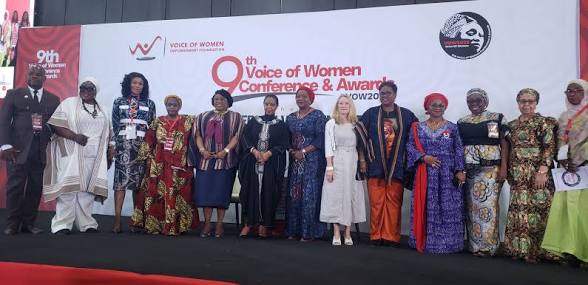
FG Vows to Amplify Women’s Voices, Push for Gender Equality in Leadership
By: Michael Mike
The Federal Government has renewed its pledge to safeguard women’s and girls’ rights, promising to expand their influence in Nigeria’s leadership and development sectors.
Speaking at the annual Renewed Women’s Voice and Leadership (RWVL) planning meeting, organized by ActionAid Nigeria in partnership with Global Affairs Canada, Minister of Women Affairs, Imaan Sulaiman-Ibrahim, emphasized that the government will intensify collaborative efforts to ensure women gain greater access to leadership roles, productive assets, and socio-economic opportunities.
Represented by Ebele Obiefuna, the Minister lauded ActionAid’s role in strengthening women’s organizations and driving empowerment programs nationwide. “We value this partnership and reaffirm our commitment to initiatives that create lasting impact for women across Nigeria,” she said.
Highlighting government support, Minister of Budget and Economic Planning Abubakar Bagudu, represented by Mrs. Tonia Okangbe, assured participants that ministries would back programs advancing women’s leadership and rights.
ActionAid Nigeria Country Director, Dr. Andrew Mamedu, revealed that RWVL is entering its second phase, building on successes that have strengthened women’s political participation, advocacy, and socio-economic influence. He stressed that the initiative is designed to ensure that women’s voices are not only heard but shape decision-making processes at all levels.
“This is about more than programmes,” Mamedu said. “It’s about creating a future where women’s leadership is visible, respected, and transformative for communities across Nigeria.”
The meeting signals a renewed focus on closing gender gaps in leadership, empowering women economically, and ensuring that their contributions to governance and society are recognized and amplified.
FG Vows to Amplify Women’s Voices, Push for Gender Equality in Leadership

Youth Exclusion Could Derail Development Goals, UN Issues Urgent Warning

West Africa’s Child Protection Laws Under Scrutiny as ECOWAS Lawmakers Confront “Implementation Failure”

Nigeria’s Skills Crisis Deepens as Government, Experts Push Urgent Overhaul of Technical Education

Roger Federer’s Shock as DNA Results Reveal Myla and Charlene Are Not His Biological Children

THE PLIGHT OF FARIDA

FAILED COUP IN BURKINA FASO: HOW TRAORÉ NARROWLY ESCAPED ASSASSINATION PLOT AMID FOREIGN INTERFERENCE CLAIMS
-
 News2 years ago
Roger Federer’s Shock as DNA Results Reveal Myla and Charlene Are Not His Biological Children
-
Opinions4 years ago
THE PLIGHT OF FARIDA
-
 News12 months ago
FAILED COUP IN BURKINA FASO: HOW TRAORÉ NARROWLY ESCAPED ASSASSINATION PLOT AMID FOREIGN INTERFERENCE CLAIMS
-

 News2 years ago
EYN: Rev. Billi, Distortion of History, and The Living Tamarind Tree
-
 Opinions4 years ago
POLICE CHARGE ROOMS, A MINTING PRESS
-

 ACADEMICS2 years ago
A History of Biu” (2015) and The Lingering Bura-Pabir Question (1)
-

 Columns2 years ago
Army University Biu: There is certain interest, but certainly not from Borno.
-

 Opinions2 years ago
Tinubu,Shettima: The epidemic of economic, insecurity in Nigeria
