
News
Act for Humanity: The Urgent Call of World Humanitarian Day 2024

Act for Humanity: The Urgent Call of World Humanitarian Day 2024
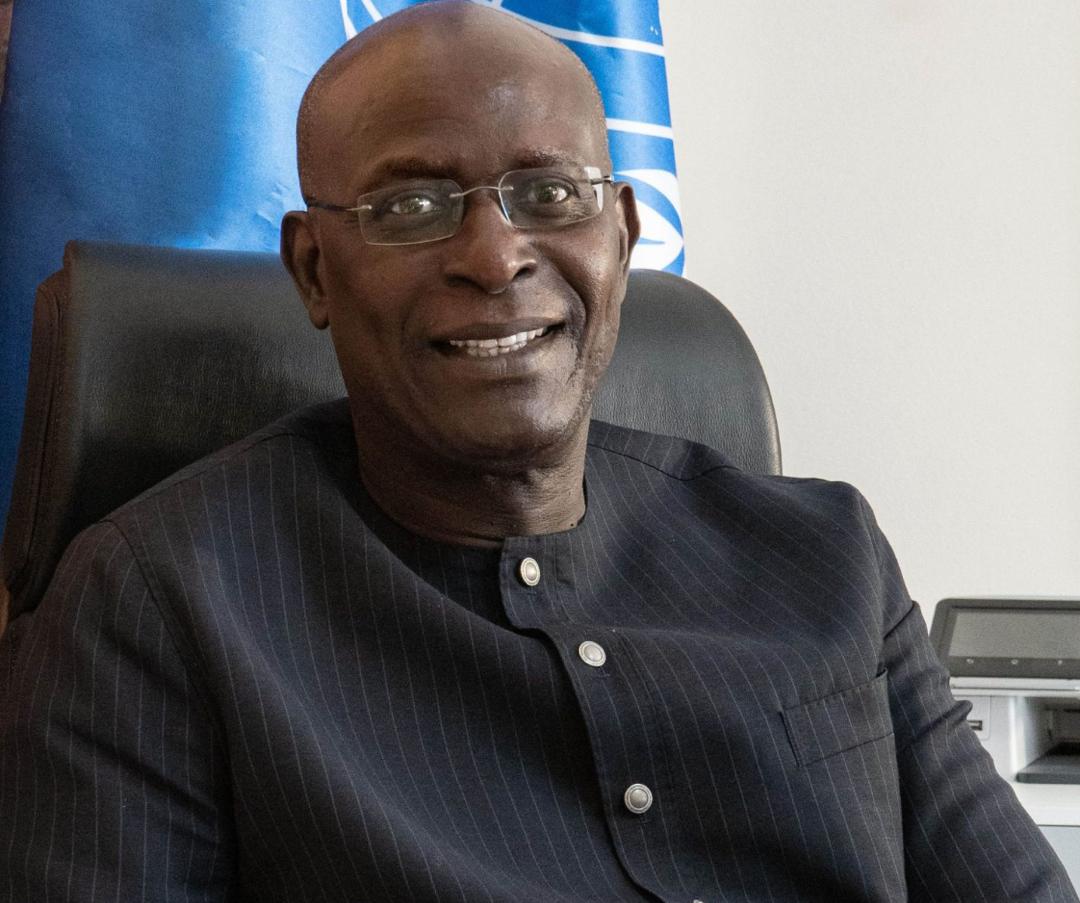
By: Mohamed Malick Fall
Every year, World Humanitarian Day (WHD) serves as a poignant reminder of the critical importance of humanitarian efforts globally. This year, the theme #ActForHumanity emphasizes the collective responsibility we all share in protecting civilians and the humanitarian workers who serve them in conflicts and other crises.
As we observe this day on 19 August, it is crucial to reflect on the profound implications of ongoing conflicts, the flagrant violations of international humanitarian law (IHL), and the dire need for global leaders to take decisive action and say enough is enough.
Conflicts around the world, from Gaza to Sudan, continue to wreak havoc on civilians. Climate change is also increasing humanitarian needs.
In north-east Nigeria, the prolonged conflict has resulted in a severe humanitarian crisis, displacing millions, disrupting livelihoods and compounding already alarming levels of food insecurity and malnutrition.
In 2024 alone, 8.1 million people need humanitarian assistance in Borno, Adamawa and Yobe (BAY) states in north-east Nigeria. This includes 2.1 million internally displaced persons (IDPs) and 4.1 million people in host communities. Humanitarian partners together with the Government of Nigeria aim to reach 4.4 million of these people with lifesaving food, water, shelter and other emergency assistance.
In Borno State, Anna Monday, a mother of four, endures the harsh realities of displacement. Forced from her home, she now lives in a temporary learning centre at the reception centre in Pulka, a place designed for short-term accommodation but now a long-term refuge for many. Up to 30 women sleep in the shelter while the men sleep outside, highlighting the lack of adequate shelter.
Amina Buba, a mother of four, was displaced from her village in Adamawa State due to violent attacks by insurgent groups. Her home was burnt, forcing her family to flee with only the clothes on their backs. In the IDP camp, Amina struggles to find enough food and clean water for her children.
Fatima Mohammadu, a young girl from Yobe State, was separated from her family during a raid on her village. She was found by humanitarian workers and brought to an IDP camp. The trauma of separation and the loss of her loved ones have left deep emotional scars. In the camp, she faces challenges such as lack of access to education and inadequate nutrition.
Women, men, boys and girls across Nigeria are also affected due to crises linked to intercommunal violence, the climate crisis or general hardships. Women and children, often suffer the worst effects enduring widespread violations of their rights, including sexual violence.
A combination of insecurity, limited access to affected people, and inadequate funding and resources are complicating the delivery of essential services, leaving millions of people in humanitarian need.
In north-east Nigeria, attacks on civilians and humanitarian workers have become disturbingly common blatantly violating international humanitarian law.
On 29 June, for instance, numerous civilians died, and dozens were injured in multiple suicide attacks in Gwoza, Borno. A month later, many families lost their loved ones in yet another suicide attack in Konduga, also in Borno. These incidents underscore the persistent threat to civilian lives in conflict, and highlight the urgent need for enhanced protection measures, including stricter adherence to international norms and the need for greater accountability for violations.
Every day, humanitarian workers, from Government, non-governmental organizations, the United Nations (UN), civil society, Nigerian and international staff go out of their way to save lives and to bring people back to their feet. Host communities accommodate people who are internally displaced despite not having much to share because of their humanity.
World Humanitarian Day is more relevant than ever. The world has never seen greater humanitarian need. The number of people who are suffering because of conflict and other humanitarian crises is staggering. There has never been a more urgent need to protect civilians, and to recognize the critical role of humanitarian workers.
Global leaders and parties to conflict have a pivotal role to play in resolving conflicts and protecting humanitarian workers. They must not only condemn violations of international humanitarian law, but also take concrete steps to hold those responsible for violations accountable.
Thanks to funding from donors, humanitarians are reaching millions of people each year with lifesaving assistance. But they need robust support to continue their vital work in support of Government efforts. This includes financial resources, humanitarian access, and political goodwill.
Today, only a quarter of the resources needed to address urgent humanitarian needs globally and in north-east Nigeria has been forthcoming. Without these resources we will be unable to support Anna, Amina, and Fatima to survive and rebuild their lives.
Beyond humanitarian interventions, development-related activities are key as humanitarian needs also stem from a lack of basic services, a lack of livelihoods, and poor access to employment for young people.
The theme #ActForHumanity is not just a slogan; it is a call to action. It implores each one of us to stand up for those who cannot stand up for themselves, to speak out against injustices, and to work towards a world where humanitarian principles are respected, and lives are protected.
On this World Humanitarian Day, let us all pledge to act for humanity, for today and for the future.
I trust that you will stand with me in solidarity with people affected by conflict and disaster and the brave men and women who come to their aid. They should not be the target of violence but must be protected at all cost.
Mohamed Malick Fall is the UN Resident and Humanitarian Coordinator in Nigeria.
Act for Humanity: The Urgent Call of World Humanitarian Day 2024


Zulum moves to resettle Konduga IDPs in four months
By: Bodunrin Kayode
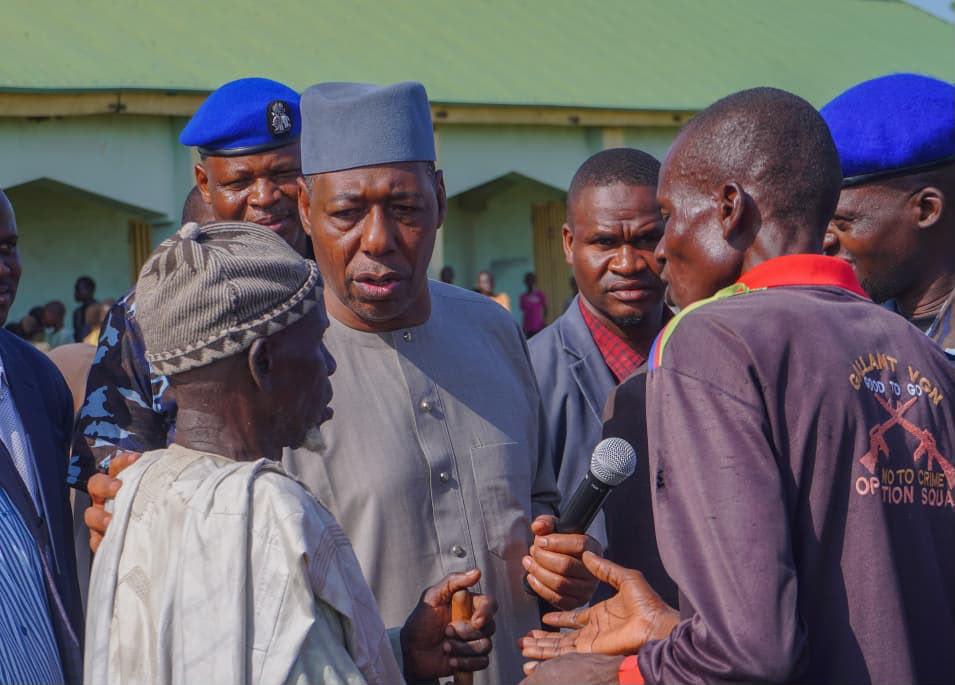
Borno State Governor, Professor Babagana Zulum, has announced the planned closure of Konduga internally displaced persons (IDP) camp within the next four months.
This follows the successful closure of Bama IDP camp, the largest displacement facility outside the state capital and the planned shutdown of Gwoza camp.
Speaking to newsmen during a recent visit to the camp, Zulum, however, stressed that the relocation is entirely voluntary and no one will be forced to resettle where they are not willing to go.
The Governor has consistently maintained that returning to ancestral homes or other areas of choice must be based on the displaced persons’ expressed willingness.
He said, “We are not carrying out the resettlement process immediately; we are here to discuss with the IDPs so that in the next four months they will be resettled in a dignified manner. I believe you heard from the IDPs that they are willing to return home. Return shall be voluntary, not by force”.
During his visit to Konduga, Governor Zulum inspected resettlement houses currently under construction in Amarwa and later proceeded to Maiwa in Mafa LGA. The Amarwa resettlement city, for which the governor had earlier laid the foundation, is being built to shelter displaced persons living in camps.
In Maiwa, the state government is constructing massive housing units as part of the ongoing resettlement programme. The resettlement houses are equipped with public facilities like a primary healthcare centre, a water facility, and other basic amenities.
Zulum was accompanied by the member of the House of Representatives, Engr Bukar Talba; the Member of the House of Assembly for Konduga, Hon. Bukar Modu; the Commissioner for Local Government and Emirate Affairs, Sugun Mai Mele; and other senior government officials.
Zulum moves to resettle Konduga IDPs in four months
Zulum Announces Closure of Konduga IDP Camp as Borno Accelerates Resettlement Drive
…Inspects ongoing housing projects in Amarwa, Maiwa
By: Michael Mike
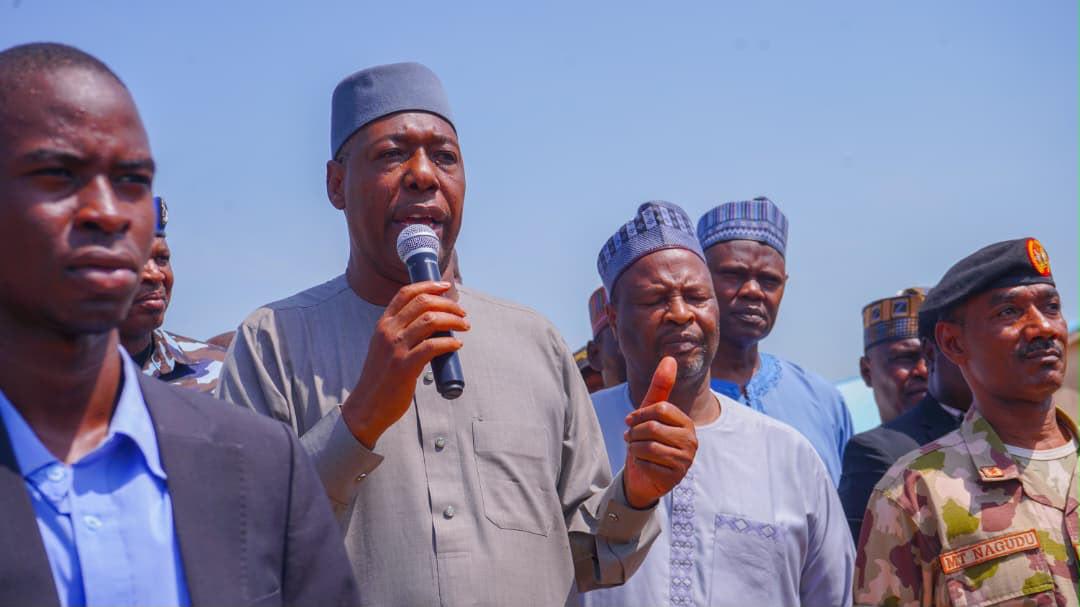
Borno State Governor, Professor Babagana Zulum, has announced plans to close the Internally Displaced Persons (IDP) camp in Konduga Local Government Area as part of efforts to accelerate the state’s ongoing resettlement programme.
The move comes shortly after the successful closure of the Bama IDP camp, which was the largest displacement camp outside Maiduguri, as well as preparations for the shutdown of the Gwoza IDP camp.
Governor Zulum, who disclosed the plan during a visit to Konduga, said the resettlement of displaced persons would be carried out in a dignified and voluntary manner, stressing that no resident would be forced to return to any location against their will.
The governor said the government would engage with the displaced communities before the process begins, noting that the return of IDPs must be based on their readiness and willingness.
“We are not carrying out the resettlement process immediately; we are here to discuss with the IDPs so that in the next four months they will be resettled in a dignified manner. I believe you heard from the IDPs that they are willing to return home. Return shall be voluntary, not by force,” Zulum said.
During the visit, the governor inspected ongoing construction work at the Amarwa resettlement city, where housing units are being developed for displaced families. The project, which was earlier inaugurated by the governor, is designed to provide a permanent settlement option for residents currently living in camps.
Governor Zulum also visited Maiwa in Mafa Local Government Area, where the state government is constructing additional housing units under its resettlement initiative.
The housing projects include essential social infrastructure such as primary healthcare centres, water facilities and other basic amenities aimed at ensuring sustainable living conditions for returnees.
The Borno State Government has continued to prioritise the rebuilding of communities affected by years of insurgency, with the closure of IDP camps forming part of a broader strategy to restore normalcy, rebuild livelihoods and support the safe return of displaced residents.
Governor Zulum was accompanied on the inspection tour by the member representing Bama/Ngala/Kala-Balge Federal Constituency in the House of Representatives, Engr. Bukar Talba; the Konduga State House of Assembly member, Hon. Bukar Modu; Commissioner for Local Government and Emirate Affairs, Sugun Mai Mele; and other senior government officials.
Zulum Announces Closure of Konduga IDP Camp as Borno Accelerates Resettlement Drive

Troops Arrest Two Suspected Terrorist Informants, Cattle Rustlers in Yobe Market
By Zagazola Makama
Troops of Operation HADIN KAI have arrested two suspected terrorist informants and cattle rustlers during a joint operation with local hunters at the Buni Yadi Friday Market in Gujba Local Government Area of Yobe State.
Military sources told Zagazola Makama that the operation was carried out at about 2:00 p.m. on July 24 by troops of 27 Task Force Brigade in conjunction with members of a hunters’ group acting on intelligence.
The suspects were identified as Muhammadu Sani, 32, from Mainahari in Biu Local Government Area of Borno State, and Buba Umaru, 40, from Garin Jauro in Fune Local Government Area of Yobe State.
According to the sources, the operation turned violent when one of the suspects attacked a member of the hunters’ group with a cutlass while resisting arrest.
The hunter sustained severe head injuries during the attack and was immediately attended to, while the troops overpowered and apprehended the suspects.
Preliminary investigations revealed that Muhammadu Sani confessed to serving as a logistics supplier and informant for Boko Haram terrorists for nearly seven years.
He also admitted to leading terrorists to the residences of two local residents, where the insurgents successfully rustled cattle during separate attacks.
Military sources said the confession is expected to assist ongoing intelligence efforts aimed at dismantling terrorist support networks operating within communities across the North-East.
The two suspects are currently in the custody of 27 Task Force Brigade and are undergoing further investigation to determine the extent of their involvement in terrorist logistics, intelligence gathering and cattle rustling activities.
Security officials said the arrest underscores the critical role played by local intelligence and collaboration between troops and community-based security groups in identifying individuals who provide logistical support and operational information to terrorist elements.
They added that troops of Operation HADIN KAI will continue to target terrorist collaborators, informants and logistics networks as part of ongoing efforts to deny insurgents the local support structures that sustain their operations across the North-East.
Troops Arrest Two Suspected Terrorist Informants, Cattle Rustlers in Yobe Market

Zulum moves to resettle Konduga IDPs in four months

My Binoculars: What has Remi Tinubu got to do with Akara, Kulikuli, Boli, Dodo and Ekpa

Zulum Announces Closure of Konduga IDP Camp as Borno Accelerates Resettlement Drive

Roger Federer’s Shock as DNA Results Reveal Myla and Charlene Are Not His Biological Children

THE PLIGHT OF FARIDA

FAILED COUP IN BURKINA FASO: HOW TRAORÉ NARROWLY ESCAPED ASSASSINATION PLOT AMID FOREIGN INTERFERENCE CLAIMS
-
 News2 years ago
Roger Federer’s Shock as DNA Results Reveal Myla and Charlene Are Not His Biological Children
-
Opinions4 years ago
THE PLIGHT OF FARIDA
-
 News1 year ago
FAILED COUP IN BURKINA FASO: HOW TRAORÉ NARROWLY ESCAPED ASSASSINATION PLOT AMID FOREIGN INTERFERENCE CLAIMS
-

 News2 years ago
EYN: Rev. Billi, Distortion of History, and The Living Tamarind Tree
-
 Opinions5 years ago
POLICE CHARGE ROOMS, A MINTING PRESS
-

 ACADEMICS2 years ago
A History of Biu” (2015) and The Lingering Bura-Pabir Question (1)
-

 Columns2 years ago
Army University Biu: There is certain interest, but certainly not from Borno.
-

 Politics1 year ago
2027: Why Hon. Midala Balami Must Go, as Youths in Hawul and Asikira/Uba Federal Constituency Reject ₦500,000 as Sallah Gift
