
National News
ActionAid Study Shows Nigeria, Five Other African Countries Have Workers Struggling for Essentials

ActionAid Study Shows Nigeria, Five Other African Countries Have Workers Struggling for Essentials
By: Michael Mike
A new study by ActionAid has revealed that deep cuts to public spending in education and health across six African countries including Nigeria have seen workers struggling to afford essentials like food and resulted in overcrowded classrooms and failing healthcare.
Published on Tuesday, the Human Cost of Public Sector Cuts in Africa surveyed over 600 healthcare workers, teachers and community members in Ethiopia, Ghana, Kenya, Liberia, Malawi, and Nigeria. The study highlights that teachers’ salaries have plummeted by between 10% and 50% over the past 5 years, with an alarming 97% of health workers reporting insufficient wages for basic needs like rent, food and household expenses.
The study painted a bleak picture of failing public systems – especially for women and girls. It showed how governments’ inadequate investments in education and health sectors have left workers struggling to make ends meet and communities failing to access quality public services.
ActionAid said the International Monetary Fund (IMF) is to blame for its advice to governments to cut spending on public services in order to service foreign debts. With the accelerating debt crisis in the Global South, over three-quarters of all low-income countries in the world are spending more on debt servicing than they spend
on health.
The Country Director of ActionAid Nigeria Andrew Mamedu, said: “The debt crisis and the IMF’s insistence on cuts to public services in favour of foreign debt repayments have severely hindered investments in healthcare and education across Africa. For example, in 2024,
Nigeria allocated only 4% of its national revenue to health, while a staggering 20.1% went toward repaying foreign debt.
“This is not only absurd but unsustainable in the long run. The time for change is now. Governments must shift from unsustainable economic policies based on cuts and debt repayments to those that prioritise human
rights. The lives of millions depend on it.”
Governance Specialist, ActionAid Nigeria, Judith Gbagidi, said: “Behind every budget cut is a woman frontline worker picking up the pieces by teaching without materials,
healing without medicine, and caring without rest. The IMF’s austerity playbook is not just a financial strategy; it’s a human rights failure. We urgently need to mobilise political will to prioritise people over
payments and restore dignity to Africa’s public workforce.”
The research highlights how insufficient budgets in the healthcare system have led to chronic shortages and a decline in service quality. Community members in all six countries revealed deep dissatisfaction with the public healthcare system and noted rising costs of services, shortage of healthcare workers, and poor infrastructure.
What’s also clear is the disproportionate impact on women, as Maria, a healthcare worker from Kenya, explained:
“In the past month, I have witnessed four women giving birth at home due to unaffordable hospital fees. The community is forced to seek vaccines and immunisation in private hospitals since they are not
available in public hospitals. Our [local] health services are limited in terms of catering for pregnant and lactating women, as a result, most women must seek services in Mombasa, which is expensive.”
Medicines for malaria are now ten times more expensive at private facilities. Long travel distances, rising fees and a dwindling medical workforce are leaving millions without healthcare as Marym, a community member from Muyakela Kebele, Ethiopia, reveals: “Now malaria is an epidemic in our area [because medication is now beyond the reach of many]. Five years ago, we could buy [antimalarial medication] for 50 birrs (USD 0.4), but now it costs more than 500 birr (USD 4) in private health centres.”
Rose, a community member from Taita Taveta in Kenya, said: “We are referred for diagnosis tests 40 km away from the [local] dispensary. Doctor’s consultation has [doubled] at the referral hospital, making it difficult for the community to access services.”
In education, the toll is equally severe. Budget cuts have resulted in failing public education systems crippled by rising costs, a dire shortage of learning materials and overcrowded classrooms. Some 87% of teachers said they lacked basic classroom materials, with 73% shelling out for equipment themselves. Meanwhile, teachers’ incomes are falling: 84% of teachers surveyed reported a drop in real income of between 10 and 50% over the
past five years. “I now believe teaching is the least valued profession. With over 200 students in my class and inadequate
teaching and learning materials, delivering quality education is nearly impossible. Monitoring individual performance and supporting struggling students has become a daunting task,” said Maluwa, a primary
school teacher in Malawi’s Rumphi District.
Four of the six countries covered by the research are spending less than the recommended one-fifth of the
national budget on education and exceeds the ratio of one teacher per 30 pupils, as reported by the UNESCO Institute for Statistics.
Kasor, a teacher from Liberia, with 80 pupils in his class, said: “The ministry doesn’t provide teaching aids or textbooks. I feel stressed and hopeless. We need better infrastructure and resources to cope with these changes.” On a personal level, due to reduced income, Kasor said, “I often struggle to put enough food on the table.”
The research shows that the consequences of these policies are multi-faceted and far-reaching. Workers are stretched beyond their limits and communities’ fundamental rights to healthcare and education are severely impacted. Governments and the IMF must work to reverse this damaging trend of cuts to essential services
while prioritising debt repayment.
the Global Economic Justice Lead at ActionAid International, Roos Saalbrink, said: “The debt crisis and drive for austerity is amplified for countries in the Global South and low-income countries, especially due to an unfair global economic system held in place by outdated institutions, such
as the IMF.
“This means the burden of debt falls on those most marginalised – once again. This must end. She added: “It’s crucial that governments agree on new international rules on global economic governance that shift important decisions away from the IMF and towards democratic institutions, such as the United Nations, to shape a fair and inclusive global economy for all.”
ActionAid called on education and health ministries to work with finance ministries to allocate sufficient resources to meet global benchmarks, ensure fair remuneration for workers, and improve infrastructure to
deliver quality services.
It said additionally, governments should explore fair and just ways of raising income, such as progressive taxation, rather than imposing spending cuts to essential public services.
ActionAid Study Shows Nigeria, Five Other African Countries Have Workers Struggling for Essentials


NHRC Raises Alarm Over Child Abuse, Custodial Torture, Civic Freedom Violations
By: Michael Mike
The National Human Rights Commission (NHRC) has called for stronger safeguards against violence and exploitation targeting women and children, tighter oversight of detention facilities and increased protection of civic freedoms ahead of Nigeria’s 2027 general elections.
The Executive Secretary of the Commission, Dr Tony Ojukwu, said persistent cases of sexual and gender-based violence, child abuse, discrimination and other forms of exploitation required more effective prevention mechanisms, thorough investigations and improved access to justice.
Ojukwu, who spoke in Abuja during the presentation of the Commission’s September 2026 Human Rights Situation Dashboard, urged government authorities to translate ongoing reforms into practical protection for vulnerable Nigerians, particularly children in underserved communities.
He welcomed the September stakeholders’ engagement on the review of the Child Rights Act, 2003, describing it as an opportunity to address gaps in the country’s child protection framework and strengthen institutional responses to violence and exploitation.
He, however, stressed that reviewing the law would not be sufficient without adequate funding, stronger institutions and effective implementation capable of delivering tangible protection to children.
The NHRC chief called on relevant authorities to ensure that the reform process produced practical measures to prevent abuse, protect vulnerable children and improve access to justice for victims.
On the treatment of detainees, Ojukwu emphasised the importance of independent monitoring of custodial facilities, warning that effective human rights protection required sustained oversight of institutions responsible for enforcing the law.
He disclosed that the Commission, through its National Preventive Mechanism, validated its 2025–2026 annual report on September 25, bringing together stakeholders to examine findings and recommendations on preventing torture and other forms of ill-treatment in places of detention.
According to him, the exercise was aimed at identifying systemic weaknesses that expose detainees to abuse and strengthening measures to prevent violations.
He said independent monitoring of detention facilities remained critical to accountability within the justice and law enforcement systems, particularly in ensuring that people deprived of their liberty continued to enjoy the protection of the law.
The Commission also stepped up efforts to monitor threats to civic freedoms as political activities gather momentum ahead of the 2027 general elections.
Ojukwu disclosed that the NHRC, in collaboration with the Nigeria Network of NGOs and with support from Heinrich Böll Stiftung Nigeria and the Office of the United Nations High Commissioner for Human Rights, organised a training workshop for the Commission’s state coordinators on Tuesday, October 13.
The workshop focused on operationalising the NHRC’s advisory opinion on promoting and protecting civic space and human rights, issued on May 18, 2026.
The initiative is expected to strengthen the capacity of state offices to identify, document and report violations affecting civic space, including restrictions on peaceful assemblies and regulatory practices affecting civil society organisations.
Ojukwu said integrating civic space monitoring into the Commission’s Human Rights Observatory and Dashboard would improve its ability to detect emerging threats and facilitate timely institutional responses.
He stressed that democratic governance must be measured not only by the conduct of elections but also by the extent to which citizens could freely express their views, associate with others, assemble peacefully and participate meaningfully in public affairs.
The Commission called on government institutions, security agencies, civil society organisations and development partners to intensify collaboration in addressing the underlying causes of human rights violations.
Ojukwu said the NHRC would continue to strengthen its monitoring and reporting systems, improve investigations and complaints resolution, and ensure that documented findings informed policy decisions and institutional reforms.
He maintained that the Commission’s responsibility extended beyond recording allegations to helping prevent violations, securing remedies for victims and ensuring accountability.
“The true measure of our progress is not simply the number of complaints documented, but the extent to which our collective efforts improve the lives of Nigerians,” he said.
He urged stakeholders to act on the findings and recommendations of the September dashboard, stressing that sustained collective action was necessary to prevent human rights violations, secure justice for victims and hold public institutions accountable.
The Commission’s renewed emphasis on child protection, custodial oversight and civic freedoms comes as Nigeria prepares for the 2027 general elections, placing the protection of fundamental rights and accountability for alleged abuses among the issues requiring sustained attention from public institutions.
NHRC Raises Alarm Over Child Abuse, Custodial Torture, Civic Freedom Violations
National News
KACRAN Challenges 19 Northern Governors to Adopt Buni’s Commercial Revolution Blueprint
KACRAN Challenges 19 Northern Governors to Adopt Buni’s Commercial Revolution Blueprint
..Calls on Tinubu to Provide Soft Loans to Traders, Says Markets, Factories Can Create Millions of Jobs
By: Michael Mike
The Kulen Allah Cattle Rearers Association of Nigeria (KACRAN) has challenged the 19 governors of Northern Nigeria to adopt Yobe State Governor Mai Mala Buni’s commercial development blueprint, describing it as a potential pathway to economic recovery, job creation and improved security across the region.
The association also urged President Bola Tinubu to provide accessible soft loans and special intervention funds for traders and entrepreneurs operating in newly developed markets, saying inadequate business capital remains a major constraint to unlocking the economic potential of Northern Nigeria.
KACRAN, in a statement issued on Tuesday by its National President, Hon. Khalil Mohammed Bello, said the region needed a deliberate economic revival strategy to address insecurity, industrial decline, youth unemployment and the disruption of agriculture and livestock production.
It identified Buni’s investment in modern markets, trailer parks and sesame seed processing facilities as a model that other Northern states could replicate to stimulate commercial activities and create employment opportunities.
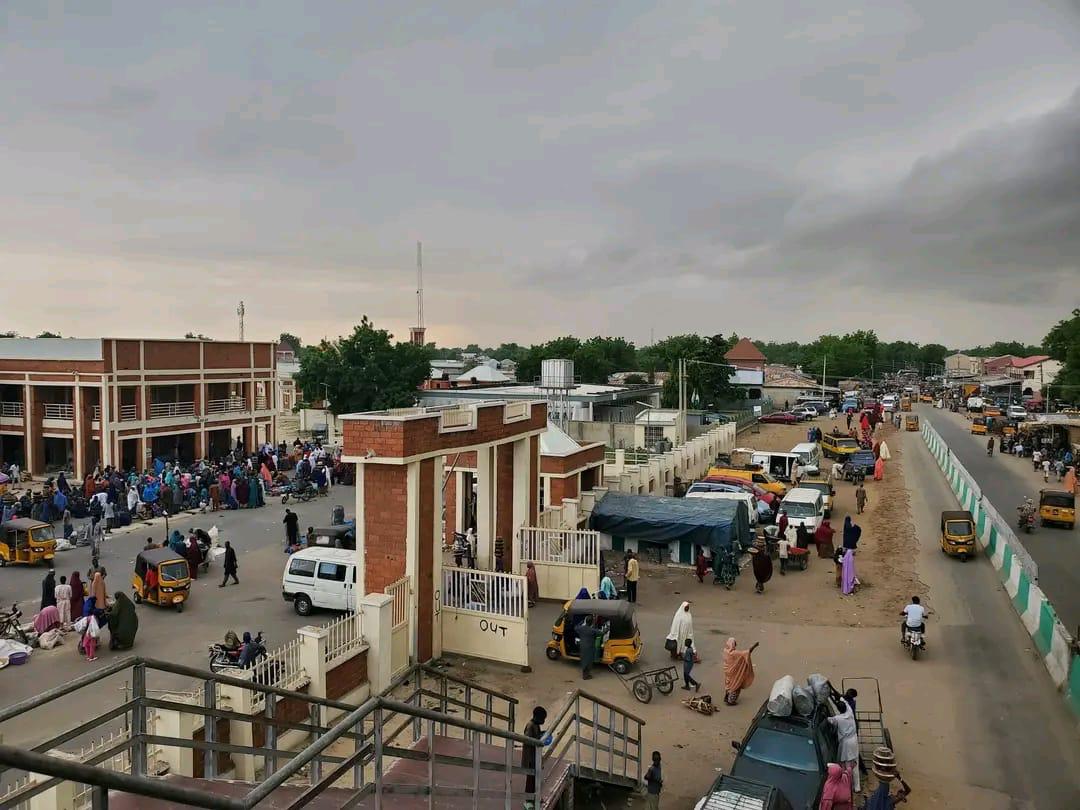
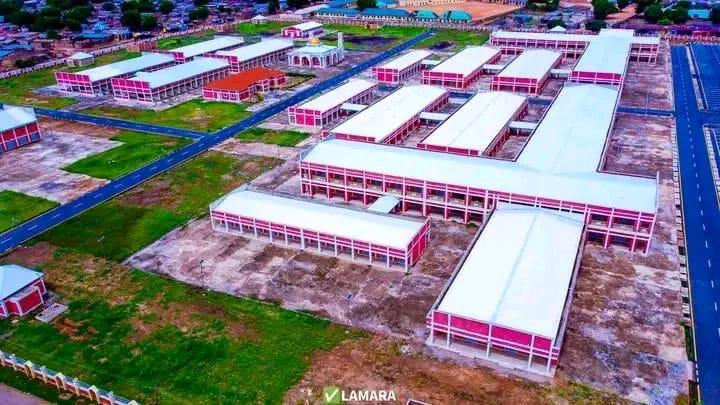
According to the association, the Yobe State Government has invested billions of naira in the construction of modern markets across the state’s 17 local government areas, with projects completed in major commercial centres and others approaching completion.
It listed Potiskum, Damaturu, Gashua, Nguru and Gaidam among the towns where modern markets have been completed, adding that Gujba and Fune are among the local government areas expected to have two markets each.
The association said the completed and ongoing projects would bring the total number of modern markets to 19.
It also highlighted the construction of two trailer parks in Potiskum and Damaturu, noting that the Potiskum facility had been completed while work was ongoing in Damaturu.
According to KACRAN, the trailer parks are expected to strengthen transportation and facilitate the movement of goods, while four sesame seed cleaning and packaging factories established in Nguru, Machina, Damaturu and Potiskum would support agricultural value addition and industrial development.
The association argued that investments in commercial infrastructure and agro-processing could expand economic opportunities, improve market access for farmers and traders, and create jobs for young people.
It, however, stressed that infrastructure alone would not be sufficient to achieve the desired economic transformation without access to affordable financing for businesses.
KACRAN therefore called on Tinubu to introduce special credit facilities for traders and entrepreneurs who had secured space in the new markets, arguing that access to working capital would enable them to expand their businesses, employ more people and strengthen economic activities along the commercial value chain.
The association said the proposed intervention could also help reduce the vulnerability of unemployed youths to criminal recruitment by providing more sustainable livelihood opportunities.
In making its case for a regional economic revival, KACRAN recalled what it described as Northern Nigeria’s historical reputation for peaceful coexistence, hospitality, commercial enterprise and trust-based business relationships.
It lamented that insecurity, the collapse of industries, ethno-religious divisions and political mistrust had undermined these traditions, while insurgency had disrupted farming, cattle rearing and fishing in several communities.
The association said the region needed to rebuild its economic foundations by investing in productive infrastructure, supporting private enterprise and creating opportunities for its growing youth population.
It traced its call for a new commercial development strategy to the economic and social changes that had taken place since the era of the late Premier of Northern Nigeria, Sir Ahmadu Bello, arguing that restoring the region’s prosperity required practical policies rather than nostalgia.
KACRAN particularly commended Buni for what it described as his commitment to reviving Yobe’s commercial sector despite the challenges posed by years of insurgency.
It also praised the state’s Commissioner for Commerce, Industry, Tourism and Solid Minerals, Hon. Kaigama Umar, alongside the ministry’s permanent secretary, directors, the management of Yobe State Investment Company and other officials involved in supervising the projects.
The association said the officials’ contributions had helped advance the state’s commercial infrastructure programme.
It maintained that replicating the Yobe model across Northern Nigeria, supported by affordable credit and effective implementation, could strengthen regional trade, expand employment and contribute to national economic growth.
“This revolution is not just for Yobe, it is for the North and for Nigeria,” the association declared.
KACRAN Challenges 19 Northern Governors to Adopt Buni’s Commercial Revolution Blueprint

EbonyLife Place Opens in London, Deepens UK-Nigeria Creative Ties
EbonyLife Place, a new cultural and entertainment destination dedicated to African and Black creativity, has opened in London, in a development expected to further strengthen creative, trade and investment ties between Nigeria and the United Kingdom.
The venue, created by Nigerian media entrepreneur and EbonyLife Group Founder and Chief Executive Officer, Mo Abudu, officially opened on Thursday and is located at 208 Wandsworth Road, between Battersea Power Station and Nine Elms.
The opening is being positioned as a significant milestone in UK-Nigeria creative collaboration and is expected to create about 40 direct jobs in London.
It also aligns with the ongoing UK-Nigeria Economic, Trade and Investment Partnership (ETIP), which seeks to deepen economic cooperation between both countries, including through stronger links in the creative industries.
EbonyLife Place London brings film, food, fashion, art, music and entertainment together under one roof, providing a platform for established and emerging creative talents from Africa and the wider Black diaspora.
At the centre of the new destination is the 160-seat Amani Auditorium, described as the UK’s only cinema dedicated exclusively to African and Black film.
The auditorium will showcase Nollywood and other African films alongside productions from the UK, Caribbean, United States and other parts of the global Black diaspora.
Beyond cinema, the auditorium will host masterclasses, industry panels, fireside conversations, keynote sessions, live acoustic performances as well as cultural and business events.
Speaking on the development, Abudu said the new venue was designed to bring the richness of African and Black creativity together through films, food, fashion, art, music and stories.
She said the vision extended beyond Nigeria to Africa and the global Black diaspora, adding that the venue would provide a platform for creators from cities including Lagos, London, Accra, Kingston and New York.
The Mayor of London, Sadiq Khan, welcomed the development, describing EbonyLife Place London as a “fantastic addition” to the city’s cultural offering.
Khan said the venue would showcase films by African and Black filmmakers alongside music, art, fashion and food, describing it as a destination for celebrating Black creativity from around the world.
The Mayor had visited EbonyLife Place in Lagos last year during his trade mission to Africa, where he and Abudu hosted a London edition of Lagos Canvas, bringing together figures from Lagos’ art and entertainment industries to promote creative links and partnerships.
Lagos State Governor, Babajide Sanwo-Olu, also welcomed the London expansion, describing it as an international extension of a vision that originated in Lagos.
“EbonyLife Place was born in Lagos in 2019, and it is wonderful to see this proudly Lagosian vision now taking its place in London,” Sanwo-Olu said.
He described the London venue as more than a new cultural destination, saying it represented a celebration of African creativity, culture and storytelling and a bridge between Lagos and the rest of the world.
The London destination also features The Afrobeat, a 40-seat restaurant offering contemporary African cuisine; Fèhìntì Lounge; Maji Concession and Bar; Zuri Retail, an African concept store; and the Living Wall Gallery for contemporary African and diaspora art and photography.
Music will also feature prominently in its programme, with live performances, listening parties and curated experiences involving established African and diaspora artistes as well as emerging musicians, DJs and new sounds.
The venue’s opening programme includes a partnership with Film Africa, described as the UK’s largest annual festival celebrating African cinema.
According to the organisers, EbonyLife Place will operate a year-round programme of screenings, performances, exhibitions, conversations, networking events, showcases and collaborations involving African and Black creative communities.
A membership scheme is also expected to be introduced, although details of the various membership tiers will be announced later.
The opening marks another stage in Abudu’s long-standing effort to build international platforms for African storytelling and creative talent.
EbonyLife was established as an African media brand and has subsequently developed partnerships with major international entertainment organisations, including Netflix, Sony Pictures and BBC Studios.
Abudu has also received international recognition, including being named among TIME magazine’s 100 Most Influential People in the World and Forbes’ 100 Most Powerful Women.
The establishment of EbonyLife Place in London therefore extends an existing Lagos-based creative brand into one of the world’s major cultural and entertainment markets.
The development also comes as Nigeria and the UK continue efforts to expand economic cooperation beyond traditional sectors, with the creative economy increasingly viewed as an area capable of generating jobs, investment and international opportunities for Nigerian talent.
With its focus on Nigerian, African and Black stories and creators, EbonyLife Place London is expected to provide another platform through which Nigerian creative products can reach international audiences while strengthening links between the country’s creative industry and the wider global market.
EbonyLife Place Opens in London, Deepens UK-Nigeria Creative Ties

Nigeria’s Nutrition Accountability Gap Persists as Child Stunting Hits 40%

NHRC Raises Alarm Over Child Abuse, Custodial Torture, Civic Freedom Violations

Borno Politics: Power, Continuity, and the Fight for Democratic Space Ahead of 2027 Elections

Roger Federer’s Shock as DNA Results Reveal Myla and Charlene Are Not His Biological Children

THE PLIGHT OF FARIDA

FAILED COUP IN BURKINA FASO: HOW TRAORÉ NARROWLY ESCAPED ASSASSINATION PLOT AMID FOREIGN INTERFERENCE CLAIMS
-
 News3 years ago
Roger Federer’s Shock as DNA Results Reveal Myla and Charlene Are Not His Biological Children
-
Opinions5 years ago
THE PLIGHT OF FARIDA
-
 News1 year ago
FAILED COUP IN BURKINA FASO: HOW TRAORÉ NARROWLY ESCAPED ASSASSINATION PLOT AMID FOREIGN INTERFERENCE CLAIMS
-
 Opinions5 years ago
POLICE CHARGE ROOMS, A MINTING PRESS
-

 News3 years ago
EYN: Rev. Billi, Distortion of History, and The Living Tamarind Tree
-

 ACADEMICS3 years ago
A History of Biu” (2015) and The Lingering Bura-Pabir Question (1)
-

 Columns3 years ago
Army University Biu: There is certain interest, but certainly not from Borno.
-

 Politics1 year ago
2027: Why Hon. Midala Balami Must Go, as Youths in Hawul and Asikira/Uba Federal Constituency Reject ₦500,000 as Sallah Gift
