
News
Environmental Degradation Not in Tandem with Spirit of National Anthem, Oppresses Most Vulnerable Nigerians-FG

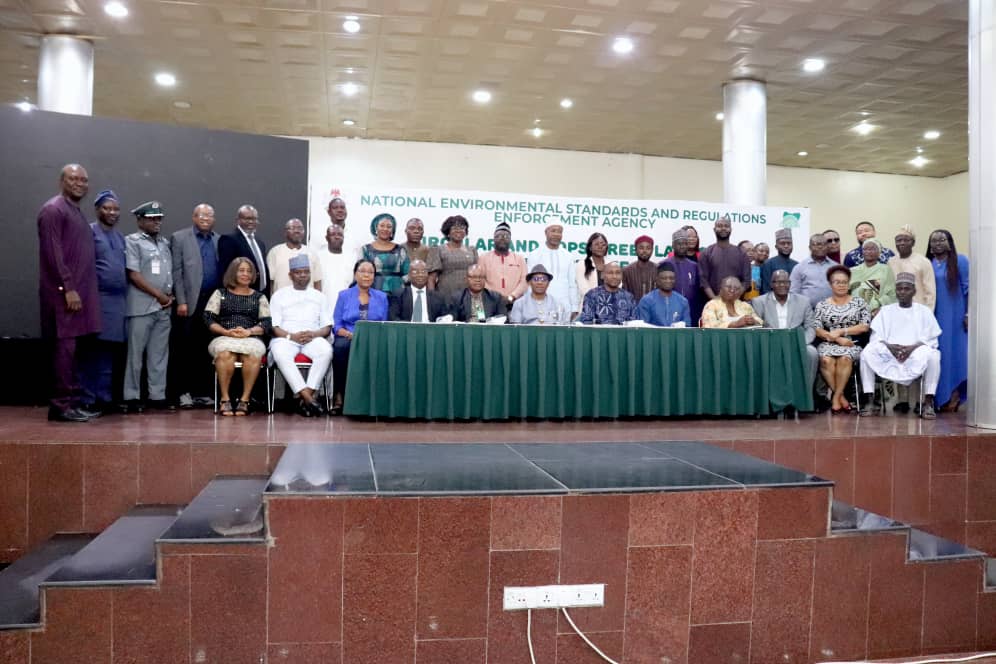
Environmental Degradation Not in Tandem with Spirit of National Anthem, Oppresses Most Vulnerable Nigerians-FG
By: Michael Mike
The Federal Government has decried that environmental degradation is not in tandem with the spirit of Nigeria’s national anthem as it oppresses the most vulnerable Nigerians.
Speaking at the Circular and POPS-free Plastics in Africa Project Inception Workshop in Abuja, the Minister of Environment, Balarabe Abbas Lawal said: “As we reflect on the words of our national anthem, “Help us to build a nation where no man is oppressed,” we must recognize that environmental degradation is indeed a form of oppression. It disproportionately affects the most vulnerable groups in our midst and limits opportunities for future generations.”
The Minister noted that: “This project represents our collective determination to break free from this oppression and build a Nigeria where both people and nature can thrive.”
Lawal while declaring the workshop opened, said: “I wish to express my profound appreciation to all critical partners who have made this initiative possible, namely: the Global Environment Facility (GEF) for financial support; UN Environment, the Implementing Agency, for providing technical support; and BCCC- Africa, for its resourcefulness in providing guidance for the project implementation. To NESREA, the performing environmental police in Nigeria – your commitment to environmental protection and your role as the National Executing Partner is deeply appreciated.”
He noted that Nigeria, as one of the five beneficiary-nations in Africa, has an ample opportunity to, among others: reduce the import, production and use of Persistent Organic Pollutants (POPs) in plastics-containing products in the automobile, construction and electronics sectors) and the generation of unintentionally-produced POPs (UPOPs), with their attendant burdens of pollution and morbidity in our environment; identify safe, eco-friendly and effective alternatives to POPs- containing plastics as well as suitable technologies to manage POPs-contaminated waste in an environmentally sound manner; and adopt and enforce upstream policies and financial instruments, to implement circular economy practices and eliminate or replace problematic products with more sustainable alternatives.
He said the cross-cutting dimension of POPs Management and plastic pollution, including the magnitude of associated challenges call for collective responsibility among all sectoral stakeholders, stressing that: “It is therefore heartwarming to note an equitable representation of high-level policy makers, the dedicated presence of ‘Basel Centre’, the Industry, Academia, Civil Society Organisations, and our Development Partners, whose expertise, vast wealth of experience and solemn commitment wil be brought to bear in actuating successful delivery of the project.”
He decried that while plastics have brought undeniable benefits to modern life, in the absence of an effective waste management strategy and circular economy system, more than three-quarters of scrap plastics get discarded and dispersed in open dumps, burnt, clog the drainage system and ultimately discharged into the marine environment as microplastics.
On his part, the Director General/CEO, National Environmental Standards and Regulations Enforcement Agency (NESREA), Prof. Innocent Barikor said on this historic inception workshop for the Circular and POPs-Free Plastics in Africa Project. “Today, we gather as partners, stakeholders, and custodians of our environment to embark on a transformative journey that will shape Nigeria’s environmental future for generations to come.”
He noted that: “The significance of this gathering cannot be overstated. We are here to address one of the most complex and pressing environmental challenges of our time – the pervasive threat posed by Persistent Organic Pollutants (POPs) in plastic materials. POPs are carcinogenic and mutagenic, causing cancer, genetic mutations, neurological damage, reproductive problems, and immunological disorders. Exposure to POPs has severe long-term health consequences.
“POPs disrupt ecological systems, threatening aquatic ecosystems and human health. “
He noted that: “Many chemical additives used during plastic production to provide the finished plastics products (e.g. plastic housing units of electronics) with unique properties (including plasticity and fire retardancy) are classified as POPs. A typical example is polybrominated diphenyl ethers (PBDEs, including penta-BDE, octa-BDE and deca-BDE). These chemicals are toxic, chemically stable and readily accumulate in the environment and living organisms.
“These toxic substances represent a silent crisis, accumulating in our ecosystems, permeate our food chains, and posing severe risks to human health and biodiversity when end-of-life plastics from electronics are not properly managed. As Nigeria’s apex environmental regulatory agency, NESREA recognizes both the gravity of this challenge and the tremendous opportunity this project presents for gradual and systemic change.
“In Nigeria, our focus on the electronics sector under this project is particularly strategic. Our nation has overtime, emerged as a regional hub for electronic goods in West Africa, with all the attendant responsibilities, advantages and disadvantages this position entails. While we celebrate the economic opportunities this brings, we must also confront the environmental implications. The lifecycle of electronic products – from production to disposal – presents multiple points where POPs could be released into the environment. This project thus provides us with the necessary tools, resources, and partnerships we require to transform this sector into a model of environmental responsibility and circular economy principles.”
Environmental Degradation Not in Tandem with Spirit of National Anthem, Oppresses Most Vulnerable Nigerians-FG


News
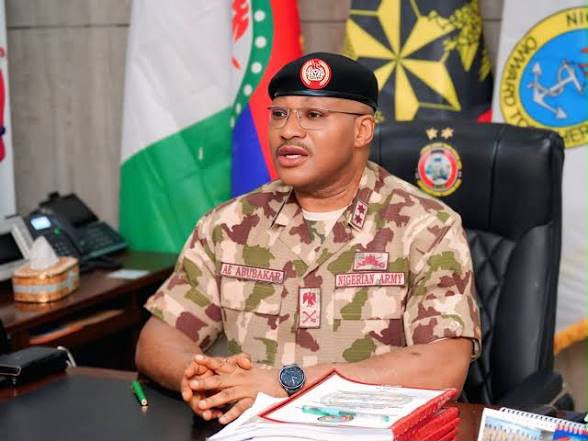
Over 7,000 IDPs return to ancestral homes as OPHK restores normalcy in Borno says Maj Gen Abubakar
Over 7,000 IDPs return to ancestral homes as OPHK restores normalcy in Borno says Maj Gen Abubakar
By Zagazola Makama
More than 7,000 internally displaced persons (IDPs) have returned to their ancestral communities across Borno State following improved security conditions created by sustained military operations under Operation HADIN KAI (OPHK), the outgoing Theatre Commander, Maj.-Gen. Abdulsalam Abubakar, has said.
Abubakar disclosed this during his farewell and introduction engagement with humanitarian partners, representatives of the Borno State Government and members of the press in Maiduguri on Tuesday.
He said the return of the displaced families represented one of the clearest indicators of the progress recorded by the Theatre during his tenure as the 15th Theatre Commander of OPHK.
According to him, the fundamental mandate given to the Theatre was not merely to conduct military operations but to facilitate the restoration of normalcy in the North-East, allowing communities to recover and socio-economic activities to resume.
He explained that normalcy could be measured by the reopening of schools and markets, access to farmlands, restoration of essential services and, most importantly, the ability of families who had fled violence to return safely to their ancestral homes.
“Together, we have seen over 7,000 displaced families return to their ancestral communities and today, communities that were abandoned for years have been re-occupied, such that returned communities now exist in every Local Government Area of Borno State,” he said.
The development, he noted, marked a significant shift in communities that had remained largely deserted for years as a result of insurgency and the fear of attacks.
Abubakar said the return of the IDPs was made possible by the combined efforts of the military, the Borno State Government, humanitarian organisations, traditional institutions and local communities.
He stressed that the objective of military operations was ultimately to create a secure environment where civilians could reclaim their communities, rebuild their homes, cultivate their farms and restart their livelihoods.
The outgoing commander said the return of displaced families was supported by sustained counter-terrorism operations which degraded the capabilities of JAS and ISWAP across the Theatre.
Abubakar said the pressure generated by sustained military operations, combined with non-kinetic measures, had also contributed to a major wave of surrenders.
He disclosed that more than 969 JAS/ISWAP fighters and their family members surrendered within the last one year, creating another pathway through which affected communities could gradually move away from the cycle of violence.
The Theatre Commander said the restoration of security had produced visible changes in several communities across Borno.
He pointed to the reopening of trade routes and local markets, allowing residents to resume economic activities that had been disrupted by years of insurgency.
Over 7,000 IDPs return to ancestral homes as OPHK restores normalcy in Borno says Maj Gen Abubakar
News
“No theatre in the country enjoys a stronger partnership than the one we enjoyed with Borno State Government” — Maj Gen Abubakar

“No theatre in the country enjoys a stronger partnership than the one we enjoyed with Borno State Government” — Maj Gen Abubakar
By Zagazola Makama
The outgoing Theatre Commander, North East Joint Task Force, Operation HADIN KAI (OPHK), Maj.-Gen. Abdulsalam Abubakar, has lauded the Borno State Government for what he described as unwavering support to military operations, declaring that no theatre of operations in the country enjoyed a stronger partnership with its host government than the relationship between OPHK and the Borno State Government.
Abubakar made the declaration during his farewell and introduction engagement with humanitarian partners, representatives of the Borno State Government and members of the press in Maiduguri on Tuesday.
He said the partnership between the Theatre and the state government had been critical to the fight against insurgency, protection of civilians, restoration of normalcy and the return of displaced persons to their ancestral communities.
“I say it plainly; no theatre of operations in this country enjoys a stronger partnership with its host government,” Abubakar said.
The outgoing commander specifically commended Governor Babagana Umara Zulum for his sustained support to Operation HADIN KAI, particularly through the provision of critical combat enablers that had strengthened the operational capacity of troops across the Theatre.
He listed Mine-Resistant Ambush Protected vehicles (MRAPs), long-range surveillance cameras and drones, among other support provided by the Borno State Government.
According to him, the state government’s contributions had gone beyond ordinary civil-military cooperation, providing practical capabilities that directly supported troops in their efforts to protect communities and degrade terrorist networks.
“These critical contributions have strengthened the partnership between the State Government and Operation HADIN KAI, and reinforced our collective resolve to defeat the insurgency, protect innocent lives, sustain peace, restore normalcy and enable the safe return of displaced persons to their communities,” he said.
Abubakar said the support was particularly significant because the restoration of normalcy in the North-East required a strong partnership between the military and the government responsible for the welfare and recovery of affected communities.
He urged the Borno State Government to maintain the partnership with his successor, saying the incoming Theatre Commander would require the same level of cooperation and support to consolidate the gains already recorded.
“I therefore respectfully request that this same partnership and support be extended to the incoming Theatre Commander as he assumes the duty of sustaining the gains we have made,” he said.
The outgoing Theatre Commander extended his appreciation to the wider humanitarian community, particularly organisations operating in Borno, Adamawa and Yobe States.
He commended the United Nations Office for the Coordination of Humanitarian Affairs (UN OCHA) for its continued support to vulnerable populations and its contribution to stabilisation efforts across the North-East.
Abubakar said humanitarian organisations had remained important partners in addressing the consequences of the insurgency, particularly the suffering of displaced persons and other vulnerable civilians.
He said their work, guided by the principles of humanity, impartiality and neutrality, had complemented the security efforts of Operation HADIN KAI in tangible ways.
“Your work, guided by the principles of humanity, impartiality and neutrality, has alleviated the suffering of the most vulnerable and has complemented our stabilisation efforts in tangible ways,” he said.
He explained that the military had also continued to support humanitarian operations by providing protection, escorts and an enabling security environment for aid workers to operate.
According to him, the relationship was based on complementary responsibilities, with the military creating the security conditions while humanitarian organisations delivered assistance to affected populations.
The Theatre Commander also highlighted the importance of regular dialogue between military and humanitarian actors.
He described the recent humanitarian roundtable as a productive engagement that provided stakeholders with an opportunity to examine coordination challenges and improve the conduct of humanitarian operations.
Abubakar urged stakeholders to institutionalise such engagements, saying regular dialogue would help prevent misunderstandings and improve the delivery of assistance to vulnerable communities.
He reiterated that requests for military escorts by humanitarian organisations should be made 48 hours before movement to enable the Theatre to properly plan and provide appropriate security.
“I urge this partnership to be maintained,” he said.
Abubakar also paid tribute to the International Committee of the Red Cross (ICRC) for its specialised capacity-building support to Operation HADIN KAI.
He said the organisation had provided valuable assistance to the Theatre both within and outside Nigeria, particularly in areas relating to professionalism, International Humanitarian Law and protection of civilians.
He singled out the ICRC’s support for improving detainee management at the Joint Interrogation Centre, saying the intervention had strengthened the Theatre’s handling of persons in custody.
According to him, the improvements recorded in detainee management contributed to commendations received by OPHK both locally and internationally.
He acknowledged that the relationship between the military and humanitarian community had sometimes experienced disagreements, but said the ability to resolve such issues through dialogue remained one of the major achievements of the partnership.
“I know our relationship with the humanitarian partners has not been without friction, but the honest dialogue we have built is itself an achievement, and I enjoin you to protect it,” Abubakar said.
The outgoing commander also expressed appreciation to Team HADIN KAI, describing its integration into OPHK since May 8, 2026, as a strategic partnership that had strengthened the Theatre’s intelligence-led operations.
He said the team had supported precision targeting, non-kinetic operations and capacity building, thereby improving the Theatre’s common operational picture.
Abubakar cited the May 15, 2026 operation at Metele, which he said resulted in the neutralisation of Abu-Bilal Al-Minuki, identified in his speech as the ISIS second-in-command, as a notable outcome of the partnership.
He said the collaboration had enhanced the professionalism and effectiveness of OPHK’s counter-terrorism efforts.
The outgoing Theatre Commander also acknowledged the contribution of the British Defence Staff – West Africa, particularly in strengthening OPHK’s combat capabilities and Counter-Improvised Explosive Device (C-IED) capacity.
He said British military advisers had contributed expertise, capacity building and equipment support.
Abubakar noted that the partnership had recently expanded to direct engagement with Forward Operating Bases, including support for defensive measures, tactical drone deployment and improved surveillance.
He urged his successor to build upon and further consolidate the relationship.
Partnership linked to return of displaced persons
Abubakar’s commendation of the government and humanitarian organisations came against the backdrop of significant progress in the return and resettlement of displaced populations.
He disclosed that more than 7,000 displaced families had returned to their ancestral communities across Borno State during his tenure.
He said communities that had remained abandoned for years were gradually being reoccupied, with returned communities now present in every Local Government Area of the state.
The Theatre also facilitated the rescue of 638 civilians from terrorist enclaves, while all 46 students involved in the attempted abduction at the Federal Government Girls College, Monguno, were safely rescued.
He further highlighted the voluntary, safe and dignified repatriation of more than 3,000 Nigerians from Cameroon, carried out through the collaboration of the Borno State Government, Federal Ministry of Humanitarian Affairs and Poverty Reduction and the United Nations High Commissioner for Refugees.
According to Abubakar, these developments demonstrated that security operations, humanitarian intervention and government support were mutually reinforcing components of the wider effort to restore normalcy.
The outgoing Theatre Commander also appreciated other security agencies, hybrid forces and what he described as the “friends of OPHK” for their support throughout his tenure.
He said their information, cooperation and encouragement had helped shape collective efforts toward fulfilling the Theatre’s mandate.
Abubakar said the fight against insurgency required more than military operations, stressing that sustainable recovery depended on the combined efforts of security agencies, government institutions, humanitarian organisations and communities.
As he handed over the Theatre to the incoming 16th Theatre Commander, Maj.-Gen. Ibikunle Ajose, Abubakar appealed to all partners to sustain the cooperation that had characterised his tenure.
He said the partnership between OPHK and its stakeholders had contributed significantly to the gradual return of normalcy, including the reopening of markets and trade routes, resumption of educational activities and the return of displaced families to their ancestral homes.
He urged all partners to give Ajose the same openness, cooperation and goodwill extended to him, saying the consolidation of peace in the North-East would depend heavily on maintaining the partnerships built over the years.
“No theatre in the country enjoys a stronger partnership than the one we enjoyed with Borno State Government” — Maj Gen Abubakar
Zulum Meets Army Chief in Abuja
By: Our Reporter
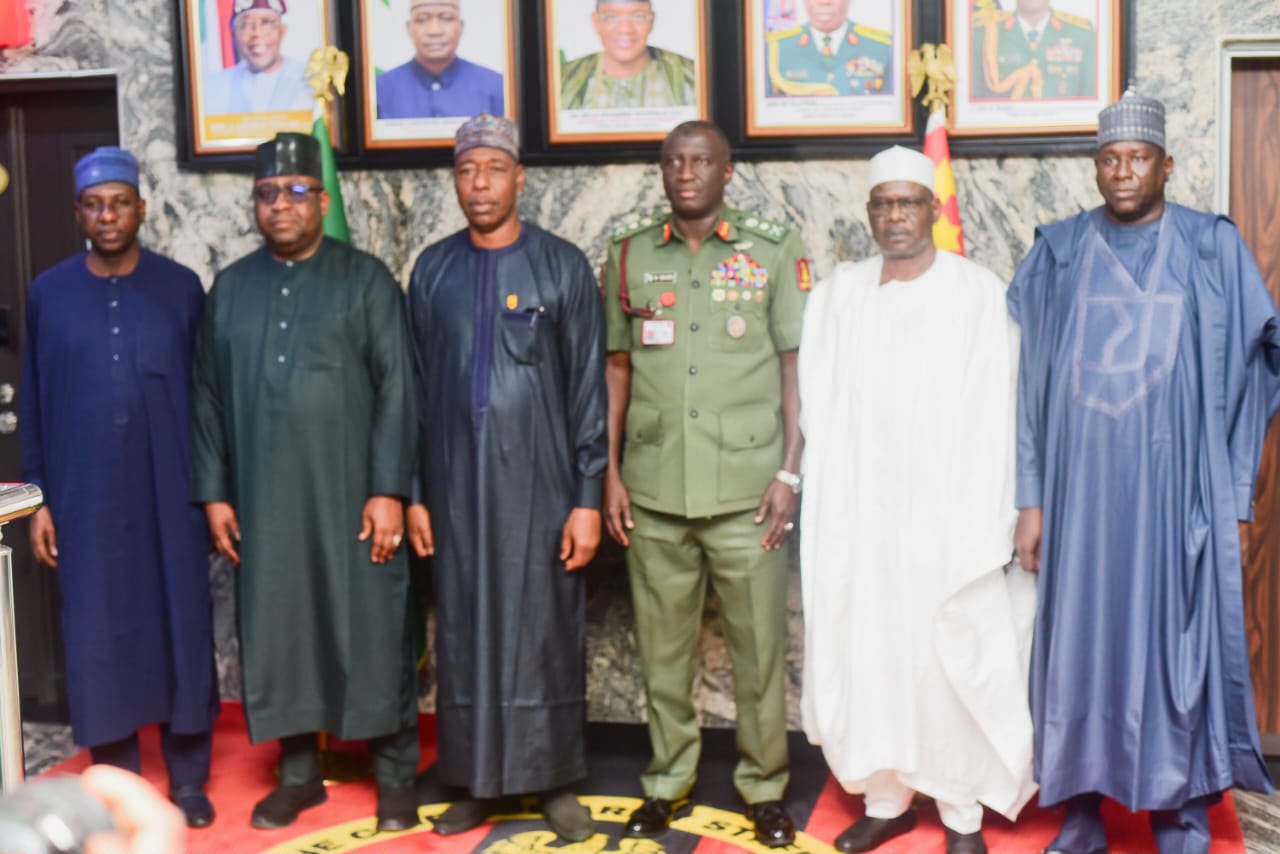
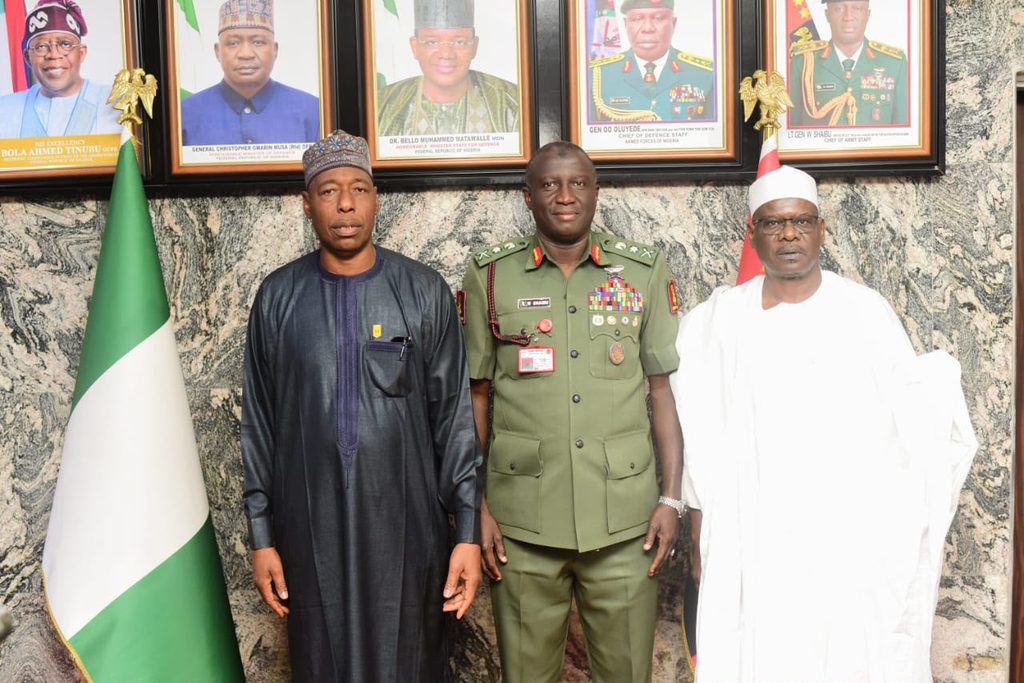
Borno State Governor, Professor Babagana Umara Zulum, on Tuesday visited the Chief of Army Staff, Lieutenant General Waidi Shaibu, at the Army Headquarters in Abuja.
The meeting, held behind closed doors, was part of the Governor’s routine engagements with the Service Chiefs to consolidate the peace and stability being restored across the state.
Security and the restoration of normalcy remain the top priority of Governor Zulum’s administration, which has continued to provide hardware and logistics support to the military and other security agencies operating in the state.
The military has continued to record remarkable gains in counter-insurgency and counter-terrorism operations in Borno, with troops sustaining offensive actions against remnants of Boko Haram and ISWAP fighters.
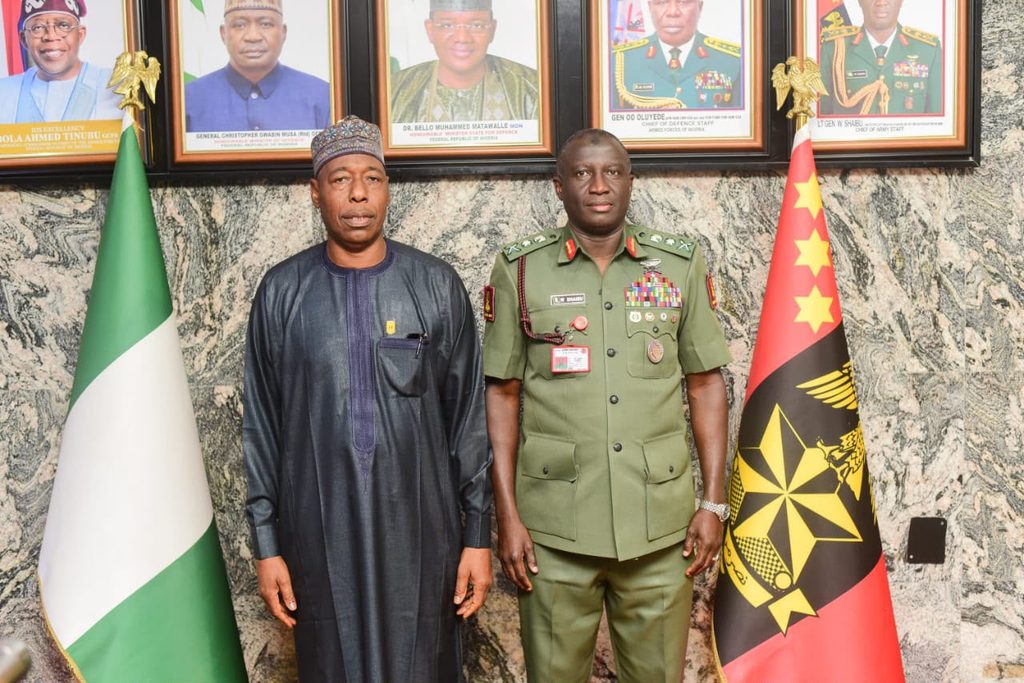
The Governor was accompanied by the Senator representing Borno South, Senator Mohammed Ali Ndume; the member representing Kukawa, Mobbar, Guzamala and Abadam Federal Constituency, Hon. Malam Gana Bukar Kareto; the Commissioner of Finance, Hon. Lawan Umar Dalorima; and the Commissioner of Planning and Economic Development, Hon. Maina Yaumi.
Zulum Meets Army Chief in Abuja

Over 7,000 IDPs return to ancestral homes as OPHK restores normalcy in Borno says Maj Gen Abubakar

“No theatre in the country enjoys a stronger partnership than the one we enjoyed with Borno State Government” — Maj Gen Abubakar

Zulum Meets Army Chief in Abuja

Roger Federer’s Shock as DNA Results Reveal Myla and Charlene Are Not His Biological Children

THE PLIGHT OF FARIDA

FAILED COUP IN BURKINA FASO: HOW TRAORÉ NARROWLY ESCAPED ASSASSINATION PLOT AMID FOREIGN INTERFERENCE CLAIMS
-
 News3 years ago
Roger Federer’s Shock as DNA Results Reveal Myla and Charlene Are Not His Biological Children
-
Opinions5 years ago
THE PLIGHT OF FARIDA
-
 News1 year ago
FAILED COUP IN BURKINA FASO: HOW TRAORÉ NARROWLY ESCAPED ASSASSINATION PLOT AMID FOREIGN INTERFERENCE CLAIMS
-

 News2 years ago
EYN: Rev. Billi, Distortion of History, and The Living Tamarind Tree
-
 Opinions5 years ago
POLICE CHARGE ROOMS, A MINTING PRESS
-

 ACADEMICS3 years ago
A History of Biu” (2015) and The Lingering Bura-Pabir Question (1)
-

 Columns3 years ago
Army University Biu: There is certain interest, but certainly not from Borno.
-

 Politics1 year ago
2027: Why Hon. Midala Balami Must Go, as Youths in Hawul and Asikira/Uba Federal Constituency Reject ₦500,000 as Sallah Gift
