
National News
Anambra Election: US threatens Visa Restriction on instigators of Violence

Anambra Election: US threatens Visa Restriction on instigators of Violence
The United States has warned that anyone who interferes with the lawful conduct of the Anambra state government or instigate violence in the South East state would be given visa restriction.
A statement on Wednesday from the US Embassy in the country said that the American government looks forward to a gubernatorial election in Anambra State on November 6 that is peaceful and transparent, with results that accurately reflect the will of the state’s residents.
Also Read: ActionAid, Stakeholders Recommends Ways to Improve…
The statement added that: “We will be paying close attention to actions of individuals who interfere with the democratic process or instigate violence against civilian populations before, during, or after the elections.
“We will not hesitate to consider consequences – including visa restrictions – for those found to be responsible for election-related violence or undermining the democratic process.”
The statement further explained that: “Under U.S. immigration law, certain violations also may lead to restrictions on family members.”
The statement however called on citizens, electoral officials, party members, and security force personnel to do their part in ensuring a credible and secure electoral process.
Anambra Election: US threatens Visa Restriction on instigators of Violence




NAPTIP Moves to Strengthen Justice Chain Against Trafficking, Migrant Smuggling
By: Michael Mike
The National Agency for the Prohibition of Trafficking in Persons (NAPTIP) has moved to strengthen Nigeria’s criminal justice chain against human trafficking and migrant smuggling, with a renewed focus on closing operational gaps between investigation, prosecution and judicial decision-making.
The initiative is coming against the backdrop of Nigeria’s strategic position in West Africa and its exposure to transnational organised crime, particularly human trafficking and migrant smuggling.
Nigeria serves as a country of origin, transit and destination, a position that exposes the country to complex operational and judicial challenges requiring a coordinated response across the entire criminal justice system.
Speaking in Abuja on Monday at the opening of a capacity-building workshop on “Strengthening the Criminal Justice Chain in Human Trafficking and Migrant Smuggling Cases,” the Director-General of NAPTIP, Binta Adamu Bello, said a stronger justice chain was critical to ensuring that perpetrators were effectively investigated, prosecuted and brought to justice while victims received adequate protection.
Bello said the workshop was designed to bring together investigators, prosecutors, judicial officers, intelligence analysts and law enforcement practitioners to strengthen cooperation and build an integrated response to the two forms of transnational organised crime.
She said human trafficking and migrant smuggling networks exploit human vulnerability, undermine national security, violate fundamental human rights and threaten economic stability across national boundaries.
According to her, the increasing sophistication of criminal networks made it necessary to strengthen the entire criminal justice chain rather than focus on isolated stages of enforcement.
“A criminal justice system is only as strong as its weakest link. If an investigation is compromised at the intelligence stage, prosecution becomes difficult; if evidence collection is flawed, justice is delayed or denied; and if judicial proceedings lack specialised operational insights into trafficking dynamics, dangerous criminals return to the streets while victims remain unprotected,” Bello said.
The workshop, she explained, seeks to improve interaction among investigators, prosecutors and judicial authorities while strengthening the effective implementation of existing procedures.
Its overall objective, she said, is to improve the effectiveness of the criminal justice chain in human trafficking and migrant-smuggling cases by improving coordination among stakeholders, enhancing the quality of case files and strengthening the connection between investigation, prosecution and judicial decision-making.
The initiative is also expected to strengthen institutional coordination and inter-agency cooperation and improve the overall effectiveness of Nigeria’s criminal justice response to trafficking and migrant smuggling.
Bello said the workshop would help close operational gaps from the initial detection of cases and victim-centred investigations through intelligence gathering and prosecution to final adjudication.
She added that the training would strengthen the ability of participating agencies to work together in tackling the convergence of trafficking and migrant smuggling with financial crimes, cybercrime and cross-border security threats.
Participants, she said, would also refine strategies for financial tracking, digital evidence collection and international legal cooperation, including Mutual Legal Assistance.
The NAPTIP boss stressed that the initiative would reinforce a victim-centred and trauma-informed approach to justice, ensuring that victims were protected throughout judicial proceedings and not re-traumatised in the process of seeking justice.
Bello said NAPTIP had maintained an aggressive, multi-dimensional strategy anchored on its 5P approach of Policy, Prevention, Protection, Prosecution and Partnership.
She disclosed that the agency had secured hundreds of convictions against human traffickers, with its legal teams continuing to pursue maximum sentences as a deterrent to organised criminal syndicates.
She said thousands of victims, including women, children and young men, had been rescued from domestic exploitation, forced labour, sexual servitude, organ-harvesting networks and digital exploitation centres both within Nigeria and internationally.
According to her, survivors receive psychosocial support, medical care, vocational training and reintegration assistance through NAPTIP’s specialised shelters across the country.
Bello said the agency had also expanded its intelligence operations in response to the growing use of digital platforms by traffickers, enabling it to track online trafficking syndicates, fake job-placement schemes and cyber-enabled exploitation networks operating in urban centres and across borders.
She added that specialised joint operations with sister security agencies, border-control authorities and international law-enforcement partners had enabled NAPTIP to intercept transnational syndicates and disrupt smuggling corridors across West Africa and Europe.
The agency, she said, had equally updated operational guidelines, strengthened standard operating procedures for victim identification and enhanced evidence-gathering techniques to ensure that investigations met international standards.
However, Bello warned that the achievements could not justify complacency, given the evolving tactics of organised criminal networks.
She said continuous innovation, institutional adaptation and deeper collaboration across the criminal justice pipeline remained necessary to sustain the fight against trafficking and migrant smuggling.
EU-backed criminal justice intervention
The capacity-building activity is being implemented within the framework of the Common Operational Partnership (COP Nigeria), carried out by CIVIPOL in collaboration with the Fundación para la Internacionalización de las Administraciones Públicas (FIAP), under the Support to Migration Governance (Component 3) project in Nigeria.
The project is funded by the European Union in partnership with the Nigerian authorities and is being developed in coordination with FIAP’s activities in Nigeria, particularly initiatives aimed at strengthening migration governance and combating human trafficking and migrant smuggling.
Bello expressed NAPTIP’s appreciation to the European Union for its sustained support under the Support to Migration Governance project, saying its investment in Nigeria’s migration-management and counter-trafficking frameworks reflected a commitment to global peace, security and human dignity.
She commended CIVIPOL for its technical expertise and leadership in implementing COP Nigeria, while also appreciating FIAP for its partnership and coordination in strengthening governance, justice and anti-trafficking structures in Nigeria.
The DG further thanked sister security agencies, judicial officers, civil society organisations and other resource persons for their participation and commitment to the fight against human trafficking.
Bello charged participants to use the workshop to build stronger professional networks and partnerships that would extend beyond the duration of the training.
“You represent the frontline defence of our nation’s criminal justice system against exploitation,” she told participants.
She urged them to engage actively, challenge assumptions and share best practices from their respective institutions, stressing that the knowledge and skills acquired would directly influence Nigeria’s capacity to investigate, prosecute and dismantle trafficking and migrant-smuggling networks.
She reminded participants that behind every case file, legal precedent and investigative report was a human life seeking justice and protection.
“Together, through a strengthened criminal justice chain, we will deny traffickers a safe haven, bring perpetrators to justice, and uphold the dignity of every individual,” Bello said.
She subsequently declared the capacity-building workshop officially open.
NAPTIP Moves to Strengthen Justice Chain Against Trafficking, Migrant Smuggling

FG moves to operationalise 112 national emergency number
By Zagazola Makama
The Federal Government has commenced steps to operationalise the 112 national emergency number as a single, toll-free channel through which Nigerians can access emergency services across the country.
The move followed a directive by Vice-President Kashim Shettima during a stakeholders’ meeting on the National Emergency Number 112 Project in Abuja on Tuesday, Sept. 8, 2026.
Shettima directed relevant government agencies to develop a comprehensive operational roadmap and standard operating procedures for the nationwide rollout of the emergency number.
The Federal Government has consequently constituted a committee comprising the Nigeria Police Force (NPF), Nigerian Communications Commission (NCC), National Emergency Management Agency (NEMA), Federal Road Safety Corps (FRSC) and other relevant agencies to finalise the framework for consideration and formal endorsement by the National Economic Council (NEC).
The NEC had recently approved 112 as Nigeria’s single universal toll-free emergency number, replacing the fragmented emergency response lines currently operated by different agencies.
The initiative is aimed at eliminating delays and bureaucratic bottlenecks while providing citizens with easier access to rapid assistance during emergencies, including fires, road crashes, medical emergencies and security incidents.
Speaking at the meeting, Shettima urged members of the committee to draw from global best practices in developing the operational framework and ensure that the project moves from policy approval to practical implementation.
He charged the stakeholders to finalise the roadmap and standard operating procedures for presentation to the NEC, stressing the importance of making tangible progress.
“Let’s make progress so that whatever time we have spent here is worth spending,” the Vice-President said, while assuring stakeholders that the Federal Government would provide the resources required to drive the process.
He said adequate funding would be made available once the project progressed to the implementation stage.
The Inspector-General of Police, Olatunji Rilwan Disu, expressed the full support of the Nigeria Police Force for the adoption of 112 as the country’s unified national emergency number.
Disu described the initiative as a significant step towards providing Nigerians with a simple and reliable means of accessing emergency assistance.
He said that during emergencies such as armed attacks, road crashes, fire outbreaks, medical crises or kidnapping incidents, citizens often face the additional challenge of determining which agency to contact.
According to him, the 112 system would provide a single access point through which an emergency call could be directed to the appropriate response agency.
Earlier, the Personal Assistant to the President on e-Governance in the Office of the Vice-President, Mrs Lydia Aina, said Nigeria’s emergency response system currently operates across multiple agencies, platforms and jurisdictions.
She explained that the fragmented structure often affects how emergencies are received, coordinated and responded to.
Aina said the objective was to move from the existing fragmented system to a coordinated and eventually fully integrated national emergency response framework.
She stressed that the success of the 112 initiative would depend not only on the emergency number itself but also on the people, agencies, operational standards and systems required to make it functional when citizens place emergency calls.
“Our job now is to turn it into an actual working programme with milestones,” she said.
According to her, six immediate priorities have been identified, beginning with governance and a clear delineation of responsibilities among participating agencies.
Other stakeholders at the meeting pledged their support for the initiative, including the Director-General of NEMA, Mrs Zubaida Umar; Corps Marshal of FRSC, Shehu Mohammed; and Director-General of the National Orientation Agency (NOA), Mallam Lanre Issa-Onilu, among others.
The Federal Government’s move is expected to strengthen coordination among emergency response agencies, reduce response delays and provide Nigerians with a more accessible mechanism for seeking urgent assistance.
If successfully implemented nationwide, the 112 system could provide a unified gateway linking citizens to police, fire, medical, road safety, disaster management and other emergency response services.
The initiative is therefore being positioned as a major step towards building a faster, more coordinated and citizen-centred emergency response system in Nigeria.
FG moves to operationalise 112 national emergency number
Nigeria, IEA Solidify Partnership, Sign Pact On Energy Policy, Security
**It’s a justification of President Tinubu’s policy choices, gains of his economic reforms – VP Shettima
By: Our Reporter
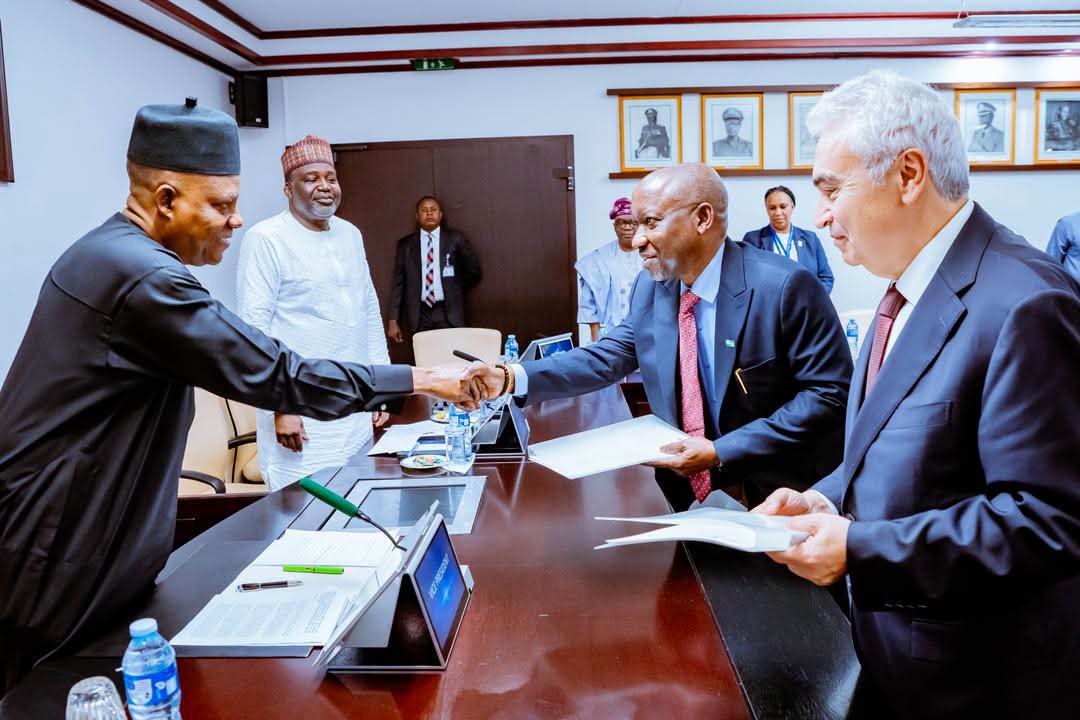
Nigeria and the International Energy Agency (IEA) have signed an agreement for a Joint Work Programme to strengthen strategic partnership in the development of data for energy policy and investment across the value chain for economic growth and energy security.
This is just as the Vice President, Senator Kashim Shettima, has said Nigeria’s formal admission into the IEA as an Association Country is a significant milestone for the country and another testament to the gains of the economic reforms of the administration of President Bola Ahmed Tinubu.
Senator Shettima stated this on Thursday during the signing of the agreement for the Joint Work Programme between Nigeria and IEA, signaling the formal commencement of the partnership.
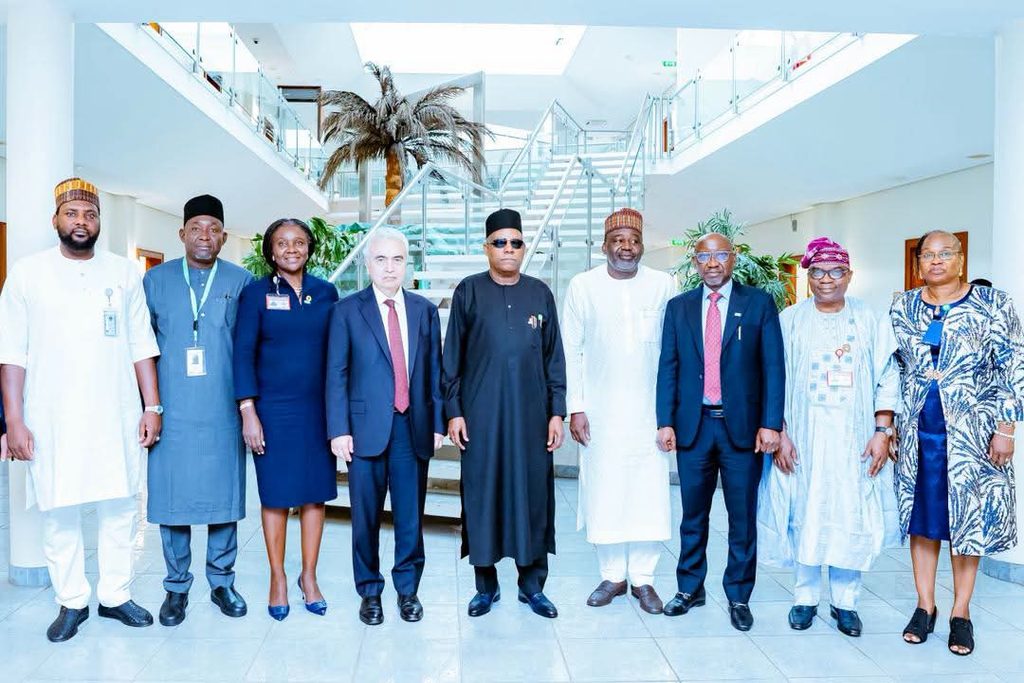
Speaking on behalf of President Tinubu, the Vice President noted that Nigeria’s formal entry into the fold of the Paris-based non-governmental organisation justifies his administration’s policy choices and efforts aimed at leveraging the country’s abundant energy resources scattered across the nation.
Commending the IEA for the important role it is playing in shaping global energy landscape, he said the effort of the agency in the global energy conversation and in supporting countries to navigate the challenges of energy security, affordability, sustainability and economic development, cannot be overstated.
His words: “Nigeria’s admission as an association country with the IEA is a significant milestone for our country and it reflects Nigeria’s strategic importance in the global energy landscape and the confidence that IEA has placed in our commitment to constructive international energy cooperation.”
VP Shettima added that given Nigeria’s potential, “the country will benefit from IEA’s institutional knowledge, the intellectual resources, the reach and expertise to support our nation’s ambitions in this sector.”
He acknowledged Nigeria’s abundant renewable energy resources and his commitment to repositioning the economy leveraging available resources which are already manifesting across different sectors of the economy.
The Vice President assured the IEA team of his administration’s commitment to continue to partner with other stakeholders within the setting to contribute to the global energy debate on a fair and just energy transition.
Earlier, leader of the IEA delegation, Dr. Fatih Birol explained that his organisation is an organisation of governments that covers all technological fields, including oil, gas, solar, nuclear power, artificial intelligence and electric cars based in Paris.
Working with top 500 energy experts of the world in terms of giving policy advice, sharing data and expertise, he said to be a member of the IEA family is not an easy task, as it requires a lot of considerations and tests.
According to Dr. Birol, after detailed discussions with the Minister of State for Petroleum and Gas, Mr. Ekperikpe Ekpo, the Board comprising the governments of the United States, Japan, Germany, Italy, and UK voted and accepted Nigeria unanimously as a member.
“The IEA will accompany the Nigerian energy sector for the next few years to come for a much better energy future. We will provide policy advice from clean cooking to gas markets, from gas markets to training Nigerian experts at the IEA on our own,” he assured.
Earlier, Minister of State Petroleum Resources (Gas), Mr Ekperikpe Ekpo, stressed that Nigeria’s admittance into the IEA was based on the performance of the Tinubu administration reflected in the reforms undertaken in the economy.
He said the signing of the Joint Work Programme, which portends the involvement of the technical team of the IEA with Nigeria in the development of data for energy policy and investment across the value chain and targeted for economic growth and energy security.
On his part, the Minister of State for Foreign Affairs, Ambassador Sola Enikanoaiye, described IEA’s partnership with Nigeria as strategically important, noting that the Nigerian Mission in Paris played a critical role in ensuring its success.
Pledging the commitment of the Minister of Foreign Affairs, Mrs. Bianca Odumegwu-Ojukwu, towards the process, “Our role is to ensure that whatever government does at home is projected effectively in advancing and promoting the interest of Nigeria.
“We take this as a critical component of our national interest and we will not fail in ensuring that we assist, as facilitators and coordinators, in ensuring that the maximum benefit of this endeavor is derived for the benefit of the Nigerian people.”
Also, the Director General of Energy Commission of Nigeria, Dr. Mustapha Abdullahi, said the Commission’s relationship with IEA led to the joint sponsorship of Nigeria’s last National Energy Master Plan, even though there was no structure to their relationship.
He expressed optimism that Nigeria’s formal joining of the IEA and the agreement will strengthen the Commission’s relationship with the organisation.
Nigeria, IEA Solidify Partnership, Sign Pact On Energy Policy, Security

FG Moves to Mainstream Gender-Responsive Budgeting in 2027 Budget

NAPTIP Moves to Strengthen Justice Chain Against Trafficking, Migrant Smuggling

NAPTIP, France move to dismantle human trafficking networks

Roger Federer’s Shock as DNA Results Reveal Myla and Charlene Are Not His Biological Children

THE PLIGHT OF FARIDA

FAILED COUP IN BURKINA FASO: HOW TRAORÉ NARROWLY ESCAPED ASSASSINATION PLOT AMID FOREIGN INTERFERENCE CLAIMS
-
 News3 years ago
Roger Federer’s Shock as DNA Results Reveal Myla and Charlene Are Not His Biological Children
-
Opinions5 years ago
THE PLIGHT OF FARIDA
-
 News1 year ago
FAILED COUP IN BURKINA FASO: HOW TRAORÉ NARROWLY ESCAPED ASSASSINATION PLOT AMID FOREIGN INTERFERENCE CLAIMS
-

 News2 years ago
EYN: Rev. Billi, Distortion of History, and The Living Tamarind Tree
-
 Opinions5 years ago
POLICE CHARGE ROOMS, A MINTING PRESS
-

 ACADEMICS3 years ago
A History of Biu” (2015) and The Lingering Bura-Pabir Question (1)
-

 Columns3 years ago
Army University Biu: There is certain interest, but certainly not from Borno.
-

 Politics1 year ago
2027: Why Hon. Midala Balami Must Go, as Youths in Hawul and Asikira/Uba Federal Constituency Reject ₦500,000 as Sallah Gift
