
Education
ASUU, like PENGASAN: And the Unending Trauma of the Nigerian Federal University Students.

ASUU, like PENGASAN: And the Unending Trauma of the Nigerian Federal University Students.
By: Dr. James Bwala
The academic landscape in Nigeria is fraught with challenges that have a profound impact on students’ lives, particularly within the federal university system. Central to this discourse is the Academic Staff Union of Universities (ASUU), like the Petroleum and Natural Gas Senior Staff Association of Nigeria (PENGASAN), both of which serve as pivotal players in the orchestration of educational policies and policies in the oil sector and conditions within their respective domains. The persistent conflicts, strikes, and policies instituted by these unions have created an atmosphere of instability and uncertainty that significantly affects students and Nigerians. The implications of ASUU and PENGASAN on Nigerian federal university students and the nightmares of fuel queues among Nigerians generally have a long history. Exploring the historical context of their formation, the recurrent strikes they undertake, the psychological and academic trauma experienced by students, and the broader consequences on Nigerians and Nigeria’s educational sector is huge.
The inception of ASUU in 1978 arose from the necessity to address the deteriorating conditions of academic staff in Nigerian universities. Established with the aim to advocate for better remuneration and improved working conditions, ASUU became a significant voice for university lecturers’ rights. As a union, it quickly grew to encompass broader issues within the educational sector, including the quest for greater budget allocations and autonomy for federal universities.
Conversely, PENGASAN emerged as a counterpart for oil workers, seeking similar objectives of improved conditions and recognition. Both unions echo decades of systemic neglect characterized by inadequate funding, lack of infrastructure, and insufficient support for research and development in Nigeria’s higher education system as well as the shifts required for the oil workers. They always cried out, directing their actions to what they called the unfulfilled promises by the government. But who is really not making an attempt to shift ground? ASUU or government? Of course those with little or no information about what is going on at the table of meetings will always want to point a finger at the government. The very lie they told you is that ASUU is fighting for the rights of all, and we believed them as carriers of the true message. Always the resultant tensions between educational bodies, the oil sector, and the state have led to numerous strikes, which have become a recurring theme in the academic calendar for the universities and the ugly experiences Nigerians had to deal with wheneverPENGASAN made a move until recently exposed in the case with Dangote.
READ ALSO: https://newsng.ng/group-captain-agom-a-soldiers-heart-an-officer-of-excellence-and-a-true-gentleman/
We are heading towards another round of strikes again by ASUU despite the efforts of the government under this administration to ensure a soft landing for all Nigerians and particularly students seeking education in federal universities. Strikes instigated by ASUU, like PENGASAN, have become emblematic of the struggles within Nigeria as a nation. Nigeria’s educational sector and the oil sector are areas of discussion amongst citizens recently. The most recent decades have seen these unions engage in strike actions that have spanned from weeks to months, bringing the academic calendar to a standstill and forcing motorists out of the roads as a result. For instance, ASUU’s strike in 2022 lasted over eight months due to grievances surrounding underfunding and the implementation of agreements made with the government. Such prolonged disruptions are not just an inconvenience; they precipitate a cascade of negative effects for students, and the private universities are cashing in on this and strangling parents who had to pay through their nose to see to the education of their children. And this same ASUU, which is benefitting from an extended hand in the private education sector, is looking the other way as parents sweat it to meet the least they must do for their children.
Academically, strikes lead to the elongation of degree programs, compounding the already lengthy process of obtaining a university education in Nigeria. The psychological toll cannot be understated; students face anxiety over their futures, uncertainty concerning job prospects, and the diminished quality of education due to inconsistent attendance and sporadic learning experiences. The change in academic timelines often disrupts students’ plans, resulting in financial strain as many students depend on family support or scholarships that typically have fixed durations. Certainly this bad experience gave birth to a disease we are all experiencing today in the name of violent and cyber crimes, or Yahoo-Yahoo, an education most students get from self-teachings in very dark universities. And this has become a problem for the whole society.
Additionally, the overlap of strikes with an unstable economy means that many students are also grappling with financial insecurity, which necessitates the other way round. With students from lower socio-economic backgrounds affected disproportionately, the impact of these strikes exacerbates existing inequalities in access to quality education, and we are making do with what is at hand—the bad deeds and the resultant returns.
The trauma inflicted upon Nigerian federal university students extends beyond academic interruptions. Students endure a complex web of psychological stressors, manifesting as anxiety, depression, and loss of motivation. The constant uncertainty regarding when or if classes will resume creates an environment rife with frustration and despair. This mental health crisis among students has been acknowledged yet remains largely unaddressed by university administrations and government bodies. The social fabric of university life is disrupted during strikes. Students miss out on critical developmental experiences that occur within a vibrant campus setting—interactions that foster networking, communication skills, and emotional intelligence. Many students feel isolated during these periods, leading to a sense of disconnection from their peers and the academic community. The lack of engagement in academic settings can lead to a culture where students feel disenfranchised and voiceless, further breeding cynicism towards the democratic processes that govern their education.
The continuous cycles of strikes and unrest within the Nigerian federal university system highlight deeper systemic issues. Despite efforts being put in place to reach agreements, ASUU has in most cases been unwilling to shift ground, causing setbacks in every sitting government, and this lack of agreements with ASUU, as with PENGASAN, is indicative of a broader disregard for the importance of education and the future of Nigeria’s youth. This neglect results in a myriad of outcomes that affect not only students but the entire nation.
One significant consequence other than what I mentioned earlier is the brain drain phenomenon. Many qualified individuals, frustrated by the poor educational infrastructure and lack of opportunities domestically, opt to seek education and employment abroad. This exodus of talent diminishes the potential for innovation and economic growth within Nigeria, perpetuating a cycle of dependency on foreign expertise and limiting the country’s ability to develop homegrown solutions to its challenges.
In a competitive global environment, the quality of graduates produced by Nigerian universities is increasingly scrutinized. Disruptions caused by strikes affect the perception of these institutions both locally and internationally. Prospective students may reconsider enrolling in Nigerian universities, leading to a decline in enrollment rates and the subsequent financial crises faced by these institutions. The intersection of ASUU and PENGASAN’s activities with the experiences of Nigerian federal university students paints a stark picture of an educational landscape marred by conflict and instability.
While these unions play crucial roles in advocating for the rights and needs of academic staff and workers in their drives, the consequences of their actions resonate negatively through the lives of students and Nigerians who find themselves caught in the crossfire. The unending trauma experienced by these students—including prolonged academic timelines, psychological distress, and a compromised educational environment—demands urgent attention and reform. Addressing these challenges requires a collaborative effort between the government, educational institutions, and student bodies. It is imperative that stakeholders prioritize dialogue and negotiations that yield tangible improvements in funding, infrastructure, and overall educational policies. Only through concerted efforts can the negative cycles of strikes and trauma be mitigated, paving the way for a more stable, equitable, and empowering educational experience for all Nigerian federal university students.
* James Bwala, PhD, writes from Abuja
ASUU, like PENGASAN: And the Unending Trauma of the Nigerian Federal University Students.



A Time To Read, Reflect, and Learn
By: Our Reporter
As predicted by many, during his two-week leave, Vice President Kashim Shettima, by custom, takes time for study and reflection.
Leadership is sustained by the willingness to keep learning. Sometimes, stepping away from the daily rush creates the space to examine ideas more carefully and return to responsibility with greater clarity.

For the Vice President, the period is also an opportunity to deepen the knowledge required for continued service to Nigeria.

Learning does not end when responsibility begins. In many ways, greater responsibility makes learning even more necessary.
A Time To Read, Reflect, and Learn
Nigeria’s Education Crisis Now About System Capacity, Not School Enrolment – Report
By: Michael Mike
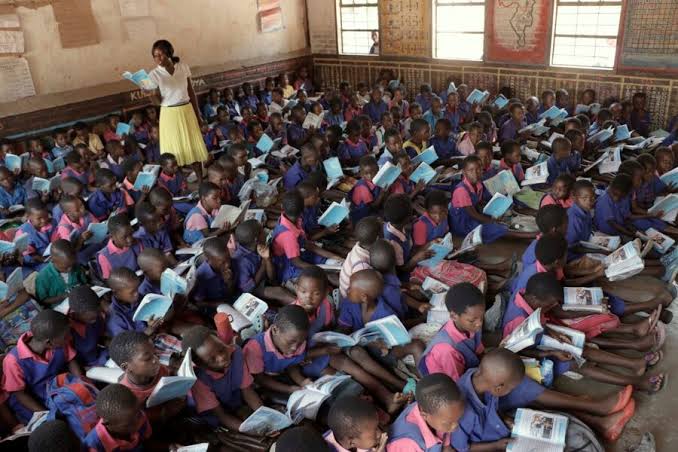
Nigeria’s education challenge has shifted from getting children into school to building an education system capable of delivering quality learning, according to a new policy report by the Athena Centre for Policy and Leadership.
The report, Nigeria’s Education Capacity Crisis: Closing the Gap Between Enrolment Growth and System Capacity, authored by Professor Temitayo Shenkoya and Anita Olatunde, argued that while the country has made remarkable progress in expanding access to education, inadequate investment in classrooms, teachers, infrastructure and governance has left the system overwhelmed and unable to translate rising enrolment into improved learning outcomes.
The publication, released on Wednesday in Abuja, described the situation as a structural capacity crisis rather than a temporary funding challenge, warning that without far-reaching institutional reforms, Nigeria risks undermining its human capital development and long-term economic competitiveness.
According to the report, 40.1 million pupils and students were enrolled in Nigeria’s public basic and secondary education system during the 2024/2025 academic session across 107,042 public schools.
However, the rapid increase in enrolment has far outpaced investments needed to sustain quality education.
The report revealed that an average classroom accommodates about 60 students, while roughly 66 students share a single toilet, highlighting severe overcrowding and poor sanitation in many public schools.
It also noted that Nigeria devoted only 0.3 per cent of its Gross Domestic Product (GDP) to public education in 2025, a figure significantly lower than allocations recorded in several comparable African countries.
The authors argued that the country’s education system is constrained less by enrolment than by weak governance structures, fragmented planning, inadequate teacher deployment, poor instructional quality, weak institutional coordination and limited use of education data for policy decisions.
“Nigeria’s education challenge is no longer defined solely by access; it is increasingly one of system capacity,” the report stated.
Rather than focusing exclusively on expanding school access, the report urged governments at all levels to prioritise strengthening institutional capacity, improving accountability mechanisms and adopting evidence-based planning to enhance learning outcomes.
Central to its recommendations is the development and effective deployment of the Digital Nigeria Education Management Information System (DNEMIS), which it said should serve as the backbone for planning, monitoring and evaluating education performance nationwide.
Among other recommendations, the report called for the establishment of integrated State Education Management Information Systems linked to the national platform, sustained multi-year investments in classrooms, teachers and digital infrastructure, evidence-based teacher deployment, improved instructional quality and stronger school leadership.
It also advocated annual infrastructure and learning-performance scorecards to monitor progress, targeted interventions for vulnerable learners and improved coordination among the Federal Ministry of Education, state governments, State Universal Basic Education Boards (SUBEBs), Teaching Service Commissions (TESCOMs) and Local Government Education Authorities.
The report stressed that future education spending should be guided by verified data and measurable learning outcomes rather than enrolment figures alone.
Drawing lessons from Botswana, South Africa and Namibia, the authors argued that countries achieving better educational outcomes have done so by building institutions capable of continuous planning, performance monitoring and accountability.
According to the report, the true measure of success should no longer be the number of children enrolled in school or classrooms constructed, but the ability of governments to use reliable evidence to improve teaching quality, strengthen school leadership and ensure meaningful learning for every child.
The publication concluded that addressing Nigeria’s education capacity deficit is not only an education sector priority but also a national development imperative with direct implications for economic growth, workforce productivity and global competitiveness.
Nigeria’s Education Crisis Now About System Capacity, Not School Enrolment – Report
Education
Drama at Ogun Student Election as Umpire Allegedly Swallows Ballot Papers, Police Intervene

Drama at Ogun Student Election as Umpire Allegedly Swallows Ballot Papers, Police Intervene
By Zagazola Makama
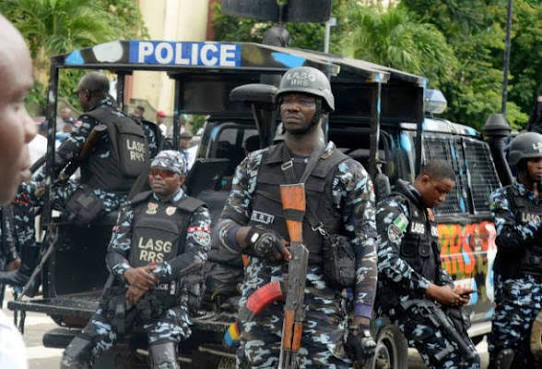
Drama unfolded during the Joint Campus Ogun State Council election held at the Nigeria Labour Congress (NLC) Secretariat in Leme, Abeokuta, after an electoral umpire allegedly swallowed some ballot papers during vote counting.
Police sources said the election, which commenced at about 8:00 a.m., was briefly delayed following a two-hour recess to resolve disputes over the number of accredited institutions.
The sources disclosed that stakeholders later reached a consensus recognising 13 institutions, after which the election proceeded.
According to the sources, tension escalated during the counting of votes when one of the electoral umpires, whose identity is yet to be confirmed, allegedly chewed some ballot papers as participants demanded the announcement of results.
They added that the umpire later fainted, prompting the Divisional Police Officer (DPO) to evacuate him in a Department of State Services (DSS) vehicle for safety and urgent medical attention.
The sources further said the Chairman of the electoral commission, identified as Sileola, was also escorted to safety in a police SWAT vehicle.
They noted that three persons who attempted to cause a breakdown of law and order were arrested, while aggrieved parties were advised to channel their grievances through the appropriate authorities.
The sources said the situation was brought under control, with calm restored at the venue, while further developments are expected.
Drama at Ogun Student Election as Umpire Allegedly Swallows Ballot Papers, Police Intervene

Farmer Injured in Machete Attack Allegedly by Herdsmen in Plateau

Suspected Fulani bandits Kill Man, Block Road in Plateau Community

NHRC seeks death penalty moratorium as 3,000 inmates languish on death row

Roger Federer’s Shock as DNA Results Reveal Myla and Charlene Are Not His Biological Children

THE PLIGHT OF FARIDA

FAILED COUP IN BURKINA FASO: HOW TRAORÉ NARROWLY ESCAPED ASSASSINATION PLOT AMID FOREIGN INTERFERENCE CLAIMS
-
 News3 years ago
Roger Federer’s Shock as DNA Results Reveal Myla and Charlene Are Not His Biological Children
-
Opinions5 years ago
THE PLIGHT OF FARIDA
-
 News1 year ago
FAILED COUP IN BURKINA FASO: HOW TRAORÉ NARROWLY ESCAPED ASSASSINATION PLOT AMID FOREIGN INTERFERENCE CLAIMS
-

 News3 years ago
EYN: Rev. Billi, Distortion of History, and The Living Tamarind Tree
-
 Opinions5 years ago
POLICE CHARGE ROOMS, A MINTING PRESS
-

 ACADEMICS3 years ago
A History of Biu” (2015) and The Lingering Bura-Pabir Question (1)
-

 Columns3 years ago
Army University Biu: There is certain interest, but certainly not from Borno.
-

 Politics1 year ago
2027: Why Hon. Midala Balami Must Go, as Youths in Hawul and Asikira/Uba Federal Constituency Reject ₦500,000 as Sallah Gift
