
News
AT JIGAWA INVESTMENT SUMMIT 2026: President Tinubu Making It Easier To Do Business Now In Nigeria, VP Shettima Asserts


AT JIGAWA INVESTMENT SUMMIT 2026: President Tinubu Making It Easier To Do Business Now In Nigeria, VP Shettima Asserts
Says FG is helping states to unlock, deploy resources prudently through rigorous reforms at the centre*
By: Michael Mike
The Vice President, Senator Kashim Shettima, has explained some of the strategies being deployed by the administration of President Asiwaju Bola Ahmed Tinubu to improve the ease of doing business in Nigeria.
According to him, through the Presidential Enabling Business Environment Council (PEBEC) as well as the bold structural and fiscal reforms, the Federal Government has replaced gatekeeping with partnership that has enabled the subnationals to unlock their economic potential.
Senator Shettima, who stated this on Wednesday when he declared open the Jigawa State Investment Summit 2026, in Dutse, the state capital, noted that across the federation, the President Tinubu-led Federal Government has taken difficult but necessary decisions to put the economy back on a path of sustainable growth.
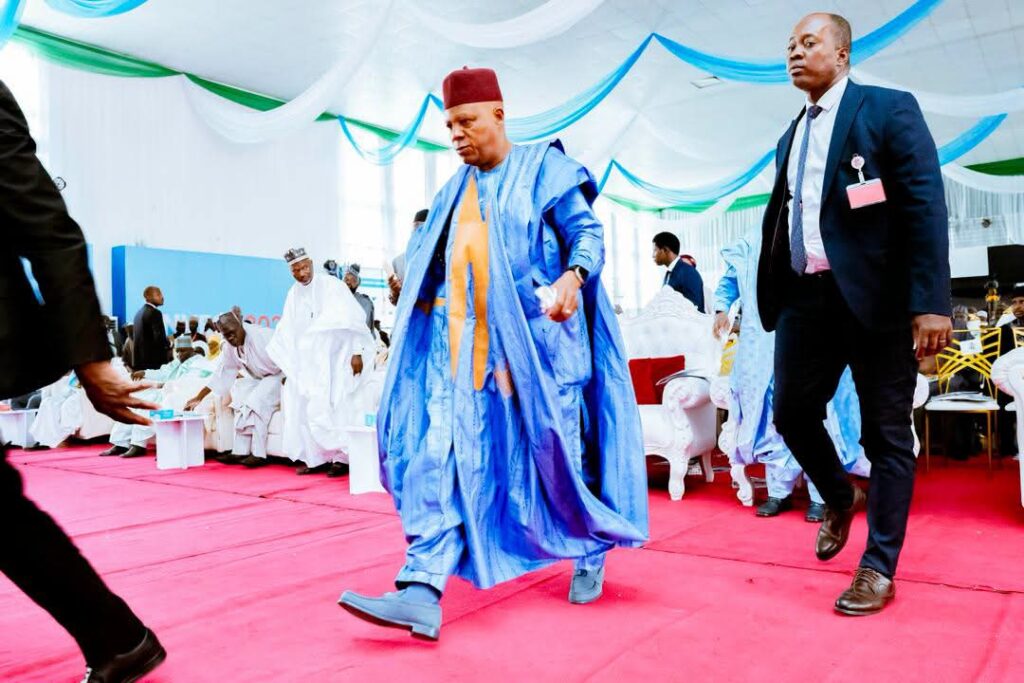
“On our part, we have made it easier to do business in Nigeria. Through the Presidential Enabling Business Environment Council, we have simplified registrations and permits, and brought the cost and time of starting and running a business steadily down. The Business Facilitation Act has given these reforms the force of law, binding our agencies to transparency, predictability and speed.
“We have also unified and liberalised the foreign-exchange market, ended distortions that for too long frightened away serious investors, and put public finances on a more honest footing,” he said.
The Vice President observed that even though it had been a journey for which patience is required, the outcomes indicate that it is paying off, as the currency markets are now functioning more transparently, and reserves are now firmer.
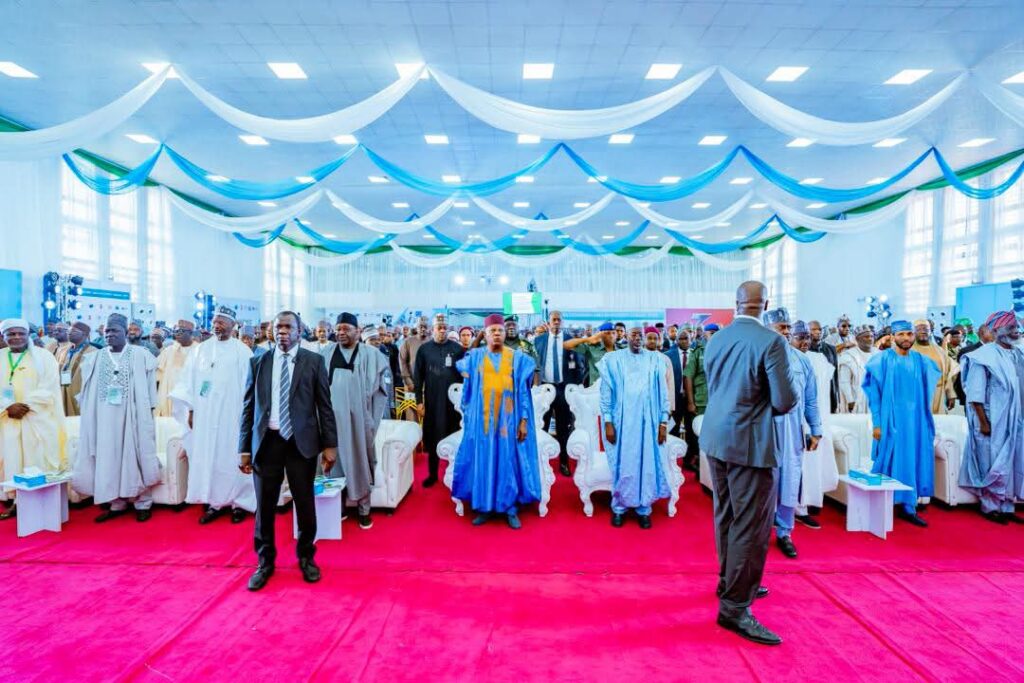
He said for the first time in over ten years, the world’s leading rating agencies have started raising Nigeria’s sovereign credit standing, while the reforms at the centre are helping the states to unlock and deploy resources prudently.
Explaining how the administration’s reforms have opened the strategic sectors of the economy to private capital, VP Shettima cited the Electricity Act 2023, which he said “stands as a consequential reform, devolving real power to the states to license, generate and distribute electricity, and inviting investors to build the power infrastructure our industries and homes so urgently need.
“From power to agriculture, from solid minerals to the digital economy, we have replaced gatekeeping with partnership. And we have redirected the savings from hard reform toward the things that build a nation, into infrastructure, into human capital, and into support for our most vulnerable citizens, so that growth, when it comes, is felt in the household and not only in the headline,” he added.
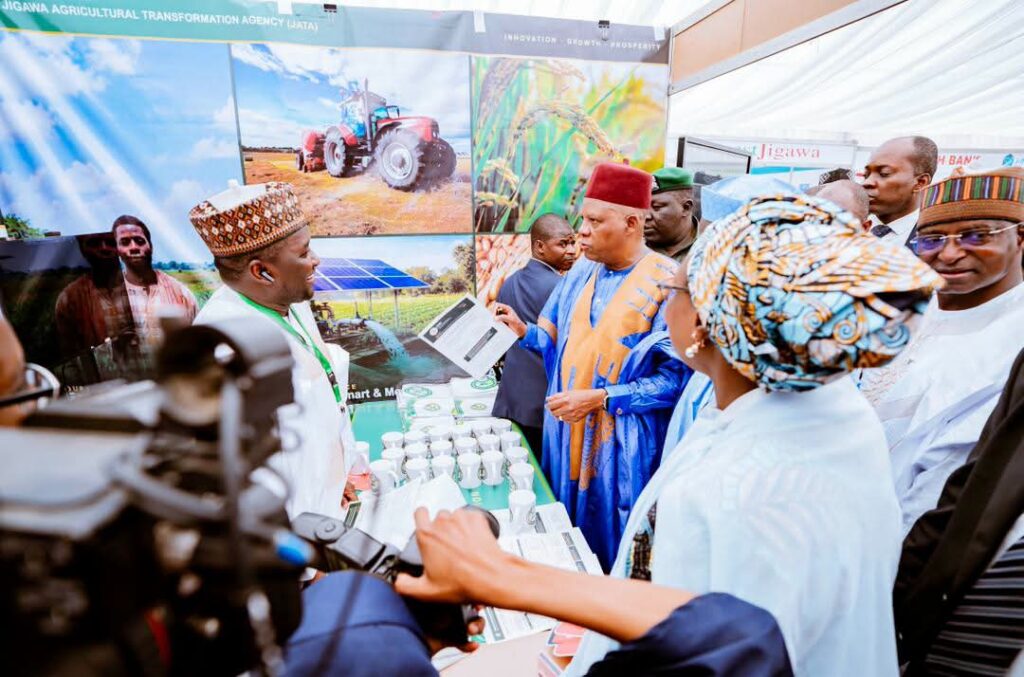
Senator Shettima acknowledged, however, that reform at the centre would make little or no impact if it does not reach the states, noting that it is the reason why the Federal Government, through the National Economic Council and the Federal Executive Council, has prioritised healthy debates and deliberations to harmonise ideas for the nation’s economic direction.
The healthy debates, he noted, are aimed at strengthening the fiscal health and transparency of states, “to help them unlock and deploy resources prudently, to channel support toward agriculture, food security and the protection of our environment and livelihoods, and to open doors for sub-national governments to access development finance and climate finance on fair terms.”
Acknowledging that Jigawa State had been “a place of immense economic opportunities and untapped potential”, the Vice President said the investment summit is an assurance of the efforts and readiness of the state governor, Mallam Umar Namadi, “to revitalise the investment ecosystem of the State.”
While wooing both local and foreign investors, the VP reminded them “that the Federal Government has done the hard work of reform, and that, in partnership with the Jigawa State Government,” the Tinubu administration is convinced that the promise of Jigawa State “is one of high yields.
“We will be here to offer support and to ensure that you experience no bureaucratic bottlenecks in setting up here and enjoying the dividends of courage,” he assured.
Earlier, the Governor of Jigawa State, Namadi, explained that the summit was designed as a working platform to move the state beyond aspiration to disciplined execution, creating viable and valuable opportunities for investors.
Namadi reaffirmed confidence in Jigawa’s capacity to achieve sustainable prosperity through vision, credible investment and purposeful partnership.
He said Jigawa has over 24,700 square meters of fertile arable land, including more than 411,000 hectares of fadama suitable for a year round farming, with water and irrigation assets, welcoming business climate, capable and hardworking population as well as access to market across northern Nigeria and neighboring Niger Republic along the ancient transaharan corridor.
“Our development direction is anchored on Jigawa vision and our 12 Points Agenda with priorities that include Agricultural transformation, infrastructure, energy, the digital economy, private sector growths, revenue expansion, security, social protection, health, education and vocational skills development.” the governor said.
Also, the Deputy Chief of Staff to the President (Office of the Vice President), Senator Ibrahim Hassan Hadeija, advised the Jigawa State government to invest more resources in energy generation, noting that without stable power it would be very difficult to attract any meaningful investment.
Hadeija said President Tinubu has deregulated the power sector, with Jigawa having a three Megawatts Independent Power Project in Dutse with 16 kilometers of transmission and distribution.
On his part, the Minister of Livestock Development, Idi Mukhtar Maiha, said Jigawa occupies a unique and strategic position in Nigeria’s agricultural landscape, adding that the state is naturally endowed with natural resources, particularly within the livestock sector, with an estimated population of 3.6 million cattle, 5.6 million sheep, 6.6 million goats and others.
According to him, Jigawa state livestock value chain are both expansive and lucrative.
The Minister urged local and international investors to look closely at the Jigawa state livestock sector, noting that the resources are abundant, the political will is resolute and the market is ready.
On her part, the Minister of State for Education, Prof. Suwaiba Ahmad, described the theme of the summit as timely and inspiring, adding that it reflects a bold vision for economic transformation and the commitment to harnessing the vast opportunities in the state for the benefits of its people and future generations.
The Minister commended the remarkable stride of the Jigawa governor, adding that his administration has demonstrated a clear commitment to people’s centred development.
In his remark, Chairman of the summit and Chairman of Arewa Consultative Forum (ACF), Alhaji Bashir Dalhatu (Wazirin Dutse), said because Jigawa is strategically located in the heart of Northern Nigeria, it serves as a gateway between the North West and the North East Nigeria.
“So our product and produce can easily reach big markets from Jigawa state to anyway. That is a very big blessing and attraction to any investor. We have got the arable land – lots of it l- and we have committed farmers, who are hospitable, welcoming,” he said.
AT JIGAWA INVESTMENT SUMMIT 2026: President Tinubu Making It Easier To Do Business Now In Nigeria, VP Shettima Asserts



UN Urges Africa to Prioritise People, Partnerships to Rescue SDGs
By: Michael Mike
The United Nations has called on African governments, development institutions and the private sector to dramatically scale up investments in people and strengthen strategic partnerships to reverse the continent’s slow progress towards achieving the Sustainable Development Goals (SDGs) before the 2030 deadline.
The appeal was made on Saturday at the Africa Social Impact Summit 2026 in Lagos, where the UN warned that Africa faces an increasingly difficult development landscape marked by economic headwinds, shrinking international aid, climate shocks and persistent conflicts.
Speaking on behalf of the United Nations Resident and Humanitarian Coordinator a.i. in Nigeria, Ms. Wafaa Saeed, the United Nations Population Fund (UNFPA) Representative in Nigeria, Ms. Muriel Mafico, said the continent must urgently shift its focus towards investing in its people if it hopes to unlock sustainable economic growth.

“The wealth of a nation is not measured by what it extracts from the ground. It is measured by what it unlocks in its people,” Mafico declared, stressing that development financing should ultimately be about creating opportunities for citizens rather than merely balancing budgets.
Addressing government officials, development partners, civil society organisations and business leaders, she argued that every child deserves quality education, every young person should have access to decent employment, every woman should be empowered to fulfil her potential, and communities must be equipped to withstand future economic and climate-related shocks.
She painted a sobering picture of global development, noting that only 36 per cent of the SDG targets are currently on track or making moderate progress. According to her, declining official development assistance, mounting debt burdens and a widening financing gap for developing countries are threatening efforts to meet the 2030 Agenda.
Despite the setbacks, Mafico maintained that Africa possesses the human and economic potential to change its development trajectory.
With less than five years remaining to meet the SDGs, she urged African countries to embrace greater urgency, ambition and collective action, insisting that sustainable development cannot be imported.
“No country can outsource its development. No nation can import resilience,” she said, calling on governments to strengthen domestic leadership, promote innovation and build partnerships that reinforce national priorities.
Turning to Nigeria, Mafico described the country’s youthful population as one of its greatest strategic assets, saying deliberate investment in education, innovation, entrepreneurship and skills development could transform the country into a global centre for inclusive growth.
She warned that neglecting investments in young people and women would deepen inequality and limit the country’s future economic prospects.
The UN official also advocated a new model of development financing anchored on stronger domestic resource mobilisation, increased private sector investment, technological innovation and expanded support for entrepreneurs.
She emphasised that partnerships should be driven by measurable impact rather than rhetoric, with people remaining at the centre of every development initiative.
Highlighting the UN’s ongoing collaboration with Nigerian authorities and other stakeholders, Mafico said the organisation is supporting reforms in institutional capacity, social protection, renewable energy, digital innovation, food systems, education and programmes aimed at expanding opportunities for women and young people.
She urged participants at the summit to ensure that the gathering delivers tangible outcomes through stronger partnerships, increased investments and coordinated action capable of accelerating sustainable development across Africa.
UN Urges Africa to Prioritise People, Partnerships to Rescue SDGs

Marwa Warns Traditional Rulers After Discovery of Drug Cartels’ Meth Labs in Southwest Forests
By: Michael Mike
Chairman/Chief Executive Officer of the National Drug Law Enforcement Agency (NDLEA), Brig.-Gen. Buba Marwa (retd.), has called on traditional rulers, parents and community leaders to take ownership of Nigeria’s war against drug abuse and illicit trafficking, warning that criminal drug syndicates are increasingly exploiting rural communities and forests for illegal operations.
Marwa’s appeal comes amid growing concerns over the recent discovery of industrial-scale clandestine methamphetamine laboratories allegedly operated by Nigerian-Mexican drug cartels in the forests of Ogun and Oyo states.

Speaking on Saturday at the 10th Akinale Day celebration and the first coronation anniversary of the Towulade of Owu Akinale, Oba Oluseyi Ayodeji Adewole Adediran (Otileta I), in Ogun State, the NDLEA chairman urged royal fathers across the country to become active partners in efforts to prevent drug traffickers from infiltrating their communities.
He specifically charged traditional rulers and community leaders to monitor activities in forests and rural settlements and to thoroughly scrutinise individuals seeking to acquire farmlands, warning that criminal organisations are increasingly using isolated locations to establish illicit drug production facilities.
Marwa said the recent discovery of methamphetamine laboratories in the South-West underscored the need for vigilance at the grassroots level.
He stressed that the fight against drug abuse could not be won by law enforcement agencies alone, insisting that traditional institutions remained critical because of their close relationship with local communities and their understanding of youth dynamics.
According to him, royal councils should establish community-based advocacy networks that would not only make their domains hostile to drug traffickers but also provide support and rehabilitation pathways for persons battling substance dependence.
Marwa also appealed to parents to return to the core values of responsible parenting by paying closer attention to their children’s behaviour and identifying early warning signs of substance abuse before addiction takes root.
Addressing young people, he warned that illicit drugs offer only a false sense of escape, arguing that substance abuse compounds life’s challenges instead of solving them.
“Drug abuse does not discriminate,” he said, noting that the menace affects people regardless of their social status, age or location.
The NDLEA boss described his visit to Akinale as “a pilgrimage of friendship, respect and deep-seated admiration,” recalling that his relationship with the monarch dated back nearly two decades to the period when Oba Adediran served as leader of the Lisabi Youths.
He commended the monarch’s leadership qualities, saying the dedication and commitment he displayed as a youth leader had continued to define his reign since ascending the throne of Owu Akinale a year ago.
Marwa Warns Traditional Rulers After Discovery of Drug Cartels’ Meth Labs in Southwest Forests
News
Police Move to Reinforce Complaint Response Unit, Court Media as Accountability Drive Gains Momentum

Police Move to Reinforce Complaint Response Unit, Court Media as Accountability Drive Gains Momentum
By: Michael Mike
The Nigeria Police Force has unveiled a fresh push to strengthen its internal accountability system, announcing major improvements to its Complaint Response Unit (CRU) while seeking a stronger partnership with the media to enhance public confidence and oversight of policing in the country.
The move, which underscores the Force’s renewed emphasis on transparency and professionalism, was disclosed on Friday by the newly appointed Force Public Relations Officer, CSP Anietie Okokon Edem, during a courtesy visit to the Nigeria Union of Journalists (NUJ), Federal Capital Territory (FCT) Council in Abuja.

Edem said the visit formed part of his familiarisation tour following his appointment, but stressed that it also reflected the Inspector-General of Police’s commitment to fostering closer engagement with the media as a critical stakeholder in policing and democratic governance.
At the centre of the discussions was the Complaint Response Unit, the Force’s dedicated digital platform established to receive, monitor and resolve complaints against police personnel nationwide.
According to the Force spokesman, the unit is undergoing significant enhancements aimed at making it more efficient, responsive and transparent in handling reports of professional misconduct, extortion, harassment, abuse of office and alleged human rights violations.
He explained that the upgraded system would improve response times, strengthen complaint tracking and provide greater transparency in the resolution of cases, ensuring that citizens receive timely feedback on petitions lodged against erring officers.
Edem noted that building public trust requires a policing system that not only enforces the law but is also willing to hold its personnel accountable whenever standards are breached.
He further disclosed that the Force would soon convene a media parley with the Zone 7 Police Command to deepen engagement with journalists and provide regular updates on policing activities and ongoing reforms.
The initiative, he said, is intended to bridge the information gap between the police and the public by encouraging more informed, factual and balanced reporting.
“Journalists are part of the police family,” Edem said, adding that the media remains an indispensable partner in promoting accountability, educating the public and supporting efforts to reform the Force.
Responding, Chairman of the NUJ FCT Council, Comrade Grace Ike, welcomed the renewed commitment to strengthening the Complaint Response Unit, describing it as a positive step towards improving accountability within the Nigeria Police Force.
She commended the Force PRO for prioritising engagement with journalists and pledged the union’s readiness to work closely with the police in amplifying citizens’ complaints and ensuring that issues brought before the CRU receive sustained public attention.
Ike said the media would continue to play its constitutional role by reporting objectively on police reforms while giving citizens a platform to seek redress through established institutional channels.
The renewed focus on the Complaint Response Unit comes amid increasing public demand for greater accountability and transparency within law enforcement institutions. Analysts believe that an efficient complaints mechanism, backed by active media scrutiny and public engagement, could significantly strengthen confidence in the police and reinforce ongoing efforts to reposition the Force as a more professional, citizen-focused institution.
Police Move to Reinforce Complaint Response Unit, Court Media as Accountability Drive Gains Momentum

UN Urges Africa to Prioritise People, Partnerships to Rescue SDGs

Marwa Warns Traditional Rulers After Discovery of Drug Cartels’ Meth Labs in Southwest Forests

Troops neutralised key bandit leaders, restored confidence along Gusau- Funtua highway

Roger Federer’s Shock as DNA Results Reveal Myla and Charlene Are Not His Biological Children

THE PLIGHT OF FARIDA

FAILED COUP IN BURKINA FASO: HOW TRAORÉ NARROWLY ESCAPED ASSASSINATION PLOT AMID FOREIGN INTERFERENCE CLAIMS
-
 News2 years ago
Roger Federer’s Shock as DNA Results Reveal Myla and Charlene Are Not His Biological Children
-
Opinions4 years ago
THE PLIGHT OF FARIDA
-
 News1 year ago
FAILED COUP IN BURKINA FASO: HOW TRAORÉ NARROWLY ESCAPED ASSASSINATION PLOT AMID FOREIGN INTERFERENCE CLAIMS
-

 News2 years ago
EYN: Rev. Billi, Distortion of History, and The Living Tamarind Tree
-
 Opinions5 years ago
POLICE CHARGE ROOMS, A MINTING PRESS
-

 ACADEMICS2 years ago
A History of Biu” (2015) and The Lingering Bura-Pabir Question (1)
-

 Columns2 years ago
Army University Biu: There is certain interest, but certainly not from Borno.
-

 Politics1 year ago
2027: Why Hon. Midala Balami Must Go, as Youths in Hawul and Asikira/Uba Federal Constituency Reject ₦500,000 as Sallah Gift
