
Politics
Borno 2027: When context speaks louder than words on the road to Maiduguri Government House


Borno 2027: When context speaks louder than words on the road to Maiduguri Government House
By: Dr. James Bwala
Since the return of democracy in Nigeria in 1999, the political landscape of Borno State has been marked by a distinctive pattern of opposition to the central government, a stance maintained until the pivotal shift observed around 2015. Historically, governors in Borno have enjoyed a robust confidence, often operating with considerable autonomy in determining their successors well before the end of their tenure. This pattern of assertive decision-making reached a particularly intriguing juncture under the governance of Professor Babagana Umara Zulum, whose public statements and political maneuvers reveal the complex interplay of personal ambition, political realities, and the subtle but powerful influence of “celestial powers” shaping the political future of Borno State.
Professor Zulum’s tenure presents two contrasting facets of political posture that invite close scrutiny. On one side, his bold declaration before the state assembly—where he confidently asserted that he would “definitely step on some toes” when revealing his “dark horse”—suggests a leader who is fully aware of the political landscape and has a clear strategy for succession. This declaration exudes an aura of control and decisiveness, traits expected from a statesman who has weathered the challenges posed by insurgency and governance in a volatile region. Yet, at a subsequent public function, Zulum reversed course, stating candidly that he did not know who would succeed him. This candid admission, seemingly at odds with his earlier pronouncement, raises important questions about the forces at play behind the scenes.
READ ALSO: https://newsng.ng/maiduguri-bomb-blast-senator-kyari-acknowledges-tinubu-shertima-and-zulum-for-support-to-victims/
To understand this apparent dichotomy, it is imperative to contextualize Governor Zulum’s personality and political environment. Zulum is not known for duplicity or vacillation. His track record reveals a man committed firmly to the welfare and stability of Borno State, one who speaks deliberately and acts with purpose. Therefore, his change in tone cannot be dismissed as mere political expediency or inconsistency. Instead, it is indicative of a deeper, more intricate power dynamic: the influence of “celestial powers.” This term, though metaphorical, alludes to the entrenched, often unseen, socio-political and spiritual forces that wield significant sway in Borno’s political arena, particularly in the selection of political heirs.
The reference to Governor Bala Mohammed, a prominent opposition figure conditioned by external requirements, underscores the reality that the ultimate decision-making authority in this “Colosseum” is not solely in the hands of any individual governor. The “celestial powers” symbolize an amalgamation of political kingmakers, traditional authorities, and religious institutions—most notably the Trinity or head of the Church in reference—meaning influential elites whose blessings are considered indispensable for anyone aspiring to the gubernatorial throne in this case, Borno State. This reality curtails the autonomy of even the most politically savvy leaders, including Zulum, and necessitates a nuanced approach to political succession.
READ ALSO:https://newsng.ng/maiduguri-bomb-blast-senator-kyari-acknowledges-tinubu-shertima-and-zulum-for-support-to-victims/
Within this framework, the political contenders, or “gladiators,” must navigate a complex battlefield. Those well-versed in the underlying codes—the “knowing their onions”—adopt cautious, discreet strategies, understanding that overt posturing can be detrimental. Conversely, some actors remain conspicuously exposed, akin to standing wide open in the arena, vulnerable to “sucker punches” from better-positioned rivals. The art of political survival and eventual success in Borno’s gubernatorial contests demands not only strategic acumen but also deep alignment with these celestial powers.
Given this context, it is clear that Governor Zulum does not hold the proverbial “four aces” in determining his successor. Indeed, while his endorsement carries substantial weight, it is ultimately the confluence of political, traditional, and spiritual sanction—the blessing of the “Trinity”—that will decide who emerges as the next governor. This triune source of authority reflects the unique socio-political architecture of Borno State, where governance is as much about formal institutional processes as it is about the tacit approval of enduring traditional and religious structures.
READ ALSO: https://newsng.ng/maiduguri-bomb-blast-senator-kyari-acknowledges-tinubu-shertima-and-zulum-for-support-to-victims/
Therefore, the advice to political gladiators preparing for the 2027 governorship election in Borno is unequivocal: reassess the situation with a fresh theoretical lens that acknowledges the supremacy of this tripartite endorsement framework. Brute political force, financial clout, or popular appeal alone will not suffice. Instead, prospective candidates must engage in a sophisticated dance of alliance-building and consensus-seeking within these spiritual and traditional power centers. Only those who can “carry the bread and the wine into the holy of holies”—a metaphor underscoring the necessity of acceptance by the sacred institutions—will be legitimately positioned to govern.
The political dynamics in Borno State since 1999 illuminate a broader truth about Nigerian democracy at the subnational level: meaningful political power is often contingent upon a harmonious interplay between elected officials and non-electoral power brokers. Governor Babagana Umara Zulum’s experience encapsulates this reality vividly. His public oscillations between confident succession planning and apparent uncertainty reflect the constraints imposed by a system where “celestial powers” ultimately guide the political narrative. For aspirants to the governorship, success in 2027 and beyond will depend not merely on political competition in the conventional sense but on their ability to secure the multifaceted and profound blessings that define legitimate authority in Borno. The wise counsel, therefore, lies in humility, strategic patience, and respectful engagement with these enduring cultural and spiritual institutions—the true architects of Borno’s political destiny.
* James Bwala, PhD, writes from Abuja.
End



Nasari urges support for the new district head in Yobe
By: Yahaya Wakili
The people of the Nasari district in the Jakusko local government area in the Bade emirate council of Yobe state have been urged to extend their support to the new district head of Nasari, Alhaji Muhammadu Sabo Lamido.
The call was made by the new Dallatu of Nasari, Alhaji Babangida Jaji Girgir, shortly after he was turbaned by the District Head of Nasari, Alhaji Muhammadu Sabo Lamido, at his palace.
He expressed his appreciation to the district of Nasari, Alhaji Muhammadu Sabo Lamido, for turbaning him as a new Dallatu of Nasari, adding that today I am pleased for this mandate offered to me by the district head, and I will not forget it throughout my life tenure.
Alhaji Babangida Girgir, who is also the chairman of the Apc Jakusko local government area, said the new district head, Alhaji Muhammadu Sabo Lamido, is the man of the people, and also he came from the royal family.
According to him, the district head is a well-known person and a very simple man; he loves everyone. Girgir prays to Almighty Allah to guide and protect him throughout his life and give him the wisdom to discharge this noble duty. Amen.
The Dallatu, however, urged the people of Nasari district to be law-abiding and also respect the law and order, as well as give the new district head full support and cooperation with a view to bringing rapid development to the domain.
Nasari urges support for the new district head in Yobe

Senator Abubakar Kyari: Protecting Farmers Is Protecting Nigeria’s Food Security
By: Dr. James Bwala
Suspected Boko Haram terrorists killed 15 farmers in the Marte Local Government Area of Borno State, serving as 15 farmers in the Marte Local Government Area of Borno State by suspected Boko Haram terrorists is a tragic reminder of the serious security challenges confronting Nigeria’s agricultural sector. The victims were not combatants or political actors. They were ordinary Nigerians who went to their farms to earn a living, support their families, and contribute to the nation’s food supply. Their deaths represent not only a devastating loss of innocent lives but also a direct assault on Nigeria’s efforts to achieve food security.
The Minister of Agriculture and Food Security, Senator Abubakar Kyari, rightly expressed deep sadness and outrage over the incident. In his statement, he extended condolences to the families of the victims, the people of Marte, the Borno State Government, and Governor Babagana Umara Zulum. He also prayed for the eternal rest of the deceased and comfort for their families. His response reflects the gravity of the tragedy and the urgent need for stronger action to protect farmers and rural communities across the country.
Farmers are essential to Nigeria’s survival and development. They produce the food consumed in homes, schools, hospitals, markets, and industries. They also provide raw materials for agro-processing and create employment for millions of people. When farmers are attacked, the consequences extend far beyond the immediate victims. Their families lose breadwinners, communities lose productive citizens, markets suffer shortages, and consumers face rising food prices. In this sense, terrorism against farmers is an attack on the entire national economy.
The situation in Borno State is particularly concerning. For years, the Boko Haram insurgency and other forms of criminality have disrupted social and economic life in the region. Many farmers have been forced to abandon their ancestral lands because they fear being killed, kidnapped, or attacked while working. Others can cultivate only small portions of their farms or do so under dangerous conditions. Some farmers have been displaced into camps and urban centers, where they depend on humanitarian assistance instead of producing food. This cycle of insecurity and displacement weakens local economies and deepens poverty.
The recent killing of the farmers in Marte demonstrates that farming remains a high-risk activity in many parts of the country. It is unacceptable that citizens should be forced to choose between cultivating their land and protecting their lives. A farmer who leaves home in the morning should be able to return safely to his or her family. The right to work without fear is fundamental, and the government has a responsibility to guarantee that right.
The government’s commitment under President Bola Ahmed Tinubu’s Renewed Hope Agenda must therefore include a comprehensive and practical strategy for agricultural security. Policies aimed at increasing food production, distributing inputs, providing financing, and modernizing farming will achieve limited results if farmers cannot safely access their fields. Food security is not merely a matter of seeds, fertilizer, irrigation, or machinery. It also depends on peace, stability, intelligence, and the protection of farming communities.
Security agencies deserve recognition for their efforts to protect communities affected by terrorism and insurgency. However, the scale and persistence of the threat require intensified operations and improved coordination. The minister’s call for security agencies to bring those responsible to justice and locate the three persons reportedly still missing is both necessary and urgent. Thorough investigations are essential, and lawful prosecution must hold perpetrators accountable. Justice is important not only for the victims’ families but also for restoring public confidence in the government’s ability to protect its citizens.
Security operations should also be based on reliable intelligence and strong cooperation with local communities. Farmers, traditional leaders, vigilante groups, and community organizations often possess valuable information about suspicious movements and criminal networks. However, their cooperation should not expose them to additional danger. The government should establish secure channels through which residents can share information confidentially and receive timely protection.
In addition, security agencies require adequate personnel, equipment, communication systems, mobility, and welfare support. Soldiers and other security officers operating in difficult rural terrain must have the resources necessary to respond quickly to attacks and protect remote communities. Regular patrols along farming routes, early-warning systems, emergency communication networks, and rapid-response units can reduce the vulnerability of farmers. Security planning should also account for seasonal farming patterns, when large numbers of people move into agricultural areas.
The protection of farmers should not be limited to military intervention. State and local governments must support measures that address the wider conditions allowing terrorism and criminality to flourish. Youth unemployment, poverty, illiteracy, drug abuse, and the absence of basic services can create an environment in which extremist groups recruit vulnerable people. Expanding education, vocational training, healthcare, roads, electricity, and legitimate employment opportunities will strengthen communities and reduce the influence of criminal organizations.
The humanitarian needs of affected families must also receive urgent attention. The relatives of the 15 deceased farmers may have lost their primary sources of income. They may require financial assistance, food, medical care, psychological support, and help with children’s education. The missing persons must be located, and their families must be kept informed about search efforts. Government support should be delivered transparently and promptly, without unnecessary bureaucracy.
Farmers who have been displaced by insecurity also need assistance to return to productive livelihoods. Before resettlement takes place, their communities must be cleared of terrorists, unexploded devices, and other dangers. Roads, markets, irrigation facilities, schools, and health centers must be restored. Farmers should receive seeds, tools, fertilizer, credit, extension services, and access to markets. A secure return to farming can help rebuild both household incomes and local food systems.
Nigeria must also invest in technologies that can improve agricultural security. Satellite imagery, drones, geographic information systems, and mobile communication platforms can help monitor remote farmlands and detect unusual activity. Digital tools can support early warning, emergency alerts, and coordination between farmers and security personnel. While technology cannot replace human intelligence or community engagement, it can significantly improve the ability of authorities to prevent attacks and respond to emergencies.
Another important measure is the development of structured farmer-security partnerships. In some areas, farmers work in isolated locations without regular contact with authorities. Local security committees could be established to identify high-risk areas, organize safe farming schedules, report threats, and coordinate emergency responses. Such arrangements must operate within the law and under proper supervision to prevent abuses and the proliferation of illegal armed groups. The objective should be community protection, not vigilantism.
The private sector and civil society also have roles to play. Agribusinesses, financial institutions, humanitarian organizations, religious bodies, and community associations can support affected farmers through insurance schemes, emergency funds, mental health services, and livelihood programs. Agricultural insurance should be expanded to cover losses resulting from terrorism and other security-related disruptions. Farmers should not be left completely vulnerable when their crops, equipment, or lives are threatened by forces beyond their control.
At the national level, the killing of farmers should be treated as a food-security emergency, not simply as an isolated security incident. When large numbers of farmers are unable to cultivate their land, food production declines. Reduced supply leads to higher prices, increased dependence on imports, and greater pressure on household incomes. Poor families are affected most severely because they spend a larger proportion of their earnings on food. Consequently, protecting farmers is one of the most effective ways to address inflation, hunger, and economic hardship.
The federal government must therefore ensure that agricultural policy and national security policy are closely connected. Ministries responsible for agriculture, defense, humanitarian affairs, finance, transportation, and rural development should work from a shared strategy. State governments must be included in planning and implementation, while local authorities should be given the resources and responsibility to respond to community needs. Fragmented action will not solve a crisis that affects security, food, employment, displacement, and public health simultaneously.
The people of Borno State deserve solidarity from all Nigerians. The suffering caused by terrorism in the Northeast is a national concern, not a regional problem. Citizens, media organizations, religious leaders, and political parties should reject narratives that divide communities or stigmatize victims. Public attention should remain focused on protecting lives, supporting affected families, defeating terrorist networks, and rebuilding the region.
The murder of the 15 farmers in Marte must not become another forgotten tragedy. It should inspire a stronger national commitment to protecting agricultural workers and rural communities. The authorities must intensify efforts to find the missing persons, identify the perpetrators, and prevent similar attacks. They must also provide meaningful support to the victims’ families and create conditions that allow farmers to return to their fields without fear.
Senator Abubakar Kyari’s statement correctly captures the central truth: protecting farmers is protecting Nigeria’s food security. It is also protecting families, rural economies, national stability, and the country’s future. No nation can achieve sustainable development while its farmers are unsafe. Nigeria must therefore match expressions of sympathy with decisive action, sustained investment, effective security coordination, and accountability.
The victims of the Marte attack should be remembered not only with prayers but also through renewed efforts to ensure that other farmers do not suffer the same fate. A safe agricultural environment is a national necessity. By protecting those who produce the nation’s food, Nigeria will take a major step toward building a more secure, prosperous, and self-reliant future.
- James Bwala, PhD, writes from Abuja.
Senator Abubakar Kyari: Protecting Farmers Is Protecting Nigeria’s Food Security
Politics
The Silent Strategy: Why Kashim Shettima Is the Defining Force Behind the Tinubu Ticket in 2027

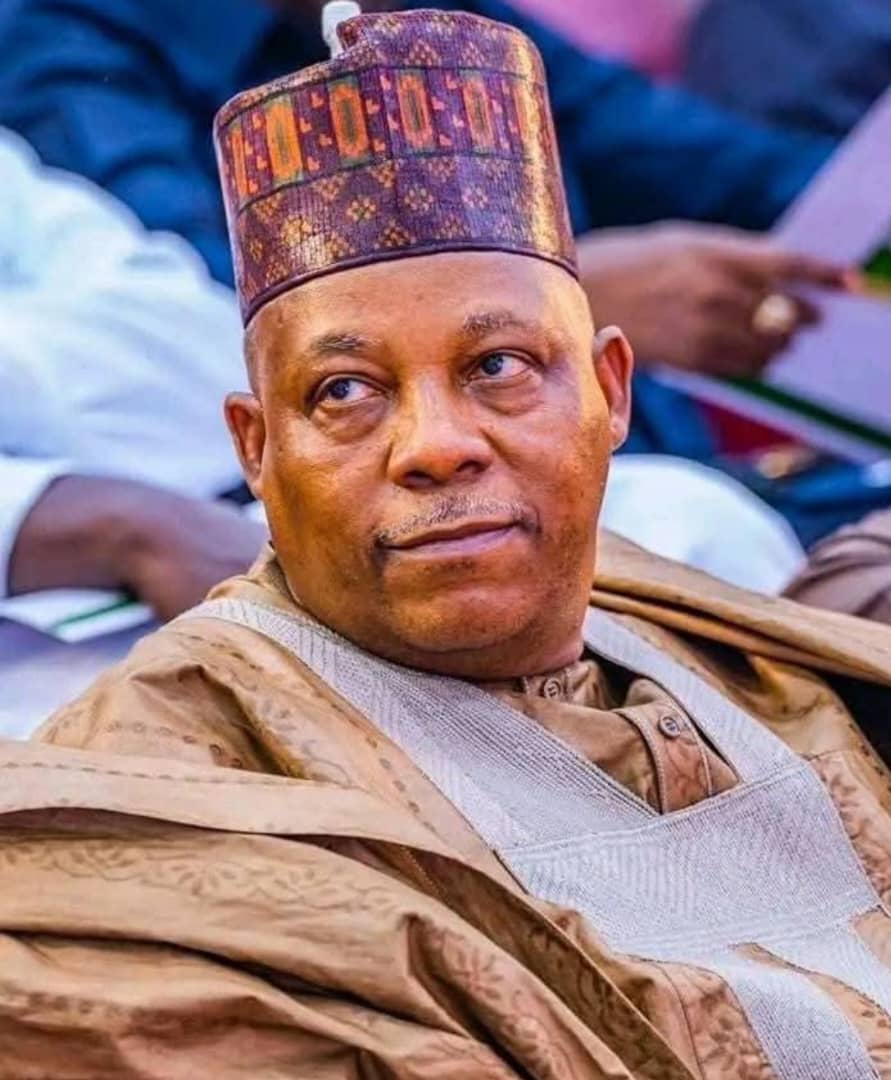
The Silent Strategy: Why Kashim Shettima Is the Defining Force Behind the Tinubu Ticket in 2027
By: Dr. James Bwala
In Nigerian politics, visibility is often mistaken for strength. Candidates who appear frequently on television, speak at rallies, issue bold promises, and dominate social media are commonly assumed to be the most politically active. Yet elections are not won by public appearances alone. Behind every successful political movement are networks, negotiations, strategy, organization, and patient groundwork that may not always be visible to the public.
This situation is why the claim that the All Progressives Congress is not campaigning for 2027 deserves closer examination. While Peter Obi appears across the country and Atiku Abubakar continues to speak about his plans for Nigeria, it would be a mistake to assume that the APC is inactive or that the Tinubu administration has surrendered the political space. Much of the party’s work may be taking place quietly, away from the noise of rallies and social media declarations. At the center of that quiet political strategy is Vice President Kashim Shettima, whose role may prove decisive in shaping the future of the Tinubu ticket.
The argument that Shettima is the soul of the Tinubu ticket is not based merely on loyalty or personal admiration. It is rooted in the realities of Nigerian political calculations. The vice president brings regional balance, political experience, administrative knowledge, and an understanding of the complex networks that influence national elections. Shettima has a deep understanding of the blueprints, and his contribution may not always generate dramatic headlines, but political success is often built through precisely such less visible efforts.
Those who judge political campaigns only by public appearances risk misunderstanding how power operates. Campaigning does not begin and end with rallies. It includes consultation with stakeholders, engagement with governors, coordination with party structures, dialogue with traditional leaders, relationship-building with religious and community organizations, and efforts to maintain unity within a broad political coalition. These activities may not trend online, but they can determine the outcome of an election.
The APC’s apparent silence may therefore be strategic rather than accidental. A party in government does not necessarily need to respond to every accusation or compete in daily verbal exchanges. Its political advantage includes access to state institutions, visibility through governance, contact with elected officials, and the ability to point to policies and projects already undertaken. While opposition figures may focus on promises and criticism, the governing party can campaign through a combination of performance, organization, and political alliances.
This does not mean that every action of the government should be accepted without scrutiny. Democracy requires accountability, and citizens have the right to question government policies, economic conditions, and political decisions. However, criticism should not be confused with electoral victory. A party can face public frustration and still win an election if it maintains internal unity, builds effective alliances, and presents a credible narrative to voters. Conversely, an opposition movement can attract large crowds and intense online support without converting that enthusiasm into sufficient votes.
The political strength of Kashim Shettima lies partly in his ability to operate within this complex environment. As a former governor, he understands the relationship between national politics and grassroots structures. He is familiar with the language of party organization, the importance of regional confidence, and the demands of managing competing interests. His experience in Borno also gives him a distinctive connection to the politics of the North, while his position as vice president enables him to participate in national engagement.
Shettima also brings an important dimension to the Tinubu ticket: the ability to complement, rather than duplicate, the president’s political identity. President Bola Tinubu is widely recognized as a forceful political strategist with a long history in Lagos politics and national coalition-building. Shettima, by contrast, contributes a different background and style. The strength of a political ticket often depends on whether its members can reach different audiences and reassure different constituencies. A successful ticket must be broad enough to unite people who may not share the same regional, religious, or political outlook.
This complementary relationship may become particularly important in 2027. Nigeria is a country of immense diversity, and no serious presidential campaign can rely on one region or one political personality. The Tinubu-Shettima ticket must appeal to voters across the South, the North, urban centers, rural communities, young people, business interests, traditional institutions, and organized political structures. Shettima’s role may be crucial in maintaining confidence among northern stakeholders and communicating the administration’s message in regions where political expectations are especially complex.
The opposition’s visible activity should not be dismissed. Peter Obi has developed a strong national following, particularly among young voters and citizens who desire a new political direction. His message of reform, competence, accountability, and economic transformation resonates with many Nigerians. Atiku Abubakar, meanwhile, remains an experienced national politician with an established network and a long record of presidential ambition. His continued public engagement demonstrates that the opposition space is active and competitive.
Nevertheless, visibility is not the same as organization. Peter Obi’s influence must eventually be translated into polling-unit structures, local coordination, coalition-building, and broad geographical support. Atiku must also overcome the challenges that have affected opposition politics in the past, including rivalry among leaders, divided platforms, personal ambition, and the difficulty of building a united front. Speaking about what they will do for Nigeria is important, but elections are won when political messages are supported by disciplined structures capable of mobilizing voters.
This is where the APC may have an advantage. The party has experienced officeholders at the federal and state levels, a national political structure, and access to influential actors across the country. If these resources are properly coordinated, the party can remain competitive even when its campaign activities appear less dramatic than those of its opponents. Its greatest challenge, however, will be internal. No amount of quiet strategy can compensate for division, poor communication, unpopular decisions, or failure to respond to public concerns.
The effectiveness of Shettima’s role will therefore depend on how well the administration combines political organization with governance. Nigerians are not likely to vote solely on the basis of party slogans or regional calculations. Economic hardship, unemployment, insecurity, inflation, public services, and trust in government will significantly influence the electorate. Political strategy may help secure alliances, but performance will determine whether those alliances remain convincing.
The APC’s opponents may be misjudging the political waters if they believe that the absence of constant rallies means the absence of preparation. However, the APC would also be misjudging the electorate if it assumes that quietness alone will produce victory. Silence can be strategic, but it must eventually be followed by a clear record, a persuasive message, and a credible plan for the future. The party cannot expect Nigerians to reward hidden efforts that do not produce visible improvements in their lives.
The phrase “the ghost is working in silence” captures the idea of political activity that is not immediately visible. Networks are being maintained. Alliances are being negotiated. Party leaders are assessing their positions. Stakeholders are calculating their interests. Communities are observing the government’s direction. Such processes may not appear on the front pages every day, but they form part of the foundation of electoral politics.
If the APC succeeds in coordinating these silent efforts, Atiku may face serious difficulties in converting his public engagement into a winning coalition. Peter Obi may also discover that popularity, especially among a passionate section of the electorate, must be matched by nationwide structure and strategic alliances. The shock awaiting the opposition may not be that it lacked public attention, but that it underestimated the capacity of a governing party to organize quietly while appearing publicly restrained.
Still, political predictions should be made with humility. No candidate is guaranteed victory, and no party should assume that past success will automatically be repeated. Nigerian voters are increasingly politically conscious, more willing to challenge established parties, and more attentive to issues of competence and accountability. The electorate cannot be treated as a passive audience that will simply follow party calculations. Citizens will judge the administration by what they experience and by whether its promises match reality.
For the Tinubu ticket, Kashim Shettima’s importance will therefore be measured not only by his ability to work behind the scenes but also by his capacity to communicate, build trust, defend the administration’s record, and help shape a political coalition that reflects Nigeria’s diversity. He must be more than a quiet strategist. He must also be an effective bridge between the government and citizens, between the president and party structures, and between national policy and regional expectations.
The central lesson is that political noise should never be confused with political power. Peter Obi’s visibility and Atiku Abubakar’s public promises are important parts of the 2027 contest, but they do not tell the whole story. The APC may be pursuing a different method—one based on quiet mobilization, institutional relationships, coalition-building, and the use of governing power. In that strategy, Kashim Shettima may be the critical figure whose influence becomes fully apparent only when the election draws near.
Those who are campaigning against President Tinubu and chanting “Tinubu Must Go” have every democratic right to do so. But they should not assume that public anger automatically translates into electoral victory. Nor should they overlook the political work taking place beyond the cameras. The coming contest will be decided not by who shouts the loudest, but by who builds the strongest national structure, offers the most convincing account of governance, and mobilizes voters most effectively.
The opposition may continue to rant today and tomorrow. The APC may continue to appear restrained. Yet beneath the surface, political calculations are already taking shape. If Shettima and the Tinubu camp succeed in turning silent organization into visible results and electoral mobilization, their opponents may indeed be shocked by the outcome. The “ghost” may be working quietly—but in politics, silence becomes powerful only when it is supported by strategy, performance, unity, and a clear understanding of the people.
- James Bwala, PhD, writes from Abuja.
- The Silent Strategy: Why Kashim Shettima Is the Defining Force Behind the Tinubu Ticket in 2027

ActionAid Raises Alarm as 33.4% of Nigerian Women Married Before 18

WAHO Receives Keys to Temporary Headquarters in Côte d’Ivoire

Governors To Declare Nutrition Emergency, Unleash Radical Funding Mechanism

Roger Federer’s Shock as DNA Results Reveal Myla and Charlene Are Not His Biological Children

THE PLIGHT OF FARIDA

FAILED COUP IN BURKINA FASO: HOW TRAORÉ NARROWLY ESCAPED ASSASSINATION PLOT AMID FOREIGN INTERFERENCE CLAIMS
-
 News3 years ago
Roger Federer’s Shock as DNA Results Reveal Myla and Charlene Are Not His Biological Children
-
Opinions5 years ago
THE PLIGHT OF FARIDA
-
 News1 year ago
FAILED COUP IN BURKINA FASO: HOW TRAORÉ NARROWLY ESCAPED ASSASSINATION PLOT AMID FOREIGN INTERFERENCE CLAIMS
-

 News3 years ago
EYN: Rev. Billi, Distortion of History, and The Living Tamarind Tree
-
 Opinions5 years ago
POLICE CHARGE ROOMS, A MINTING PRESS
-

 ACADEMICS3 years ago
A History of Biu” (2015) and The Lingering Bura-Pabir Question (1)
-

 Columns3 years ago
Army University Biu: There is certain interest, but certainly not from Borno.
-

 Politics1 year ago
2027: Why Hon. Midala Balami Must Go, as Youths in Hawul and Asikira/Uba Federal Constituency Reject ₦500,000 as Sallah Gift
