
National News
Borno awards N2.8 billion road construction contract to indigenous firm


Borno awards N2.8 billion road construction contract to indigenous firm
By: James Bwala
Borno State Government has awarded a road contract of N2.8 billion to an indigenous construction company, Obtuse Tech Engineering and Construction Company limited.
The contract, which is the construction of 8.2 kilometers of road within Maiduguri Metropolis, the state capital, was awarded to the company in order to encourage the growth of Nigerian business and encourage the economy of indigenous people.
According to the Permanent Secretary, Ministry of Works, Engineer Ali Goni Lawan, who spoke at the official contract signing ceremony at the weekend, the project consists of Baga road market- Jajeri – Umarari- Bulabulin with another one linking Texaco- Churchkime – Abdu One road.
Lawan recalled that, in September last year, a tender/bid documents in respect to these projects were advertised in some national dailies, after which, companies were invited for the bid, adding that, Obtuse Tech Engineering Company won and was considered to execute the projects.
Also Read: Boko Haram: Sustained Artillery Fire Scares Residents in…
He said: “The construction works are from Baga road market- Jajeri – Umarari- Bulabulin with another one linking Texaco- Churchkime – Abdu One road at the total cost of N2,812,405, 577.48.”
He added that: “These projects were approved by our committed and patriotic governor, Professor Babagana Umara Zulum, and are expected to be completed and commissioned before the end of this year 2022.
“I want to sound a strong warning that substandard work would not be compromised by the present administration, therefore, I enjoined you to do a thorough and good job for the betterment of humanity.”
The Managing Director, Obtuse Tech Engineering and Construction Company, Engineer Umar Sheriff Lawan who spoke to journalists after the ceremony, said his company has been in the business of construction works in the last 10 years and has executed several standard road projects all across the state.
He assured deployment of his professional team of engineers/workers to site immediately to complete the projects within the specified 365 days as stipulated in Terms of Reference (ToR).
He commended Borno State Government under the leadership of Professor Babagana Zulum for considering his company worthy to execute the projects, and assured that they will do everything possible to meet specifications.
Borno awards N2.8 billion road construction contract to indigenous firm



ECOWAS Project Delivers Electricity to 500,000 People in Three West African Countries
…$225m World Bank-funded initiative connects 490 localities in The Gambia, Guinea-Bissau and Mali
…Mali seeks extension as ECOWAS holds final steering committee meeting in Abuja
By: Michael Mike
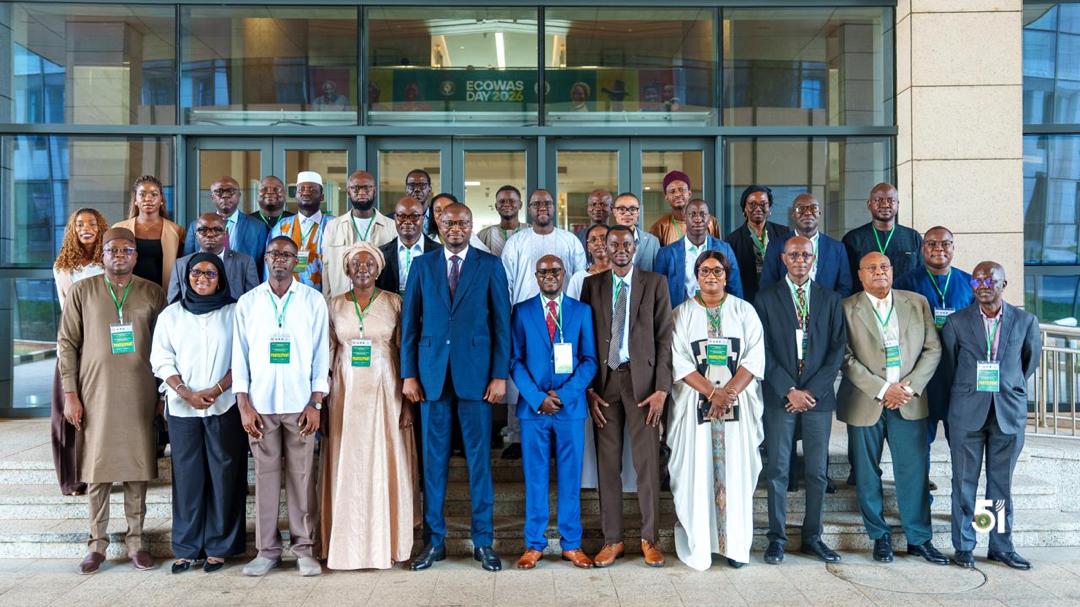
The Economic Community of West African States (ECOWAS) said its $225 million Regional Electricity Access Project has extended electricity access to nearly 500,000 people across 490 localities in The Gambia, Guinea-Bissau and Mali.
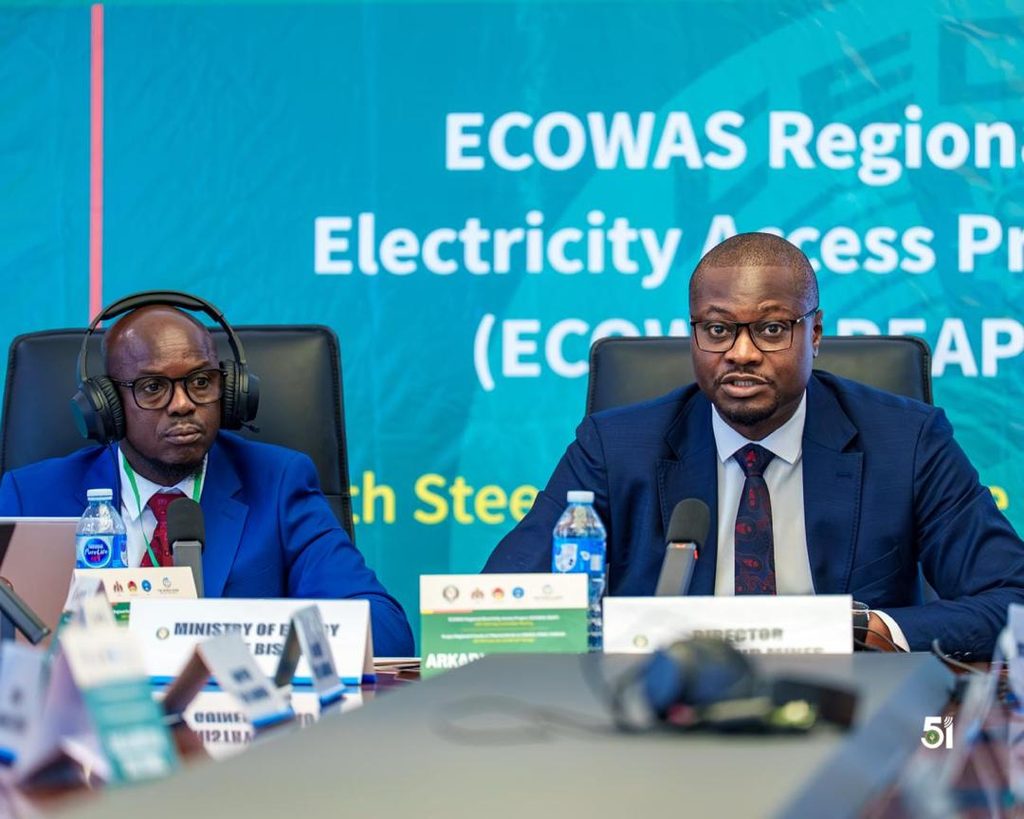
The achievement was disclosed at the 10th and final Steering Committee meeting of the ECOWAS Regional Electricity Access Project (ECOWAS-REAP), which opened in Abuja on Tuesday to review implementation progress and determine measures for ensuring the sustainability of the project.
The World Bank-financed initiative is designed to expand electricity access in underserved communities across the three countries, as part of efforts to deepen regional energy integration and improve living conditions in West Africa.
Speaking at the meeting, the Director of Energy and Mines at the ECOWAS Commission and Chairman of the Steering Committee, Arkadius Koumoin, acknowledged the significant progress recorded despite challenges that affected implementation, including the COVID-19 pandemic and institutional disruptions.
He, however, stressed the need for concrete decisions and actions to ensure responsible closure of the project, noting that its success should ultimately be measured by the number of households effectively connected to electricity.
Koumoin’s position highlights the importance of translating infrastructure investments into actual electricity access for communities, rather than measuring performance solely by completed project activities.
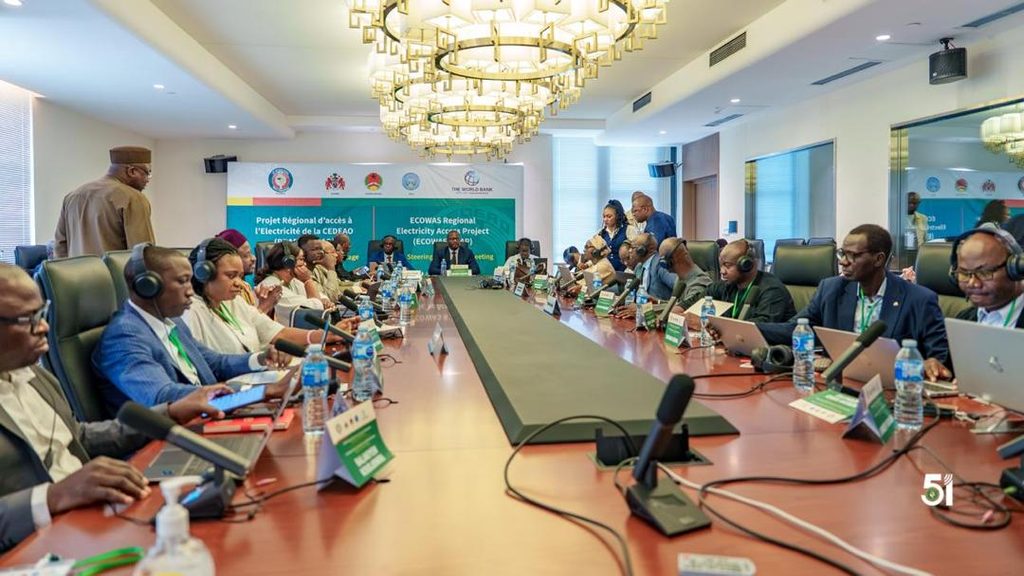
The Managing Director of the National Water and Electricity Company (NAWEC), The Gambia, Gallo Saidy; the representative of Guinea-Bissau’s Ministry responsible for Energy, Pedro Jeus de Oliviera; and Mali’s National Director of Energy, Oussouby Mary dit Ousmane Diarra, reaffirmed their commitment to completing outstanding project activities.
However, Mali called for an extension to enable it to complete its outstanding work, underscoring the need to address implementation gaps before the project’s final closure.
The meeting is expected to provide an opportunity for participating countries and the ECOWAS Commission to agree on the outstanding actions required to consolidate the gains of the initiative and ensure that beneficiaries continue to enjoy reliable electricity access.
Through ECOWAS-REAP, the regional bloc is advancing its energy integration agenda and the objectives of ECOWAS Vision 2050, with the broader ambition of translating regional investments into tangible improvements in the lives of West African citizens.
ECOWAS Project Delivers Electricity to 500,000 People in Three West African Countries
Court Dismisses El-Rufai’s N120m Rights Violation Suit Over Alleged Wiretapping
By: Zagazola Makama
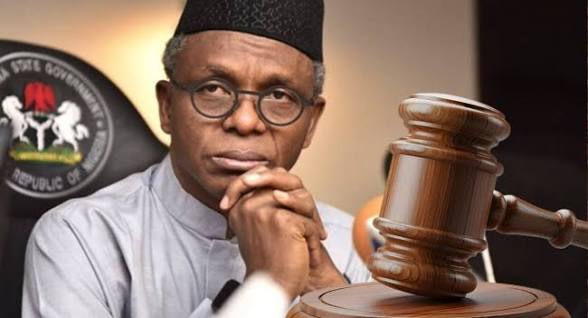
A High Court of the Federal Capital Territory (FCT) on Monday dismissed a N120 million fundamental rights enforcement suit filed by former Kaduna State Governor, Mallam Nasir El-Rufai, against the Department of State Services (DSS), the Economic and Financial Crimes Commission (EFCC), the Independent Corrupt Practices and Other Related Offences Commission (ICPC) and the Attorney General of the Federation (AGF).
The court dismissed the suit for lacking merit and awarded N200,000 each in favour of the DSS, EFCC and ICPC.
Delivering judgment, Justice Sylvanus Orji held that the invitation letters issued to El-Rufai by the EFCC and ICPC complied with constitutional requirements and did not violate his fundamental rights.
On El-Rufai’s challenge to an attempted arrest by the DSS at the Nnamdi Azikiwe International Airport, Abuja, the judge held that the service possessed powers to carry out its statutory responsibilities pursuant to the relevant legal instruments governing its operations, including the National Security Agencies Act.
The court further held that the DSS had the mandate to maintain watchlists and take appropriate action, including arresting persons of interest within the scope of its lawful powers.
Justice Orji stressed that El-Rufai could not use the court to prevent security and law enforcement agencies from performing their legally assigned duties.
On the seizure of the former governor’s international passport by the DSS, the court held that it was satisfied that the action was lawful and within the agency’s powers.
The judge also ruled that the applicant had failed to establish that the seizure was continuous, permanent and unlawful in a manner that amounted to a violation of his fundamental rights.
The suit sought N120 million in damages over alleged violations of El-Rufai’s rights in connection with the actions of the security and anti-corruption agencies.
The ruling represents a setback for the former governor in his legal challenge to the actions taken by the agencies.
Court Dismisses El-Rufai’s N120m Rights Violation Suit Over Alleged Wiretapping
NHRC Raises Alarm Over Child Abuse, Custodial Torture, Civic Freedom Violations
By: Michael Mike
The National Human Rights Commission (NHRC) has called for stronger safeguards against violence and exploitation targeting women and children, tighter oversight of detention facilities and increased protection of civic freedoms ahead of Nigeria’s 2027 general elections.
The Executive Secretary of the Commission, Dr Tony Ojukwu, said persistent cases of sexual and gender-based violence, child abuse, discrimination and other forms of exploitation required more effective prevention mechanisms, thorough investigations and improved access to justice.
Ojukwu, who spoke in Abuja during the presentation of the Commission’s September 2026 Human Rights Situation Dashboard, urged government authorities to translate ongoing reforms into practical protection for vulnerable Nigerians, particularly children in underserved communities.
He welcomed the September stakeholders’ engagement on the review of the Child Rights Act, 2003, describing it as an opportunity to address gaps in the country’s child protection framework and strengthen institutional responses to violence and exploitation.
He, however, stressed that reviewing the law would not be sufficient without adequate funding, stronger institutions and effective implementation capable of delivering tangible protection to children.
The NHRC chief called on relevant authorities to ensure that the reform process produced practical measures to prevent abuse, protect vulnerable children and improve access to justice for victims.
On the treatment of detainees, Ojukwu emphasised the importance of independent monitoring of custodial facilities, warning that effective human rights protection required sustained oversight of institutions responsible for enforcing the law.
He disclosed that the Commission, through its National Preventive Mechanism, validated its 2025–2026 annual report on September 25, bringing together stakeholders to examine findings and recommendations on preventing torture and other forms of ill-treatment in places of detention.
According to him, the exercise was aimed at identifying systemic weaknesses that expose detainees to abuse and strengthening measures to prevent violations.
He said independent monitoring of detention facilities remained critical to accountability within the justice and law enforcement systems, particularly in ensuring that people deprived of their liberty continued to enjoy the protection of the law.
The Commission also stepped up efforts to monitor threats to civic freedoms as political activities gather momentum ahead of the 2027 general elections.
Ojukwu disclosed that the NHRC, in collaboration with the Nigeria Network of NGOs and with support from Heinrich Böll Stiftung Nigeria and the Office of the United Nations High Commissioner for Human Rights, organised a training workshop for the Commission’s state coordinators on Tuesday, October 13.
The workshop focused on operationalising the NHRC’s advisory opinion on promoting and protecting civic space and human rights, issued on May 18, 2026.
The initiative is expected to strengthen the capacity of state offices to identify, document and report violations affecting civic space, including restrictions on peaceful assemblies and regulatory practices affecting civil society organisations.
Ojukwu said integrating civic space monitoring into the Commission’s Human Rights Observatory and Dashboard would improve its ability to detect emerging threats and facilitate timely institutional responses.
He stressed that democratic governance must be measured not only by the conduct of elections but also by the extent to which citizens could freely express their views, associate with others, assemble peacefully and participate meaningfully in public affairs.
The Commission called on government institutions, security agencies, civil society organisations and development partners to intensify collaboration in addressing the underlying causes of human rights violations.
Ojukwu said the NHRC would continue to strengthen its monitoring and reporting systems, improve investigations and complaints resolution, and ensure that documented findings informed policy decisions and institutional reforms.
He maintained that the Commission’s responsibility extended beyond recording allegations to helping prevent violations, securing remedies for victims and ensuring accountability.
“The true measure of our progress is not simply the number of complaints documented, but the extent to which our collective efforts improve the lives of Nigerians,” he said.
He urged stakeholders to act on the findings and recommendations of the September dashboard, stressing that sustained collective action was necessary to prevent human rights violations, secure justice for victims and hold public institutions accountable.
The Commission’s renewed emphasis on child protection, custodial oversight and civic freedoms comes as Nigeria prepares for the 2027 general elections, placing the protection of fundamental rights and accountability for alleged abuses among the issues requiring sustained attention from public institutions.
NHRC Raises Alarm Over Child Abuse, Custodial Torture, Civic Freedom Violations

Korea Seeks Nigerian Manufacturing Shift, Urges Ratification of 20-Year Tax Treaty

Wildlife Traffickers Shift Operations to Port Harcourt, Enugu as EIA Uncovers Corruption.

ECOWAS, Germany Open Strategic Dialogue as Berlin Commits €49m to West Africa

Roger Federer’s Shock as DNA Results Reveal Myla and Charlene Are Not His Biological Children

THE PLIGHT OF FARIDA

FAILED COUP IN BURKINA FASO: HOW TRAORÉ NARROWLY ESCAPED ASSASSINATION PLOT AMID FOREIGN INTERFERENCE CLAIMS
-
 News3 years ago
Roger Federer’s Shock as DNA Results Reveal Myla and Charlene Are Not His Biological Children
-
Opinions5 years ago
THE PLIGHT OF FARIDA
-
 News2 years ago
FAILED COUP IN BURKINA FASO: HOW TRAORÉ NARROWLY ESCAPED ASSASSINATION PLOT AMID FOREIGN INTERFERENCE CLAIMS
-
 Opinions5 years ago
POLICE CHARGE ROOMS, A MINTING PRESS
-

 News3 years ago
EYN: Rev. Billi, Distortion of History, and The Living Tamarind Tree
-

 ACADEMICS3 years ago
A History of Biu” (2015) and The Lingering Bura-Pabir Question (1)
-

 Columns3 years ago
Army University Biu: There is certain interest, but certainly not from Borno.
-

 Politics1 year ago
2027: Why Hon. Midala Balami Must Go, as Youths in Hawul and Asikira/Uba Federal Constituency Reject ₦500,000 as Sallah Gift
