
News
Brief on the late Emir of Gudi

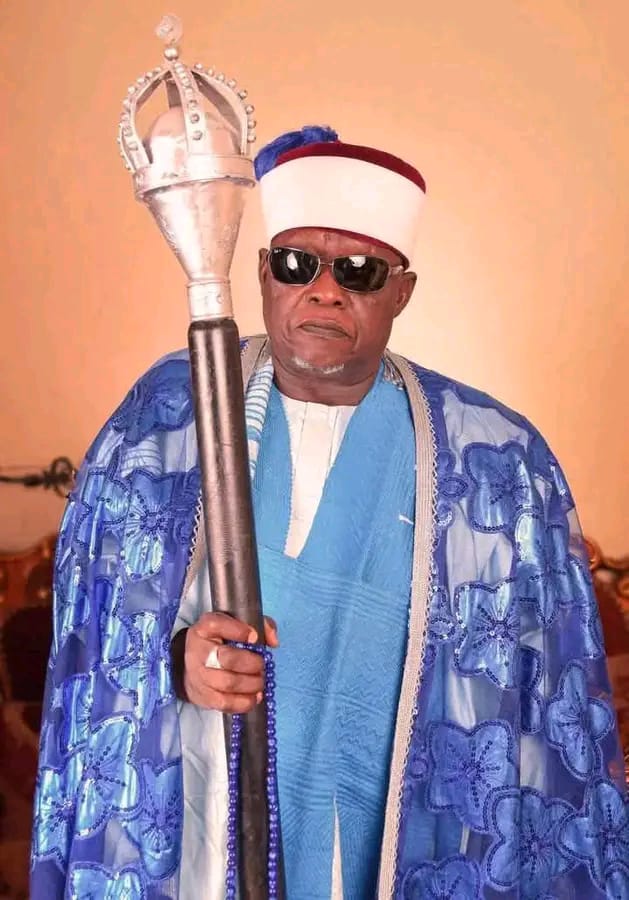
Brief on the late Emir of Gudi
By: Yahaya Wakili
The late Emir of Gudi, Alhaji Isa Bunuwo Ibn Madubu Khaji, was born in Gadaka town in 1950, a time that is considered in history with the arrival of the first batch of Christian missionaries to Gadaka town, the Fika Native Authority, and later the Fika Emirate.
Alhaji Isa Bunuwo started his western education at Gadaka Central Primary School, and on graduation he gained employment under the Fika native authority in 1969 as an instructor in the Agricultural Department. He then proceeded on course to the College of Agriculture in Maiduguri, the northeastern state, in 1972.
On graduation, the late Isa Bunuwo was transferred from the agriculture department to the treasury, and after settling, he secured admission into the Staff Training Center Potiskum, now the College of Business and Administrative Studies (CABS), where he graduated with a diploma certificate in accountancy in 1983.
Alhaji Isa Bunuwo Ibn Madubu Khaji was later seconded to the Federal Girls College Potiskum as an accountant and later redeployed to the treasury department as a revenue officer, then cashier, where he served for many years. Following the aspirations and desire of the people of Gudi to have a district, he was appointed as the District Head of the newly created district of Ngeji with headquarters at Gadaka in 1991.
The spirit and desire of the Ngamo people to have a kingdom continued, and this time around it was for the upgrading of the district to an emirate, where Alhaji Isa Bunuwo Ibn Madubu Khaji became the Mai Gudi with third-class grade status confirmed by Governor Bukar Abba Ibrahim FNIQS in 1993.
The hope of the Ngamo was, however, dashed following the change of government from civil to military in 1993 when the military administrator of Yobe state, then COMPOL Dabo Aliyu, reversed the appointment and dissolved the emirate.
Alhaji Isa Bunuwo Ibn Madubu Khaji had to adjust to his former position as district head of Ngeji and acted for nearly 6 years. When Alhaji Bukar Abba Ibrahim was re-elected for the second time, his appointment was resuscitated, and the wishes, yearning, and aspirations of the Ngamo and indeed all ethnic groups across Yobe state for getting their traditional chiefdoms were renewed.
The Emir of Gudi and all other emirs received various upgrades from their grades to a higher one, an exercise that was conducted in several phases, which brought all the emirs from their previous classes to first-class status, and the Emir of Gudi was among the beneficiaries in 2007.
The late Emir of Gudi enjoys farming, and he has received awards from the Farmers Institute of Nigeria, has travelled widely within and outside Nigeria, and is happily married to four wives.
Brief on the late Emir of Gudi


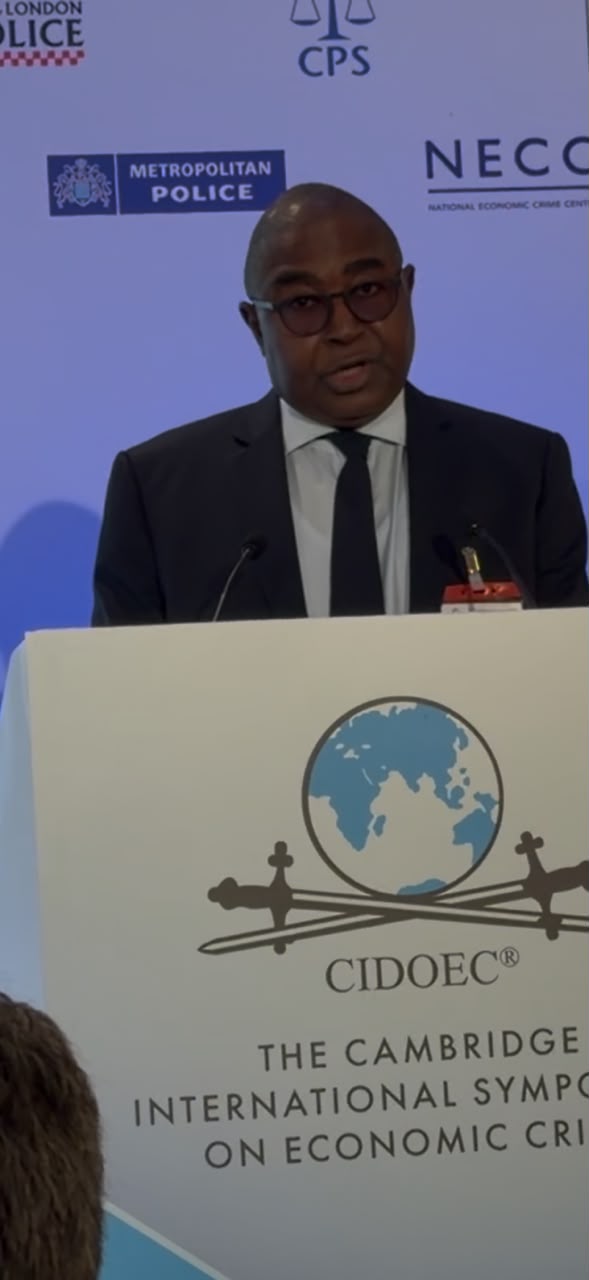
Drug Barons Must Lose Their Wealth to Be Truly Defeated, Marwa Tells Cambridge Symposium
By Zagazola Makama
The Chairman/Chief Executive Officer of the National Drug Law Enforcement Agency (NDLEA), Brig. Gen. Mohamed Buba Marwa (rtd), has declared that the war against drug trafficking cannot be won through arrests and convictions alone, stressing that drug barons must also be stripped of the financial resources sustaining their criminal enterprises.
Marwa made the declaration while delivering a presentation titled, “Criminal Property and the Criminal Process: How Can We Make It More Effective?” at the ongoing 43rd Cambridge International Symposium on Economic Crime, organised by the Centre for Geopolitics, University of Cambridge, United Kingdom.
The international symposium brought together judges, law enforcement chiefs, financial intelligence experts, academics and other specialists in the fight against economic and organised crime.
Marwa told the gathering that the effectiveness of the criminal justice system should not be measured solely by the number of convictions secured, but also by whether criminals are prevented from benefiting from the proceeds of their crimes.
According to him, a trafficker who loses his freedom but retains his wealth has not been completely defeated, as such resources could be deployed to finance new operations, support criminal associates and sustain the wider network.
“The ultimate objective must therefore be to deny criminals the proceeds of their crime, promptly, and lawfully while preserving the value of the property,” Marwa said.
He explained that the NDLEA had increasingly adopted financial investigations and asset recovery as a core component of its strategy against drug trafficking organisations.
The NDLEA boss likened arresting a trafficker without dismantling his financial base to “pruning a weed at the stem while leaving its roots undisturbed,” warning that illicit wealth could resurface through front companies, new identities or different jurisdictions.
Marwa outlined six practical strategies deployed by the agency to strengthen asset recovery, relying on provisions of the National Drug Law Enforcement Agency Act 2004, the Proceeds of Crime (Recovery and Management) Act 2022 and the Money Laundering (Prevention and Prohibition) Act 2022.
He cited the forfeiture of the Hook Hotel, a property allegedly linked to a fugitive drug suspect, as an example of the agency’s application of non-conviction-based forfeiture.
According to him, the property was recovered and subsequently sold for $4.2 million, with the proceeds paid into the Federal Government’s forfeited assets account domiciled with the Central Bank of Nigeria.
Marwa said the development demonstrated that fleeing the country or remaining at large would not necessarily allow a suspect to retain the benefits of alleged criminal activities.
He also disclosed that NDLEA investigators and prosecutors are now working together from the early stages of cases, a reform he said had helped reduce the time between arrests and the securing of asset restraint orders.
According to him, within the last month alone, the agency froze bank accounts containing more than $7 million and secured interim forfeiture orders covering multibillion-naira assets allegedly linked to a fugitive methamphetamine syndicate.
The assets, he said, included filling stations, multi-storey buildings and exotic vehicles.
Speaking on the case involving Nigerian businessman Amadi Simon, who was arrested in Switzerland through a joint operation involving the NDLEA, the United States Drug Enforcement Administration (DEA) and authorities in Switzerland, Greece and France, Marwa said three hotels linked to the suspect were placed under professional asset managers.
He explained that the decision was aimed at preserving the value of the businesses as going concerns rather than allowing the properties to deteriorate while legal proceedings continue.
The NDLEA chairman further highlighted the use of unexplained wealth and lifestyles beyond legitimate means as investigative triggers in identifying suspected proceeds of crime.
He also pointed to the use of interlocutory sales for perishable and depreciating assets to prevent the loss of value before final determination by the courts.
Marwa said the financial disruption strategy had now been incorporated into Nigeria’s National Drug Control Master Plan 2026–2030, making the dismantling of the financial architecture of drug trafficking a sustained national priority.
He distilled the agency’s approach into three guiding principles: speed over sequence, preservation of value and institutionalisation.
While acknowledging progress, Marwa identified delays in mutual legal assistance, limited forensic accounting capacity and the need to balance the rights of accused persons with the state’s responsibility to preserve assets pending trial as continuing challenges.
He called for faster international cooperation mechanisms and stronger cross-border recognition of non-conviction-based forfeiture orders.
Marwa reaffirmed the NDLEA’s commitment to strengthening partnerships with international jurisdictions and institutions in order to dismantle the financial structures that enable drug trafficking organisations to operate.
He thanked the Centre for Geopolitics, the organisers of the symposium and Judge Wendy Tien, who chaired the session, for providing a platform for the exchange of ideas on strengthening the global fight against economic and organised crime.
Drug Barons Must Lose Their Wealth to Be Truly Defeated, Marwa Tells Cambridge Symposium

NFIU Uncovers Terrorist Financing Through Women’s Accounts, Crowdfunding
By Zagazola Makama
The Nigerian Financial Intelligence Unit (NFIU) has uncovered emerging methods allegedly being used by terrorist financiers to move and conceal funds, including the use of bank accounts belonging to women, disconnected phone numbers, coded transaction descriptions and crowdfunding platforms.
The findings are contained in the NFIU’s 2025 Annual Report, which identifies the methods as part of evolving financial networks supporting terrorist operations in Nigeria.
According to the report, male terrorist commanders and logistics managers sometimes control accounts opened in the names of wives, sisters and other female associates. The accounts, the NFIU said, are used to distance the actual operators from illicit funds, while some of the women whose accounts are used may be unaware of the transactions taking place.
The financial intelligence agency also identified the use of pre-registered SIM cards, numbers registered to deceased persons and phone lines linked to other individuals to facilitate mobile banking and account alerts. It said the practice weakens the link between telephone numbers and Bank Verification Numbers, making financial transactions more difficult for investigators to trace.
The NFIU further said terrorist cells, including those linked to the Islamic State West Africa Province, ISWAP, use coded and seemingly innocuous descriptions for transactions to conceal the purpose of payments. It said facilitators may use secret codes, alphanumeric combinations or different languages to evade automated banking filters designed to detect terrorism-related transactions.
The report also detailed a crowdfunding model in which foreign-based facilitators allegedly use social media campaigns presented as humanitarian or educational appeals to raise funds. Hundreds of donors may contribute relatively small amounts, which are later consolidated and transferred through international money-transfer operators and remittance applications to networks of Nigerian money mules.
The agency said students, small-business owners and relatives could be used as intermediaries, receiving funds that may subsequently be converted to cash, used to purchase dual-use items or transferred to terrorist logistics managers and field operatives.
The NFIU’s findings underscore the growing sophistication of terrorist financing networks and the security challenge posed by the exploitation of legitimate banking, telecommunications and digital fundraising systems to sustain insurgent operations.
NFIU Uncovers Terrorist Financing Through Women’s Accounts, Crowdfunding

State Police Must Not Become Tool for Political Repression, Ojukwu Warns
By: Michael Mike
The Executive Secretary of the National Human Rights Commission (NHRC), Chief Anthony Ojukwu, has thrown his weight behind the establishment of state police, but warned that the reform could worsen Nigeria’s security and human rights problems if state-controlled forces are allowed to operate without stringent safeguards and independent oversight.
Ojukwu said decentralising the country’s policing system had become an urgent necessity because the existing centralised structure was overstretched, slow to respond to emergencies and increasingly incapable of matching the security demands of a vast and populous country.
He spoke on Tuesday at the 66th Annual General Conference of the Nigerian Bar Association (NBA) in Port Harcourt, Rivers State, where he challenged lawyers and policymakers to ensure that any state policing framework places citizens’ rights at its core.
“If you don’t have State Police, you can never have adequate security,” Ojukwu said, stressing that Nigeria could not continue relying on a policing structure in which a relatively limited number of officers are expected to protect a population of more than 200 million people.
According to him, the consequence is a security system in which response to emergencies can take too long, leaving vulnerable communities exposed.
“The response time is so long that we only live by God’s grace,” he said.
Ojukwu’s intervention comes against the backdrop of a persistent security crisis that has placed extraordinary pressure on Nigeria’s law-enforcement agencies.
The country continues to confront multiple threats, including banditry, kidnapping, terrorism and communal violence. Recent attacks have also highlighted the risks faced by police officers themselves. In August, 10 police officers were killed in a gun battle with armed rebels in Kebbi State, underscoring the difficult operating environment confronting security forces in parts of the country.
Available assessments put the strength of the Nigeria Police Force at about 371,800 personnel serving a population estimated at more than 236 million. The resulting manpower deficit has contributed to concerns over the ability of the police to maintain an effective presence across the country.
The problem is further complicated by the deployment of a significant number of police personnel for VIP and political protection, reducing the manpower available for ordinary policing and community protection.
Against this background, supporters of state police argue that policing cannot be sufficiently effective when decisions, deployment and operational control are concentrated at the federal level in Abuja.
“With State Police, the governors will have the wherewithal to respond quickly. The police will be more effective because they know the terrain; they know the people,” he said.
While advocating state police, the NHRC chief drew a clear line between decentralising policing and handing governors unchecked security powers.
He warned that without strong institutional controls, state police could be transformed from an instrument of community protection into a weapon for political persecution.
His concerns include arbitrary arrests, intimidation, torture, unlawful detention and other violations of fundamental rights.
“We must insist that when the National Policing Bill comes, it must be well drafted. There must be a board that runs it. There must be oversight. Otherwise, it will become another problem,” he said.
That warning strikes at one of the most contentious issues surrounding state police: who controls the police, and who polices those who control them?
The proposed reform has gained substantial momentum in 2026. The National Assembly has advanced constitutional amendment proposals designed to provide for state police services alongside a federal police structure. The House of Representatives passed the State Police Bill in July after the Senate had earlier approved its version.
The emerging framework nevertheless retains federal intervention powers in certain circumstances, reflecting continuing concerns over national security, constitutional order and possible abuse of state-controlled security institution.
For Ojukwu, the success of the reform will not be determined simply by the number of police commands created across the 36 states, but determined by whether those forces can protect citizens without violating the same rights they are established to defend.
He therefore charged lawyers to become a critical line of defence against abuses by security agencies.
“Lawyers should be the people to insist on the right thing to do. If the police is going to arrest anybody, insist on the right procedure. Don’t let them abuse power. We have to watch them,” he said.
His position places the rule of law at the centre of the state police debate, rather than treating security and human rights as competing priorities.
The warning is particularly significant because Nigeria’s police reform debate has historically involved concerns over accountability, excessive use of force, arbitrary arrests and public distrust of law-enforcement institutions. An assessment by the European Union Agency for Asylum has similarly cited delayed responses, resource constraints and reports of police misconduct as challenges confronting the existing system.
The challenge, therefore, is not simply whether Nigeria needs more police.
It is whether the country can build a policing system that is closer to the people without becoming captive to political power.
State police could potentially provide faster intelligence gathering, quicker emergency response and stronger community engagement because officers would operate in areas they understand more intimately.
But decentralisation without accountability could create 36 new centres of police power, each vulnerable to manipulation by political authorities.
That is why Ojukwu’s demand for oversight is central to the debate.
He called for a properly structured policing law with clear command arrangements, independent oversight and safeguards capable of protecting citizens from abuses by state security institutions.
The NHRC boss maintained that effective security and respect for human rights are not mutually exclusive.
Rather, he argued, a police force that violates citizens’ rights ultimately undermines the very public confidence it needs to fight crime effectively.
He lamented that insecurity and delayed responses had left many Nigerians feeling that their safety was dependent on chance rather than an effective security system.
“Our people live by God’s grace because the system is not working. That must change,” he said.
His comments come at a defining moment in Nigeria’s security architecture. With constitutional efforts to establish state police gaining momentum, the country is approaching a potentially historic departure from its decades-old centralised policing model.
But the reform carries a dual responsibility: to bring the police closer to the people while keeping the power of the police firmly under the law.
“We cannot continue with a system where only a few police officers are expected to secure millions,” he said.
State Police Must Not Become Tool for Political Repression, Ojukwu Warns

Troops Foil Armed Robbery Attack, Rescue Two Locals in Plateau

Israel Sends Life-Saving Ambulances, Medical Equipment to Nigeria

Drug Barons Must Lose Their Wealth to Be Truly Defeated, Marwa Tells Cambridge Symposium

Roger Federer’s Shock as DNA Results Reveal Myla and Charlene Are Not His Biological Children

THE PLIGHT OF FARIDA

FAILED COUP IN BURKINA FASO: HOW TRAORÉ NARROWLY ESCAPED ASSASSINATION PLOT AMID FOREIGN INTERFERENCE CLAIMS
-
 News2 years ago
Roger Federer’s Shock as DNA Results Reveal Myla and Charlene Are Not His Biological Children
-
Opinions5 years ago
THE PLIGHT OF FARIDA
-
 News1 year ago
FAILED COUP IN BURKINA FASO: HOW TRAORÉ NARROWLY ESCAPED ASSASSINATION PLOT AMID FOREIGN INTERFERENCE CLAIMS
-

 News2 years ago
EYN: Rev. Billi, Distortion of History, and The Living Tamarind Tree
-
 Opinions5 years ago
POLICE CHARGE ROOMS, A MINTING PRESS
-

 ACADEMICS2 years ago
A History of Biu” (2015) and The Lingering Bura-Pabir Question (1)
-

 Columns2 years ago
Army University Biu: There is certain interest, but certainly not from Borno.
-

 Politics1 year ago
2027: Why Hon. Midala Balami Must Go, as Youths in Hawul and Asikira/Uba Federal Constituency Reject ₦500,000 as Sallah Gift
