
National News
CAC Pledges Support To CSOs on Self Regulation

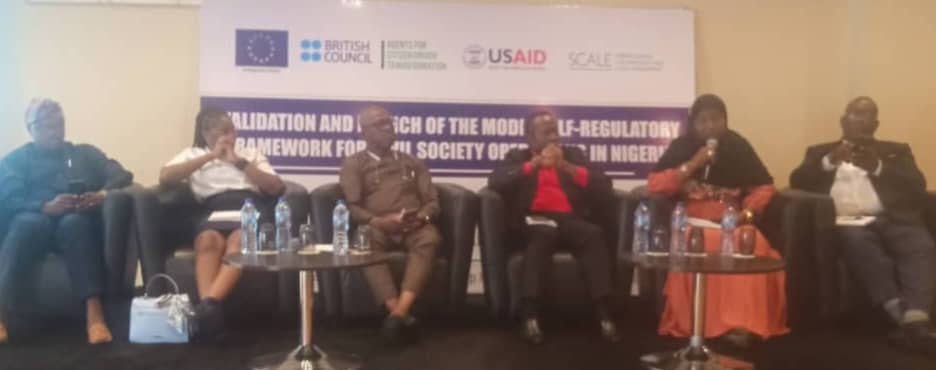
CAC Pledges Support To CSOs on Self Regulation
By: Michael Mike
The Corporate Affairs Commission (CAC) has pledged to support Civil Society Organisations(CSOs) in the country in the use of the self-regulation framework.
The Registrar General of CAC, Garba Abubakar, made the pledged on Thursday, during the validation and launch of ‘the model self-regulatory framework for Civil Society Organisation’ organised by the British Council National Technical Committee in Abuja.
Abubakar, who was represented by the Special Assistance to the Registrar General CAC, Terver Ayua, said, the organisation is ready to partner with CSOs to reach the highest level of their purpose.
He said, “CSOs perform important activities that cut across different sectors, as regulators that register these entities, we have always partnered with and we are ready to partner with these CSOs to make sure they achieve their optimum objective.
“If they are going to continue to be relevant to rendering services to the society. We can only do that if we self regulate or statutory regulate. We promise to give you maximum cooperation to make sure the objective is achieved,” he said.
Also Read: NAPTIP nabs suspected human trafficker in Anambra, rescues…
Chief Executive Officer, Food Basket Foundation International and Co-Chair National Technical Committee, Dr. Funmi Akinyele, in her review on the ‘model self-regulation for CSOs in Nigeria’ explained that self-regulation does not mean doing away with extant laws but, making a tailored law that goes in line with the organisation’s vision.
According to her, “organisation regulated without intervention from external interference, will ensure credibility of Civic societies and public trust of accountability. We know we have bad eggs in this circle but that does not mean all are bad.
“It will help incorporate public interest for basically sustainable peace and progress and contribute to common good while maintaining ethical cooperation and partnership where possible and appropriate for the greater public good.
“Accord credibility in its dealing with donors in respect to the laws in any jurisdiction, that all its stakeholders are aware of its activity and proactively report its financial details for transparency.”
She noted that as much as the model has its advantages, it also has disadvantages as it could breed unhealthy competition, where people are subjective instead of objective.
She said: “Window dressing can not be completely put out as some CSOs if self regulates may not do the right thing but put up a front as they do.”
Similarly, Abdulsalam Badamasi, Policy and Governance Reform Advisor USAID-SCALE Nigeria, reiterated the need for CSOs’ collaboration to work better and more, this is as self-regulation makes it possible to know their strength and create better working conditions.
Badamasi said: “Self-regulation is a matter of survival for the civil society organisation, this is because of the shrinking space for the CSOs and the amount of money flowing to this sector, accountability needs to be done, as an organisation that holds public officials accountable should also show a great level of accountability.”
CAC Pledges Support To CSOs on Self Regulation


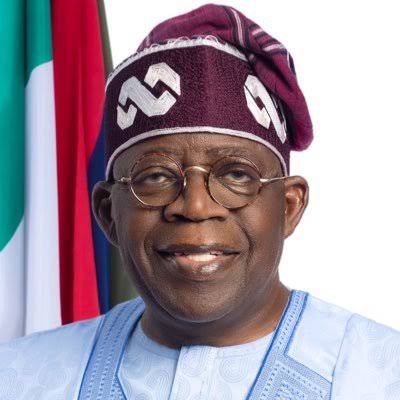
Shehu Dikko Endorses President Tinubu for Second Term
By Comrade Philip Ikodor
Abuja, Nigeria – The Chairman of the National Sports Commission (NSC), Shehu Dikko, has called on Nigerians to support President Bola Ahmed Tinubu’s bid for a second term in office come 2027. Dikko made this assertion at the Grand Endorsement event of President Tinubu’s re-election, organized by the National Progressive Hub (NPH), a prominent support group of the All Progressives Congress (APC), held at the Shehu Yaradua Center in Abuja.
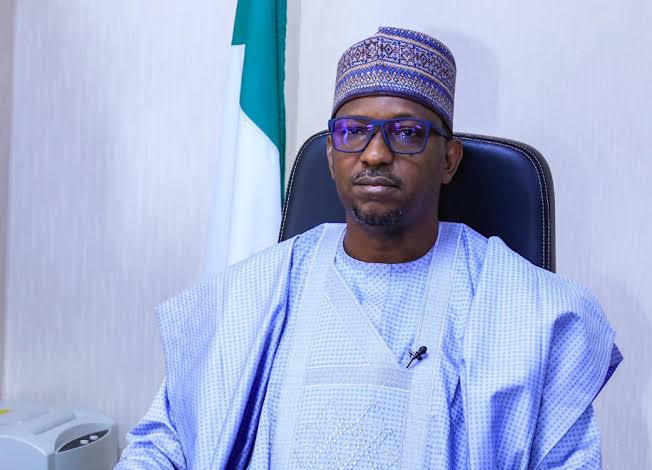
Dikko, who hosted the event, highlighted the achievements of the Tinubu administration, including the establishment of the National Sports Commission, which has driven reforms and innovations in sports administration in Nigeria. He also commended the President’s industrial revolution drive, which has led to economic stability and development.
“President Bola Ahmed Tinubu is a great leader committed to positioning Nigeria as a leading nation. His bold economic policies and interventions have yielded positive results,” Dikko said. He also praised the President’s recent executive bill, which mandates key institutions to remit generated revenue directly to government coffers, calling it a significant step towards economic development.
The event also featured the formal inauguration of the 36 state coordinators and the FCT of the National Progressive Hub (NPH) and the unveiling of the Roadmap Framework for strategic grassroots engagement towards the APC’s victory in 2027.
The NPH, a leading APC support group, has thrown its weight behind President Tinubu’s re-election bid, citing his remarkable achievements and commitment to Nigeria’s development. The group is set to mobilize support for the President across the country, leveraging its extensive network and grassroots presence to ensure a landslide victory for the APC in 2027.
The NPH’s endorsement is seen as a significant boost to the President’s re-election campaign, and a testament to his growing popularity and influence among Nigerians.
Shehu Dikko Endorses President Tinubu for Second Term
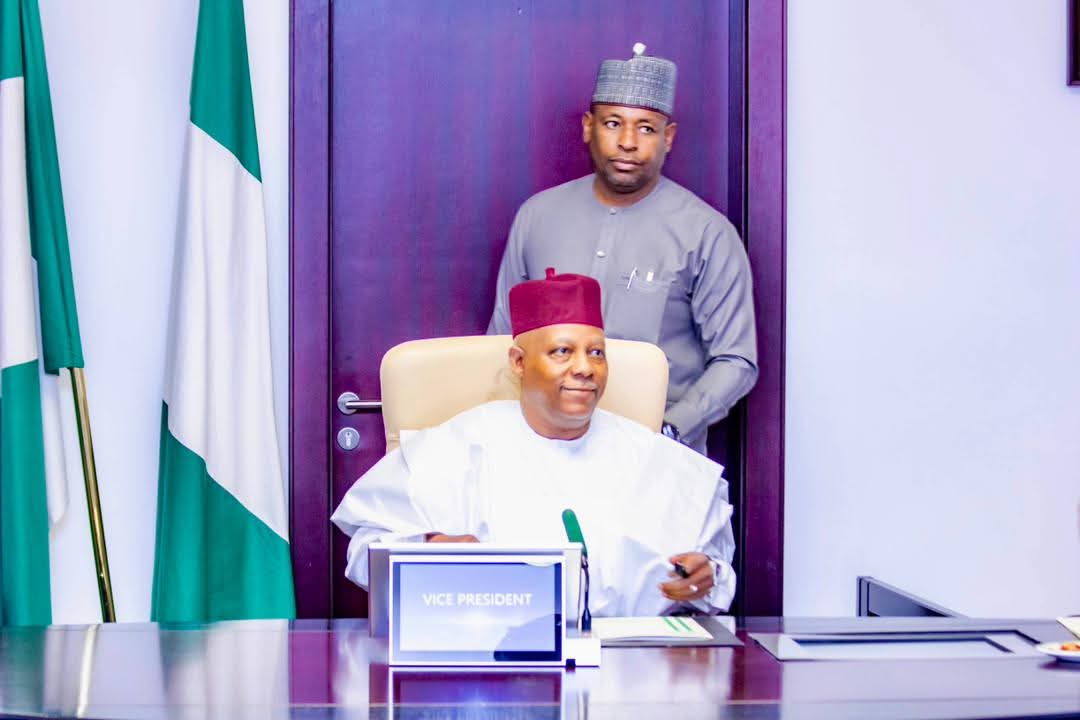
FG Moves To Democratise Credit Access, Inaugurates CREDICORP Board
We’re targeting 50% of working population by 2030, says VP Shettima
By: Our Reporter
The Vice President, Senator Kashim Shettima, has inaugurated the Board of the Nigerian Consumer Credit Corporation (CREDICORP), saying access to consumer credit is critical to Nigeria’s ambition of becoming a one-trillion-dollar economy.

According to him, President Bola Ahmed Tinubu established the CREDICORP to build a trusted credit infrastructure, provide catalytic capital to lower borrowing costs, and help Nigerians overcome long-standing cultural resistance to credit.
Speaking on Thursday in Abuja when he inaugurated the Board on behalf of the President, the Vice President said that the quality of life of Nigerians cannot improve without closing the gap between access to capital and human dignity.
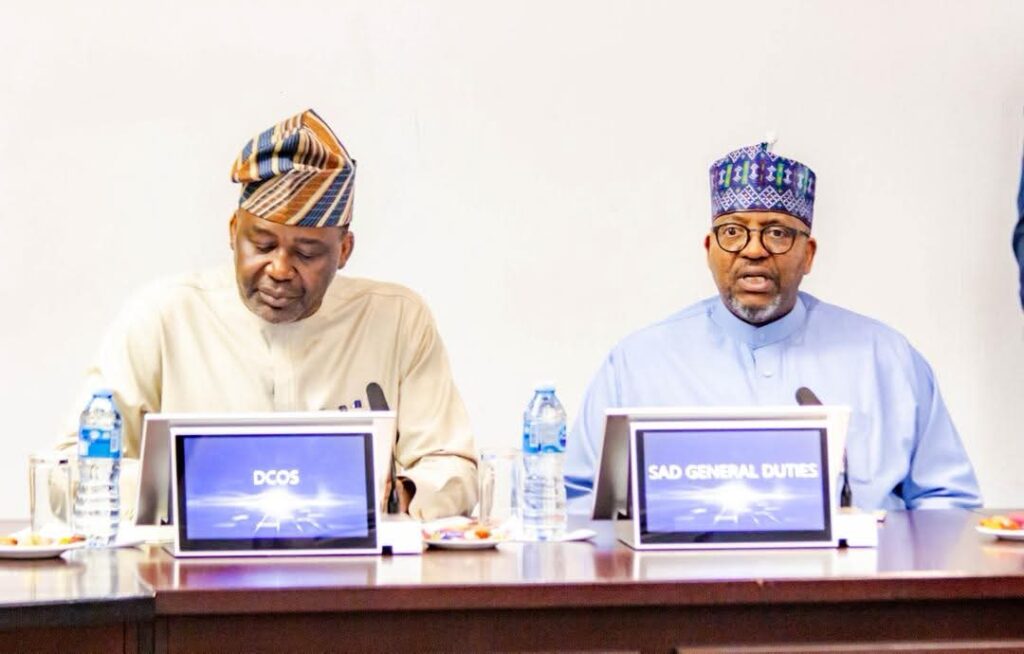
“A civil servant who earns honestly does not have to chase sudden wealth just to buy a vehicle, or save for ten years to buy one. A young professional should not remain in darkness simply because solar power must be paid for all at once,” the Vice President said.
VP Shettima disclosed that in just one year of operations, CREDICORP has disbursed over ₦37 billion in consumer credit to more than 200,000 Nigerians, with over half of them accessing formal credit for the first time.
The Vice President said the organisation is specifically tasked with building credit infrastructure to bridge the trust gap between lenders and borrowers, providing wholesale capital and credit guarantees through its portfolio company.
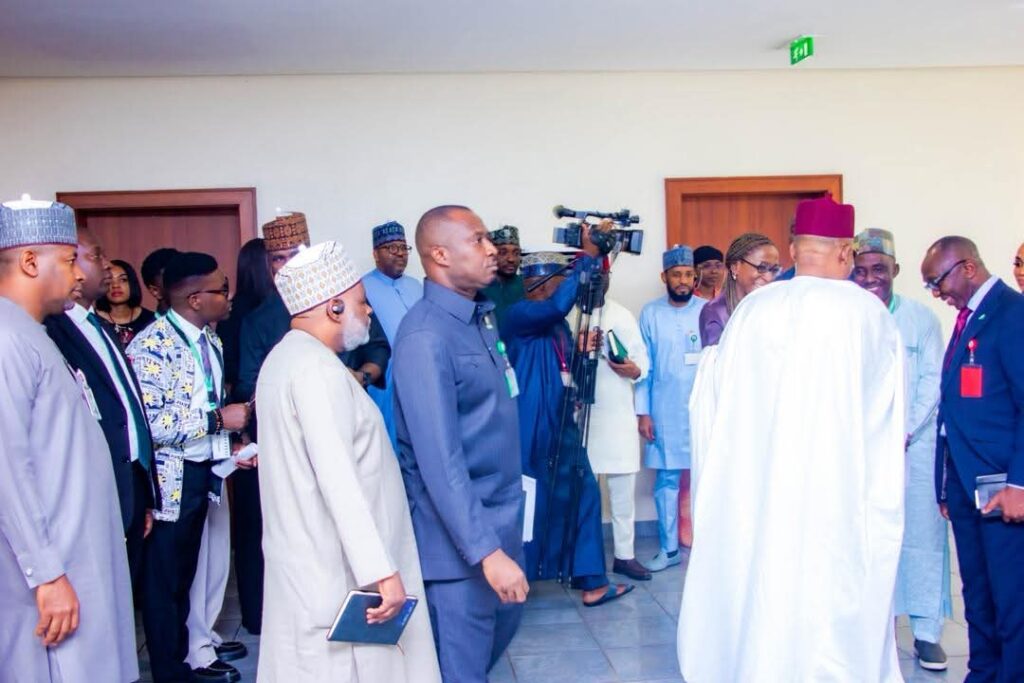
“Ultimately, these critical jobs of CREDICORP will enable access to consumer credit to at least 50 per cent of working Nigerians by 2030,” he said.
The Vice President explained that the new board’s role is not ceremonial as they are custodians of the organisation’s mission, adding that the long-term strength of the institution would depend on their “vigilance, integrity, sacrifice, and commitment.”
He directed Board members to uphold Public Service Rules, the Board Charter, and all applicable governance frameworks, warning that accountability and stewardship of public resources were non-negotiable.
Earlier, Chairman of CREDICORP, Otunba Aderemi Abdul, expressed appreciation to President Tinubu for his vision behind the formation of CREDICORP and for the confidence reposed in them, noting that the establishment of Corporation marked an important step towards strengthening the nation’s financial architecture.
He assured President Tinubu that the board understands its responsibility and will guide the institution to deliver meaningful benefits to Nigerians.

For his part, Engr. Uzoma Nwagba, Managing Director/CEO of CREDICORP, recalled watching President Tinubu saying 20 years ago that consumer credit is one of the major tools that will improve the lives of Nigerians.
He noted that over the past 18 months, the institution has benefited more than 200,000 Nigerians, including students.
He assured that the presidential vision behind CREDICORP would not be taken lightly, as the team considers their appointments a unique, once-in-a-lifetime opportunity.
Other members of the board inaugurated include Olanike Kolawole, Executive Director, Operations; Aisha Abdullahi, Executive Director, Credit and Portfolio Management; Dr. Armstrong Ume-Takang (MD, MoFI), Representative of MoFI; Engr. Bisoye Coke-Odusote (DG, NIMC), Representative of NIMC; and Mohammed Naziru Abbas, Representative of FMITI.
Others are Marvin Nadah, Representative of FCCPC; Chinonyelum Ndidi, Representative of the Federal Ministry of Finance; Mohammed Abbas Jega, Independent Director; and Toyin Adeniji, Independent Director.
FG Moves To Democratise Credit Access, Inaugurates CREDICORP Board
National News
NAPTIP, UK Government Rally Against Rising Trafficking into Southeast Asia Scam Centres

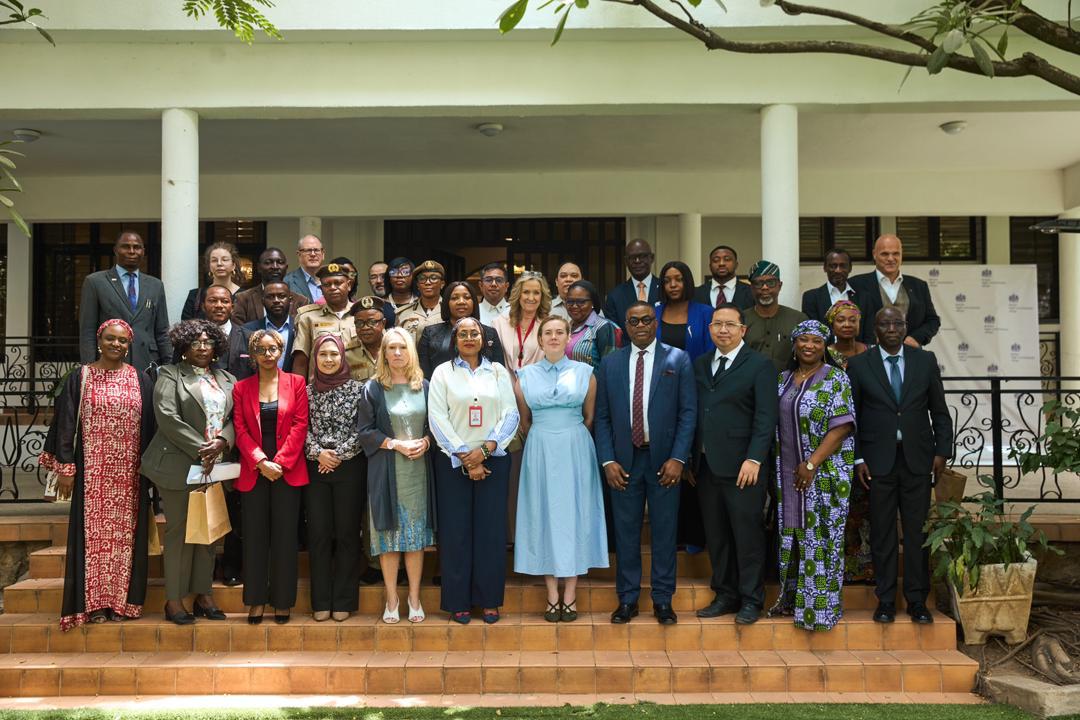
NAPTIP, UK Government Rally Against Rising Trafficking into Southeast Asia Scam Centres
By: Michael Mike
The National Agency for the Prohibition of Trafficking in Persons (NAPTIP), in collaboration with the British High Commission Abuja, has amplified the voices of trafficking survivors in a bold move to confront the fast-growing crisis of cyber-enabled scam operations across Southeast Asia.
At a landmark survivor-centred forum held in Abuja on Monday, stakeholders gathered under the theme, “Confronting the Global Scam Centre Crisis: Perspectives of Nigerian Survivors,” to spotlight the emerging pattern of Nigerians being lured abroad with fake job offers and forced into criminal cyber-fraud networks.
The event featured testimonies from recently repatriated Nigerians who were trafficked to Myanmar, Laos, Cambodia and Thailand, where they were compelled to operate sophisticated online scam schemes under harsh, exploitative and often abusive conditions.
The programme followed a coordinated rescue effort involving NAPTIP, the Nigerian Ministry of Foreign Affairs, the Nigerian Embassy in Bangkok, the British NGO EDEN, and the International Organization for Migration (IOM). Their joint intervention — including cross-border triangulation at the Thai–Myanmar frontier and welfare visits to detained Nigerians at Bangkok’s Immigration Detention Centre — led to the safe return of 23 survivors earlier this month.
Global data underscore the severity of the crisis. According to the Office of the United Nations High Commissioner for Human Rights (OHCHR) 2026 report titled “A Wicked Problem,” credible estimates indicate that at least 120,000 individuals are currently trapped in forced scam operations inside Myanmar alone, with figures exceeding 300,000 across Southeast Asia. The report notes that victims identified originate from at least 66 countries, and that between 2020 and 2025, 74 percent of known victims trafficked into scam centres were taken to Southeast Asia after being promised lucrative employment.
Speaking at the event, the UK Deputy High Commissioner to Abuja, Gill Lever, said the forum was designed to centre survivors’ voices and ensure their experiences inform prevention and response strategies.
“We are here to listen to survivors who have shown remarkable bravery in sharing their experiences,” she said. “The UK is working closely with Nigerian authorities and partners to ensure trauma-informed care, safe repatriation and stronger safeguards against this rapidly evolving threat.”
Representing the Director-General of NAPTIP, Mrs. Kehinde Akomolafe, the agency’s Director of Public Enlightenment, described the accounts as a stark reminder of the cruelty underpinning modern trafficking networks.
“The courage these survivors have shown is extraordinary,” she said. “Their experiences expose the brutal reality of trafficking into scam centres — a crime that strips individuals of their dignity, autonomy and freedom. NAPTIP remains resolute in protecting Nigerians from this growing menace and strengthening collaboration with international partners.”
One survivor recounted being promised a legitimate job opportunity abroad, only to be trapped in a high-security compound and coerced into online fraud under constant surveillance and threats.
“I was promised opportunity and a better life,” the survivor said. “Instead, I lived in fear and was forced to do things against my will. I am speaking out so other Nigerians can recognise the warning signs. No one should go through what we endured.”
Stakeholders at the forum called for intensified public awareness campaigns, tighter scrutiny of overseas recruitment channels, enhanced intelligence-sharing among Commonwealth partners and stronger victim-protection frameworks.
As cyber-enabled trafficking networks expand across borders, Nigerian and UK authorities signalled that survivor-led advocacy will remain central to dismantling scam syndicates and preventing further exploitation.
NAPTIP, UK Government Rally Against Rising Trafficking into Southeast Asia Scam Centres

Military Air precision bombardment neutralises over 50 terrorists after attack on Ngoshe in Borno

Police foil abduction in Kano, one killed

Two arrested over alleged child trafficking in Cross River

Roger Federer’s Shock as DNA Results Reveal Myla and Charlene Are Not His Biological Children

THE PLIGHT OF FARIDA

FAILED COUP IN BURKINA FASO: HOW TRAORÉ NARROWLY ESCAPED ASSASSINATION PLOT AMID FOREIGN INTERFERENCE CLAIMS
-
 News2 years ago
Roger Federer’s Shock as DNA Results Reveal Myla and Charlene Are Not His Biological Children
-
Opinions4 years ago
THE PLIGHT OF FARIDA
-
 News11 months ago
FAILED COUP IN BURKINA FASO: HOW TRAORÉ NARROWLY ESCAPED ASSASSINATION PLOT AMID FOREIGN INTERFERENCE CLAIMS
-

 News2 years ago
EYN: Rev. Billi, Distortion of History, and The Living Tamarind Tree
-
 Opinions4 years ago
POLICE CHARGE ROOMS, A MINTING PRESS
-

 ACADEMICS2 years ago
A History of Biu” (2015) and The Lingering Bura-Pabir Question (1)
-

 Columns2 years ago
Army University Biu: There is certain interest, but certainly not from Borno.
-

 Opinions2 years ago
Tinubu,Shettima: The epidemic of economic, insecurity in Nigeria
