
News
China-Africa Infrastructure Cooperation:Building the Groundwork for a Better Future

China-Africa Infrastructure Cooperation:
Building the Groundwork for a Better Future
By: Yi Xin
When speaking of China-Africa cooperation, the word “kaleidoscopic” comes to mind. Recent years have seen fruitful outcomes of the bilateral cooperation in multiple fields. Among them, infrastructure is hardly one to miss.
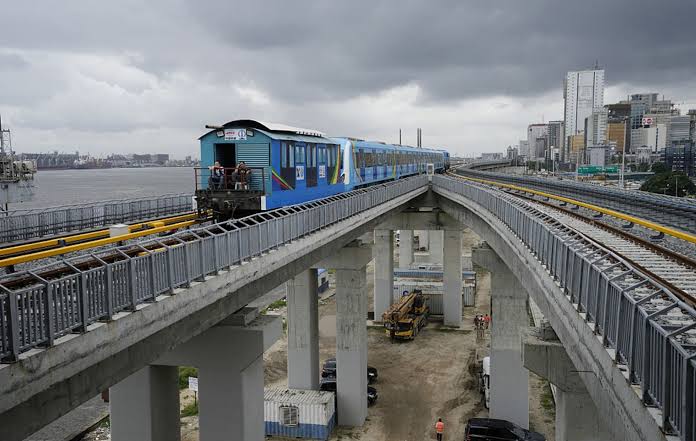
From the plateau in the east to the coast in the west, from the landlocked countries in the sub-Saharan region to the small island states in the Western Indian Ocean, roads, railways, bridges, ports, schools, hospitals and power stations built with Chinese assistance are paving the groundwork for a better future for a land of promise and potential.
Transport projects drive a more connected future.
“To get rich, build roads first.” This is not just a popular Chinese proverb, but an important takeaway from China’s own development. Drawing on this experience, China has spent decades working with Africa to build the transport backbone necessary for driving economic growth.
It would be remiss not to mention the Addis Ababa-Djibouti Railway (AADR), a transport artery connecting Ethiopia and Djibouti and the first electrified transnational railway in East Africa. It is a flagship Belt and Road cooperation project, and one of the two main lines of transport in the Outlook on Peace and Development in the Horn of Africa which China put forward in 2022 to support regional countries in addressing security, development and governance challenges.
The railway greatly improved the access of countries along the route to the outside world. It has cut transport time for freight goods from more than three days to less than 20 hours, and reduced the cost by at least one-third. To date, the railway has transported 680,000 passengers and 9.5 million tons of cargo, with an average annual growth rate of 39 percent in revenue. As countries in the region grapple with soaring oil prices, the electrified railway has played an increasingly important role in delivering essential materials such as edible oil and fertilizers to meet the needs of socioeconomic development.
In May this year, the Chinese contractors handed over the railway’s management and operation to the African side after six years of smooth operation. Ethiopian Minister of Finance Ahmed Shide said, “The Addis Ababa-Djibouti railway line is an example of the ever-flourishing Sino-African relations. The Sino-African partnership has passed the test of time, demonstrated its resilience, and marks a brighter and strong future.”
In recent years, more and more infrastructure projects in Africa undertaken by China have yielded tangible benefits, often exceeding the traditional transport domain. Since the establishment of the Forum on China-Africa Cooperation (FOCAC) in 2000, according to the “China and Africa in the New Era: A Partnership of Equals” white paper, Chinese companies have helped African countries build or upgrade more than 10,000 km of railways, nearly 100,000 km of highways, nearly 1,000 bridges, nearly 100 ports, 66,000 km of power transmission and distribution, an installed power-generating capacity of 120 million kW, a communications backbone network of 150,000 km, and a network service covering nearly 700 million user terminals.
Blue economy cooperation cultivates talent.
The ocean connects countries; it also bears infinite hope. In recent years, under the Vision for Maritime Cooperation under the Belt and Road Initiative and The Belt and Road Blue Cooperation Initiative, China has taken concrete steps to forge a blue partnership with Africa.
In China-Africa Cooperation Vision 2035 released at the eighth FOCAC Ministerial Conference in 2021, cooperation on the blue economy is listed as a “new growth area” that can “add value to and sustainably utilize marine resources.” The infrastructure projects in this field have created many local jobs and helped train much-needed engineers, technicians and other skilled professionals for Africa.
The Lamu Port Project in Kenya is an exemplar. It has an important place in Kenya Vision 2030, the country’s long-term development blueprint. Built by a Chinese company, the port is part of Kenya’s bid to become a major trading hub in East Africa.
Over three-quarters of the project’s hirees were African. The Chinese companies send experienced and skilled Chinese workers to provide on-the-job training for local recruits. This was met with much enthusiasm among young Africans. More than 2,500 job opportunities with such tailored training produced a large number of skilled workers. After the project was completed, they were able to find new jobs and lead better lives with the skills they mastered.
Green economy cooperation supercharges energy transition.
China has been an important partner in Africa’s green transition. To date, China has undertaken more than 100 clean energy projects under the FOCAC framework, supporting African countries in making better use of clean energy such as solar, hydro, wind and geothermal power.
The De Aar Wind Farm has changed the energy landscape of South Africa. As the first wind power project financed, constructed and operated by a Chinese company in Africa, it supplies 760 million kilowatt-hours of clean electricity annually, meeting the electricity needs of 300,000 households. This has contributed to closing the gap caused by unstable clean energy and addressing the electricity shortage in South Africa.
China’s continuous efforts to help develop infrastructure in Africa over the decades find roots in Confucian philosophy. To quote The Analects, “ A man of virtue, while establishing himself and pursuing success, also works to establish others and enable them to succeed as well.” In other words, in pursuing its own development, China sincerely hopes to see African countries, which are also important members of the Global South, become prosperous and strong.
(Yi Xin is a Beijing-based international affairs commentator.)
China-Africa Infrastructure Cooperation:
Building the Groundwork for a Better Future


Troops Arrest Suspected Military Impostor in Katsina
By Zagazola Makama
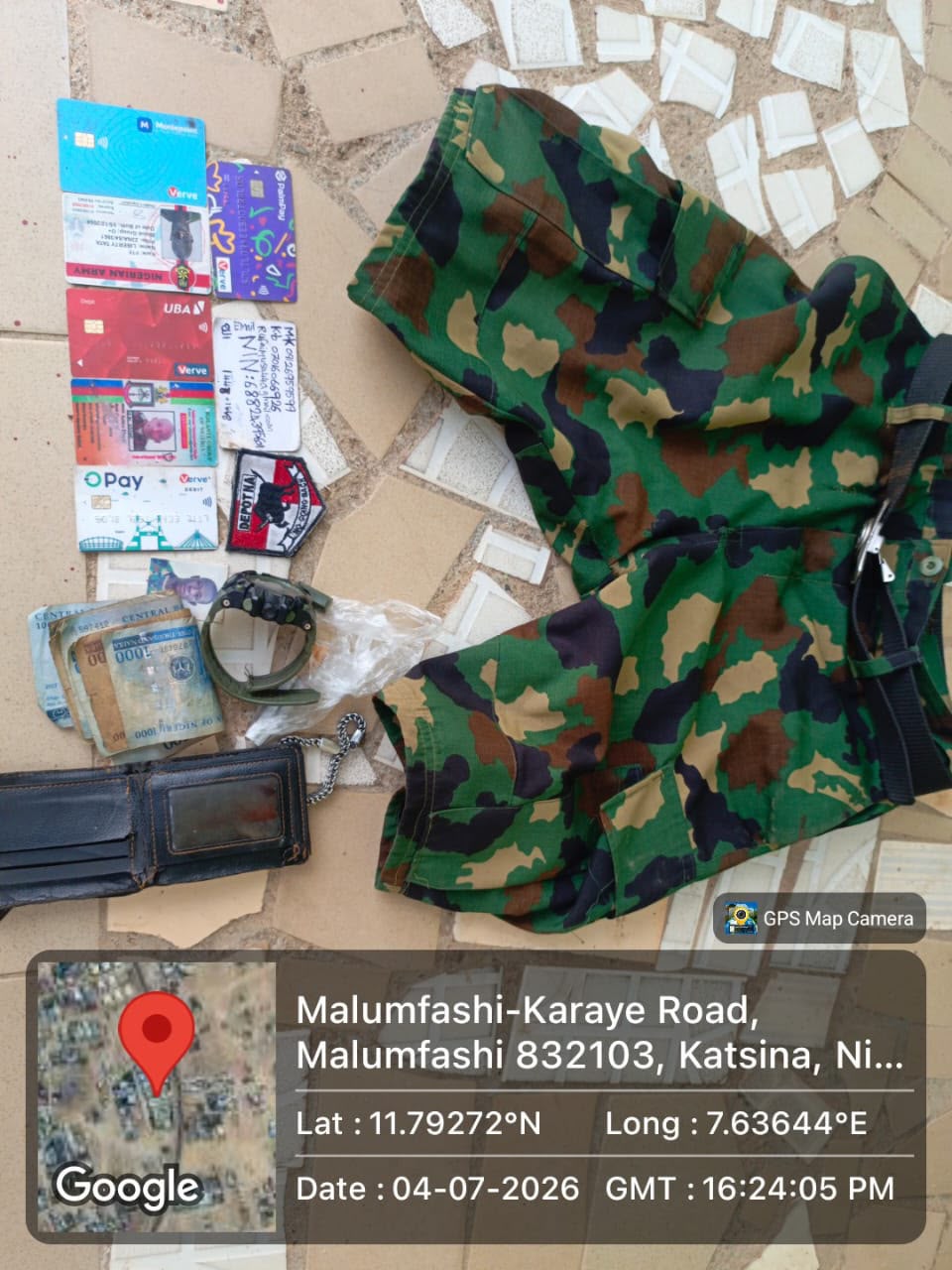
Troops of 17 Brigade have arrested a suspected military impostor during a fighting patrol in Malumfashi Local Government Area.
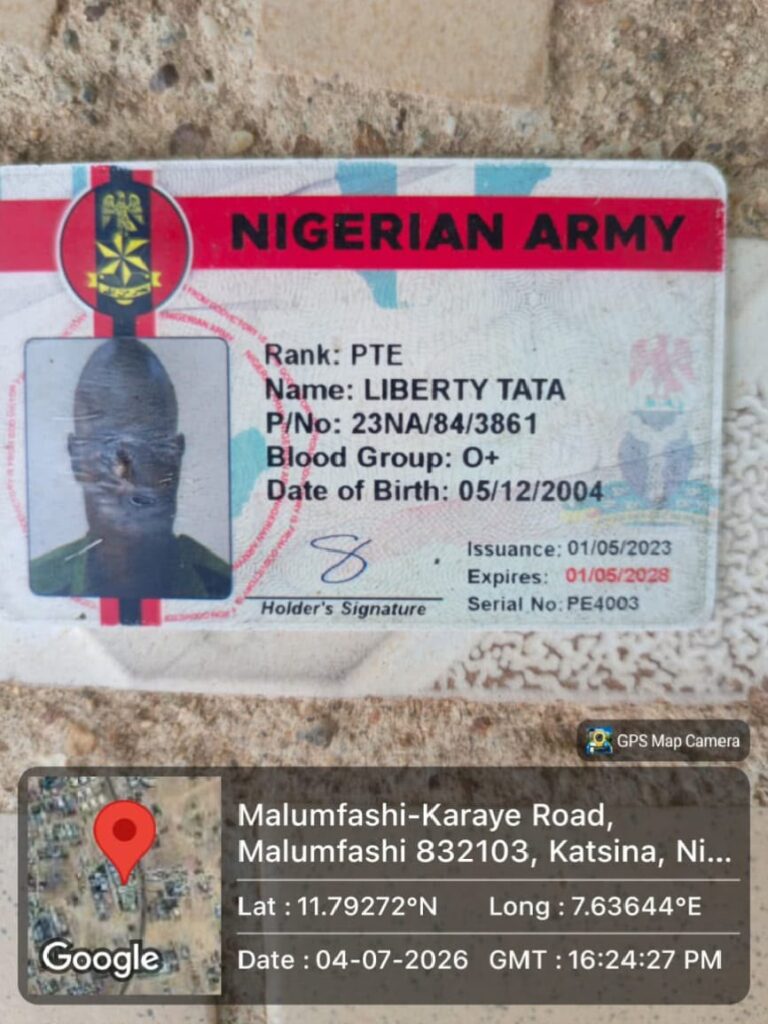
Security sources told Zagazola Makama that the suspect was apprehended at about 1:30 p.m. on July 4 by troops deployed at the Forward Operating Base (FOB) Malumfashi while conducting routine patrols within Malumfashi town.

According to the sources, the suspect was intercepted while wearing a woodland camouflage three-quarter short, raising suspicion among the troops.
A search conducted on the suspect led to the recovery of a fake Nigerian Army identity card, four Automated Teller Machine (ATM) cards, one woodland camouflage three-quarter short, a wristwatch and the sum of ₦17,000.
The suspect and the recovered exhibits are currently in military custody pending further investigation.
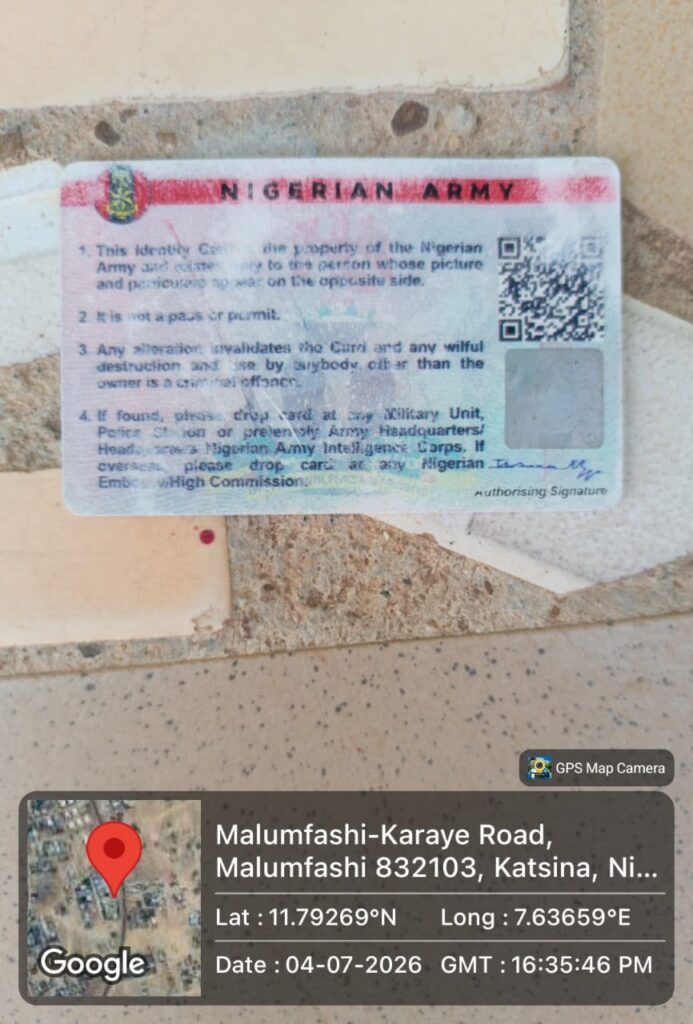
Military sources said the arrest forms part of ongoing efforts to curb impersonation of security personnel and other criminal activities within the area.
Troops Arrest Suspected Military Impostor in Katsina
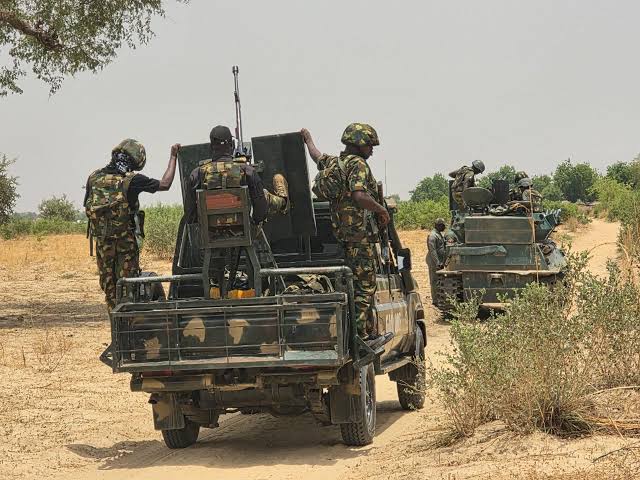
Troops Recover 50 Rustled Cattle, Repel Suspected Rustlers in Kaduna
By Zagazola Makama
Troops deployed at the Forward Operating Base (FOB) Kankomi have recovered 50 rustled cattle after repelling suspected cattle rustlers during an ambush operation in Chikun Local Government Area.
Security sources told Zagazola Makama that the troops responded to a distress call at about 9:55 a.m. on July 4 over the activities of suspected rustlers at Ungwan Gontu community.
According to the sources, the troops swiftly laid an ambush and made contact with the fleeing suspects, forcing them to abandon the stolen livestock and escape into the surrounding area.
During the operation, the troops recovered 50 rustled cattle, which were subsequently identified and handed over to their rightful owner.
Military sources said efforts are ongoing to track down the fleeing suspects as security operations continue to combat cattle rustling and other criminal activities across Kaduna State.
Troops Recover 50 Rustled Cattle, Repel Suspected Rustlers in Kaduna
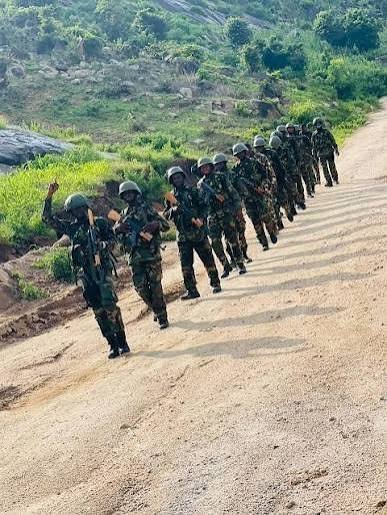
Troops Arrest Suspected Terrorist in Kogi, Suspect Confesses to Group Membership
By Zagazola Makama
Troops of 12 Brigade, in collaboration with Office of the National Security Adviser (ONSA) Hybrid Forces, have arrested a suspected terrorist during an operation in Lokoja Local Government Area.
Security sources told Zagazola Makama that the troops responded at about 1:00 p.m. on July 4 to reports of a confrontation between local residents and a suspected terrorist at a Ruga settlement behind Obajana community.
According to the sources, the troops swiftly intervened and arrested one suspect at the scene.
During preliminary interrogation, the suspect reportedly confessed to being a member of a terrorist group led by an individual identified as Haruna, which allegedly operates within the Okene general area.
The suspect is currently in military custody and is undergoing further investigation to establish the extent of his involvement and identify other members of the group.
Military sources said the arrest forms part of ongoing security operations aimed at dismantling terrorist and criminal networks across Kogi State.
Troops Arrest Suspected Terrorist in Kogi, Suspect Confesses to Group Membership

Troops Arrest Suspected Military Impostor in Katsina

Troops Recover 50 Rustled Cattle, Repel Suspected Rustlers in Kaduna

Troops Arrest Suspected Terrorist in Kogi, Suspect Confesses to Group Membership

Roger Federer’s Shock as DNA Results Reveal Myla and Charlene Are Not His Biological Children

THE PLIGHT OF FARIDA

FAILED COUP IN BURKINA FASO: HOW TRAORÉ NARROWLY ESCAPED ASSASSINATION PLOT AMID FOREIGN INTERFERENCE CLAIMS
-
 News2 years ago
Roger Federer’s Shock as DNA Results Reveal Myla and Charlene Are Not His Biological Children
-
Opinions4 years ago
THE PLIGHT OF FARIDA
-
 News1 year ago
FAILED COUP IN BURKINA FASO: HOW TRAORÉ NARROWLY ESCAPED ASSASSINATION PLOT AMID FOREIGN INTERFERENCE CLAIMS
-

 News2 years ago
EYN: Rev. Billi, Distortion of History, and The Living Tamarind Tree
-
 Opinions5 years ago
POLICE CHARGE ROOMS, A MINTING PRESS
-

 ACADEMICS2 years ago
A History of Biu” (2015) and The Lingering Bura-Pabir Question (1)
-

 Columns2 years ago
Army University Biu: There is certain interest, but certainly not from Borno.
-

 Politics1 year ago
2027: Why Hon. Midala Balami Must Go, as Youths in Hawul and Asikira/Uba Federal Constituency Reject ₦500,000 as Sallah Gift
