
News
Chronicling Maj Gen Waidi Shuaibu’s 14 months Stint As Theatre Commander, North East Operation Hadin Kai

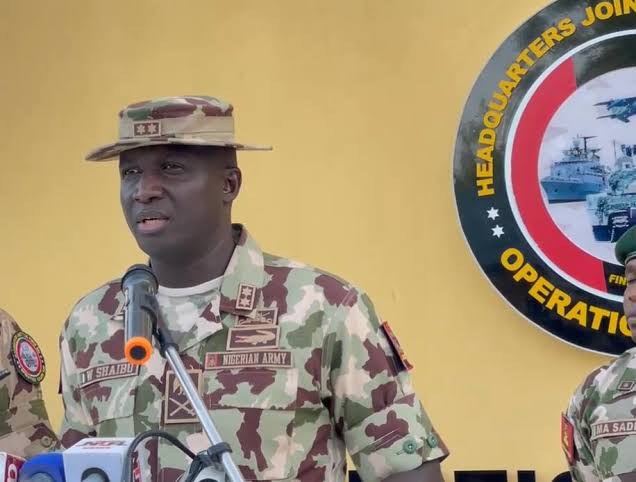
Chronicling Maj Gen Waidi Shuaibu’s 14 months Stint As Theatre Commander, North East Operation Hadin Kai
By: Zagazola Makama
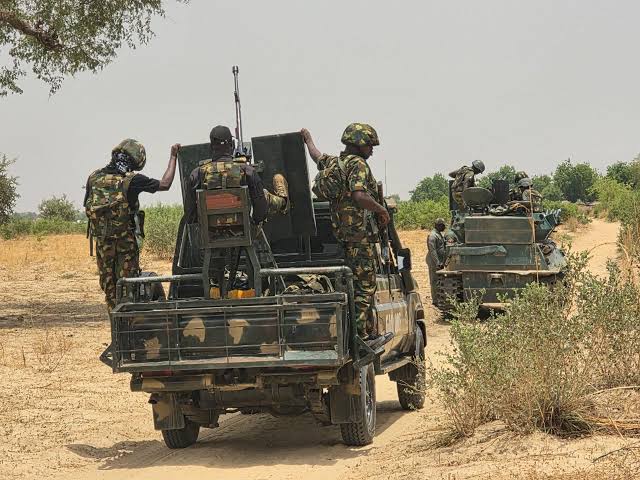
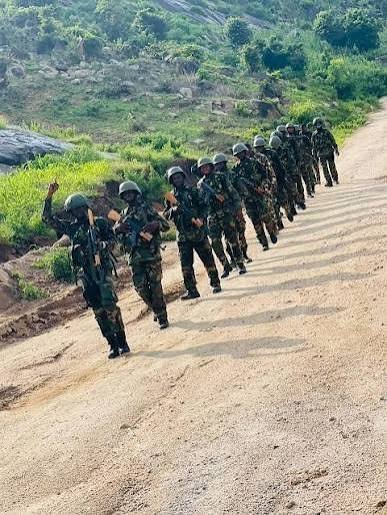
Over the past 14 months, Major General Waidi Shuaibu has demonstrated exemplary leadership as the Theatre Commander of Operation Hadin Kai in the North East, steering numerous military and civil initiatives aimed at restoring peace, neutralizing terrorism, and stabilizing the region. His tenure has been marked not only by significant operational successes but also by infrastructural development and community engagement, affirming his commitment to comprehensive counter insurgency strategies.
From the outset of his appointment, Major General Waidi Shuaibu prioritized the enhancement of operational capacity within the theatre. He oversaw the refurbishment and upgrade of military hardware, including fixing ten VP 1 Type 89 APCs, five BMPs, three Steyr APCs, six Camel MRAPs, and other vital equipment belonging to various units such as 199 Special Forces Battalion and 25 Brigade. These efforts were in preparation for the 2024 dry season operations, ensuring the troops had the necessary assets to effectively combat insurgents and carry out their missions.
One of the remarkable feats under his leadership was the successful deep clearance operations into the Sambisa Forest and the TumbuKtu Triangle in February 2024. These operations significantly degraded terrorist and their hideouts as well as supply routes. Furthermore, the orchestrated in theatre Local Community Policing and Peace Enforcement (LCPPE), which took place from 12 to 17 February 2024, helped foster trust with local communities and created an environment conducive to peacebuilding activities.
Major General Waidi Shuaibu’s operational achievements are vividly illustrated by the neutralization of over 567 terrorists associated with JAS and ISWAP from February 2024 to date. These targeted assaults coupled with meticulous intelligence gathering resulted in the recovery of 492 assorted weapons, over 10,714 rounds of ammunition, and numerous high value items including general purpose machine guns, rifles, and various explosives. His forces also confiscated large caches of communication devices, including 54 Baofeng radios and 332 mobile phones, disrupting terrorist command and control communications.
The success of counter-terrorism activities extended beyond weapon captures. Under his command, the military rescued over 2,225 civilians from terrorist enclaves. Additionally, more than 9,800 patrols, nearly 2,700 ambushes, and over 990 clearance and offensive operations were carried out, significantly weakening enemy strongholds and restoring safety to the civilian population. Through intensive interdiction NAF Air Component operations conducting 232 missions across 230 sorties, clocking more than 567 hours of flight time the air component remained a force multiplier in the fight.
Intelligence, Surveillance, and Reconnaissance (ISR) played a crucial role; the Nigerian Air Force UAV command executed 760 ISR missions totaling 6,674 flight hours, providing real-time intelligence and enabling precision strikes. This synergy of air and ground operations facilitated the arrest of over 161 terrorists’ logisticians and the surrender of an astounding 121,012 fighters along with their families, which marked a paradigm shift in the theatre’s counter-insurgency efforts.
Other Key activities was the successful conduct of Operation Desert Sanity III (February to June 2024), aimed at degrading insurgent networks, coupled with the ongoing efforts in community stabilization. The release of over 4,000 internally displaced persons (IDPs) in Kukawa after successful stabilization operations exemplifies the tangible peace dividends under his leadership.
Infrastructure and civil-military cooperation also saw notable progress. The renovation and upgrading of the Headquarters JTF (NE) office complex, construction and furnishing of escort and drivers’ lounges, and the refurbishment of Soldier’s accommodation in the Theatre Command fostered operational efficiency and morale.
In the domain of civil-military engagement, the Theatre Commander organized the Quranic Recitation Competition, which sought to promote harmony and spiritual resilience among the troops and communities. This initiative was complemented by training activities such as IED awareness, detection courses for officers, and specialized weapon handling training for Civil Defense personnel, reflecting his holistic approach to security.
The theatre’s successes extended to high-profile counter-terrorism operations, which involved neutralizing key terrorists leaders including Tahir Baga and Abu Rijal in May and September 2024 respectively. The decapitation strategy, alongside community engagement, significantly weakened the terrorists’ leadership hierarchy.
In recognition of these efforts, the Nigerian military’s North East Theatre under Major General Waidi Shuaibu received the Security Watch Award in December 2024 the most outstanding defense command in Africa an accolade that underscored the effectiveness of his leadership.
His initiatives also contributed to crucial civil-military projects, including the construction of 30 two-bedroom Community Base Quarters and the organization of community engagement activities such as a Quranic recitation contest, which saw three participants sponsored for Hajj pilgrimage.
In addition to operational success, Major General Waidi Shuaibu undertook critical interventions like the timely installation of military-grade long-range surveillance cameras in key locations such as Monguno, Gajiram, and Kekeno, further enhancing battlefield awareness.
Following his accomplished tenure, Major General Waidi Shuaibu was succeeded by Major General Abdulsalam Enesi Abubakar as the 15th Theatre Commander of Operation HADIN KAI (OPHK). This strategic move has been widely welcomed within security and political circles, as Maj Gen Abubakar brings over a decade of extensive operational, command, and instructional experience. His illustrious career includes serving as Commander Sector 3 OPHK and Multi-National Joint Task Force in Monguno, GOC 7 Division/Commander Sector 1 OPHK Maiduguri, and GOC 3 Division/Commander Operation SAFE HAVEN.
Maj Gen Abubakar’s impressive military background reflects his expertise in offensive operations, community engagement, and infrastructure development—traits that are expected to further bolster the fight against insurgency. His previous roles have seen him successfully lead operations that neutralized high-profile terrorists and disrupted their supply chains, making him a formidable leader capable of steering the theatre toward stability. His advocacy for community involvement and humanitarian assistance underscores his holistic approach to counter-insurgency, which harmonizes military actions with civil development.
Given his extensive experience, Maj Gen Abubakar’s appointment marks an optimistic new chapter in Nigeria’s ongoing fight against terrorism in the North East. As he assumes command, there is cautious hope among stakeholders that his strategic vision and operational expertise will intensify efforts to restore lasting peace, rebuild communities, and secure the region for future generations.
In summary, Major General Waidi Shuaibu’s leadership has yielded remarkable operational successes and infrastructural progress, significantly weakening insurgent networks and delivering tangible peace dividends. His tenure laid the foundation for continued progress, and his successor, Major General Abdulsalam Enesi Abubakar, is expected to leverage his vast experience to accelerate these gains. As Nigeria remains committed to restoring peace in the North East, the leadership baton now passed to Maj Gen Abubakar symbolizes a renewed hope for victory against insurgency and a stable future for the region.
Zagazola Makama is a Counter Insurgency Expert and Security Analyst in the Lake Chad
Chronicling Maj Gen Waidi Shuaibu’s 14 months Stint As Theatre Commander, North East Operation Hadin Kai


Troops Arrest Suspected Military Impostor in Katsina
By Zagazola Makama
Troops of 17 Brigade have arrested a suspected military impostor during a fighting patrol in Malumfashi Local Government Area.
Security sources told Zagazola Makama that the suspect was apprehended at about 1:30 p.m. on July 4 by troops deployed at the Forward Operating Base (FOB) Malumfashi while conducting routine patrols within Malumfashi town.

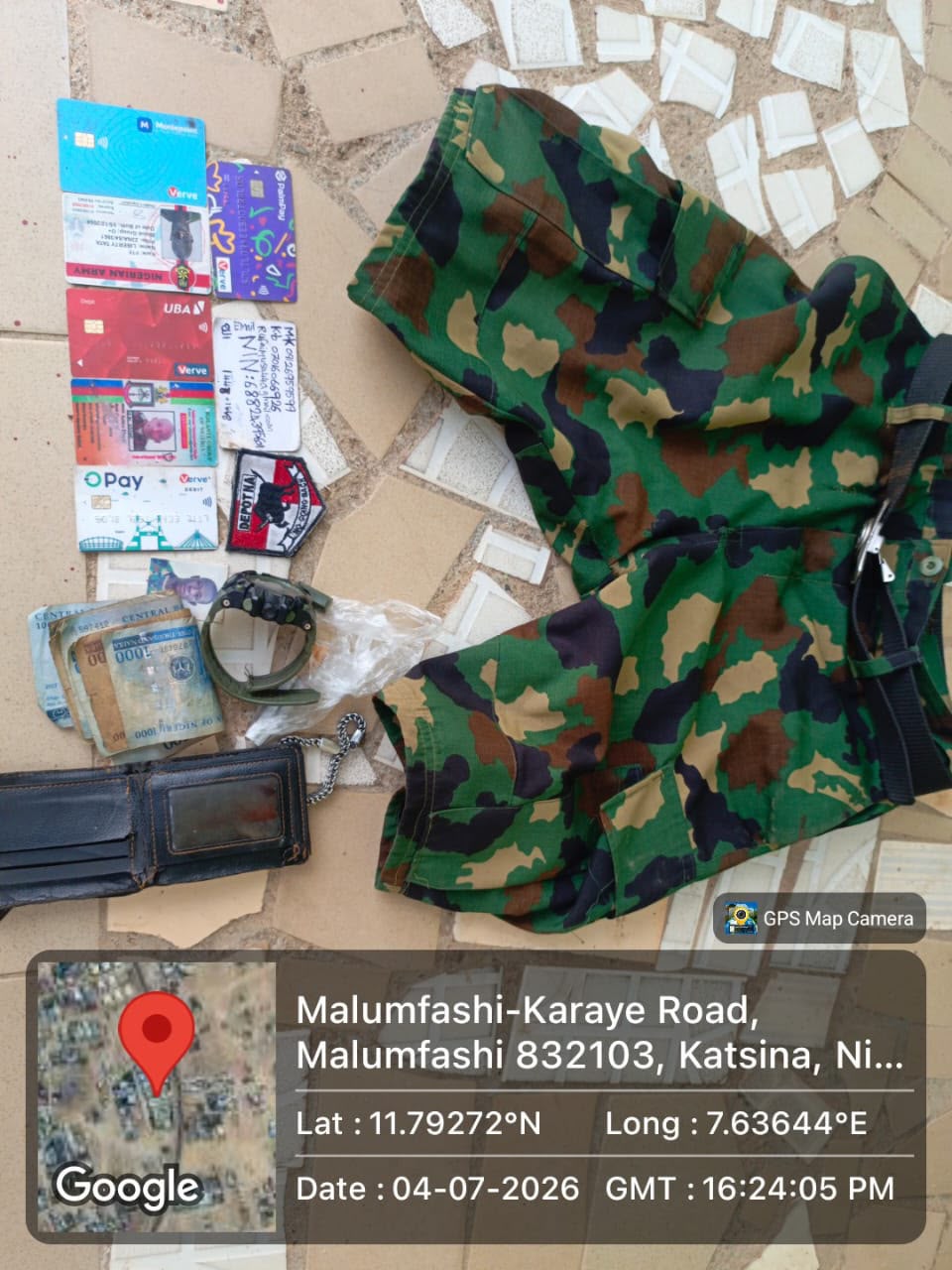
According to the sources, the suspect was intercepted while wearing a woodland camouflage three-quarter short, raising suspicion among the troops.
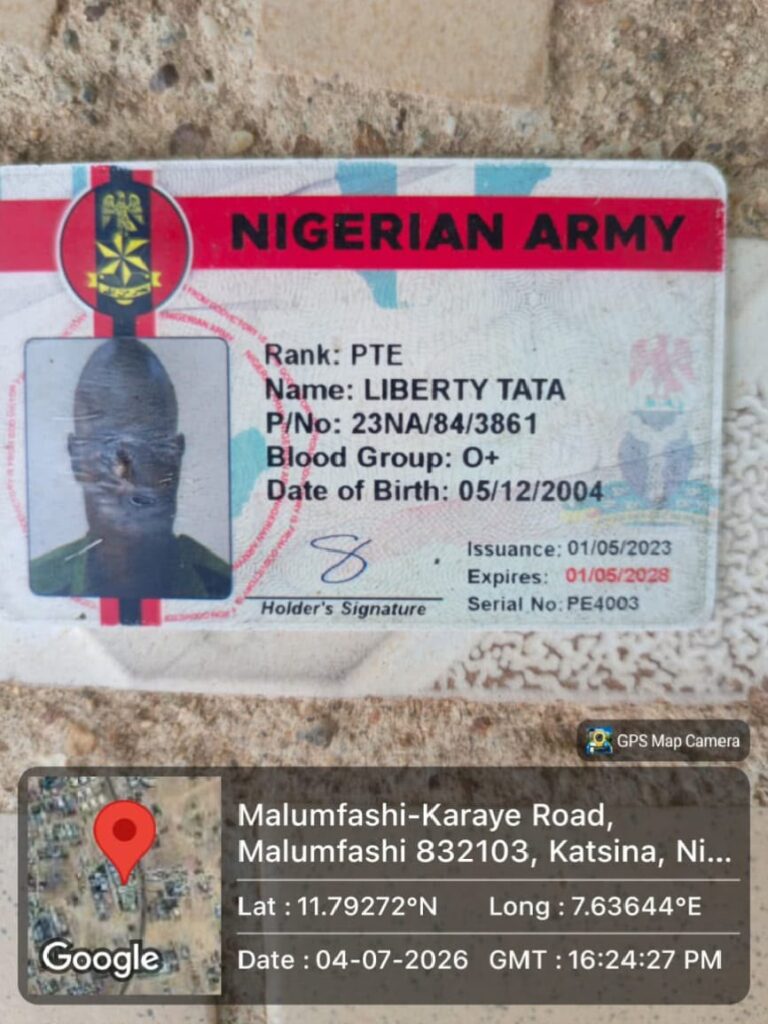
A search conducted on the suspect led to the recovery of a fake Nigerian Army identity card, four Automated Teller Machine (ATM) cards, one woodland camouflage three-quarter short, a wristwatch and the sum of ₦17,000.
The suspect and the recovered exhibits are currently in military custody pending further investigation.
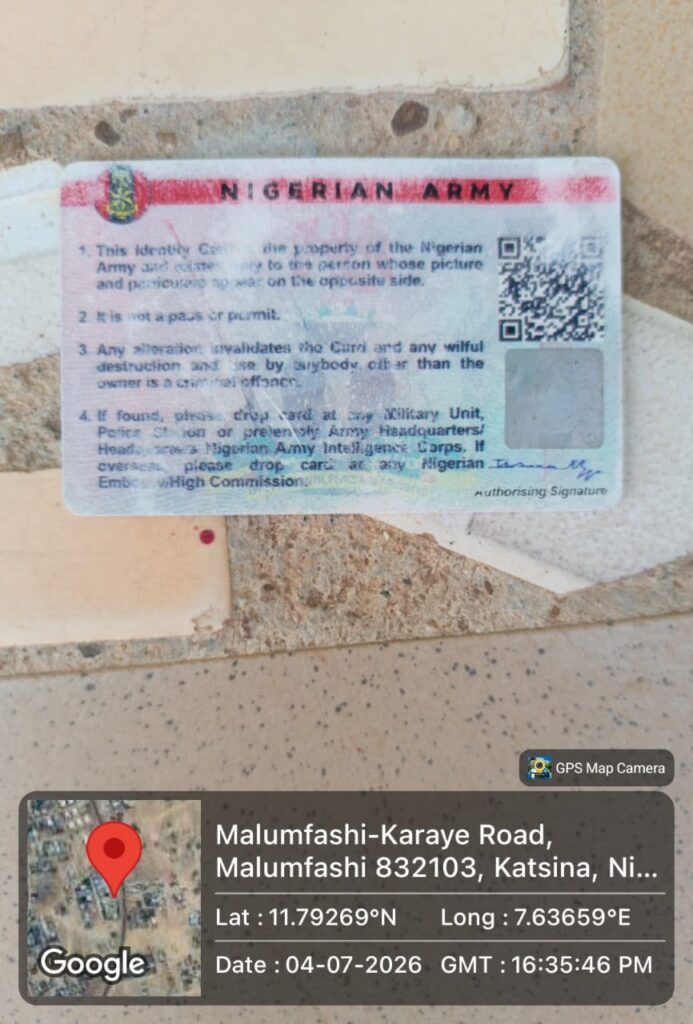
Military sources said the arrest forms part of ongoing efforts to curb impersonation of security personnel and other criminal activities within the area.
Troops Arrest Suspected Military Impostor in Katsina
Troops Recover 50 Rustled Cattle, Repel Suspected Rustlers in Kaduna
By Zagazola Makama
Troops deployed at the Forward Operating Base (FOB) Kankomi have recovered 50 rustled cattle after repelling suspected cattle rustlers during an ambush operation in Chikun Local Government Area.
Security sources told Zagazola Makama that the troops responded to a distress call at about 9:55 a.m. on July 4 over the activities of suspected rustlers at Ungwan Gontu community.
According to the sources, the troops swiftly laid an ambush and made contact with the fleeing suspects, forcing them to abandon the stolen livestock and escape into the surrounding area.
During the operation, the troops recovered 50 rustled cattle, which were subsequently identified and handed over to their rightful owner.
Military sources said efforts are ongoing to track down the fleeing suspects as security operations continue to combat cattle rustling and other criminal activities across Kaduna State.
Troops Recover 50 Rustled Cattle, Repel Suspected Rustlers in Kaduna
Troops Arrest Suspected Terrorist in Kogi, Suspect Confesses to Group Membership
By Zagazola Makama
Troops of 12 Brigade, in collaboration with Office of the National Security Adviser (ONSA) Hybrid Forces, have arrested a suspected terrorist during an operation in Lokoja Local Government Area.
Security sources told Zagazola Makama that the troops responded at about 1:00 p.m. on July 4 to reports of a confrontation between local residents and a suspected terrorist at a Ruga settlement behind Obajana community.
According to the sources, the troops swiftly intervened and arrested one suspect at the scene.
During preliminary interrogation, the suspect reportedly confessed to being a member of a terrorist group led by an individual identified as Haruna, which allegedly operates within the Okene general area.
The suspect is currently in military custody and is undergoing further investigation to establish the extent of his involvement and identify other members of the group.
Military sources said the arrest forms part of ongoing security operations aimed at dismantling terrorist and criminal networks across Kogi State.
Troops Arrest Suspected Terrorist in Kogi, Suspect Confesses to Group Membership

Troops Arrest Suspected Military Impostor in Katsina

Troops Recover 50 Rustled Cattle, Repel Suspected Rustlers in Kaduna

Troops Arrest Suspected Terrorist in Kogi, Suspect Confesses to Group Membership

Roger Federer’s Shock as DNA Results Reveal Myla and Charlene Are Not His Biological Children

THE PLIGHT OF FARIDA

FAILED COUP IN BURKINA FASO: HOW TRAORÉ NARROWLY ESCAPED ASSASSINATION PLOT AMID FOREIGN INTERFERENCE CLAIMS
-
 News2 years ago
Roger Federer’s Shock as DNA Results Reveal Myla and Charlene Are Not His Biological Children
-
Opinions4 years ago
THE PLIGHT OF FARIDA
-
 News1 year ago
FAILED COUP IN BURKINA FASO: HOW TRAORÉ NARROWLY ESCAPED ASSASSINATION PLOT AMID FOREIGN INTERFERENCE CLAIMS
-

 News2 years ago
EYN: Rev. Billi, Distortion of History, and The Living Tamarind Tree
-
 Opinions5 years ago
POLICE CHARGE ROOMS, A MINTING PRESS
-

 ACADEMICS2 years ago
A History of Biu” (2015) and The Lingering Bura-Pabir Question (1)
-

 Columns2 years ago
Army University Biu: There is certain interest, but certainly not from Borno.
-

 Politics1 year ago
2027: Why Hon. Midala Balami Must Go, as Youths in Hawul and Asikira/Uba Federal Constituency Reject ₦500,000 as Sallah Gift
