
News
FG Promises to Secure Abuja from Environment, Climate Disasters

FG Promises to Secure Abuja from Environment, Climate Disasters0
By: Michael Mike
The federal government said it would be moving headlong to secure the Federal Capital Territory (FCT) Abuja from imminent environment and climate disasters.
The Minister of Environment, Malam Balarabe Lawal assured of the nation’s commitment to its environmental and climate action goals, initiated in line with the Renewed Hope Agenda of President Bola Ahmed Tinubu and through targeted policies and programmes.
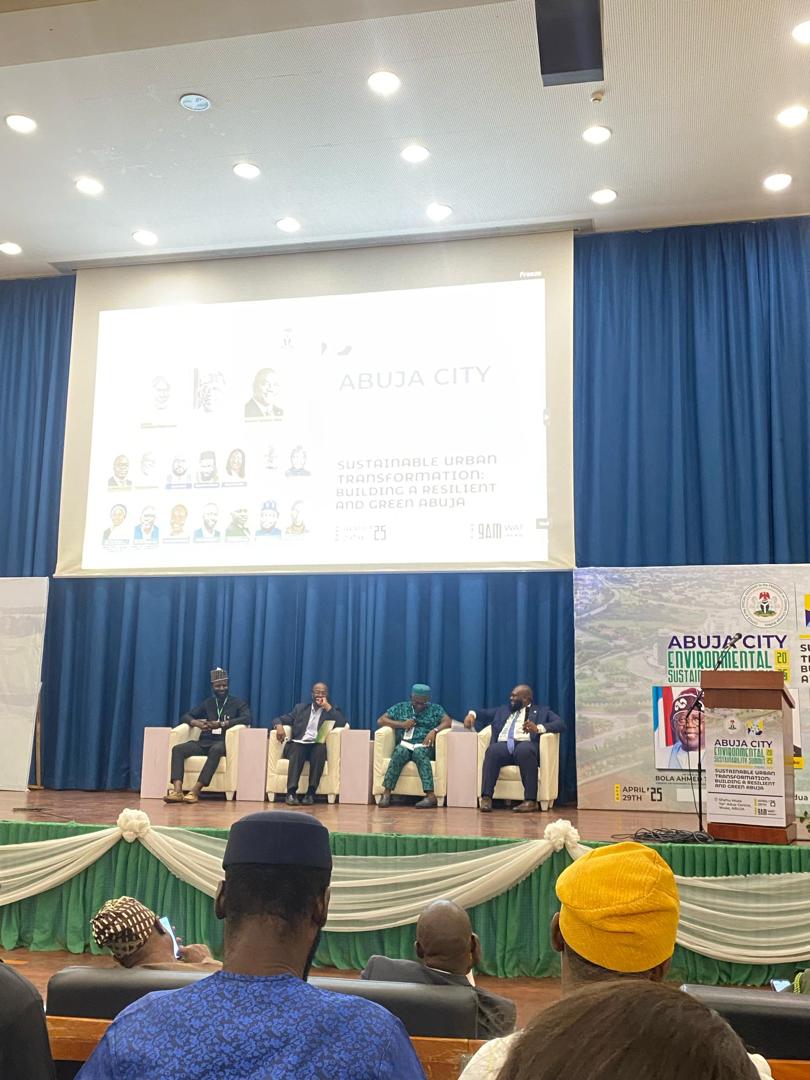
Speaking Tuesday in Abuja, during the 2025 Abuja City Environmental Sustainability Summit, with the theme ‘Sustainable Urban Transformation: Building a resilient and green Abuja ‘, Lawal said climate impacts as well as great green wall and agro climate resilience in semi-arid landscape projects were undertaken by the ministry, which adapts to the impact of climate change, which promote just, equitable and inclusive growth.
Represented by the Permanent Secretary, Mahmud Kambari, the Minister said the ministry has demonstrated a growing commitment in developing and implementing policies and initiatives that integrate ecosystem restoration and sustainable management.
He noted that Abuja city faces a significant environmental and transportation related issues, ranging from frequent flooding, poor waste management to traffic congestion, air pollution and rising greenhouse gas emissions, adding that these are not just any environmental problems, but developmental issues as they impact on our health, economy, livelihood and quality of life.
He said: “We need to enhance a new flooding that reduces our environmental footprint, promotes circular economy and prioritizes people, livelihood and economies in the planet. To achieve this Sustainable pathway in Abuja’s city, a green city planning and sustainable urban transformation system prioritizing public transport, electric vehicles, cycling and walking and promote the development of green spaces, energy efficient building. Renewables and use of smart innovative technologies, to optimize resource use and reduce the environmental impact.
“It is important to note that this city are at high risk of environment and climate related disasters, which includes insecurity and other risks essential to environment and climate related issues. The ministry asalin demonstrated a growing commitment in developing and implementing policies and initiatives that integrate ecosystem restoration and sustainable management such as National clean cooking policy, national gender policy, national adaptation plan and circular economy, which aims to enhance resilience of Nigerians and reduce vulnerability.
“Climate impacts as well as great green wall and agro climate resilience in semi-arid landscape projects were undertaken by the ministry, which adapts to the impact of climate change, which promote just, equitable and inclusive growth.
“Nigeria remains committed to its environmental and climate action goals initiated in line with Renewed Hope Agenda of Mr President and through targeted policies and programs. We will continue to prioritize nature based solutions and ecosystem restoration and adaptive capacity at all levels.
“To this end we must be intentional to embark on transformative development pathway that will transition us yo low carbon economy, protect and restore. Biosafety, combat pollution, promote innovation, sustainable consumption as well as green jobs.
“I commend the organizers. Of this initiative for their dedication to driving climate change and empowering communities. With practical solutions. I also urge all stakeholders to seize this opportunity to strengthen partnership, share best practices and advance policies that will ensure more resilient and sustainable future for Nigeria.”
Speaking earlier, the Special Assistant to the President on Climate Change Matters, Comrade Yussuf Kelani, said the summit will showcase the urban redevelopment efforts currently being spearheaded by the FCTA, saying the efforts play a crucial role in mitigating climate change, promoting environmental sustainability and improving the quality of life in Abuja.
He said: “Climate change has emerged as a paramount environmental concern, standing as the most pressing issue globally, and Nigeria is no exception to its ramifications. Regrettably, a significant portion of the populace remains uninformed about the imminent perils we face and the underlying causes of major community calamities we’ve endured.
“The imperative to incorporate climate change adaptation strategies into development agendas is growing ever more urgent. Nonetheless, a lack of awareness or comprehension regarding pivotal issues surrounding vulnerability and adaptation can impede the much-needed response.
“The impacts of climate change manifest divergently across various regions of Nigeria. The Northern part contends with the adversities of drought and desert encroachment, while the Southern regions grapple with inundation due to their low-lying terrain and dense tropical vegetation. The central belt confronts gully erosion, compounded by being a focal point for communal conflicts spurred by the repercussions of climate change.
“Assuming the role of Special Assistant to the President on Climate Change Matters, I bear the responsibility of advancing the Presidency’s initiatives and programs concerning climate change intervention, fostering engagement with Nigerians and stakeholders across all pertinent sectors.
“My team is carrying out this assignment along the mandates and responsibilities of my office. We have since deployed our working strategies in realizing the aforementioned objectives and execute the above official responsibilities through the Presidential Climate Change Action and Resilience Enhancement Scheme (P-CARES), a workplan platform for my office, which was launched in May 2024 to align with President Bola Ahmed Tinubu’s Renewed Hope Agenda.
“Abuja, Nigeria’s Capital, faces numerous environmental challenges, including rapid urbanization, waste management issues, and climate change impacts. The Abuja Environmental Summit seeks to address these challenges by fostering collaboration among government entities, private sector leaders, environmental experts, and civil society organizations. The summit will focus on developing sustainable urban solutions that can be implemented to ensure Abuja’s transformation into a resilient and green city.
“This summit is designed to be a pivotal event focused on advancing sustainable urban development practices in Abuja. With the goal of accelerating the implementation of eco-conscious urbanization strategies, the summit will provide a platform for fostering collaboration among key stakeholders, including government representatives, urban planners, environmentalists, and the private sector. Additionally, it will aim to build the capacity of local government officials and engage the public in efforts to transform Abuja into a leading model of climate-resilient urban growth. Through this event, the summit seeks to catalyze meaningful change in the way urban spaces are managed, ensuring a more sustainable, and environmentally-friendly future for the city.
“With urbanization increasingly affecting our environment, it is crucial to adopt sustainable practices ensure a resilient and eco-friendly future. The summit will act as a catalyst for change and will directly contribute to the ongoing efforts of the federal government in addressing climate change and building sustainable cities. Through this summit, we aim to address these critical issues and propel Abuja to the forefront of sustainable urban development.”
He added: “This summit will showcase the urban redevelopment efforts currently being spearheaded by the Ministry of the Federal Capital Territory (FCT). Special focus will be placed on key initiatives such as tree planting and urban greening, which significantly to carbon capture and the improvement of urban air quality. These efforts play a crucial role in mitigating climate change, promoting environmental sustainability, and improving the quality of life in Abuja.
“The summit will provide targeted capacity-building Workshops for local government officials from the six area councils of Abuja. Training will focus on facility management, sustainable urban practices, and waste management. These workshops will equip officials with the skills and knowledge needed to better manage urban spaces and contribute to promoting sustainable practices at the grassroots level, further enhancing the eco-friendliness of Abuja.
“A key component of the summit will be the Waste to Wealth initiative. This program will train young people in sustainable others management practices, empowering them to view waste as a resource that can be converted into valuable products.
“Participants, including local government officials, youth, and other stakeholders, will be empowered with the knowledge and tools to drive sustainable change in Abuja.
“The summit will catalyze the development of actionable policies and strategies that support the growth of environmentally-friendly urban spaces in Abuja.
“The Waste to Wealth program will create economic opportunities for youth while contributing to environmental sustainability, making a lasting impact on both the local economy and the city’s waste management system.
“The summit will help forge lasting partnerships between the government, private sector, and civil society, which will be crucial for ongoing collaboration in the drive for sustainable urban development.”
On his part, the Secretary to the Government of the Federation (SGF), George Akume, who was represented by the Special Adviser (Technical), Prof Babatunde Bernard, said Abuja is for all Nigerians, hence we must jointly come together to be able to take care of it in a more sustainable way.
“So, it’s like I corrected one of the speakers, it’s a conscious effort by all of us, the government and the people themselves. The awareness is being created, we have a national waste management, we have now a climate change and then we have quite a lot of government efforts towards this climate change issues to have a sustainable city.
“Abuja is for all of us. It’s the capital city of Nigeria, so it’s a place for all of us and we must jointly come together to be able to take care of it in a more sustainable way,” he said.
FG Promises to Secure Abuja from Environment, Climate Disasters


ICPC Pushes Fresh Anti-Corruption Reforms in Health, Education, Warns Against Weak Governance
By: Michael Mike
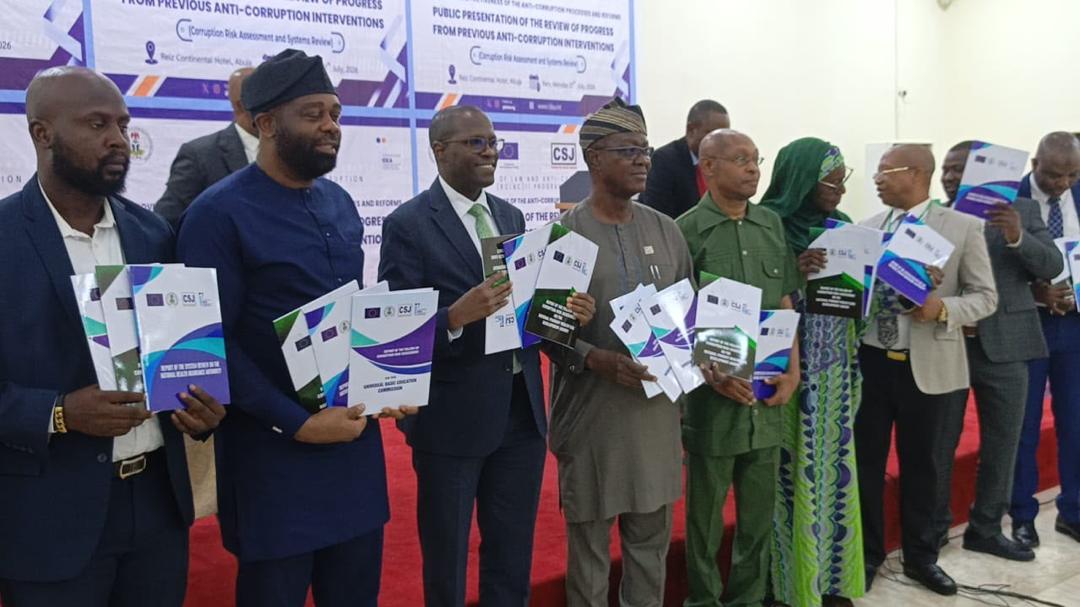
The Independent Corrupt Practices and Other Related Offences Commission (ICPC) has intensified its preventive anti-corruption campaign, unveiling three follow-up assessment reports that expose lingering governance gaps in Nigeria’s health and education sectors while urging sweeping institutional reforms to strengthen accountability and service delivery.
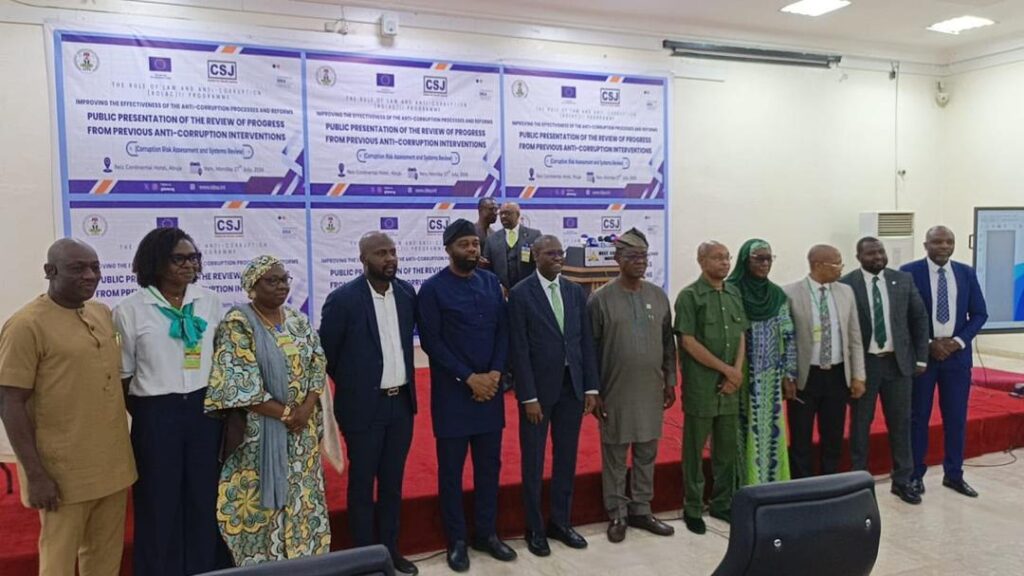
The reports, presented in Abuja on Monday, reviewed the implementation of earlier anti-corruption recommendations issued to the National Health Insurance Authority (NHIA), the National Primary Health Care Development Agency (NPHCDA), the Universal Basic Education Commission (UBEC) and selected State Universal Basic Education Boards (SUBEBs).
Speaking at the presentation, ICPC Chairman, Dr. Musa Aliyu (SAN), said the exercise underscored the Commission’s growing emphasis on preventing corruption by strengthening institutional systems rather than relying solely on prosecutions.
Aliyu explained that the Commission’s mandate under the Corrupt Practices and Other Related Offences Act empowers it to identify vulnerabilities within public institutions and recommend reforms capable of preventing corruption before it occurs.
He said the follow-up assessments measured the extent to which previous recommendations had been implemented, identified areas of progress, highlighted unresolved weaknesses and proposed further reforms to improve institutional performance.
“The value of system studies and corruption risk assessments lies not merely in producing reports but in implementing their recommendations. Their true impact is measured by improvements in governance, accountability, transparency, operational efficiency and service delivery,” he said.
According to him, the reviews were not designed to apportion blame but to encourage continuous institutional improvement and reinforce accountability across government agencies.
Aliyu noted that the NHIA, NPHCDA and UBEC were selected because of their strategic roles in delivering essential healthcare and education services to millions of Nigerians, stressing that stronger governance in the agencies would help safeguard public funds, improve service delivery and restore public confidence in government institutions.
While acknowledging that the institutions had implemented several recommendations from previous assessments, he maintained that significant reforms were still required.
He commended the leadership of the agencies for the progress recorded and urged them to sustain the reform momentum by implementing outstanding recommendations.
“The fight against corruption cannot be won through enforcement alone. Sustainable success depends on building resilient institutions with transparent systems, robust internal controls, effective oversight mechanisms and a culture of accountability,” Aliyu said.
He reaffirmed the Commission’s commitment to collaborating with Ministries, Departments and Agencies (MDAs), oversight institutions, development partners and civil society organisations to ensure effective implementation and monitoring of the recommendations.
Aliyu also acknowledged the support of the European Union-backed Rule of Law and Anti-Corruption (RoLAC II) Programme and the Centre for Social Justice (CSJ), which partnered with the Commission on the review process.
Earlier, the Lead Director of the Centre for Social Justice (CSJ), Eze Onyekpere, warned that corruption risk assessments would have little impact unless their recommendations translated into measurable institutional reforms.
He explained that the reviews formed part of the European Union-supported Rule of Law and Anti-Corruption Programme II aimed at strengthening Nigeria’s anti-corruption processes at both national and sub-national levels.
Onyekpere identified persistent corruption risks across the health and education sectors, including leakages in health insurance payments, diversion of medicines and vaccines, ghost workers in primary healthcare facilities, fraudulent enrolment practices, procurement irregularities, abandoned school projects and weak oversight of public funds.
He described corruption risk assessments as critical diagnostic tools that enable governments to detect and address systemic weaknesses before they undermine public service delivery.
“Our collective responsibility is to ensure that NHIA resources provide quality healthcare to beneficiaries, that medicines and vaccines reach intended patients, and that UBEC funds translate into better classrooms, improved learning outcomes and a brighter future for Nigerian children,” he said.
Onyekpere advocated wider deployment of digital governance systems, including integrated platforms that would allow citizens to monitor health insurance enrolment, primary healthcare services and education projects in real time.
He also recommended the institutionalisation of end-to-end electronic procurement, stronger whistleblower protection, improved staff welfare and capacity building, enhanced independent oversight mechanisms and greater deployment of technology to reduce human discretion in public administration.
Also speaking, Chairman of the Federal Civil Service Commission, Prof. Tunji Olaopa, said corruption prevention through institutional reforms offers a more sustainable solution than relying exclusively on law enforcement.
He commended the ICPC for prioritising system reviews and integrity plans, noting that transparent governance structures remain the strongest defence against corruption.
Olaopa urged public institutions to embrace technology-driven governance, transparent recruitment, conflict-of-interest declarations, stronger internal audit systems and ethical leadership, while challenging government agencies to move beyond mere compliance and institutionalise continuous reforms that promote prudent management of public resources.
The latest ICPC reports come amid increasing calls for public sector reforms as concerns grow over leakages, inefficiency and weak accountability in critical sectors responsible for healthcare and education delivery across the country.
ICPC Pushes Fresh Anti-Corruption Reforms in Health, Education, Warns Against Weak Governance

ECOWAS Sounds Alarm as 90% of West Africa’s Economy Remains Informal
…Parliament pushes sweeping reforms to unlock MSMEs, create jobs, tackle insecurity
By: Michael Mike
The Economic Community of West African States (ECOWAS) Parliament has raised concern over the dominance of the informal sector in West Africa, warning that nearly 90 per cent of economic activities and at least 60 per cent of the region’s workforce remain outside the formal economy, a situation lawmakers said is undermining economic growth, job creation and regional competitiveness.
The parliament on Monday called for far-reaching policy reforms to formalise and strengthen Micro, Small and Medium Enterprises (MSMEs), describing the sector as central to achieving economic transformation, reducing poverty and addressing insecurity across the sub-region.
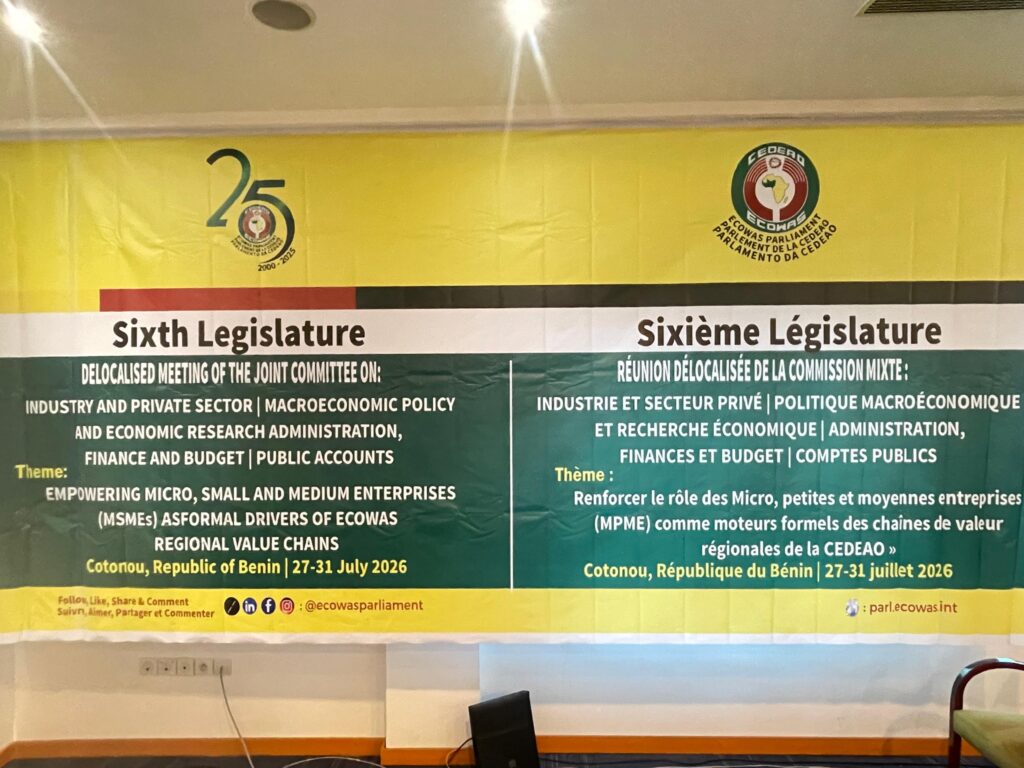
The warning came at the opening of a Joint Committee meeting of the ECOWAS Parliament in Cotonou, Republic of Benin, where lawmakers, policy experts, private sector operators and development partners began deliberations on strategies to integrate millions of informal businesses into the formal economy.
Delivering the opening remarks on behalf of the Joint Committee on Industry and Private Sector, Macroeconomic Policy and Economic Research, Administration, Finance and Budget, and Public Accounts, Co-Chairperson, Hon. Alhagie Darbo said the statistics reflected both the entrepreneurial resilience of West Africans and the failure of existing policies to support business growth.
According to him, while MSMEs remain the backbone of local economies by creating jobs, driving innovation, promoting entrepreneurship, empowering women and youths and facilitating cross-border trade, the overwhelming majority continue to operate informally, preventing them from accessing finance, technology, markets, business support services and legal protection.
“It is estimated that the informal sector accounts for nearly 90 per cent of economic activities and employs not less than 60 per cent of our labour force across member states,” Darbo said.
“While this demonstrates the entrepreneurial spirit of our people, it also highlights the urgent need to create enabling policies that encourage formalisation, improve productivity and integrate MSMEs into regional and continental value chains.”
He stressed that formalising small businesses was no longer just an economic objective but a strategic necessity for poverty reduction, sustainable development and regional integration.
Darbo urged ECOWAS member states to dismantle barriers limiting the growth of MSMEs through harmonised policies, improved access to finance, digital transformation, stronger productive capacity and greater participation in regional value chains under both the ECOWAS Trade Liberalisation Scheme (ETLS) and the African Continental Free Trade Area (AfCFTA).
He noted that the objectives align with ECOWAS Vision 2050, the regional bloc’s long-term development agenda aimed at building a peaceful, prosperous and fully integrated West Africa driven by inclusive economic growth.
Declaring the meeting open, Speaker of the ECOWAS Parliament, Hon. Hadja Memounatou Ibrahima, represented by Second Deputy Speaker Hon. Adjaratou Coulibaly, linked economic empowerment to the region’s growing security challenges.
She argued that expanding opportunities for women and young people through thriving MSMEs would help reduce unemployment and address some of the underlying drivers of insecurity confronting several ECOWAS member states.
According to her, empowering citizens to participate meaningfully in economic activities is one of the most effective long-term strategies for promoting peace and stability in the region.
The committee is expected to produce recommendations for consideration by ECOWAS institutions and member states, with the aim of creating a more business-friendly environment capable of accelerating industrialisation, boosting intra-African trade and making West African economies more globally competitive.
MSMEs account for more than 90 per cent of businesses in many African countries and are recognised as the largest source of employment outside government. Despite their importance, many operate in the informal economy because of burdensome regulations, multiple taxation, inadequate infrastructure, limited access to affordable finance and weak institutional support.
The challenge has become more pressing as ECOWAS intensifies efforts to deepen regional integration through the ECOWAS Trade Liberalisation Scheme and the African Continental Free Trade Area, both of which require competitive and formalised businesses capable of participating in cross-border commerce.
Economic experts have repeatedly argued that bringing more businesses into the formal sector would expand government revenues, improve access to credit, strengthen productivity and position West Africa to compete more effectively in the global economy.
ECOWAS Sounds Alarm as 90% of West Africa’s Economy Remains Informal
News
NDLEA Hunts Down Fugitive Drug Kingpin After 10 Years, Ex-International Footballer Jailed in Cocaine Bust

NDLEA Hunts Down Fugitive Drug Kingpin After 10 Years, Ex-International Footballer Jailed in Cocaine Bust
By: Michael Mike
In a dramatic conclusion to a decade-long manhunt, the National Drug Law Enforcement Agency (NDLEA) has secured a combined 24-year jail term against a fugitive drug kingpin who evaded justice for nearly 10 years and a former international footballer linked to a cocaine trafficking syndicate, in what the agency described as a strong message that no trafficker can outrun the law.
Justice Musa Kakaki of the Federal High Court in Lagos convicted and sentenced fugitive drug kingpin, Ntoruka Chinedu, to 22 years imprisonment, while former professional footballer Segun Hunkarin was sentenced to two years for their roles in the unlawful importation of cocaine into Nigeria.
The landmark judgment capped a case that began in 2015 when Chinedu was first arraigned for importing 6.250 kilogrammes of cocaine. After pleading not guilty and securing bail, he absconded midway through trial, disappearing for almost a decade before being tracked down by NDLEA operatives.
His arrest came on June 24, 2025, at the Murtala Muhammed International Airport, Lagos, as he attempted to smuggle another 800 grammes of cocaine into Nigeria aboard an Ethiopian Airlines flight from Addis Ababa.
The spokesman of the anti-narcotics agency, Femi Babafemi in a statement on Monday, said investigations revealed that Chinedu, a frequent traveller involved in the clothing trade between Turkey and Nigeria, had collected the drug consignment during a stopover in Ethiopia before heading to Lagos.
He noted that further surveillance led operatives to former professional footballer Segun Hunkarin, who was waiting in the airport car park to receive the illicit consignment. During interrogation, Hunkarin admitted he had trafficked drugs twice from Brazil to Ethiopia while pursuing his football career in South America.
Delivering judgment, Justice Kakaki sentenced Chinedu to 20 years imprisonment without an option of fine for the 2015 cocaine importation case and an additional two years for conspiring with Hunkarin to import the 800 grams of cocaine in 2025.
Hunkarin received a two-year prison sentence on the conspiracy charge, bringing the total jail terms handed down to both convicts to 24 years.
The court rejected appeals by defence lawyers seeking non-custodial punishment through fines, holding that the offences warranted custodial sentences after reviewing the evidence and legal authorities presented by the prosecution.
Reacting to the judgment, NDLEA Chairman and Chief Executive Officer, Brig. Gen. Buba Marwa (Rtd), hailed the verdict as proof that drug traffickers cannot permanently escape justice.
He said the successful re-arrest of Chinedu after nearly a decade underscored the agency’s determination, patience and intelligence-led operations in pursuing fugitives irrespective of how long they remain on the run.
Marwa also commended the judiciary for reinforcing Nigeria’s anti-drug campaign and praised the officers involved in the arrest, investigation and prosecution of the case.
mmitted to pursuing traffickers across borders and bringing them to justice, regardless of their social status, profession or the length of time spent in hiding.
NDLEA Hunts Down Fugitive Drug Kingpin After 10 Years, Ex-International Footballer Jailed in Cocaine Bust

ICPC Pushes Fresh Anti-Corruption Reforms in Health, Education, Warns Against Weak Governance

ECOWAS Sounds Alarm as 90% of West Africa’s Economy Remains Informal

NDLEA Hunts Down Fugitive Drug Kingpin After 10 Years, Ex-International Footballer Jailed in Cocaine Bust

Roger Federer’s Shock as DNA Results Reveal Myla and Charlene Are Not His Biological Children

THE PLIGHT OF FARIDA

FAILED COUP IN BURKINA FASO: HOW TRAORÉ NARROWLY ESCAPED ASSASSINATION PLOT AMID FOREIGN INTERFERENCE CLAIMS
-
 News2 years ago
Roger Federer’s Shock as DNA Results Reveal Myla and Charlene Are Not His Biological Children
-
Opinions4 years ago
THE PLIGHT OF FARIDA
-
 News1 year ago
FAILED COUP IN BURKINA FASO: HOW TRAORÉ NARROWLY ESCAPED ASSASSINATION PLOT AMID FOREIGN INTERFERENCE CLAIMS
-

 News2 years ago
EYN: Rev. Billi, Distortion of History, and The Living Tamarind Tree
-
 Opinions5 years ago
POLICE CHARGE ROOMS, A MINTING PRESS
-

 ACADEMICS2 years ago
A History of Biu” (2015) and The Lingering Bura-Pabir Question (1)
-

 Columns2 years ago
Army University Biu: There is certain interest, but certainly not from Borno.
-

 Politics1 year ago
2027: Why Hon. Midala Balami Must Go, as Youths in Hawul and Asikira/Uba Federal Constituency Reject ₦500,000 as Sallah Gift
