
Politics
COMMUNIQUE ISSUED BY THE PDP GOVERNORS’ FORUM AT THE END OF THEIR MEETING IN PORT HARCOURT, RIVERS STATE, JANUARY 17, 2022.

COMMUNIQUE ISSUED BY THE PDP GOVERNORS’ FORUM AT THE END OF THEIR MEETING IN PORT HARCOURT, RIVERS STATE, JANUARY 17, 2022.
The PDP Governors’ Forum held its regular meeting crucial to the sustenance of our Democracy on Monday, 17th January, 2022, at the Rivers State Government House, Port Harcourt, the first in the new year. The meeting once again reviewed the state of the States, the state of the nation and THE PDP and issued the following Communique:
1. The PDP Governors congratulated the entire PDP family for conducting a smooth and credible National Convention that led to the emergence of the highly acclaimed Senator Dr. Iyorchia Ayu-led National Executive Committee and commended the new PDP NWC for hitting the ground running with respect to repositioning the PDP into a credible vehicle for RESCUING and REBUILDING Nigeria which has been battered by bad economy, insecurity, unemployment and other social ills by the incompetent and inept APC Administration.
2. The PDP Governors requested the National Assembly to quickly conclude deliberations on the Electoral Act Amendment Bill either by overriding Mr President’s veto or deleting areas of complaints. The meeting advised that the option of sustaining Mr President’s veto would lead to a quicker resolution and would deny Mr President the opportunity to once again truncate a reformed Electoral jurisprudence for Nigeria. An early concluded Electoral Act is vital for credible elections.
3. The meeting lamented the continued state of insecurity in the country, the persistent and ceaseless flow of Nigerians’ blood on a daily basis in many parts of Nigeria, the near collapse of the security situation in Nigeria. The strategies to confront terrorists, kidnappers, bandits and other criminals is still a major problem of the APC administration.
4. The meeting expressed regrets that Mr President is unwilling, from his recent comments discountenancing the proposals for state policing, to participate in reviewing the structural problems of tackling insecurity in Nigeria and urges Mr President to reconsider his position and consider decentralisation and restructuring of the security architecture as the most viable solution, together with proper arming, funding and training requirements for Security Agencies.
Also Read: Asiwaju Bola Ahmed Tinubu: A subject for the gathering…
5. The Nigerian Economy has continued to deteriorate and Nigerians have become numb and accustomed to bad economic news as exemplified by the inconsistent and differential exchange rate regime, high interest rates, unsustainable unemployment figures and borrowing spree some of which have not been applied to important projects, and other bad economic indicators. In particular, it is clear that the APC Government is a massive failure when compared with the records of PDP in government. The PDP handed over a $550 billion economy (the largest in Africa), but under APC, Nigeria is the Poverty Capital of the world. In 2015, under PDP, the exchange rate was N198 per Dollar, it is now under APC almost N500 to a Dollar; In 2015, unemployment rate was 7.3% under PDP, it is now 33%, one of the highest in the world under APC; In 2015, the Pump price of Petroleum was N87 per litre, it is now N165 per litre and climbing under APC. Debt Servicing now under APC takes over 98% of the Federal budget. The tales of woe is endless.
6. The PDP Governors noted that the management of our Oil and Gas resources, the administration of Federation Account remittances have remained opaque, confusing and non – transparent. In addition, the transition to NNPC Ltd under the Petroleum Industry Act has not been properly streamlined to ensure that the interests of all the tiers of Government are protected, consistent with the 1999 Constitution.
7. The meeting urged eligible Nigerians of all walks of life, particularly the Youths, to register en masse with INEC to exercise their franchise in the 2023 general elections. It further noted that the next election is a very consequential election that should be used to end the dominance of very youth unfriendly APC Government; a government that had the arrogance to deny Nigerian youths of the use of TWITTER, a business friendly tool for the young, for over a year. The youths should empower themselves to determine who leads them.
8. The PDP Governors congratulated the Chief Host, His Excellency, Governor Nyesom Ezenwo Wike, CON, for the very high standards of hosting and for the great leadership performance he has entrenched in Rivers State.
9. The PDP Governors wished Nigerians and PDP Members a happy new Year.
In attendance are:
Rt. Hon. Aminu Waziri Tambuwal, CFR- Sokoto State – Chairman
Gov. Udom Emmanuel – Akwa Ibom State – Member
Gov. Sen. Douye Diri – Bayelsa State – Member
Gov. Samuel Ortom -Benue State -Member
Gov. Dr. Ifeanyi Okowa – Delta State – Member
Gov. Ifeanyi Ugwuanyi – Enugu State – Member
Gov. Nyesom Wike, CON – Rivers State – Member
Gov. Engr. Oluseyi Abiodun Makinde – Oyo State – Member
Gov. Ahmadu Umaru Fintiri -Adamawa State -Member
Gov. Bala Mohammed -Bauchi State – Member
COMMUNIQUE ISSUED BY THE PDP GOVERNORS’ FORUM AT THE END OF THEIR MEETING IN PORT HARCOURT, RIVERS STATE, JANUARY 17, 2022.


Yilwatda at 58: Embrace Culture of Giving, APC Chairman Urges Nigerian Leaders
By: Michael Mike
National Chairman of the All Progressives Congress (APC), Prof. Nentawe Yilwatda, has challenged Nigerian leaders to make service to humanity and the culture of giving central to their leadership, insisting that political positions should translate into tangible improvements in the lives of ordinary citizens.
Yilwatda made the call on Saturday in Jalingo, Taraba State, where he marked his 58th birthday by sponsoring a medical and surgical outreach that reached thousands of residents across the state’s three senatorial districts.
Rather than holding a conventional birthday celebration, the APC chairman chose healthcare intervention as the centrepiece of his anniversary, saying the decision reflected his belief that leadership must be measured by its impact on the people.

The birthday programme, held at the Multipurpose Conference Hall of the Federal Medical Centre (FMC), Jalingo, also featured the commissioning of landmark projects at the medical centre.
Yilwatda said the choice of Taraba was deliberate, explaining that the intervention was designed to respond to the needs of underserved communities, particularly residents who struggle to access quality healthcare because of distance, poverty and other socioeconomic barriers.
He said the exercise followed a needs assessment carried out before the commencement of the programme and was deliberately spread across the state to ensure that beneficiaries were drawn from different parts of Taraba.
The outreach began on August 3 at Takum General Hospital before moving to the Federal University Teaching Hospital, Wukari; First Referral Hospital, Sunkani, in Ardo-Kola Local Government Area; General Hospital, Bali; General Hospital, Gembu; and finally FMC Jalingo.
Thousands of residents received medical attention during the exercise, while hundreds of patients requiring surgical intervention were also attended to.
For Yilwatda, however, the intervention was more than a birthday gesture. It was a statement about the kind of leadership he believes Nigeria needs at a time when citizens are increasingly demanding that those entrusted with public responsibility deliver measurable benefits to society.
“Leadership is about service,” he said, urging political office holders and other public leaders to see giving back to society not as an occasional gesture but as an important component of their responsibility to the people.
He said Nigeria could only achieve sustainable development when its institutions were strong and when the welfare of citizens remained at the heart of governance.
Yilwatda also reaffirmed his personal commitment to service, declaring that his overriding ambition was to make his life useful to humanity.
“Every day that I live, the vision is: let it be useful to humanity,” he said.
The intervention attracted commendation from the Taraba State Government, with Governor Agbu Kefas describing the initiative as a timely demonstration of compassion and responsible leadership.
Kefas commended Yilwatda for choosing Taraba as the venue for his birthday celebration and, more importantly, for converting the occasion into an opportunity to provide healthcare to residents across the state.
He described the medical and surgical outreach as a significant intervention, particularly for residents who might otherwise have been unable to afford or access specialised medical services.
The governor also underscored the importance of partnerships between governments, institutions and individuals in addressing the needs of vulnerable citizens.
Minister of Health and Social Welfare, Prof. Muhammad Ali Pate, equally praised Yilwatda for making healthcare the focus of his 58th birthday celebration.
Pate said the decision to mark the occasion in the North-East, particularly Taraba, carried significance, noting that healthcare remained one of the most effective avenues for improving human welfare and strengthening national unity.
He described the health sector as a critical foundation for national development, stressing that no society could make meaningful progress without a healthy population.
The minister commended the Taraba State Government, the National Assembly and residents of the state for supporting and embracing the intervention.
The host of the celebration, Dr. Aisha Adamu Mohammed, said the choice of FMC Jalingo further demonstrated a commitment to strengthening medical excellence and improving healthcare delivery.
She described the projects commissioned at the medical centre and the outreach as important contributions to ongoing efforts to expand access to quality healthcare in Taraba.
The ceremony culminated in the cutting of Yilwatda’s 58th birthday cake and the commissioning of the projects at FMC Jalingo.
But beyond the ceremony and birthday symbolism, the anniversary carried a broader message: that leadership should not be defined merely by the office occupied, the privileges attached to it or the political influence it confers, but by the lives touched and the problems solved.
For Yilwatda, turning 58 was therefore not simply an occasion to celebrate another year of life. It was an opportunity to give, serve and demonstrate his conviction that public leadership ultimately finds its greatest meaning in humanity.
Yilwatda at 58: Embrace Culture of Giving, APC Chairman Urges Nigerian Leaders

2027: Nigeria Needs Issue-Based Political Discourse and Genuine Leadership
By: Dr James Bwala
Going through the pages of newspapers, the drama that is taking over Nigeria’s approaches to the 2027 presidential elections is disconcerting. The pattern that dominates the political landscape speaks less of the personalities falling over themselves as the days unfolded. Politicians are fixated more on personal attacks and partisan squabbles than on substantive discussions about national challenges and solutions. This trend is not only counterproductive but also detrimental to Nigeria’s democratic progress and socio-economic development. For a country grappling with profound insecurity, widespread poverty, and pervasive corruption, the electorate deserves leaders who prioritise meaningful dialogue about policies and governance rather than engage in divisive rhetoric and political mudslinging.
The current state of political discourse reveals a troubling shift away from issue-based debates towards an obsession with personalities and irrelevant vendettas. A glaring example is the recent exchange between supporters of President Bola Tinubu and former Vice President Atiku Abubakar. When an Atiku supporter lambasted President Tinubu by questioning the public’s knowledge of his father, it exposed not only the pettiness of political arguments but also their irrelevance to the electorate’s pressing concerns. Ironically, the same critic forgets that Atiku himself has little public discourse about his own paternal background, underscoring how such personal attacks add no value to the presidential contest. More importantly, the lineage or parentage of these candidates bears absolutely no relevance to their ability to govern Nigeria effectively or address the nation’s myriad problems. Yet, this shallow focus distracts from urgent national issues that demand serious attention.
Similarly, Tinubu’s supporters have largely resorted to celebratory chants like “On your mandate we shall stand” instead of articulating and showcasing the tangible achievements or policy successes under the Tinubu-Shettima administration. Such displays may cultivate loyalty among core supporters but do little to persuade undecided voters or sceptics who seek evidence of competent governance. What Nigerians require are detailed outlines of policy frameworks and measurable progress reports on security, economic reforms, healthcare, education, and anti-corruption efforts—outcomes that directly impact daily lives. The absence of these critical conversations speaks volumes about the superficiality permeating political campaigns.
The disturbing episode involving Bishop Onayinkon and the Sultan of Sokoto further exemplifies the politics of distraction. While these revered figures occasionally become embroiled in political controversies, the essential “table” where politicians should lay down concrete plans remains conspicuously empty. Whether in the ruling party or the opposition, there is scant evidence of genuine engagement with the core issues undermining Nigeria’s stability and prosperity. Instead, time and resources are expended on symbolic gestures or media-driven theatrics rather than strategic policymaking and governance innovation.
As the opposition coalition attempts to regroup, with Atiku and Peter Obi supporters exploring alliances like the new G-100 coalition, numerous questions arise. For the new G-100 coalition, numerous questions loom large. Can these groups, historically divided by ideology and political ambition, genuinely reconcile and formulate a cohesive governance blueprint? Or will their efforts devolve into another round of factionalism and power struggles that fail to address Nigeria’s fundamental needs? The success or failure of such coalitions will significantly influence Nigeria’s political trajectory, underscoring the imperative for unity premised on substantive policy alignment rather than mere electoral arithmetic.
Giving this background, the broader socio-political context cannot be ignored. Nigeria’s challenges are deeply entrenched and multifaceted. Insecurity remains pervasive, with insurgency, banditry, kidnappings, and communal conflicts destabilising communities and eroding citizens’ confidence in government protection. Simultaneously, poverty continues to ravage millions, with economic inequality starkly visible in urban slums and rural hinterlands alike. Corruption, the perennial cancer afflicting governance structures, persists despite institutional anti-corruption agencies’ existence, largely due to weak enforcement, political interference, and lack of transparency.
Regrettably, government bodies tasked with combating these challenges have yet to deliver tangible results that speak at the grassroots level. Public trust in institutions is waning, and this vacuum often fuels apathy or cynicism during elections. Adding to the complexity, grassroots conversations across Nigerian towns and villages reveal a palpable anxiety about the future. Voters whisper tentative plans, alliances, and expectations ahead of 2027, signifying both hope and uncertainty. These silent discourses often escape mainstream political narratives but are crucial indicators of public sentiment and priorities.
From all indications, a critical juncture lies ahead. The political actors have a clear choice: continue with self-serving battles and distractions that risk further destabilising Nigeria’s fragile democracy, or rise above partisan bickering to offer authentic leadership grounded in ideas, solutions, and national interest. Nigerians deserve a “full table” of ideas—a comprehensive agenda addressing insecurity, poverty alleviation, systemic corruption, economic diversification, infrastructure development, education reform, and social cohesion. Without this, the elections risk becoming a mere spectacle of personalities rather than a genuine exercise in democratic renewal.
The fact remains that the 2027 Nigerian presidential elections must transcend the current culture of personal attacks and symbolic posturing. For Nigeria to progress, politicians must shift focus from criticising each other’s lineage or engaging in hollow celebrations to presenting substantive plans that respond to the nation’s critical challenges. The electorate deserves leaders who speak boldly about what they can contribute to Nigeria’s development and who demonstrate commitment to transparent governance and inclusive growth. Only through such a transformation in political discourse can Nigeria hope to build a more secure, prosperous, and united future. The days ahead will reveal whether Nigerian politicians choose to build bridges or deepen divisions—but the stakes could not be higher for the country and its people.
- James Bwala, PhD, writes from Abuja.
- 2027: Nigeria Needs Issue-Based Political Discourse and Genuine Leadership
Politics
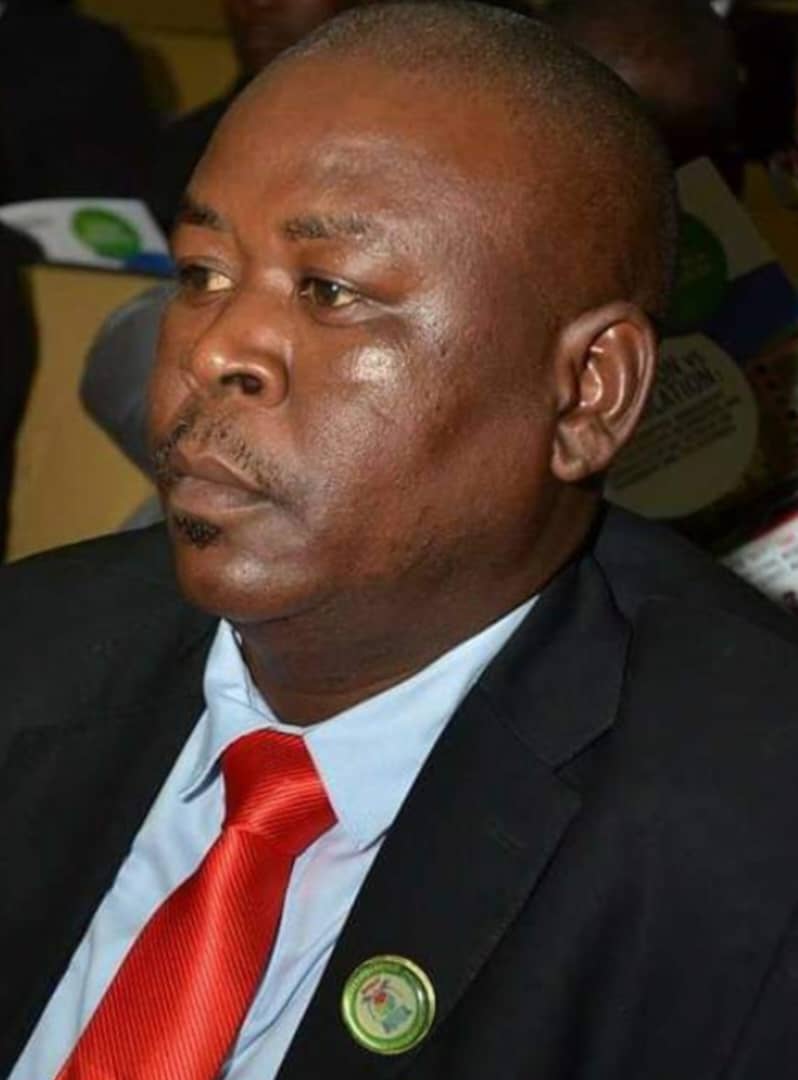
“I Have Never Been Wrong About Vice President Kashim Shettima in Over 1,000 Articles” – Dr James Bwala.

“I Have Never Been Wrong About Vice President Kashim Shettima in Over 1,000 Articles” – Dr James Bwala.
By: Lazarus Balami
Writing about politicians is one of the most difficult tasks in the field of journalism. This is because politicians themselves do not understand who they are in words and actions, and such breeds different pictures of what they are now and the next moment, especially highly experienced and intelligent ones like Nigeria’s vice president, Kashim Shettima. In the realm of political analysis and reportage, consistency and accuracy often separate mere commentators from credible and influential voices. Dr James Bwala, a distinguished analyst, recently asserted that he has never been wrong about Vice President Kashim Shettima throughout his extensive career, spanning over 1,000 articles following one personality. This bold claim is not merely an expression of personal pride but a testament to meticulous research, grounded insights, and steadfast commitment to factual integrity.
Those who read his writings, those who knew him and those that rode the field with him, and yours sincerely, as a professional examining this assertion, I can authoritatively say that it is very important to explore why Dr James Bwala’s insights into Vice President Kashim Shettima’s political journey—from his tenure as governor of Borno State to his current role as Nigeria’s vice president—have been consistently accurate and impactful. I chose to interview Dr Bwala and to write this piece to appreciate the importance of his stand and rigors political analysis that helps millions understand how Vice President Shettima’s character and leadership have validated such assessments.
Many journalists attested to Dr Bwala’s track record and testified that it owes much to his profound understanding of the socio-political context of Borno State and Nigeria at large. During Shettima’s tenure as governor from 2011 to 2019, Borno State was engulfed by the insurgency of Boko Haram—a crisis marked by widespread violence, displacement, and humanitarian catastrophe. Many analysts struggled to accurately assess the complexity of the conflict and the government’s response. However, Dr Bwala’s reports stood out for their nuanced comprehension of both the security challenges and the socio-economic undercurrents influencing them. Rather than succumbing to sensationalism or reductive narratives, despite his turning relationship with his friend and colleague, who was Governor Shettima’s spokesperson at the time – speaking of the late Malam Isa Gusau – Dr Bwala offered comprehensive analyses that factored in the local dynamics, Shettima’s policies, and the evolving nature of the insurgency.
Vice President Kashim Shettima’s leadership during these trying years demonstrated resilience, pragmatism, and strategic vision, qualities Dr Bwala meticulously documented. Shettima’s approach combined military cooperation with concerted efforts to rehabilitate displaced persons, rebuild critical infrastructure, and stimulate economic recovery. A drive late, Isa Gasau praised and spoke of Dr James Bwala as a core professional in his field. I also recalled Ahmed Salkida’s description of Dr Bwala as a brave journalist during an interview owing to his approach to reports during the height of the crises in the north-east. Dr Bwala’s evaluations recognised that, while Shettima faced enormous obstacles, his administration made noteworthy progress in stabilising the region and restoring hope to its people. These assessments were borne out by subsequent developments: improved security conditions, returnees resuming livelihoods, and gradual resumption of education in previously inaccessible areas.
I have read and followed hundreds of Dr Bwala’s precision in reporting, which has been bolstered by his reliance on credible sources and firsthand accounts. He engaged extensively with local communities, government officials, security agencies, and international partners operating in the region even while working as a humanitarian and journalist. This immersion ensured that his writings were not only timely but also reflected ground realities often missed by external observers. The authenticity of his information enabled him to avoid the pitfalls of misinformation, which frequently plagued coverage of personalities, the state and the broader North-east Nigeria conflict zone.
Transitioning from Shettima’s governorship to his elevation as vice president, Dr Bwala’s consistent accuracy persisted due to his vigilant observation of the politician’s evolving role on the national stage. Vice President Shettima now occupies a position demanding not just regional expertise but also statesmanship, diplomacy, and a capacity to influence broad governance agendas. Dr Bwala’s commentary has highlighted Shettima’s deft navigation of Nigeria’s complex political landscape—his ability to build alliances, address national security concerns, and advocate for developmental initiatives attuned to the needs of marginalised communities. These analyses have increasingly portrayed Shettima as a unifying figure capable of bridging ethno-religious divides, fostering inclusive governance, and championing reforms.
Sceptics might question the infallibility implied by Dr Bwala’s statement regarding never being wrong. Yet it is crucial to acknowledge that political analysis, unlike empirical sciences, involves interpretation and prediction amidst fluid circumstances. Dr Bwala’s claim is better understood as an affirmation of his rigors standards and the enduring validity of his core assessments concerning Vice President Shettima’s leadership qualities and impact. Instances where tactical details might have shifted do not diminish the overarching truths he has reliably conveyed about Shettima’s integrity, commitment, and effectiveness. He never shakes on his stance with the vice president, Kashim Shettima. Even when pointers to the rumour of dropping Shettima as President Tinubu’s running mate were high and voices supporting Shettima ebbed, his piece reassuring was constant almost on a daily basis.
The consistency of Dr Bwala’s analyses has contributed positively to public discourse. Coming in an era where misinformation and partisan distortions abound, his balanced and verified reports offer a dependable compass for policymakers, scholars, and citizens seeking to understand one of Nigeria’s most influential leaders. He sets a high bar for accuracy and context and exemplifies the important role that responsible journalism plays in democratic societies.
Dr James Bwala’s declaration of never having been wrong about Vice President Kashim Shettima over more than one thousand articles is a reflection of his continued dedication to truth-telling and insightful political analysis. Through his detailed examination of Shettima’s governance of Borno State amidst insurgency challenges and his ongoing contributions as vice president, Dr Bwala has demonstrated unparalleled accuracy, contextual sensitivity, and analytical depth. His work has not only affirmed the significance of Vice President Shettima’s leadership but also underscored the indispensable value of rigors, fact-based reportage in shaping informed public opinion and guiding effective governance. Such committed analysis faithfully charts the contours of Nigeria’s political landscape and appropriately assesses its leaders.
- Balami, Publisher/Columnist 08036779290
“I Have Never Been Wrong About Vice President Kashim Shettima in Over 1,000 Articles” – Dr James Bwala.

BENUE POLICE ARRESTS FIVE PAKISTANIS, RECOVERS 35 MOBILE PHONES

Troops Intercept 55 Cows, Arrest 13-Year-Old Herder Over Alleged Farm Destruction in Plateau

IBUAM: The Challenges of a Specialized University

Roger Federer’s Shock as DNA Results Reveal Myla and Charlene Are Not His Biological Children

THE PLIGHT OF FARIDA

FAILED COUP IN BURKINA FASO: HOW TRAORÉ NARROWLY ESCAPED ASSASSINATION PLOT AMID FOREIGN INTERFERENCE CLAIMS
-
 News2 years ago
Roger Federer’s Shock as DNA Results Reveal Myla and Charlene Are Not His Biological Children
-
Opinions4 years ago
THE PLIGHT OF FARIDA
-
 News1 year ago
FAILED COUP IN BURKINA FASO: HOW TRAORÉ NARROWLY ESCAPED ASSASSINATION PLOT AMID FOREIGN INTERFERENCE CLAIMS
-

 News2 years ago
EYN: Rev. Billi, Distortion of History, and The Living Tamarind Tree
-
 Opinions5 years ago
POLICE CHARGE ROOMS, A MINTING PRESS
-

 ACADEMICS2 years ago
A History of Biu” (2015) and The Lingering Bura-Pabir Question (1)
-

 Columns2 years ago
Army University Biu: There is certain interest, but certainly not from Borno.
-

 Politics1 year ago
2027: Why Hon. Midala Balami Must Go, as Youths in Hawul and Asikira/Uba Federal Constituency Reject ₦500,000 as Sallah Gift
