
News
DG Harps on Discipline, Patriotism as TAC Deploys Volunteers to S’Leone

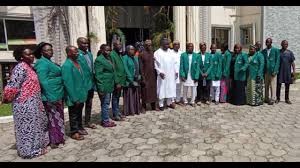
DG Harps on Discipline, Patriotism as TAC Deploys Volunteers to S’Leone
By: Michael Mike
Director General of the Nigerian Technical Aid Corps, Rt.Hon. Yusuf Buba Yakub has called on the Corps’ Volunteers to always abide by the laws of the country where they have been deployed to serve.
He said it is by so doing that Nigeria as a big-brother country will continue to retain the respect and admiration of their host countries wherever the Volunteers have been deployed.
The TAC DG, who made the call on Saturday in Abuja during the ceremony for the deployment of 18 Volunteers to Sierra Leone, thanked President Tinubu for his continuous support for the 37-year-old programme since assuming office in 2023.
Buba added that the Volunteers were Ambassadors of the Nigerian nation and were, therefore, expected to exhibit the highest form of discipline, decorum and obedience to constituted authorities.
He said: “Just as you have been informed, the Technical Aid Corps was established 37 years ago as a flagship programme for the advancement of our nation’s Foreign Policy goals through the deployment of technical support to our brothers and sisters in African, Caribbean and Pacific countries. The Nigerian Technical Aid Corps has deployed over 35,000 professionals and experts in various fields of learning to these countries over the past 37 years.
“The Government of Nigeria places great interest and value on this foreign policy tool. This is why you go out there with our official passports. And just as our Ambassadors, you are expected never to do the don’ts of the country in which you are going to serve. You must keep in mind that what you are involved in is volunteer service. So, no matter the opulence of your home, if you are quartered in a 1-room apartment, do not forget what took you there.
“Over the last 37 years, all those who have served everywhere in this Scheme, have done so with dignity and honour, and nothing less is expected of you. I congratulate you on being successful among the thousands of those who applied for this opportunity and wish you well in the journey ahead of you all.
“I also like to add that, while in Sierra Leone, the High Commission of Nigeria there remains your guardian, while we here are your parents. Whatever you want to do, please, remember to follow the rules in the Country Agreement and the tripartite agreement the Federal Government through TAC has signed with you and the Government of Sierra Leone. Endeavour to study these rules and regulations in order not to fall foul of any of the provisions. For us, as an Agency, we will ensure that all responsibilities towards you are followed to the letter”
Earlier speaking while presenting the Volunteers to the DG, Director of Programmes in the Agency, Amb.Zakari Usman, explained that the new Volunteers had arrived from across the country and had since undertaken various processes in the bid to prepare for deployment. He thanked the DG for his support at ensuring that the processes were easy and seamless.
Among the 18 health professionals, who belong to the first batch of the Volunteers scheduled for Sierra Leone, are very experienced nurses and Medical Doctors that have served Nigeria in various communities and public institutions.
The Volunteers who also spoke to journalists during the exercise also expressed readiness to commit to the ideals of the TAC mandate and make Nigeria proud through hard work and obedience to the authorities of the host country.
It will be recalled that the Agency has since last month commenced the deployment of Volunteers to The Gambia, Uganda and now Sierra Leone. It is expected to carry out more deployments in the weeks ahead to different ACP countries.
DG Harps on Discipline, Patriotism as TAC Deploys Volunteers to S’Leone


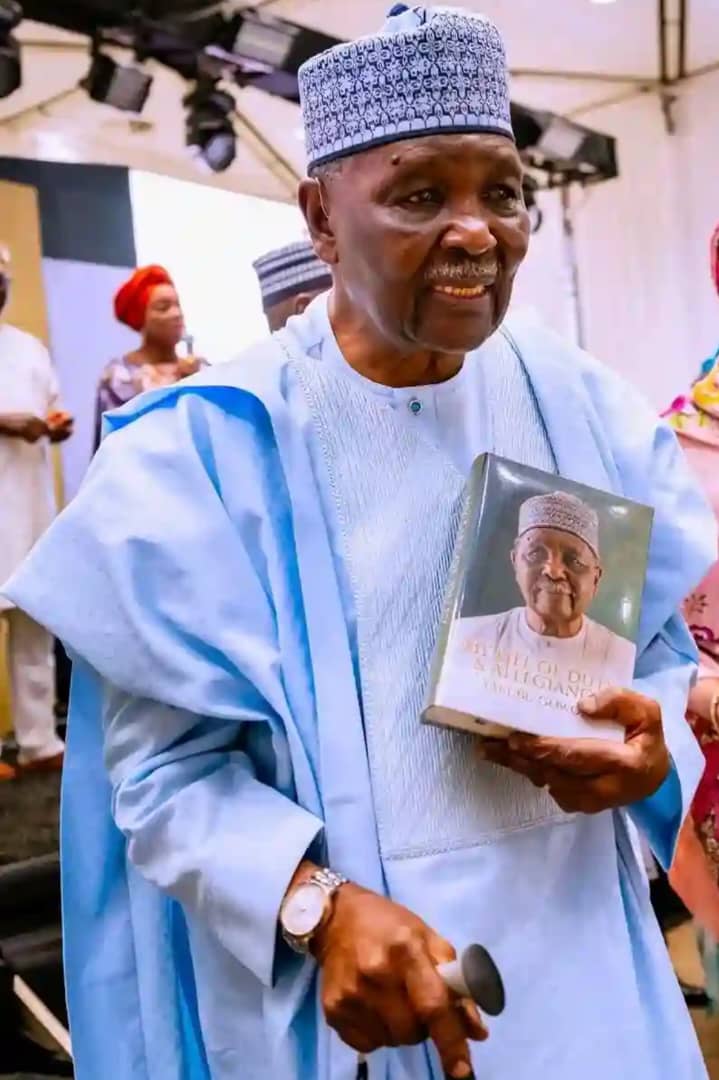
Gowon: US, UK Arms Ban Forced Nigeria to Seek Soviet Support During Civil War
By: Our Reporter
Former Head of State, Yakubu Gowon, has revealed that the refusal of the United States and the United Kingdom to supply arms to Nigeria during the civil war forced his administration to seek military support from the Soviet Union and a Lebanese black market arms dealer.
According to Gowon, the unexpected alliances proved decisive in changing the course of the war, which lasted from July 1967 to January 1970.
The disclosure is contained in Chapter Fifteen of his 859 page autobiography, My Life of Duty and Allegiance, unveiled in Abuja on Tuesday. President Bola Tinubu was represented at the launch by Vice President Kashim Shettima.
In the chapter titled If The Devil’s Ready To Help, Gowon recounted the intense struggle his government faced in sourcing weapons as Nigeria’s ammunition reserves dwindled dangerously by late 1968. He revealed that the country’s stockpile had dropped to about half a million rounds for the entire Army, an amount he considered grossly inadequate for sustained military operations.
He explained that international restrictions on arms sales prevented Nigeria from replenishing its military supplies, despite the escalating demands of the conflict.
“As the weeks of fighting wore on, our stock of ammunition was steadily depleted, and we could not replenish them because international sales restrictions prevented suppliers from selling military hardware to Nigeria,” Gowon wrote.
The former military leader added that the shortage forced him to halt further military advances after the capture of Enugu, restricting federal troops to positions around Okigwe and Umuahia.
“Left with no choice, I ordered the Federal troops to hold their position because I could not, in clear conscience, commit them to further advance knowing that the ammunition to sustain the effort was in short supply,” he stated.
Gowon also expressed disappointment with the stance of Western powers, particularly at a time when the United States was heavily involved militarily in Vietnam and Cambodia.
He recalled holding what he described as one of the most significant meetings of the war with the British and American ambassadors, hoping to secure support for Nigeria’s military efforts.
“If I say I’m not disappointed, it will be an understatement,” he said while recounting the encounter.
Gowon noted that he reminded the diplomats of his responsibility to preserve Nigeria’s unity and protect all citizens and foreign nationals living in the country.
He further recalled telling them before their departure from the State House that he would seek assistance from anywhere necessary to defend the nation.
“I will go to any devil to get what I need to deal with the problem and do my duty to my country,” he said.
According to Gowon, both ambassadors left the meeting without making any commitment, but by then, he had already resolved to pursue alternative sources of military support.
Gowon: US, UK Arms Ban Forced Nigeria to Seek Soviet Support During Civil War
Community Court of Justice, ECOWAS Holds Second Moot Court Competition in Dakar
By: Michael Mike
The Community Court of Justice, ECOWAS is hosting the second edition of its annual Moot Court Competition in Dakar, bringing together law students, academics and legal practitioners from across West Africa in a regional initiative aimed at strengthening legal education and deepening understanding of Community law.
The three-day competition, scheduled for May 20 to 22, 2026, is part of the Court’s broader drive to promote awareness of its jurisdiction and jurisprudence while equipping the next generation of lawyers with practical advocacy, research and analytical skills.
Organised under the theme, “Today’s Students, Tomorrow’s Jurists,” the competition is expected to provide participants with hands-on exposure to simulated legal proceedings, enabling them to bridge the gap between classroom learning and real-world legal practice.
This year’s edition will feature eight universities from francophone ECOWAS member states, including Benin, Côte d’Ivoire, Guinea, Senegal and Togo, while students from a university in Cape Verde will participate as observers. Each institution will field a team made up of two students and a faculty adviser.
The competition is structured in two phases — written and oral. During the written stage, participating teams prepare memorials for both the applicant and respondent based on a hypothetical legal dispute rooted in issues falling within the jurisdiction of the ECOWAS Court. The top-performing teams from the written assessments advance to the oral rounds.
The oral phase in Dakar will feature preliminary and semi-final rounds before designated panels, culminating in a grand finale where the two best teams will argue before a distinguished panel of judges. The event will end with an awards and closing ceremony recognising outstanding teams and participants, while a cultural tour is scheduled for May 23.
The maiden edition of the competition, held in Abuja in 2025, attracted participation from 13 Nigerian universities at the memorial stage, with eight advancing to the oral rounds. Ahmadu Bello University emerged overall winner of the inaugural edition.
Senior government officials from Senegal, members of the Senegalese judiciary and bar association, academics, media representatives, partner organisations and invited guests are expected to attend this year’s competition alongside judges and staff of the ECOWAS Court.
The Court said the initiative reflects its continued commitment to promoting legal excellence, strengthening access to justice and advancing human rights within the West African sub-region.
According to the Court, the programme is also designed to foster stronger institutional ties between the judiciary and academic institutions while nurturing a new generation of lawyers with deeper knowledge of Community law and regional integration mechanisms.
Community Court of Justice, ECOWAS Holds Second Moot Court Competition in Dakar
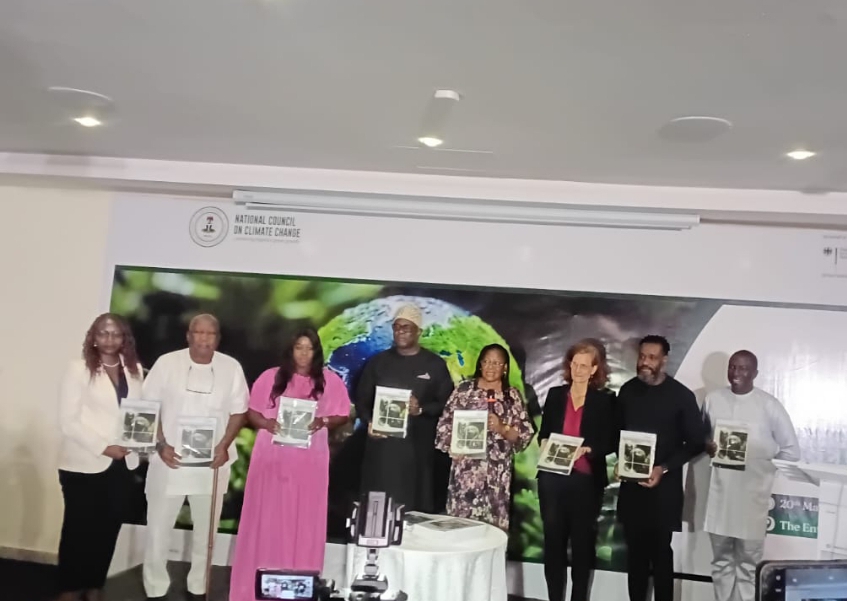
Nigeria Unveils Net Zero Investment Plan to Unlock Climate Finance, Drive Green Growth
By: Michael Mike
The Federal Government of Nigeria has launched an ambitious Net Zero Investment Plan (NZIP), a major policy framework designed to mobilise climate finance, accelerate sustainable economic growth, and strengthen the country’s pathway to net zero emissions by 2060.
The plan, unveiled in Abuja by the National Council on Climate Change, represents a significant step in Nigeria’s efforts to translate its climate commitments into concrete investment opportunities capable of attracting both domestic and international financing.
Developed under the NDC Partnership’s “Global Call for NDCs 3.0 and LT-LEDS,” the framework received technical support from Deutsche Gesellschaft für Internationale Zusammenarbeit (GIZ) GmbH and funding from the German Federal Ministry for the Environment, Climate Action, Nature Conservation and Nuclear Safety through the International Climate Initiative.
The NZIP is expected to serve as a strategic roadmap for implementing Nigeria’s long-term climate agenda by identifying priority sectors for investment, outlining financing needs, and proposing mechanisms to bridge existing climate finance gaps.
Government officials said the initiative aligns with Nigeria’s broader economic transformation agenda and reinforces the country’s aspiration to emerge as a leading climate-responsive economy in Africa in line with the African Union Agenda 2063.
The investment framework builds on key national policies, including the Nigeria Agenda 2050, the Nationally Determined Contributions (NDCs), and the Long-Term Low-Emission Development Strategy (LT-LEDS), all of which provide the policy backbone for Nigeria’s transition toward sustainable and climate-resilient growth.
Under the LT-LEDS framework, Nigeria targets net zero greenhouse gas emissions by 2060, while the NDCs outline short- and medium-term actions under the Paris Agreement.
Speaking at the launch, Country Director of GIZ, Markus Wagner, described the NZIP as a critical instrument for transforming climate goals into bankable projects capable of attracting large-scale investment.
According to him, the framework goes beyond policy declarations by providing a structured mechanism for mobilising public and private capital toward climate resilience, low-carbon industrialisation, and sustainable economic development.
Wagner noted that achieving net zero emissions would require strong collaboration among government institutions, development partners, financial organisations, and the private sector.
He said the plan demonstrates Nigeria’s determination to align climate action with economic development priorities while creating opportunities for innovation, green jobs, and long-term sustainable growth across strategic sectors of the economy.
Analysts say the launch of the NZIP could improve investor confidence in Nigeria’s green economy ambitions and position the country to access increasing pools of global climate finance targeted at low-carbon and climate-resilient development initiatives.
Nigeria Unveils Net Zero Investment Plan to Unlock Climate Finance, Drive Green Growth

How Muktari Betara Calmed Nerves Following APC Primaries in Southern Borno

Cuba Condemns U.S. Accusation Against Raúl Castro, Defends 1996 Airspace Action

NOW THAT GUBIO HAS EMERGED: A lessom in Continuity and Control.

Roger Federer’s Shock as DNA Results Reveal Myla and Charlene Are Not His Biological Children

THE PLIGHT OF FARIDA

FAILED COUP IN BURKINA FASO: HOW TRAORÉ NARROWLY ESCAPED ASSASSINATION PLOT AMID FOREIGN INTERFERENCE CLAIMS
-
 News2 years ago
Roger Federer’s Shock as DNA Results Reveal Myla and Charlene Are Not His Biological Children
-
Opinions4 years ago
THE PLIGHT OF FARIDA
-
 News1 year ago
FAILED COUP IN BURKINA FASO: HOW TRAORÉ NARROWLY ESCAPED ASSASSINATION PLOT AMID FOREIGN INTERFERENCE CLAIMS
-

 News2 years ago
EYN: Rev. Billi, Distortion of History, and The Living Tamarind Tree
-
 Opinions4 years ago
POLICE CHARGE ROOMS, A MINTING PRESS
-

 ACADEMICS2 years ago
A History of Biu” (2015) and The Lingering Bura-Pabir Question (1)
-

 Columns2 years ago
Army University Biu: There is certain interest, but certainly not from Borno.
-

 Opinions2 years ago
Tinubu,Shettima: The epidemic of economic, insecurity in Nigeria
