
Uncategorized
Economic Downturn: Government Asked to Reduce Cost of Govenance


Economic Downturn: Government Asked to Reduce Cost of Govenance
By: Michael Mike
Government has been asked to reduce the cost of governance in the country not only in reduction of pecks of office but also the retinue of appointees.
Addressing journalists yesterday in Abuja, the Lead Director of Speak out Africa initiative, a Non governmental Organisation, Kenneth Eze said government needs to look beyond politics now and reduce the cost of governance.
Eze called on President Bola Ahmed Tinubu to prune the government spending including streamlining ministerial , commissioner, adviser portfolio to sizeable numbers with particular call to abolish minister for state position and cut down on their luxurious convoy.
He said: “As part of our mandate in deepening democracy and promoting good governance through accountability checks and evidence-based advocacy, Speak Out Africa Initiative (SOAI) has yet again kick-start a “Governance Tracker called CRIG.ng” project on a mission to torchlight government activities, checkmate and promote cost effective governance at federal, state and local government amongst public office holders with overall goal to reducing cost of governance in Nigeria”.
He added that: “It is notable that Nigerians are groaning under the effect of the untold hardship inflicted upon them by successive leaders ranging from subsidy removal of premium motor spirit (PMS) without fixing of the existing refineries and no proactive provisions to cushion its effect, to unimaginable school fees hike with direct impact on the poorest of the poor who are faced with option to drop out of school, to already perfected planned electricity tariff increment and, many other cacophonies of unpleasant difficulties without no solution in sight.
“Sadly, the reverse is the case as we see political office holders/our leaders enjoying barrage of benefits without recourse to the plight of the ordinary citizens, example is the self-allocation of the N70billion from the World Bank loan which should have been channeled to the poorest of the poor- a situation that is best described insensitive and unjustifiable.”
He recommended that as matter of urgency the government should povide measures to cushion the effect of the subsidy removal on the ordinary Nigerians, noting that subsidy removal has hiked the price of PMS which has in turn raises inflation to an unbearable 22.79% as at June 2023 (NBS), thereby reducing cost of living and increasing hardship.
He also advocated for the streamlining of the list of cabinet ministers (for Federal government) to sizable number with complete abolishing of minister-for-state cabinet positions; called on the current administration to stop postponing the raining day and implement the Oronsaye report to merge ministries, departments & agencies (MDAs) for those their jobs overlap with each other as we can no longer sustain it.
Eze also called on state governors to reduce/cut down list of commissioners and appointment of advisers to sizable number to reduce cost of governance, urging political/public office holders to cut down on barrage of convoy/entourage; and insist of reversal of the purported increment of public office holders’ salaries by 114% as such move is anti-people since Nigerians are in serious difficult time currently.
Economic Downturn: Government Asked to Reduce Cost of Govenance






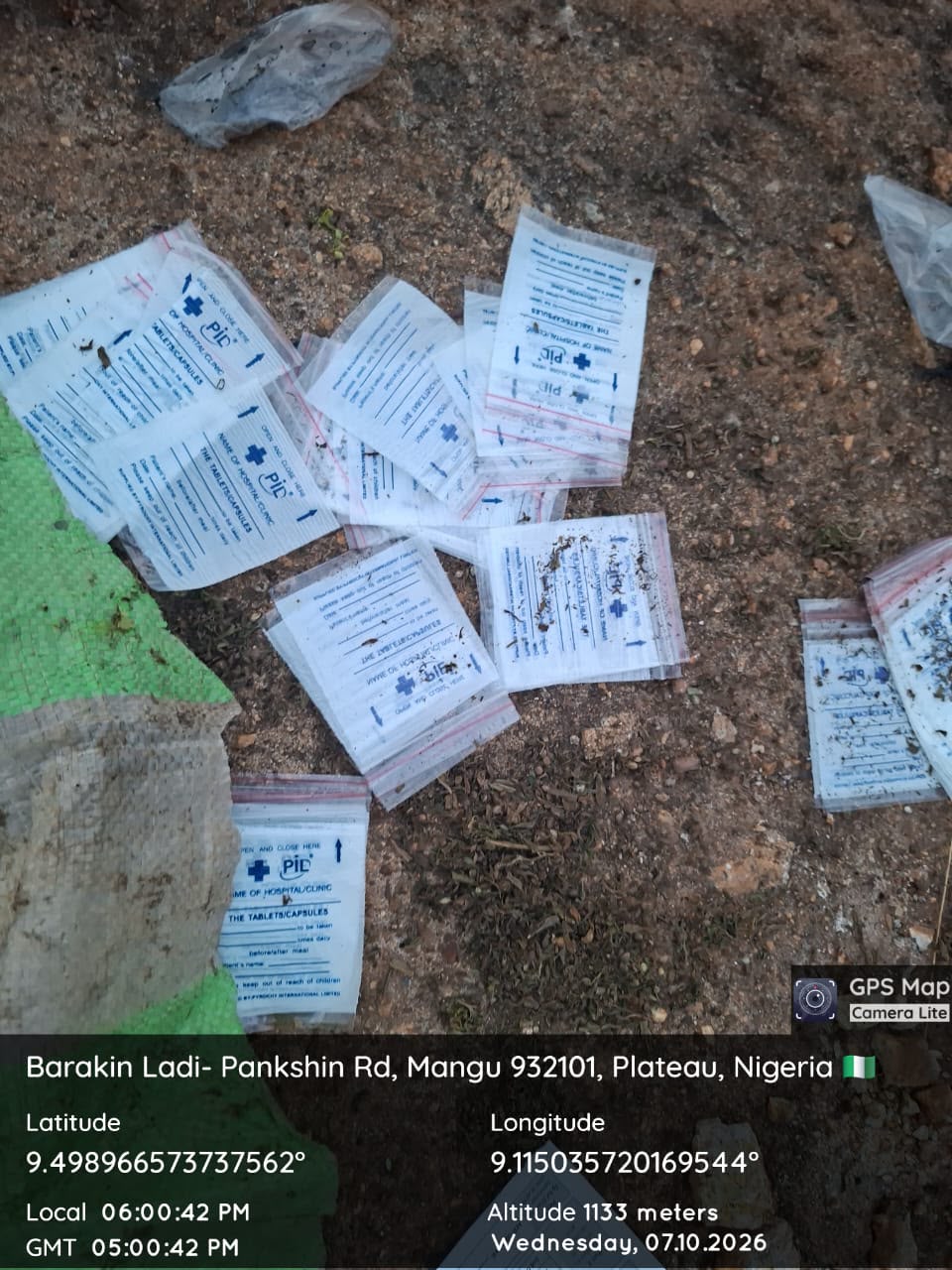
Troops recover cannabis, other illicit drugs huge out in Mangu market
By: Zagazola Makama
Troops of Sector 8, Operation Enduring Peace (OPEP), have recovered quantities of cannabis sativa and other illicit drugs during a raid on a suspected hideout of drug peddlers at Mangu Market in Mangu Local Government Area of Plateau State.
The operation was conducted at about 5:10 p.m. on Oct. 7, 2026, as part of efforts to flush out illicit drug dealers and other criminal elements operating within the area.
Security sources told Zagazola Makama that troops deployed from Sabon Gari moved to the identified hideout and conducted a raid.
The suspected drug peddlers, however, had fled the location before the arrival of the troops.
The troops recovered quantities of cannabis sativa and other suspected illicit substances from the hideout.
The recovered exhibits have been secured in custody for further investigation and necessary action, the source said.
The operation is part of ongoing efforts by OPEP troops to disrupt criminal activities and deny illicit drug dealers and other criminal elements safe havens in Plateau State.
Troops recover cannabis, other illicit drugs huge out in Mangu market
Uncategorized
2027: Tinubu Deserves Second Term, Says First Lady Oluremi unveils APC women campaign council, orders nationwide mobilisation for ‘total victory
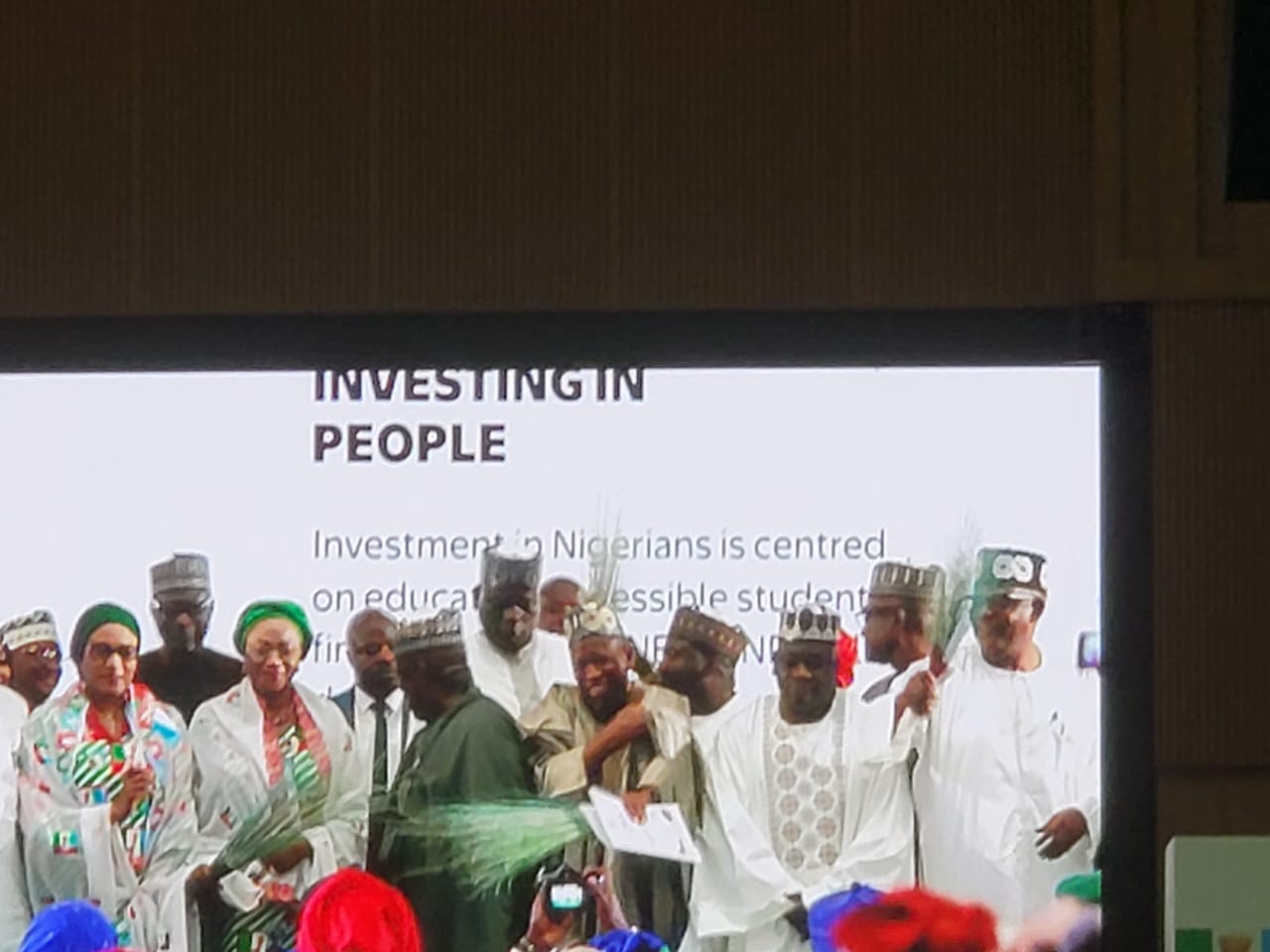
2027: Tinubu Deserves Second Term, Says First Lady Oluremi unveils APC women campaign council, orders nationwide mobilisation for ‘total victory’
By: Michael Mike
The First Lady, Senator Oluremi Tinubu, has described her husband as deserving a second term, claiming that President Bola Tinubu administration’s economic reforms are beginning to produce tangible results and deserve the continued support of Nigerians.
Speaking on Monday in Abuja at the inauguration of the All Progressives Congress (APC) Presidential Women Campaign Council for the 2027 general elections, the First Lady said the government’s economic interventions had moved beyond policy pronouncements to measurable signs of national stabilisation.

She urged APC women across the country to take the message of the administration’s achievements to the grassroots and mobilise Nigerians for what she described as a decisive electoral victory for President Tinubu and all APC candidates in 2027.
The campaign council, inaugurated under the banner “Renewed Hope Agenda 2.0: From Reforms to Prosperity,” is expected to spearhead a nationwide women-led mobilisation drive covering the presidency, governorships, the National Assembly and State Houses of Assembly.

Mrs. Tinubu said the administration’s economic reforms were beginning to reshape the country’s economic outlook, pointing to declining inflation, growing foreign reserves, increased investor confidence and greater support for farmers.
“Our economy is stabilizing, inflation is coming down, foreign reserves are growing, and investors are returning to Nigeria,” she said.
She also cited the Nigeria Education Loan Fund (NELFUND) initiative, noting that university students could now access interest-free loans to support their education.
According to her, the progress recorded by the administration was not merely political rhetoric but evidence that the country was moving towards economic recovery and prosperity.
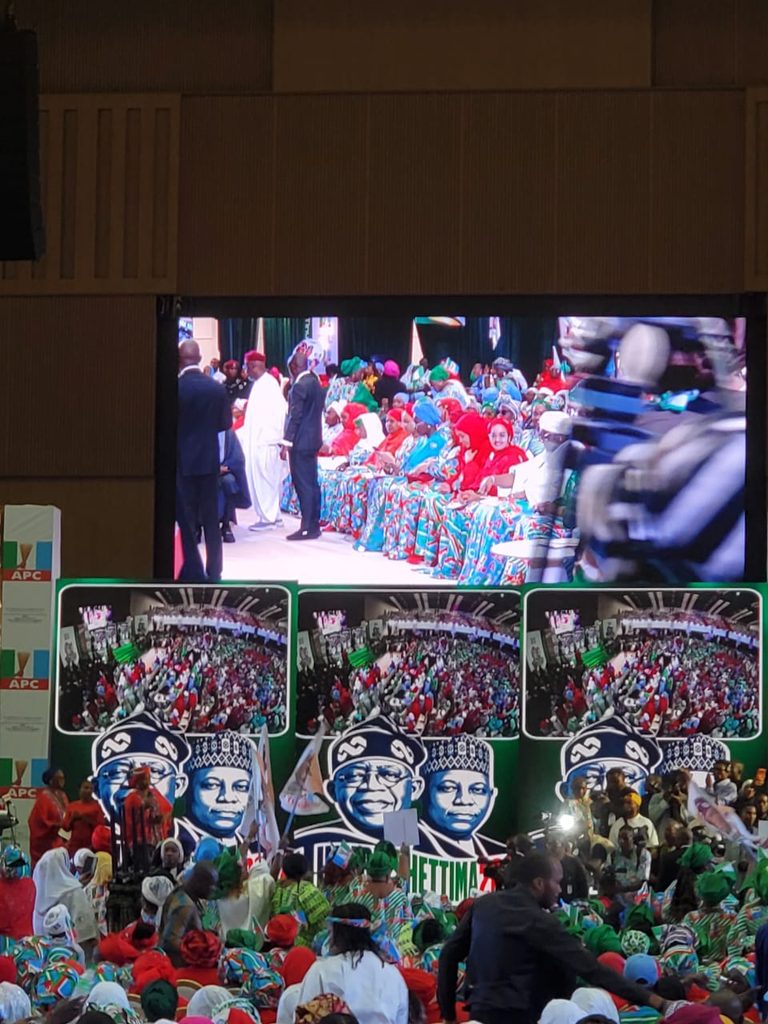
“The theme of this year’s rally is not just a slogan; it is our reality,” the First Lady declared.
Describing President Tinubu as a courageous leader prepared to take difficult decisions in the national interest, she appealed to APC women to become the administration’s strongest grassroots communicators ahead of the elections.
She charged members of the newly inaugurated council to move across the country, engage communities and convince voters to support the APC at every level of government.
Mrs. Tinubu also announced a major restructuring of the various women support groups campaigning for the President, saying they had been brought under a single APC campaign structure to ensure unity and discipline.
“We have collapsed every other women support group into one—from Tinubu Again to Torch Bearers and others,” she said.
“What you will see on the ballot box is APC. We are here to promote APC, nothing less.”
The First Lady said the campaign structure would organise six geopolitical zonal mega-rallies, state-level rallies and a grand finale in Abuja as part of an aggressive mobilisation strategy ahead of the 2027 polls.
She disclosed that she would participate in the zonal campaigns alongside the wife of the Vice President, Hajia Nana Shettima, and other senior party leaders.
At the state level, she said the mobilisation would be driven by the wife of the Senate President, the wife of the Speaker of the House of Representatives and the Chairperson of the Nigeria Governors’ Spouses Forum.
Earlier, the APC National Women Leader, Dr. Mary Alile Idele, charged the newly inaugurated campaign council to translate the administration’s reform message into direct grassroots engagement.
She said the “Renewed Hope Agenda 2.0: From Reforms to Prosperity” was not simply a campaign slogan but a call for women leaders to take ownership of the administration’s message and communicate its opportunities and achievements to Nigerians.
Alile urged the women to take the campaign into homes, markets, communities and wards, insisting that grassroots mobilisation would be critical to the party’s success in 2027.
She outlined a four-point strategy for the council, beginning with the creation of stronger women-to-women networks across wards, local government areas and communities.
The second, she said, was to identify women in need, link them with available empowerment opportunities and ensure that beneficiaries subsequently became agents of development within their communities.
She also tasked the council with taking the message of reform, opportunity and prosperity to every community while listening to citizens’ concerns and transmitting constructive feedback to the leadership.
The final plank of the strategy, she said, was to move beyond mobilisation to measurable results through clearly defined responsibilities, functional grassroots structures, regular engagement and accountability.
The inauguration signals the beginning of what the APC hopes will be a formidable women-driven campaign machinery ahead of the 2027 elections, with the party positioning its female leadership structures as a critical force in its quest for victory across the country.
2027: Tinubu Deserves Second Term, Says First Lady Oluremi unveils APC women campaign council, orders nationwide mobilisation for ‘total victory
Troops, DIA Team Recover SMG Rifle, Ammunition in Taraba Raid
By: Zagazola Makama
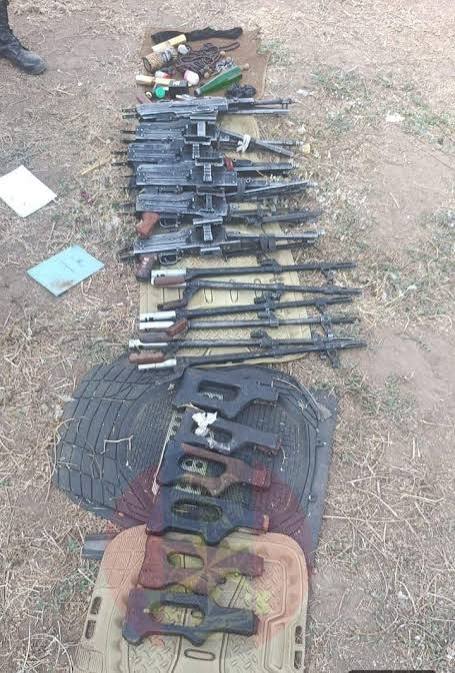
Troops of the 114 Battalion (Reinforcement), in collaboration with a Defence Intelligence Agency (DIA) composite team, have recovered a submachine gun rifle and assorted ammunition during a raid on a suspected criminal hideout in Taraba State.
Security sources told Zagazola Makama that the operation was conducted at about 3:00 p.m. on Oct. 3, 2026, at Abbare in Lau Local Government Area.
The sources said the joint team recovered one submachine gun rifle, one magazine, 12 rounds of 7.62mm NATO ammunition, one round of 7.62mm special ammunition and five rounds of 9mm ammunition.
No contact was made with the suspected criminals, and no arrest was recorded during the operation.
The recovered weapon and ammunition remain in military custody for further investigation and necessary action.
The raid forms part of ongoing security efforts to dismantle criminal hideouts, recover illegal weapons and prevent armed groups from using such facilities to perpetrate violence in the region.
Troops, DIA Team Recover SMG Rifle, Ammunition in Taraba Raid

COAS Calls for Joint Operations, Multi-Domain Integration as Army Expands to 12 Divisions

NHRC Urges FG to Prioritise Mental Health, Warns Against Rights Abuses

Kwali Council Commends Security Operatives Over Vandalism Arrests, Warns Perpetrators

Roger Federer’s Shock as DNA Results Reveal Myla and Charlene Are Not His Biological Children

THE PLIGHT OF FARIDA

FAILED COUP IN BURKINA FASO: HOW TRAORÉ NARROWLY ESCAPED ASSASSINATION PLOT AMID FOREIGN INTERFERENCE CLAIMS
-
 News3 years ago
Roger Federer’s Shock as DNA Results Reveal Myla and Charlene Are Not His Biological Children
-
Opinions5 years ago
THE PLIGHT OF FARIDA
-
 News1 year ago
FAILED COUP IN BURKINA FASO: HOW TRAORÉ NARROWLY ESCAPED ASSASSINATION PLOT AMID FOREIGN INTERFERENCE CLAIMS
-

 News3 years ago
EYN: Rev. Billi, Distortion of History, and The Living Tamarind Tree
-
 Opinions5 years ago
POLICE CHARGE ROOMS, A MINTING PRESS
-

 ACADEMICS3 years ago
A History of Biu” (2015) and The Lingering Bura-Pabir Question (1)
-

 Columns3 years ago
Army University Biu: There is certain interest, but certainly not from Borno.
-

 Politics1 year ago
2027: Why Hon. Midala Balami Must Go, as Youths in Hawul and Asikira/Uba Federal Constituency Reject ₦500,000 as Sallah Gift
