
National News
ECOWAS Parliamentarians Express Concern Over Handling of Religious Matters in West Africa

ECOWAS Parliamentarians Express Concern Over Handling of Religious Matters in West Africa
By: Michael Mike
Members of Economic Community of West African State (ECOWAS) Parliament have expressed deep concern regarding the unequal treatment of religious matters in political decisions by government of various countries in West Africa.
The Parliament therefore called on political and religious leaders from member states to ensure equity in the treatment of different religions existing within the community, as part of the efforts at addressing religious intolerance in the sub-region.
Besides, the parliamentarians also called for the establishment of the ECOWAS Communication charter on religious tolerance.
This came against the backdrop of religious crisis in the sub-region in recent times, which has led to killings and wanton destruction of properties, and gradually turning the Sahel into a theatre of war with the activities of various religious terrorist groups.
The concern was raised at the end of ECOWAS Parliament delocalised meeting of joint committees on Education, Science and Culture; Health ;Telecommunications and Information Technology , in Praia, Capital of Cape Verde, with the theme, “Religious Tolerance and Harmony: Essential factors for development, peace and stability in ECOWAS region”.
The draft report of the meeting which had many presentations from scholars and religious leaders was read by the meeting co-Chairman, Hon. Aime Assine, from Senegal.
The meeting noted that the challenges raised with regards to religious tolerance and harmony in the community space and therefore insisted on the need for them (Parliamentarians) to become more involved in the national education policy programmes of their states.
The meeting harped on the need for deliberate actions and funding for programmes and activities that would promote religious tolerance among the people in the community.
The meeting also stressed the need for ECOWAS parliamentarians to undertake sensitization, education and information activities for the benefit of the populations, particularly in rural areas.
The meeting further called on the parliamentarians to make legislative proposals or vote on bills which intend to promote a legislative framework relating to religious tolerance and harmony.
Other m recommendations put forward by the meeting include the promotion of structures that will ensure enforcement of laws and political will for religious tolerance amongst other far fetching recommendations put forward at the end of the meeting.
Also Read: Insurgency: N/East women group hails military over recent…
Member states were also charged to “Include in their curricular in schools, from primary to universities religious tolerance teachings in order to foster the culture of religious tolerance.
“Create a legal and formative framework that favours liberties to ensure religious tolerance culture in ECOWAS
“Allocate massive government budget on religious General Education in ECOWAS centred on cultural and religious diversity for tolerance culture.
“Promote an ECOWAS-wide campaign sensitization for the promotion of tolerance culture.”
In his vote of thanks, a member of the joint Committee, Hon. Usman Idi Ango, from Niger Republic expressed gratitude to the Speaker of the National Assembly of Cape Verde, Rt. Hon Ausrelino Tavares and the Cape Verdeans Delegation for the successful hosting of the event.
He also appreciated the Speaker of the ECOWAS Commission, Dr. Sidie Mohamed Tunis for his efficiency and commitment in executing his Mandate, support to the regional integration and his immense contribution to peace, democracy and solidarity in the ECOWAS region
ECOWAS Parliamentarians Express Concern Over Handling of Religious Matters in West Africa


National News
President Tinubu Flags Off the Construction of Dikwa–Gamboru Ngala, Bama–Banki International Road Projects

President Tinubu Flags Off the Construction of Dikwa–Gamboru Ngala, Bama–Banki International Road Projects
By: Bodunrin Kayode
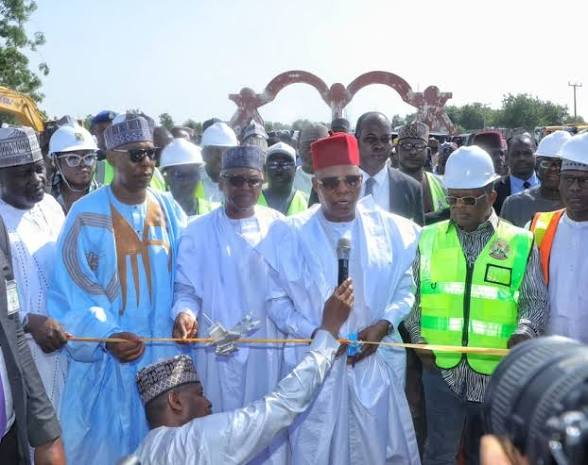
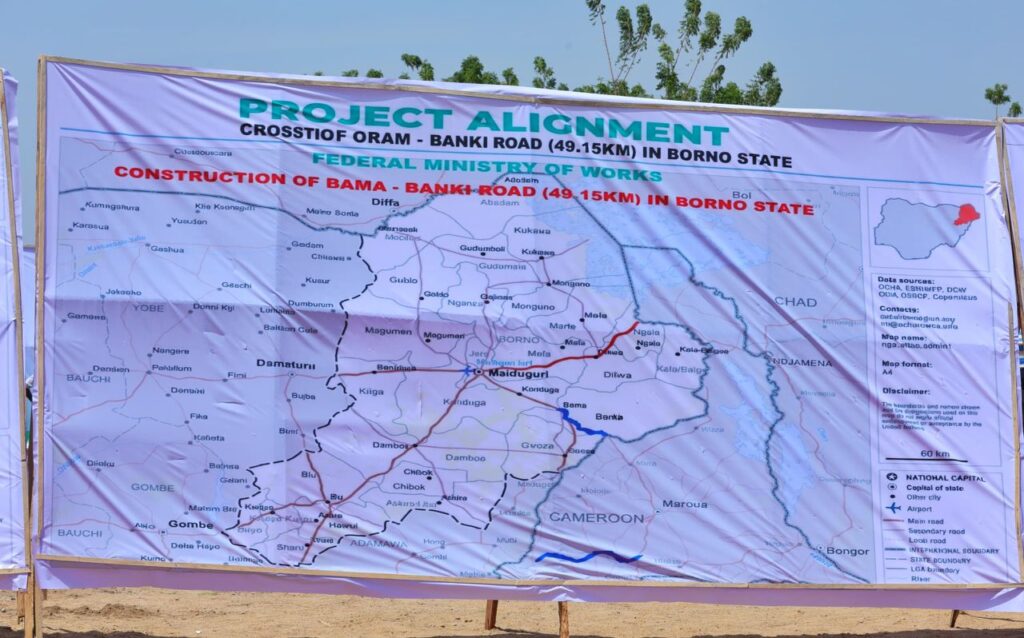
President Bola Tinubu on Saturday flagged off the construction of the 49.55-kilometre Dikwa–Gamboru Ngala Road and the 49.15-kilometre Bama–Banki Road, describing the strategic highways as critical to economic growth, regional integration, and national security.
The two road projects, regarded as economic lifelines of North-East Nigeria, serves as key gateways to neighbouring African countries, which will bolster cross-border trade, facilitate the movement of agricultural produce, and strengthen security operations in a region recovering from over a decade of insurgency.
The groundbreaking ceremony was held along the Maiduguri–Gamboru Ngala Road, where President Tinubu was represented by Vice President Senator Kashim Shettima.
The Vice President said the rehabilitation of the roads would improve connectivity and deliver on the administration’s commitment to infrastructure development across the country.
“His Excellency, President Bola Ahmed Tinubu, GCFR, has made infrastructure a central priority. This is what Mr. President promised Nigerians, and I’m here today to affirm our readiness to redeem the promise and to convey his goodwill and gratitude for the support you have shown us,” Shettima said.
“The Bama–Banki Corridor carries special strategic weight. It is a top route of agriculture, movement, and national security. The Dikwa–Gamboru Ngala Road belongs to the same vision of reconnecting communities and restoring economic confidence across Borno State.”
The President also commended Borno State Governor, Professor Babagana Zulum, for prioritising infrastructure and maintaining a strong partnership with the Federal Government.
“The partnership between the Federal Government and Borno State shows what becomes possible when public institutions are united by the urgency of service. Certainly, Your Excellency, Professor Babagana Umara Zulum, you are one of the best-performing governors in the federation,” Tinubu stated.
Governor Zulum expressed appreciation to President Tinubu for approving the road projects and other critical interventions in Borno State.
“The successful commencement of this project reflects the strong partnership between the Federal Government and the Borno State Government. We deeply appreciate and remain eternally grateful to the President of the Federal Republic of Nigeria, President Bola Ahmed Tinubu, GCFR, for his unwavering commitment to the development, peace, and security of the North East and Nigeria as a whole.
“Borno State Government recognizes that infrastructure remains a critical foundation for development. Since assuming office, our administration has prioritized the rehabilitation and construction of roads, schools, hospitals, water facilities, and other critical infrastructure as part of our commitment to improving the lives of our citizens,” he added.
Governor Zulum also pledged the state’s political support for President Tinubu in the next presidential election.
“I want to assure the President and indeed the Vice President that, Insha Allah, come January 2027, the people of Borno State will overwhelmingly vote him into office.”
The Governor equally praised his representative Vice President Shettima for his sustained support towards the reconstruction and development of Borno State.
“Your Excellency, your personal interest in the reconstruction and development of our state continues to inspire confidence among our people. We sincerely appreciate your leadership and steadfast commitment.” said Zulum.
Zulum also acknowledged the humanitarian contributions of Alhaji Aliko Dangote, particularly through the Aliko Dangote Foundation, during the state’s recovery from insurgency and the 2024 flood disaster.
He recalled the construction of Dangote Village, the donation of ₦1.5 billion to the National Emergency Management Agency (NEMA), ₦1 billion to the Borno State Government following the 2024 flood, and the distribution of relief materials to internally displaced persons.
“Through the Aliko Dangote Foundation, thousands of displaced persons received food and non-food items. Essentially, in 2017, he donated 106 trucks of food to IDPs.
“Alhaji Aliko Dangote has also donated ₦1.5 billion to NEMA to support flood victims in Borno State in the year 2024.”
Governor Zulum assured that the road projects would be closely monitored to ensure value for money and strict compliance with quality standards. He also appealed to the Minister of Works to grant the Borno State Government a waiver to regulate the activities of heavy-duty truck drivers using the roads intermittently.
Earlier, the Minister of Works, Senator David Umahi, disclosed that the projects would be executed in two phases and expressed confidence that construction would be completed within six months.
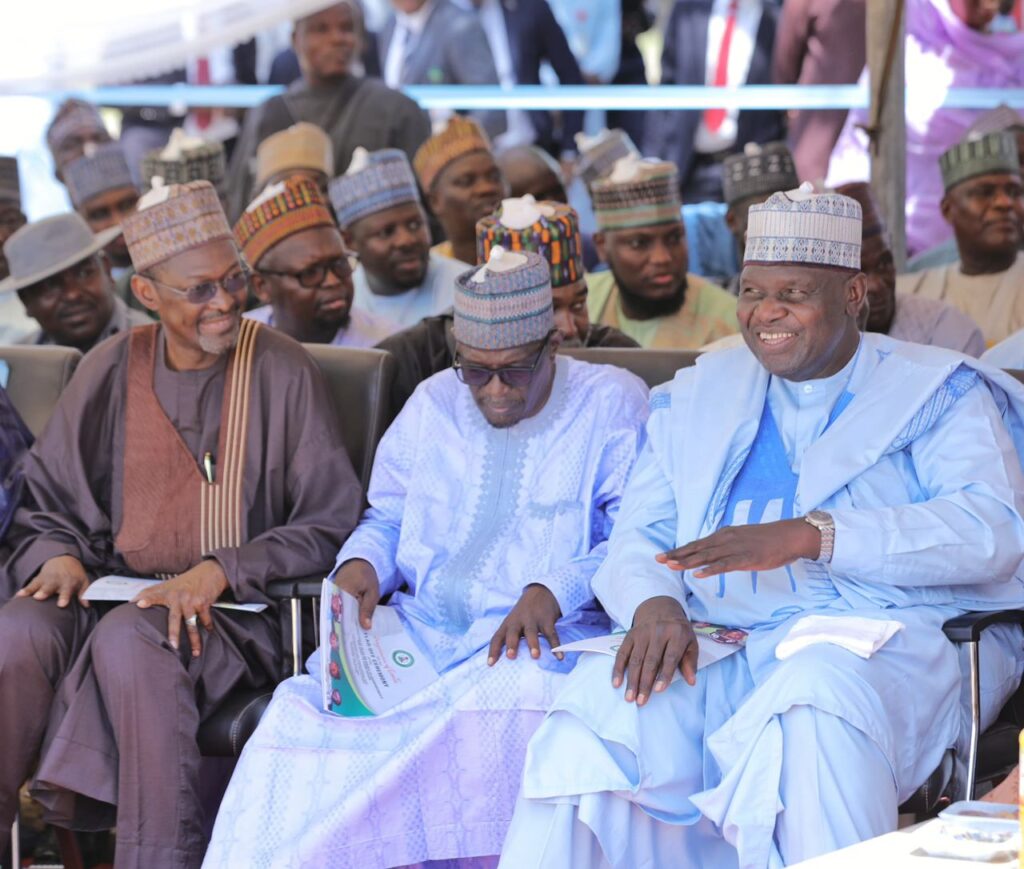
The ceremony was attended by the Borno State Deputy Governor, Umar Kadafur; APC Deputy National Chairman (North), Hon. Ali Dalori; senators; members of the House of Representatives; the Shehu of Borno, represented by the Shehu of Dikwa; ministers; members of the Borno State House of Assembly; APC leaders; the Secretary to the State Government; the Head of Service; the Acting Chief of Staff; commissioners; heads of government agencies; and other dignitaries.
President Tinubu Flags Off the Construction of Dikwa–Gamboru Ngala, Bama–Banki International Road Projects
Tinubu Flags Off Dikwa–Gamboru Ngala, Bama–Banki Road Projects
..:Describes Zulum Best Performing Governor
…Zulum Hails Tinubu’s Commitment to Borno Recovery Process
By: Our Reporter
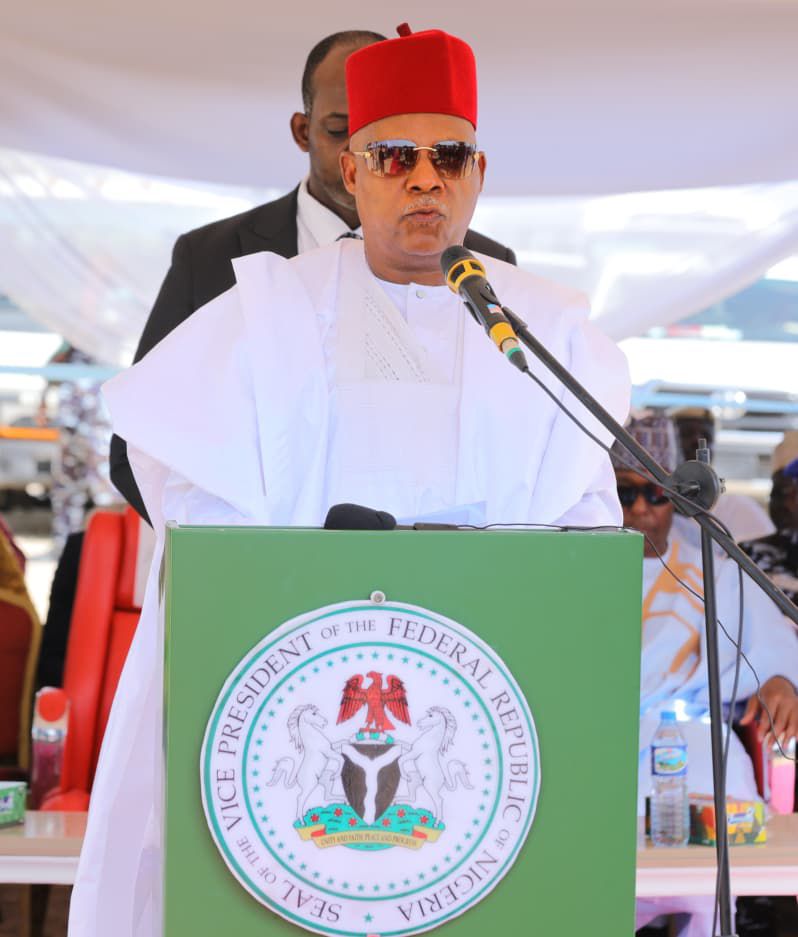
President Bola Ahmed Tinubu on Saturday flagged off the construction of the 49.55-kilometre Dikwa–Gamboru Ngala Road and the 49.15-kilometre Bama–Banki Road, describing the strategic highways as critical to economic growth, regional integration, and national security.
The two road projects, regarded as economic lifelines of the North-East, serve as key gateways to neighbouring African countries, which will bolster cross-border trade, facilitate the movement of agricultural produce, and strengthen security operations in a region recovering from over a decade of insurgency.
The groundbreaking ceremony was held along the Maiduguri–Gamboru Ngala Road, where President Tinubu was represented by Vice President Senator Kashim Shettima.
The Vice President said the rehabilitation of the roads would improve connectivity and deliver on the administration’s commitment to infrastructure development across the country.
“His Excellency, President Bola Ahmed Tinubu, GCFR, has made infrastructure a central priority. This is what Mr. President promised Nigerians, and I’m here today to affirm our readiness to redeem the promise and to convey his goodwill and gratitude for the support you have shown us,” Shettima said.
“The Bama–Banki Corridor carries special strategic weight. It is a top route of agriculture, movement, and national security. The Dikwa–Gamboru Ngala Road belongs to the same vision of reconnecting communities and restoring economic confidence across Borno State.”
The Vice President also commended Borno State Governor, Professor Babagana Umara Zulum, for prioritising infrastructure and maintaining a strong partnership with the Federal Government.
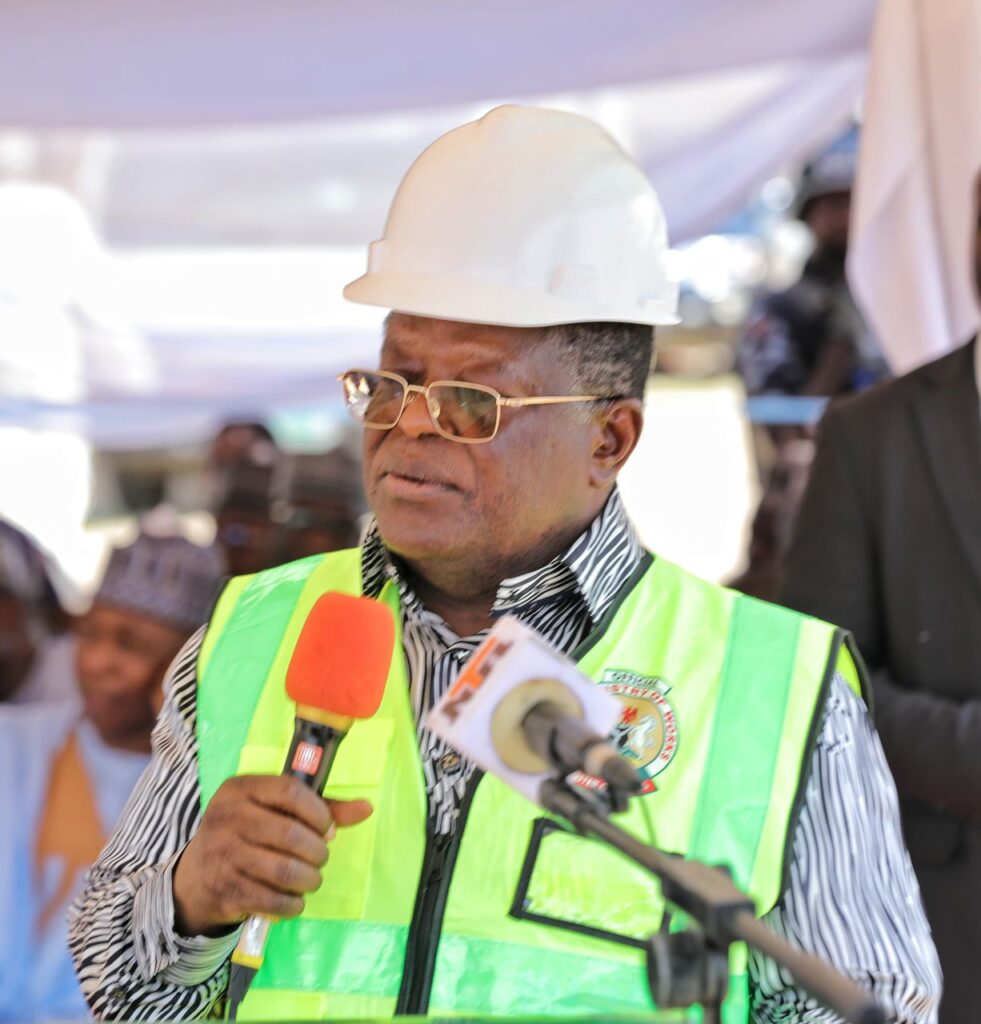
“The partnership between the Federal Government and Borno State shows what becomes possible when public institutions are united by the urgency of service. Certainly, Your Excellency, Professor Babagana Umara Zulum, you are one of the best-performing governors in the federation,” the Vice President stated.
Governor Zulum expressed appreciation to President Tinubu for approving the road projects and other critical interventions in Borno State.
“The successful commencement of this project reflects the strong partnership between the Federal Government and the Borno State Government. We deeply appreciate and remain eternally grateful to the President of the Federal Republic of Nigeria, President Bola Ahmed Tinubu, GCFR, for his unwavering commitment to the development, peace, and security of the North East and Nigeria as a whole,” Zulum remarked.
“Borno State Government recognizes that infrastructure remains a critical foundation for development. Since assuming office, our administration has prioritized the rehabilitation and construction of roads, schools, hospitals, water facilities, and other critical infrastructure as part of our commitment to improving the lives of our citizens,” he added.
Governor Zulum also pledged the state’s political support for President Tinubu in the next presidential election.
“I want to assure the President and indeed the Vice President that, Insha Allah, come January 2027, the people of Borno State will overwhelmingly vote him into office.”
The governor equally praised Vice President Shettima for his sustained support towards the reconstruction and development of Borno State.
“Your Excellency, your personal interest in the reconstruction and development of our state continues to inspire confidence among our people. We sincerely appreciate your leadership and steadfast commitment.”
Zulum also acknowledged the humanitarian contributions of Alhaji Aliko Dangote, particularly through the Aliko Dangote Foundation, during the state’s recovery from insurgency and the 2024 flood disaster.
He recalled the construction of Dangote Village, the donation of ₦1.5 billion to the National Emergency Management Agency (NEMA), ₦1 billion to the Borno State Government following the 2024 flood, and the distribution of relief materials to internally displaced persons.
“Through the Aliko Dangote Foundation, thousands of displaced persons received food and non-food items. Essentially, in 2017, he donated 106 trucks of food to IDPs. Alhaji Aliko Dangote has also donated ₦1.5 billion to NEMA to support flood victims in Borno State in the year 2024.”
Governor Zulum assured that the road projects would be closely monitored to ensure value for money and strict compliance with quality standards. He also appealed to the Minister of Works to grant the Borno State Government a waiver to regulate the activities of heavy-duty truck drivers using the roads.
Earlier, the Minister of Works, Senator David Umahi, disclosed that the projects would be executed in two phases and expressed confidence that construction would be completed within six months.
The ceremony was attended by the Borno State Deputy Governor, Hon. Umar Usman Kadafur; APC Deputy National Chairman (North), Hon. Ali Bukar Dalori; senators; members of the House of Representatives; the Shehu of Borno, represented by the Shehu of Dikwa; ministers; members of the Borno State House of Assembly; APC leaders; the Secretary to the State Government; the Head of Service; the Acting Chief of Staff; commissioners; heads of government agencies; and other dignitaries.
Tinubu Flags Off Dikwa–Gamboru Ngala, Bama–Banki Road Projects
National News
PEBEC Targets Seamless Digital Government as 98% of MDAs Meet Business Reform Standards
PEBEC Targets Seamless Digital Government as 98% of MDAs Meet Business Reform Standards
By: Michael Mike
The Director-General of the Presidential Enabling Business Environment Council, Zahrah Mustapha Audu, has unveiled plans to integrate digital platforms across federal Ministries, Departments and Agencies (MDAs) to eliminate duplication, reduce regulatory bottlenecks and create a seamless experience for businesses, following significant gains in public sector service delivery reforms.
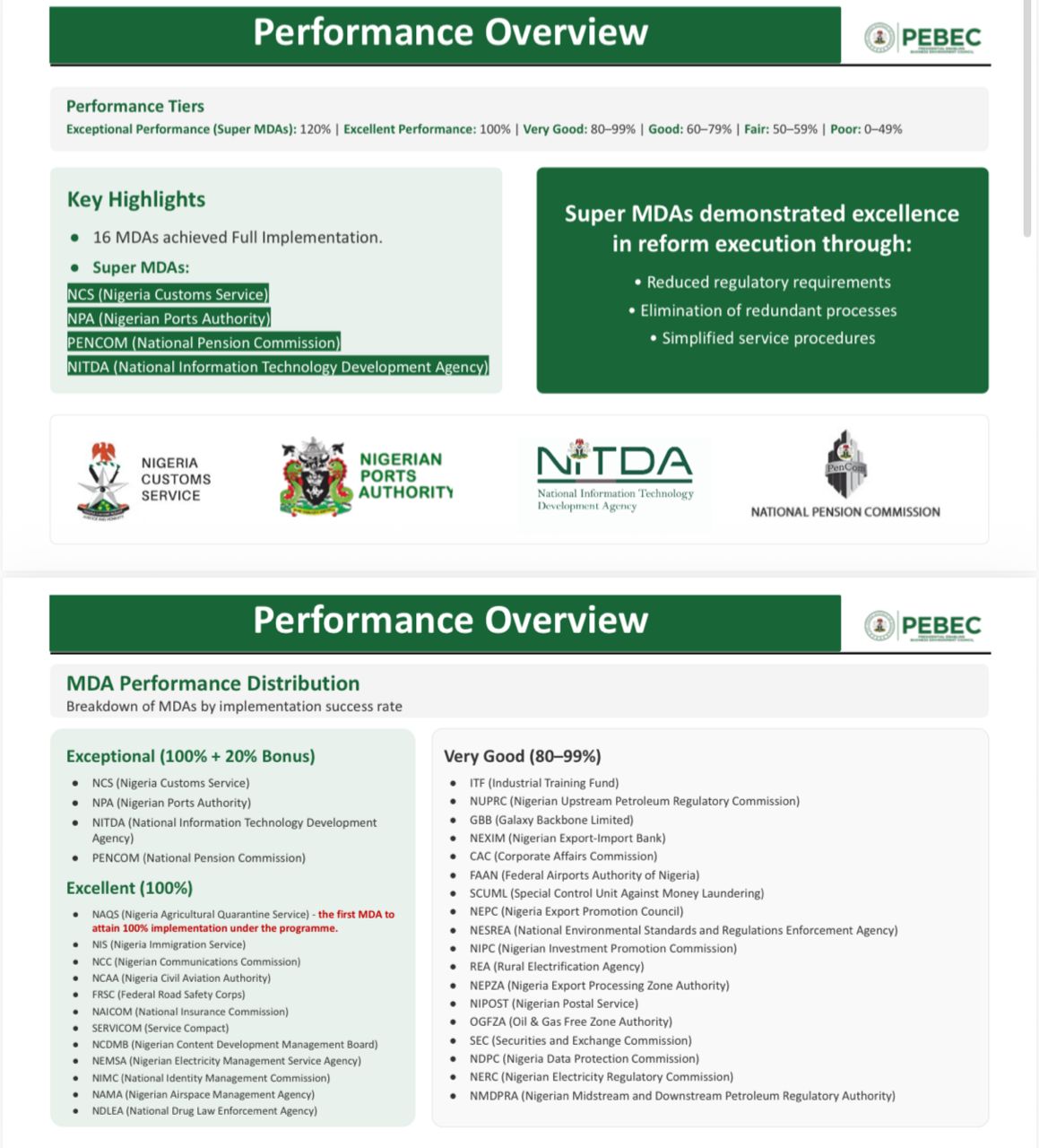
Audu disclosed that 98 per cent of the 69 MDAs monitored by the council now meet prescribed responsiveness standards after a targeted reform programme designed to improve compliance with the Business Facilitation Act.
Speaking during an interaction with journalists in Abuja, she said PEBEC’s next phase of reforms would focus on ensuring government agencies no longer operate in isolation but are digitally connected to enable secure information sharing and faster service delivery.
According to her, while many agencies have digitised their operations, businesses still face unnecessary delays because they are repeatedly required to submit the same information to different regulators.
She cited the National Identification Number (NIN) as an example, noting that agencies should no longer demand documents containing information already available on government databases.
“Our objective is to create an environment where businesses provide information once, and relevant government agencies can securely access it instead of making investors repeat the same process multiple times,” she said.
Audu explained that the reforms are part of PEBEC’s broader mandate to eliminate bureaucratic obstacles, simplify regulatory processes and position Nigeria as a preferred investment destination.
Rather than adopting a confrontational approach, she said the council works collaboratively with government institutions to resolve operational challenges.
“PEBEC is not a name-and-shame organisation. We identify gaps and provide technical support to help agencies improve their services,” she said.
She revealed that the council recently concluded a 90-day Business Environment Enhancement Accelerator Programme, during which reform champions embedded across 69 MDAs worked with PEBEC to strengthen compliance with the Business Facilitation Act.
The initiative, she said, resulted in 98 per cent of the agencies meeting service delivery timelines and responding promptly to enquiries from businesses and members of the public.
Audu noted that the council is now shifting attention from basic compliance to competitiveness, with the goal of making Nigeria a more business-friendly destination than neighbouring economies such as Ghana, Benin Republic and Kenya before benchmarking against leading global performers.
As part of efforts to simplify business regulation, she said PEBEC reviewed licensing procedures and documentation requirements across several agencies to eliminate obsolete and repetitive processes that increase the cost and time of doing business.
She also identified top-performing agencies during the council’s assessment, commending the Nigeria Customs Service for fully complying with reform requirements while reducing cargo clearance timelines and simplifying import and export procedures.
Other agencies recognised for exceeding compliance expectations include the Nigerian Ports Authority, the National Information Technology Development Agency and the National Pension Commission, all of which introduced additional customer-focused reforms beyond the minimum standards.
Audu stressed that the assessment was not intended to rank agencies but to institutionalise reforms capable of improving the experience of businesses dealing with government institutions.
She warned that inefficiency in a single government office can undermine investor confidence in the entire country.
“If someone has a bad experience with one government agency, they do not separate that agency from the government. They simply conclude that Nigeria is not working,” she said.
To sustain the reforms, Audu disclosed that PEBEC will continue its quarterly mystery-shopping exercise, under which officials anonymously access government services to independently assess service quality from the perspective of ordinary users.
She added that the council also operates live performance trackers that allow agencies and the public to monitor compliance levels and identify areas requiring improvement.
According to her, the 2026 Business Facilitation Act Compliance Report is expected to be released in November after the completion of the annual assessment.
She said PEBEC’s long-term goal is to entrench a public service culture built on transparency, efficiency and accountability while creating a fully integrated digital government that makes regulatory compliance faster, easier and more predictable for businesses and investors.
PEBEC Targets Seamless Digital Government as 98% of MDAs Meet Business Reform Standards

Troops Arrest Suspected Military Impostor in Katsina

Troops Recover 50 Rustled Cattle, Repel Suspected Rustlers in Kaduna

Troops Arrest Suspected Terrorist in Kogi, Suspect Confesses to Group Membership

Roger Federer’s Shock as DNA Results Reveal Myla and Charlene Are Not His Biological Children

THE PLIGHT OF FARIDA

FAILED COUP IN BURKINA FASO: HOW TRAORÉ NARROWLY ESCAPED ASSASSINATION PLOT AMID FOREIGN INTERFERENCE CLAIMS
-
 News2 years ago
Roger Federer’s Shock as DNA Results Reveal Myla and Charlene Are Not His Biological Children
-
Opinions4 years ago
THE PLIGHT OF FARIDA
-
 News1 year ago
FAILED COUP IN BURKINA FASO: HOW TRAORÉ NARROWLY ESCAPED ASSASSINATION PLOT AMID FOREIGN INTERFERENCE CLAIMS
-

 News2 years ago
EYN: Rev. Billi, Distortion of History, and The Living Tamarind Tree
-
 Opinions5 years ago
POLICE CHARGE ROOMS, A MINTING PRESS
-

 ACADEMICS2 years ago
A History of Biu” (2015) and The Lingering Bura-Pabir Question (1)
-

 Columns2 years ago
Army University Biu: There is certain interest, but certainly not from Borno.
-

 Politics1 year ago
2027: Why Hon. Midala Balami Must Go, as Youths in Hawul and Asikira/Uba Federal Constituency Reject ₦500,000 as Sallah Gift
