
National News
Eid Al Maulud: Foreign Affairs Minister calls for Global Peace

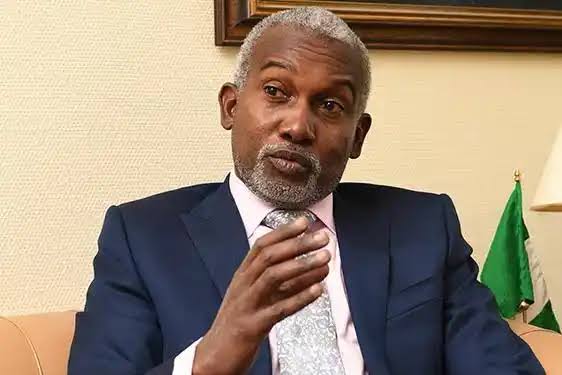
Eid Al Maulud: Foreign Affairs Minister calls for Global Peace
By: Michael Mike
Minister of Foreign Affairs, Ambassador Yusuf Tuggar has called for global peace and harmony on the occasion of Eid al Maulud.
The Minister, in a statement signed by his Special Assistant on Media and Communications Strategy, Alkasim Abdulkadir enjoined the Muslim Ummah to embrace the noble and exemplary life of Prophet Muhammad SAW (Peace Be Upon Him) in their daily lives.
He also prayed for peace and security in Nigeria, most especially in the ECOWAS subregion and other parts of the world going through conflicts and strife; while also calling on all to imbibe tolerance, love, and compassion.
According to him, “The lesson from the life of Prophet Muhammad Peace Be Upon Him is one of inspiration to be pious and humane. His dedication to love, compassion, humility, and teaching tolerance are needed in these times.
“May the occasion of Eid al Maulud bring our country and the entire world peace and tranquillity. Have a wonderful celebration.”
He furthermore wished Muslims all over the world a joyful celebration.
Eid Al Maulud: Foreign Affairs Minister calls for Global Peace


National News
Turkey Deepens Military Partnership with Somalia Amid Shifting Regional Security Dynamics
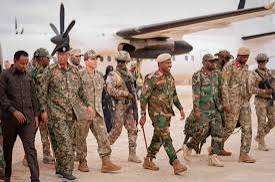
Turkey Deepens Military Partnership with Somalia Amid Shifting Regional Security Dynamics
By Zagazola Makama
Turkey is significantly expanding its military partnership with Somalia, reinforcing its position as one of Mogadishu’s most important security allies at a time of growing uncertainty over the future of international stabilization efforts and increasing pressure from Western partners to sustain the fight against Al-Shabaab.
The latest developments point to a broader strategic realignment in Somalia’s security architecture, with Ankara deepening its involvement in the country’s defense sector through expanded military training, operational support, and institutional reforms aimed at building a self-reliant Somali National Army (SNA).
The renewed cooperation signifies Somalia’s effort to develop integrated land, air, and naval capabilities capable of independently confronting insurgent threats and securing the country’s vast territory and coastline.
Security sources familiar with the development said the Somali government has accelerated plans to build a unified defense structure operating across multiple regions, reflecting a long-term strategy to reduce dependence on foreign peacekeeping forces.
The initiative includes strengthening command structures, improving force mobility, enhancing intelligence coordination, and developing specialized units capable of responding to evolving threats posed by Al-Shabaab.
The move comes as uncertainty continues to surround the future role of the African Union Support and Stabilization Mission in Somalia (AUSSOM), which replaced the African Union Transition Mission in Somalia (ATMIS) but continues to face operational and funding challenges. Officials believe Somalia must increasingly rely on its own security institutions if recent gains against extremist groups are to be sustained.
Demonstrating the growing defense relationship, Commander of the Somali National Army, Brig. Gen. Ibrahim Mohamed Mohamud, recently arrived in Baidoa alongside the Commander of TurkSom, Gen. Sebahattin Kalkan.
The joint visit is being viewed as more than a routine inspection. Military analysts say it underscores Ankara’s continued commitment to Somalia’s security sector reforms and reflects close coordination between Turkish military advisers and Somali commanders on future operational planning.
Turkey has played a central role in training thousands of Somali soldiers through the TurkSom Military Training Centre in Mogadishu, one of Ankara’s largest overseas military facilities.
The partnership has evolved beyond basic military instruction to include leadership development, logistics, force modernization, and institutional capacity building.
The renewed Turkish engagement comes against the backdrop of sustained pressure from Somalia’s Western partners to intensify military operations against Al-Shabaab.
Only days earlier, Commander of the United States Africa Command (AFRICOM), Gen. Dagvin R.M. Anderson, urged Somali authorities to maintain relentless pressure on the extremist group and prevent it from regaining territory.
His remarks reflected Washington’s continued commitment to supporting Somalia’s counterterrorism campaign through intelligence sharing, training, and precision operations against Al-Shabaab leadership.
The United States has continued to conduct targeted strikes and provide military assistance to Somali security forces, viewing Al-Shabaab as one of Africa’s most resilient jihadist organizations and a continuing regional security threat.
The evolving security environment has also pointed to the emergence of parallel defense partnerships across Somalia.
In recent weeks, AFRICOM concluded a bilateral security cooperation arrangement with Puntland authorities, demonstrating Washington’s engagement with regional administrations alongside the Federal Government.
These parallel relationships illustrate the increasingly complex network of international security actors operating in Somalia, where Turkey, the United States, the African Union, and other partners are simultaneously supporting different aspects of the country’s security architecture.
While Ankara focuses heavily on force generation, training, and institutional development, Washington continues to emphasize counterterrorism cooperation and operational support against Al-Shabaab.
Despite differences in approach, both Turkey and the United States share the broader objective of preventing Al-Shabaab from reversing military gains made by Somali forces over recent years.
The expansion of military cooperation with Turkey represents part of a wider strategy to build sustainable national defense capabilities capable of eventually assuming full responsibility for the country’s security.
As debates continue over the future of AUSSOM and international funding for stabilization missions, the emphasis on strengthening indigenous military institutions is expected to become increasingly central to Somalia’s long-term security planning.
The success of these reforms will largely determine whether Somali forces can maintain operational momentum against Al-Shabaab and secure areas recovered from insurgent control without prolonged dependence on foreign peacekeeping missions.
Turkey Deepens Military Partnership with Somalia Amid Shifting Regional Security Dynamics
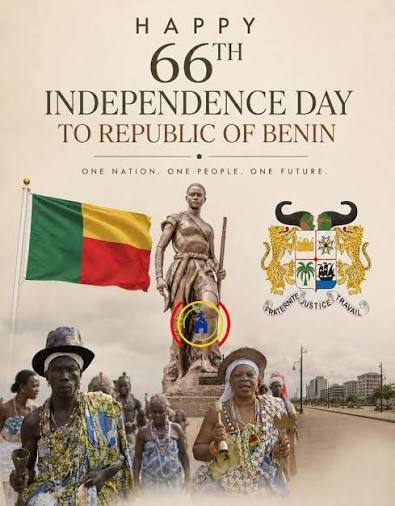
ECOWAS Chief Bids Benin Farewell with Unity Message on 66th Independence Anniversary
By: Michael Mike
The President of the ECOWAS Commission, Dr. Omar Alieu Touray, has paid a glowing tribute to the Republic of Benin on the occasion of its 66th Independence Anniversary, reaffirming the regional body’s commitment to solidarity, integration and shared prosperity in West Africa.
In what is seen as one of his final symbolic gestures before the end of his tenure, Dr. Touray extended warm congratulations to the government and people of Benin, describing the country as a steadfast pillar of regional cooperation and democratic governance within the Economic Community of West African States (ECOWAS).
The ECOWAS Commission President acknowledged Benin’s longstanding contributions to regional peace, political stability and economic integration, noting that the country’s commitment to the ideals of the bloc has strengthened cooperation among member states.
He reaffirmed ECOWAS’ determination to continue working closely with Benin in advancing regional integration, promoting sustainable development and addressing the common challenges confronting West Africa.
Dr. Touray’s message comes at a significant moment as he prepares to leave office, making the goodwill message not only a congratulatory note but also a symbolic reaffirmation of the enduring partnership between ECOWAS and one of its founding member states.
The Commission’s tribute underscored the importance of unity and collective action as West Africa confronts security threats, economic pressures and political transitions, stressing that closer cooperation remains essential to achieving lasting peace and prosperity across the sub-region.
Benin marked its 66th Independence Anniversary with celebrations reflecting on its post-independence journey and renewed commitment to democratic governance and national development.
The ECOWAS message highlighted the organisation’s resolve to deepen collaboration with the Beninese authorities and people in pursuit of the Community’s vision of an integrated, peaceful and prosperous West Africa.
ECOWAS Chief Bids Benin Farewell with Unity Message on 66th Independence Anniversary
National News
ECOWAS, UNDP, Nigeria Unite to Break Barriers Against Women’s Political Leadership in West Africa
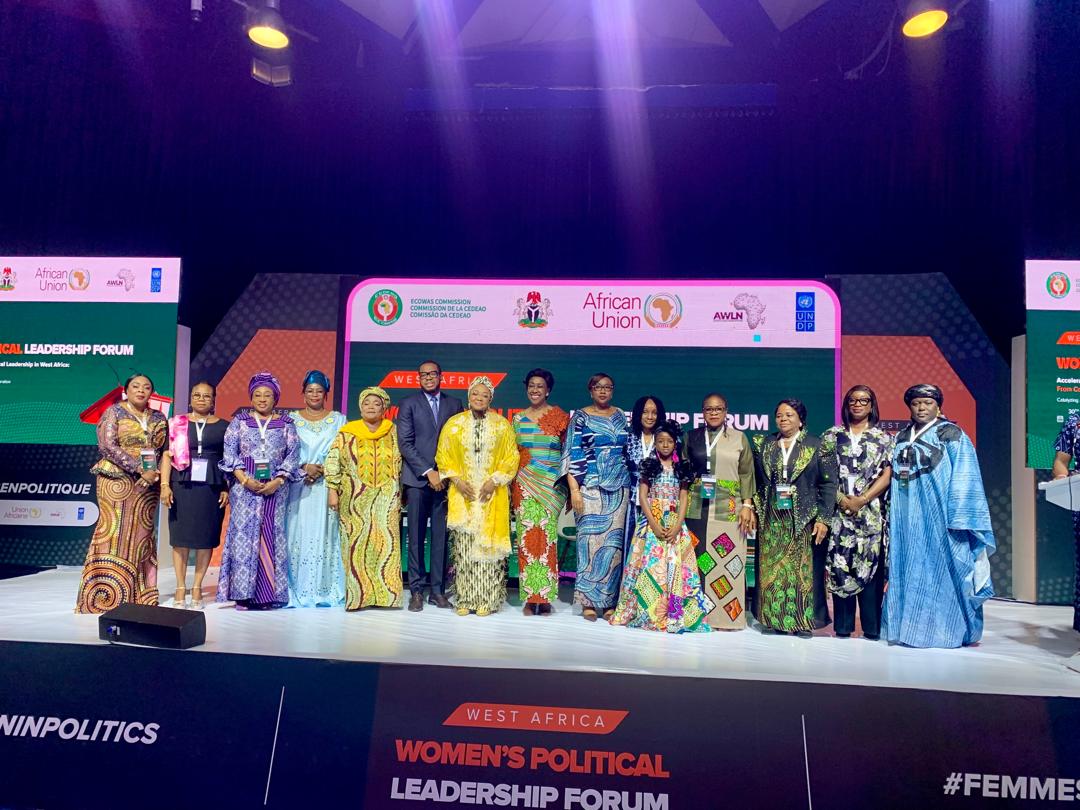
ECOWAS, UNDP, Nigeria Unite to Break Barriers Against Women’s Political Leadership in West Africa
By: Michael Mike
The Economic Community of West African States (ECOWAS) has launched a historic regional push to transform the political landscape of West Africa by dismantling the structural barriers that have kept women largely underrepresented in governance, with leaders declaring that stronger democracies and sustainable development cannot be achieved without the full participation of women.
The declaration came at the opening of the High-Level Forum on Strengthening the Representation of Women in Political Leadership in the ECOWAS Region held in Abuja on Thursday, where regional leaders, ministers, parliamentarians, development partners and gender advocates gathered to chart a practical pathway towards greater inclusion of women in political decision-making.
The declaration, which ECOWAS described as a major legacy of its 50th anniversary celebration, seeks to create an enabling environment for women to compete for elective positions, participate actively in political parties and occupy leadership roles across the region.
The forum followed the adoption by the ECOWAS Authority of Heads of State and Government of the Presidential Declaration on Strengthening the Representation of Women in Political Leadership in the ECOWAS Region at the Summit on the Future of Regional Integration in West Africa held recently in Freetown, Sierra Leone.
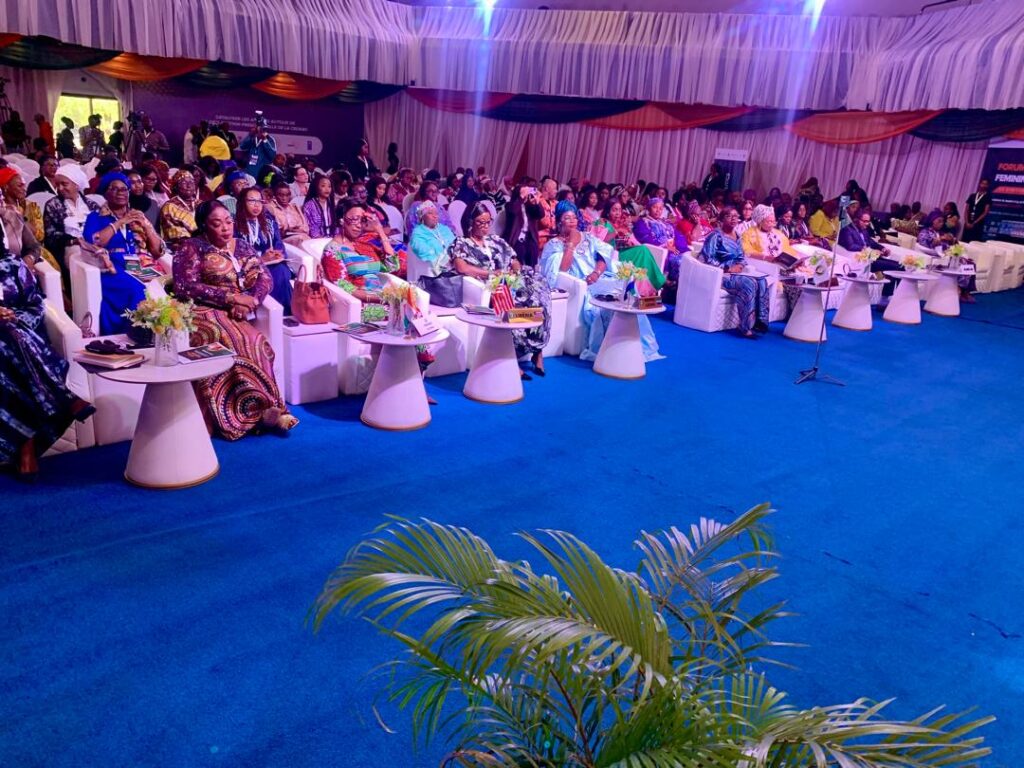
Speaking at the forum, Vice President of the ECOWAS Commission, Mrs. Damtien Tchintchibidja, said the region had reached a defining moment in its democratic journey, stressing that the future strength of West Africa depended on ensuring that women and men alike participate fully in shaping governance.
“There are moments in the life of a Community when it has the opportunity to shape history. I believe this is one of those moments,” she said.
According to her, the initiative was conceived as part of the legacy of ECOWAS at 50, not only to celebrate five decades of regional cooperation but also to establish a foundation for a new phase of integration where leadership reflects the talents, experiences and aspirations of all citizens.
She explained that the adoption of both the Pact for the Future of Regional Integration and the Presidential Declaration demonstrated the commitment of West African leaders to building a more inclusive and people-centred community anchored on ECOWAS Vision 2050.
“The strength of our democracies, the quality of our governance and the future of our development depend on the ability of all citizens, women and men alike, to participate fully in shaping the destiny of our region,” Tchintchibidja said.
Despite progress in democratic governance across West Africa, the ECOWAS Vice President said the persistent exclusion of women from political leadership remains one of the major weaknesses of the region’s democratic systems.
She noted that women constitute more than half of the population and contribute significantly to business, peacebuilding, innovation, family and community development, yet their representation in institutions where key decisions are taken remains far below their contributions to society.
Tchintchibidja said women occupy only about 15.5 per cent of parliamentary seats across West Africa, a figure significantly below the African average of 25 per cent and the global average of 26.5 per cent.
She acknowledged that some ECOWAS member states had introduced gender quotas, parity laws and other reforms aimed at expanding political opportunities for women but said progress remained uneven.
The Vice President stressed that women’s political inclusion was not only about correcting historical imbalance but also about unlocking economic potential.
Citing global economic projections, she said the International Monetary Fund estimates that closing gender gaps could increase economic output by between 10 and 35 per cent, depending on national circumstances.
She added that the World Bank had estimated that countries lose approximately 14 per cent of their human capital wealth when women are unable to fully participate in economic and public life.
“Institutions become more responsive, economies more productive and development more inclusive when we make full use of our human potential,” she said.
The ECOWAS declaration provides a regional framework requiring member states to strengthen constitutional, legal and policy measures that support women’s political participation.
It also called on political parties to review their nomination processes, internal structures and leadership practices to provide women genuine opportunities to contest elections and participate in party decision-making.
Other areas covered by the declaration include investment in leadership development, mentorship programmes, capacity building and support networks for women aspiring to political office.
It recognised political financing as one of the biggest obstacles facing female candidates and calls for measures that will improve women’s access to campaign resources and other forms of political support.
The declaration further emphasises the need to confront restrictive social and cultural norms through education, advocacy and collaboration with civil society organisations, academia and the media.
Under the framework, the ECOWAS Commission will play a central role in implementation through regional coordination, technical assistance, peer learning, exchange of best practices and monitoring of progress among member states.
Nigeria’s Minister of Women Affairs and Social Development, Hajiya Imaan Sulaiman-Ibrahim, also at the forum called for far-reaching reforms to remove barriers limiting women’s participation in politics, describing inclusive leadership as essential to stronger democracy and sustainable development.
She urged governments, political parties and institutions across the region to move beyond declarations by implementing practical measures that guarantee women equal opportunities in elective and appointive positions.
The minister identified challenges such as limited access to political financing, discriminatory practices, social barriers and institutional weaknesses as some of the factors preventing women from fully participating in political leadership.
She described the ECOWAS declaration as a significant milestone that provides an opportunity for member states to accelerate reforms and create a more inclusive political environment.
Sulaiman-Ibrahim said women’s political participation should not be viewed merely as a gender issue but as a governance necessity, noting that societies achieve better policy outcomes when women are adequately represented in decision-making.
She reaffirmed Nigeria’s commitment to working with ECOWAS, the United Nations Development Programme (UNDP) and other partners to translate the declaration into measurable action.
The United Nations Development Programme (UNDP) said it would support the implementation of the regional commitment through new initiatives aimed at building a pipeline of women leaders across Africa.
The UN Assistant Secretary-General and Director of UNDP Regional Bureau for Africa, Ahunna Eziakonwa, said women continue to face entrenched financial, institutional, social and cultural barriers that limit their entry into politics and reduce their influence even when they attain office.
She disclosed that women currently occupy only 27 per cent of parliamentary seats across Africa, nine per cent of political party leadership positions, 13 per cent of senior executive positions, 24 per cent of cabinet posts and 25 per cent of local government seats.
“That is simply not enough,” she said.
Eziakonwa argued that the challenge was not to ask women to adapt to unequal political systems but to transform those systems.
“It is really not to ask women to adapt to the unequal political systems that they face, but really to transform those systems,” she said.
She announced that UNDP, in partnership with the African Women Leaders Network and the African Union, had established the African Facility for Women in Political Leadership.
She also revealed that the African Academy for Women’s Political Leadership would be launched in Kigali, Rwanda, with an inaugural cohort of 40 women from 28 African countries and the Caribbean.
The academy, she said, would equip participants with leadership skills, strategic networks and influence required to shape policies and decisions driving Africa’s development.
UNDP would also support the African Union Commission in developing guidelines to address financial barriers preventing women from participating fully in politics.
She highlighted the African Young Women Leaders Fellowship Programme, which has supported about 95 young women across Africa, as part of efforts to create a sustainable pipeline of future leaders.
Eziakonwa urged participants at the Abuja forum to develop a practical action plan capable of addressing the financial, institutional, social, cultural and digital barriers facing women in politics.
She also called for greater involvement of men, stressing that gender parity requires male allies willing to challenge discrimination and support women’s leadership.
“Women’s political leadership is not a concession, but essential to a stronger democracy,” she said.
She challenged stakeholders to ensure the forum marks a decisive shift:
“From representation to influence. From isolated achievement to collective power. From declarations to delivery.”
For Tchintchibidja, the Abuja gathering represents not only a regional commitment but also a defining moment as she concludes her tenure as Vice President of the ECOWAS Commission.
She expressed hope that the declaration would become an enduring legacy of ECOWAS at 50 and a foundation for the regional community envisioned under Vision 2050.
“History seldom remembers those who merely recognised the need for change; instead it remembers those who had the courage to make it happen,” she said.
The forum ended with a renewed call for West African governments, political parties, civil society groups and development partners to move from commitments on paper to concrete actions that will ensure that every woman and girl in the region can see political leadership as a realistic and attainable future.
ECOWAS, UNDP, Nigeria Unite to Break Barriers Against Women’s Political Leadership in West Africa

The Sahel at War: Inside the Interlocking Networks of Terrorism, Banditry Amidst State Fragility in West Africa

Turkey Deepens Military Partnership with Somalia Amid Shifting Regional Security Dynamics

Troops arrest suspected ISWAP informant attempting to flee Adamawa community

Roger Federer’s Shock as DNA Results Reveal Myla and Charlene Are Not His Biological Children

THE PLIGHT OF FARIDA

FAILED COUP IN BURKINA FASO: HOW TRAORÉ NARROWLY ESCAPED ASSASSINATION PLOT AMID FOREIGN INTERFERENCE CLAIMS
-
 News2 years ago
Roger Federer’s Shock as DNA Results Reveal Myla and Charlene Are Not His Biological Children
-
Opinions4 years ago
THE PLIGHT OF FARIDA
-
 News1 year ago
FAILED COUP IN BURKINA FASO: HOW TRAORÉ NARROWLY ESCAPED ASSASSINATION PLOT AMID FOREIGN INTERFERENCE CLAIMS
-

 News2 years ago
EYN: Rev. Billi, Distortion of History, and The Living Tamarind Tree
-
 Opinions5 years ago
POLICE CHARGE ROOMS, A MINTING PRESS
-

 ACADEMICS2 years ago
A History of Biu” (2015) and The Lingering Bura-Pabir Question (1)
-

 Columns2 years ago
Army University Biu: There is certain interest, but certainly not from Borno.
-

 Politics1 year ago
2027: Why Hon. Midala Balami Must Go, as Youths in Hawul and Asikira/Uba Federal Constituency Reject ₦500,000 as Sallah Gift
