
News
UMTH: CMD visits NEDC seeks more healthcare intervention


UMTH: CMD visits NEDC seeks more healthcare intervention
By: Our Reporter
As part of measures to further strengthen existing cordial relationship between the University of Maiduguri Teaching Hospital and the North East Development Commission NEDC, the New Chief Medical Director Professor Faruk Buba incompany of Top Management Committee of the hospital paid a courtesy visit to Managing Director/ CEO of NEDC Dr. Mohammed Goni Alkali at the Commission’s head office In Maiduguri.
Professor Faruk Buba recounted on the giant strides in healthcare interventions done to the hospital by the NEDC which cut across establishment of the Burns Centre, provision of steady water supply through drilling of boreholes, procurement and installation of High-tech Magnetic Resonance Imaging also known as MRI, High-efficiency generators as well as the recent establishment of Fertility Care Centre and en-suite maternity complex among others.
These and many more he said have contributed immensely to being the largest Hospital in Nigeria and longstanding Centre of Excellence in Immunology and Infectious Diseases.
The Chief Medical Director further solicited more interventions from the Commission especially in procurement of more up-to-date equipment to enhance the hospital capacity in healthcare service delivery to the teaming population of Borno state, the North East region, Nigeria and Beyond.
Responding, MD/CEO North East Development Dr. Mohammed Goni Alkali said the University of Maiduguri Teaching Hospital has been a partner in progress adding that UMTH has played critical roles in extending the Commission’s numerous life-touching interventions for the people in the region one of which is provision of accessible and affordable healthcare service delivery.
Dr. Alkali revealed that large consignments of Healthcare equipment are en-route to the region and as always, Tertiary Health institutions like the UMTH will be given priority consideration.
Meanwhile, the Chief Medical Director alongside top management Committee had paid condolences visit to Medical Director, Hospitals Management Board Borno state Professor Abubakar Kullima over the demise of his sister and offered prayers for the grieving families.
UMTH: CMD visits NEDC seeks more healthcare intervention



FG Raises Alarm Over Gambian Directive to Replace 57 Nigerian Bank Workers
…Commission seeks reversal of December deadline, warns against displacement of African professionals
By: Michael Mike
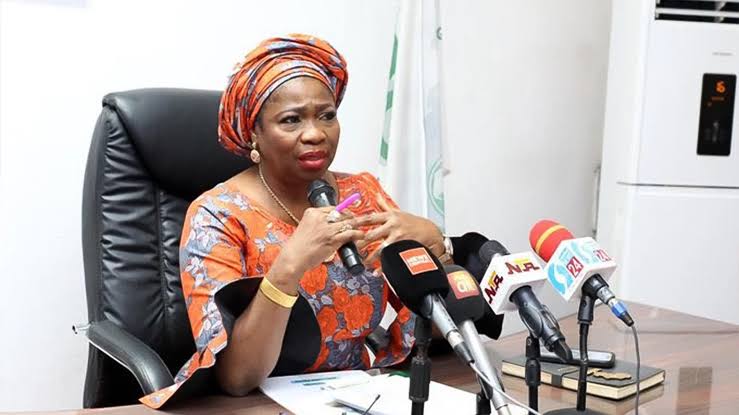
An agency of the Federal Government, the Nigerians in Diaspora Commission (NiDCOM) has called on the Central Bank of The Gambia to reverse a directive requiring banks operating in the country to replace non-Gambian employees with qualified Gambian nationals, warning that the policy could lead to the displacement of 57 Nigerian professionals.
The directive, reportedly issued on September 16, 2026, gives banks until December 31, 2026, to replace their existing non-Gambian employees with Gambians, a development NiDCOM said had raised serious concerns about the welfare and employment rights of affected Nigerians.
The Chairman/Chief Executive Officer of NiDCOM, Hon. Abike Dabiri-Erewa, described the development as deeply worrisome, particularly as the affected Nigerian professionals reportedly possess valid residency and work permits and have made significant contributions to The Gambia’s banking sector.
In a statement issued in Abuja on Tuesday, the Commission acknowledged The Gambia’s right to promote local employment and develop its workforce but insisted that such policies must respect existing employment arrangements, legitimate work authorisations and the principles of African solidarity and regional integration.
NiDCOM said information available to it indicated that 57 Nigerian professionals working in four Nigerian-origin banks operating in The Gambia could be affected by the directive.
The Commission also drew attention to the economic contributions of the four banks, which collectively account for approximately 37.2 per cent of total banking industry deposits, valued at 35.3 billion Gambian dalasi, and 32.6 per cent of loans, worth 7.67 billion dalasi.
The banks also reportedly control 37 per cent of the industry’s total assets, valued at 44.78 billion dalasi, while accounting for about 34.5 per cent of investments in Central Bank bonds.
More significantly, NiDCOM said the four institutions reportedly contributed 90 per cent of the funding supporting the operations of the National Water and Electricity Company (NAWEC), highlighting their importance to the Gambian economy
.
The Commission expressed concern that a blanket employment replacement policy could undermine the contributions of African professionals and investors to host economies, particularly at a time when African countries are seeking to deepen economic cooperation and regional integration.
It argued that encouraging African investment and the free movement of people while implementing policies capable of indiscriminately displacing qualified African professionals could undermine the objectives of continental economic integration.
NiDCOM therefore urged the Central Bank of The Gambia to immediately reconsider and reverse the directive, calling for consultations with the Nigerian High Commission in Banjul, the affected financial institutions and other relevant stakeholders to achieve an equitable resolution.
The Commission also appealed to Gambian authorities to uphold the spirit of the Economic Community of West African States (ECOWAS) integration framework and the longstanding cordial relationship between Nigeria and The Gambia.
It called for constructive diplomatic engagement to resolve the dispute without jeopardising the livelihoods of affected Nigerian professionals or the broader economic relationship between both countries.
The development comes against the backdrop of regional efforts to promote the free movement of people, capital and services, as well as stronger economic partnerships among African countries.
FG Raises Alarm Over Gambian Directive to Replace 57 Nigerian Bank Workers
Leading Chinese Modernization Steadily Forward Through the Party’s Self-Revolution
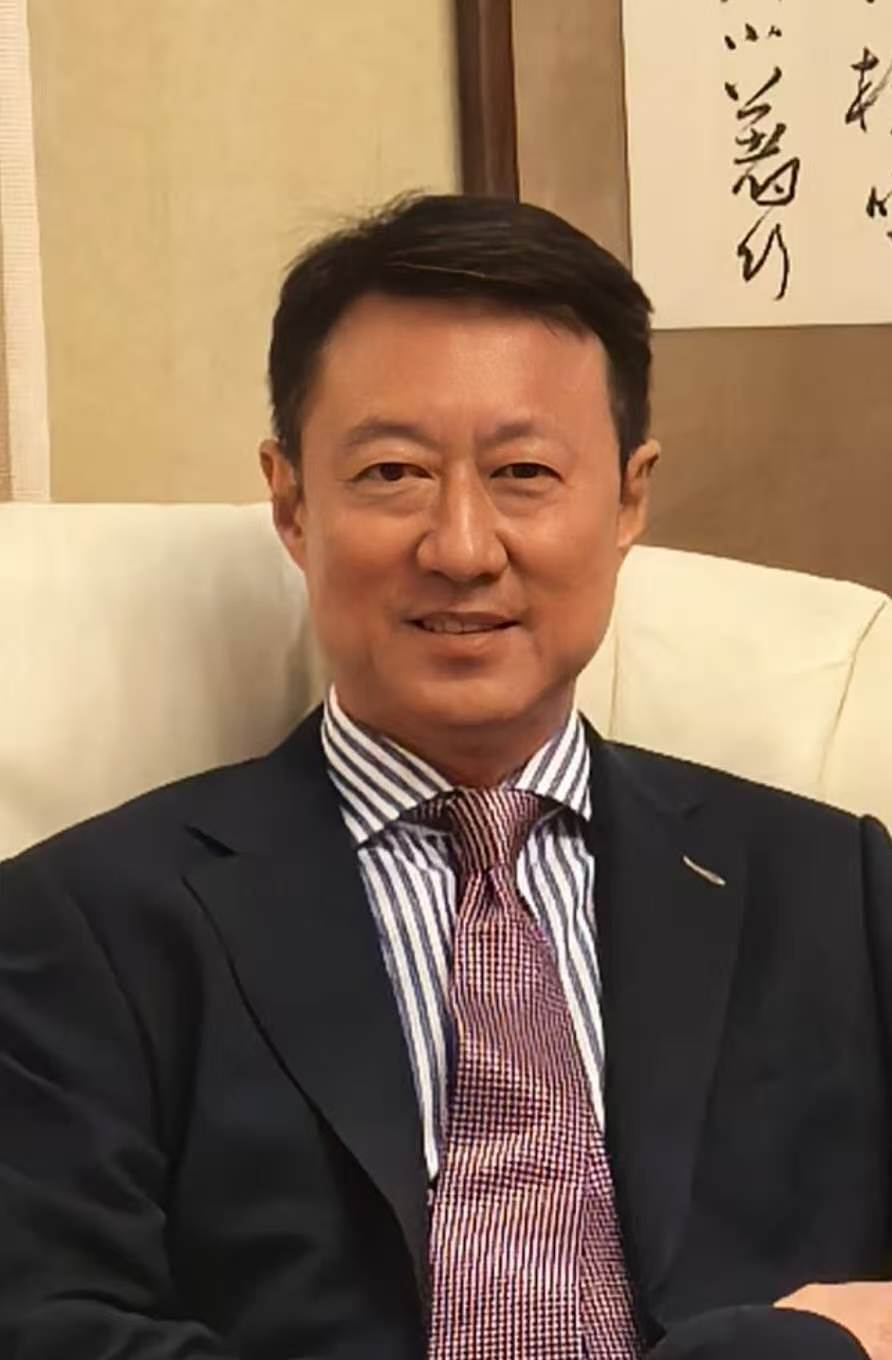
By: Yu Dunhai, Chinese Ambassador to Nigeria
Days ago, the Fifth Plenary Session of the 20th Central Committee of the Communist Party of China concluded in Beijing. The session reviewed and adopted the Resolution of the Central Committee of the CPC on Certain Major Issues concerning Persevering with Full and Rigorous Party Self-Governance. It sets out systematic plans for continuing to exercise full and rigorous self-governance of the Party on the new journey in the new era, providing a strong political guarantee for advancing the great cause of building a strong country and achieving national rejuvenation through Chinese modernization.
Through this plenary session, the world has clearly seen that the Communist Party of China has grown stronger through self-revolution, that China’s development path has become clearer and more determined, and that China’s sincere willingness to share governance experience and work with other countries to create a better future has been further demonstrated.
To govern the country well, we must first govern the Party well; only when the Party thrives can the nation prosper. China’s success hinges on the Party, and on exercising full and rigorous Party self-governance. Since the 18th National Congress of the CPC, the Party has advanced full and rigorous self-governance with extraordinary historical courage and strategic resolve. The fight against corruption has achieved an overwhelming victory and been comprehensively consolidated. Practice has fully proven that, as the world’s largest Marxist governing party, the Communist Party of China possesses a powerful capacity to identify problems, correct deviations, and achieve self-purification, self-improvement, self-renewal, and self-enhancement through its own efforts. It has always been the core force leading China’s development and progress and safeguarding the fundamental interests of the people.
Self-revolution is not an abstract political concept; it is a realistic driving force that promotes national development and benefits hundreds of millions of people. It is precisely by consistently advancing full and rigorous Party self-governance that the CPC has been able to rally the entire society into a powerful, unified force, translating governance efficacy into tangible development results, and writing new chapters in the twin miracles of rapid economic growth and long-term social stability.
China has built the world’s largest and most complete industrial system. Its manufacturing value-added has long ranked first globally. It has nurtured a middle-income group of more than 400 million people, historically solved the problem of absolute poverty, and lifted hundreds of millions of rural residents out of poverty. These tangible development achievements are powerful evidence that the Party’s self-revolution empowers national governance and benefits the people.
China’s development cannot be separated from the world, and the world’s prosperity also needs China. As the world’s second-largest economy, China has the most promising super-large-scale market and has contributed around 30 percent to global economic growth for many consecutive years, serving as an important multiplier and stabilizer. The series of strategic arrangements made at the Fifth Plenary Session of the 20th CPC Central Committee are not only top-level designs for China’s own long-term development, but also contain development opportunities for the world.
A China that persists in self-revolution and continues to develop steadily will keep expanding high-level opening-up and inject lasting momentum into the stability of global industrial and supply chains and the recovery of the world economy.
At present, profound changes unseen in a century are accelerating, and the four deficits in peace, development, security, and governance continue to grow more pronounced. Developing countries’ desire to independently explore modernization paths is becoming ever stronger. Against this backdrop, the CPC’s practice of advancing national governance through self-revolution has drawn wide international attention.
This reflects recognition of China’s development path and governance effectiveness, as well as keen interest in the logic of self-revolution in Party and state governance.
China never exports its development model, attaches no political conditions, and never interferes in other countries’ internal affairs. We always respect every country’s independent choice of a development path suited to its national conditions and are ready to engage in equal exchanges of governance experience with political parties and organizations around the world.
China continues to put into practice the Global Development Initiative, the Global Security Initiative, the Global Civilization Initiative, and the Global Governance Initiative, working with all parties to explore solutions to global challenges and contributing Chinese wisdom, Chinese solutions, and Chinese strength to building a community with a shared future for mankind.
Africa is a continent full of hope, a key force in the Global South, and an important partner on the path of Chinese modernization. Within the framework of the Forum on China-Africa Cooperation(FOCAC), China has always upheld the principles of sincerity, real results, amity and good faith, as well as the correct approach to justice and interests, and has joined African countries in exploring modernization.
The 2024 FOCAC Beijing Summit was a success, when President Xi Jinping announced the “Ten Partnership Actions” for jointly advancing modernization, charting a clear blueprint for all-round China-Africa cooperation. Starting from 1 May this year, China has implemented zero-tariff treatment for all African countries that have diplomatic relations with China, further consolidating its position as Africa’s largest trading partner and helping African countries expand exports and advance industrial transformation.
The Communist Party of China is deepening exchanges of experience in Party governance and state administration with political parties across Africa, helping the China-Africa community with a shared future take root and becoming a vivid practice of building a community with a shared future for mankind.
Nigeria is Africa’s most populous country and a key engine driving the revitalization of the African continent. In more than two years as Chinese Ambassador to Nigeria, I have deeply felt the strong endogenous demand among all sectors of Nigerian society for good governance, stability and an independently chosen path of modernization. Nigeria is currently upholding strategic autonomy, pursuing a pragmatic foreign policy, advancing structural reforms, actively attracting foreign investment, expanding international trade, and promoting technological innovation, thereby continuously strengthening the foundations of independent development and demonstrating firm determination to follow a modernization path suited to its national conditions. Under the strategic guidance of President Xi Jinping and President Bola Ahmed Tinubu, the China-Nigeria comprehensive strategic partnership has entered a new stage of high-quality development.
The two sides continue to deepen exchanges of governance experience, closely align their development agendas, and make practical cooperation in various fields more solid, continuously benefiting the peoples of both countries.
Standing at a new historical starting point, China will take the spirit of the Fifth Plenary Session of the 20th CPC Central Committee as its guide, remain committed to the long-term task of self-revolution, unremittingly advance full and rigorous Party self-governance, firmly follow the path of Chinese modernization, unswervingly promote high-quality development and expand high-level opening-up, and steadfastly safeguard world peace and promote common development. China’s door of opening-up will only open wider.
The dividends of China’s development belong not only to the Chinese people but also to the whole world. We warmly look forward to walking hand in hand with friends in Nigeria on the path of equality, mutual learning and mutual benefit, jointly writing a new chapter of solidarity and revitalization among Global South countries.
Leading Chinese Modernization Steadily Forward Through the Party’s Self-Revolution
Sanusi, Peterside, Adesina, Tijani, Oteh: Nigeria Must Move Beyond 4% Growth to Tackle Poverty
By: Michael Mike
Emir of Kano warns that GDP growth means little without improved living standards; Peterside blames corruption, political patronage for weak investment; Adesina urges investment in young people; Tijani identifies AI as key to productivity; Oteh calls for inclusive capital markets
Nigeria must move beyond celebrating modest economic growth and pursue a more ambitious growth target of 10 per cent, while ensuring that economic reforms translate into better living conditions for citizens, prominent Nigerian leaders and economic experts have said.
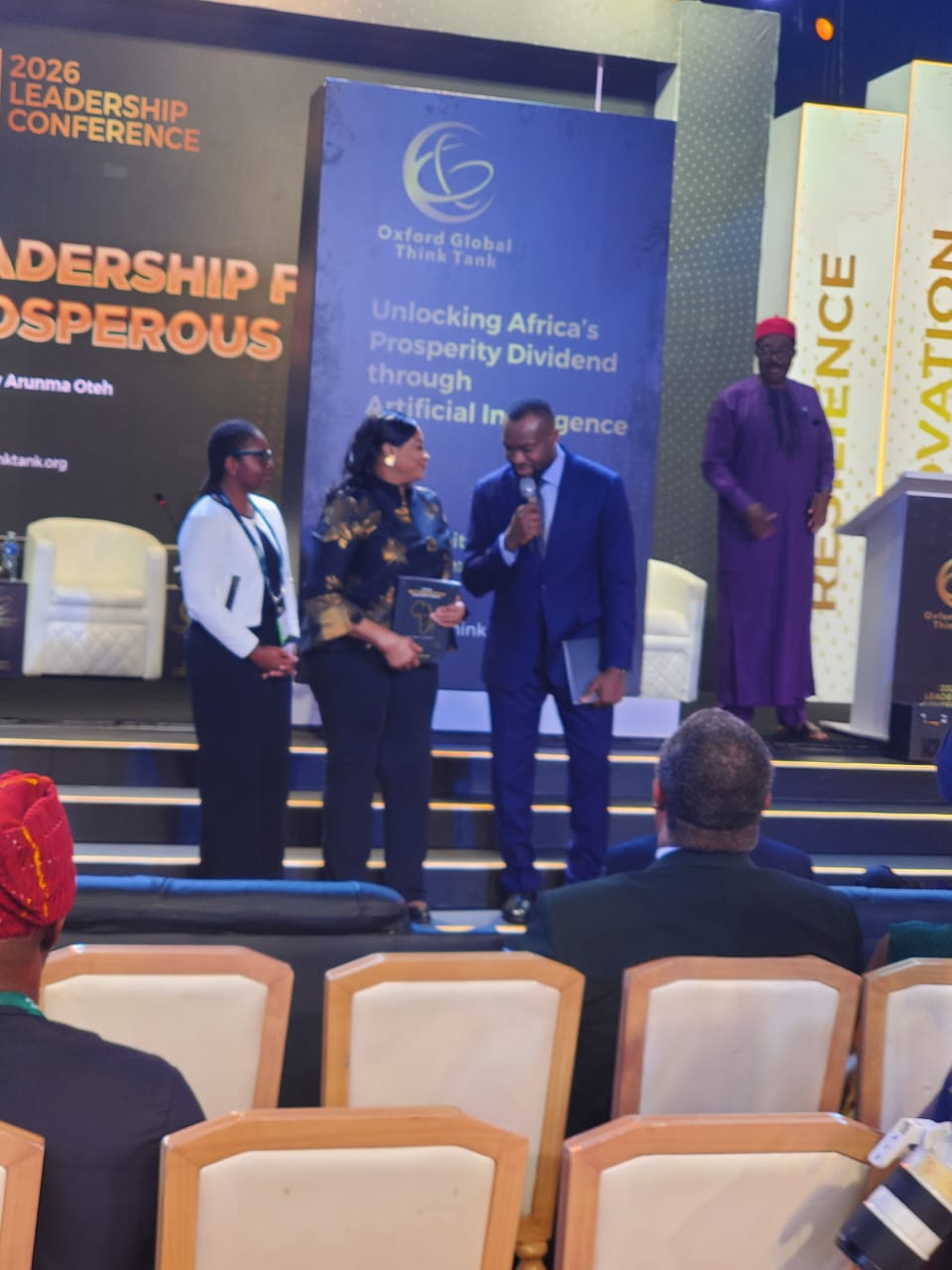
They spoke on Tuesday at the Oxford Global Think Tank Leadership Conference, with theme: “Leadership for a Prosperous Future,” where they examined Nigeria’s economic challenges, the need for stronger institutions, investment mobilisation, technological innovation and the development of its human capital.
The Emir of Kano, Muhammadu Sanusi II, cautioned that improvements in headline economic indicators should not be mistaken for improved welfare, insisting that the ultimate test of economic policy must be its impact on households.
Sanusi acknowledged that some macroeconomic indicators had improved and that the economy was recording growth of about 4.5 per cent. However, he argued that aggregate GDP figures did not adequately reflect the economic realities facing ordinary Nigerians.
He said the decline in GDP per capita since 2023, influenced by economic growth and currency depreciation, raised questions about whether the benefits of reform were reaching the wider population.
According to him, economic performance should be assessed not only through GDP growth, foreign reserves and other macroeconomic indicators, but also through improvements in education, healthcare, nutrition, employment, household incomes and poverty reduction.
The former Central Bank of Nigeria governor also cautioned against excessive reliance on portfolio inflows, which he said could be volatile and influenced by high interest rates and attractive short-term returns.
He stressed that sustainable economic progress required structural reforms that went beyond the removal of subsidies and changes to foreign exchange policy.
Sanusi called for investment in infrastructure, stronger accountability, transparency, reliable economic data and policies capable of expanding productive opportunities across the country.
He also warned that perceived regional imbalances in appointments, particularly in sensitive areas of national security, could undermine national cohesion, urging the government to pay greater attention to fairness and inclusion.
While acknowledging that the country’s economic situation was not entirely bleak, he maintained that reforms would have limited meaning if citizens continued to experience worsening living conditions.
Similarly, businessman and former Chairman of Stanbic IBTC Holdings, Atedo Peterside, said Nigeria should not be satisfied with economic growth of about four per cent when the country needed to grow at 10 per cent to create sufficient jobs, expand businesses and improve living standards.
Peterside identified weak investment as one of the major constraints to Nigeria’s economic expansion, arguing that the country could not achieve the required growth without a significant increase in investment as a proportion of GDP.
He blamed political patronage, corruption, regulatory harassment and the absence of a level playing field for discouraging investors and weakening the private sector.
According to him, businesses, particularly small and medium-scale enterprises, are often subjected to arbitrary demands and harassment by government regulators, making it difficult for them to operate, expand and create jobs.
He warned that public procurement had become a major avenue for the diversion of public resources, with inflated contract costs undermining the value of government expenditure.
Peterside described the abuse of procurement processes as a form of legalised theft, arguing that money meant for infrastructure and public services was being lost through inflated contracts and corrupt practices.
He said Nigeria needed to confront corruption and state capture if it hoped to attract the scale of domestic and foreign investment required to transform the economy.
The businessman also called for economic reforms to be implemented fairly, warning that citizens should not be made to bear the entire burden of adjustment while those benefiting from political connections and public resources remained insulated from its consequences.
He urged the government to strengthen institutions, protect businesses from arbitrary interference and ensure that public appointments and the allocation of national resources were guided by merit and national interest.
Former President of the African Development Bank, Dr Akinwumi Adesina, focused on the continent’s demographic advantage, arguing that Africa’s growing young population should be treated as an economic asset rather than a burden.
Adesina said population growth alone could not guarantee prosperity, stressing that the real advantage lay in building the capabilities of young people and connecting them to productive opportunities.
He noted that Africa’s population was projected to account for about a quarter of the world’s population by 2050, with young people making up a substantial proportion of the continent’s population.
He said the demographic trend presented an enormous opportunity, but warned that it could become a source of economic and social pressure if governments failed to invest adequately in education, healthcare, nutrition, technical skills and access to finance.
According to him, young Africans must be equipped not only to seek employment but also to create businesses, develop technologies and provide solutions to the continent’s challenges.
Adesina emphasised the need to expand digital and artificial intelligence capabilities, insisting that Africa should not remain merely a consumer of technologies developed elsewhere.
He called for stronger investment in human capital, affordable financing and infrastructure that would enable young people to turn their ideas into viable enterprises and productive ventures.
Minister of Communications, Innovation and Digital Economy, Dr Bosun Tijani, said Nigeria’s ability to convert knowledge and technology into productive economic activity would determine its future prosperity.
Tijani argued that natural resources alone could not guarantee national wealth, explaining that prosperity depended on how effectively a country applied knowledge, technology and technical expertise to the resources available to it.
Using the parable of the talents, he said countries that developed the capacity to improve and multiply the value of their resources would achieve greater prosperity than those that merely possessed them.
He cited the liberalisation of Nigeria’s telecommunications sector and the introduction of GSM services in 2001 as an example of how deliberate government policy, private investment and competition could transform an industry and create wider economic opportunities.
According to him, artificial intelligence represents another major productivity frontier, but Nigeria must first develop the capacity to absorb emerging technologies and apply them to its own economic needs.
He identified connectivity, computing and data infrastructure, skills and research, innovation capacity, and effective policies and institutions as the foundations required to build that capacity.
The minister disclosed that the Federal Government was pursuing an approximately 90,000-kilometre open-access fibre-optic network, backed by an estimated $2bn investment, to expand broadband connectivity across the country.
He also highlighted plans to strengthen shared computing infrastructure and develop a Nigerian large language model capable of supporting local languages, including Yoruba, Hausa and Igbo, as well as Nigerian-accented English.
Tijani said the government’s 3 Million Technical Talent programme was designed to build a pool of skilled Nigerians capable of participating in the global digital economy, while the National Artificial Intelligence Strategy would provide a framework for the responsible adoption and development of AI.
He also referred to the establishment of an AI community of practice, with initial support of $150,000, to encourage collaboration and practical application of the technology.
To illustrate the economic consequences of failing to adopt technology, Tijani compared agricultural productivity in Nigeria with that of countries such as Brazil and Argentina.
He said Nigerian maize yields were generally between 1.5 and 2.5 tonnes per hectare, compared with yields of about 10 tonnes per hectare in the South American countries, attributing part of the difference to the application of precision technologies and improved farming practices.
He urged businesses to take advantage of the digital infrastructure and other foundations being developed by government, stressing that the private sector must translate those investments into products, services, jobs and economic value.
Convener of the Oxford Global Think Tank Leadership Conference, Arunma Oteh, called for an ecosystem approach to economic development, arguing that sustainable growth required governments, businesses, investors, financial institutions and citizens to work together.
Oteh, a former Director-General of the Securities and Exchange Commission, said domestic capital markets had an important role to play in mobilising the resources needed to finance development and expand economic opportunities.
She emphasised the importance of increasing retail participation in capital markets, noting that broader participation would allow more Nigerians to invest in productive enterprises and share in the country’s economic growth.
She also highlighted the potential of pension funds to support long-term investment and democratise wealth creation, provided appropriate safeguards and investment frameworks were in place.
Oteh said Africa’s youthful population made investment in education, skills and employment particularly urgent, noting that about 70 per cent of the continent’s population was under the age of 30.
She argued that development efforts should not be excessively centralised, stressing that decentralisation could improve service delivery and allow communities to respond more effectively to local needs.
Using electricity supply in Aba, Abia State, as an example, she pointed to the possibilities offered by decentralised approaches to managing infrastructure and delivering essential services.
Oteh also stressed the importance of creating an enabling environment for businesses through reliable infrastructure, access to finance, regulatory certainty and a skilled workforce.
She cited the reported broad international participation in the Dangote Refinery’s proposed public offering as an indication of the potential of capital markets to attract investors beyond Nigeria’s borders.
The interventions converged on a central message: Nigeria’s economic challenge is not simply to record higher growth figures, but to build an economy in which investment, technology, human capital and accountable institutions combine to generate jobs, raise productivity and improve the welfare of citizens.
The speakers maintained that achieving such an outcome would require more than isolated policy announcements. It would depend on sustained reforms, a stronger private sector, effective public institutions and deliberate investment in the capabilities of Nigerians.
Sanusi, Peterside, Adesina, Tijani, Oteh: Nigeria Must Move Beyond 4% Growth to Tackle Poverty

FG Raises Alarm Over Gambian Directive to Replace 57 Nigerian Bank Workers

Leading Chinese Modernization Steadily Forward Through the Party’s Self-Revolution

Sanusi, Peterside, Adesina, Tijani, Oteh: Nigeria Must Move Beyond 4% Growth to Tackle Poverty

Roger Federer’s Shock as DNA Results Reveal Myla and Charlene Are Not His Biological Children

THE PLIGHT OF FARIDA

FAILED COUP IN BURKINA FASO: HOW TRAORÉ NARROWLY ESCAPED ASSASSINATION PLOT AMID FOREIGN INTERFERENCE CLAIMS
-
 News3 years ago
Roger Federer’s Shock as DNA Results Reveal Myla and Charlene Are Not His Biological Children
-
Opinions5 years ago
THE PLIGHT OF FARIDA
-
 News2 years ago
FAILED COUP IN BURKINA FASO: HOW TRAORÉ NARROWLY ESCAPED ASSASSINATION PLOT AMID FOREIGN INTERFERENCE CLAIMS
-
 Opinions5 years ago
POLICE CHARGE ROOMS, A MINTING PRESS
-

 News3 years ago
EYN: Rev. Billi, Distortion of History, and The Living Tamarind Tree
-

 ACADEMICS3 years ago
A History of Biu” (2015) and The Lingering Bura-Pabir Question (1)
-

 Columns3 years ago
Army University Biu: There is certain interest, but certainly not from Borno.
-

 Politics1 year ago
2027: Why Hon. Midala Balami Must Go, as Youths in Hawul and Asikira/Uba Federal Constituency Reject ₦500,000 as Sallah Gift
