
News
Eradication of Torture, Needs Collaboration of All Stakeholders, Says Beatrice Jedy-Agba

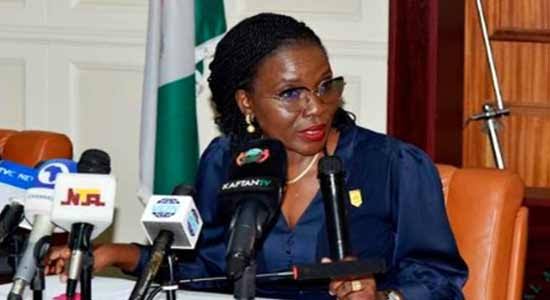
Eradication of Torture, Needs Collaboration of All Stakeholders, Says Beatrice Jedy-Agba
By: Michael Mike
A call has gone for collaboration of all stakeholders, including citizens and all Civil Society Organisations (CSOs) to eradicate torture in the country.
Speaking at the 2025 Commemoration of the International Day Against Victims of Torture, organised by the Ministry of Justice in ccollaboration with the National Human Rights Commission (NHRC), on Thursday in Abuja, the Solicitor General of the Federation and Permanent Secretary, Ministry of Justice, Mrs. Beatrice Jedy-Agba while appreciating all stakeholders for efforts at eradicating torture in the country, said more collaborations is needed to put a stop to the scourge.
She said: “The eradication of torture in Nigeria requires sincere collaborative efforts of all stakeholders, particularly citizens and Civil Society Organisations (CSOs), who play key roles in highlighting incidences of torture and advocating necessary measures to prevent and penalize such incidences.”
She added that: “As you may be aware, the Federal Ministry of Justice has over the years focused on prevention of torture through creating awareness and sensitization of law enforcement organisations, and initiating reform of our legal and regulatory frameworks on torture prevention and penalization.
“In this regard, the Ministry, through the Committee against Torture (CATN) has concluded work on the establishment of the Implementing Regulations for the Anti-Torture Act, 2017. The Regulations make provisions for specific matters that hitherto hindered the implementation of the Anti-Torture Act, such as procedures for the institution of criminal proceedings for offenders, right to medical examination, rehabilitation of victims of torture, among others.
“The Anti-Torture Regulations are currently in the process of being gazetted which will enable it come into force, in line with the requirements of the law.”
She stated that: “In addition, the Ministry, in line with the recommendations of the United Nations Committee Against Torture (CAT), has also begun reviewing the Anti-Torture Act, to address inherent gaps for effectiveness. Other preventive measures we have taken include conducting visits to places of detention and making recommendations to relevant authorities for improvement in the management of detainees, particularly in Nigeria’s correctional facilities. We have also established our National Preventive Mechanism under the National Human Rights Commission, in line with international obligations under the Optional Protocol to the Convention against Torture (OPCAT).
“However, we cannot accomplish our objectives without your support. We are open to strategic partnerships and collaboration with development partners and experts on improving efficacy of our reforms and driving initiatives that improve the torture situation in Nigeria.”
She noted that: “Torture is an abhorrent act and must be shunned by all. While we continue to record successes in the reforms and measures taken to prevent torture, these measures must necessarily translate to a reduction in the incidence of torture in Nigeria. Accordingly, the Ministry is poised to go beyond prevention, and to advocate institutional reforms to address and punish offenders, as a means of deterrence to the commission of this crime. We cannot continue to pay lip service to the commission of this crime, if we want to see change. It is for this reason that I wish to use this opportunity to encourage stakeholders, CSOs and development partners to support our efforts, to enable us achieve our desired objectives.”
She noted that: “The crime of torture is one that affects us all as a society, and requires collaborative efforts to not only disabuse public officials from its use, but to discourage the practice which appears to have become an abhorrent culture in our places of detention.”
She insisted that: “Every human deserves to be treated with dignity and respect. The use of torture is a criminal offence and prohibited in all circumstances. All stakeholders, both in the public and private sectors must speak with one voice against the perpetrators of torture, and for all who suffer at their hands, in order to build a better, more humane society for all people everywhere.”
On his part, theInspector General of Police (IGP), Olukayode Egbetokun said the police as an organisation dedicated to upholding human rights and the rule of law, recognises the profound physical and psychological trauma inflicted upon victims of torture.
Egbetokun, who was represented by Deputy Commissioner of Police, Legal, DCP Daniel Haliba, said: “We acknowledge the resilience and courage of survivors who, despite their suffering, continue to advocate for justice, accountability and healing.
“We reaffirm our commitment to preventing torture by advocating for policies and practices that uphold human dignity and prevent torture in all its forms.”
He added that: “We call upon government institutions and individuals to join us in this critical effort. Together, we can strengthen legal frameworks to prevent torture and ensure accountability, provide comprehensive psychological and legal assistance.”
“Let us work together to create a future where human rights are respected and all individuals can live with dignity.”
Executive Secretary. National Human Rights Commission (NHRC), Dr. Tony Ojukwu, in his remarks said the NHRC is willing to to work with the Ministry of Justice and other stakeholders to eradicate torture.
Ojukwu, speaking through his Special Adviser and Director Monitoring Department, Benedict Agu, said: “We are committed to working closely with the Ministry of Justice, the National Committee Against Torture, and all other relevant actors to ensure that Nigeria lives up to its constitutional and international human rights commitments always.”
Speaking earlier he said, “We commend the Federal Government of Nigeria for the progressive steps it has taken to align with its international obligations under the United Nations Convention Against Torture (UNCAT) through the enactment of the Violence Against Persons (Prohibition) (VAPP) Act 20215, the Anti-Torture Act 2017 and the establishment of the National Committee Against Torture, which brings together government agencies, civil society organizations, and academia, are important strides towards a coordinated and comprehensive approach to eliminating torture in our country.
He noted that: “There is also the establishment of the National Preventive Mechanism (NPM) “ stressing that: “However, it is worthy of note that the Fundamental law in Nigeria, the 1999 Constitution, under section 34 provides for the right to the dignity of the human person.”
He said: “Nonetheless, much work remains. Preventing torture is not only a legal obligation it is a moral imperative. It requires consistent political will, strengthened oversight mechanisms, proper training of security and Law Enforcement Agencies, and the empowerment of victims through legal, social, humanitarian and medical services.
“At the National Human Rights Commission, we remain committed to our mandate to promote, protect, and enforce the human rights of everyone, including all who have suffered grievous human rights violations/abuses with regards to torture.”
Kabiru Elayo of the National Preventive Mechanism (NPM), in his goodwill message acknowledged the importance of collaboration to succeed in eradicating torture.
He said: “We acknowledge that torture is not only a violation of fundamental human rights, but a direct attack on human dignity, the rule of law, and public trust in justice institutions.
“The NPM stands as a safeguard to ensure that no person, regardless of their statu iis subjected to abuse or neglect while in detention or under any form of custodial authority.”
Eradication of Torture, Needs Collaboration of All Stakeholders, Says Beatrice Jedy-Agba


Military
COAS commissions 6 Division RSM House, reaffirms frontline leadership role of regimental sergeant majors
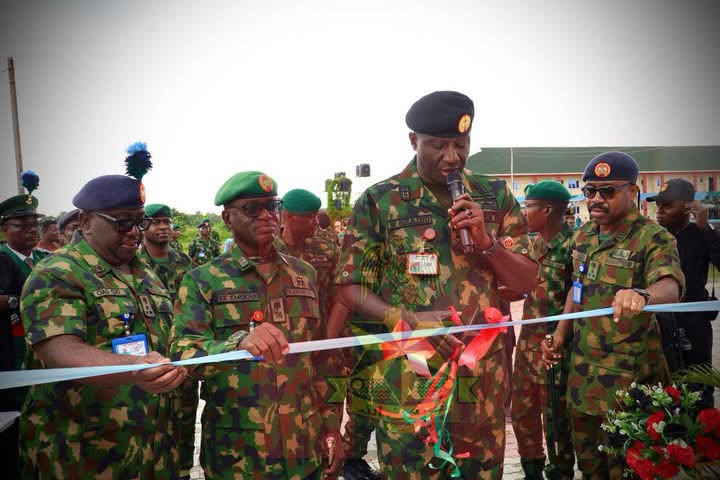
COAS commissions 6 Division RSM House, reaffirms frontline leadership role of regimental sergeant majors
By Zagazola Makama
The Chief of Army Staff (COAS), Lieutenant General Waidi Shaibu, has reaffirmed the critical role of Regimental Sergeant Majors (RSMs) in strengthening discipline, leadership and operational effectiveness across the Nigerian Army.
The COAS made the remarks on Friday during the commissioning of the newly constructed 6 Division Regimental Sergeant Major’s House in Port Harcourt as part of activities marking the 163rd Nigerian Army Day Celebration (NADCEL 2026).
Speaking at the event, Lt.-Gen. Shaibu described RSMs as the backbone of regimental administration and custodians of discipline, standards and morale within the Army.

He said the provision of dedicated accommodation for RSMs was not merely a welfare initiative but a strategic investment aimed at enhancing leadership at the unit level and improving operational efficiency.
According to the Army Chief, RSMs play a vital role in translating command directives into action, maintaining troop cohesion and ensuring effective implementation of operational orders across various theatres of operation.
He added that the senior non-commissioned officers also serve as the crucial link between officers and soldiers, fostering professionalism, mutual trust and esprit de corps within formations and units.

Shaibu noted that the influence of RSMs in mentoring soldiers, enforcing discipline and sustaining troop morale remains indispensable to the success of military operations.
He stressed that providing conducive accommodation for key regimental leaders would enhance their ability to discharge their responsibilities effectively and contribute to improved operational readiness.
The COAS reiterated that under his “Soldier First” philosophy, the welfare of personnel, particularly those occupying critical leadership positions, remains a top priority.
He maintained that sustained investment in welfare infrastructure and leadership development would continue to strengthen the Nigerian Army’s capacity to remain a resilient, professional and combat-ready force capable of addressing the country’s evolving security challenges.
COAS commissions 6 Division RSM House, reaffirms frontline leadership role of regimental sergeant majors

Troops intercept cattle grazing in restricted area in Plateau, herders flee
By: Zagazola Makama
Troops of Operation Enduring Peace (OPEP) have intercepted a herd of cattle found grazing in a restricted area in Barkin Ladi Local Government Area of Plateau State.
Intelligence sources told Zagazola Makama that the troops of Sector 4 OPEP responded to a report of illegal grazing at about 3:30 p.m. on Friday in Nyerwie village.
The sources said that upon arrival at the location, the troops found a herd of cattle grazing in the restricted area.
The herders reportedly fled into nearby bushes on sighting the troops, abandoning the livestock.
The intercepted cattle were subsequently moved to a secure location for necessary administrative action, while efforts are ongoing to identify and apprehend the fleeing herders, the sources said.
Troops intercept cattle grazing in restricted area in Plateau, herders flee
Troops Arrest Two Suspected Vandals, Recover Stolen Construction Materials in Jos
By: Zagazola Makama
Troops of Operation Enduring Peace (OPEP) have arrested two suspected vandals in Jos North Local Government Area of Plateau State for allegedly stealing construction materials from an ongoing road construction site.
Security sources said the suspects, identified as Arin Itse, 21, and Agwom Christopher, 19, were arrested at about 9:30 a.m. on Friday during a routine patrol by troops of Sector 1, Sub-Sector 12, along the Kwanga road in Jos North.
The sources said the suspects were intercepted while in possession of iron rods suspected to have been stolen from a road construction company handling an ongoing project in the area.
According to the sources, the suspects were taken into custody for further investigation, while the recovered iron rods were handed over to the construction company.
The sources added that investigations were ongoing to determine the circumstances surrounding the alleged theft and whether other persons were involved.
Troops Arrest Two Suspected Vandals, Recover Stolen Construction Materials in Jos

COAS commissions 6 Division RSM House, reaffirms frontline leadership role of regimental sergeant majors

Troops intercept cattle grazing in restricted area in Plateau, herders flee

Troops Arrest Two Suspected Vandals, Recover Stolen Construction Materials in Jos

Roger Federer’s Shock as DNA Results Reveal Myla and Charlene Are Not His Biological Children

THE PLIGHT OF FARIDA

FAILED COUP IN BURKINA FASO: HOW TRAORÉ NARROWLY ESCAPED ASSASSINATION PLOT AMID FOREIGN INTERFERENCE CLAIMS
-
 News2 years ago
Roger Federer’s Shock as DNA Results Reveal Myla and Charlene Are Not His Biological Children
-
Opinions4 years ago
THE PLIGHT OF FARIDA
-
 News1 year ago
FAILED COUP IN BURKINA FASO: HOW TRAORÉ NARROWLY ESCAPED ASSASSINATION PLOT AMID FOREIGN INTERFERENCE CLAIMS
-

 News2 years ago
EYN: Rev. Billi, Distortion of History, and The Living Tamarind Tree
-
 Opinions5 years ago
POLICE CHARGE ROOMS, A MINTING PRESS
-

 ACADEMICS2 years ago
A History of Biu” (2015) and The Lingering Bura-Pabir Question (1)
-

 Columns2 years ago
Army University Biu: There is certain interest, but certainly not from Borno.
-

 Politics1 year ago
2027: Why Hon. Midala Balami Must Go, as Youths in Hawul and Asikira/Uba Federal Constituency Reject ₦500,000 as Sallah Gift
