
National News
FG May Modify Policy On Charcoal Export


FG May Modify Policy On Charcoal Export
By: Michael Mike
The federal government has expressed its readiness to modify the present policy on export of processed wood and charcoal.
It said should the desired results not be achieved concerning export of processed wood and charcoal, then there would be no hesitation in reversing the embargo on the two.
Speaking at the consultative workshop on the Implementation of Policy Guideline on Export of Processed Wood and Charcoal and the Nigeria Timber Legality standards in Abuja, Permanent Secretary, Ministry of Environment, Mr Ibrahim Yusufu said the government will continue to play its part by providing the enabling policy and guidance as well as oversight to ensure achievement of the desired results.
He said: “You will agree with me that the recent conditional lifting of embargo on processed wood and charcoal export, will not yield the desired results without setting in motion the necessary machinery such as this workshop designed to provide the impetus for process and procedure refining for sustainable utilisation and management of forest resources. We are all aware that the embargo was lifted conditionally.”
He noted that the workshop is aimed at discussing strategies for sustainable utilisation and management of the nation’s forest resources for investors, individuals, companies, exporters in the processed wood and charcoal business.
“As you are aware, series of events have taken place in recent times in the build-up to the take-off of the new policy on processed wood and charcoal export, the workshop is yet another step towards achieving responsible trade in the forest industry without compromising the integrity of the forests and in fulfillment of our commitment to national development agenda as well as Global Goals.”
He urged all the participants to take advantage of the workshop in understanding what the Timber Legality Standards are all about and be familiar with the roles and responsibilities, while stressing government efforts to ensure that processed wood and charcoal export activities do not impact negatively on the forests but rather contribute to job creation and national economic development.
He said: “At this juncture, I will like to urge as many of the Exporter Groups that are yet to establish their plantations to as a matter of urgency, do so and identify with us on this noble cause as the Ministry will not consider applications of Exporter Groups without verifiable evidence of owning forest plantations.
“Already, a number of applications have been received and are undergoing processing. Inspection visits have been made to some facilities and plantations of some applicants while Letters of Support will be issued only to the companies that meet the stipulated requirements.”
The Permanent Secretary, also added that the government would not relent in the ongoing efforts at increasing the nation’s forest cover and contributing to global emission reduction and climate change mitigation.
The Director of Forestry, Ministry of Environment, Mrs. Hajara Umar Sani, said that it is necessary that stakeholders meet to discuss implementation strategies of the Policy Guidelines on Processed Wood and Charcoal and domestication of the Nigeria Timber Legality Standards for efficient utilization and effective forest management before the commencement of export of these products.
She added that the workshop will ensure the sustainability of the wood, charcoal, and other allied products business in Nigeria.
She explained that: “This workshop would have come earlier but it is the responsibility of the Federal Ministry of Environment to ensure that processes that will guarantee the protection of our dwindling forest resources are followed. The primary reason was making sure all the measures that will aid SFM are in place in addition to making sure these are communicated to key stakeholders for smooth take-off of operation.”
It is appropriate to emphasize that all critical stakeholders in the wood, charcoal, and other allied products business endeavor to have a full understanding of the modus operandi of the export in the forestry sector because it is no longer business as usual, this is a new paradigm where actions taken in ignorance by anybody will not be condoned.
FG May Modify Policy On Charcoal Export


FG Readies 10,000 E-Vehicles for Northeast, Targets 100,000 Jobs
…Maiduguri plant set for Tinubu’s inauguration as NEDC links green transport to rural economy
By: Michael Mike
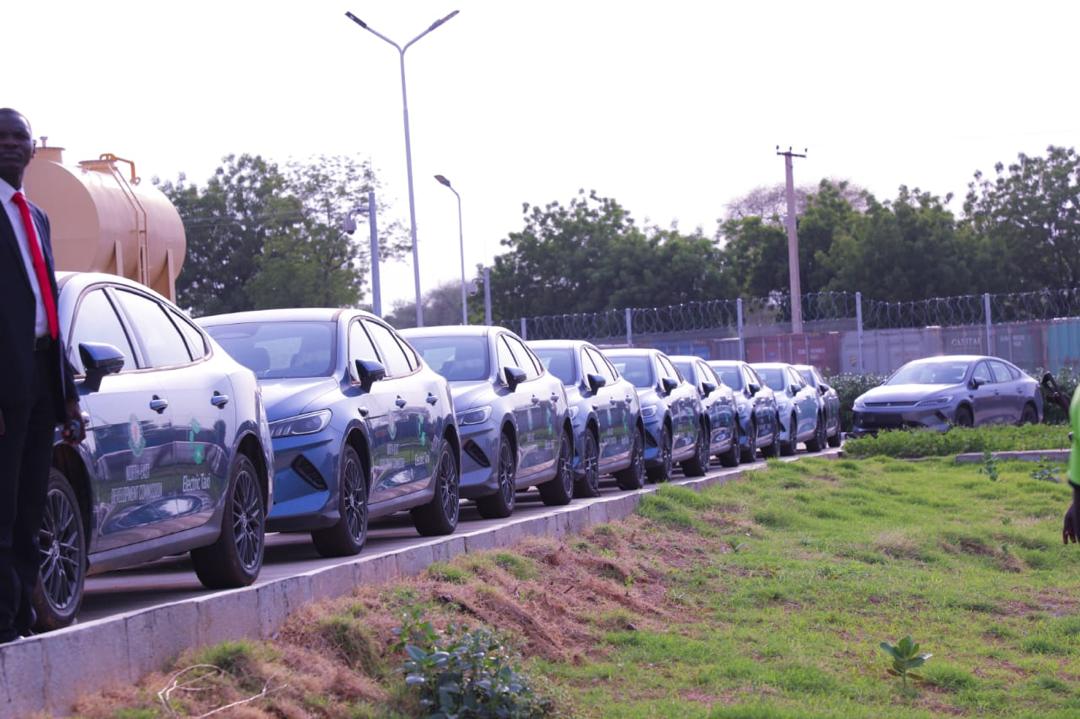
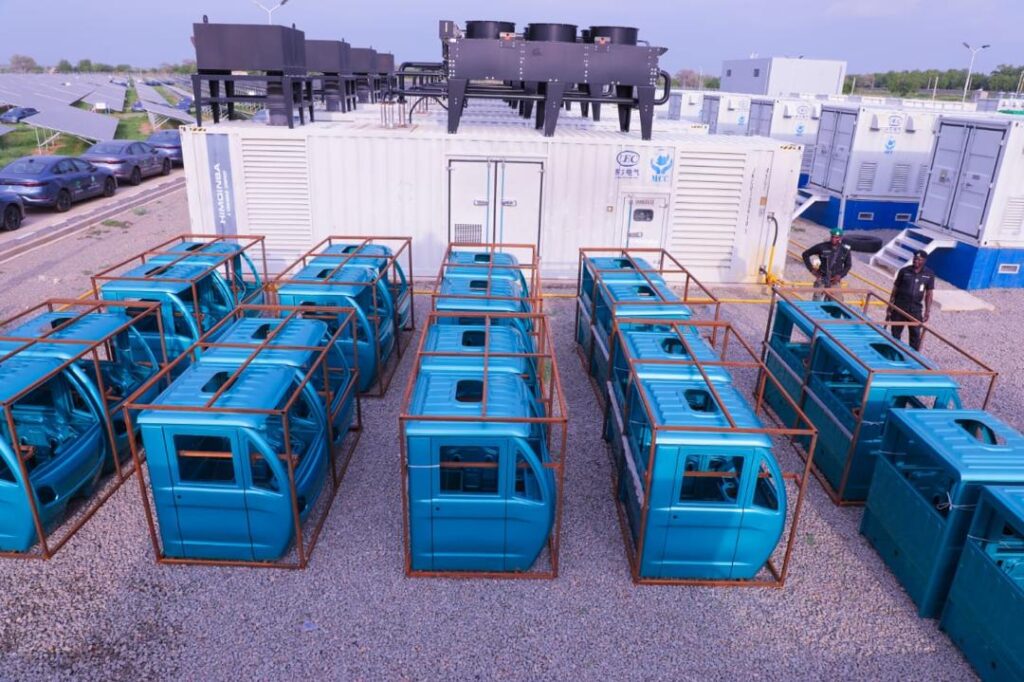
The Federal Government is set to launch a major electric mobility programme in the North-East, with an assembly plant in Maiduguri, Borno State, preparing to roll out 10,000 electric vehicles and tricycles in an initiative projected to generate employment for up to 100,000 people during the assembly process.
The Minister for Regional Development, Abubakar Momoh, disclosed this yesterday after inspecting the electric vehicle assembly facility being managed by the North-East Development Commission (NEDC) ahead of its planned inauguration by President Bola Ahmed Tinubu.
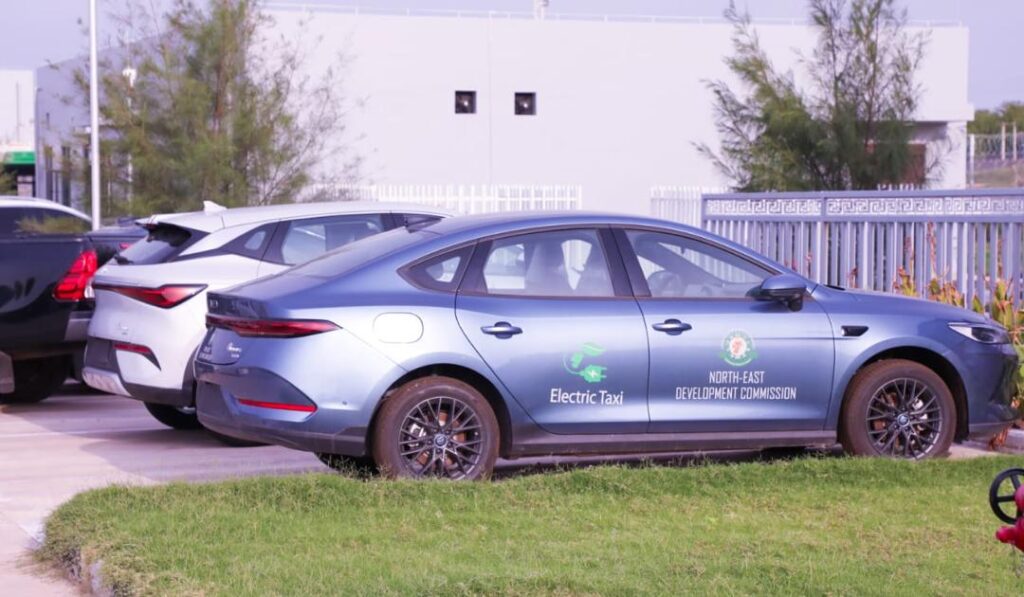
Momoh said the project had moved substantially beyond the planning stage, with nearly all the targeted vehicles already at the facility and assembly operations underway.
He said the fleet, comprising electric buses, taxis and tricycles, would be deployed across the six states of the North-East, with charging infrastructure incorporated into the programme.
The minister described the project as a significant demonstration of the administration’s transformation agenda, particularly its efforts to combine infrastructure development, youth employment, cleaner transportation and economic recovery in the region.
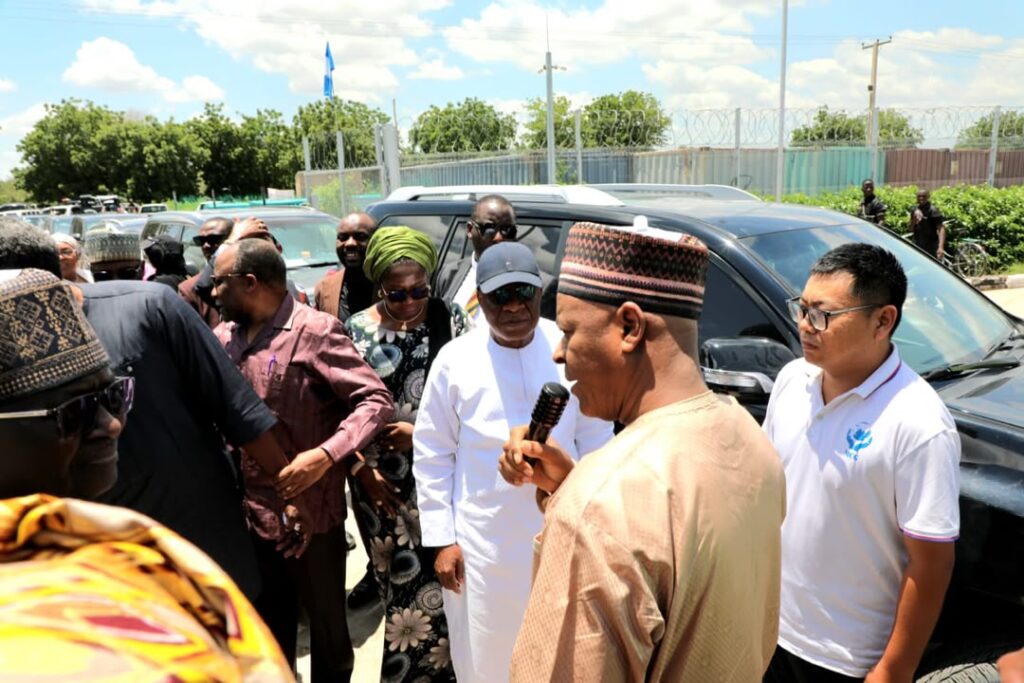
“Apart from the fact that it will help to improve commuting of people, and create more job opportunities for the youths,” Momoh said, adding that the assembly process itself was already generating employment.
One of the most significant aspects of the initiative is its potential employment impact.
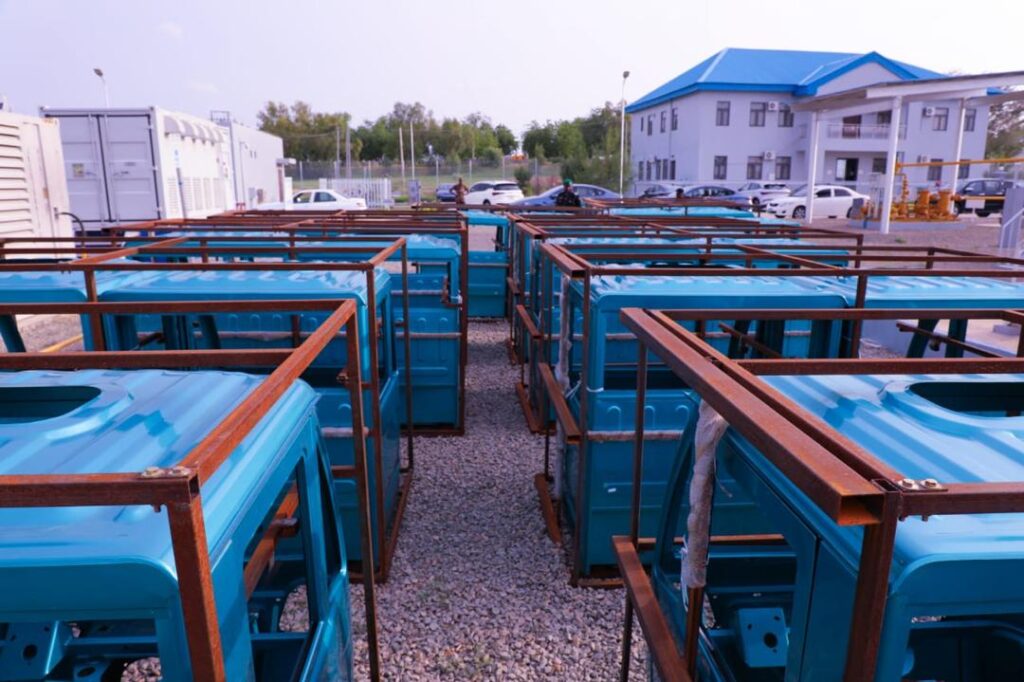
According to the minister, the project’s Director of Operations briefed him that the assembly of the 10,000 vehicles could provide employment for not less than 100,000 people before the target is completed.
The claim places the Maiduguri project at the centre of the Federal Government’s broader effort to make infrastructure spending translate into direct economic opportunities for young Nigerians, rather than merely producing physical assets.
The vehicles are also expected to create jobs beyond the assembly line through transportation operations, servicing, maintenance and supporting infrastructure once deployed across the region.
The project has an additional dimension that could prove particularly important to the North-East’s predominantly agrarian economy.
Momoh said some of the electric tricycles were designed to carry both passengers and agricultural produce, potentially allowing farmers in remote communities to move their commodities to urban markets more efficiently.
He therefore directed attention to the relationship between the e-vehicle programme and ongoing rural road construction.
According to him, the combination of improved roads and appropriate transport could strengthen the connection between rural producers and city markets.
The minister specifically urged the NEDC leadership to ensure that communities along newly rehabilitated road corridors were not excluded from the distribution of the vehicles.
He said rural residents needed the vehicles to evacuate agricultural produce from their communities to urban centres.
The Maiduguri project is not a new policy idea. The NEDC announced plans in 2024 to introduce 10,000 electric vehicles across the North-East as part of an effort to modernise transportation, reduce carbon emissions and respond to climate-change concerns.
The original plan envisaged a mix of nine-seater solar-powered tricycles, four-seater taxis and 40-seater buses, with deployment across Adamawa, Bauchi, Borno, Gombe, Taraba and Yobe states.
The commission had said the programme would be implemented in two phases of 5,000 vehicles each, while charging points would be established across the six states. Plans also included solar-power installations along major routes to support charging infrastructure.
The current inspection indicates that the initiative has now reached the assembly and deployment stage, bringing the long-planned regional mobility scheme closer to implementation.
For the North-East, the project comes against the backdrop of years of infrastructure deficits, disrupted economic activity and major transportation challenges.
The region comprises vast rural areas where poor transport connectivity can raise the cost of moving farm produce and limit access to markets, schools, healthcare and other essential services.
The NEDC was established specifically to coordinate reconstruction, rehabilitation and development interventions in the six North-Eastern states.
The electric mobility programme consequently fits into a wider regional-development strategy rather than being merely a vehicle procurement exercise.
The commission’s plan to link the vehicles with rural roads is particularly significant because better roads without affordable transport can leave rural communities economically isolated, while vehicles without passable roads cannot deliver their full value.
The initiative also places the North-East within Nigeria’s broader transition towards cleaner transportation.
Nigeria has been pursuing electric mobility as part of its energy-transition strategy, with the Federal Government increasingly promoting local assembly, charging infrastructure and technology transfer.
In January 2026, the National Automotive Design and Development Council disclosed that the Federal Government had signed an agreement with South Korea’s Asia Economic Development Committee for an electric vehicle manufacturing project and charging infrastructure. That separate national initiative envisages an eventual production capacity of 300,000 vehicles and about 10,000 jobs, alongside development of battery, component and charging ecosystems.
The broader policy objective is to move Nigeria beyond dependence on imported vehicles and fossil-fuel-powered transportation by developing local manufacturing capacity and the technical workforce required to sustain an electric-vehicle economy.
During his Maiduguri tour, Momoh also inspected rural road projects, including the Ngwom/Kushebe/Gadamari corridor towards Gongulong, and said he had observed substantial improvement.
He linked the road projects directly to the e-vehicle programme, arguing that improved roads would increase the usefulness of the vehicles, particularly for agricultural communities.
The minister also inspected the ongoing construction of the NEDC headquarters in Maiduguri and expressed satisfaction with the pace of work.
He said the project, which was at basement level during his previous visit, had progressed considerably, with the basement completed and another section of the building already under construction. He expressed confidence that the headquarters would be completed within 18 to 24 months.
For the Tinubu administration and the NEDC, the forthcoming inauguration will mark only the beginning of the real test.
The success of the programme will ultimately depend on whether the 10,000 vehicles remain operational after deployment, whether charging infrastructure is reliable, whether spare parts and technical expertise are locally available, and whether rural communities receive a meaningful share of the fleet.
If those challenges are effectively addressed, the Maiduguri project could become more than a transport intervention: it could provide the North-East with a new industrial ecosystem built around electric mobility, youth employment, clean energy, rural commerce and local technical skills.
And with nearly 10,000 vehicles already at the assembly facility, the region’s long-awaited shift towards electric mobility appears to be moving from policy promise to production reality.
FG Readies 10,000 E-Vehicles for Northeast, Targets 100,000 Jobs
National News
China Approves RMB 200m Grant for Nigeria as Envoy Meets Foreign Ministry Permanent Secretary
China Approves RMB 200m Grant for Nigeria as Envoy Meets Foreign Ministry Permanent Secretary
By: Michael Mike
China has announced a RMB 200 million grant to Nigeria to support the implementation of development projects agreed upon by the two governments, in a fresh demonstration of Beijing’s expanding economic partnership with Abuja.
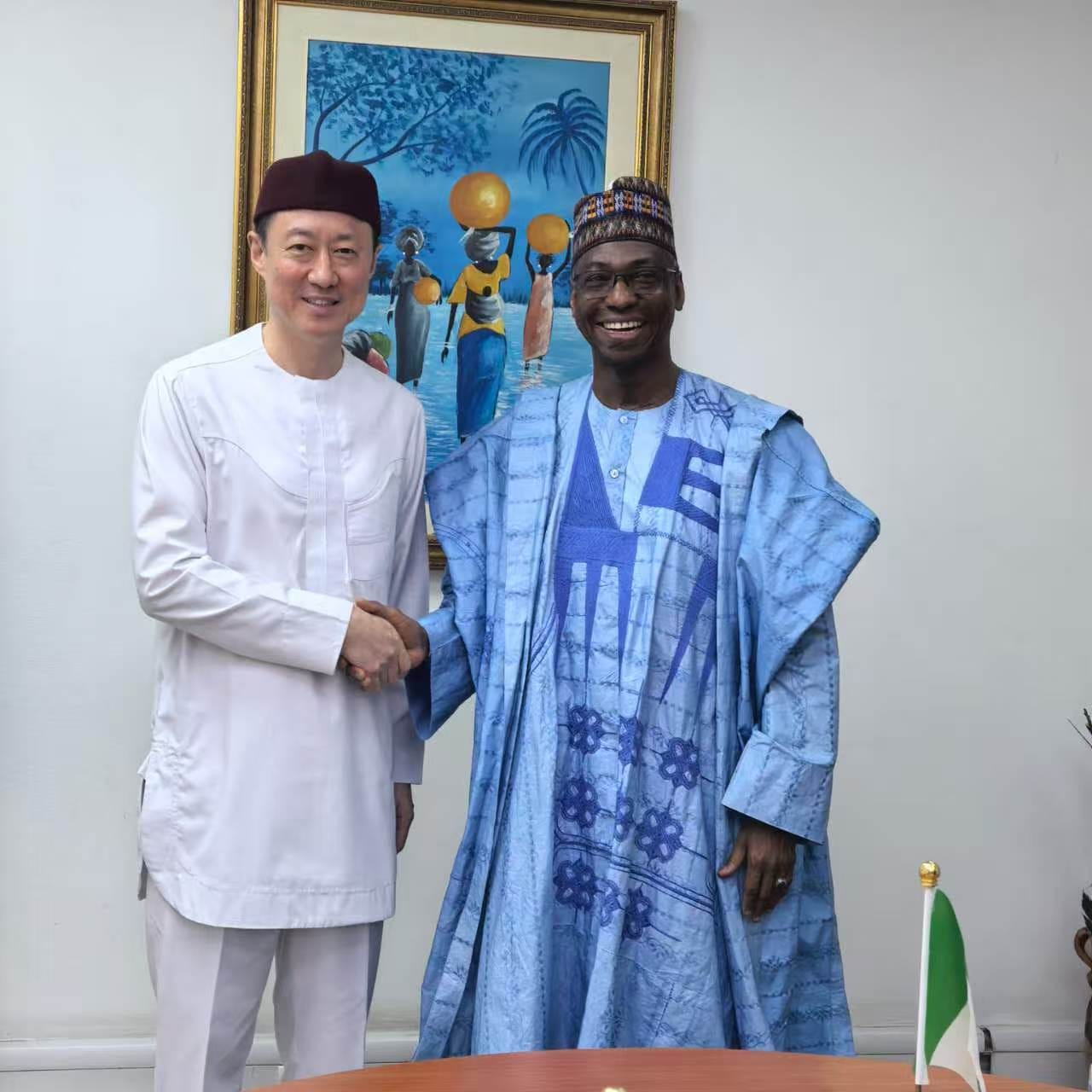
The announcement was made on Thursday by the Chinese Ambassador to Nigeria, H.E. Yu Dunhai, during a meeting with the Permanent Secretary of Nigeria’s Ministry of Foreign Affairs, Dr. Dunoma Umar Ahmed, in Abuja.
Yu said the grant was part of China’s continuing support for Nigeria’s national development and economic growth, stressing that the assistance would be deployed to projects jointly agreed by the two governments.
He said the latest commitment underscored the depth of relations between both countries, which have maintained diplomatic ties for 55 years.
According to the envoy, China-Nigeria relations have remained at the forefront of China-Africa relations and, under the strategic leadership of Chinese President Xi Jinping and Nigerian President Bola Ahmed Tinubu, the bilateral relationship has entered a new phase of high-quality development.
Yu said Beijing and Abuja had maintained close communication and coordination while working to implement agreements reached by their two leaders, as well as the outcomes of the 2024 Forum on China-Africa Cooperation (FOCAC) Beijing Summit.
He added that the objective was to ensure that the benefits of bilateral cooperation translated into tangible improvements in the lives of citizens of both countries.
Responding, the Nigerian Permanent Secretary thanked the Chinese government for what he described as its concrete support for Nigeria’s economic and social development.
Ahmed said the RMB 200 million grant demonstrated China’s commitment as a major global partner and reflected the deep friendship between Nigeria and China.
He assured that Nigeria would ensure the effective utilisation of the grant and work closely with China to implement the bilateral agreements and common understandings reached by both governments.
The Permanent Secretary said such cooperation would further strengthen Nigeria-China relations while delivering greater benefits to the peoples of both countries.
The fresh financial commitment comes as Abuja and Beijing continue to deepen cooperation in infrastructure, trade, investment, development financing and other strategic sectors, with both governments seeking to translate their comprehensive strategic partnership into concrete development outcomes.
China Approves RMB 200m Grant for Nigeria as Envoy Meets Foreign Ministry Permanent Secretary

Tinubu Approves Up to 80% Salary Increase for Armed Forces Personnel
By Zagazola Makama
President Bola Ahmed Tinubu has approved a new salary structure for personnel of the Nigerian Armed Forces, with increases ranging from 30 to 80 per cent, in a major welfare package aimed at boosting the morale of troops engaged in counter-insurgency and other internal security operations.
According to a statement issued on Tuesday by the Special Adviser to the President on Information and Strategy, Bayo Onanuga, about 250,000 military personnel will benefit from the new salary adjustment, which takes effect from Sept. 1, 2026.
Under the approved structure, officers above the rank of colonel—including Brigadier Generals, Major Generals, Lieutenant Generals and Generals—will receive a 30 per cent salary increase.
Personnel from the rank of Colonel down to Warrant Officer will enjoy a 50 per cent increase, while soldiers from the rank of Private to Staff Sergeant will receive the highest adjustment of 80 per cent.
The new package will raise the annual personnel cost of the Armed Forces from ₦660 billion to ₦924 billion, reflecting the Federal Government’s renewed commitment to improving troop welfare.
President Tinubu said the decision was in recognition of the courage and sacrifices of members of the Armed Forces in confronting terrorism, banditry, kidnapping and other security challenges across the country.
“The men and women who help to keep us safe in our homes must be supported and appreciated in the course of their duties to our nation,” the President said.
He reaffirmed his administration’s commitment to prioritising troop welfare while modernising the Armed Forces through the provision of modern weapons, equipment and technological capabilities needed to effectively carry out their constitutional responsibilities.
According to the President, security remains the foundation for national development, stressing that his administration would continue to mobilise military and law enforcement assets to eliminate threats and safeguard the lives and property of Nigerians.
“I urge our servicemen to take our gesture as a sign of our deep appreciation of the services they render to our fatherland. Together we shall prevail over the enemies intent on destroying the fabric of our nation,” Tinubu said.
The salary review is expected to provide a significant boost to the welfare of military personnel serving in various theatres of operation across the country, including those engaged in counter-terrorism, anti-banditry and peace support missions.
Tinubu Approves Up to 80% Salary Increase for Armed Forces Personnel

Security Agencies Conduct Show of Force, Secure Juma’at Prayers in Jos

18-Year-Old Herder Killed in Bassa, Suspected Irigwe Assailants Blamed

S. Targets Nigeria’s Livestock Sector in Fresh Trade Push

Roger Federer’s Shock as DNA Results Reveal Myla and Charlene Are Not His Biological Children

THE PLIGHT OF FARIDA

FAILED COUP IN BURKINA FASO: HOW TRAORÉ NARROWLY ESCAPED ASSASSINATION PLOT AMID FOREIGN INTERFERENCE CLAIMS
-
 News2 years ago
Roger Federer’s Shock as DNA Results Reveal Myla and Charlene Are Not His Biological Children
-
Opinions4 years ago
THE PLIGHT OF FARIDA
-
 News1 year ago
FAILED COUP IN BURKINA FASO: HOW TRAORÉ NARROWLY ESCAPED ASSASSINATION PLOT AMID FOREIGN INTERFERENCE CLAIMS
-

 News2 years ago
EYN: Rev. Billi, Distortion of History, and The Living Tamarind Tree
-
 Opinions5 years ago
POLICE CHARGE ROOMS, A MINTING PRESS
-

 ACADEMICS2 years ago
A History of Biu” (2015) and The Lingering Bura-Pabir Question (1)
-

 Columns2 years ago
Army University Biu: There is certain interest, but certainly not from Borno.
-

 Politics1 year ago
2027: Why Hon. Midala Balami Must Go, as Youths in Hawul and Asikira/Uba Federal Constituency Reject ₦500,000 as Sallah Gift
