
News
FG Moves to Stem Human Trafficking, Irregular Migration as Over 1,000 Nigerians Return from Crisis Routes

FG Moves to Stem Human Trafficking, Irregular Migration as Over 1,000 Nigerians Return from Crisis Routes
By: Michael Mike
The Federal Government on Tuesday unveiled a renewed strategy to curb irregular migration and dismantle human trafficking networks, warning that worsening economic hardship and the growing use of digital platforms by traffickers are exposing more Nigerians, particularly women and young people, to exploitation across Africa, the Middle East and Europe.
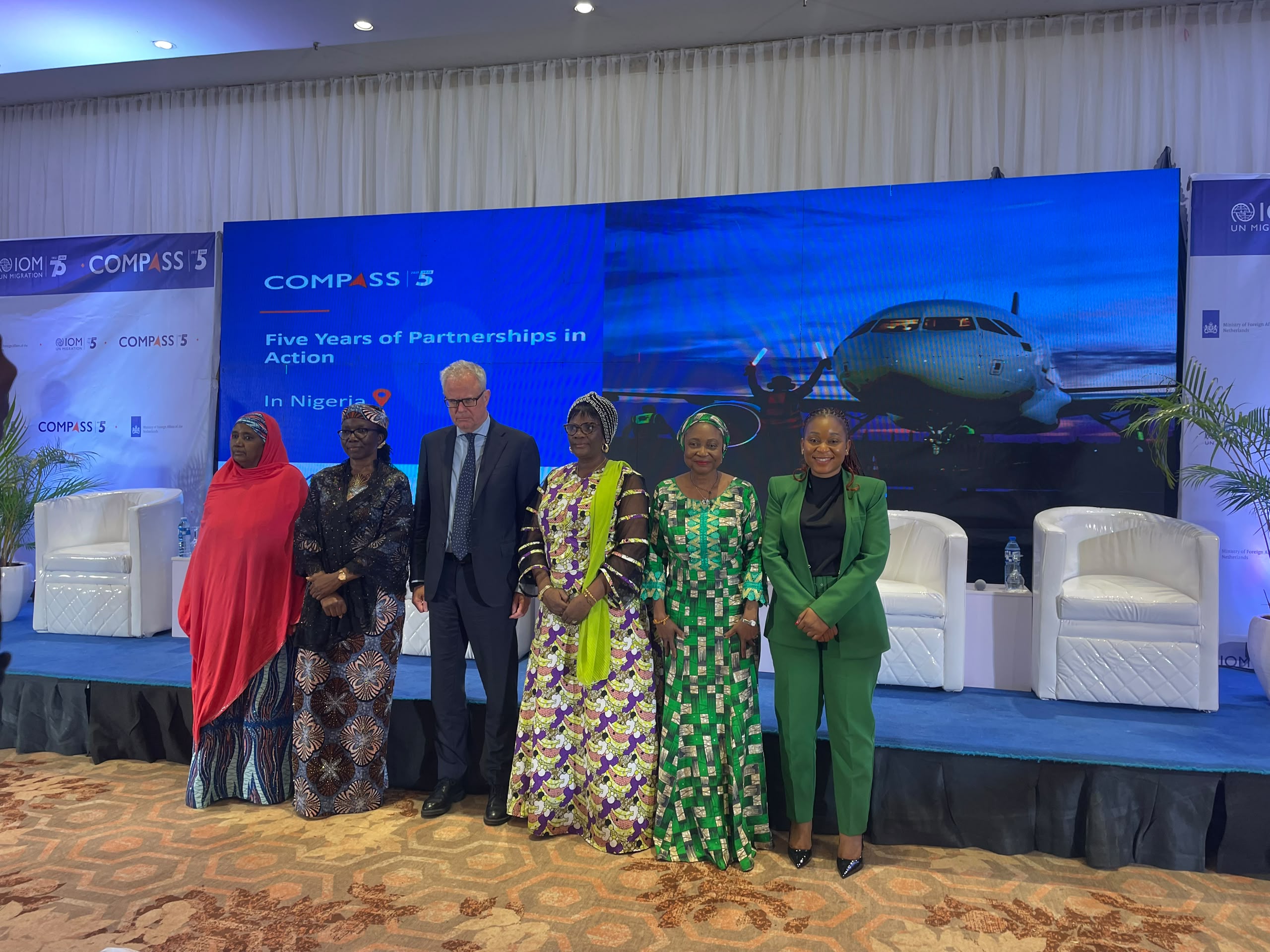
The renewed commitment came as the government and its international partners marked the fifth anniversary of the Comprehensive Protection, Reintegration and Assistance to Migrants and Communities (COMPASS) Programme, revealing that more than 1,000 stranded Nigerians have voluntarily returned from countries including Libya, Lebanon, Morocco, Mali, Egypt, India and the United Arab Emirates, while over 900 vulnerable returnees have received psychosocial care, healthcare and livelihood support to rebuild their lives.
Stakeholders warned that trafficking syndicates are becoming increasingly sophisticated, exploiting technology, poverty and unemployment to lure desperate Nigerians into dangerous migration routes where many end up trapped in forced labour, sexual exploitation and other forms of abuse.
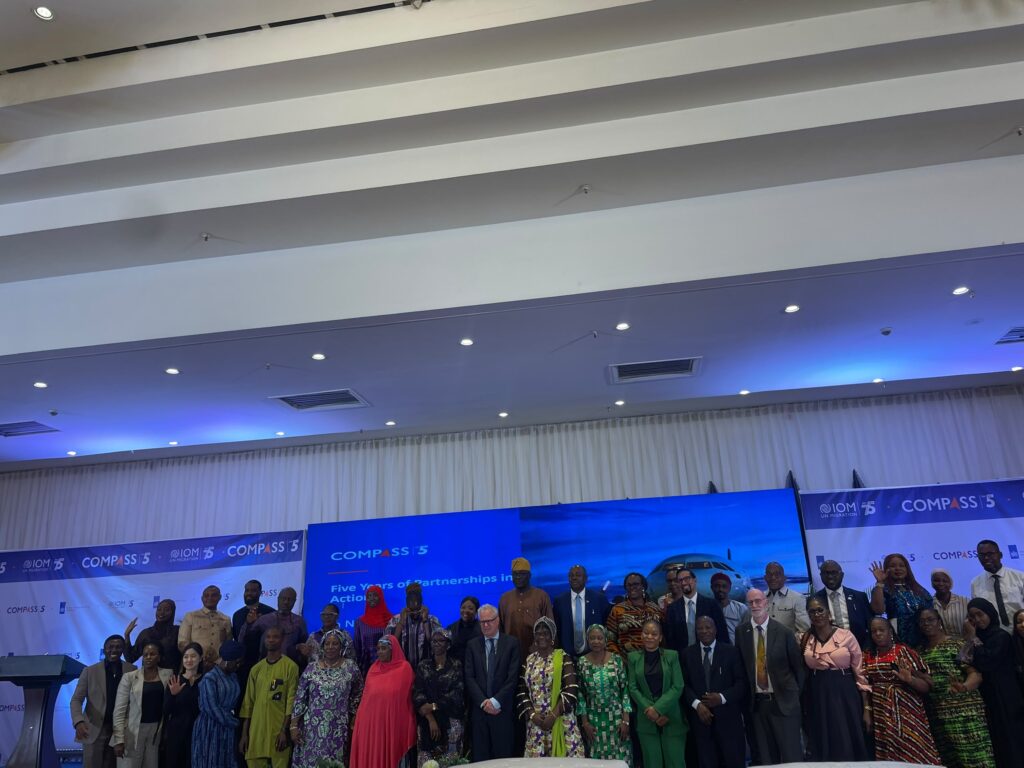
Speaking at the anniversary event, the Chief of Mission of the International Organisation for Migration (IOM) in Nigeria, Sharon Dimanche, said migration itself was not the problem but the absence of safe and legal pathways.
She said: “Migration is not the problem. The challenge is ensuring that migration is safe, orderly and regular, while protecting the dignity of every migrant.”
Dimanche said the COMPASS Programme had significantly strengthened Nigeria’s migration governance architecture by improving policies and institutional coordination while placing the protection of migrants at the centre of migration management.
Highlighting the programme’s impact, she recounted the story of “Joy”, a Nigerian woman trafficked abroad and subjected to severe exploitation before returning home traumatised.
According to her, through IOM’s psychosocial support and reintegration programme, Joy rebuilt her life, established a fashion business and now employs several young women.
“Joy is no longer defined by what happened to her. She is defined by what she has become,” Dimanche said, describing the story as evidence that effective reintegration can transform survivors into productive members of society.
The Minister of Humanitarian Affairs and Poverty Reduction, Dr. Bernard Doro. reaffirmed the Federal Government’s commitment to protecting returning migrants, refugees, internally displaced persons and vulnerable communities.
He said the government’s “One Humanitarian, One Poverty Reduction” framework under President Bola Ahmed Tinubu’s Renewed Hope Agenda was designed to integrate humanitarian assistance with long-term poverty reduction.
“Migration, when properly managed, presents opportunities for national development. We will continue to strengthen institutions, expand livelihood opportunities and ensure that returning migrants are empowered to rebuild their lives with dignity.”
The Minister of Women Affairs and Social Development, Imaan Sulaiman-Ibrahim, who was represented at the event, by the Director and Special Adviser Administration, Mrs. Erimfolami Ola, warned that women and children continue to bear the greatest burden of irregular migration and human trafficking.
According to her representative, the ministry has worked closely with partners under the COMPASS Programme to facilitate the voluntary return of over 1,000 stranded Nigerians while strengthening institutional responses to trafficking and forced displacement.
She stressed that interventions in Edo State had demonstrated that addressing poverty and unemployment significantly reduces the factors driving irregular migration.
Representing the Minister of Youth Development, Ayodele Olawande, represented by the the Head of Youth Migration and Climate Action Resilience, pecial Adviser (Administration), Adedoyin Oyekan, said creating sustainable opportunities for young Nigerians remains one of the most effective responses to irregular migration.
The ministry pledged to deepen collaboration with IOM and development partners in expanding entrepreneurship, skills acquisition, innovation and employment programmes aimed at discouraging dangerous migration.
Also speaking, the Ambassador of the Kingdom of the Netherlands to Nigeria, Bengt van Loosdrecht, announced plans for a football-based youth initiative that would equip young Nigerians with coaching and life skills while educating communities about the dangers of irregular migration.
He said the programme would empower participants to become community ambassadors for safe migration.
According to the ambassador, “Migration is fundamentally a human issue. Through COMPASS, we are investing not only in stronger institutions but also in protecting people, supporting survivors and preventing others from falling into the hands of traffickers.”
Van Loosdrecht explained that the Netherlands established the COMPASS Programme to consolidate migration support into a coordinated framework capable of providing survivor care, mental health services, institutional strengthening and protection for vulnerable migrants.
Also addressing the gathering, the Director-General of the National Agency for the Prohibition of Trafficking in Persons (NAPTIP), Binta Bello, described the COMPASS Programme as one of Nigeria’s most strategic partnerships in the fight against human trafficking.
She said the initiative had strengthened the agency’s capacity to investigate and prosecute trafficking cases through specialised training for investigators and prosecutors while improving support for victims.
Warning that trafficking networks continue to evolve, Bello said: “Traffickers are adapting to technology, exploiting economic hardship and taking advantage of the aspirations of vulnerable young Nigerians. We must therefore strengthen partnerships among government, international organisations, civil society and communities to stay ahead of these criminal networks.”
The renewed commitment comes amid persistent concerns over the thousands of Nigerians who, in recent years, have embarked on perilous journeys across the Sahara Desert and the Mediterranean Sea in search of better economic opportunities. Many have perished, while others have been rescued from detention camps, trafficking rings and exploitative labour conditions abroad.
Stakeholders at the event agreed that while stronger law enforcement remains essential, tackling poverty, unemployment and social vulnerability is critical to addressing the root causes of irregular migration and sustaining Nigeria’s fight against human trafficking.
FG Moves to Stem Human Trafficking, Irregular Migration as Over 1,000 Nigerians Return from Crisis Routes



Sowore Suffers Fourth Court Setback as Judge Rejects Bid to Compel DSS DG to Testify
By: Zagazola Makama
Omoyele Sowore, presidential candidate of the African Action Congress (AAC) in the 2027 general election, on Monday suffered another setback qin his trial over alleged cyberbullying of President Bola Tinubu, as the Federal High Court in Abuja dismissed his application to compel the Director-General of the Department of State Services (DSS), Oluwatosin Ajayi, to appear personally as a defence witness.
Justice Mohammed Garba Umar dismissed the application while ruling on arguments for and against a subpoena issued to the DSS chief at the request of the activist and politician.
The ruling marked the fourth setback for Sowore in the case instituted by the DSS over his alleged description of President Tinubu as a “criminal.”
The court had earlier dismissed his application alleging a violation of his fundamental rights and rejected his preliminary objection to the trial. The Chief Judge had also rejected his request for the trial judge to recuse himself from the proceedings.
At Monday’s sitting, Sowore, through his counsel, Adeyinka Olumide Fusika, SAN, had sought an order compelling Ajayi to testify on official activities of the DSS relating to the cyberbullying case.
However, the DSS, represented by Akinlolu Thomas Kehinde, SAN, opposed the application, arguing that the matters in question concerned official duties of the agency rather than the personal actions of its Director-General.
Kehinde argued that any authorised official of the service with relevant knowledge could testify on its behalf, making the personal appearance of the Director-General unnecessary.
He maintained that the DSS was an institution whose official activities could be explained by a designated representative, rather than requiring its chief executive to appear personally in court.
In his ruling, Justice Umar held that the subpoena related to official acts of the DSS and that the expected testimony was not personal to the Director-General.
The judge consequently ruled that another official of the service could appear in court to give evidence on behalf of the agency.
Following the ruling, Fusika called Michael Jego, an investigating officer with the DSS, as the third defence witness.
Jego was subsequently led in evidence as proceedings continued.
The case centres on allegations that Sowore cyberbullied President Tinubu through his public statements, including his description of the President as a “criminal.” The allegations remain subject to the court’s determination.
Monday’s ruling means the defence will proceed with testimony from the DSS investigating officer rather than the agency’s Director-General, unless the court subsequently orders otherwise.
Sowore Suffers Fourth Court Setback as Judge Rejects Bid to Compel DSS DG to Testify

NUJ FCT Congratulates Lanre-Oke, Jesus Praise Ministry on 10th Anniversary
By: Michael Mike
The Correspondents’ Chapel of the Nigeria Union of Journalists (NUJ), FCT Council, has congratulated the founder and Senior Presiding Pastor of Jesus Praise Evangelical Ministry International, Abuja, Dr Femi Lanre-Oke, on the church’s 10th anniversary and eighth convention, HEBRON 2026.
The Chapel commended the ministry for its contributions to leadership development, education, social empowerment and community service over the past decade, saying its various initiatives had touched lives and helped nurture a new generation of Nigerian leaders.
In a congratulatory statement signed by its Chairman, Felix Ojo, the Chapel described the double celebration as a milestone marking 10 years of service to God and humanity, sustained commitment and teamwork.
It highlighted the ministry’s interventions through its mission centres, His Praise Publishing and Bookshop, scholarship programmes, FLO Leadership Academy, FLO Marriage Seminar, FLO Mentorship Programme, Davidstone School of Ministry and Still Waters Foundation.
Other initiatives cited included social empowerment outreaches, business grants, Staystrong conferences, the TED Women Initiative, conventions, and counselling and mentorship programmes.
The Chapel said the programmes reflected the ministry’s commitment to developing people, strengthening families, promoting leadership and equipping young Nigerians to assume greater responsibilities in society.
It also praised the resilience and dedication behind the growth of the ministry, which it said had evolved from a simple family gathering into an outreach with a wider reach.
According to the statement, the ministry has contributed to building moral values, shaping character and preparing young leaders to influence families, religious institutions, workplaces and society.
The Chapel said it shared the ministry’s vision of a church that exists to serve the people, particularly the oppressed, discouraged, neglected, rejected and disadvantaged, by offering relief, support and comfort.
It further expressed appreciation to Lanre-Oke and the ministry for their cooperation with journalists over the years and their commitment to the welfare of members of the profession.
The Chapel expressed optimism about strengthening the relationship through deeper partnership and collaboration in advancing their shared commitment to public service and community development.
It wished the ministry continued growth and greater commitment to its mission, while congratulating Lanre-Oke, the church leadership and members on the anniversary and HEBRON 2026 convention.
NUJ FCT Congratulates Lanre-Oke, Jesus Praise Ministry on 10th Anniversary
News
Ikpeazu at 62: Ambassador Unveils First-Class Scholarship, Says Empowerment Must Go Beyond Handouts
Ikpeazu at 62: Ambassador Unveils First-Class Scholarship, Says Empowerment Must Go Beyond Handouts
By: Michael Mike
Nigeria’s Ambassador to the Kingdom of Spain and former Governor of Abia State, Dr Okezie Victor Ikpeazu, has announced plans to establish the DOVIS Scholarship Scheme for exceptional first-class students, declaring that sustainable empowerment requires investment in education, skills acquisition and human capacity development rather than the distribution of handouts.
Ikpeazu made the disclosure at the celebration of his 62nd birthday and the Fifth Okezie Victor Ikpeazu Colloquium, organised by the Pa Ismael Ikpeazu Library and DOVI Scientific Leadership Centre, where speakers called for a shift towards empowerment programmes that equip young people with the knowledge, practical experience and resources needed to achieve lasting economic independence.
The colloquium, themed “Empowerment Beyond Handouts: Building Responsible, Skilled and Self-Reliant Young People for Sustainable Development,” examined how education, mentorship, enterprise development and practical training could help Nigeria harness the potential of its youthful population.
Under the proposed scholarship scheme, Ikpeazu said beneficiaries would be expected to maintain high academic standards, warning that the award would be suspended if a student’s academic performance declined.
The initiative reflects the central argument of the gathering: that empowerment should be measured not by the immediate value of assistance distributed but by the capacity beneficiaries develop to sustain themselves and contribute to society.
Reflecting on his years in public service, the former governor said effective empowerment must combine training, mentorship, practical experience and access to resources, citing agricultural initiatives undertaken during his administration in Abia State as an example of the approach.
He recalled the establishment of poultry clusters designed to prepare young people for independent enterprise through structured training and practical exposure.
The programme provided facilities including poultry pens, feed stores and veterinary clinics, while expert instructors guided participants through classroom instruction and practical farm management before their transition into independent poultry businesses.
According to Ikpeazu, the model helped reduce the risk of business failure by ensuring that participants acquired the necessary knowledge and experience before setting up their own enterprises.
The approach, he suggested, demonstrated the limitations of distributing funds or equipment without providing beneficiaries with the technical competence and managerial skills required to make productive use of them.
Ikpeazu also expressed gratitude to President Bola Ahmed Tinubu for appointing him Nigeria’s ambassador to Spain and commended the President’s economic reforms, which he said had placed the country on a positive economic trajectory.
He thanked members of his family, friends and political associates for their support throughout his academic, professional and political journey.
The keynote lecture, delivered virtually by Professor John Uzoma Ihendinihu, Professor of Accounting and Taxation at Michael Okpara University of Agriculture, Umudike, reinforced the argument that genuine empowerment must focus on building capacity rather than creating dependence on periodic assistance.
Ihendinihu said sustainable youth development required an integrated approach that developed character, knowledge, competence and self-reliance.
He argued that empowerment programmes should extend beyond cash transfers and material gifts to incorporate formal education, vocational training, mentorship, entrepreneurship support and access to markets.
The professor also presented Ikpeazu’s career and administration as an illustration of the relationship between education, discipline, enterprise development and public service, citing several initiatives introduced during his eight years as governor of Abia State.
Among the programmes he highlighted were the promotion of the Made-in-Aba campaign, the sponsorship of local artisans for international training, the establishment of the Enyimba Automated Shoe Company and the Enyimba Automated Garment Factory, as well as efforts to secure institutional markets for products manufactured by Aba-based entrepreneurs.
The Made-in-Aba initiative sought to strengthen local manufacturing, promote indigenous craftsmanship and expand opportunities for businesses operating in Aba, a major commercial and manufacturing centre in southeastern Nigeria.
By supporting artisans with training and promoting locally manufactured products, the initiatives were intended to improve productivity, create employment opportunities and help local enterprises compete in wider markets.
Ihendinihu argued that such interventions represented a shift from consumption-based assistance towards capacity building, in which beneficiaries were equipped to produce goods, develop businesses and generate sustainable incomes.
He urged governments, educational institutions, businesses and community leaders to prioritise the development of responsible, skilled and productive young people capable of driving long-term economic growth and national development.
The argument also raised a broader policy question about the effectiveness of empowerment programmes in Nigeria: whether interventions should be judged by the number of beneficiaries reached or by the jobs, enterprises and sustainable livelihoods they create.
The birthday colloquium’s emphasis on practical training and entrepreneurship built on four previous editions that examined the socioeconomic future of the Igbo people, entrepreneurship as a driver of economic development, business survival in an inflationary economy and the shortcomings of conventional empowerment programmes.
The first edition, themed “Socio-Economic Future of Ndigbo: Setting the Agenda,” considered pathways towards a more prosperous and inclusive future for the Igbo people. The second focused on “Entrepreneurship as a Pathway to Economic Growth and Development,” while the third examined “Maintaining Business Growth in an Inflationary Economy.”
The fourth edition, titled “The Paradox of Empowerment: Why Empowerment Programs Rarely Empower,” questioned why the distribution of resources often failed to translate into lasting economic independence.
This year’s theme sought to advance that discussion by focusing on how young people could be equipped with the skills, values and experience necessary to create value, sustain livelihoods and adapt to changing economic conditions.
Earlier, in his opening remarks, the event’s moderator and former spokesman of the Ministry of Foreign Affairs, Kimiebi Ebienfa, described Ikpeazu as a scholar, statesman, diplomat and public servant whose career had been shaped by scholarship, humility and service.
Ebienfa said the annual colloquium had consistently provided a platform for discussing economic development, entrepreneurship and sustainable empowerment.
He noted that the conversation had progressed from examining entrepreneurship and economic growth to questioning the limitations of conventional empowerment programmes and exploring how human capital development could deliver more enduring results.
The event also featured tributes and goodwill messages from friends, family members, associates and guests who participated physically and virtually from different parts of the world. They commended Ikpeazu’s contributions to public service, youth development, education and community advancement.
Born on 18 October 1964 in Umuebere, Umuobiakwa, Obingwa Local Government Area of Abia State, Ikpeazu earned a bachelor’s degree in Clinical Biochemistry from the University of Maiduguri, a master’s degree in Biochemical Toxicology and a PhD in Biochemical Pharmacology from the University of Calabar.
He worked as a university lecturer and researcher before entering mainstream politics, subsequently serving in various public offices before becoming governor of Abia State in 2015. He served two terms, ending in 2023, before taking up his diplomatic appointment in Spain.
The celebration concluded with goodwill messages, birthday tributes and a birthday song in honour of the ambassador, as family members, friends, associates and well-wishers marked his 62nd birthday.
Beyond the celebrations, the proposed scholarship scheme and the discussions at the colloquium placed education, practical skills and sustained enterprise development at the centre of the debate on how Nigeria can turn its youthful population into a driver of economic growth.
The underlying message was that lasting empowerment requires more than providing people with immediate assistance: it demands the knowledge, discipline, opportunities and institutional support that enable them to build independent and productive lives.
Ikpeazu at 62: Ambassador Unveils First-Class Scholarship, Says Empowerment Must Go Beyond Handouts

Sowore Suffers Fourth Court Setback as Judge Rejects Bid to Compel DSS DG to Testify

Court Dismisses El-Rufai’s N120m Rights Violation Suit Over Alleged Wiretapping

ZAGAZOLA RESPONSE: OLD BOKO HARAM VIDEO RESURRECTED AS ‘RECENT’ FOOTAGE IN FRESH ATTEMPT TO MANUFACTURE RELIGIOUS PROPAGANDA

Roger Federer’s Shock as DNA Results Reveal Myla and Charlene Are Not His Biological Children

THE PLIGHT OF FARIDA

FAILED COUP IN BURKINA FASO: HOW TRAORÉ NARROWLY ESCAPED ASSASSINATION PLOT AMID FOREIGN INTERFERENCE CLAIMS
-
 News3 years ago
Roger Federer’s Shock as DNA Results Reveal Myla and Charlene Are Not His Biological Children
-
Opinions5 years ago
THE PLIGHT OF FARIDA
-
 News2 years ago
FAILED COUP IN BURKINA FASO: HOW TRAORÉ NARROWLY ESCAPED ASSASSINATION PLOT AMID FOREIGN INTERFERENCE CLAIMS
-
 Opinions5 years ago
POLICE CHARGE ROOMS, A MINTING PRESS
-

 News3 years ago
EYN: Rev. Billi, Distortion of History, and The Living Tamarind Tree
-

 ACADEMICS3 years ago
A History of Biu” (2015) and The Lingering Bura-Pabir Question (1)
-

 Columns3 years ago
Army University Biu: There is certain interest, but certainly not from Borno.
-

 Politics1 year ago
2027: Why Hon. Midala Balami Must Go, as Youths in Hawul and Asikira/Uba Federal Constituency Reject ₦500,000 as Sallah Gift
