
National News
Food scarcity is the biggest form of insecurity…Bishop Bakeni

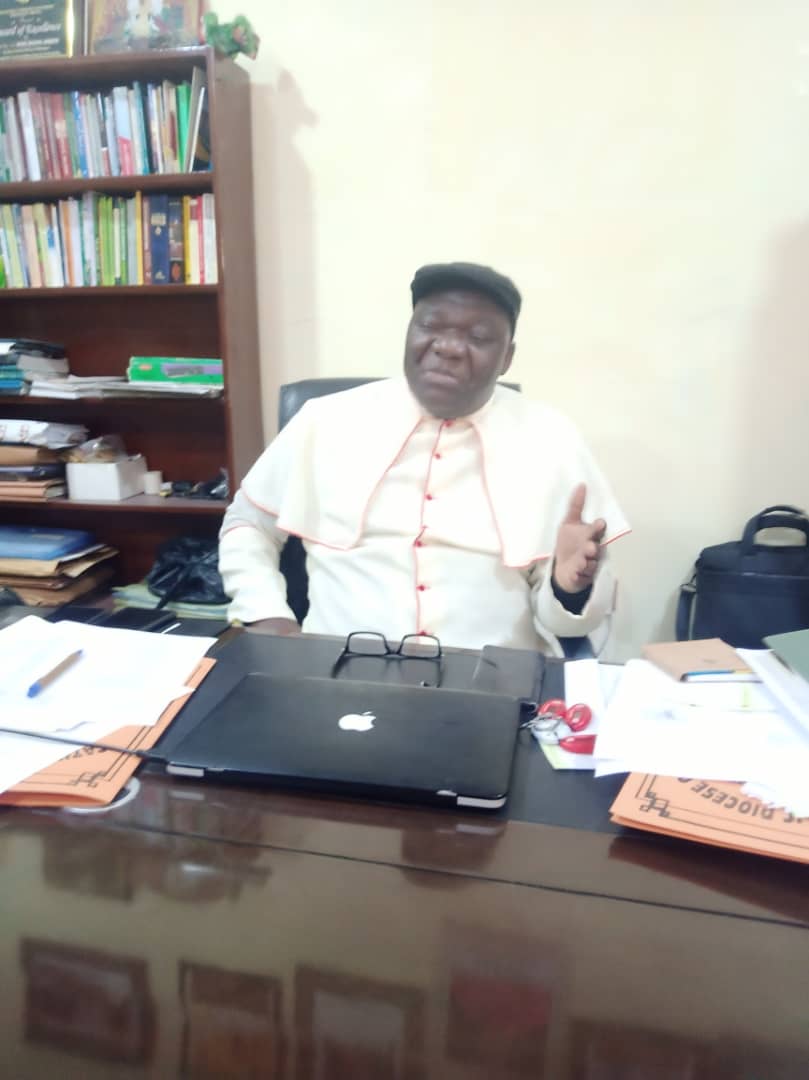
By: Bodunrin Kayode
The Chair of the Christian Association of Nigeria (CAN) Borno state, chapter Bishop John Bakeni has said that the biggest insecurity Nigeria is facing now as a nation is food insecurity.
He said that it was extremely dangerous for residents in the country who have been used to having surplus food to become hungry at any time in their lives either through natural or unnatural means.
Catholic auxiliary Bishop Bakeni who reviewed 2024 with this reporter recently noted that the fact that Nigerians rush for food to feed their families at this auspicious time in our economic history was a dangerous signal that food security must be fixed.
Reacting to the various loss of lives that occurred in 2024 after stampedes over food, he said that food insecurity was the greatest threat to the existence of the average Nigerian now.
“It was very unfortunate that Nigerians would have to loose their lives in such a way. It points out to something bigger towards the desperation, hunger and hardship in the land.
” You only need to go out and try to distribute anything today and watch how people will scramble for it. It would confirm what I am telling you. I don’t want to believe that it was only Catholics that were in the one that occurred in Abuja. There were many others there too because as a church our doors are always wide open for everyone.
“When people are hungry and desperate, it would be difficult for them to listen to commands and order to go about things the proper way. I think it was unfortunate that it was in that situation people had to die. But anything open like this can end up in stampede like the one that occurred in Ibadan.
“But we have not conquered poverty due to economic policies yet, there is hardship and and a lot has to be done to address these issues. Sometimes people shielded in all theses palaces may not be in tune with the reality. It’s only us that mingle that would know. And don’t forget they have 24 hours like us.
” Look, its not enough to tell a leader that your people are hungry.. You have to go out there to feel the pulse of the people yourself because the largest insecurity in this country is food insecurity. Once there is disconnect there is a problem.
“What happened in that catholic church in abuja is beyond being organized. The biggest challenge we have now is not the bandits but it has to do with food insecurity. And it is all because the economy has been adjusted today in Nigeria there by creating food insecurity.
” Food security is key to every thing affecting the residents and there is no substitute to safety and overall security of the people. Its the primary role of every leader and if you cannot fulfil this to your people then you should look at yourself in the mirror and tell yourself the truth.” Said Bakeni.
Post flood message to christians as CAN chairman for 2025
Asked for his message to residents in the State, the chairman asked Christians to hold on to hope without which there would not be any need to exist.
He warned residents regardless of faith not to sink to a low level of despondency that they will discard hope which is what should carry them around at this time of economic challenges affecting the state of our nation.
“There is no doubt that 2024 was a tough year for every one. Even the high and mighties were affected by the turmoil. It was a year of hardship, hunger, insecurity, a lot of drama, natural and man made challenges that we cannot forget easily as a people.
” What I have for them is that we have to be a people of hope. Let us believe and hope in our God. We have to equally believe in our state and nation in the face of any challenge or calamity because it tells you how much we can do.
“We are a very resilient people so let’s hold on to that resilience and weather through the storm of 2025 as it comes. The Lord will see us through. There is no promise that it is going to be a bed of roses
” It is said that people can live without food for a month and water for at least a week but you cannot live without hope for a second.. The moment you loose hope and despondency sets in you lose everything. ” said Bakeni.
Food scarcity is the biggest form of insecurity…Bishop Bakeni


National News
Tinubu orders full investigation into deaths of suspected illegal miners in NSCDC custody
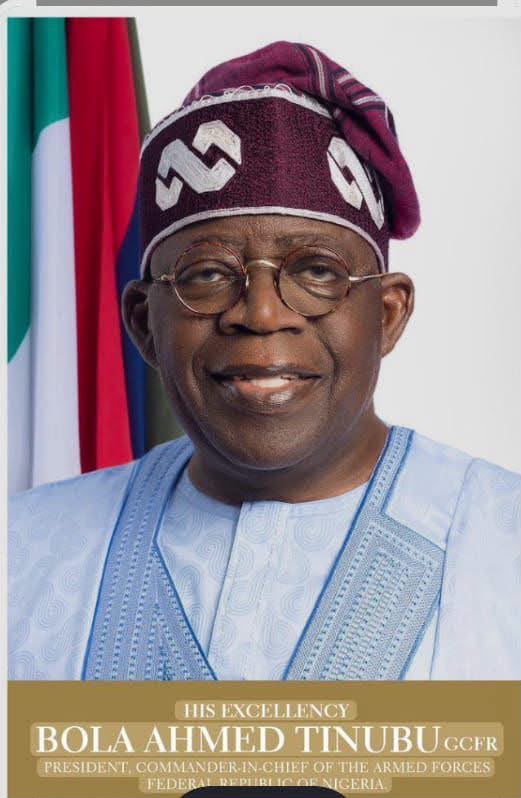
Tinubu orders full investigation into deaths of suspected illegal miners in NSCDC custody
By: Our Reporter
President Bola Tinubu has ordered a full, transparent and unhindered investigation into the deaths of suspected illegal miners detained by the Nigeria Security and Civil Defence Corps (NSCDC) following enforcement operations around the Lt. General Mohammed Inuwa Wushishi Estate in Minna, Niger State.
In a statement issued by the Special Adviser to the President on Information and Strategy, Bayo Onanuga, the President said the life of every Nigerian matters and that no citizen should lose their life while in government custody as a result of negligence, abuse, inhumane treatment or dereliction of duty.
Tinubu expressed deep concern over the reported deaths, describing the development as a grave matter requiring urgent investigation and accountability.
He said while the Federal Government would continue to combat illegal mining and other criminal activities across the country, enforcement operations must be conducted strictly within the law and with full respect for the dignity and fundamental rights of persons in custody.
The President stressed that the fact that the victims were suspected of illegal mining did not remove their right to life, dignity and humane treatment while in government custody.
He warned that the government would not tolerate mass deaths arising from official negligence, dereliction of duty or failure by public officials to protect people placed under their care.
“Where the investigation establishes that any official, through action, abuse or negligence, contributed to these deaths, such an officer must be arrested and prosecuted in accordance with the law. There must be accountability,” Tinubu said.
The President directed relevant authorities to ensure that the investigation is comprehensive, transparent and unhindered, covering the circumstances of the arrests, the conditions under which the detainees were held, the events leading to their deaths and the conduct of all officials involved.
The directive comes as the Niger State Government has also constituted a Committee of Inquiry to establish the circumstances surrounding the deaths, with Deputy Governor Yakubu Garba as Chairman and Commissioner for Homeland Security Maurice Magaji as Secretary.
The Niger State Government said forensic examinations and autopsies would be conducted to establish the exact cause of death, while the NSCDC Commandant General has suspended the Niger State Commandant, Suberu Siyaka Aniviye, and members of his team to allow investigations to proceed.
Tinubu orders full investigation into deaths of suspected illegal miners in NSCDC custody
National News
Breaking: NSCDC launches probe as 30 suspected illegal miners die in Commands custody in Niger
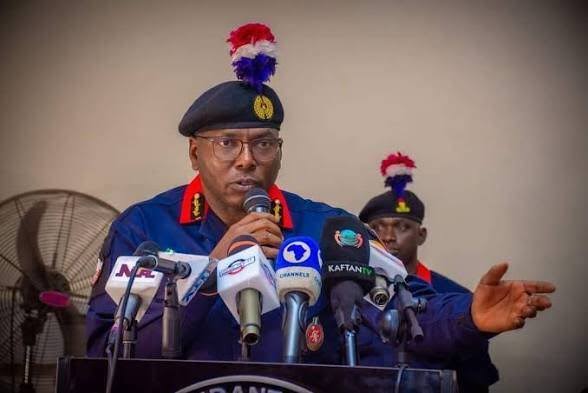
Breaking: NSCDC launches probe as 30 suspected illegal miners die in Commands custody in Niger
By Zagazola Makama
The Nigeria Security and Civil Defence Corps (NSCDC) has ordered an investigation into the deaths of several suspected illegal miners arrested during an enforcement operation in Niger State.
The suspects were apprehended on Sept. 15 and 16, 2026, during a joint operation targeting illegal mining activities around the M.I. Wushishi/Lukoto axis of the state.
The NSCDC Niger State Command initially reported that scores of detainees were found dead in the early hours of Sept. 17 following what was described as a suspected disease outbreak.
The remains have since been evacuated to the General Hospital, Minna, where medical examinations are expected to determine the actual cause of death.
The development has generated concern among relatives of some of the detainees, with family members alleging that more than 30 people died while in custody.
However, the NSCDC has cautioned against attributing the deaths to any particular disease before medical and laboratory examinations are concluded.
In a statement issued by the Corps’ National Public Relations Officer, Assistant Commandant of Corps Babawale Afolabi, the Commandant General, Prof. Ahmed Abubakar Audi, directed the immediate constitution of a high-powered investigative team.
The team, headed by the Deputy Commandant General responsible for Intelligence and Investigation, is expected to establish what happened before and after the suspects were taken into custody.
Investigators are to examine the physical condition of the detainees at the point of arrest, the duration of their detention, conditions inside the facility, medical care provided to them and other circumstances that could have contributed to the deaths.
The Corps said it was also working with health authorities and other security agencies to implement appropriate medical and public-health measures.
It further directed that the health and welfare of suspects still in custody be given immediate priority, while personnel who may have come into contact with the affected detainees are also protected.
The NSCDC said the incident would be addressed strictly on the basis of verified medical and investigative findings.
The Corps also reiterated that its campaign against illegal mining would continue, stressing that the enforcement of the law must be carried out alongside respect for the dignity and fundamental rights of persons in custody.
The Commandant General expressed condolences to the families of those who died and assured them that the circumstances surrounding the incident would be thoroughly investigated.
The Corps appealed to the public to remain calm while the medical and investigative processes are concluded, promising to release further information as verified facts become available.
The incident has meanwhile raised questions about the health status and detention conditions of the arrested miners, with the pending medical examination expected to provide critical answers on what caused the deaths.
Breaking: NSCDC launches probe as 30 suspected illegal miners die in Commands custody in Niger

VP SHETTIMA CLARIFIES REMARKS ON NORTHERN GOVERNORS’ SUPPORT FOR PRESIDENT TINUBU
By: Our Reporter
The Office of the Vice President wishes to clarify remarks by Vice President Kashim Shettima concerning the support President Bola Ahmed Tinubu received from northern governors in the build-up to his emergence as the presidential candidate of the All Progressives Congress (APC).
The Vice President’s reference to six northern governors who believed in and supported President Tinubu was specifically about political consultations and alignments preceding the APC presidential primary in June 2022.
It was not a comment on the position of northern APC governors following President Tinubu’s emergence as the party’s candidate, nor was it intended to question their support during the 2023 presidential election.
Following the presidential primary, APC governors in the North rallied around the party’s candidate and played important roles in the campaign and electoral efforts that culminated in President Tinubu’s victory in the 2023 general election. Indeed, it is worthy of note that it was after the declaration of President Tinubu as winner of the 2023 presidential primaries that all other governors across the country rallied round and followed suit. That declaration by the northern governors hence became the aligning moment across all political divides in the quest for power shift.
VP Shettima holds the northern governors and other leaders of the APC in high regard and recognises their individual and collective contributions to the success of the party and the emergence of President Tinubu.
The Vice President regrets any interpretation of his remarks that may have suggested otherwise and hopes this clarification places the comments in their proper context.
VP Shettima also appreciates the Nigerian media for its longstanding professionalism and constructive engagement with his office and urges continued accuracy and context in the reporting of public remarks as the country approaches another political season.
VP SHETTIMA CLARIFIES REMARKS ON NORTHERN GOVERNORS’ SUPPORT FOR PRESIDENT TINUBU

OPEP troops foil suspected Fulani bandits reprisal attack on Jwerk Kargung village in Plateau

NIS Enrolls 8,552 Nigerians in Diaspora Passport Intervention

Experts Warn that Climate Crisis is Paramount to Explosion of Insecurity in West Africa

Roger Federer’s Shock as DNA Results Reveal Myla and Charlene Are Not His Biological Children

THE PLIGHT OF FARIDA

FAILED COUP IN BURKINA FASO: HOW TRAORÉ NARROWLY ESCAPED ASSASSINATION PLOT AMID FOREIGN INTERFERENCE CLAIMS
-
 News3 years ago
Roger Federer’s Shock as DNA Results Reveal Myla and Charlene Are Not His Biological Children
-
Opinions5 years ago
THE PLIGHT OF FARIDA
-
 News1 year ago
FAILED COUP IN BURKINA FASO: HOW TRAORÉ NARROWLY ESCAPED ASSASSINATION PLOT AMID FOREIGN INTERFERENCE CLAIMS
-

 News3 years ago
EYN: Rev. Billi, Distortion of History, and The Living Tamarind Tree
-
 Opinions5 years ago
POLICE CHARGE ROOMS, A MINTING PRESS
-

 ACADEMICS3 years ago
A History of Biu” (2015) and The Lingering Bura-Pabir Question (1)
-

 Columns3 years ago
Army University Biu: There is certain interest, but certainly not from Borno.
-

 Politics1 year ago
2027: Why Hon. Midala Balami Must Go, as Youths in Hawul and Asikira/Uba Federal Constituency Reject ₦500,000 as Sallah Gift
