
Crime
Fresh Chadian Offensive Forces ISWAP/Boko Haram Fighters to Flee Lake Chad Shores

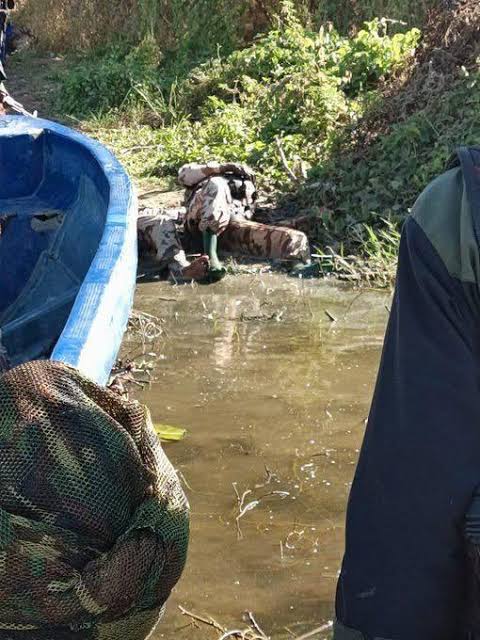
Fresh Chadian Offensive Forces ISWAP/Boko Haram Fighters to Flee Lake Chad Shores
By: Zagazola Makama
A fresh military offensive by Chadian forces in the Lake Chad Basin has triggered a mass displacement of Boko Haram terrorists and their families from the Tunbuns and adjoining island settlements toward parts of northern Borno, security and local sources have disclosed.
The development followed days of intense aerial bombardments and coordinated ground assaults launched by the Chadian military against suspected Boko Haram and ISWAP enclaves in the Lake Chad region after deadly attacks on Chadian troops earlier this month.
Sources told Zagazola Makama on Tuesday that large numbers of insurgents, accompanied by women and children, were seen moving across border routes from the Tunbuns toward Kangarwa and surrounding settlements.
Kangarwa is located about 14 to 15 kilometres from Kukawa in northern Borno.
The sources said the fleeing insurgents were escaping sustained bombardments by Chadian air assets targeting known terrorist camps and logistics bases located within the marshlands and islands around the Lake Chad fringes.
According to the sources, there are growing fears that some of the displaced fighters may attempt to regroup within established enclaves around Doro Naira, Wula Wula, Njemina, Tunbun Gini, Tunbun Rago and Tunbun Shanu in Borno state.
The sources stressed the need for intensified military operations within the Kukawa, Baga, Gudumbali and Malam Fatori axis to prevent the insurgents from integrating into existing cells operating within Nigerian territory.
The latest offensive is believed to be directly linked to recent deadly attacks carried out by insurgents against Chadian troops in the Lac Province area of Chad.
Security sources said insurgents linked to the Bakura-led faction of Jama’atu Ahlis Sunna Lidda’awati wal-Jihad (JAS) attacked Chadian military positions at Ngaboua and Chukuntale, known collectively as the Barka Tolorom axis, between May 4 and May 6.
According to the sources, the first attack occurred on May 4 at about 10 p.m. when insurgents stormed a Chadian military base at Ngaboua and reportedly overran the position.
Two days later, Chadian troops mounted a counteroffensive involving senior military commanders and multiple watercraft advancing through the riverine area toward insurgent positions.
However, the troops were reportedly ambushed around the Chukuntale waterways and adjoining high grounds.
Official Chadian figures put the casualty toll at 23 soldiers killed and 26 wounded.
However, security and local intelligence sources suggested that the actual casualty figure could be significantly higher, with some reports indicating that more than scores of soldiers, including two generals, may have been killed during the attacks.
The Chadian authorities subsequently declared a three-day national mourning period from May 6 to May 9 for fallen soldiers and imposed a 20-day state of emergency across the Lac Province.
Sources also disclosed that mass burials had been conducted for some of the deceased troops, while reports indicated that additional bodies remained within remote island locations difficult to access.
Zagazola noted that the Lake Chad region remains one of the most difficult operational theatres in the fight against Boko Haram due to its geography of islands, swamps and narrow waterways that provide insurgents with concealment and escape routes.
The terrain enables fighters to move rapidly between islands using canoes and small boats, making pursuit by conventional forces extremely difficult.
Zagazola further noted that poor communications, difficult logistics and isolated forward positions often complicate casualty evacuation, troop reinforcement and battlefield reporting within the region.
The latest attacks have also revived memories of the March 2020 Bohoma assault in Chad, where Boko Haram fighters killed dozens of Chadian soldiers during an attack on a military base located on one of the Lake Chad islands.
The renewed Chadian offensive appears aimed at dismantling insurgent camps and preventing further attacks on military formations within the region.
However, concerns remain that displaced insurgents could spill into communities across northern Borno and parts of Yobe if regional forces fail to coordinate sustained follow-up operations.
Military sources said the current dry-season conditions between May and July provide favourable terrain for clearance operations within the Tunbuns and adjoining riverine corridors.
Zagazola also renewed calls for stronger coordination among countries operating under the Multinational Joint Task Force, warning that unilateral operations without sustained regional synchronisation could simply displace insurgent threats across borders rather than eliminate them.
Fresh Chadian Offensive Forces ISWAP/Boko Haram Fighters to Flee Lake Chad Shores


Crime
Troops Intercept Abandoned Toyota Camry Loaded with 315 Sachets of Suspected Indian Hemp in Kaduna
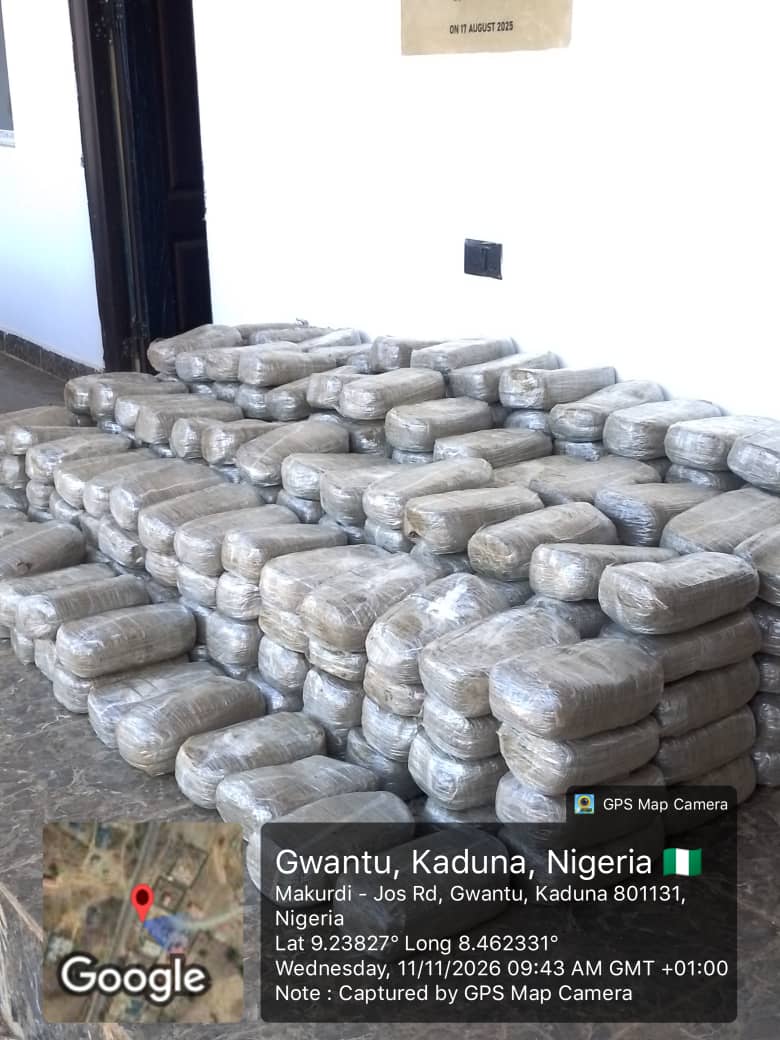
Troops Intercept Abandoned Toyota Camry Loaded with 315 Sachets of Suspected Indian Hemp in Kaduna
By: Zagazola Makama
Troops of Operation ENDURING PEACE (OPEP) have intercepted an abandoned Toyota Camry conveying 315 sealed sachets of substances suspected to be Cannabis sativa, popularly known as Indian hemp, in Sanga Local Government Area of Kaduna State.
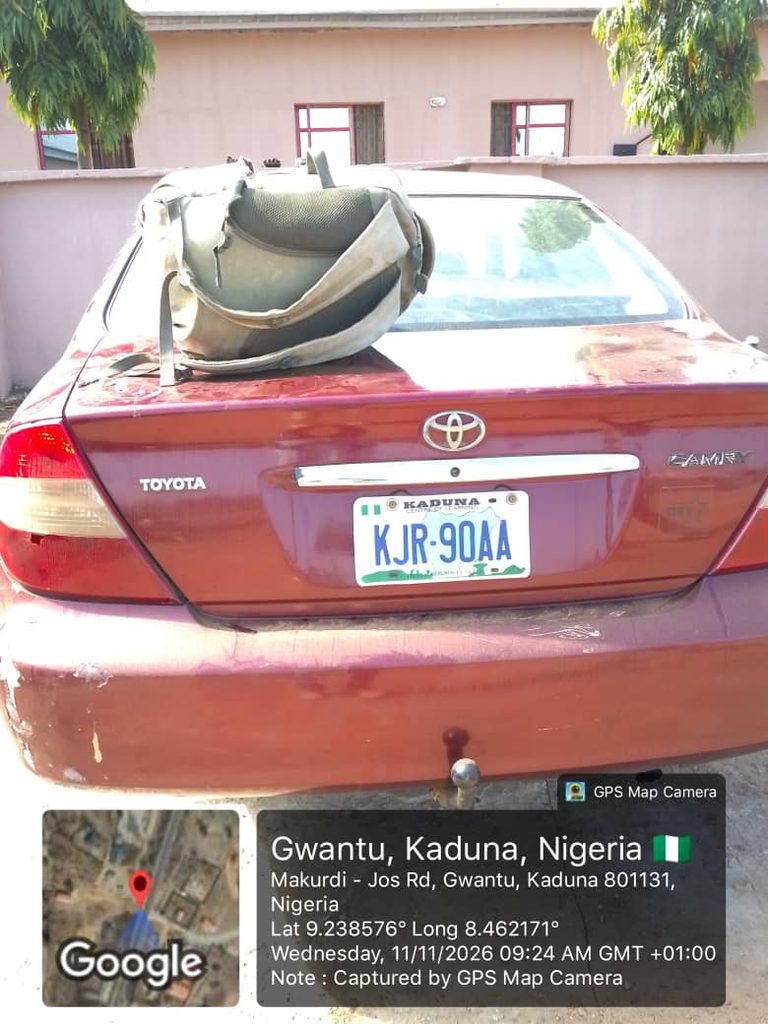
The interception occurred at about 8:30 a.m. on November 11, 2026, following a report of an abandoned vehicle at Numbu community.
Security sources said troops of Sector 7, Sub-Sector 71, responded to the report and discovered a Toyota Camry with registration number KJR 90 AA KD, parked without occupants.

A search of the vehicle led to the discovery of 315 sealed sachets of substances suspected to be Indian hemp.
The vehicle and recovered exhibits were subsequently towed to the headquarters of Sub-Sector 7 in Sanga for further necessary action.
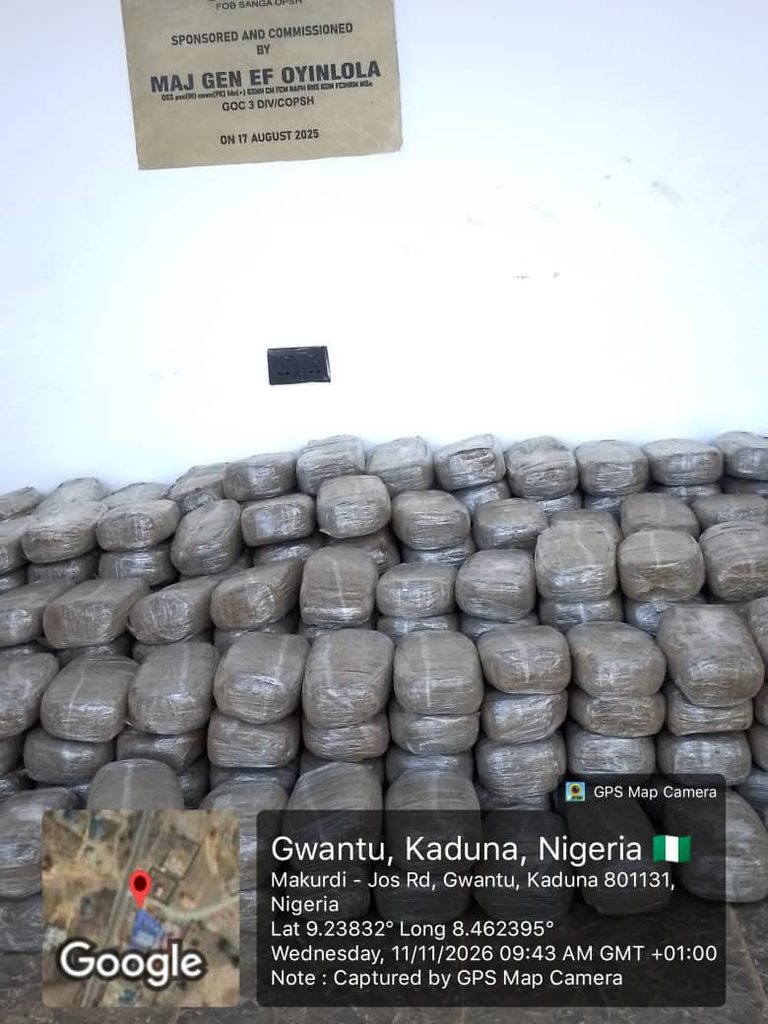
The interception highlights ongoing security efforts to disrupt the transportation and distribution of illicit drugs, which can fuel criminal activities and undermine community safety.
Troops Intercept Abandoned Toyota Camry Loaded with 315 Sachets of Suspected Indian Hemp in Kaduna
How we arrested 4 suspected IPOB members who kidnapped, killed our operative –DSS witness
By; Zagazola Makama
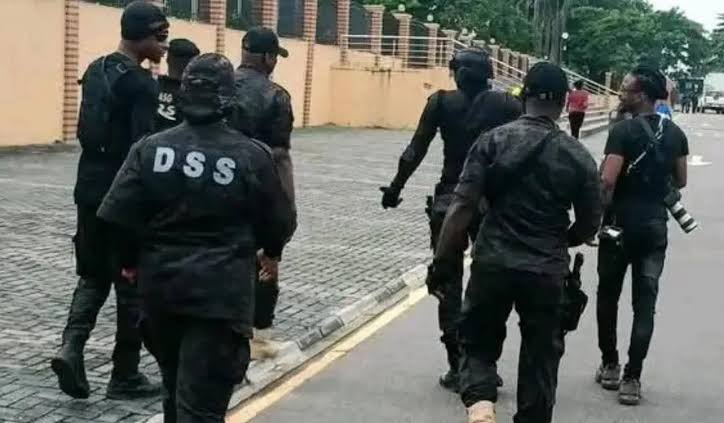
A Department of State Services (DSS)’ witness on Wednesday told the Federal High Court in Abuja how four suspected members of the outlawed Indigenous People of Biafra (IPOB), who allegedly kidnapped and killed their officer, Ekpenyong Owoh, were tracked and arrested by the secret police.
The witness and a DSS investigator told Justice Joyce Abdulmalik while testifying as the 1st prosecution witness (PW-1) in the ongoing trial of the four defendants.
The defendants are Michael Okafor, a.k.a Onyechimeleze; Chinedu Chukwudozie, alias Kante; Chibunna Olisa; and Chigozie Olisa a.k.a Ability.
They were arraigned before Justice Abdulmalik on September 28 on a six-count charge bordering on terrorism and kidnapping.
The prosecution alleged that the defendants conspired to commit acts of terrorism and were involved in the abduction of the Late Owoh, while he was travelling from Port Harcourt in Rivers to Awka.
They were further accused of taking the operative hostage and killing him.
The suspects were also accused of belonging to the proscribed IPOB and its armed wing, the Eastern Security Network (ESN), as well as involvement in activities allegedly linked to terrorism.
In addition, the prosecution alleged that the suspects were involved in the unlawful possession of firearms, including an AK-47 rifle, and pump-action gun, in connection with the alleged offences.
The defendants, however, pleaded not guilty to the charge.
Led in evidence by the prosecution lawyer, Munirat Oladunjoye, the witness, who was codenamed “AAA” for security reasons, said he has worked with the DSS for about 17 years.
He said he investigated the matter with his team.
“Sometime in February 2022, the wife of our personnel made a complaint to us in Anambra Command that her husband, who was travelling from Port Harcourt to Awka in Anambra State, was missing.
“We sprung into action and did a technical analysis of the officer’ movement indicated that he was last seen alive in Osomogu, Ihiala Local Government Area of Anambra State,” he said.
The witness said the late Owoh’s Toyota Pontiac car in which he was travelling, was also found to be in the town.
According to the witness, since the area where Owoh was last seen was a stronghold of the IPOB and Eastern Security Network (ESN), the DSS liaised with the military to get to work, leading to the arrest of one Chinyere Okabue, on June 20, 2026.
Okabue’s arrest, said the witness, led to the arrest of Okafor and the co-defendants.
He said while Okafor, the prime suspect, was arrested on September 14, the three other defendants were arrested on September 20.
Recounting what transpired on the date Owoh was murdered, the witness said the late officer had, on February 23, 2022, called his wife on the telephone that he would be coming home to see his newly-born baby.
“When they intercepted Owoh, Okafor, who was a sub-commander of ESN, and his co-defendants, seized him, and took him into their camp.
The witness told the court that, Chibunna Olisa drove Owoh’s vehicle into their camp and he was kept there until one sub commander called Double Lion gave Okafor the directive to kill him.
“He was shot several times and buried in a shallow grave,” the witness told the court adding that the four defendants had ESN marks 1414 n their bodies.
Thereafter, Justice Abdulmalik ordered the defendants, who were in the dock, to come forward and pull off their wears one after the other to confirm the witness’ allegation.
The witness and the defendants’ lawyers, K.C. Ekwe and G.U. Oputa, confirmed the mark on their bodies.
According to AAA, they gave them that mark as a sign of protection.
He said after Owoh was killed, Okafaor converted his Toyota Pontiac vehicle to his own personal use.
He alleged that Okafor also gave Owoh’s phone to his girl friend, Chinyere, as a gift.
“When we found out that the lady did not know anything about our personnel’s abduction, we granted her administrative bail,” he told the court.
He maintained that all the defendants were involved in the abduction, kidnapping and killing of their personnel.
The witness said Okafor travelled to Cote d’Ivoire and later to India, but he was involved in criminal activities in India and was deported around 2024.
When the lawyer asked how they were arrested, the witness said: “Okafor was arrested on September 14, 2026 through an intelligence-driven operation.”
He added that after Okafor’s deportation, he returned and decided to lie low and worked as a bricklayer at Azia in Ihiala LGA.
He said his co-defendants were later arrested on September 20.
The PW-1 said they voluntarily gave their statements which were equally recorded.
He said their confessional statements were gotten in a relaxed atmosphere with air-conditioning and in the presence of a lawyer from Legal Aid Council.
All the statements of the defendants were admitted in evidence and marked as exhibits after the defence lawyers did not object.
.
“The law says you must be talking in the presence of a lawyer,” he added, mentioning the name of the lawyer from the Legal Aid Council.
The interviewer also told them that they had the right not to say anything but that whatever they said would be used against them in the law court.
The defendants, however, responded that they were ready to make the statements, and it was admitted as evidence against them by the judge and marked as Exhibit TWT-5 Series.
Justice Abdulmalik adjourned the matter until November 16 for cross examination of AAA in the trial-within-trial and for continuation of trial-within-trial.
The judge warned that if the defence lawyers failed to appear on the next adjourned date, their cross examination would be foreclosed.
How we arrested 4 suspected IPOB members who kidnapped, killed our operative –DSS witness
Troops Kill ISWAP Commander, Mallam Ali, Two Terrorists in Fierce Battle at Adamawa Outpost
By: Zagazola Makama
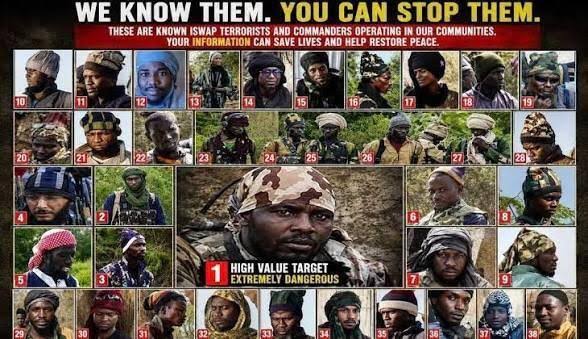
Troops of the Nigerian Army have dealt a significant blow to the Islamic State West Africa Province (ISWAP) terrorist network, neutralising two insurgents, including Mallam Ali, identified as the Amirul Fiya (commander in charge of fighting forces) of the notorious Timbuktu Triangle enclave in Borno State.
The terrorist commander was killed during a failed midnight assault on troops of 226 Battalion at their Forward Operating Base (FOB) in Zangula Kilba Junction, Gombi Local Government Area of Adamawa State.
The attack occurred at about 12:05 a.m. on November 10, 2026, when ISWAP fighters launched an assault on the military position, apparently seeking to overrun the base.
However, the troops, supported by local hunters and Rangers, mounted a determined resistance, repelling the attackers and inflicting casualties on the terrorist group.
Military sources said two terrorists were neutralised during the encounter, including Mallam Ali, whose position as Amirul Fiya of the Timbuktu Triangle makes his elimination a significant operational development against ISWAP’s command and fighting structure.
The Timbuktu Triangle, located within the Lake Chad operational theatre, has remained one of the strategic areas associated with ISWAP’s activities, including the movement and deployment of fighters.
Following the successful defence of the base, troops recovered two AK-47 rifles, four magazines and a substantial quantity of ammunition.
The recovered ammunition included 125 rounds of 7.62mm x 54, 77 rounds of 7.62mm x 51 and 20 rounds of 7.62mm x 39, alongside two belted links of 7.62mm x 54 ammunition.
Other items recovered were a mobile telephone, wristwatch, camel bag and ₦15,000 cash.
The killing of Mallam Ali is expected to deal a blow to ISWAP’s fighting hierarchy, particularly if his operational responsibilities and communication networks are further exploited through intelligence gathered from the recovered items.
Troops Kill ISWAP Commander, Mallam Ali, Two Terrorists in Fierce Battle at Adamawa Outpost

UNFPA, Signify partner to illuminate 10,000 healthcare facilities in seven states

Nigeria, India Sign Human Rights Agreement as Fagbemi Pledges Support for Implementation

19 Nigerian Pension Funds Express Interest in Proposed $750m Infrastructure Fund

Roger Federer’s Shock as DNA Results Reveal Myla and Charlene Are Not His Biological Children

THE PLIGHT OF FARIDA

FAILED COUP IN BURKINA FASO: HOW TRAORÉ NARROWLY ESCAPED ASSASSINATION PLOT AMID FOREIGN INTERFERENCE CLAIMS
-
 News3 years ago
Roger Federer’s Shock as DNA Results Reveal Myla and Charlene Are Not His Biological Children
-
Opinions5 years ago
THE PLIGHT OF FARIDA
-
 News2 years ago
FAILED COUP IN BURKINA FASO: HOW TRAORÉ NARROWLY ESCAPED ASSASSINATION PLOT AMID FOREIGN INTERFERENCE CLAIMS
-
 Opinions5 years ago
POLICE CHARGE ROOMS, A MINTING PRESS
-

 News3 years ago
EYN: Rev. Billi, Distortion of History, and The Living Tamarind Tree
-

 ACADEMICS3 years ago
A History of Biu” (2015) and The Lingering Bura-Pabir Question (1)
-

 Columns3 years ago
Army University Biu: There is certain interest, but certainly not from Borno.
-

 Politics1 year ago
2027: Why Hon. Midala Balami Must Go, as Youths in Hawul and Asikira/Uba Federal Constituency Reject ₦500,000 as Sallah Gift
