
Crime
JNIM Fighters Intensify Pressure on Bamako Supply Routes Amid Growing Security Concerns in Mali

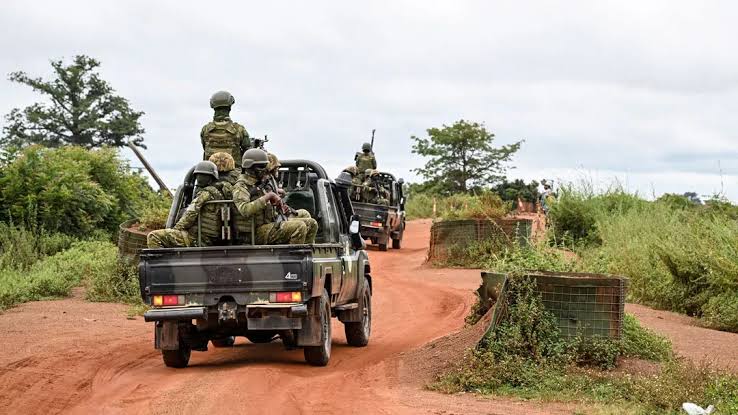
JNIM Fighters Intensify Pressure on Bamako Supply Routes Amid Growing Security Concerns in Mali
By: Zagazola Makama
Armed fighters linked to Jama’at Nusrat al-Islam wal-Muslimin (JNIM) have intensified attacks along key transport corridors in southern Mali, raising fresh concerns over the country’s deteriorating security situation and the growing vulnerability of routes leading to the capital, Bamako.
Security sources and local reports indicated that several commercial buses and cargo trucks were intercepted and set ablaze on May 9 along the strategic Sikasso-Bougouni highway despite prior warnings allegedly issued by JNIM elements operating in the region.
The attacks reportedly occurred barely 48 hours after Mali’s Foreign Affairs Minister, Abdoulaye Diop, assured diplomats in Bamako that the state remained firmly in control of the security situation and that ongoing military “reorganisation” efforts were progressing effectively.
According to local accounts, armed fighters also attacked the village of Zambougou, located about 45 kilometres from Ségou on the road toward Bamako.
The village, reportedly hosting a pro-government militia allied with the Malian Armed Forces (FAMa), was allegedly set on fire during the assault.
Residents said militia members fled the area during the attack, leaving civilians stranded as homes and property were destroyed.
Similar incidents were reported in the Sanankoro Bani area, where additional buses were reportedly burned by armed groups operating along the corridor.
The attacks have heightened fears that insurgent groups are steadily tightening pressure on transport and supply routes critical to Bamako’s economic and logistical stability.
Transport operators and residents in affected regions described growing anxiety over movement along major highways linking southern and central Mali to the capital.
The latest incidents appear consistent with a broader insurgent strategy aimed at isolating Bamako through progressive disruption of transport corridors, supply chains and commercial movement.
“The pattern emerging is not random violence,” a regional security observer said.
“It increasingly resembles a deliberate strategy of economic and psychological pressure targeting the state’s ability to maintain normal activity and public confidence.”
The attacks also underscore the widening gap between official government messaging and realities on the ground, according to analysts monitoring the conflict.
In his May 7 briefing with diplomats, Diop had accused unnamed foreign actors of attempting to destabilise Mali while insisting that state institutions remained operational and effective.
However, critics argue that the repeated attacks on highways, military positions and civilian infrastructure reflect persistent weaknesses in the country’s security architecture despite the junta’s assurances.
Insurgent activity has expanded significantly in recent weeks across northern, central and southern Mali, targeting not only military facilities but also transport networks, energy infrastructure and commercial routes.
The ruling military government, led by Assimi Goïta, has repeatedly defended its security strategy since severing military ties with France and strengthening cooperation with Russian military partners.
Nevertheless, insecurity has continued to spread in several regions despite intensified military operations.
Zagazola warned that attacks on major highways could have severe economic consequences if sustained over time, particularly as Mali already faces inflationary pressures, fuel shortages and rising transportation costs.
“The danger is not only military. When commercial traffic slows and populations begin to fear movement between cities, the economic and psychological effects become significant.”
Local residents in parts of central and southern Mali have increasingly expressed concern over insecurity on roads previously considered relatively stable compared to conflict zones in the north.
Humanitarian organisations also warned that disruptions along key transport corridors could affect delivery of food supplies, medical assistance and other essential goods to vulnerable communities.
As of the time of filing this report, Malian authorities had not issued a detailed official statement regarding the attacks on the Sikasso-Bougouni axis.
JNIM Fighters Intensify Pressure on Bamako Supply Routes Amid Growing Security Concerns in Mali


Crime
Troops storm suspected IPOB-linked camp across treacherous waters in Anambra, recover arms, explosives materials

Troops storm suspected IPOB-linked camp across treacherous waters in Anambra, recover arms, explosives materials
By Zagazola Makama
Troops of the Nigerian Army, in a daring operation involving a river crossing into a difficult forest terrain, have stormed a suspected criminal camp in Abator, Ogbaru Local Government Area of Anambra State, recovering a cache of firearms, ammunition and materials suspected to be associated with improvised explosive device (IED) production.
The operation, conducted on Oct. 1, followed the rescue of three persons abducted in the Osakwa General Area of Ihiala Local Government Area, in an incident that triggered a security response involving troops and local security volunteers.

According to the sources, troops of 185 Battalion, working alongside the local security volunteers, conducted a follow-up operation at about 5:30 a.m. on Oct. 1 and arrested a suspected member of the kidnapping syndicate, identified as Sunday Obi.
During interrogation, the suspect reportedly disclosed that the syndicate’s camp was located at Abator, across the Isieke waterside in Ogbaru LGA.
The disclosure set the stage for a more demanding operation, requiring the troops to navigate waterways and penetrate an area identified as a hideout for the suspected criminals.
Rather than allowing the difficult terrain to impede the pursuit, the combined force mobilised canoes to cross the river and advance towards the suspected camp.
The approach presented significant operational challenges. The waterways restricted movement, while the surrounding forest offered cover for armed men familiar with the terrain.
Yet the troops pressed ahead.
On reaching the location, the troops engaged the suspected criminals with what security sources described as maximum firepower, forcing them to flee into the surrounding area with reported gunshot wounds.
The operation culminated in the recovery of weapons, ammunition, electronic equipment and materials suspected to be linked to IED production.

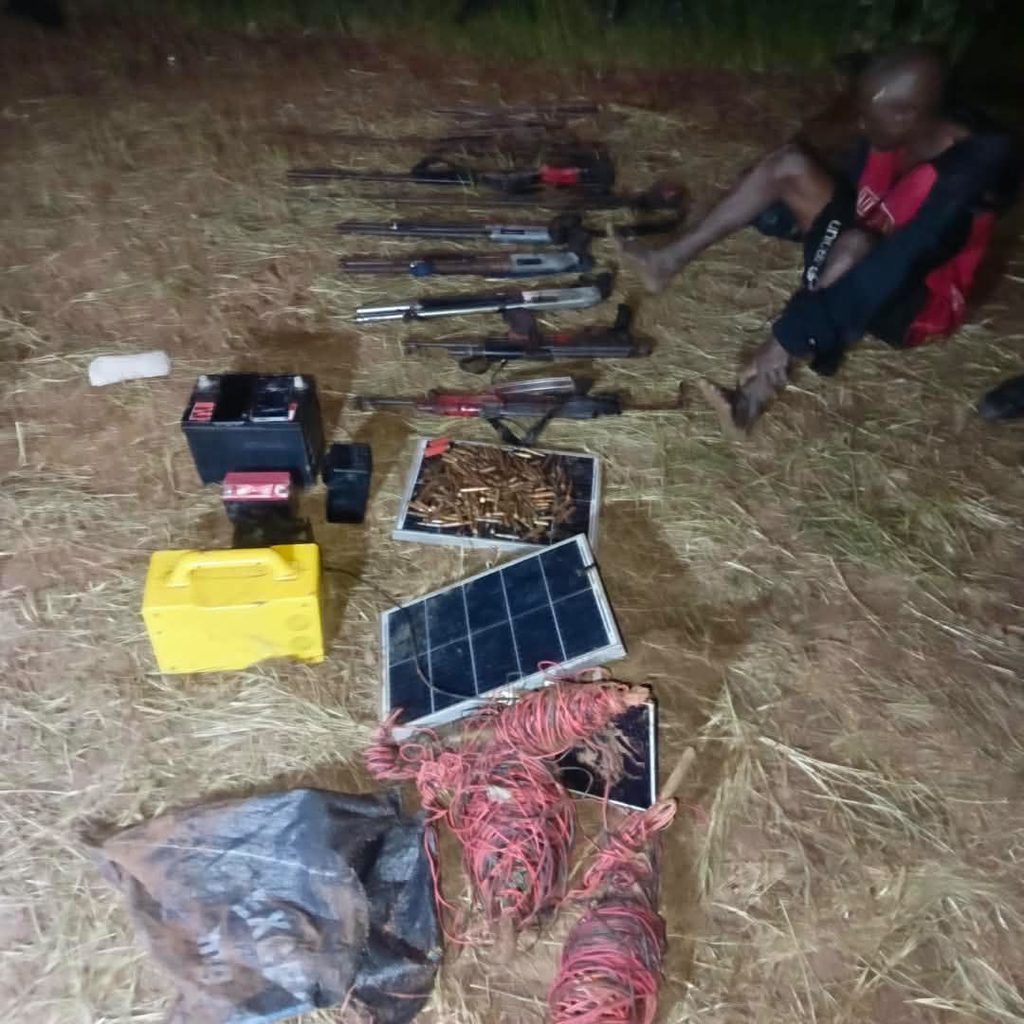
The recovered items included two AK-47 rifles with magazines, three pump-action guns, three locally fabricated dane guns, 62 rounds of 7.62mm NATO ammunition, 149 rounds of 7.62mm special ammunition and two cartridges.
Troops also recovered suspected IED-making materials, a solar generator, a power bank, a car battery, two motorcycle batteries, two solar panels and two mobile phones.
The recovery of the materials is expected to assist further investigations into the activities, logistics and possible supply networks of the suspected criminal group.
Security sources said the operation demonstrated the challenges facing troops pursuing armed criminal networks that exploit river channels, remote settlements and difficult forest terrain to establish hideouts and evade security forces.
The distinction is important in a region where security forces continue to confront kidnapping, armed criminality and violence involving groups with different operational identities.
The immediate outcome was that three abducted persons had been rescued, a suspected kidnapper was arrested, and a hideout identified during interrogation was raided, yielding a substantial cache of weapons and other materials.
Security sources said troops would sustain follow-up operations to track down the fleeing suspects, identify their alleged logistics suppliers and apprehend other individuals suspected of facilitating the network.
The operation also draw attention to the importance of intelligence-led security efforts, particularly where waterways and forest corridors provide armed groups with concealment and escape routes.
Troops storm suspected IPOB-linked camp across treacherous waters in Anambra, recover arms, explosives materials
Troops arrest suspected ISWAP member, recover ₦396,200 in Yobe
By: Zagazola Makama
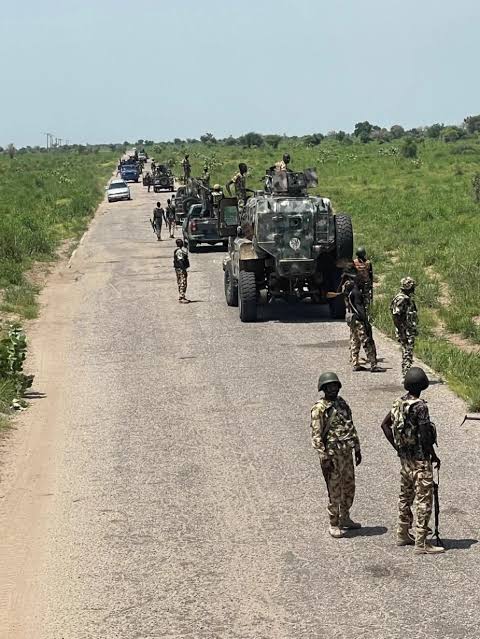
Troops of the Nigerian Army have apprehended a suspected member of the Islamic State West Africa Province (ISWAP) at Babbangida in Tarmuwa Local Government Area of Yobe State.
The suspect was arrested at about 12:30 p.m. on Sept. 29 by troops of 233 Tank Battalion, Forward Operating Base Babbangida, Sector 3, Joint Task Force North East, Operation HADIN KAI (OPHK).
Preliminary investigation revealed that the suspect claimed to be an Islamic cleric operating in the Sahara area of the North-East Republic of Niger.
According to security sources, the suspect reportedly travelled by truck from the Zarmadu-Sahara general area of Niger Republic into Nigeria and disembarked at Bayamari.
He subsequently boarded a commercial vehicle to Shuari Madinatu in Maiduguri Metropolitan Council (MMC), Borno State, before his arrest.
Troops recovered one mobile phone, a prayer mat, blanket, jacket, slate, detergent and ₦396,200 in cash from the suspect.
The suspect and the recovered items remain in military custody for further investigation and necessary action.
Troops arrest suspected ISWAP member, recover ₦396,200 in Yobe

Borno Police Explains Arrest, Prosecution of Five Over Alleged Thuggery
By: Michael Mike
The Borno State Police Command has clarified the circumstances surrounding the arrest and prosecution of five persons in Maiduguri over alleged incitement, breach of public peace, thuggery and possession of suspected illicit substances.
The Command said the five suspects were arrested on September 25, 2026, during a routine township patrol around the West End Roundabout area of Maiduguri.
According to the police, the suspects were allegedly engaged in conduct capable of causing public disturbance when officers apprehended them at about 6:00 p.m.
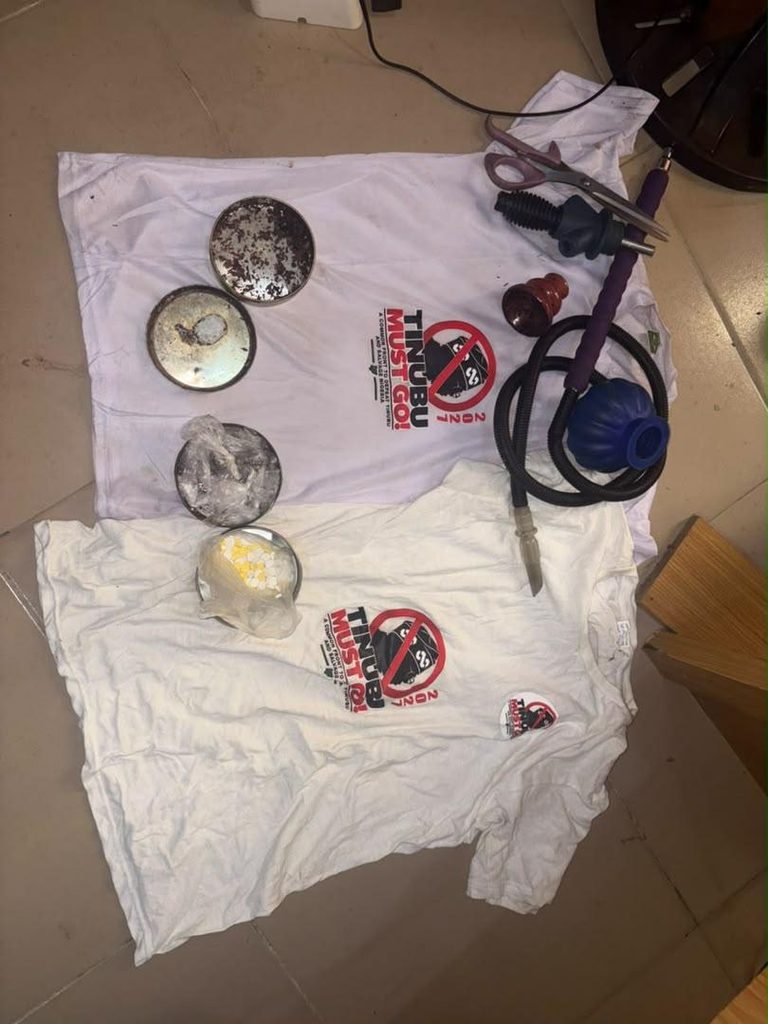
The Command said a search allegedly led to the recovery of 15 wraps of dried leaves suspected to be Indian hemp, 100 tablets suspected to be D5, one shisha pot and a pair of scissors.
It added that two T-shirts bearing the inscription, “Tinubu Must Go,” were also recovered from the suspects.
The development had generated public debate, particularly over the political inscription on the T-shirts and the subsequent decision of the police to prosecute the suspects.

But in a statement issued on Wednesday by the Police Public Relations Officer, ASP Nahum Kenneth Daso, the Command said the prosecution followed preliminary investigations during which statements were obtained from the suspects.
The police said the case was subsequently charged before a competent court after the initial investigation was completed.
Clarifying its position, the Command stressed that the Nigeria Police Force remained a professional and non-partisan institution, insisting that it did not discriminate against citizens on the basis of their political affiliation or viewpoints.
“The Command remains committed to the protection of fundamental human rights, the rule of law, due process, accountability and transparency in the discharge of its responsibilities,” it said.
The police further explained that taking the matter to court was intended to allow the judicial process to determine the allegations against the suspects based on the evidence presented.
The Command therefore urged members of the public to rely on verified information rather than reports circulating on social media and other platforms.
It said: “Members of the public are therefore urged to rely on verified information and allow the court to determine the matter based on the facts and evidence presented before it.”
The development comes amid heightened political activities in the country ahead of the forthcoming elections, making allegations involving political expressions, public order and security enforcement particularly sensitive.
The Borno Command reiterated its commitment to professionalism, impartiality, accountability and the protection of lives and property.
Borno Police Explains Arrest, Prosecution of Five Over Alleged Thuggery

Senator Abubakar Kyari: Protecting Farmers Is Protecting Nigeria’s Food Security

North-East Governors Push Regional Energy Agenda, Seek Speedy Completion of Mambila Hydropower

Army, Police, DSS launch aggressive operation to rescue 20 abducted NYSC members in Imo

Roger Federer’s Shock as DNA Results Reveal Myla and Charlene Are Not His Biological Children

THE PLIGHT OF FARIDA

FAILED COUP IN BURKINA FASO: HOW TRAORÉ NARROWLY ESCAPED ASSASSINATION PLOT AMID FOREIGN INTERFERENCE CLAIMS
-
 News3 years ago
Roger Federer’s Shock as DNA Results Reveal Myla and Charlene Are Not His Biological Children
-
Opinions5 years ago
THE PLIGHT OF FARIDA
-
 News1 year ago
FAILED COUP IN BURKINA FASO: HOW TRAORÉ NARROWLY ESCAPED ASSASSINATION PLOT AMID FOREIGN INTERFERENCE CLAIMS
-

 News3 years ago
EYN: Rev. Billi, Distortion of History, and The Living Tamarind Tree
-
 Opinions5 years ago
POLICE CHARGE ROOMS, A MINTING PRESS
-

 ACADEMICS3 years ago
A History of Biu” (2015) and The Lingering Bura-Pabir Question (1)
-

 Columns3 years ago
Army University Biu: There is certain interest, but certainly not from Borno.
-

 Politics1 year ago
2027: Why Hon. Midala Balami Must Go, as Youths in Hawul and Asikira/Uba Federal Constituency Reject ₦500,000 as Sallah Gift
