
News
Governor Zulum flags off fertilizer sales, warns against diversion

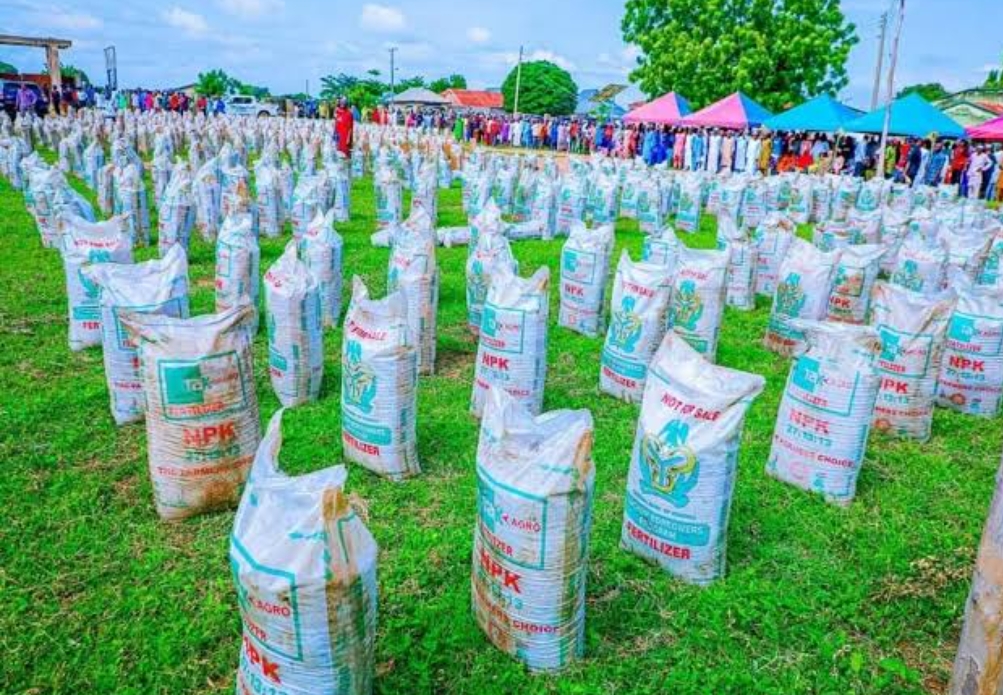
Governor Zulum flags off fertilizer sales, warns against diversion.
By: Bodunrin Kayode
Governor of Borno State Babagana Zulum has warned that anyone who diverts fertilizer will be prosecuted no matter how highly placed.
In his speech while flagging off the sales of fertilizer in the state recently, the governor asserted that no resident would be spared, “no matter how highly placed,” the repercussions of flouting his directive.
Zulum noted that he is aware of the “risks” associated with the diversion of the commodity, which is why he is emphasizing that any form of diversion of fertilizer in the state by anyone high or low in the state will be punished.
He called on the intelligence agencies to wake up to their responsibilities by ensuring that all culprits are arrested and prosecuted for daring to divert the commodity within or outside the state.
“Culprits shall be dealt with, specifically those who are not farmers but intend to use proxies to get the commodities for any form of usage.
“I hereby call on traditional and community leaders to be very vigilant during this distribution of the fertilizers, which should be given to only registered members. All farmers must register to partake in the sales, which will be done at 50 percent of the price.
“Let me add that this government will stop at nothing to empower farmers in the state to achieve all their potential, which is why it is only fertilizers that will be sold at 50 percent prices. Other implements would be given free to them.” Said Zulum.
It is a known fact that insurgents are in desperate need of fertilizers, especially urea, which is used to assist them in the production of improvised explosive devices (IEDs) used to cause havoc to both civilians and the military in the 15-year-old conflict that has plagued the Northeastern region of Nigeria.
Tackling restrictions over farmlands
The governor expressed dissatisfaction over the back-and-forth some residents have been having with security agencies over their ancestral farmlands, in which they have been restricted from farming.
“I want you to report anybody who stops you as farmers from farming anywhere in the state. Such decisions can only be given by the state security council and nobody else. Nobody can take such a decision without consulting us at the security council.
“As long as you have clearance from us, you are free to farm anywhere. Ensure you have the clearance, which I can assure you nobody can deny you as long as we have given you clearance,” said Zulum.
The governor maintained that his government was on course in going into private partnership with a private investor to maintain the continuous functionality of the state fertilizer plant, which has remained comatose for some time now.
Making his remarks as the Chair of the agricultural transformation committee, the secretary to the state government, Tijani Bukar, assured that they will work with the World Food Programme to ensure that the sector is moved from where it is now to where it should be in the nearest future.
He hinted that the governor is worried about the recovery by returnee farmers who have lost virtually everything to the tragedy of the 15-year insurgency, which is why he is doing all he can to make them achieve the concept of recovery, which should make them happy.
Counting the blessings of the recovery program, the SSG said that Monguno was a typical example of a council area that superseded its expectations beyond all imagination.
“We have been achieving results so far. Monguno alone generated over N50 billion from beans alone in 2024. And this occurs because of the complementarity from the government.
“The concepts of resilience, recovery, and seed capital are key factors that the government will continue with to ensure that all registered farmers will prosper in the business of food security.
“Let me assure you that nobody should express any fear of any source because as long as you are a conscious farmer, you will get what is due to you as support for being a farmer.” Said Alhaji Bukar.
Commissioner of Agriculture Bawa Musari stated that in spite of all the challenges farmers have experienced in the state, he has not lost hope for their future but believes in the greenery of the entire state before the end of the farming season.
He called on Governor Professor Zulum to do all he can in his power to revitalize the fertilizer plant, which is a vital asset in the green revolution of the entire state.
Governor Zulum flags off fertilizer sales, warns against diversion


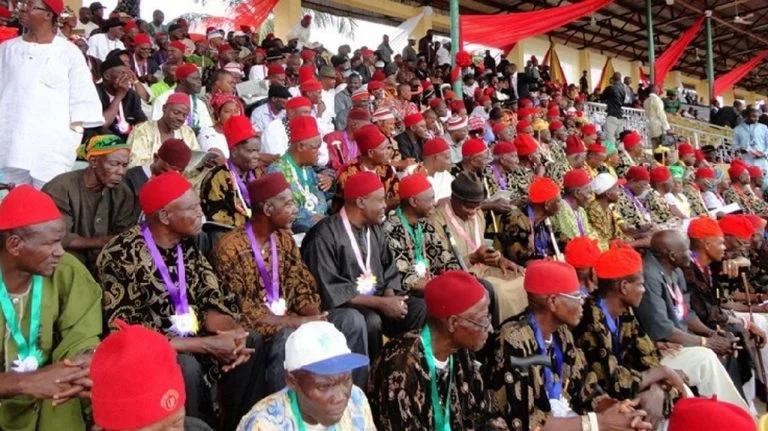
FG, Ohanaeze Outlaw ‘Eze Ndigbo’ Titles Abroad Amid Rising Diplomatic Tensions
By: Michael Mike
The Federal Government has moved to curb the controversial installation of “Eze Ndigbo” in foreign countries, backing a sweeping decision by Ohanaeze Ndigbo Worldwide and South East traditional rulers to abolish the practice outside Igboland, following a series of international incidents that have strained Nigeria’s diplomatic relations.
Minister of State for Foreign Affairs, Bianca Odumegwu-Ojukwu, delivered the government’s position at the high-level Imeobi meeting of Ohanaeze in Enugu on Thursday, describing the proliferation of Igbo “kings” in the diaspora as a growing embarrassment to Nigeria and a trigger for avoidable conflicts abroad.
She warned that while diaspora communities are free to promote their culture, attempts to replicate traditional rulership structures in foreign lands have repeatedly sparked tensions with host authorities and local populations.
The latest flashpoint occurred in East London, where the coronation of Solomon Ogbonna Eziko ignited violent protests. The unrest led to the destruction of property, attacks on foreign-owned businesses, and clashes with security forces, after locals interpreted the installation as a challenge to South Africa’s traditional authority system.
South African institutions, including the Eastern Cape House of Traditional and Khoi-San Leaders and the Department of Cooperative Governance and Traditional Affairs, declared the coronation illegal, underscoring the diplomatic sensitivity of such actions.
Nigeria’s foreign missions quickly distanced themselves from the development, with officials clarifying that the event was merely cultural and not a recognized monarchy. The Nigerian Embassy in Pretoria subsequently issued an apology and urged citizens to maintain a low profile.
Odumegwu-Ojukwu revealed that similar tensions had surfaced in Accra in 2025, where protests against Nigerians escalated over the same issue. She led a diplomatic delegation to calm the situation, engaging directly with John Mahama and other key stakeholders.
According to her, the intervention of the Ghanaian president was pivotal in diffusing tensions, as he reaffirmed his country’s commitment to ECOWAS protocols on free movement and rejected calls for xenophobic actions against Nigerians.
The minister stressed that such crises place Nigerian lives, businesses, and diplomatic standing at risk, insisting that urgent measures were necessary to prevent further escalation.
In response, Ohanaeze Ndigbo Worldwide has formally proscribed the conferment and use of “Eze Ndigbo” titles outside Igboland. President-General of the organization, Azuta Mbata, declared that any individual assuming such a title abroad does so without the backing of the Igbo people.
He disclosed that the group would notify state governments and Nigerian missions globally of the decision and is working with traditional rulers to establish sanctions for violators, including community-level enforcement through hometowns and town unions.
The Federal Government has pledged to reinforce the directive through its diplomatic channels, signaling a coordinated effort to prevent further international disputes linked to cultural misrepresentation.
The development marks a decisive shift by both the government and Igbo leadership to separate cultural expression from traditional authority in diaspora settings, amid growing concern over the global implications of local customs.
FG, Ohanaeze Outlaw ‘Eze Ndigbo’ Titles Abroad Amid Rising Diplomatic Tensions
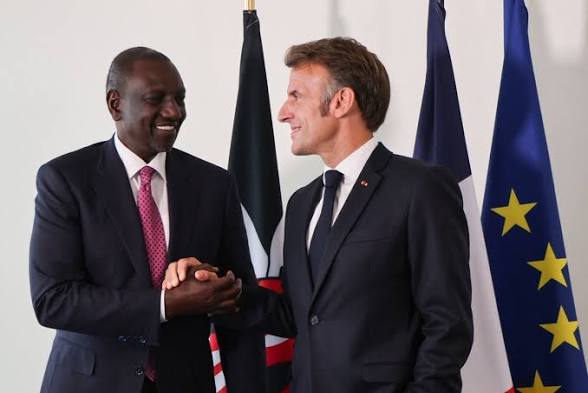
Africa, France Move to Reset Economic Ties at Nairobi Summit
By: Michael Mike
African leaders and their French counterparts are set for a critical engagement next month as Kenya and France prepare to host the Africa Forward Summit: Africa–France Partnerships for Innovation and Growth in Nairobi, amid growing calls for a new model of cooperation that delivers real economic impact for the continent.
The summit, scheduled for May 11–12, 2026, will convene top political leaders including Emmanuel Macron and William Ruto, alongside African Heads of State, investors, development partners, civil society groups, and youth representatives.
A Business Forum on May 11 is expected to drive private sector engagement and set the tone for the main summit, where discussions will centre on investment, innovation, and long-term economic collaboration.
Organisers said the summit is designed to move beyond diplomatic symbolism, focusing instead on actionable partnerships in key sectors such as healthcare, agriculture, digital technology, energy, and infrastructure—areas considered vital to Africa’s transformation.
For countries like Nigeria, the outcomes could be significant, offering pathways to attract investment, create jobs, and strengthen economic resilience at a time of global uncertainty.
The summit comes against the backdrop of evolving relations between Africa and France, marked by increasing demands from African nations for more equitable and transparent partnerships.
Historically, France has maintained strong political, economic, and military ties with several African countries, particularly in West and Central Africa. However, in recent years, these relationships have come under scrutiny, with critics calling for an end to perceived imbalances and a shift toward mutual respect and shared benefits.
At the same time, Africa’s global relevance has risen, driven by its growing population, expanding markets, and strategic importance in global supply chains. This has intensified competition among global powers seeking influence on the continent, prompting France to recalibrate its engagement strategy.
The Africa Forward Summit is seen as part of that reset—an attempt to reposition France as a partner in innovation and sustainable development rather than a traditional power broker.
The timing is also significant as it feeds into preparations for the upcoming G7 Summit, where Africa’s economic future, climate challenges, and development financing are expected to dominate discussions.
Analysts said the Nairobi meeting could serve as a testing ground for how Africa and its international partners engage moving forward—shifting from aid-driven relationships to investment-led cooperation.
With unemployment rising and infrastructure gaps widening across many African economies, expectations are high that the summit will produce concrete commitments rather than broad declarations.
Diplomatic missions in Abuja have indicated that further details will be unveiled at a press briefing, but stakeholders are already positioning the summit as a defining moment in reshaping Africa–Europe relations.
If successful, the Africa Forward Summit could mark a turning point—signaling a transition from historic ties to future-focused partnerships built on innovation, shared prosperity, and measurable outcomes.
Africa, France Move to Reset Economic Ties at Nairobi Summit
.

Experts Sound Alarm Over Unregulated AI in Nigeria’s Healthcare System
By: Michael Mike
Growing adoption of artificial intelligence in Nigeria’s healthcare sector is outpacing regulatory safeguards, raising concerns among experts who warned that without urgent oversight, the technology could deepen inequality and expose patients to new risks.
This warning took centre stage at a policy dialogue titled “AI in Healthcare: Risk or Asset?”, held Thursday at the French Institute in Abuja, where stakeholders from government, medicine, and development circles examined the expanding role of AI in health service delivery.
Speakers at the forum acknowledged that AI is already transforming diagnostics, laboratory systems, and patient management. However, they cautioned that Nigeria’s regulatory environment has yet to catch up with the speed of innovation.
Director of the French Institute, Thierry Vapentin, set the tone for the discussions, describing the platform as a space to confront emerging global issues through open debate. He stressed the importance of interrogating both the opportunities and ethical dilemmas posed by AI in critical sectors like healthcare.
Delivering a policy perspective, Dr. Anthony Ayeke of the European Union Delegation noted that while AI could significantly improve access and efficiency in healthcare delivery across Africa, blind reliance on automated systems could undermine professional judgment and patient safety. He emphasized that human oversight must remain central in all AI-driven processes.
In his intervention, the CEO of Premier Health Systems Consults, Dr. Niyi Osamiluyi argued that Nigeria urgently needs a clearly defined ethical and regulatory framework to guide AI deployment. He outlined key principles including transparency, inclusiveness, accountability, data protection, and auditability, warning that failure to assign responsibility for AI outcomes could create dangerous accountability gaps.
The issue of data integrity also featured prominently. Joshua Kojalo highlighted ongoing government-backed digital health initiatives, particularly mobile applications designed to expand access to health insurance. However, he warned that overdependence on foreign datasets could embed bias into local systems, potentially excluding vulnerable populations. He called for deliberate investment in locally generated data to ensure fairness and accuracy.
From an operational standpoint, Dr. Temitope Agbana, Co-founder of AIDX Medical, shared field experiences demonstrating AI’s impact on laboratory efficiency, noting that automated systems have significantly increased processing capacity. Despite these gains, he maintained that technology must remain a support tool rather than a substitute for human expertise, stressing that no AI system is entirely error-proof.
Equity concerns dominated the latter part of the discussion, with Dr. Chimezie Anyakora, CEO of Bloom Public Health, warning that weak regulation could leave already disadvantaged communities exposed to the harshest consequences of technological failure. He cautioned that without deliberate safeguards, AI could reinforce existing healthcare disparities rather than bridge them.
Participants agreed that Nigeria risks creating a two-tier healthcare system where advanced AI-driven services are accessible only to the wealthy, while rural and low-income populations are left behind.
The forum concluded with a strong consensus that Nigeria must act swiftly to establish robust regulatory frameworks, invest in capacity building, and ensure inclusive access. Experts stressed that while AI holds immense potential to transform healthcare delivery, its benefits will only be realized if innovation is matched with responsibility.
Without decisive action, they warned, the same technology that promises progress could ultimately widen the gap it seeks to close.
Experts Sound Alarm Over Unregulated AI in Nigeria’s Healthcare System

FG, Ohanaeze Outlaw ‘Eze Ndigbo’ Titles Abroad Amid Rising Diplomatic Tensions

Africa, France Move to Reset Economic Ties at Nairobi Summit

Experts Sound Alarm Over Unregulated AI in Nigeria’s Healthcare System

Roger Federer’s Shock as DNA Results Reveal Myla and Charlene Are Not His Biological Children

THE PLIGHT OF FARIDA

FAILED COUP IN BURKINA FASO: HOW TRAORÉ NARROWLY ESCAPED ASSASSINATION PLOT AMID FOREIGN INTERFERENCE CLAIMS
-
 News2 years ago
Roger Federer’s Shock as DNA Results Reveal Myla and Charlene Are Not His Biological Children
-
Opinions4 years ago
THE PLIGHT OF FARIDA
-
 News12 months ago
FAILED COUP IN BURKINA FASO: HOW TRAORÉ NARROWLY ESCAPED ASSASSINATION PLOT AMID FOREIGN INTERFERENCE CLAIMS
-

 News2 years ago
EYN: Rev. Billi, Distortion of History, and The Living Tamarind Tree
-
 Opinions4 years ago
POLICE CHARGE ROOMS, A MINTING PRESS
-

 ACADEMICS2 years ago
A History of Biu” (2015) and The Lingering Bura-Pabir Question (1)
-

 Columns2 years ago
Army University Biu: There is certain interest, but certainly not from Borno.
-

 Opinions2 years ago
Tinubu,Shettima: The epidemic of economic, insecurity in Nigeria
