
News
Governors Wives: Success of Tinubu’s Administration Reliant on Successful Drug War

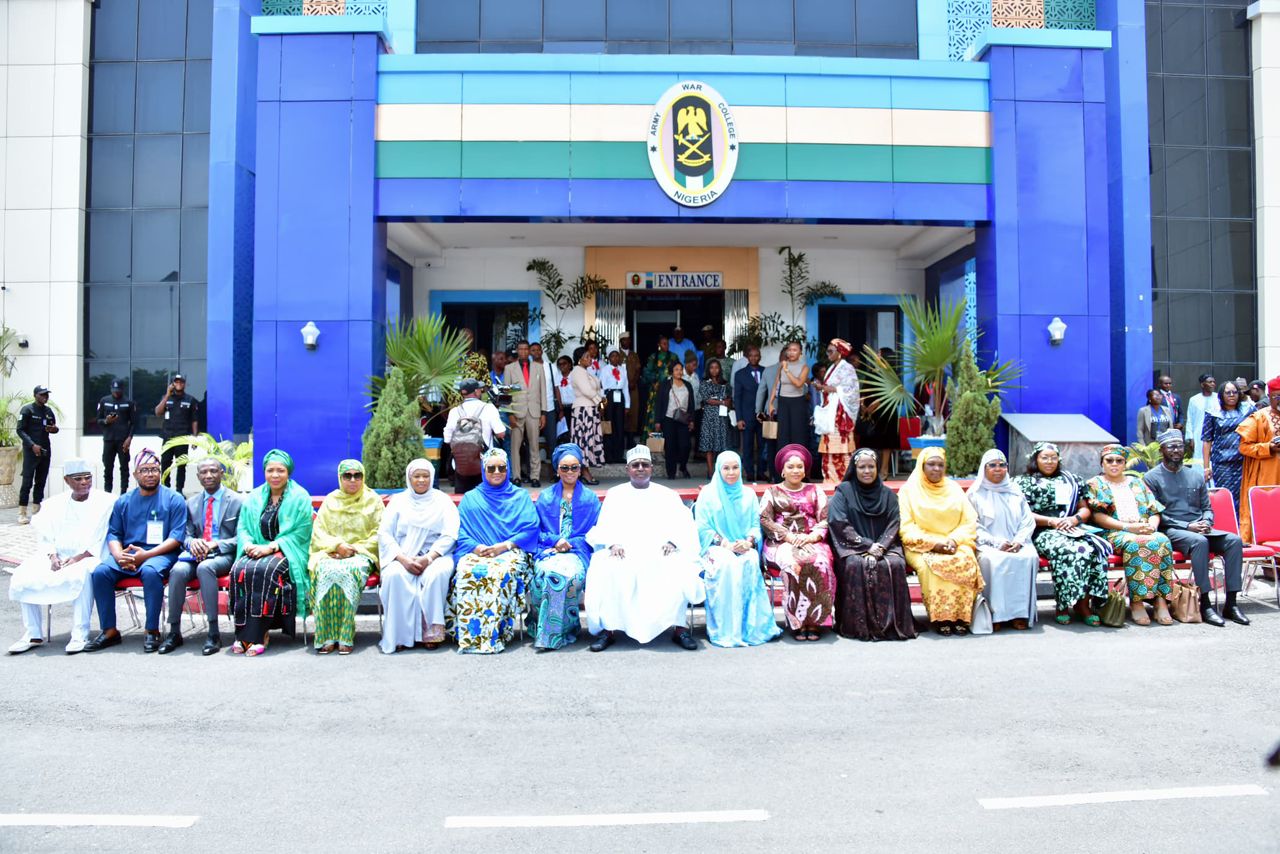
Governors Wives: Success of Tinubu’s Administration Reliant on Successful Drug War
By: Michael Mike
The Nigeria Governors Spouses’ Forum (NGSF) has posited that the success of the present administration of President Bola Tinubu administration is independent on the success of ongoing war against illicit drug trafficking.
They declared that the success of the ongoing efforts by the National Drug Law Enforcement Agency (NDLEA) against the menace of substance abuse and illicit drug trafficking will lead to the actualization of the renewed hope agenda of the President Bola Tinubu administration.

Recalling the importance that successfully tackling the drug scourge will remarkably ensure that the Renewed Hope Agenda of the President is achievable for holistic national development required to birth a Nigeria of our collective dreams, wives of state governors declared as part of their resolutions in a communique read by the first lady of Ogun state, Mrs. Bamidele Dapo Abiodun on behalf of the Chairperson of the Forum and first lady of Kwara state, Prof Olufolake Abdulrasaq, at the end of a training workshop organized by the NDLEA in collaboration with the NGSF in Abuja
The Forum expressed concern “that Nigeria presently faces an alarming drug use situation, which has heavily pervaded every sphere and strata of communities and consequently endangering the wellbeing and security of individuals, families and communities within the country.”
It reiterated that states play critical roles as stakeholders in addressing national drug challenges by implementing localized strategies, fostering cross sector collaboration and aligning with internal frameworks, towards responding to community needs and contributing to coordinated national responses.
The Forum endorsed the “outstanding efforts of NDLEA under the leadership of Brig Gen Mohamed Buba Marwa against drug use and trafficking with phenomenal national and global success records in the areas of arrests and seizures, prosecutions and convictions, prevention, treatment, and rehabilitation among others.”
As parts of its resolutions, the Forum acknowledged “with urgency the need for the First Ladies to use their good offices to liaise with the State Governors in facilitating the establishment, of State Drug Control Committees (SDCCs) in the thirty-six states of the country, beyond the nine functional committees currently in existence.”
It said the laudable partnership between NDLEA and the NGSF has yielded significant dividends and achieved notable milestones over time, adding that “urgent concerted and pragmatic efforts are required considering the complex public health issues and security challenges, the country is witnessing, which is fuelled largely by the use of drugs.”
The Forum called on the Federal Government and Governors to declare state of emergency on drug use and the illicit trafficking pandemic with a view to accepting national ownership of the drug problem and mobilising resources to dismantle the menace.
It also resolved to ensure that “Local Government Drug Abuse Committees are established in line with the ‘bottom to top’ approach, a core principle of the NDCMP, in ensuring that tailored Drug Demand Reduction activities are further cascaded to the wards and rural communities, areas highly vulnerable to the drug problem”
According to First Ladies, “the Drug Abuse Prevention Treatment and Care (DPTC) programmes in States continue to serve as Forum project, and to be chaired by the first ladies of the State, as additional tools for addressing community-based drug prevention, use and treatment modalities to promote community health, development and overall wellbeing.”
They highlighted the importance of the SDCCs in expanding its scope by seeking result-oriented partnerships with the private sector, civil society organisations and other key stakeholders in the development and implementation of community-based projects, through the enhancement of resources, facilities and infrastructure for holistic outcomes across the States of the Federation.
They also reaffirmed “the need for active collaboration with, and providing vital supports to NDLEA Commands in States with a view to achieving more effective, integrated and enduring responses to drug challenges in diverse community settings by combining enforcement, prevention, treatment and recovery efforts.The Forum harped on “the need to create and promote sustainable development initiatives by encouraging health and people centered prevention, treatment, social support, stigma reduction, and inclusive policies that tackle root causes and ensure long term community and health and resilience.”
Governors Wives: Success of Tinubu’s Administration Reliant on Successful Drug War



KACRAN Applauds Buni’s Leadership, Cites Job Creation and Food Security Gains in Yobe
By: Michael Mike
The Kulen Allah Cattle Rearers Association of Nigeria (KACRAN) has commended Yobe State Governor, Mai Mala Buni, for what it described as visionary leadership that has significantly improved job creation, food security, and overall wellbeing of citizens in the state.
In a statement signed by its National President, Khalil Mohammed Bello, the association said the desire of any society is to have a leader who prioritizes the welfare, security, and long-term prosperity of the people, noting that Governor Buni embodies such qualities.
KACRAN praised the governor’s humility and accessibility, describing him as a leader who maintains close contact with citizens to better understand their needs and challenges. According to the association, this people-oriented approach has contributed to sustained peace and unity in Yobe State.

Highlighting key achievements, the group noted that Buni’s administration has consistently invested heavily in agriculture by procuring and distributing farm inputs to farmers at subsidized rates. This, it said, has boosted food production and strengthened food security not only in Yobe but across neighboring states.
The association also lauded the establishment of a dedicated Ministry of Livestock, which it said has reinforced Yobe’s position as a leading livestock hub in Nigeria. It added that the construction of modern markets across major towns has further enhanced commercial activities within the state.
On human capital development, KACRAN pointed to the award of scholarships to thousands of students for studies within and outside Nigeria, as well as the construction and rehabilitation of roads, bridges, and other infrastructure to improve connectivity between rural and urban areas.
The group further commended the governor for creating employment opportunities through recruitment into the civil service and various empowerment programmes targeting youths and women.
KACRAN also acknowledged the efforts of the Yobe State Emergency Management Agency (SEMA), led by Mohammed Goje, in providing relief materials to internally displaced persons and vulnerable populations affected by insurgency, floods, and other disasters.
It noted that during the ongoing Ramadan, the state government has intensified food distribution initiatives, ensuring that thousands of households receive daily support as part of broader measures to cushion economic hardship.
While stressing the importance of proactive governance, KACRAN urged other state governments and the Federal Capital Territory to emulate Yobe’s approach to investing in agriculture, human development, and security in order to avert potential food crises and improve living standards nationwide.
The association concluded that sustained commitment to these priorities would promote peace, unity, and long-term stability across the country.
KACRAN Applauds Buni’s Leadership, Cites Job Creation and Food Security Gains in Yobe
News
CDS urges Borno, Yobe residents to take ownership of fight against terror, says enemy operating from within
CDS urges Borno, Yobe residents to take ownership of fight against terror, says enemy operating from within
By: Zagazola Makama
The Chief of Defence Staff (CDS), Gen. Olufemi Oluyede, has raised fresh concerns over internal complicity in the protracted insurgency in the North-East, urging residents of Borno and Yobe to take ownership of the fight against terrorism.
Oluyede’s position, articulated after a high-level security meeting in Maiduguri, signals a strategic shift in emphasis from purely kinetic military operations to community-driven counterinsurgency, as Nigeria battles the enduring threat posed by Boko Haram and the Islamic State West Africa Province.
The meeting, which lasted about four hours, brought together top military commanders, including the Chief of Army Staff, Lt.-Gen. Waidi Shuaibu, the Theatre Commander of Operation Hadin Kai, Maj.-Gen. Abdulsalam Abubakar and other top military officials.
At the heart of the CDS’s message is a troubling reality: the insurgency is being sustained, in part, by individuals that sometimes embedded within affected communities.
According to Oluyede, intelligence reports indicate that many of those responsible for attacks over the past 15 years originate from the same communities bearing the brunt of the violence.
This assertion reinforces long-standing concerns within security circles that local knowledge terrain familiarity, social networks, and community cover has continued to provide operational advantages to insurgents.
He cited a recent example in Kukawa, where troops discovered wounded terrorists hiding within the community during post-attack clearance operations, pointing to the challenge of distinguishing between civilians and collaborators.
The dynamics complicate military efforts, as insurgents exploit familial and social ties to evade detection, making intelligence gathering more difficult despite sustained offensives.
The CDS’s call for residents to “take ownership” reflects a recognition that military القوة alone cannot decisively end the insurgency without active civilian cooperation.
Oluyede’s remarks suggest a push to recalibrate this dynamic by encouraging residents to see the fight as a collective responsibility rather than solely a government burden.
The CDS also acknowledged the evolving tactics of insurgents, particularly the increasing use of drones and other technological in attacks.
Oluyede disclosed that the Nigerian military is adapting, including the deployment of advanced drone systems to enhance surveillance, targeting, and battlefield coordination.
CDS urges Borno, Yobe residents to take ownership of fight against terror, says enemy operating from within
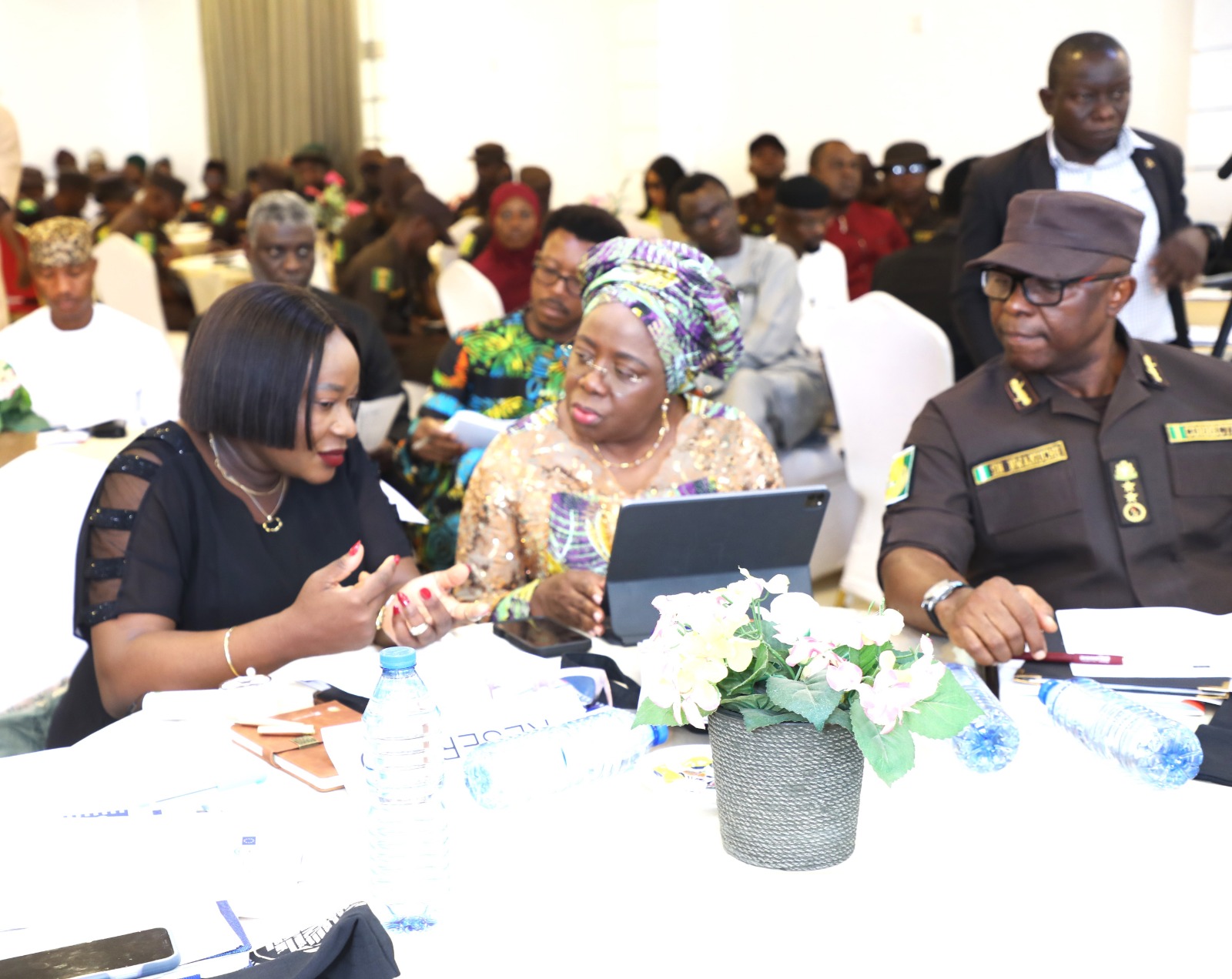
FG Pushes for Correctional Reform via Public-Private Partnership
By: Michael Mike
The Federal Government has reaffirmed its commitment to transforming Nigeria’s correctional system into a hub of rehabilitation, skills development, and national productivity through strategic Public-Private Partnerships (PPPs).
The pledge was highlighted at a stakeholders’ engagement on optimizing correctional farm centres, industries, and PPP opportunities, organized by the Ministry of Interior in collaboration with civil society and development partners.
Representing the Honourable Minister of Interior, Dr. Olubunmi Tunji-Ojo, Permanent Secretary Dr. Magdalene Ajani stated that modern correctional facilities must focus not only on confinement but also on equipping inmates with practical skills for reintegration into society. “Correctional centres must evolve into institutions of transformation—where inmates are prepared to become productive members of society upon release,” she said.
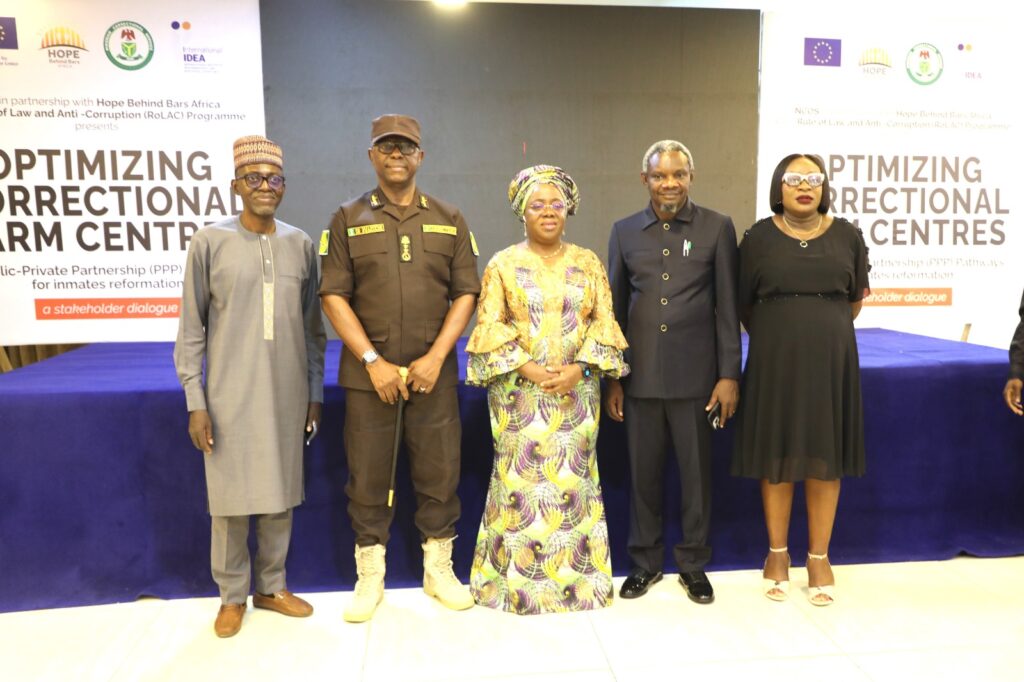
Ajani emphasized the importance of PPPs in achieving this vision, describing them as critical tools for combining government oversight with private sector expertise, innovation, and investment. She added that correctional farm centres and industries could become centres of excellence in agriculture, agro-processing, and value-chain development, contributing to both inmate rehabilitation and national food security.
The Controller-General of the Nigerian Correctional Service, Sylvester Nwakuche, disclosed that the Service currently operates 18 farm centres and 10 cottage industries nationwide, spanning crop production, livestock, fisheries, and poultry.
He noted that collaboration with the private sector would boost productivity, introduce modern techniques, and create sustainable value chains.
Stakeholders, including representatives from government, civil society, development organisations, and the private sector, agreed on the need for actionable and scalable models to drive tangible impact.
On his part, the Chairman of the House Committee on Reformatory Institutions Hon. Chinedu Ogah, called for greater accountability, innovation, and commitment in optimizing correctional farms, noting that agriculture remains a critical driver of economic growth and national security.
The engagement aligns with President Bola Ahmed Tinubu’s administration’s broader reform agenda, which prioritizes institutional strengthening, economic productivity, and sustainable development. Participants were urged to leverage partnerships that transform correctional facilities into engines of productivity, reduce recidivism, and enhance community safety.
The Ministry of Interior reiterated that the success of correctional reform depends on collective action, sustained investment, and a shared commitment to building a humane and development-oriented correctional system.
FG Pushes for Correctional Reform via Public-Private Partnership

Sallah: FRSC deploys 620 personnel in Gombe

KACRAN Applauds Buni’s Leadership, Cites Job Creation and Food Security Gains in Yobe

CDS urges Borno, Yobe residents to take ownership of fight against terror, says enemy operating from within

Roger Federer’s Shock as DNA Results Reveal Myla and Charlene Are Not His Biological Children

THE PLIGHT OF FARIDA

FAILED COUP IN BURKINA FASO: HOW TRAORÉ NARROWLY ESCAPED ASSASSINATION PLOT AMID FOREIGN INTERFERENCE CLAIMS
-
 News2 years ago
Roger Federer’s Shock as DNA Results Reveal Myla and Charlene Are Not His Biological Children
-
Opinions4 years ago
THE PLIGHT OF FARIDA
-
 News11 months ago
FAILED COUP IN BURKINA FASO: HOW TRAORÉ NARROWLY ESCAPED ASSASSINATION PLOT AMID FOREIGN INTERFERENCE CLAIMS
-

 News2 years ago
EYN: Rev. Billi, Distortion of History, and The Living Tamarind Tree
-
 Opinions4 years ago
POLICE CHARGE ROOMS, A MINTING PRESS
-

 ACADEMICS2 years ago
A History of Biu” (2015) and The Lingering Bura-Pabir Question (1)
-

 Columns2 years ago
Army University Biu: There is certain interest, but certainly not from Borno.
-

 Opinions2 years ago
Tinubu,Shettima: The epidemic of economic, insecurity in Nigeria
