
News
HOW PLATEAU PASTOR ALLEGEDLY MASTERMINDED PLOT TO KIDNAP BISHOPS’ WIVES IN JOS

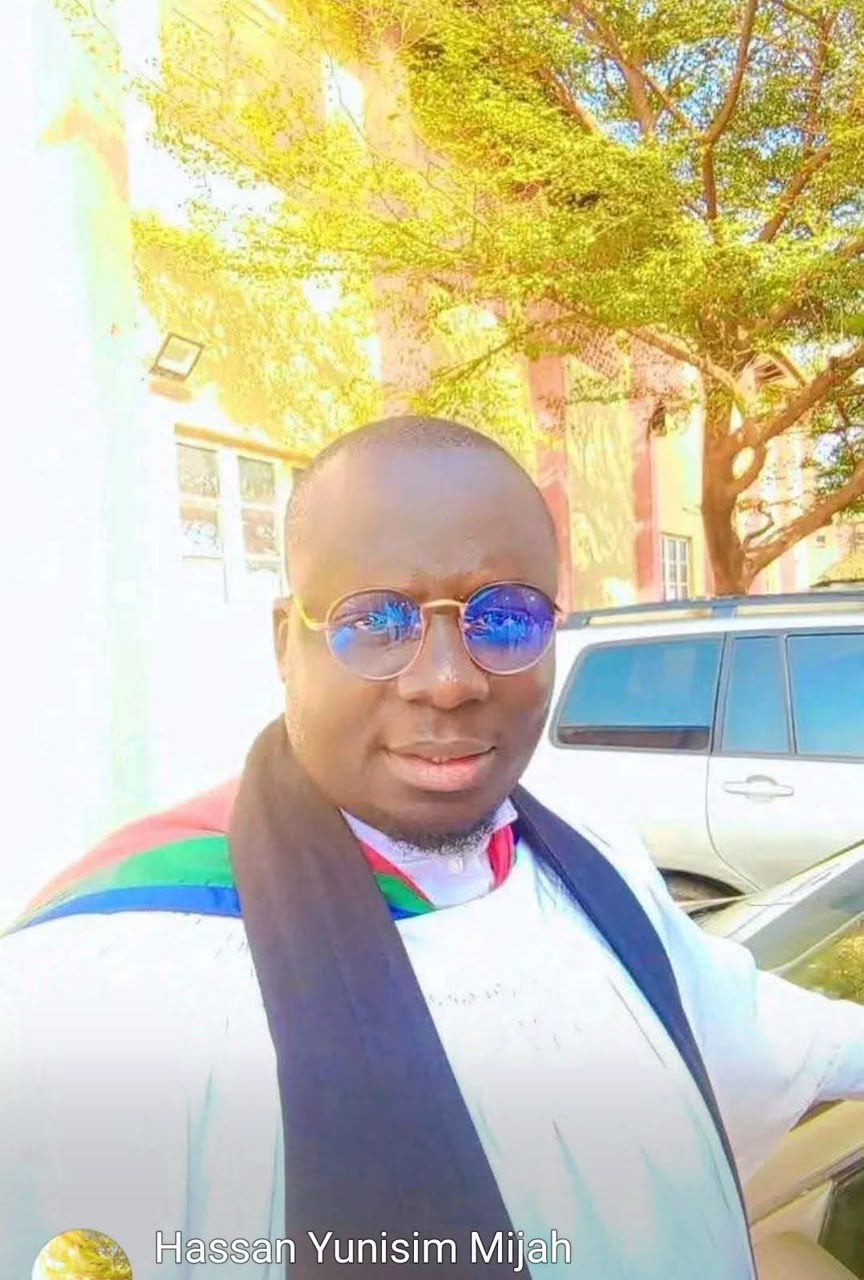
HOW PLATEAU PASTOR ALLEGEDLY MASTERMINDED PLOT TO KIDNAP BISHOPS’ WIVES IN JOS
By Zagazola Makama
What began as an alleged plan to abduct the wives of two Anglican bishops in Jos was reportedly uncovered by one of the very men recruited to execute the crime.
The case has sparked serious debate about the vulnerability of trusted individuals, the growing threat of insider involvement, and how criminal networks can exploit people with access to communities, institutions and security structures.
The alleged plot reportedly revolved around
Rev. Hassan Yunisim Mijah, 42, of Tudun Wada, Jos North, a clergyman described as a Rev. Canon under the Anglican Diocese of Jos.
Mijah was arrested alongside Sgt. Ezra Sunday, a Nigerian Air Force personnel, and OS Usman Khalid, a Nigerian Navy personnel. Both security personnel were reportedly attached to Sector 1, Operation Enduring Peace (OPEP), in Jos.
The Plateau State Police Command said the arrests followed credible intelligence concerning an alleged criminal conspiracy and a plot to kidnap the wives of Bishop Ephraim Gongden, the current Anglican Bishop of Jos, and retired Bishop Benjamin Kwashi. The intended victims were identified as Mrs Esther G. Gongden and Mrs Gloria Kwashi.
The whistleblower
According to accounts surrounding the investigation, the alleged conspiracy began to unravel when a naval officer approached by the suspected mastermind reportedly refused to participate.
The officer, described as a devout Muslim, allegedly told Bishop Ephraim Gongden about the plot after being approached to take part in the planned abduction. The officer reportedly visited the bishop at his residence in the Rantya area of Jos South Local Government Area and disclosed that he had been contacted by the syndicate.
Rather than participate in the alleged crime, he reportedly cited his religious convictions and moral upbringing as reasons for rejecting the assignment. The information immediately changed the direction of the case.
Instead of confronting the alleged mastermind directly, police operatives attached to the Plateau State Police Command’s Vigilance and Criminal Response Unit (VCRU) reportedly instructed the naval officer to continue playing along with the suspects while detectives monitored the operation. It was a classic attempt to allow the alleged conspiracy to reveal itself from within.
The safehouse trap
While the police were monitoring developments, Rev. Mijah allegedly contacted the naval officer and demanded an update on the arrangements.
According to information surrounding the investigation, one of the critical requirements was a safe location where the intended victims could allegedly be held after their abduction.
Working under police direction, the naval officer reportedly supplied an address that had been placed under police control on the outskirts of Jos. The alleged mastermind apparently believed the safehouse arrangement was genuine.
On August 7, 2026, at about 2:10 p.m., Mijah reportedly travelled to the designated location alongside Sgt. Ezra Sunday and OS Usman Khalid. The trio allegedly arrived to collect the keys to the supposed safehouse. Instead of receiving access to a hideout, they reportedly walked into a police operation.
Operatives of the VCRU who had been positioned at the location moved in and arrested the suspects. The Plateau State Police Command subsequently confirmed the arrest of the three men. The command said the suspects were interrogated and “confessed to the crime.”
The arrests also prompted the police to formally notify Operation Enduring Peace about the involvement of the two military personnel attached to the operation.
The alleged ransom plan
Investigators subsequently uncovered further details about the alleged plot. According to the information provided by the police, Mijah allegedly instructed his co-conspirators to demand a ransom of ₦100 million from the diocese following the abduction.
The alleged instruction reportedly came with a minimum acceptable amount of ₦50 million, suggesting that the kidnapping was allegedly planned as a financially motivated operation rather than an impulsive crime.
If established through the ongoing investigation and subsequent legal proceedings, the alleged ransom structure would indicate that the suspects had moved beyond merely discussing an abduction and had allegedly begun planning the financial demands that would follow.
An earlier attempt to recruit a militia gang
Investigators also reportedly uncovered another disturbing dimension to the alleged plan. According to the information provided, Mijah had initially attempted to contract Fulani Fulani Bandits to carry out the abduction.
That arrangement allegedly collapsed after the militia leader insisted that his men would sexually assault the two women during captivity.
Mijah reportedly rejected the condition.
The alleged failure of that arrangement subsequently led him to seek another group capable of carrying out the operation, eventually turning to military personnel.
The allegation, if established, presents a particularly disturbing picture of how criminal conspiracies can move between different networks in search of people with the required access and capability.
The alleged involvement of two personnel attached to a military security operation adds another layer of concern to the case. Security personnel routinely possess knowledge of movement patterns, locations, routines and vulnerabilities that ordinary criminals may struggle to obtain.
This is why insider threats are considered particularly dangerous in asymmetric security environments. An outsider may need to break through several layers of security. An insider may already know where the door is.
The case therefore goes beyond the alleged targeting of two bishops’ wives. It pointed out to how criminal elements can exploit relationships, access and institutional familiarity to facilitate crimes.
A familiar face in security circles
There is also an element of irony surrounding the allegations against Mijah.
Zagazola Media further learnt that the clergyman was reportedly regarded as being close to security personnel and had, on several occasions, provided information concerning suspected attackers planning to attack communities. That history reportedly made his alleged involvement in a kidnapping conspiracy particularly difficult to reconcile.
A person who is trusted enough to provide intelligence about attackers can potentially acquire knowledge about how security forces operate, what information they consider important and how their response mechanisms function.
This is precisely why intelligence services place emphasis on corroborating information, assessing sources and continuously reviewing the credibility of human intelligence.
The person providing information about the enemy must not automatically be assumed to be incapable of becoming part of the threat.
The alleged dispute with the church
Investigation has also reportedly uncovered a background of administrative friction between Mijah and the leadership of the Anglican Diocese of Jos. According to the information provided, Mijah had previously been dismissed by retired Bishop Benjamin Kwashi. He was later reinstated by the current Bishop of Jos, Rt. Rev. Ephraim Gongden.
Following his reinstatement, Mijah reportedly demanded payment of outstanding allowances or back-pay from the diocese. The diocese allegedly declined to settle the claimed arrears.
Another aspect emerging from the background information is Mijah’s reported political ambition.
The clergyman, described as an indigene of Adamawa State, is reportedly contesting for the House of Representatives seat representing Numan/Lamurde/Demsa Federal Constituency under the platform of the African Democratic Congress (ADC).
That political background has added another layer of public interest to the case, although his political activities, by themselves, do not establish any connection to the alleged kidnapping plot. The central issue remains the criminal allegation currently being investigated by the police.
Why the case matters
The alleged conspiracy illustrates one of the most difficult challenges confronting security agencies in an environment where criminal networks increasingly depend on access, information and personal relationships. Kidnapping operations do not always begin in the bush.
They can begin in conversations, through trusted contacts, inside communities, within institutions or among people who appear to have legitimate reasons for being close to potential victims. That is what makes insider threats particularly dangerous. In asymmetric warfare, the enemy does not always announce himself. He may not wear a uniform. He may not carry a weapon openly. He may even present himself as someone helping security agencies identify the threat.
That is why intelligence must be independently verified, regardless of whether it comes from a civilian, a community leader, a religious figure or even someone with access to security personnel.
Investigation continues
The Plateau State Police Command has confirmed that the suspects remain in custody while investigation continues. Operation Enduring Peace has also reportedly been formally informed of the arrest of the two military personnel.
Investigators are expected to establish the full circumstances surrounding the alleged conspiracy, determine whether additional persons were involved and examine the financial, logistical and communication links connecting the suspects.
For now, the case remains an allegation under investigation, and the suspects are entitled to due process and the presumption of innocence until proven guilty by a competent court.
But if the allegations are ultimately established, the case would represent a disturbing example of how criminal conspiracies can allegedly penetrate circles of trust and how one unexpected whistleblower can sometimes expose an entire network before the first victim is taken.
HOW PLATEAU PASTOR ALLEGEDLY MASTERMINDED PLOT TO KIDNAP BISHOPS’ WIVES IN JOS


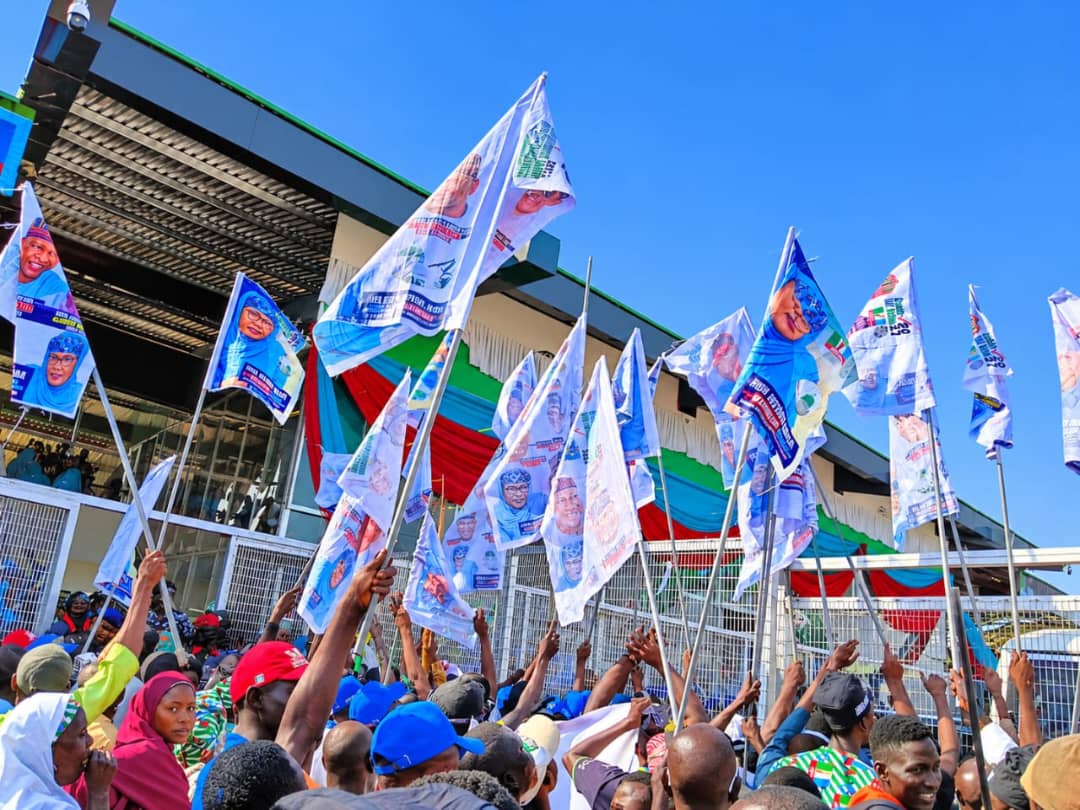
Yobe APC flag-off 2027 campaign in Damaturu
By: Yahaya Wakili
The All Progressives Congress (APC) Yobe state chapter has today officially flagged off its statewide campaign ahead of the 2027 general elections at the August 27 stadium in Damaturu, the state capital.
Addressing a massive crowd of APC supporters, the Minister of Police Affairs and Chairman of critical stakeholders in Yobe state, Senator Ibrahim Geidam, has cautioned members of the party against anti-party activities in the forthcoming general elections in the state and the country as a whole.
According to Senator Geidam, the party leadership has concrete evidence regarding those who worked tirelessly against the interest of the APC during the previous general elections in the state.
‘I have the record at my hand of those who participated in the non-success of the party in the past general elections, and I will disclose them now if possible,’ the Minister of Police Affairs added.
The highlight of the ceremony was the receiving of the large number of decampees from the PDP to APC. The defectors led by the former minister of science and technology, Dr. Abdu Bulama, and the former national chairman of the People’s Democratic Party (PDP), Ambassador Umaru Iliya Damagum.
In his remarks, Governor Mai Mala Buni CON, COMN of Yobe State, welcomed the defectors and presented them the party flags and commended them for what he described as a welcome development and solidarity to the party.
Governor Buni assured the defectors that the leadership of the All Progressives Congress (APC) in the state promised equal opportunities for the new members and called on all party supporters in the state to come out and en masse to vote for President Bola Ahmed Tinubu GCFR and all APC candidates from top to bottom.
Also speaking of the detector-general of the campaign council, Hon. Kaigama Umar Yunusari said the 2027 election is a competition between zone C and two other zones because this time around the governorship candidate is from zone C; the zone has never produced the governor or the deputy since the restoration of democracy in 1999.
Yobe APC flag-off 2027 campaign in Damaturu
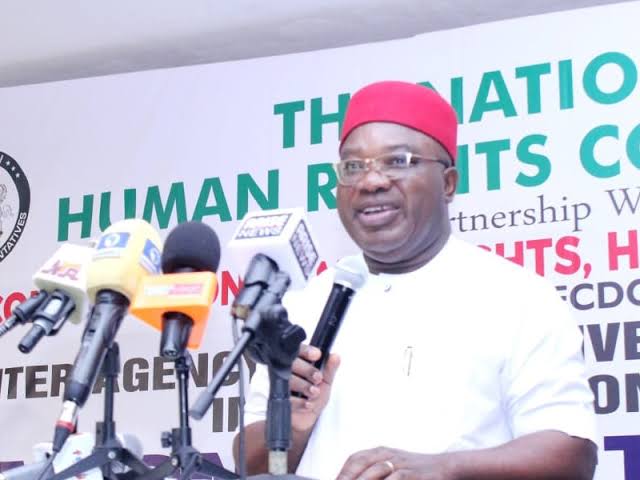
NHRC Wqrns Media Against Electoral Misinformation, Hate Speech Ahead of 2027 Polls
…Ojukwu urges ethical reporting, protection of journalists, accountability
By: Michael Mike
The National Human Rights Commission (NHRC) has warned against the spread of misinformation, disinformation, hate speech and politically manipulated narratives ahead of the 2027 general elections, saying irresponsible media reporting could threaten national peace, public safety and democratic stability.
The Executive Secretary of the Commission, Chief Tony Ojukwu, said the media must uphold accuracy, fairness, verification, balance and respect for human dignity in its coverage of the electoral process.
Ojukwu, who spoke at the 2026 NHRC Annual Media Parley, said the media’s strategic role in informing voters, scrutinising political actors, shaping public opinion and facilitating democratic engagement placed enormous responsibility on journalists, particularly as the country approaches another electoral cycle.
The parley was themed, “Ethical Journalism and the 2027 General Elections: Promoting Professionalism, Peace and Accountability.”
According to him, elections transcend political contests and the transfer of power, as they involve fundamental human rights, including freedom of expression, access to information, peaceful assembly, political participation and the right of citizens to freely determine their leaders.
He warned that the distinction between responsible and irresponsible journalism could have far-reaching consequences for national cohesion and the enjoyment of human rights.
“Our message is simple: the media must not become a vehicle for electoral division; it must remain an instrument for democratic accountability, peaceful participation and national cohesion,” he said.
The NHRC boss stressed that while freedom of expression remained fundamental to democracy, journalists must exercise the right with professional responsibility, especially in an increasingly volatile information environment where digital manipulation and politically motivated narratives could undermine public confidence in democratic institutions.
He, however, said the responsibility for a healthy media environment did not rest on journalists alone, insisting that media practitioners must also be protected from intimidation, harassment and unlawful interference in the discharge of their duties.
Ojukwu said the Commission remained committed to protecting journalists’ rights and promoting an environment that supports independent, free and responsible media practice, noting that safeguarding journalists also protects citizens’ right to information and preserves the democratic space.
He urged journalists to intensify human rights-focused reporting in the run-up to the 2027 elections, particularly on voter intimidation, political violence, discrimination, attacks on journalists, restrictions on civic participation and violations of the rights of women, children, persons with disabilities and other vulnerable groups.
The Executive Secretary also drew attention to the risks confronting journalists during election coverage, especially in volatile environments, saying their safety and security must remain a priority.
He disclosed that the NHRC, in collaboration with Konrad Adenauer Stiftung, would launch a Safety Handbook for Journalists and Media Practitioners on November 26, to provide practical guidance on navigating the risks associated with field reporting, particularly during elections.
He said the initiative was designed to equip journalists with the knowledge and guidance needed to protect themselves while carrying out their professional responsibilities.
Ojukwu expressed appreciation to journalists and media organisations for their sustained coverage of the Commission’s activities, their efforts in amplifying the voices of victims of human rights violations and their role in bringing critical human rights issues to national attention.
He described the annual parley as more than an engagement between the Commission and the media, saying it offered an opportunity to strengthen their partnership, reflect on their shared responsibilities and advance a society anchored on human rights, justice, accountability and democratic values.
The Executive Secretary expressed optimism that the deliberations would deepen collaboration between the NHRC and media practitioners and strengthen collective efforts towards peaceful, credible and accountable elections in 2027.
He welcomed the Director of the United Nations Information Centre (UNIC), Nigeria, Ronald Kayanja, who was invited as keynote speaker, alongside journalists, civil society representatives and officials of the Commission.
NHRC Wqrns Media Against Electoral Misinformation, Hate Speech Ahead of 2027 Polls
EU Releases €10m Additional Humanitarian Aid for Nigeria
By: Michael Mike
The European Union has released an additional €10 million in humanitarian assistance for Nigeria as part of a €39.5 million funding package to address urgent humanitarian needs across the Sahel and Lake Chad regions, amid persistent conflict, displacement, food insecurity and climate-related shocks.
The additional funding for Nigeria, announced by the EU Commissioner for Equality, Preparedness and Crisis Management, Hadja Lahbib, during a Senior Officials Meeting on the humanitarian situation in the Sahel and Lake Chad on November 12, is expected to strengthen emergency interventions in communities facing severe humanitarian challenges.
The EU said the funding was part of a humanitarian package announced at the latest United Nations General Assembly, bringing its total humanitarian assistance to the Sahel and Lake Chad regions to €263.5 million for 2026.

The additional €10 million allocated to Nigeria will support the scaling up of food security interventions, multi-purpose cash assistance, nutrition and healthcare services in areas with high levels of displacement.
The funding will also be deployed to improve shelter conditions, access to clean water, sanitation and hygiene services, while support for logistics and telecommunications in humanitarian hubs will be reinforced to facilitate the delivery of emergency assistance.
Nigeria continues to grapple with humanitarian challenges arising from prolonged insecurity, displacement, food shortages and environmental pressures, particularly in conflict-affected communities where access to basic services remains limited.
Across the wider Sahel and Lake Chad regions, the EU said its humanitarian funding supports frontline humanitarian partners in delivering emergency food, nutrition, healthcare, protection, water and sanitation services, as well as education in emergencies, according to the most pressing needs in individual countries.
The bloc reiterated that its humanitarian assistance is guided by humanitarian principles and allocated strictly on the basis of needs, irrespective of political, religious or other considerations.
It also renewed its call for respect for international humanitarian law and the protection of civilians and humanitarian workers operating in crisis-affected areas.
EU Releases €10m Additional Humanitarian Aid for Nigeria

Yobe APC flag-off 2027 campaign in Damaturu

EU Launches ₦152.9m Fund to Protect Women from Electoral Violence Ahead of 2027 Polls

NHRC Wqrns Media Against Electoral Misinformation, Hate Speech Ahead of 2027 Polls

Roger Federer’s Shock as DNA Results Reveal Myla and Charlene Are Not His Biological Children

THE PLIGHT OF FARIDA

FAILED COUP IN BURKINA FASO: HOW TRAORÉ NARROWLY ESCAPED ASSASSINATION PLOT AMID FOREIGN INTERFERENCE CLAIMS
-
 News3 years ago
Roger Federer’s Shock as DNA Results Reveal Myla and Charlene Are Not His Biological Children
-
Opinions5 years ago
THE PLIGHT OF FARIDA
-
 News2 years ago
FAILED COUP IN BURKINA FASO: HOW TRAORÉ NARROWLY ESCAPED ASSASSINATION PLOT AMID FOREIGN INTERFERENCE CLAIMS
-
 Opinions5 years ago
POLICE CHARGE ROOMS, A MINTING PRESS
-

 News3 years ago
EYN: Rev. Billi, Distortion of History, and The Living Tamarind Tree
-

 ACADEMICS3 years ago
A History of Biu” (2015) and The Lingering Bura-Pabir Question (1)
-

 Columns3 years ago
Army University Biu: There is certain interest, but certainly not from Borno.
-

 Politics1 year ago
2027: Why Hon. Midala Balami Must Go, as Youths in Hawul and Asikira/Uba Federal Constituency Reject ₦500,000 as Sallah Gift
