
News
Nestlé, FG Launch Nationwide Campaign Against Unsafe Water Michael Olugbode in Abuja


Nestlé, FG Launch Nationwide Campaign Against Unsafe Water Michael Olugbode in Abuja
By: Michael Mike
The Federal Government and Nestlé Nigeria Plc have launched a nationwide water quality advocacy campaign aimed at tackling unsafe drinking water and taking water safety education directly to communities across the country.
The initiative, being implemented in collaboration with the Organised Private Sector in Water, Sanitation and Hygiene (OPS-WASH), seeks to shift Nigeria’s water conversation from mere access and availability to the quality, safety and sustainability of water consumed by citizens.
The campaign was unveiled at a National Training of Trainers (ToT) workshop on the Water Quality Handbook, bringing together government officials, technical experts and other stakeholders to build a network of personnel capable of cascading water safety knowledge to states, local government areas and communities.
Representing the Minister of Water Resources and Sanitation, Engr. Prof. Joseph Utsev, at the event, Director Habu Jamilu said Nigeria could no longer afford fragmented interventions in water quality management, stressing the need for a unified national approach.
He described the Water Quality Handbook as a definitive technical guide designed to establish standard procedures across the water quality value chain.
According to him, the handbook covers source protection, household water handling, water testing, household water treatment, climate-related water quality challenges and channels for reporting water quality concerns to relevant authorities.
Utsev said the training represented a critical step towards converting the technical provisions of the handbook into practical knowledge that could be replicated across the country.
He urged participants to maximise the technical sessions and practical exercises, noting that the success of the national campaign would ultimately depend on effective transfer of knowledge from trained personnel to communities.
Speaking on the initiative, the National Coordinator and Global Head of OPS-WASH Nigeria, Dr. Nicholas Igwe, who represented Nestlé Nigeria at the event, said the company was deliberately broadening its approach to water stewardship beyond access to include quality, governance and sustainability.
Igwe disclosed that under Nestlé Nigeria’s Water Regeneration Project, the company had committed to providing about 270,000 cubic metres of water annually to 16 communities in one catchment area, while another catchment area covering eight communities was expected to receive about 130,000 cubic metres.
The combined intervention amounts to about 400,000 cubic metres of water annually, underscoring the scale of the company’s stated commitment to water regeneration and community development.
He said the project rests on four key pillars — water access, water quality, governance and sustainability — with the objective of ensuring that communities do not merely have water but have access to water that meets acceptable quality standards.
“People should not only have access to water; they should also understand and benefit from water that meets acceptable quality standards,” Igwe said.
He explained that community participation was central to the project, with communities involved at different stages, from design through implementation, in order to promote ownership and ensure that the benefits could be sustained beyond the intervention period.
The project also incorporates water harvesting initiatives aimed at supporting agricultural activities and contributing to food security.
Igwe said the Water Quality Handbook, launched in April 2026 with the support of the Federal Ministry of Water Resources and Sanitation, was designed to be more than a policy document.
He said its real value would be measured by its ability to reach ordinary Nigerians and equip them with practical knowledge about the water they consume.
“The objective is for people to know exactly what they drink and understand how water quality affects their health and even the economy,” he said.
According to him, the trainers being developed through the workshop would take the knowledge contained in the handbook to different states, local government areas and communities.
They would educate residents on the health and economic consequences of poor water quality, appropriate household practices and the importance of consuming safe water.
Igwe also challenged private-sector organisations to move beyond interventions at the federal level and ensure that their investments translate into measurable benefits for communities.
He called on state governors and state-level water and sanitation institutions to take ownership of the campaign and support its implementation when it reaches their respective states.
The training featured technical sessions designed to equip participants with practical knowledge of water quality management.
A goodwill message was delivered by the President of the Association of Professional Women Engineers in Nigeria (APWEN), Engr. Chinreye Igwegbe, who joined other stakeholders in advocating stronger professional and institutional collaboration in water management.
The partnership between the Federal Ministry of Water Resources and Sanitation, OPS-WASH and Nestlé Nigeria signals an increasing recognition that Nigeria’s water challenge extends beyond providing sources of supply.
The emerging priority is ensuring that the water reaching Nigerian households is safe, tested, properly handled and sustainable.
For millions of Nigerians who depend on vulnerable water sources, the success of the campaign could therefore determine whether access to water translates into genuine protection of public health — or merely access to water that may still pose risks.
Nestlé, FG Launch Nationwide Campaign Against Unsafe Water Michael Olugbode in Abuja





Moscow Jamboree: If Russia Cannot Protect Itself, Why Must Africa Keep Coming to It?
By Oumarou Sanou
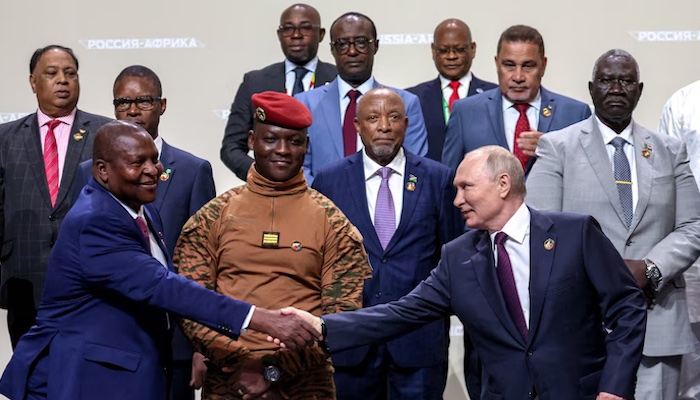
With barely a month to go before the Third Russia-Africa Summit, scheduled for 28–29 October in Moscow, African delegations face a question that has nothing to do with diplomacy and everything to do with arithmetic: is it worth the risk of flying into a capital that Ukrainian drones now reach with uncomfortable regularity, and what, precisely, does Africa get for making the trip at all?
The security question answers itself first. On 6 October, roughly 650 drones struck the Moscow region in one of the largest such attacks of the war, killing two people and setting a warehouse ablaze; it followed a 20 September assault in which some 450 drones were aimed at the capital specifically, part of a wider barrage of 1,600 launched across Russia that day. These are not isolated incidents but a pattern, and one that has already reached African carriers directly. In early September, Air Tanzania suspended its Dar es Salaam-Moscow route following a risk assessment, resuming it only days later under commercial and diplomatic pressure. “If Air Tanzania judged it necessary to temporarily suspend its flights, it was not without reason,” a Tanzanian official close to the matter is reported to have said. “But what happens if Moscow is struck again during the summit, or if air defences are activated while we are there?”
That question deserves more than Moscow’s choreography will allow. The danger is not that Ukraine would deliberately target an African delegation; it is that civilian aviation and live air defence operations now share the same airspace over the same city, with precedents that should concentrate minds. In 2014, flight MH17 was shot down over eastern Ukraine, killing all 298 people aboard. In December 2024, Azerbaijan Airlines flight J2-8243 crashed after apparently being struck during Russian air defence operations against drones, killing 38. Neither involved an African carrier, but both show what happens when commercial aircraft fly through contested skies.
“If Russia cannot secure its own capital, what exactly is it offering the African governments that have come to treat it as a security guarantor?”
Moscow’s pitch to Africa rests on a narrower premise than its rhetoric suggests, not development, not shared prosperity, but protection, delivered through private military contractors and now the state-run Africa Corps in Mali, the Central African Republic and beyond. Putin said in 2023 that Russia had military-technical cooperation agreements with more than 40 African states; US congressional research has identified regime protection, not institution-building, as the principal attraction. That comparative advantage is strongest precisely where African institutions are weakest, which is a different business from development entirely.
The economic case is no sturdier. At the inaugural Sochi summit in 2019, Putin set a target of roughly doubling Russia-Africa trade within four to five years, implying a figure near $40bn. By Lavrov’s own account, 2025 turnover came in at just over $27bn, and Russia still accounts for less than 1% of foreign direct investment into Africa. That gap has not gone unnoticed inside the delegations themselves. “It would be interesting to discuss the ‘win-win’ aspect of this partnership. For now, that is not the case,” a source close to Ghana’s delegation said, adding pointedly: “AI can wait, political stability cannot,” a rejoinder aimed squarely at Lavrov’s own list of summit priorities, artificial intelligence, digital payments, alternative currencies, which reads less like an African agenda than one exported wholesale from Moscow. Gabon has reportedly settled the matter outright, declining to send its president or his inner circle to a summit held far from its borders and further still from its citizens’ concerns.
More troubling than the shortfall is what increasingly fills it. A US Congressional Research Service assessment notes reports that African gold and other resources have helped Russia cushion sanctions pressure. Now another resource appears increasingly relevant: people. Amnesty International’s September investigation documented deceptive and coercive recruitment of foreign nationals, disproportionately from poorer Global South countries, into Russia’s armed forces, concluding that in many cases the practices amounted to human trafficking. A partnership cannot credibly be called mutually beneficial if Africans searching for ordinary jobs end up supplying manpower for someone else’s war.
This is also why the summit’s location deserves scrutiny, not just its agenda. Russia has now held three summits with Africa, Sochi in 2019, St Petersburg in 2023, Moscow in 2026, and has never once brought the gathering to African soil.
Compare that with France’s Africa Forward Summit, held in Nairobi on 11–12 May 2026 and co-chaired jointly by Macron and Kenya’s president, the first such summit in Africa, with African hosts, African protocol and African convening power. Whatever one thinks of France’s own record on the continent, the choice of venue signalled something Moscow has never offered: treating African leaders as co-chairs of their own partnership rather than invitees to someone else’s capital. If Russia’s engagement with Africa is genuinely a partnership of equals rather than a demonstration of whose capital commands the guest list, there is no structural reason the next summit could not be held in Addis Ababa, Nairobi or Abuja, co-chaired by an African head of state. That it has not been, after three editions, says as much about the relationship as any communiqué will.
None of this argues for severing ties with Moscow. Russia remains a significant arms supplier and a useful counterweight for states diversifying away from former colonial patrons, and strategic autonomy means keeping options open, not foreclosing them. But engagement is not deference, and a summit is not evidence that a partnership is working. As one official close to the preparations put it: “For three years now we have been discussing a summit held in Africa; it remains a dead letter. But on top of that, we now run the risk of being bombed.” Before African leaders sign on to another round of declarations in a city that cannot fully guarantee their physical safety, the least they owe their own citizens is an honest answer: if Russia cannot protect itself, and will not even meet Africa halfway on its own soil, what exactly is this partnership protecting?
Oumarou Sanou is a social critic, Pan-African observer and researcher focusing on governance, security and political transitions in the Sahel. He writes on geopolitics, regional stability and African leadership dynamics. Contact: sanououmarou386@gmail.com
Moscow Jamboree: If Russia Cannot Protect Itself, Why Must Africa Keep Coming to It?
EU Releases €225,000 Humanitarian Aid for Conflict-Displaced Persons in Kebbi
By: Michael Mike
The European Union (EU) has released €225,000, equivalent to about N340 million, in humanitarian assistance to support communities displaced by conflict in Kebbi State.
The intervention, announced on Wednesday, will enable the Nigerian Red Cross to provide emergency assistance to conflict-displaced persons in the state over a six-month period.
The assistance comes amid worsening insecurity in Kebbi, where armed attacks and communal violence across seven Local Government Areas have displaced thousands of residents and left affected communities in urgent need of humanitarian support.
According to the EU, the funding will prioritise multipurpose cash assistance, allowing displaced families to meet their most immediate needs, while protection services will be provided for vulnerable individuals.
The response is expected to reach approximately 7,700 conflict-displaced people living in settlements and host communities across the state.
The EU said particular attention would be given to female-headed households, persons with disabilities, elderly people and individuals facing acute protection risks.
The intervention will also include continuous monitoring of population movements and the mobilisation of local volunteers, with the EU saying the effort would help lay the groundwork for longer-term recovery interventions by other humanitarian actors.
The latest intervention is part of the EU’s contribution to the Disaster Response Emergency Fund (DREF) of the International Federation of Red Cross and Red Crescent Societies (IFRC).
The EU said insecurity in Kebbi State had deteriorated significantly following an escalation of armed attacks and communal violence.
While displacement had been ongoing since mid-August, it said a sharp escalation in violence around August 31 triggered the humanitarian response.
The violence has reportedly affected more than 16,600 people across the state, including 7,706 people who have been displaced and 108 others who sustained injuries.
The EU said the affected population was confronting a complex security environment characterised by organised banditry, armed group activity and communal violence.
It added that displaced families living in temporary settlements and host communities were in urgent need of shelter, food, clean water, healthcare and protection.
The humanitarian funding is being channelled through the IFRC’s DREF, a mechanism established to provide immediate financial support to National Red Cross and Red Crescent Societies responding to disasters and other emergencies.
The EU said the intervention reflected its broader commitment to humanitarian assistance for populations affected by conflicts and disasters.
Through its Civil Protection and Humanitarian Aid department, the bloc provides emergency assistance to vulnerable populations affected by natural disasters and man-made crises around the world.
The European Commission has also signed a €16 million humanitarian delegation agreement with the IFRC to support the Federation’s DREF.
Established in 1979, the DREF is funded through contributions from donors and provides National Red Cross and Red Crescent Societies with rapid access to emergency financing.
For smaller-scale disasters, the IFRC allocates grants from the fund, which can subsequently be replenished through donor contributions.
EU Releases €225,000 Humanitarian Aid for Conflict-Displaced Persons in Kebbi
N101m defamation judgment debt: A/Court begins hearing SERAP’s appeal Friday
The Court of Appeal in Abuja has scheduled hearing for Friday in the appeal filed by the Incorporated Trustees of the Socio-economic Rights and Accountability Project (SERAP) in relation to the May 5 judgment given against the group by a High Court of the Federal Capital Territory (FCT).
Information about the planned hearing date is contained in a notice sent on Wednesday by the appellate court’s Registry to parties in the appeal marked: CA/ABJ/CV/1114/2026.
Justice Halilu Yusuf of the High Court of the FCT had, in the May 5 judgment, awarded N101million in damages and cost against SERAP and its Deputy Director, Kolawole Oluwadare upon holding that they defamed two officials of the Department of State Services (DSS) through a false publication it made on September 10, 2024.
The judgment was on the suit marked: CV/4547/2024 filed by the DSS officials – Sarah John and Gabriel Ogundele – who accused SERAP and Oluwadare of making false claims in publications on the group’s website and social media platforms that the claimants invaded their Abuja office on September 9, 2024 and subjected them to harassment.
Justice Halilu Yusuf held among others that claimants led sufficient evidence that effectively established all the ingredients of defamation.
Justice Yusuf rejected that defence of justification raised by SERAP and Oluwadare on the grounds that they failed to provide evidence that their publications were not based on falsehood.
The judge noted that the words like invasion, forceful entry and harassment were used inaccurately, the defendants having admitted at trial that the DSS officials did not forcefully enter into SERAP’s premises and did not brandish any weapon
He held that the publications made by the defendants injured the reputation of the claimants in their professional capacity and standing in the society.
Justice Yusuf said: “Having been unable to establish invasion and harassment, the defence of justification fails. There is no doubt that the publication affected the claimants mentally and psychologically.”
The judge said, going forward, it was necessary for care and due diligence on the part of SERAP and its officials before releasing information to the public.
He added that in the exercise of their right to tweet and send information out, the defendants should be aware of the rights of others, particularly as it relates to government agencies and their officials.
The judge dismissed the objection raised by the defendants against the competence of the suit and held that the claimants possessed the requisite locus standi to file the suit over which the court has the jurisdiction to entertain.
He held that as against the defendants’ argument, the claimants must not be named in the publication complained about for defamation to be established.
Justice Yusuf noted that from when the claimants complained about the inaccuracy of the publications, the defendants failed to take any steps to pull down the injurious publication.
He proceeded to adjudge the publications as defamatory and awarded damages of N100million against the defendants in addition to N1m as cost of prosecuting the suit.
The judge also ordered the defendants to publish a public apology on SERAP’s website, X handle, two national daily newspapers and two television stations.
He held that the judgment sum shall attract 10 percent interest per annum from the date of the judgment until the sum is fully paid by the defendants.
N101m defamation judgment debt: A/Court begins hearing SERAP’s appeal Friday

Troops raid suspected robbers’ hideout in Nasarawa, recover motorcycle

EbonyLife Place Opens in London, Deepens UK-Nigeria Creative Ties

Moscow Jamboree: If Russia Cannot Protect Itself, Why Must Africa Keep Coming to It?

Roger Federer’s Shock as DNA Results Reveal Myla and Charlene Are Not His Biological Children

THE PLIGHT OF FARIDA

FAILED COUP IN BURKINA FASO: HOW TRAORÉ NARROWLY ESCAPED ASSASSINATION PLOT AMID FOREIGN INTERFERENCE CLAIMS
-
 News3 years ago
Roger Federer’s Shock as DNA Results Reveal Myla and Charlene Are Not His Biological Children
-
Opinions5 years ago
THE PLIGHT OF FARIDA
-
 News1 year ago
FAILED COUP IN BURKINA FASO: HOW TRAORÉ NARROWLY ESCAPED ASSASSINATION PLOT AMID FOREIGN INTERFERENCE CLAIMS
-

 News3 years ago
EYN: Rev. Billi, Distortion of History, and The Living Tamarind Tree
-
 Opinions5 years ago
POLICE CHARGE ROOMS, A MINTING PRESS
-

 ACADEMICS3 years ago
A History of Biu” (2015) and The Lingering Bura-Pabir Question (1)
-

 Columns3 years ago
Army University Biu: There is certain interest, but certainly not from Borno.
-

 Politics1 year ago
2027: Why Hon. Midala Balami Must Go, as Youths in Hawul and Asikira/Uba Federal Constituency Reject ₦500,000 as Sallah Gift
