
News
ILO Promotes Elimination of Child Labour in Mining

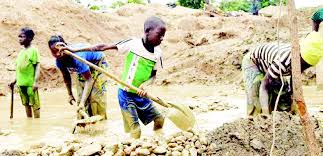
ILO Promotes Elimination of Child Labour in Mining
By: Michael Mike
The International Labour Organisation (ILO) Builds the Capacities of Stakeholders on Occupational Safety and Health and Elimination of Child Labour in the Artisanal Small-Scale Gold Mining (ASGM) Supply Chains in Niger and Osun States.
In the effort to combat child labour in Nigeria’s artisanal small-scale gold mining supply chains, the ILO ACCEL Africa Project (Accelerating Action for the Elimination of Child Labour in Supply Chains in
Africa), held significant workshops from February 18 – 27, 2025, in Niger and Osun States.
The workshops aim was to empower Stakeholders and representatives from Government, Employers, Workers organisations and community leaders, to eliminate child labour and uphold best
practices in OSH in the ASGM sector in Niger and Osun States.
In addition, Members of Community
Child Labour Monitoring Committees (CCLMCs) in the States were equipped with the necessary skills and tools to enforce Community Action Plans (CAPs), monitor and report on child labour cases, and
carry out interventions effectively.
The Director, ILO Country Office, Dr. Vanessa Phala, represented by the National Project Coordinator of the ACCEL Africa Phase II Project, Mrs. Celine Oni, stated that the objective of the workshop is to
enhance capacities of stakeholders and institutions involved in the fight against child labour.
Participants discussed and demonstrated skills and knowledge to effectively develop, advocate and implement policies and strategies aimed at eradicating child labour.
The ACCEL Africa project firstly, is working with relevant stakeholders such as the Federal Ministry of Labour and Employment, Federal Ministry of Agriculture and Food Security, the Ministry of Solid Minerals Development and members of the National Steering Committee on the Elimination of Child labour. The projects outcome is to strengthen institutions to develop and implement policies for the eradication of child labour in the cocoa and ASGM sector.
The second outcome is to address the root causes of child labour through innovative and evidence-based solutions in the supply chains (cocoa and ASGM) are institutionalized. This outcome targets
key thematic areas such as social protection, social finance, occupational safety, health and youth employment, promotion of smooth transitions from school to decent work. “The Durban Call to
Action has emphasized the need to tackle root causes of child labour, which include poverty, lack of access to social protection and Health insurance coverage for the people”.
There is ongoing research by the Project on social protection modalities and coverage, youth employment opportunities in Nigeria. It is expected that the research results and findings would guide the interventions in Niger and Osun.
The Controller of the Federal Ministry of Labour and Employment (FMLE) in Niger State, Hauwa Zakariyya, said “occupational safety and health is everyone’s business, and it should never be underestimated. When safety is neglected, accidents are bound to occur. In every respectable
workplace, safety measures are observed to prevent casualties while performing our duties.”
“And that is why we find it very, very important that ACCEL Africa project is focusing on artisanal mining to prevent incidents as what occurred in the Kuchiko community, where accidents resulted in
many casualties, particularly involving children. We believe it’s essential to educate miners to enhance safety and avoid such tragedies in the future”.
On his part, the State Controller for the Federal Ministry of Labour and Employment in Osun State, Mr. Solomon Ayinde Alabi, expressed his gratitude for Osun State’s inclusion in the Phase II project, noting that although the state was not fully integrated in Phase I, it would now benefit from the
experiences gained in other regions such as Ondo and Niger States, where the project has already shown positive outcomes.
“I am aware that Osun State was not fully integrated in the Phase I of the project, I want to thank the team for the full integration of Osun State into the second Phase of the project. With success reports
from Ondo and Niger States, I am sure that Osun State will equally record great successes.
“One good pointer to the impacts of the project in our state is the report coming from Ibala community. It is pleasing to report that cases of out of school children in the community has been drastically reduced to almost zero level. This is good news is credited to the activities of the CCLMC
in the community.
“I wish to remind and appeal to us as parents, guardians, and community to make the best use of this opportunity to intensify our commitment in fighting against the menace, child labour in our respective communities. We are expected to know and share the knowledge to others so that the
goal of the project can be achieved”.
As part of the workshop activity, the participants visited artisanal mining fields in their various states for onsite observations of the mining practices, noting the tools, equipment, processes and identification of inherent hazards. Additionally, they had discussion with local miners, children onsite
and other stakeholders.
During an interview with children on the field, 13 years old Lawali Yusufa from Korokwa mining field in Minna, stated that the reason why he is mining is to be able to make money. “I am working here because my parents cannot afford to sponsor me through school so, I want to make enough money so that I can start going to school just like my mates. I know that the mining field is very dangerous especially for children like me, but I still want to continue working here because it is the only way I
can make money” Lawali said.
In Idoka mining field, Osun, 11 years old Ibrahim said his dream is to become a miner when he grows up and that is why he works there as an errand boy. “I work here as an errand boy because I want to learn how to mine for gold when I grow up. Even though I’m often chased out of the field, I still insist
on returning because it is my dream,” Ibrahim said.
Meanwhile, the training participants were divided into teams for a group activity to discuss the OSH
risks at the mining site, conditions of work compared to the best practices and decent work expectations, and present what they’ve learned from the workshop.
The training initiative is expected to significantly improve the ability of these committees to act as the first line of defense in the fight against child labour in Nigeria’s cocoa and gold mining sectors.
ILO Promotes Elimination of Child Labour in Mining


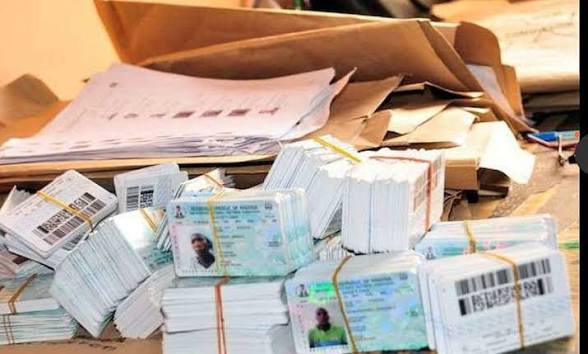
KACRAN Urges INEC to Extend PVC Collection Deadline by One Week
By: Michael Mike
The Kulen Allah Cattle Rearers Association of Nigeria (KACRAN) has urged the Independent National Electoral Commission (INEC) to extend the ongoing display of the preliminary voters’ register and distribution of Permanent Voter Cards (PVCs) by one week to prevent the disenfranchisement of millions of eligible voters ahead of the 2027 general elections.
The association proposed that the exercise, scheduled to end on October 15, should be extended to October 22, 2026, citing inadequate public awareness, particularly among rural dwellers, pastoral communities and internally displaced persons (IDPs) in Northern Nigeria.
In a statement signed by its National President, Hon. Khalil Mohd Bello, KACRAN said many Nigerians who registered online or physically between August 18 and December 10, 2025, remained unaware of the ongoing collection exercise and the approaching deadline.
The association expressed concern that while residents of major cities and towns had better access to information through newspapers, electronic media and social media, many people in remote rural communities and pastoral settlements were yet to receive adequate sensitisation.
KACRAN said it had spent months mobilising its members without PVCs to participate in the registration exercise but feared that many of those who registered might lose the opportunity to collect their cards before the deadline.
It also highlighted the plight of thousands of internally displaced persons across Northern Nigeria, noting that many had registered as voters after fleeing their communities but might struggle to collect their PVCs because of inadequate information about collection centres and their designated ward headquarters.
According to the association, a one-week extension would provide additional time to reach affected communities and enable registered voters to collect their cards ahead of the 2027 elections.
KACRAN stressed that PVC collection was critical to effective participation in the electoral process, arguing that every eligible vote mattered in determining the outcome of elections.
The association further criticised politicians for concentrating on campaigns and the selection of preferred candidates while paying insufficient attention to mobilising eligible voters who were yet to collect their PVCs.
It urged INEC to treat the request as urgent, warning that failure to extend the deadline could leave many registered Nigerians unable to participate fully in the forthcoming elections.
Beyond its appeal to the electoral commission, KACRAN called on the 19 Northern governors to declare Monday, October 19, and Tuesday, October 20, 2026, work-free days if INEC approved the extension.
The proposed days, it said, should be devoted to intensive public enlightenment and mobilisation across the region to ensure that all eligible voters whose cards were ready collected them at their designated ward headquarters.
The association also called on print and electronic media organisations, as well as social media platforms, to intensify public awareness campaigns and provide timely information on PVC collection.
It urged Nigerians who had registered and whose cards were available to collect them before the deadline, warning that failure to do so could lead to avoidable disappointment during the 2027 general elections.
KACRAN said it was prepared to participate actively in the electoral process and support the emergence of leaders committed to justice and fairness for all Nigerians.
KACRAN Urges INEC to Extend PVC Collection Deadline by One Week
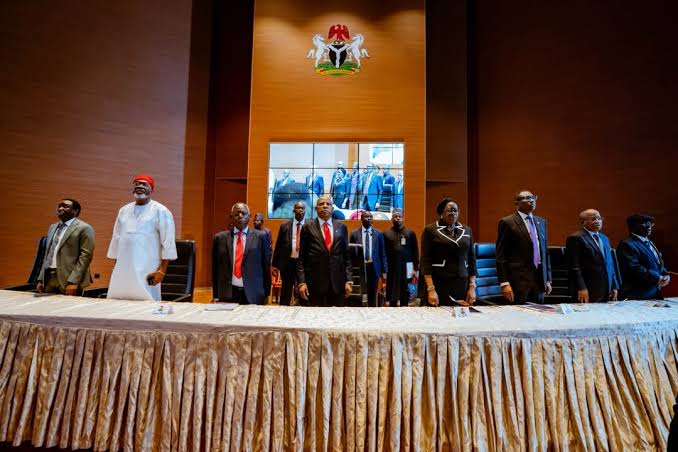
Centre Urges Presidential Candidates to Commit to Fiscal Reforms
By: Michael Mike
The Centre for Social Justice has called on political parties and presidential candidates to make strict budget discipline, transparent public borrowing and enforcement of statutory debt limits central to their manifestoes ahead of Nigeria’s next political transition.
The centre warned that rising public debt, mounting debt-servicing obligations and persistent breaches of public financial management rules were undermining fiscal stability, calling for structural reforms to strengthen accountability in the management of public funds.
In a policy commentary, Paul Dasimeokuma of the Centre for Social Justice said Nigeria needed to move away from discretionary fiscal practices towards strict compliance with existing laws governing budget preparation, public borrowing and debt management.
He cited public debt exceeding ₦159 trillion and debt-servicing costs consuming more than half of federal revenues as indicators of the pressure on the nation’s finances.
Dasimeokuma identified delays in the passage of annual budgets as a major weakness in the country’s fiscal management system, arguing that disruptions to the statutory budget calendar undermine planning, spending predictability and the credibility of public accounts.
He cited the 2026 Federal Budget, which received presidential assent on April 17, 2026, as an example of the delays that have characterised the budgeting process.
According to him, Section 14(1) of the Fiscal Responsibility Act (FRA) 2007 provides a framework for the timely preparation and approval of the Medium-Term Expenditure Framework (MTEF), which underpins the annual budget.
He argued that adherence to the statutory timetable would help ensure that annual budgets receive presidential assent before the commencement of the financial year on January 1.
The centre also raised concerns over the practice of extending capital budget implementation beyond the relevant financial year, sometimes resulting in multiple capital budgets being implemented concurrently.
Dasimeokuma said such practices created uncertainty in public expenditure management, distorted accounting and weakened the link between approved budgets and actual government spending.
He further questioned the management of public borrowing, arguing that loans should be subjected to rigorous scrutiny to establish their economic and social benefits before approval.
He referenced Section 41 of the Fiscal Responsibility Act, which sets out restrictions on government borrowing, and Section 44, which provides for cost-benefit analysis of proposed loans.
According to him, legislative approval of major borrowing proposals should be supported by transparent documentation showing the purpose, costs and expected returns of the loans.
He alleged that some borrowing approvals had been granted without sufficient public scrutiny and warned against the use of loans to finance recurrent expenditure and debt-service obligations.
Dasimeokuma also called attention to Section 42 of the Act, which provides for the establishment of an overall debt limit for the federation by the President in agreement with the National Assembly.
He argued that the absence of an established, legally binding debt ceiling had weakened the framework for controlling the growth of public debt.
To address the concerns, the centre urged political parties and presidential candidates to commit to four key reforms: establishing and enforcing a predictable budget calendar, implementing statutory debt limits, requiring the publication of cost-benefit analyses for external loans and ensuring transparency in public debt records.
It said the reforms should be incorporated into party manifestoes and translated into enforceable policies to improve fiscal discipline and strengthen public confidence in government financial management.
Dasimeokuma maintained that Nigeria’s economic stability would depend partly on whether political leaders could move beyond policy promises to enforce existing financial laws and ensure that public borrowing and expenditure were subject to effective oversight.
Centre Urges Presidential Candidates to Commit to Fiscal Reforms
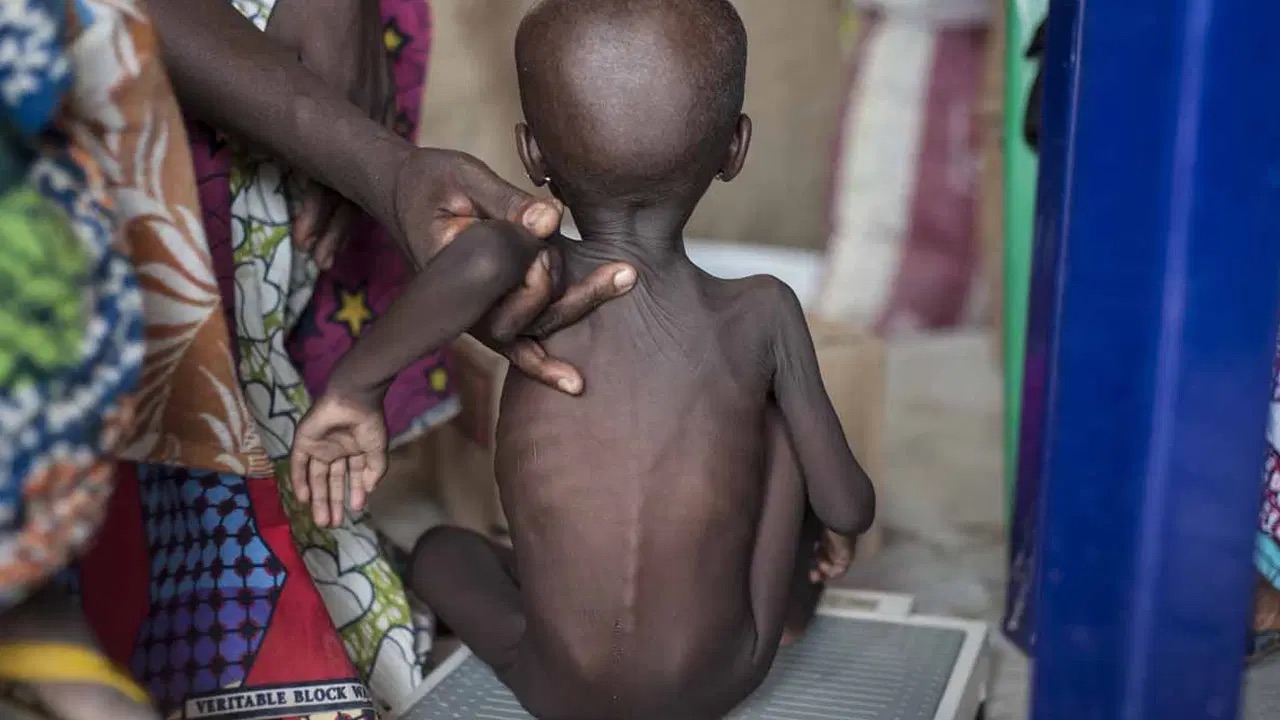
Nigeria’s Nutrition Accountability Gap Persists as Child Stunting Hits 40%
By: Michael Mike
Nigeria’s failure to translate nutrition policies and funding commitments into measurable results has come under scrutiny, with the Athena Centre for Policy and Leadership calling for performance-based financing, stronger legislative oversight and tougher accountability measures to address child malnutrition.
The centre said on Wednesday that under-five stunting in Nigeria stood at 40 per cent, against a national target of 18 per cent that has expired, highlighting the gap between policy commitments and implementation.
Speaking at a policy webinar in Abuja, the Director of the Olikoye Ransome-Kuti Institute for Health and Social Equity, Dr Danjuma Iyaji, said Nigeria had developed systems for measuring nutrition outcomes without establishing adequate mechanisms to hold public officials accountable for poor performance.
“Nigeria has built the measurement architecture of nutrition accountability without building its consequence architecture,” Iyaji said.
The webinar, organised by the Athena Centre through its institute, was titled From Measurement to Consequence: Fixing Nigeria’s Nutrition Accountability Gap. It examined findings from the centre’s policy paper, Political Incentives and Nutrition Neglect: Why State Governments Fail to Improve Child Nutrition.
The discussion brought together officials from the Office of the Vice President, the National Primary Health Care Development Agency (NPHCDA) and the House of Representatives Committee on Nutrition and Food Security to examine why government commitments were not consistently translating into improved nutrition outcomes.
According to the centre, only nine of Nigeria’s 36 states had formally established State Councils on Nutrition as of April 2026, while the existence of such councils did not necessarily demonstrate that they were functioning effectively.
To address the gaps, the centre proposed linking supplementary funding tranches to independently verified readiness, conducting annual state performance assessments, establishing an escalation framework for persistent non-performance and holding annual legislative hearings at the state level.
However, participants stressed that accountability measures must not deprive vulnerable children of essential nutrition services because their state governments failed to meet administrative or performance requirements.
The Senior Special Assistant to the President on Nutrition and Public Health, Uju Rochas-Anwukah, endorsed the diagnosis, identifying three major breaks in the accountability chain: commitments not translating into fund releases, releases failing to translate into service delivery, and inadequate understanding of nutrition priorities among subnational leaders.
“A stunted child is a lost asset that no bridge can build,” she said.
Rochas-Anwukah cautioned that readiness-based financing must not disadvantage states with the greatest nutrition needs but weaker implementation capacity. She also clarified that the terms governing the Child Nutrition Fund rested with UNICEF and its partners, rather than her office.
She called for a pathway through which less-prepared states could strengthen their capacity to qualify for support without leaving children in those states behind.
The presidential aide also urged the passage of the proposed National Food and Nutrition Bill, arguing that a stronger legal framework would help sustain accountability beyond individual administrations.
The Director of Nutrition at NPHCDA, Dr Adebiyi Olatunde, said accountability must extend beyond state-level indicators to primary healthcare facilities, where the availability of therapeutic foods and micronutrients directly affects children’s access to treatment and preventive services.
She warned that state-level figures could conceal serious deficiencies in individual communities and health facilities.
“At times we have data for a state, and the issue may be in only two particular wards,” Olatunde said.
She advocated collecting and analysing data down to ward and facility levels to identify localised failures. She also called for a root-cause assessment before sanctions or other escalation measures were imposed, to establish whether poor performance resulted from funding shortages, supply-chain problems or weaknesses in implementation.
The Research Lead for the House of Representatives Committee on Nutrition and Food Security, Abel Okechukwu, described conditional financing as “workable and urgently needed”, but argued that the approach should combine protected funding for essential services with incentives for improved performance.
He proposed allocating 70 per cent of funding as a protected lifeline for interventions such as micronutrient provision and school feeding, while reserving 30 per cent as a performance incentive linked to functional nutrition councils, approved costed plans and published expenditure records.
“Conditional financing should not punish the child,” Okechukwu said.
He also called for stronger legislative scrutiny, arguing that oversight hearings must be supported by reliable data and adequate preparation rather than conducted as ceremonial exercises.
According to him, effective hearings require standardised reporting templates and the submission of reports at least 21 days before proceedings.
Okechukwu said the committee intended to intensify joint oversight in 2026 and 2027. He also proposed inserting a provision in the Appropriation Act to link federal grants to evidence that state governments had exercised appropriate oversight of nutrition programmes.
The discussions refined several of the centre’s recommendations, particularly the need to protect essential nutrition funding, provide weaker states with a route to meeting readiness requirements, assess performance below the state level and make root-cause reviews the starting point for addressing persistent failures.
However, whether the existing Child Nutrition Fund arrangements permit the proposed financing conditions remains unresolved, according to the centre’s policy paper.
As follow-up measures, the Athena Centre said it would engage partners in the Child Nutrition Fund on financing conditions, present the proposed escalation framework to the Nigeria Governors’ Forum and take its legislative recommendations to State Houses of Assembly.
It also plans to circulate a policy note incorporating the panellists’ recommendations before publication and reassess the four proposed reforms in July 2027.
In her closing remarks, the webinar moderator and researcher at the institute, Ijeoma Achebe, said the discussion had strengthened the paper’s diagnosis of the challenges undermining nutrition outcomes.
“The gap is not simply about a lack of policies,” she said. “It is the distance between commitments and delivery.”
Nigeria’s Nutrition Accountability Gap Persists as Child Stunting Hits 40%

VP Shettima Allegations: Paul Ibe Must Bring Proof, Not Just Headlines.”

2027: Inside Tinubu–Shettima’s Campaign Strategy and the Battle for Advantage

KACRAN Urges INEC to Extend PVC Collection Deadline by One Week

Roger Federer’s Shock as DNA Results Reveal Myla and Charlene Are Not His Biological Children

THE PLIGHT OF FARIDA

FAILED COUP IN BURKINA FASO: HOW TRAORÉ NARROWLY ESCAPED ASSASSINATION PLOT AMID FOREIGN INTERFERENCE CLAIMS
-
 News3 years ago
Roger Federer’s Shock as DNA Results Reveal Myla and Charlene Are Not His Biological Children
-
Opinions5 years ago
THE PLIGHT OF FARIDA
-
 News1 year ago
FAILED COUP IN BURKINA FASO: HOW TRAORÉ NARROWLY ESCAPED ASSASSINATION PLOT AMID FOREIGN INTERFERENCE CLAIMS
-
 Opinions5 years ago
POLICE CHARGE ROOMS, A MINTING PRESS
-

 News3 years ago
EYN: Rev. Billi, Distortion of History, and The Living Tamarind Tree
-

 ACADEMICS3 years ago
A History of Biu” (2015) and The Lingering Bura-Pabir Question (1)
-

 Columns3 years ago
Army University Biu: There is certain interest, but certainly not from Borno.
-

 Politics1 year ago
2027: Why Hon. Midala Balami Must Go, as Youths in Hawul and Asikira/Uba Federal Constituency Reject ₦500,000 as Sallah Gift
