
Uncategorized
“It breaks my heart to see an 11 year old surrendered from Boko Haram enclave with three children” Borno Commissioner

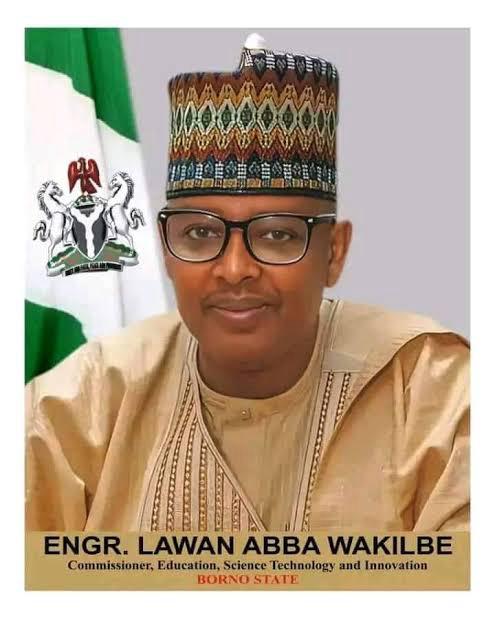
“It breaks my heart to see an 11 year old surrendered from Boko Haram enclave with three children” Borno Commissioner
By: Zagazola Makama
At just 11 years old, Fatima (not her real name) has lived through experiences unimaginable to most. With three children in tow, she surrendered from a Boko Haram enclave, carrying the weight of trauma and responsibilities far beyond her years. Her story, shared by Borno State Commissioner for Education, Science, Technology, and Innovation, Lawan Abba Wakilbe, spotlighted the urgent plight of vulnerable children and young mothers emerging from the insurgency.
“She’s just a child herself,” Wakilbe said. “To see an 11-year-old with three children is heartbreaking. This reflects the harsh reality of many girls and women caught in the insurgency, particularly in border communities like Bama, Banki, and Gwoza.”
Fatima’s surrender is part of a growing wave of young girls and women being repatriated or rescued, often from neighboring countries like Cameroon. Many, aged between 13 and 15, return with children born in captivity. With limited options, some resort to prostitution to survive, a crisis that the Commissioner attributes to extreme poverty and a lack of viable alternatives.
The Commissioner’s call to action underscores the need for urgent intervention. “Poverty is the driving force behind these vices,” he explained. “We need to establish Technical and Vocational Education and Training (TVET) centers in vulnerable areas. These centers can provide skills and startup packs for young mothers like Fatima, enabling them to rebuild their lives.”
Wakilbe stressed that traditional education systems are ill suited to address the unique needs of conflict affected children and girls. Many have witnessed violence, displacement, and abduction, leaving them in need of tailored rehabilitation and reintegration programs.
Efforts to integrate these children into regular schools have faced significant challenges. Wakilbe cited the example of some Chibok girls who struggled in secondary schools and were eventually transferred to specialized programs like the Second Chance School.
“Without long term planning, we’re failing these children,” Wakilbe said. “Donor agencies often miss the mark, implementing programs that don’t address immediate needs. For instance, teaching local languages in areas dominated by other dialects is less impactful than providing a foundational education in English.”
Despite graduating over 300 women through the Second Chance Program and equipping them with vocational skills, the challenges persist. Underage mothers like Fatima remain some of the most vulnerable.
During a courtesy visit by Hajiya Hamsatu Allamin, CEO of the Allamin Foundation for Peace, the Commissioner highlighted the need for collaborative efforts.
Allamin echoed these concerns, sharing insights from her foundation’s work in deradicalizing women and girls.
“Our initiatives, supported by the military and local communities, have helped hundreds of women and girls surrender and reintegrate,” Allamin said. “But the magnitude of the problem requires sustainable, proactive solutions.”
Allamin noted that the challenge extends beyond personal experiences; it calls for urgent action from local authorities, NGOs, and international organizations.
“In our foundation, we have Built vocational education centers and providing tailored programs for rehabilitation which has been helping in addressing the immediate needs of these victims.
“We also Established community awareness programs which foster understanding and acceptance, helping to mitigate the stigma faced by those returning from captivity.
Zagazola Makama understands that the plight of women and girls who fall victim to abduction by Boko Haram presents an alarming reality in Borno State, Nigeria. Many of these victims, after enduring harrowing experiences, return to their communities only to face severe stigmatization and an array of abuses. This issue is compounded by the trauma they have experienced during their captivity, which often includes being forcibly married to militants and bearing children under traumatic circumstances.
Upon returning to their communities, these victims encounter immense societal rejection. A former female member of Boko Haram, who chose to repent and return to her family, poignantly described the painful atmosphere awaiting those who escape the clutches of the insurgency.
She noted, “The Boko Haram tagged Nigeria as the land of sinners. When they come back from the bush, they know they are already living in hell.” This metaphor encapsulates the emotional and social turmoil that victims like her face. Rather than finding solace and support upon their return, many feel further isolated and condemned by their communities.
The stigma attached to being a victim of insurgency extends beyond mere judgment. Victims often experience verbal, physical, and psychological abuse from individuals who view them as tainted or unclean due to their experiences. Such treatment fosters an environment of despair, compelling many to engage in desperate measures to survive.
Prostitution and other nefarious activities have become common among these women, driven by a need for financial stability and, in some cases, by the misguided belief that engaging in these activities may offer them an escape from their grim realities.
The cycles of poverty and violence exacerbate these challenges. Economic hardships and limited access to education and employment opportunities leave few alternatives for victims, perpetuating a cycle of vulnerability. While some women resort to these activities as a means of survival, others may find temporary pleasure or a sense of agency in reclaiming control over their lives, despite the risks involved.
Furthermore, the broader societal neglect exacerbates the situation. Many young mothers remain trapped in a system that fails to recognize their unique needs. Efforts to rehabilitate and reintegrate these individuals often lack the necessary resources and long-term planning to be effective. For instance, initiatives focusing solely on education without addressing immediate economic needs fall short of providing the comprehensive support required for successful reintegration.
Zagazola Makama is a Counter Insurgency Expert and Security Analyst in the Lake Chad Region
“It breaks my heart to see an 11 year old surrendered from Boko Haram enclave with three children” Borno Commissioner


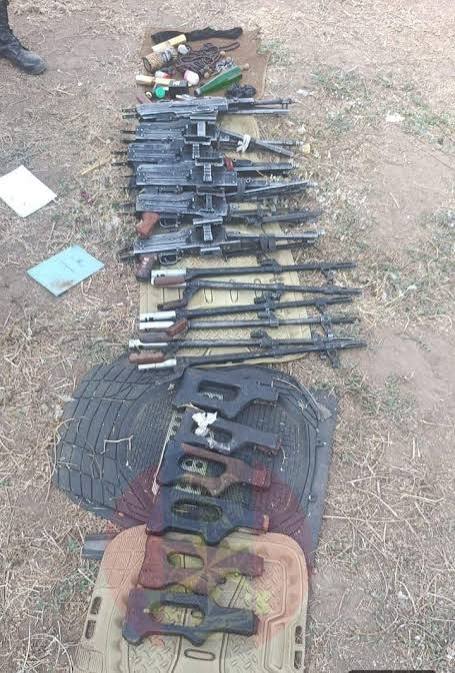
Troops, DIA Team Recover SMG Rifle, Ammunition in Taraba Raid
By: Zagazola Makama
Troops of the 114 Battalion (Reinforcement), in collaboration with a Defence Intelligence Agency (DIA) composite team, have recovered a submachine gun rifle and assorted ammunition during a raid on a suspected criminal hideout in Taraba State.
Security sources told Zagazola Makama that the operation was conducted at about 3:00 p.m. on Oct. 3, 2026, at Abbare in Lau Local Government Area.
The sources said the joint team recovered one submachine gun rifle, one magazine, 12 rounds of 7.62mm NATO ammunition, one round of 7.62mm special ammunition and five rounds of 9mm ammunition.
No contact was made with the suspected criminals, and no arrest was recorded during the operation.
The recovered weapon and ammunition remain in military custody for further investigation and necessary action.
The raid forms part of ongoing security efforts to dismantle criminal hideouts, recover illegal weapons and prevent armed groups from using such facilities to perpetrate violence in the region.
Troops, DIA Team Recover SMG Rifle, Ammunition in Taraba Raid
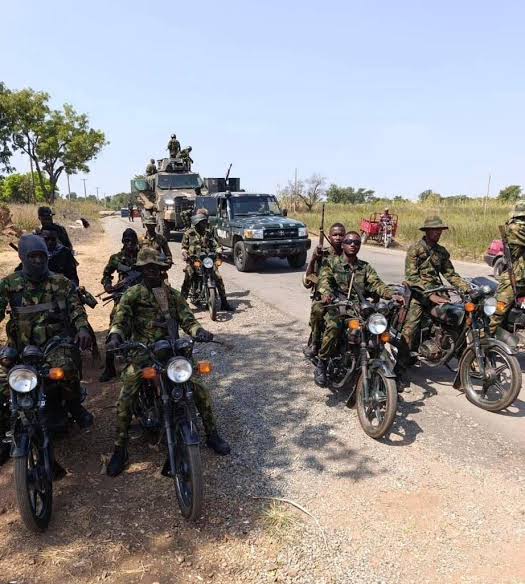
Troops Recover Two Rustled Cattle After Foiling Attack in Plateau
By: Zagazola Makama
Troops of Sector 2, Operation Enduring Peace (OPEP), have recovered two rustled cattle following an encounter with suspected terrorists in Gululu village, Wase Local Government Area of Plateau State.
Security sources told Zagazola Makama that the incident occurred at about 6:30 p.m. on Oct. 2, 2026, when troops responded to reports of cattle rustling by suspected terrorists in the community.
The sources said the troops engaged the suspected assailants, forcing them to retreat in disarray.
A subsequent search of the general area led to the recovery of two cattle allegedly rustled by the fleeing suspects.
The recovered cattle were subsequently handed over to their owner.
The operation highlights ongoing efforts by security forces to curb cattle rustling, protect rural communities and safeguard livelihoods in Plateau State.
Troops Recover Two Rustled Cattle After Foiling Attack in Plateau

Nigeria, Indonesia target bigger trade as economic ties deepen
By: Michael Mike
Nigeria and Indonesia are seeking to push bilateral trade beyond the $3 billion annual level, while expanding cooperation in investment, technology transfer, industrialisation, agriculture, healthcare and other sectors as both countries seek to turn longstanding diplomatic ties into a broader economic partnership.
The Indonesian Ambassador to Nigeria, Bambang Suharto, and the Permanent Secretary, Ministry of Foreign Affairs, Ambassador Dunoma Umar Ahmed, made the call on Tuesday in Abuja at a diplomatic reception to mark Indonesia’s 81st Independence Anniversary.
Suharto said bilateral trade had consistently exceeded $3 billion annually, describing Nigeria as one of Indonesia’s major trading partners in Africa.
He said the size of the two markets, with a combined population of more than 550 million people, provided considerable room for increased trade, investment, technology exchange and job creation.
“Our bilateral trade has consistently surpassed USD 3 billion annually, cementing Nigeria’s position as one of Indonesia’s foremost trading partners in Africa,” Suharto said.
The ambassador said the economic relationship was already reflected in the everyday lives of citizens, with Nigeria supplying energy to Indonesia while Indonesian manufactured and consumer products have gained a significant presence in the Nigerian market.
Official Indonesian data put bilateral trade at about $3.4 billion in 2024, with Indonesia recording a trade deficit of about $2.5 billion. Indonesia’s main exports to Nigeria include palm oil, while crude oil is among Nigeria’s major exports to Indonesia.
Suharto said the next phase of the relationship should go beyond the exchange of commodities to create stronger industrial and investment linkages between the two economies.
“Our ultimate ambition is not simply to trade more, but to cultivate a resilient partnership in which businesses on both sides thrive, local industries develop, and our people directly reap the benefits of the opportunities we create together,” he said.
The growing relationship is also being driven by Indonesian companies with operations in Nigeria.
Suharto specifically acknowledged the contributions of Dufil Prima Foods Ltd, Primera Food Nigeria Ltd, Tempo Scan Pacific, Glorious Dexa Mandaya Ltd and Orange Kalbe Ltd, citing their investments, employment generation and corporate social responsibility initiatives.
Suharto, meanwhile, highlighted Indonesian scholarship programmes that have enabled Nigerian students to study in Indonesia, as well as educational and cultural exchanges between the two countries.
He also pointed to the shared diversity of Nigeria and Indonesia as an opportunity for both countries to exchange experiences on national cohesion, dialogue, inclusion and tolerance.
Suharto said Indonesia remained committed to strengthening cooperation with Nigeria and other African countries through initiatives such as the Indonesia-Africa Forum, with priority areas including energy, agriculture, healthcare, infrastructure and human-resource development.
He expressed confidence that the two countries’ historical ties and expanding economic interests would provide a stronger foundation for increased trade, investment, knowledge-sharing, technological cooperation and people-to-people relations.
Indonesia’s foreign ministry said at least 15 Indonesian companies are active in Nigeria, particularly in food, pharmaceuticals, mining and fast-moving consumer goods.
Dufil Prima Foods, one of the most visible examples of the economic links between the two countries, has Indonesian corporate interests through the Salim Group and its relationship with Indofood. The company has developed manufacturing and backward-integration activities in Nigeria, illustrating how the relationship has evolved beyond simple import-and-export transactions.
The Indonesian embassy has also been facilitating new business links. At the 2025 Trade Expo Indonesia, it helped secure nine trade commitments between Nigerian and Indonesian businesses worth $24.99 million.
For Nigeria, Ahmed said the priority was to convert the longstanding diplomatic relationship into a more productive economic partnership capable of supporting domestic production and attracting sustainable investment.
He identified Indonesia’s experience in industrialisation, manufacturing, digital transformation, infrastructure, agriculture, maritime development and small and medium-sized enterprises as areas where Nigeria could benefit from greater cooperation.
“Nigeria is particularly interested in expanding cooperation that can support the development of local productive capacity, strengthen value chains, promote technology transfer, and attract sustainable investment,” Ahmed said.
He called for stronger links among private-sector organisations, chambers of commerce, financial institutions and business communities in both countries.
Agriculture and agro-processing, manufacturing, energy, infrastructure, pharmaceuticals, the digital economy and creative industries were identified as sectors with significant potential for expanded trade and investment.
Ahmed also called for the removal of practical barriers to commerce, including market-access difficulties, inadequate business information and weak connectivity between business communities.
Nigeria and Indonesia have maintained diplomatic relations since 1965, with economic and capacity-building cooperation becoming important components of the relationship. Indonesia’s embassy was initially established in Lagos before being relocated to Abuja in 2008, while Nigeria opened its embassy in Jakarta in 1976.
The two countries also have a longstanding connection through South-South cooperation. Both are members of the D-8 Organisation for Economic Cooperation, which was established in 1997 by Bangladesh, Egypt, Indonesia, Iran, Malaysia, Nigeria, Pakistan and Türkiye to promote economic cooperation among developing countries. Indonesia is chairing the organisation for 2026–2027.
Ahmed said the shared platforms could be used more effectively to advance cooperation on sustainable development financing, climate action, food and energy security, technology transfer and reforms to international financial and governance institutions.
He said Nigeria welcomed Indonesia’s engagement in multilateral affairs and stressed the importance of ensuring that developing countries have a stronger voice in global decision-making.
Beyond commerce, Ahmed called for expanded cooperation in education, skills development, science, technology and innovation, particularly because of the large and youthful populations of Nigeria and Indonesia.
He proposed greater exchanges among universities, research institutions, cultural organisations, young professionals and civil society groups, saying such engagements could deepen mutual understanding while creating new opportunities for practical cooperation.
Nigeria, Indonesia target bigger trade as economic ties deepen

Troops Arrest 15 Suspected Drug Peddlers in Jos Raid

Troops, DIA Team Recover SMG Rifle, Ammunition in Taraba Raid

Troops Recover Two Rustled Cattle After Foiling Attack in Plateau

Roger Federer’s Shock as DNA Results Reveal Myla and Charlene Are Not His Biological Children

THE PLIGHT OF FARIDA

FAILED COUP IN BURKINA FASO: HOW TRAORÉ NARROWLY ESCAPED ASSASSINATION PLOT AMID FOREIGN INTERFERENCE CLAIMS
-
 News3 years ago
Roger Federer’s Shock as DNA Results Reveal Myla and Charlene Are Not His Biological Children
-
Opinions5 years ago
THE PLIGHT OF FARIDA
-
 News1 year ago
FAILED COUP IN BURKINA FASO: HOW TRAORÉ NARROWLY ESCAPED ASSASSINATION PLOT AMID FOREIGN INTERFERENCE CLAIMS
-

 News3 years ago
EYN: Rev. Billi, Distortion of History, and The Living Tamarind Tree
-
 Opinions5 years ago
POLICE CHARGE ROOMS, A MINTING PRESS
-

 ACADEMICS3 years ago
A History of Biu” (2015) and The Lingering Bura-Pabir Question (1)
-

 Columns3 years ago
Army University Biu: There is certain interest, but certainly not from Borno.
-

 Politics1 year ago
2027: Why Hon. Midala Balami Must Go, as Youths in Hawul and Asikira/Uba Federal Constituency Reject ₦500,000 as Sallah Gift
