
News
IWD: CHRICED Calls for Accelerated Action for Political Integration of Women


IWD: CHRICED Calls for Accelerated Action for Political Integration of Women
By: Michael Mike
The Resource Centre for Human Rights and Civic Education (CHRICED) has called on stakeholders to use the occasion of the International Women’s Day (IWD) to accelerate action for the political integration of women in every sphere of leadership as well as enthrone deep respect and value for women in the conduct of societal affairs.
A statement jointly signed by the Programme Manager, Victor Emejuiwe, Communications Officer, Furera Isiaka and Gender Desk Officer, Falilat Adamu read: “As we celebrate the International Women’s Day, The Resource Center for Human Rights and Civic Education (CHRICED) uses this occasion to call on stakeholders This call is in line with the Beijing declaration that provides for equal rights and dignity of women and the National Gender Policy which also makes provision for a just society devoid of discrimination, where the needs and concerns of women, and other gender are mainstreamed equitably into all sectors of national development.
“At CHRICED, we strongly disapprove of actions that aim to undermine women as they strive to achieve their dreams and goals. Such actions include, but are not limited to, workplace violence against women, sexual harassment, and the coercion of transactional sex in exchange for favors. These actions not only violate the rights of women but also perpetuate a culture of fear and silence that hinders progress toward gender equality.”
The statement added: “In light of this, CHRICED expresses profound concern regarding the recent allegations of sexual harassment leveled against Senate President Senator Godswill Akpabio by Distinguished Senator Natasha Akpoti Uduaghan. While the full details of the interactions between the two senators may not be publicly available, it is crucial that a comprehensive and impartial investigation is undertaken to ascertain the truth.
“This is particularly pressing given that Senator Akpabio has faced similar accusations in the past, including allegations of sexual misconduct from the former head of the Niger Delta Development Commission (NDDC) during his time as a minister in the Buhari administration. Such a pattern of behavior raises serious questions about accountability and the treatment of women in positions of power.
“We commend Senator Natasha Akpoti Uduaghan for her courage in speaking out against harassment and refusing to remain silent in a predominantly male Senate. Her actions not only highlight the challenges faced by women in political spaces but also serve as a beacon of hope and inspiration for women around the world who have endured similar experiences. It is vital that her bravery is recognized and supported, as it encourages a culture of transparency and accountability.
“CHRICED advocates for a nonpartisan, independent investigation into these allegations, emphasizing the importance of allowing the law to take its full course. A thorough investigation is essential not only to uphold the dignity of the Senate President’s office but also to maintain the integrity of the legislative branch of government, which is the second arm of governance. Without such integrity, the legislative body risks losing its moral authority to enact laws that protect women and vulnerable individuals, effectively signaling a tacit acceptance of sexual harassment in workplaces.
“In order to ensure that the investigation unfolds in a manner that is free from bias and external influence, the Centre for Human Rights and Conflict Resolution (CHRICED) strongly urges Senator Godswill Akpabio to consider temporarily stepping down from his position as Senate President.
“We recommend that he delegate his responsibilities to his deputy for the duration of the investigation. This proposed action is not merely a procedural formality; it is a critical step toward fostering an environment that is conducive to uncovering the truth. By removing any potential conflicts of interest and mitigating the impact of power dynamics, we can create a more transparent and impartial investigative process. The integrity of the investigation is paramount, as it directly relates to the Senate’s commitment to justice and accountability. When those in positions of power are involved in matters under scrutiny, there is an inherent risk that their influence could skew the findings or deter witnesses from coming forward. By temporarily relinquishing his role, Senator Akpabio would not only demonstrate a commitment to transparency but also reinforce the Senate’s dedication to upholding the principles of justice.
“Moreover, we believe that implementing such measures is essential for establishing a safer and more equitable environment for all individuals within the Senate, particularly for women. The current climate may discourage women and other marginalized groups from voicing their concerns or participating fully in the political process. By taking decisive action to ensure that the investigation is conducted without the shadow of power looming over it, we can help to cultivate a culture of respect, safety, and equality. CHRICED urge Senator Akpabio to take this important step for the sake of the investigation and the integrity of the Senate. By doing so, he would not only be acting in the best interest of justice but also setting a precedent for accountability and ethical leadership that could inspire confidence in the legislative process among all citizens, particularly those who have historically faced barriers to participation.
The Centre added that the participation of women in politics is a critical issue that transcends mere acknowledgment; it demands a robust and unified commitment from political parties and elected officials at all levels of governance, from the Presidency down to state Governors and local leaders. This commitment is essential for the effective implementation of the 35 percent affirmative action for women, a policy that aims to ensure that women are adequately represented in political decision-making processes. Given that women make up 49% of Nigeria’s population yet occupy only six percent of leadership roles in both the corporate and public sectors, the current gender disparity is not just a statistic; it is a significant barrier to Nigeria’s progress. This underrepresentation stifles the potential contributions of women to national development, limiting the country’s ability to harness the full spectrum of talent and perspectives available within its populace.”
The Centre also added that “in light of these pressing issues, we urge President Bola Ahmed Tinubu to adopt a proactive and decisive approach to safeguarding the rights of women in Nigeria. In the spirit of the holy month of Ramadan, we specifically call upon the APC Muslim-Muslim Presidency of Bola Tinubu to take the following actions:
“Investigate Allegations of Sexual Harassment: We call for the President to direct the appropriate security agencies to conduct a thorough and impartial investigation into the allegations of sexual harassment against the Senate President. This step is crucial not only for accountability but also for reinforcing the message that such behavior is unacceptable in any form of governance.
“Implement Political Party Reforms: It is imperative that the President champions political party reforms that require all political parties in Nigeria to reserve a minimum of 35 percent of positions for women, both in elective and appointive capacities. This provision was part of the five gender bills that were regrettably rejected by the previous Senate. By mandating this representation, we can begin to dismantle the systemic barriers that have historically marginalized women in politics.
“Reintroduce Gender Bills: We urge the President to reintroduce the five gender bills as executive proposals, which were dismissed by the Ninth Senate. These bills are vital for enhancing women’s rights across social, political, and economic spheres, and their reintroduction would signal a commitment to gender equality and empowerment.
“Moreover, we call on all levels of government to enact and enforce policies that empower women economically, socially, and politically. This includes the rigorous enforcement of laws and policies designed to protect women from violence, sexual harassment, and all forms of intimidation. By creating a safe and supportive environment for women, we can foster their active participation in all aspect of governance processes.”
IWD: CHRICED Calls for Accelerated Action for Political Integration of Women



Troops Secure 27 Cattle After Responding to Farmland Destruction Report in Plateau
By: Zagazola Makama
Troops of Operation Enduring Peace (OPEP) have secured 27 cattle after responding to a report of farmland destruction in Bassa Local Government Area of Plateau State.
Military sources told Zagazola that the incident occurred at about 3:00 p.m. on Monday at Taagbe Village.
The sources said troops of Sector 3, Operation Enduring Peace, were deployed to the area following reports that cattle were grazing on farmlands, resulting in the destruction of crops.
Upon arrival, the troops found 27 cattle grazing unattended, with no herders present at the scene.
According to the sources, the cattle were moved to a safe location to prevent further damage to farmlands and to facilitate appropriate administrative action.
The sources added that security personnel remain on alert in the area to forestall any breakdown of law and order, while efforts are ongoing to identify the owners of the cattle and address the incident through the appropriate channels.
The intervention forms part of ongoing measures by security agencies to contain farmer-herder disputes and maintain peace in communities across Plateau State.
Troops Secure 27 Cattle After Responding to Farmland Destruction Report in Plateau
News
NADCEL 2026: 4 BRIGADE CONDUCTS 10KM ROUTE MARCH, PUBLIC SPEAKING ENGAGEMENT, FREE MEDICAL OUTREACH, AND NAOWA EDUCATIONAL OUTREACH IN BENIN CITY
PRESS RELEASE
NADCEL 2026: 4 BRIGADE CONDUCTS 10KM ROUTE MARCH, PUBLIC SPEAKING ENGAGEMENT, FREE MEDICAL OUTREACH, AND NAOWA EDUCATIONAL OUTREACH IN BENIN CITY
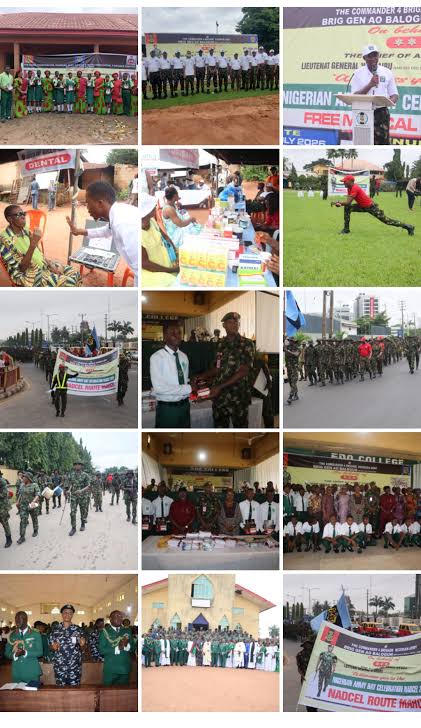
As part of activities marking the Nigerian Army Day Celebration (NADCEL) 2026, Headquarters 4 Brigade Nigerian Army successfully conducted a series of civil-military and operational activities, including a 10-kilometre route march, public speaking engagement, free medical outreach, and Nigerian Army Officers’ Wives Association (NAOWA) educational outreach in Benin City, Edo State.
NADCEL is the Nigerian Army’s foremost annual event dedicated to commemorating its establishment, evolution, achievements, and the sacrifices of its personnel in the defence of Nigeria’s sovereignty and territorial integrity. The celebration traces its origin to 6 July 1967, when the Nigerian Army commenced active military operations during the Nigerian Civil War following the firing of the first shot at Garkem in present-day Cross River State. Since then, 6 July has been observed annually as Nigerian Army Day, symbolising the Army’s resilience, professionalism, and unwavering commitment to national service.
Activities marking NADCEL 2026 at 4 Brigade commenced on 26 and 28 June 2026 with Juma’at prayers and an Interdenominational Church Service held at GRA and Ekehuan Cantonment respectively. The religious activities were attended by officers, soldiers, and personnel of other security agencies in Edo State. Special prayers were offered for the continued success of the Nigerian Army, the safety of serving personnel, the well-being of retired veterans, and the repose of the souls of fallen heroes who paid the supreme sacrifice in the defence of the nation.
On Friday, 3 July 2026, the Commander 4 Brigade Nigerian Army, Brigadier General Ahmed Balogun, led officers and soldiers on a 10-kilometre NADCEL route march through major streets of Benin City as part of activities commemorating the 163rd anniversary of the Nigerian Army. Speaking with journalists at the end of the exercise, the Commander stated that the route march was aimed at creating public awareness of the Nigerian Army Day Celebration while demonstrating the Brigade’s operational readiness to discharge its constitutional responsibilities. He further disclosed that this year’s celebration was unique as the Chief of Army Staff Lieutenant General W Shaibu NAM had directed all commanders to reassure Nigerians that the Nigerian Army remains fully committed to confronting emerging security threats within their respective areas of responsibility.
Following the route march, the Commander, accompanied by officers and soldiers, proceeded to Edo College Benin City, for a public speaking engagement with the school’s management and students. During the programme, a documentary highlighting the history and evolution of the Nigerian Army was screened, while students were enlightened on the various career opportunities in the Nigerian Army.
The students expressed appreciation to the Brigade Commander for the enlightening engagement, noting that they had gained valuable knowledge about the Nigerian Army and its operations. In his remarks, the Principal of the College, Mr Justice Aigbe, thanked the Brigade for organising the programme themed, “Protecting the Nation and Serving the People: A Way Forward for the Nigerian Army.” Highlights of the event included an interactive question-and-answer session during which the Commander addressed students’ questions, as well as the unveiling and presentation of educational books provided by Army Headquarters to the students.
On Saturday, 4 July 2026, Brigadier General Ahmed Balogun led staff officers, personnel of 4 Brigade Medical Centre to Amufi and neighbouring communities in Ikpoba-Okha Local Government Area of Edo State for a free medical outreach. The outreach formed part of the Brigade’s activities for NADCEL 2026 and provided free medical consultations, eye screening, reading glasses, dental care, essential drugs dispense, health education, laboratory investigations, including malaria parasite tests, hepatitis B and C screening, retroviral screening, blood sugar tests, and blood pressure checks, among other healthcare services.
Addressing beneficiaries, the Brigade Commander stated that the outreach reflected the Nigerian Army’s commitment to improving the well-being of Nigerians beyond its constitutional responsibility of defending the nation’s territorial integrity. He added that the initiative forms part of the Brigade’s non-kinetic operations aimed at strengthening relationships with host communities and appreciating critical stakeholders for their continued support to military operations.
Speaking on behalf of the community, the Ohen of Amufi Kingdom, Chief Iyi-Ewuare Asenogua, expressed profound appreciation to the Nigerian Army for bringing quality healthcare services to the community, noting that over 3,000 beneficiaries received free medical treatment during the exercise. Similarly, the Chairman of Ikpoba Hill Youth Forum, Mr Kingsley Osemwingie, described the outreach as a demonstration of the Nigerian Army’s concern for the welfare of the people, adding that the initiative had significantly improved access to quality healthcare for residents of the community.
On Monday, 6 July 2026, the Zonal Coordinator, Nigerian Army Officers’ Wives Association (NAOWA), 4 Brigade Chapter, Mrs Mariam Aina Balogun, led executive members of the Association to Army Day Secondary School, Ikpoba Hill, Benin City, for a NAOWA Educational Outreach as part of activities commemorating NADCEL 2026. The outreach, which was aimed at promoting educational development and supporting learning among students, was attended by teachers, students, and members of the school community. During the event, educational materials, including customised exercise books, pens, pencils, and erasers, were distributed to over 500 students to encourage academic excellence and support their educational pursuits.
Kennedy Anyanwu
Captain
Assistant Director Army Public Relations
4 Brigade Nigerian Army
Benin City
NADCEL 2026: 4 BRIGADE CONDUCTS 10KM ROUTE MARCH, PUBLIC SPEAKING ENGAGEMENT, FREE MEDICAL OUTREACH, AND NAOWA EDUCATIONAL OUTREACH IN BENIN CITY
Zulum Appoints Engr Peter Samuel as General Manager BOSAMA
By: Our Reporter
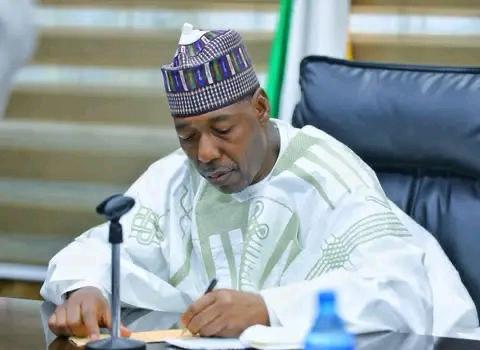
Borno State Governor, Professor Babagana Umara Zulum, has approved the appointment of Engr Peter Samuel, MNSE, MNIAE, as the General Manager of Borno State Agricultural Mechanization Authority (BOSAMA).
In a statement by the Special Adviser to the Governor on Media, Dauda Iliya, the appointment was based on Engr Samuel’s outstanding professional competence, proven track record, and experience in agricultural engineering and mechanization.
The statement noted that Engr Samuel possesses the requisite qualifications, technical expertise and leadership capacity required to reposition BOSAMA in line with Governor Zulum’s agricultural transformation agenda.
The newly appointed General Manager is an Agricultural Engineer with academic, professional, administrative, and practical experience in agricultural mechanization, farm power and machinery, irrigation engineering, and agricultural infrastructure development.
He holds a Master of Engineering (M.Eng.) in Farm Power and Machinery from Joseph Sarwuan Tarka University, Makurdi (formerly the Federal University of Agriculture, Makurdi), a Postgraduate Diploma in Farm Management and Production Economics from Nasarawa State University, and a Bachelor of Engineering (B.Eng.) in Agricultural and Environmental Resources Engineering from the University of Maiduguri.
Engr Samuel has distinguished himself through years of meritorious service in teaching, research, agricultural engineering practice, and project implementation. He currently serves as a Lecturer in Farm Power and Machinery at Ramat Polytechnic, Maiduguri.
Over the years, he has held several strategic leadership positions, including General Manager of a commercial agricultural enterprise, Project Coordinator, Programme Coordinator, and Consultant on numerous agricultural development interventions implemented by reputable national and international organisations.
He is a member of the Nigerian Society of Engineers (NSE) and the Nigerian Institution of Agricultural Engineers (NIAE).
Governor Babagana Zulum congratulated the new General Manager on his appointment and urged him to deploy his wealth of knowledge, technical expertise, and experience in agricultural mechanization to strengthen the operations of BOSAMA
Zulum Appoints Engr Peter Samuel as General Manager BOSAMA

Troops Secure 27 Cattle After Responding to Farmland Destruction Report in Plateau

Troops Arrest Suspected Terrorist Informant, Recover Motorcycle, Cash in Kebbi

NADCEL 2026: 4 BRIGADE CONDUCTS 10KM ROUTE MARCH, PUBLIC SPEAKING ENGAGEMENT, FREE MEDICAL OUTREACH, AND NAOWA EDUCATIONAL OUTREACH IN BENIN CITY

Roger Federer’s Shock as DNA Results Reveal Myla and Charlene Are Not His Biological Children

THE PLIGHT OF FARIDA

FAILED COUP IN BURKINA FASO: HOW TRAORÉ NARROWLY ESCAPED ASSASSINATION PLOT AMID FOREIGN INTERFERENCE CLAIMS
-
 News2 years ago
Roger Federer’s Shock as DNA Results Reveal Myla and Charlene Are Not His Biological Children
-
Opinions4 years ago
THE PLIGHT OF FARIDA
-
 News1 year ago
FAILED COUP IN BURKINA FASO: HOW TRAORÉ NARROWLY ESCAPED ASSASSINATION PLOT AMID FOREIGN INTERFERENCE CLAIMS
-

 News2 years ago
EYN: Rev. Billi, Distortion of History, and The Living Tamarind Tree
-
 Opinions5 years ago
POLICE CHARGE ROOMS, A MINTING PRESS
-

 ACADEMICS2 years ago
A History of Biu” (2015) and The Lingering Bura-Pabir Question (1)
-

 Columns2 years ago
Army University Biu: There is certain interest, but certainly not from Borno.
-

 Politics1 year ago
2027: Why Hon. Midala Balami Must Go, as Youths in Hawul and Asikira/Uba Federal Constituency Reject ₦500,000 as Sallah Gift
