
National News
Jungle Justice Is Murder, Not Justice — IGP Disu Orders Nationwide Crackdown on Mob Killings


Jungle Justice Is Murder, Not Justice — IGP Disu Orders Nationwide Crackdown on Mob Killings
By Zagazola Makama
The Inspector-General of Police, IGP Olatunji Rilwan Disu, has declared a firm war against jungle justice and mob action across Nigeria, directing Commissioners of Police in the 36 states and the Federal Capital Territory to treat every case of mob violence as homicide and investigate such incidents with the same seriousness accorded other killings.
Disu, in a strong-worded public address, on Sunday said no Nigerian, community, vigilante group or association had the legal authority to arrest, try, convict or execute another person on the basis of suspicion, accusation, rumour or social media evidence.
The IGP’s declaration comes amid renewed public concern over cases in which suspected criminals are subjected to beatings, burning, stabbing and other forms of extrajudicial punishment before security agencies can intervene.
He said the Police Force would no longer regard such incidents as mere community disputes or spontaneous public reactions, but as serious criminal offences requiring full investigation and prosecution.
“Jungle justice is murder. It is not justice. It is a crime, and the Nigeria Police Force will treat it as such,” Disu said.
The police chief stressed that Nigeria operates under the rule of law and not mob rule, warning that no citizen or group has the constitutional authority to determine the guilt of another person or impose punishment outside a competent court.
‘Nobody has the right to take another person’s life’
According to the IGP, Sections 33, 34 and 36 of the 1999 Constitution, as amended, guarantee fundamental rights including the right to life, dignity and fair hearing.
He said those rights remain applicable even when a person is suspected of committing a serious crime.
Disu argued that the growing practice of gathering around an alleged criminal, beating the person and sometimes killing him or her before the police arrive represents a direct assault on the country’s justice system.
He said an accusation does not amount to proof of guilt. A person shouting “thief”, a viral video, a photograph circulated online or an allegation made by a member of the public, he maintained, cannot replace a police investigation or judicial determination.
“The law presumes everybody innocent until proven guilty in a court of law, not in the street, not by a mob, not by a phone video because you saw him in video,” he said.
The IGP cited the March 2025 killing of 16 travellers in Uromi, Edo State, as a painful reminder of the consequences of mob justice.
The victims, who were reportedly travelling from Rivers State towards Kano, were intercepted after local security personnel found locally made weapons in their vehicle. The situation escalated after they were suspected of being kidnappers, resulting in the mob attack that claimed 16 lives. Police subsequently arrested suspects in connection with the incident.
The incident generated nationwide outrage and renewed calls for stronger action against mob killings. Amnesty International also called for a transparent investigation into the Uromi killings, describing the incident as a brutal lynching.
The IGP said Nigeria had witnessed several disturbing cases in which individuals were killed over allegations that were either unverified or subsequently found to be mistaken.
He referenced cases involving students accused of stealing phones, travellers mistaken for criminals, and young people attacked over allegations of blasphemy or ritual activities.
Such cases, he said, demonstrate the deadly consequences of allowing rumours and accusations to substitute for evidence.
The warning is particularly significant in an era where videos and allegations can spread rapidly across social media platforms.
A short video clip can be shared thousands of times within minutes, while an accusation attached to it can quickly become accepted as fact before investigators establish what actually happened.
Disu made clear that the police investigation would not stop with the individual who physically killed the victim.
He directed police commands to identify and prosecute ringleaders, instigators and other participants whose actions contributed to the mob violence, where the evidence supports criminal liability.
The IGP said investigators would use video recordings, eyewitness accounts, community intelligence and forensic evidence to reconstruct incidents and identify those involved.
The implication is that the traditional excuse of “I did not touch him” may not necessarily shield a person whose conduct amounts to criminal participation. Those who plan, incite, encourage or facilitate mob action may face investigation for conspiracy or other offences, depending on the facts and applicable law.
In one of the strongest elements of his warning, the IGP also addressed people who record mob attacks on their phones.
He said filming incidents, circulating the videos, mobilising crowds or preventing security personnel from rescuing a suspect could attract criminal consequences where such conduct amounts to an offence.
The warning is significant because videos of mob killings have increasingly become part of the evidence available to investigators.
Rather than helping perpetrators escape, such recordings can potentially provide investigators with a trail of evidence showing who was present, who attacked the victim, who encouraged the crowd and who prevented intervention.
The IGP therefore warned Nigerians against assuming that remaining behind a camera automatically removes them from criminal responsibility.
Police officers who look away will also face consequences. Disu’s directive was not directed exclusively at civilians.
He also placed responsibility on police officers who fail to intervene when mob action is taking place.
The IGP warned that officers who stand by, look away or fail to take reasonable action to protect a suspect from a violent crowd could face disciplinary measures.
This aspect of the directive is particularly important because the responsibility to protect life remains central to policing. A suspect may eventually be convicted. A suspect may eventually be acquitted. But while the investigation and trial are ongoing, the state remains responsible for protecting that person’s life and dignity.
Disu therefore told officers that protecting life was not an optional responsibility attached to wearing the police uniform.
‘Take suspected criminals to the police’
The IGP appealed to Nigerians to redirect their anger and frustration through lawful channels.
He urged anyone who suspects another person of committing a crime to immediately alert the police or the nearest security agency rather than attempting to punish the suspect.
He also called on community leaders, religious leaders, market associations and other influential groups to use their platforms to discourage mob violence.
According to him, community vigilance should complement law enforcement, not replace it.
A responsible community member, he said, should help the police identify a suspected criminal, preserve evidence and provide information—not become judge, jury and executioner.
The IGP’s intervention comes at a time when public frustration over insecurity, criminality and delays in the justice system can easily translate into demands for immediate punishment.
In many communities, jungle justice is sometimes rationalised as a response to the belief that criminals will escape justice if handed over to the authorities. But the police chief rejected that logic.
He acknowledged the frustration created by crime and the slow pace of justice but maintained that the answer to institutional weakness is reform and stronger enforcement, not extrajudicial killing.
A society cannot simultaneously demand respect for the rule of law while allowing crowds to determine who deserves to live or die.
Disu’s declaration is strong, but its ultimate impact will depend on enforcement.
The police will have to demonstrate that cases of mob justice can be investigated with the same determination applied to other homicide cases.
Investigators will have to identify suspects from often chaotic scenes, preserve digital evidence, obtain witness statements, establish individual culpability and work with prosecutors to build cases capable of surviving judicial scrutiny.
There is also the question of police response.
Where officers arrive early enough to prevent a mob killing, their intervention can mean the difference between a criminal investigation and a homicide investigation. Where officers fail to act, the IGP’s promise of disciplinary action will therefore be closely watched.
Perhaps the most important message from the IGP is that criminal responsibility does not necessarily begin only when the fatal blow is delivered.
It can begin with the decision to mobilise the crowd. It can begin with incitement. It can involve preventing the police from taking custody of a suspect. It can involve encouraging the attackers.
And, depending on the evidence and the law applicable to the particular conduct, it can extend to other forms of participation in the offence. The police are therefore drawing a new line around mob violence:
If you suspect someone, report them.
If you have evidence, submit it. If the person is arrested, allow the law to take its course.
But if a crowd gathers and turns an accusation into a death sentence, the people involved should not expect the law to describe the killing as “community justice.” It will be investigated as a crime.
The central message of IGP Disu’s declaration is ultimately about the kind of country Nigeria wants to be. One system of justice cannot operate in the courtroom while another operates on the street. The court must remain the place where guilt is established.
The police must remain the institution responsible for investigating crime. Citizens must remain witnesses, complainants and partners in crime prevention not executioners.
And communities must understand that protecting themselves from criminals does not require them to become criminals themselves.
The Uromi killings demonstrated the catastrophic consequences of allowing suspicion to become collective punishment. The IGP’s latest directive is an attempt to ensure that such incidents are neither normalised nor dismissed as spontaneous expressions of public anger.
The message from the police chief is therefore unequivocal: Jungle justice is not justice.
Mob action is not a court. A viral video is not a conviction. An accusation is not a death sentence.
And where a mob takes a person’s life, the police will treat the incident not as justice served, but as a crime to be investigated and prosecuted.
Jungle Justice Is Murder, Not Justice — IGP Disu Orders Nationwide Crackdown on Mob Killings


NSCDC Raises Alarm Over Fake Promotion Notice, Warns Personnel Against Scammers
…Disowns WhatsApp message seeking officers’ names, service numbers and ranks
By: Michael Mike
The Nigeria Security and Civil Defence Corps (NSCDC) has alerted its personnel to a fraudulent notice circulating on WhatsApp, warning that scammers are attempting to harvest officers’ personal and service details under the guise of the 2026 senior promotion exercise.
The Corps, in an official disclaimer on Monday, disowned the notice, which directs personnel to submit their full names, service numbers and present ranks to a designated WhatsApp number, 08031306693.
It described the purported directive as fake, stressing that neither the NSCDC management nor its National Public Relations Office issued the instruction.
The warning comes amid concerns over the growing use of unofficial communication channels by fraudsters to exploit personnel seeking career advancement, particularly during promotion exercises.
In the disclaimer, signed by the National Public Relations Officer, Assistant Commandant of Corps Babawale Afolabi, the Corps urged officers and men to disregard the message and avoid disclosing sensitive service information to unverified individuals or platforms.
It cautioned that the fraudulent request could expose personnel to identity theft, impersonation and other forms of financial or administrative fraud.
The NSCDC clarified that all official matters relating to promotions fall within the jurisdiction of the Secretary to the Civil Defence, Correctional, Fire and Immigration Services Board (CDCFIB).
It added that legitimate promotion-related information is communicated through established administrative channels of the Ministry of Interior and the Corps, rather than through unsolicited WhatsApp messages or personal telephone numbers.
The Corps, therefore, advised personnel to verify all promotion-related information through their appropriate command structures and official administrative channels before acting on any purported directive.
The disclaimer urged officers and men to remain vigilant and ensure that the warning receives wide publicity to prevent unsuspecting personnel from falling victim to the scheme.
The development highlights the vulnerability of internal administrative processes to impersonation and fraud, particularly where career progression and promotion opportunities are involved.
For security personnel, the Corps stressed, the safest approach is to treat unsolicited requests for service records and personal information with suspicion and rely exclusively on officially authorised communication channels.
NSCDC Raises Alarm Over Fake Promotion Notice, Warns Personnel Against Scammers
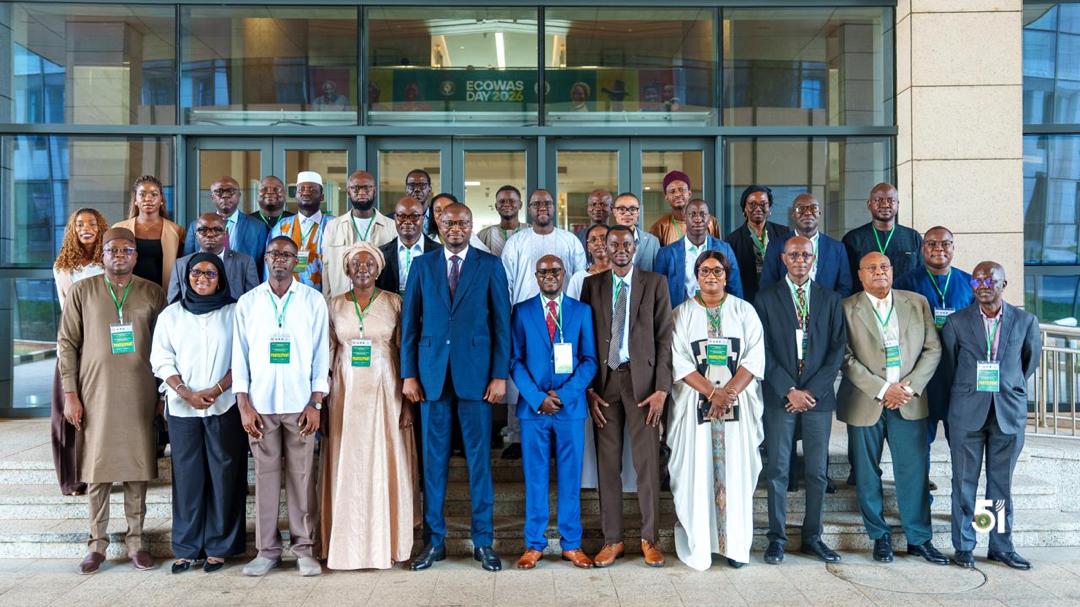
ECOWAS Project Delivers Electricity to 500,000 People in Three West African Countries
…$225m World Bank-funded initiative connects 490 localities in The Gambia, Guinea-Bissau and Mali
…Mali seeks extension as ECOWAS holds final steering committee meeting in Abuja
By: Michael Mike
The Economic Community of West African States (ECOWAS) said its $225 million Regional Electricity Access Project has extended electricity access to nearly 500,000 people across 490 localities in The Gambia, Guinea-Bissau and Mali.
The achievement was disclosed at the 10th and final Steering Committee meeting of the ECOWAS Regional Electricity Access Project (ECOWAS-REAP), which opened in Abuja on Tuesday to review implementation progress and determine measures for ensuring the sustainability of the project.
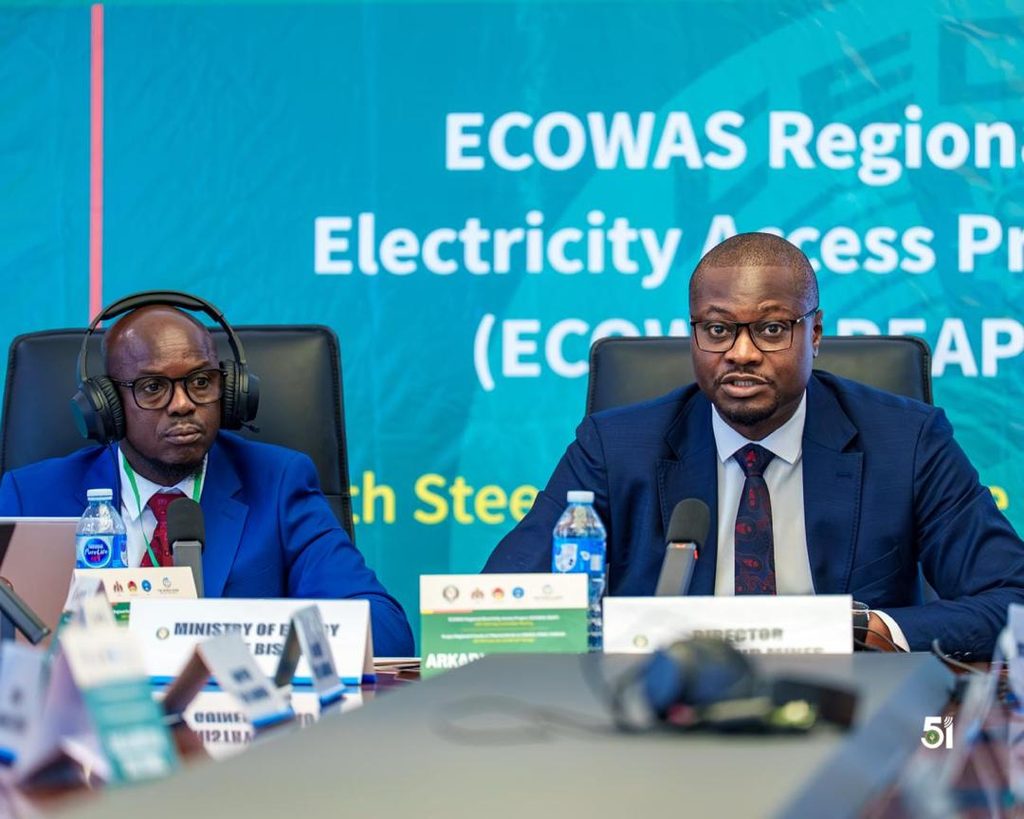
The World Bank-financed initiative is designed to expand electricity access in underserved communities across the three countries, as part of efforts to deepen regional energy integration and improve living conditions in West Africa.
Speaking at the meeting, the Director of Energy and Mines at the ECOWAS Commission and Chairman of the Steering Committee, Arkadius Koumoin, acknowledged the significant progress recorded despite challenges that affected implementation, including the COVID-19 pandemic and institutional disruptions.
He, however, stressed the need for concrete decisions and actions to ensure responsible closure of the project, noting that its success should ultimately be measured by the number of households effectively connected to electricity.
Koumoin’s position highlights the importance of translating infrastructure investments into actual electricity access for communities, rather than measuring performance solely by completed project activities.
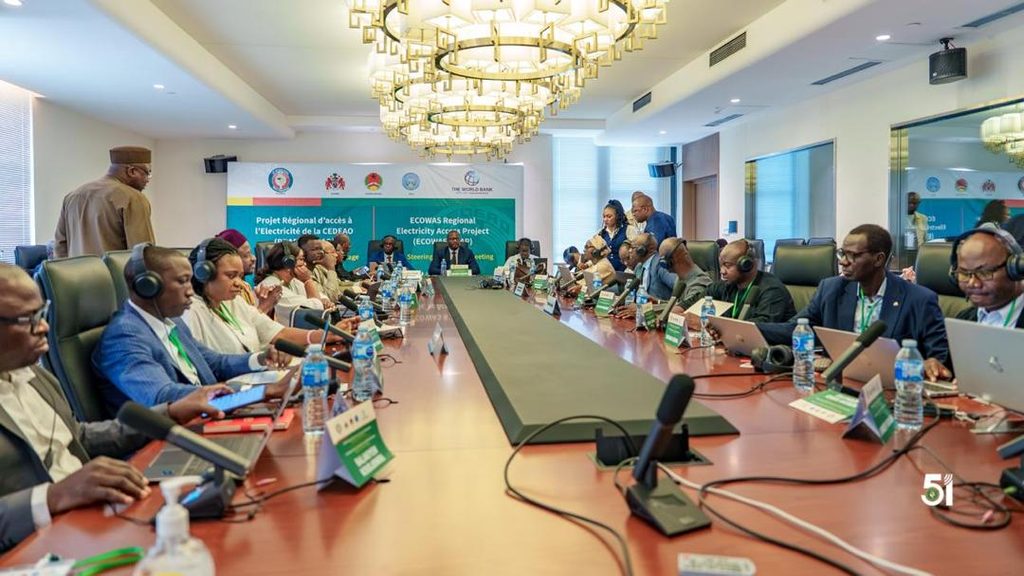
The Managing Director of the National Water and Electricity Company (NAWEC), The Gambia, Gallo Saidy; the representative of Guinea-Bissau’s Ministry responsible for Energy, Pedro Jeus de Oliviera; and Mali’s National Director of Energy, Oussouby Mary dit Ousmane Diarra, reaffirmed their commitment to completing outstanding project activities.
However, Mali called for an extension to enable it to complete its outstanding work, underscoring the need to address implementation gaps before the project’s final closure.
The meeting is expected to provide an opportunity for participating countries and the ECOWAS Commission to agree on the outstanding actions required to consolidate the gains of the initiative and ensure that beneficiaries continue to enjoy reliable electricity access.
Through ECOWAS-REAP, the regional bloc is advancing its energy integration agenda and the objectives of ECOWAS Vision 2050, with the broader ambition of translating regional investments into tangible improvements in the lives of West African citizens.
ECOWAS Project Delivers Electricity to 500,000 People in Three West African Countries
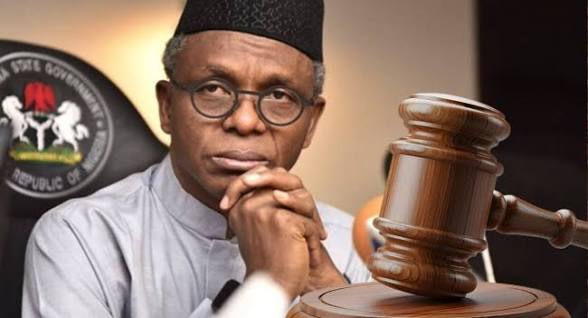
Court Dismisses El-Rufai’s N120m Rights Violation Suit Over Alleged Wiretapping
By: Zagazola Makama
A High Court of the Federal Capital Territory (FCT) on Monday dismissed a N120 million fundamental rights enforcement suit filed by former Kaduna State Governor, Mallam Nasir El-Rufai, against the Department of State Services (DSS), the Economic and Financial Crimes Commission (EFCC), the Independent Corrupt Practices and Other Related Offences Commission (ICPC) and the Attorney General of the Federation (AGF).
The court dismissed the suit for lacking merit and awarded N200,000 each in favour of the DSS, EFCC and ICPC.
Delivering judgment, Justice Sylvanus Orji held that the invitation letters issued to El-Rufai by the EFCC and ICPC complied with constitutional requirements and did not violate his fundamental rights.
On El-Rufai’s challenge to an attempted arrest by the DSS at the Nnamdi Azikiwe International Airport, Abuja, the judge held that the service possessed powers to carry out its statutory responsibilities pursuant to the relevant legal instruments governing its operations, including the National Security Agencies Act.
The court further held that the DSS had the mandate to maintain watchlists and take appropriate action, including arresting persons of interest within the scope of its lawful powers.
Justice Orji stressed that El-Rufai could not use the court to prevent security and law enforcement agencies from performing their legally assigned duties.
On the seizure of the former governor’s international passport by the DSS, the court held that it was satisfied that the action was lawful and within the agency’s powers.
The judge also ruled that the applicant had failed to establish that the seizure was continuous, permanent and unlawful in a manner that amounted to a violation of his fundamental rights.
The suit sought N120 million in damages over alleged violations of El-Rufai’s rights in connection with the actions of the security and anti-corruption agencies.
The ruling represents a setback for the former governor in his legal challenge to the actions taken by the agencies.
Court Dismisses El-Rufai’s N120m Rights Violation Suit Over Alleged Wiretapping

2027: Biu Elders Rally Behind Engr. Mustapha Gubio in Powerful Solidarity Visit

Faces Behind the Figures: Nigerians Lost in Russia’s War

EFCC PETITIONED OVER N2.5M GTBANK FRAUD, UNAUTHORISED N138,000 LOAN

Roger Federer’s Shock as DNA Results Reveal Myla and Charlene Are Not His Biological Children

THE PLIGHT OF FARIDA

FAILED COUP IN BURKINA FASO: HOW TRAORÉ NARROWLY ESCAPED ASSASSINATION PLOT AMID FOREIGN INTERFERENCE CLAIMS
-
 News3 years ago
Roger Federer’s Shock as DNA Results Reveal Myla and Charlene Are Not His Biological Children
-
Opinions5 years ago
THE PLIGHT OF FARIDA
-
 News2 years ago
FAILED COUP IN BURKINA FASO: HOW TRAORÉ NARROWLY ESCAPED ASSASSINATION PLOT AMID FOREIGN INTERFERENCE CLAIMS
-
 Opinions5 years ago
POLICE CHARGE ROOMS, A MINTING PRESS
-

 News3 years ago
EYN: Rev. Billi, Distortion of History, and The Living Tamarind Tree
-

 ACADEMICS3 years ago
A History of Biu” (2015) and The Lingering Bura-Pabir Question (1)
-

 Columns3 years ago
Army University Biu: There is certain interest, but certainly not from Borno.
-

 Politics1 year ago
2027: Why Hon. Midala Balami Must Go, as Youths in Hawul and Asikira/Uba Federal Constituency Reject ₦500,000 as Sallah Gift
