
Politics
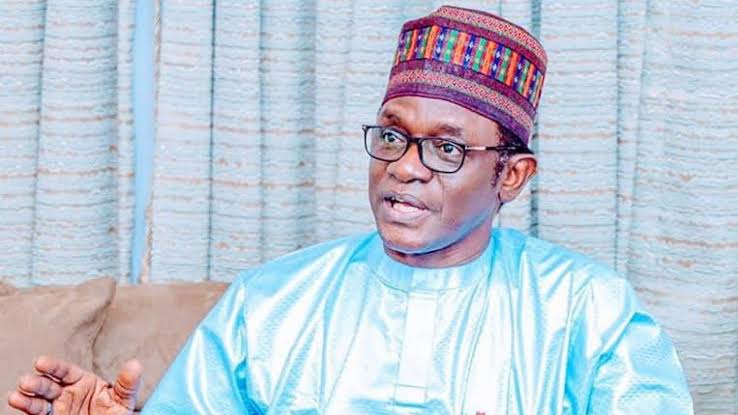
KACRAN Endorses Buni for Second Term

KACRAN Endorses Buni for Second Term
By: Michael Mike
Kulen Allah Cattle Rearer Association of Nigeria (KACRAN) has endorsed the candidature of Yobe State Governor, Hon. Mai Mala Buni in the forthcoming Gubernatorial election.
The endorsement was announced by the national president of the association, Khalil Muhammad Bello while addressing journalist in Damaturu.
Bello said the endorsement of Buni became necessary considering his numerous achievements in the livestock sector and other sectors across the state.
He called on all members of the association to come out en-mass to vote for all APC candidates in the state during Saturday’s elections.
The KACRAN president noted that the Governor during his first term has achieved tremendously in almost all sectors of human endeavors.
Bello outlined some of the achievements recorded by the present administration of Governor Mai Mala Buni which include the revitalization of education, agriculture, water supply, youths and women empowerment and employment opportunities among others.
The president also appealed to the people of the state to rally round Buni administration towards more developmental policies and programme.
He also called on the people to come out en-mass and votes for Buni and all other APC candidates for continuity and consolidation of the ongoing project across the state.
KACRAN Endorses Buni for Second Term


Politics
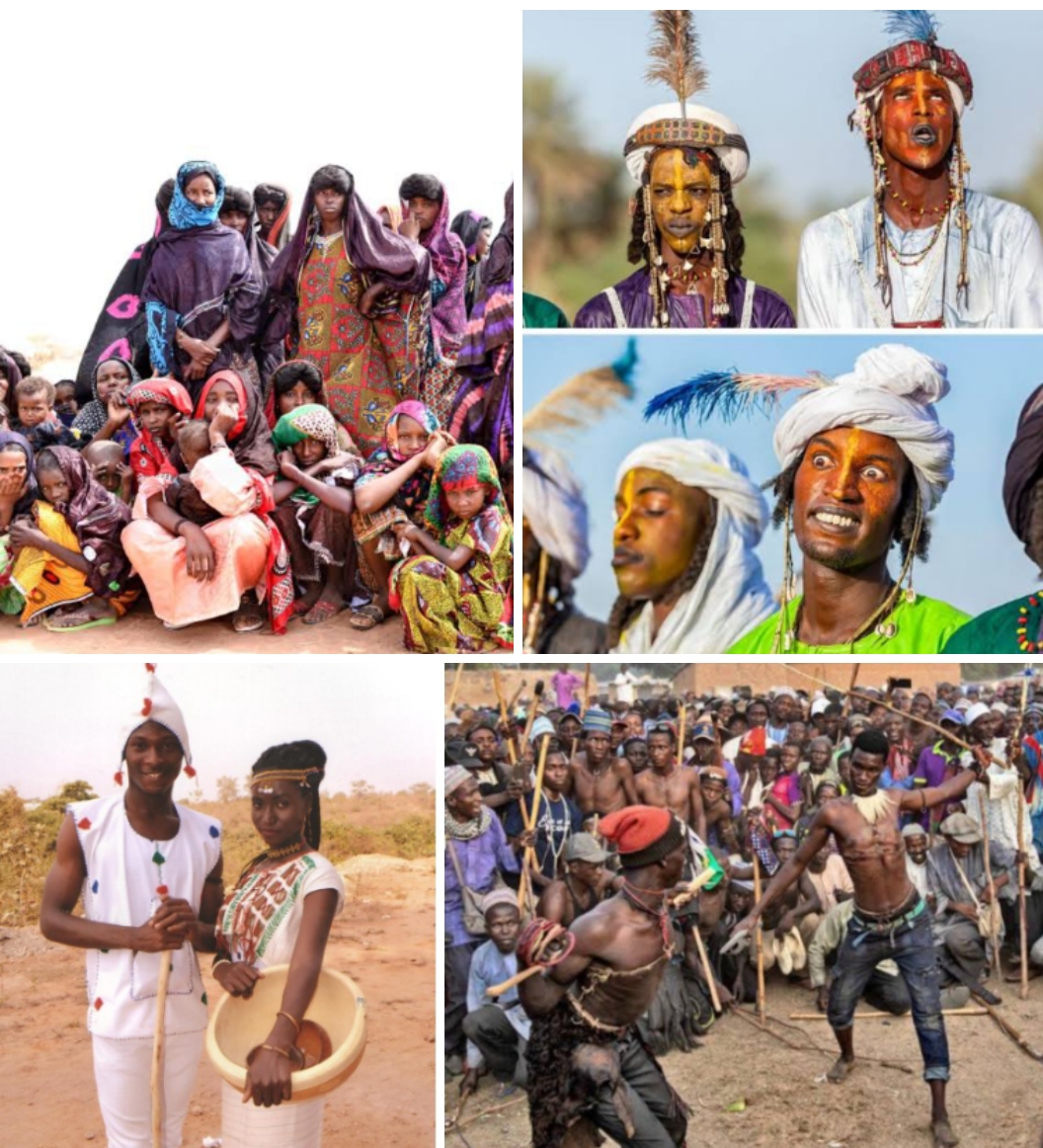
The Persistent Political Scar on Nigeria: Fulani Ethnic Groups as the New Target of Demonization

The Persistent Political Scar on Nigeria: Fulani Ethnic Groups as the New Target of Demonization
By: Dr. James Bwala
The political games and ethnic scapegoating that kicked off in the post-independence era, especially during the Nigerian civil war and its aftermath, have repeatedly chipped away at national unity. This has shown up as tribal biases, religious divides, and the recent targeting of certain ethnic groups. These ongoing issues point to a deep-rooted failure to tackle the core problems, leaving Nigeria at risk of further division and a possible return to the chaos of its past. The shift from the early targeting of the Igbo people to the current fears surrounding Fulani communities highlights a troubling trend where political figures exploit identity for their own gain, effectively “eating Nigeria in bits and pieces.”
The period starting in 1960, which led to the nation’s first military coup, set a troubling precedent for instability that has, in many ways, continued to tear the country apart. The initial excitement of independence quickly faded into the harsh realities of power struggles, ethnic distrust, and the exploitation of these divisions for political advantage. What began as a hopeful new democracy with regional rivalries soon spiraled into a cycle of military takeovers. And when those ended, even more severe forms of social fragmentation emerged.
READ ALSO: https://newsng.ng/civil-defence-the-silence-accountability-and-death-of-miners-in-niger/
From the very beginning of Nigeria’s independence, political maneuvering has been rife, marked by the scapegoating of various ethnic groups, the manipulation of religious sentiments, and the rise of new divisions. This has gradually eroded the strength of the Nigerian state, resulting in a widespread feeling of insecurity and an ongoing cycle of crises that no government seems willing to tackle. The portrayal of the Igbo as a problematic group, the heightened focus on religious divides, and the current vilification of the Fulani are not just random occurrences; they reflect a deeper, systemic political issue that threatens to tear apart the nation’s delicate unity and could even lead to a repeat of the traumatic events of the past.
In the early days of independence, Nigeria was caught in a complex web of ethnic loyalties and a fierce battle for political power. The colonial past had, to a large degree, brought together various ethnic groups into one political framework, but it also unintentionally fueled regionalism and highlighted existing differences. The political elite, primarily from the major ethnic groups—the Igbo, Yoruba, and Hausa Fulani—struggled to create a unified national identity. Instead, the emerging political parties often formed around ethnic lines, deepening regional mistrust. Unfortunately, the political conversation began to label certain ethnic groups as inherently hostile or untrustworthy. For example, the Igbo were frequently depicted in some political circles as overly ambitious, expansionist, or even treacherous, especially concerning their economic success and political clout in certain areas. While this narrative wasn’t universally accepted, it became a powerful weapon for politicians looking to rally support or undermine their opponents. This fostered an environment of suspicion and animosity, setting the stage for future conflicts.
READ ALSO: https://newsng.ng/civil-defence-the-silence-accountability-and-death-of-miners-in-niger/
The parliamentary elections and the struggle for federal power became a zero-sum game where perceived threats from other ethnic groups were amplified to secure political advantage. The rhetoric employed often demonized the “other,” reducing complex political and economic issues to ethnic conflicts. This early phase of political maneuvering, marked by the labeling of the Igbo as a problematic entity, was a critical juncture, planting the seeds of division that would germinate into more profound crises. The political elite’s failure to foster genuine national unity, opting instead for ethnic calculations, proved to be a self-inflicted wound that began to erode the foundations of the new nation.
Following the initial ethnic-driven political antagonisms, religion emerged as another potent, and arguably more intractable, fault line in Nigeria’s political landscape. While religious differences, primarily between the predominantly Christian South and the largely Muslim North, existed prior to independence, they were amplified and weaponized by political actors. The competition for political power and resource control became increasingly intertwined with religious identity. Politicians adeptly exploited religious sentiments to mobilize their constituents, often framing political opponents as threats to their religious faith. This led to the politicization of religious institutions and the demonization of adherents of different faiths. Incidents of religious intolerance and communal violence, which might have once been localized disturbances, were increasingly drawn into the broader political arena, becoming instruments of political leverage. The framing of political issues through a religious lens created a deep chasm, making cross-ethnic and cross-religious dialogue and cooperation significantly more challenging.
READ ALSO: https://newsng.ng/civil-defence-the-silence-accountability-and-death-of-miners-in-niger/
The narrative shifted from purely ethnic grievances to a perceived struggle for dominance between religious communities. This contributed to a growing sense of insecurity, particularly among minority religious groups in certain regions, and fueled a cycle of retaliatory actions. The political game, in this context, became less about policy and more about asserting religious identity and safeguarding perceived religious interests. The manipulation of religious fervor by political elites proved to be a powerful divisive force, further fracturing the nation and making it more susceptible to instability. The legacy of this period is evident in the ongoing challenges of religious extremism and sectarian violence that continue to plague Nigeria.
In recent years, the political discourse has witnessed a disturbing shift, with the Fulani ethnic group increasingly becoming the target of demonization and vilification. This contemporary phenomenon is not entirely novel, as the Fulani have, at various times, been subjects of suspicion, particularly in relation to their nomadic lifestyle and historical migrations. However, the current intensity and scope of this narrative are particularly alarming. The narrative portrays the Fulani as an invasive force, responsible for widespread insecurity, farmer-herder conflicts, and acts of banditry and terrorism across the country. While the challenges posed by farmer herder clashes and banditry are undeniably real and have devastating consequences, the tendency to generalize and attribute these issues solely to the Fulani ethnic group represents a dangerous form of collective punishment and ethnic scapegoating. This discourse often ignores the complex socio-economic factors contributing to these conflicts, such as land degradation, climate change, population growth, and the breakdown of traditional conflict resolution mechanisms.
READ ALSO: https://newsng.ng/civil-defence-the-silence-accountability-and-death-of-miners-in-niger/
Instead, it feeds into a simplistic and dangerous narrative of an ethnic group being a “virus” to be purged. This rhetoric is not only unjust but also incredibly divisive. It risks alienating a significant segment of the population, fostering resentment, and potentially fueling retaliatory actions. It distracts from the need for comprehensive and nuanced solutions to the security challenges facing the country, solutions that address the root causes of conflict rather than targeting an entire ethnic group. The political elite, by actively or passively endorsing or participating in this demonization, are once again playing a dangerous game, exacerbating existing fault lines and threatening to push the nation towards further fragmentation. This contemporary narrative mirrors past patterns of ethnic scapegoating, demonstrating a disturbing continuity in the nation’s political pathologies.
The continuous cycle of ethnic and religious demonization in Nigeria’s political arena evokes a profound sense of déjà vu, echoing the instability that characterized the decades following the first coup. The nation has witnessed periods of intense political crisis, culminating in military rule, and the subsequent return to democracy in 1999 has not eradicated these underlying issues. Instead, the period since 1999 has seen a proliferation of vices, including corruption, ethnic nationalism, and a persistent inability to address fundamental socio-economic inequalities. The predicted divisions and the potential for the “next major tribe” to fall under the weight of such political games are not mere hypotheticals but plausible outcomes if the current trajectory continues. The experiences of the 1960s, 1970s, 1980s, and 1990s, marked by coups, counter-coups, civil war, and widespread political repression, serve as stark reminders of the fragility of the Nigerian state when its unity is undermined by divisive politics.
READ ALSO: https://newsng.ng/civil-defence-the-silence-accountability-and-death-of-miners-in-niger/
The return of democracy was meant to bring about a time of accountability, inclusivity, and healing for the nation. Yet, the ongoing reliance on ethnic and religious rhetoric for political gain, along with the failure to promote fair development and address long-standing grievances, has left the country exposed and vulnerable. The current discussions around the Fulani, reminiscent of past patterns of scapegoating, hint at a troubling repetition of historical errors. If Nigeria continues down this road, it risks not only deepening existing divides but also sparking new conflicts, potentially leading to the fragmentation that many fear. The predictions of division could turn into a self-fulfilling prophecy if the political leaders don’t learn from the past and actively pursue true national unity and fair governance. The issues we’ve seen over the last 26 years are just symptoms of a deeper problem that calls for a significant change in political strategy and a dedication to building an inclusive nation.
For Nigeria to escape this crippling cycle, its leaders need to rise above ethnic and religious affiliations and truly commit to national integration, fair resource distribution, and upholding the rule of law. The current path, marked by the ongoing vilification of certain groups, threatens the very fabric of the nation’s unity and stability. The lessons from Nigeria’s tumultuous history should guide a more responsible and inclusive governance approach—one that values the common good over fleeting political interests and nurtures a sense of shared purpose among all its diverse communities. Without a significant shift in political awareness and practice, the fear of division may indeed come true, leaving behind a fractured and weakened nation.
- James Bwala, PhD, writes from Abuja
The Persistent Political Scar on Nigeria: Fulani Ethnic Groups as the New Target of Demonization

APC splits in Yobe as Unity Forum urges Buni to intervene
By: Yahaya Wakili
The faction of the All Progressives Congress (APC) in the Nangere local government area of Yobe State. Nangere Local Government Unity Forum (NLGUF) has called on Governor Mai Mala Buni to intervene to solve the crisis that split the party in the local government ahead of the 2027 general elections.
The chairman of the faction group, Alhaji Sule Hussaini Garin Buzu, made the call in a meeting with the chairmen of the forum of the 11 wards in Garin Buzu village, in the Nangere local government area of Yobe state. He said, “This call has become imperative at this moment and requires urgent attention.”
“We are full members of the APC, but our critical stakeholders and the elected office holders of the local government have neglected and abandoned our people, and the 2027 general elections are approaching. We noted that if necessary action is not taken to solve this crisis before the elections, our people will change their minds to vote for another candidate,” Garin Buzu said.
Buzu revealed that 79 boreholes were grounded, 6 dispensaries were dilapidated with no equipment, and health workers were there; therefore, our people in the rural areas are seriously suffering. Instead of our stakeholders and elected office holders coming to the aid of our people and rescuing them from this hazard, they just abandoned them.
Garin Buzu further calls on Governor Buni and APC leaders to immediately effect the replacement of the state house of assembly member of the Nangere constituency, Hon. Saminu Musa Lawan, and the chairman of the Nangere local government area, Hon. Samaila Musa, respectively.
According to Sule Buzu, our electives office holders and critical stakeholders don’t know the value of our people, noting that when they were elected or appointed, nobody would ever see them again until, after three and a half years, they would come back for another tenure.
Hon. Ahmed Abubakar, alias Draga, the secretary of the unity faction, said our stakeholders and our elected office holders have failed; they don’t care about our people, and they think they were wise, especially the chairman of the local government and a member of the state house of assembly.
“The member of the state house assembly, Nangere constituency, pHon, Saminu Musa Lawan, after five aspirants were asked to withdraw for him, saying that he will not thank anybody, because he was already appointed or elected him from the top, warned that if action was not taken before the elections, definitely we are going to show them that our votes were useful, we are going to change them, our people are suffering in rural areas, no drinking water, no anything to make their lives better. ”Draga said.
APC zonal vice chairman Zone B, Alhaji Yunusa Saban Auta, said he was here to represent the state chairman, Alhaji Mohammed Gadaka, and urged all APC members to be patient with one another.
He promised them that he would deliver all their complaints to the state party chairman and onward to His Excellency Governor Mai Mala Buni CON, COMN, adding that APC is one family and there was no friction in the party.
APC splits in Yobe as Unity Forum urges Buni to intervene
To end insecurity, kill religion in Nigerian politics
By: Dr. James Bwala
Last week I was at the Garki area, specifically at the Kiss FM 99.9, to supervise one of my students on SIWES at the radio station. I arrived while a call-in program was on air with discussions and contributions coming in as I took a seat in the studio. The discussion was centered around politics and religion, with the visits of some religious leaders to the presidency and endorsement of the Tinubu and Kashim Shettima’s administration for the 2027 general elections in the country. This program got hot at some point, and I smiled as I followed. In the end, we exchanged pleasantry and did the introduction because the anchor of that program, Mr. Felix, happened to be my student’s organization supervisor. While discussing the program, I told him that every political leader is a religious leader, and I explained. He concurred and also suggested I come up someday for his program live, which I will someday.
While I left the station, I also arrived at Gwani Street to see one of my students on an industrial assignment. While I was waiting in that office, I listened to conversations amongst staff of that organization still hitting on politics and religion. This time they were looking at the insecurity situations in Nigeria and the government and its agencies’ inability to deal with the situation and bring it to an end. I smiled and nodded as if agreeing with one of the staff’s views when he pointed at the failure of the Tinubu administration and the lack of commitment on the part of the Nigerian military to end the terror conflicts of Boko Haram in the Northeast, banditry in the Northwest, and kidnapping and other crimes across other parts of the country.
He then turns to me and seeks my opinion after learning I was a lecturer with one of the universities. He asked a specific question and needed a straight answer as to how I think the insecurity in the country can come to an end. I simply said, “To end insecurity, kill religion in Nigerian politics.” This statement hits them like a bomb. One asked if I am serious. I smile, look at him straight in the eyes, and ask what he thinks. I told them I am seeing the prophecy of Malam Aminu Kano in 1956 when he cautions about the day politicians and religious leaders will come to the table in agreement and the outcome he foresaw of the common man. I told them what I earlier told the anchorman at Kiss Radio—that every political leader is a religious leader. And every word coming from such a leader makes or destroys.
The conversation went on, and I told them that the pervasive issue of insecurity in Nigeria has become a constant source of national anxiety, prompting widespread calls for decisive action from the government and military.
My point is that, while the populace is quick to attribute the persistent state of insecurity to the perceived failures of these institutions, a deeper examination reveals a more complex web of underlying factors that hinder effective resolution. Among these, the pervasive influence of religion, often exploited or manipulated, stands out as a potent catalyst and impediment to lasting peace in Nigeria.
My observation is that it is a common refrain in Nigerian discourse to point fingers at the government and the military for the nation’s security woes. From banditry in the North to farmer-herder conflicts in the Middle Belt and secessionist agitations in the South, the blame is often laid at the feet of ineffective governance and a poorly equipped or corrupt security apparatus. While these institutions undoubtedly bear responsibility for maintaining law and order, this singular focus often overshadows the intricate socio-religious dynamics that fuel and sustain these conflicts. The narrative of government failure, while partly true, serves as a convenient shield, deflecting attention from the deeply entrenched communal grievances and the ways in which religious identity is weaponized.
I see religion in Nigeria as not merely a private belief system; it is a powerful social and political force that permeates nearly every aspect of life. Unfortunately, this influence is often exploited to sow division and incite violence. Extremist interpretations of religious doctrines, propagated by unscrupulous individuals or groups, have fostered an us-versus-them mentality, dehumanizing those of differing faiths and justifying aggression.
The proliferation of religious militias and other influences of religion often exacerbates the cycle of violence, blurring the lines between self-defense and offensive action. For example, the farmer-herder crisis is frequently framed in religious terms, pitting predominantly Christian farmers against Muslim herders, thereby obscuring the underlying issues of land scarcity, resource competition, and historical grievances. This religious framing simplifies complex socio-economic problems into an intractable faith-based conflict, making genuine reconciliation immensely difficult.
In fact, the influence of religious leaders in Nigeria is immense, and their pronouncements carry significant weight within their communities.
While many religious leaders advocate for peace and tolerance, a segment actively or passively contributes to insecurity. This can manifest through the dissemination of inflammatory rhetoric, the justification of violence in the name of faith, or the refusal to condemn acts of brutality committed by adherents of their religion. In some cases, religious institutions themselves become centers of power and influence that are unwilling to cede ground or engage in interfaith dialogue, further entrenching divisions.
The inability of many religious communities to engage in critical self-reflection regarding their role in perpetuating conflict is a major impediment to peace. When religious doctrines are interpreted in ways that promote exclusivity and intolerance, the seeds of insecurity are sown.
It is crucial to acknowledge that religion is not the sole driver of insecurity in Nigeria. Poverty, unemployment, corruption, ethnic tensions, and the proliferation of small arms all play significant roles.
However, religion often acts as an accelerant, transforming these underlying vulnerabilities into active conflicts. For example, economic hardship can be more easily exploited by religious demagogues who promise divine retribution against perceived enemies or offer spiritual solace that justifies violent action. Similarly, ethnic rivalries are often overlaid with religious differences, creating a potent and combustible mix. Therefore, any strategy aimed at ending insecurity must acknowledge and actively dismantle the ways in which religion is manipulated to exacerbate these other societal ills.
The brief discussion turns to a lecture series. Given my take on this, I concluded that while the Nigerian government and military remain central to any security strategy, their efforts will continue to fall short if the deeply ingrained religious dimensions of insecurity are not addressed. The tendency to solely blame external authorities obscures the internal societal dynamics that fuel conflict. Until Nigerians, particularly religious leaders and communities, engage in a profound and honest reckoning with how religious narratives and identities are being used to perpetuate violence, lasting peace will remain an elusive dream.
Acknowledging and actively dismantling the manipulative use of religion, fostering genuine interfaith dialogue, and promoting critical engagement with religious texts are vital steps toward breaking the cycle of insecurity that has plagued Nigeria for too long. Only by confronting these “underlying difficulties” can Nigeria hope to achieve lasting stability.
We can learn from the ten most peaceful countries in the world: Iceland, New Zealand, Switzerland, Slovenia, Ireland, Austria, Portugal, Singapore, Finland and Japan. In these countries, there is a great divide between politics, government and religion. Kill religion in government and in politics and Nigeria will end insecurity.
- James Bwala, PhD, writes from Abuja
- To end insecurity, kill religion in Nigerian politics

The Persistent Political Scar on Nigeria: Fulani Ethnic Groups as the New Target of Demonization
NiDCOM Audit: NIDO Demands Answers, Board Constitution Over 13 Queries

NDLEA Dogs Get German Upgrade for Drug Detection Operations

Roger Federer’s Shock as DNA Results Reveal Myla and Charlene Are Not His Biological Children

THE PLIGHT OF FARIDA

FAILED COUP IN BURKINA FASO: HOW TRAORÉ NARROWLY ESCAPED ASSASSINATION PLOT AMID FOREIGN INTERFERENCE CLAIMS
-
 News3 years ago
Roger Federer’s Shock as DNA Results Reveal Myla and Charlene Are Not His Biological Children
-
Opinions5 years ago
THE PLIGHT OF FARIDA
-
 News1 year ago
FAILED COUP IN BURKINA FASO: HOW TRAORÉ NARROWLY ESCAPED ASSASSINATION PLOT AMID FOREIGN INTERFERENCE CLAIMS
-

 News3 years ago
EYN: Rev. Billi, Distortion of History, and The Living Tamarind Tree
-
 Opinions5 years ago
POLICE CHARGE ROOMS, A MINTING PRESS
-

 ACADEMICS3 years ago
A History of Biu” (2015) and The Lingering Bura-Pabir Question (1)
-

 Columns3 years ago
Army University Biu: There is certain interest, but certainly not from Borno.
-

 Politics1 year ago
2027: Why Hon. Midala Balami Must Go, as Youths in Hawul and Asikira/Uba Federal Constituency Reject ₦500,000 as Sallah Gift
