
News
London Courts Africa’s Rising Economic Power as Khan Hosts Historic Business Summit

London Courts Africa’s Rising Economic Power as Khan Hosts Historic Business Summit
By: Michael Mike
In a bold push to cement London’s status as the premier global gateway for African investment, business and innovation, Mayor Sadiq Khan on Wednesday convened the first-ever London-Africa Business Summit, bringing together leading investors, policymakers and entrepreneurs from across the African continent and the United Kingdom amid intensifying global competition for Africa’s rapidly expanding markets.
The landmark gathering, hosted at City Hall and attended by more than 200 business and political leaders, marks a new chapter in economic relations between London and Africa, as both sides seek to capitalize on growing trade opportunities, rising investment flows and the continent’s emergence as one of the world’s most significant engines of future growth.
The summit comes at a time when Africa’s economic importance is attracting unprecedented international attention. With its youthful population, expanding middle class, accelerating urbanization and increasing digital transformation, the continent is widely projected to account for a significant share of global economic growth in the coming decades.
Against this backdrop, London is moving aggressively to position itself as Africa’s preferred international financial and commercial hub.
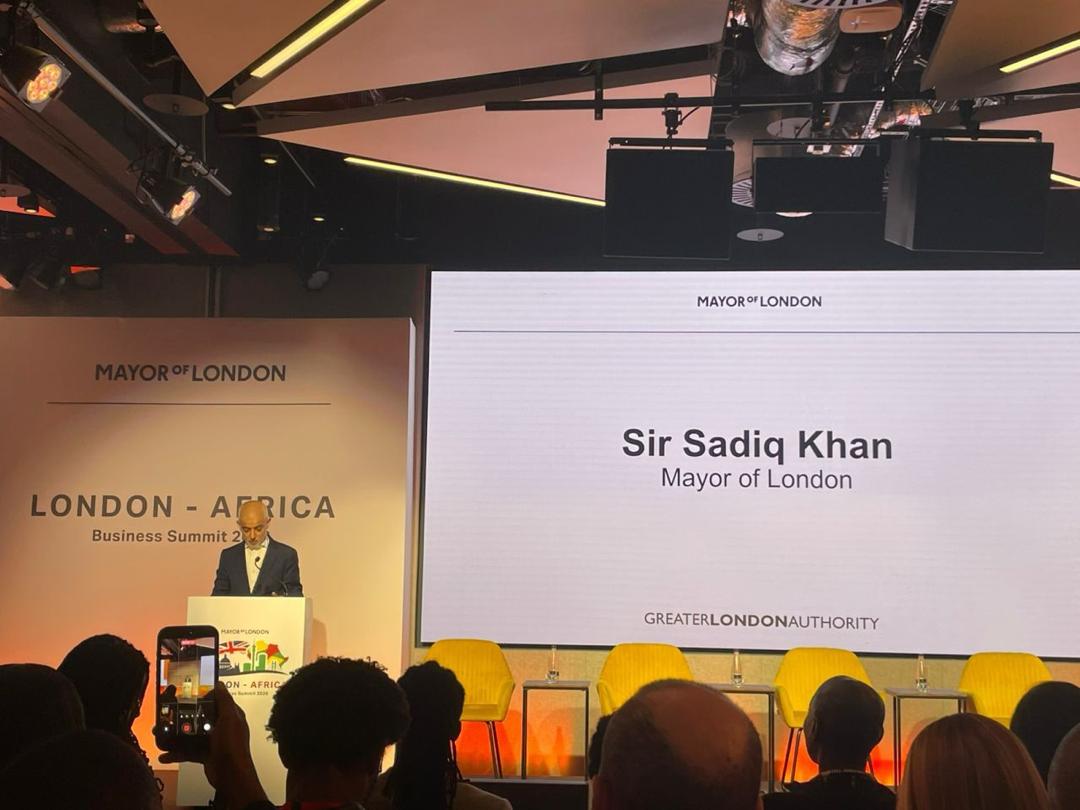
Addressing delegates, Khan described Africa as one of the world’s most dynamic growth regions and reaffirmed London’s commitment to supporting African companies seeking global expansion.
“I am proud to host City Hall’s first-ever London-Africa Business Summit, bringing together investors, entrepreneurs and businesses to showcase London as the best city in the world for African companies to expand internationally and attract investment,” the mayor said.
The summit represents a major outcome of Khan’s groundbreaking 2025 trade mission to Nigeria, Ghana and South Africa — the first official African trade mission by a serving Mayor of London. The visit was designed to strengthen commercial partnerships and deepen engagement with some of Africa’s largest and fastest-growing economies.
The strategy is already delivering measurable returns.
Officials disclosed that African companies have invested more than £30 million in London through foreign direct investment since the mayor’s visit last year, strengthening confidence in the city as a destination for African capital and enterprise.
The summit also underscored London’s dominance as the leading international marketplace for African businesses. According to figures presented at the event, 117 African companies are currently listed on the London Stock Exchange, more than on any other stock exchange worldwide.
Those listings span strategic sectors including telecommunications, banking, energy, mining, technology and infrastructure, reflecting London’s long-standing role as a bridge between African enterprise and global capital.
The significance of that position becomes even more evident when compared to other financial centres. Fewer than 20 African firms are listed on the New York Stock Exchange, highlighting London’s unique relationship with African markets and investors.
Beyond financial markets, participants examined growing opportunities for collaboration in technology, renewable energy, healthcare, education, creative industries, agribusiness and infrastructure development.
Representatives from Ghana’s Ministry of Trade, the Nigerian Exchange Group, the London Africa Network, SOAS University of London and investment firms from both regions participated in discussions focused on unlocking new avenues for growth and investment.
Economic experts at the summit noted that Africa’s transformation is no longer viewed solely through the lens of development but increasingly as a strategic economic opportunity.
Home to some of the world’s fastest-growing cities and a population expected to surpass 2.5 billion by 2050, Africa is becoming a focal point for global investors seeking new markets, innovation hubs and long-term returns.
The growing importance of the continent is already reflected in trade figures.
Despite a challenging global economic environment, total UK-Africa trade reached approximately £52 billion in 2025, while British exports to African countries climbed to nearly £26.2 billion, demonstrating the increasing strength of commercial ties between both regions.
For Britain, the relationship extends beyond economics.
The UK hosts one of the largest African diaspora populations in Europe, including an estimated 215,000 Nigerians, creating deep cultural, social and business connections that continue to strengthen bilateral relations.
Business leaders attending the summit argued that these human connections provide a powerful foundation for future economic cooperation.
Mark Smithson, Country Director for Nigeria and Anglo West Africa at the UK Department for Business and Trade, said the forum had created a platform capable of translating ambition into tangible economic outcomes.
According to him, stronger partnerships between British and African businesses would drive sustainable growth, attract investment and create jobs across both regions.
Similarly, financial institutions highlighted growing investor interest in Africa’s expanding markets.
Chief Executive Officer of FirstBank UK, Olukorede Adenowo, said London remains a critical gateway for African businesses seeking international expansion, while Africa continues to offer some of the most attractive long-term investment opportunities globally.
The summit also aligns with London’s broader economic ambitions.
Under the city’s Growth Plan, London aims to attract enough investment to add £107 billion to its economy by 2035 and create 150,000 new jobs by 2028. African investment is expected to play an increasingly important role in achieving those targets.
For many observers, the significance of the inaugural London-Africa Business Summit extends far beyond investment announcements and networking opportunities.
It reflects a strategic shift in how global cities are engaging with Africa — not as a continent in need of assistance, but as a rising economic force capable of shaping future patterns of trade, finance and innovation.
As competition intensifies among global financial centres seeking deeper access to African markets, London is making a calculated bet that its historical ties, financial expertise and multicultural character can secure it a leading role in Africa’s economic future.
The success of the summit suggests that bet may already be paying off.
London Courts Africa’s Rising Economic Power as Khan Hosts Historic Business Summit


Troops Rescue Farmer Shot by Suspected Armed Herders in Plateau, Recover Abandoned Cattle
By Zagazola Makama
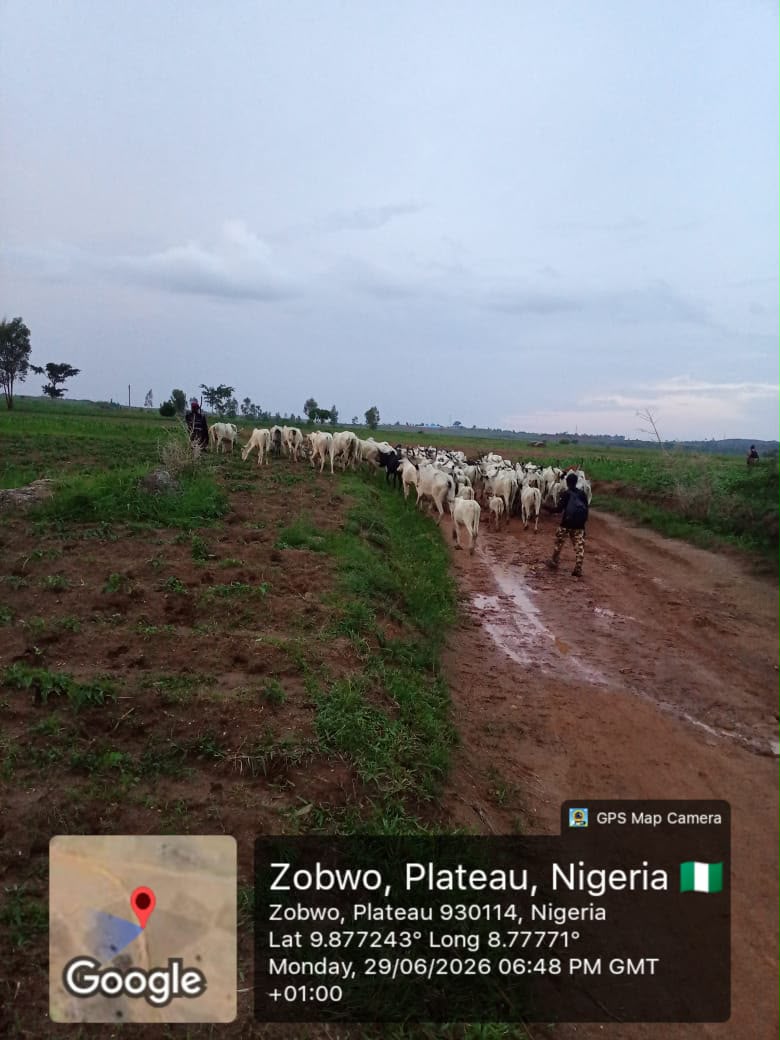
Troops of Sector 3, Operation Enduring Peace (OPEP), have rescued a farmer who was shot by suspected armed herders during an attack in Bassa Local Government Area of Plateau State.
Sources told Zagazola Makama that the incident occurred at about 4:20 p.m. on June 29 around Jebbu Miango community, where the assailants attacked a farmer identified as Mr. Lambat.
The sources said troops swiftly responded to a distress call and engaged the attackers, forcing them to flee the area before they could inflict further harm.
During the intervention, the troops rescued the victim, who had sustained gunshot wounds, and evacuated him to ENOS Hospital in Miango for urgent medical treatment.
The troops also recovered a herd of cattle abandoned by the fleeing suspects. The animals were moved to a secure location pending identification of their rightful owners and further necessary action by the relevant authorities.
Security sources said efforts are ongoing to track down the fleeing suspects and prevent further attacks in the area.
Troops Rescue Farmer Shot by Suspected Armed Herders in Plateau, Recover Abandoned Cattle
Missing Man Found Dead at Illegal Mining Site in Plateau
By Zagazola Makama
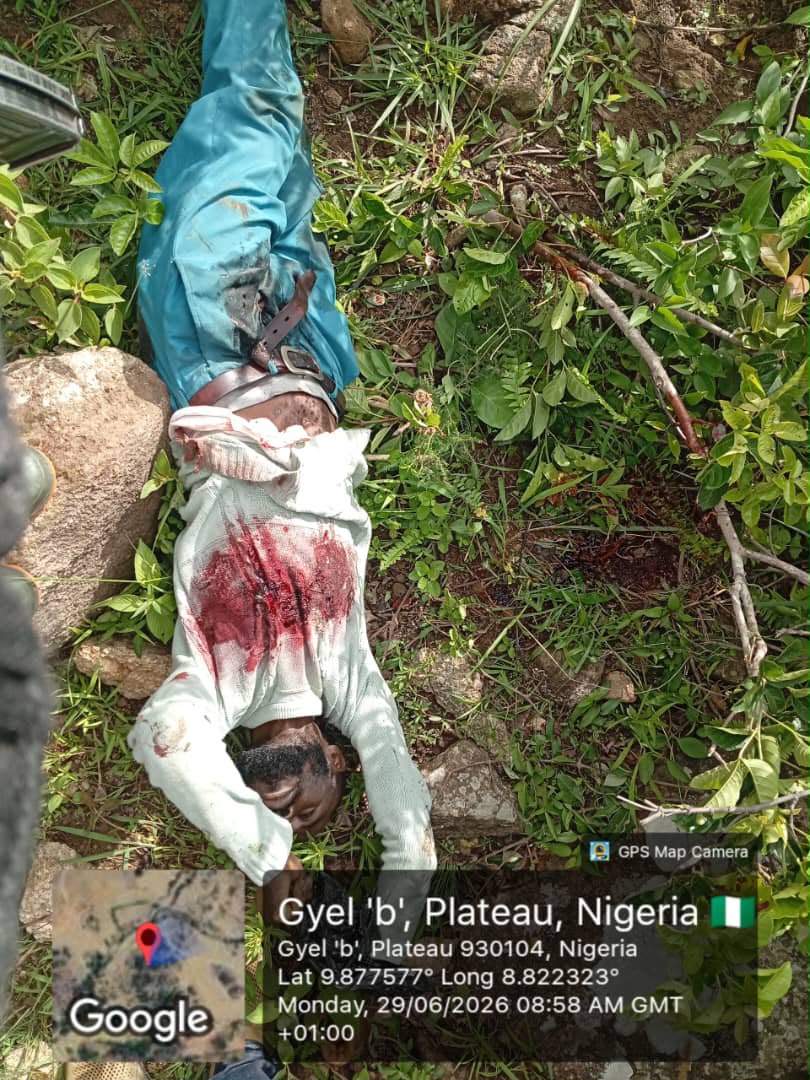
The corpse of a man earlier reported missing has been recovered at an illegal mining site in Jos South Local Government Area of Plateau State.
Intelligence sources told Zagazola Makama that troops of Sector 3, Operation Enduring Peace (OPEP), responded to a report at about 7:30 a.m. on June 29 that one Mr. Jerry had gone missing from the Rantya area.
The sources said the troops, in collaboration with members of the Vigilante Group of Nigeria (VGN), launched a search-and-rescue operation in the surrounding bushes.
During the operation, the search team discovered the victim’s corpse at a mining site. The body bore gunshot wounds as well as machete cuts.
Preliminary investigations indicated that the deceased had left home for illegal mining activities but failed to return, prompting concerns from relatives and the subsequent search operation.
Security sources said investigations are ongoing to determine the circumstances surrounding the killing and identify those responsible.
Missing Man Found Dead at Illegal Mining Site in Plateau
Military Delivers Decisive Air Strike on Bandit Enclave Along Niger–Kaduna–Zamfara Border
By: Zagazola Makama
The Nigerian military, in continuation of its sustained air campaign against armed bandits and other criminal elements threatening national security, has recorded another significant operational success with a precision air strike targeting a major gathering of bandits at Dogon Dawa, along the strategic Niger–Kaduna–Zamfara border.
Credible operational sources confirmed that the strike was executed after intelligence indicated that a large number of armed bandits had converged at the location to coordinate and plan a series of attacks against nearby communities.
The precision engagement effectively struck the gathering, resulting in the neutralisation of a substantial number of the terrorists. Intelligence obtained following the operation also indicated that more than hundreds of motorcycles, believed to have been assembled for the planned offensive and mobility of the criminal elements, were present at the target area at the time of the strike.
Battle Damage Assessment (BDA) and follow-up intelligence further revealed that several surviving terrorists, many of them wounded, fled in disarray towards the forests between Shadadi and Ma’undu through the Mangwaro axis, abandoning their coordinated plans as the devastating effects of the air strike disrupted their operations.
The successful mission illustrated the effectiveness in employing intelligence-driven precision air power to deny criminal groups freedom of movement, disrupt their command structures, and degrade their operational capabilities before attacks can be launched against innocent civilians.
This operation also reflects the seamless synergy between intelligence agencies and the Air Component in identifying, tracking, and engaging high-value terrorist and bandit targets with remarkable precision while sustaining pressure on criminal networks across the North-West and North-Central theatres.
Military Delivers Decisive Air Strike on Bandit Enclave Along Niger–Kaduna–Zamfara Border

Troops Rescue Farmer Shot by Suspected Armed Herders in Plateau, Recover Abandoned Cattle

Missing Man Found Dead at Illegal Mining Site in Plateau

Military Delivers Decisive Air Strike on Bandit Enclave Along Niger–Kaduna–Zamfara Border

Roger Federer’s Shock as DNA Results Reveal Myla and Charlene Are Not His Biological Children

THE PLIGHT OF FARIDA

FAILED COUP IN BURKINA FASO: HOW TRAORÉ NARROWLY ESCAPED ASSASSINATION PLOT AMID FOREIGN INTERFERENCE CLAIMS
-
 News2 years ago
Roger Federer’s Shock as DNA Results Reveal Myla and Charlene Are Not His Biological Children
-
Opinions4 years ago
THE PLIGHT OF FARIDA
-
 News1 year ago
FAILED COUP IN BURKINA FASO: HOW TRAORÉ NARROWLY ESCAPED ASSASSINATION PLOT AMID FOREIGN INTERFERENCE CLAIMS
-

 News2 years ago
EYN: Rev. Billi, Distortion of History, and The Living Tamarind Tree
-
 Opinions5 years ago
POLICE CHARGE ROOMS, A MINTING PRESS
-

 ACADEMICS2 years ago
A History of Biu” (2015) and The Lingering Bura-Pabir Question (1)
-

 Columns2 years ago
Army University Biu: There is certain interest, but certainly not from Borno.
-

 Politics1 year ago
2027: Why Hon. Midala Balami Must Go, as Youths in Hawul and Asikira/Uba Federal Constituency Reject ₦500,000 as Sallah Gift
