
National News
NAPTIP Moves to Strengthen Justice Chain Against Trafficking, Migrant Smuggling


NAPTIP Moves to Strengthen Justice Chain Against Trafficking, Migrant Smuggling
By: Michael Mike
The National Agency for the Prohibition of Trafficking in Persons (NAPTIP) has moved to strengthen Nigeria’s criminal justice chain against human trafficking and migrant smuggling, with a renewed focus on closing operational gaps between investigation, prosecution and judicial decision-making.
The initiative is coming against the backdrop of Nigeria’s strategic position in West Africa and its exposure to transnational organised crime, particularly human trafficking and migrant smuggling.
Nigeria serves as a country of origin, transit and destination, a position that exposes the country to complex operational and judicial challenges requiring a coordinated response across the entire criminal justice system.
Speaking in Abuja on Monday at the opening of a capacity-building workshop on “Strengthening the Criminal Justice Chain in Human Trafficking and Migrant Smuggling Cases,” the Director-General of NAPTIP, Binta Adamu Bello, said a stronger justice chain was critical to ensuring that perpetrators were effectively investigated, prosecuted and brought to justice while victims received adequate protection.
Bello said the workshop was designed to bring together investigators, prosecutors, judicial officers, intelligence analysts and law enforcement practitioners to strengthen cooperation and build an integrated response to the two forms of transnational organised crime.
She said human trafficking and migrant smuggling networks exploit human vulnerability, undermine national security, violate fundamental human rights and threaten economic stability across national boundaries.
According to her, the increasing sophistication of criminal networks made it necessary to strengthen the entire criminal justice chain rather than focus on isolated stages of enforcement.
“A criminal justice system is only as strong as its weakest link. If an investigation is compromised at the intelligence stage, prosecution becomes difficult; if evidence collection is flawed, justice is delayed or denied; and if judicial proceedings lack specialised operational insights into trafficking dynamics, dangerous criminals return to the streets while victims remain unprotected,” Bello said.
The workshop, she explained, seeks to improve interaction among investigators, prosecutors and judicial authorities while strengthening the effective implementation of existing procedures.
Its overall objective, she said, is to improve the effectiveness of the criminal justice chain in human trafficking and migrant-smuggling cases by improving coordination among stakeholders, enhancing the quality of case files and strengthening the connection between investigation, prosecution and judicial decision-making.
The initiative is also expected to strengthen institutional coordination and inter-agency cooperation and improve the overall effectiveness of Nigeria’s criminal justice response to trafficking and migrant smuggling.
Bello said the workshop would help close operational gaps from the initial detection of cases and victim-centred investigations through intelligence gathering and prosecution to final adjudication.
She added that the training would strengthen the ability of participating agencies to work together in tackling the convergence of trafficking and migrant smuggling with financial crimes, cybercrime and cross-border security threats.
Participants, she said, would also refine strategies for financial tracking, digital evidence collection and international legal cooperation, including Mutual Legal Assistance.
The NAPTIP boss stressed that the initiative would reinforce a victim-centred and trauma-informed approach to justice, ensuring that victims were protected throughout judicial proceedings and not re-traumatised in the process of seeking justice.
Bello said NAPTIP had maintained an aggressive, multi-dimensional strategy anchored on its 5P approach of Policy, Prevention, Protection, Prosecution and Partnership.
She disclosed that the agency had secured hundreds of convictions against human traffickers, with its legal teams continuing to pursue maximum sentences as a deterrent to organised criminal syndicates.
She said thousands of victims, including women, children and young men, had been rescued from domestic exploitation, forced labour, sexual servitude, organ-harvesting networks and digital exploitation centres both within Nigeria and internationally.
According to her, survivors receive psychosocial support, medical care, vocational training and reintegration assistance through NAPTIP’s specialised shelters across the country.
Bello said the agency had also expanded its intelligence operations in response to the growing use of digital platforms by traffickers, enabling it to track online trafficking syndicates, fake job-placement schemes and cyber-enabled exploitation networks operating in urban centres and across borders.
She added that specialised joint operations with sister security agencies, border-control authorities and international law-enforcement partners had enabled NAPTIP to intercept transnational syndicates and disrupt smuggling corridors across West Africa and Europe.
The agency, she said, had equally updated operational guidelines, strengthened standard operating procedures for victim identification and enhanced evidence-gathering techniques to ensure that investigations met international standards.
However, Bello warned that the achievements could not justify complacency, given the evolving tactics of organised criminal networks.
She said continuous innovation, institutional adaptation and deeper collaboration across the criminal justice pipeline remained necessary to sustain the fight against trafficking and migrant smuggling.
EU-backed criminal justice intervention
The capacity-building activity is being implemented within the framework of the Common Operational Partnership (COP Nigeria), carried out by CIVIPOL in collaboration with the Fundación para la Internacionalización de las Administraciones Públicas (FIAP), under the Support to Migration Governance (Component 3) project in Nigeria.
The project is funded by the European Union in partnership with the Nigerian authorities and is being developed in coordination with FIAP’s activities in Nigeria, particularly initiatives aimed at strengthening migration governance and combating human trafficking and migrant smuggling.
Bello expressed NAPTIP’s appreciation to the European Union for its sustained support under the Support to Migration Governance project, saying its investment in Nigeria’s migration-management and counter-trafficking frameworks reflected a commitment to global peace, security and human dignity.
She commended CIVIPOL for its technical expertise and leadership in implementing COP Nigeria, while also appreciating FIAP for its partnership and coordination in strengthening governance, justice and anti-trafficking structures in Nigeria.
The DG further thanked sister security agencies, judicial officers, civil society organisations and other resource persons for their participation and commitment to the fight against human trafficking.
Bello charged participants to use the workshop to build stronger professional networks and partnerships that would extend beyond the duration of the training.
“You represent the frontline defence of our nation’s criminal justice system against exploitation,” she told participants.
She urged them to engage actively, challenge assumptions and share best practices from their respective institutions, stressing that the knowledge and skills acquired would directly influence Nigeria’s capacity to investigate, prosecute and dismantle trafficking and migrant-smuggling networks.
She reminded participants that behind every case file, legal precedent and investigative report was a human life seeking justice and protection.
“Together, through a strengthened criminal justice chain, we will deny traffickers a safe haven, bring perpetrators to justice, and uphold the dignity of every individual,” Bello said.
She subsequently declared the capacity-building workshop officially open.
NAPTIP Moves to Strengthen Justice Chain Against Trafficking, Migrant Smuggling



NSCDC Raises Alarm Over Fake Promotion Notice, Warns Personnel Against Scammers
…Disowns WhatsApp message seeking officers’ names, service numbers and ranks
By: Michael Mike
The Nigeria Security and Civil Defence Corps (NSCDC) has alerted its personnel to a fraudulent notice circulating on WhatsApp, warning that scammers are attempting to harvest officers’ personal and service details under the guise of the 2026 senior promotion exercise.
The Corps, in an official disclaimer on Monday, disowned the notice, which directs personnel to submit their full names, service numbers and present ranks to a designated WhatsApp number, 08031306693.
It described the purported directive as fake, stressing that neither the NSCDC management nor its National Public Relations Office issued the instruction.
The warning comes amid concerns over the growing use of unofficial communication channels by fraudsters to exploit personnel seeking career advancement, particularly during promotion exercises.
In the disclaimer, signed by the National Public Relations Officer, Assistant Commandant of Corps Babawale Afolabi, the Corps urged officers and men to disregard the message and avoid disclosing sensitive service information to unverified individuals or platforms.
It cautioned that the fraudulent request could expose personnel to identity theft, impersonation and other forms of financial or administrative fraud.
The NSCDC clarified that all official matters relating to promotions fall within the jurisdiction of the Secretary to the Civil Defence, Correctional, Fire and Immigration Services Board (CDCFIB).
It added that legitimate promotion-related information is communicated through established administrative channels of the Ministry of Interior and the Corps, rather than through unsolicited WhatsApp messages or personal telephone numbers.
The Corps, therefore, advised personnel to verify all promotion-related information through their appropriate command structures and official administrative channels before acting on any purported directive.
The disclaimer urged officers and men to remain vigilant and ensure that the warning receives wide publicity to prevent unsuspecting personnel from falling victim to the scheme.
The development highlights the vulnerability of internal administrative processes to impersonation and fraud, particularly where career progression and promotion opportunities are involved.
For security personnel, the Corps stressed, the safest approach is to treat unsolicited requests for service records and personal information with suspicion and rely exclusively on officially authorised communication channels.
NSCDC Raises Alarm Over Fake Promotion Notice, Warns Personnel Against Scammers
ECOWAS Project Delivers Electricity to 500,000 People in Three West African Countries
…$225m World Bank-funded initiative connects 490 localities in The Gambia, Guinea-Bissau and Mali
…Mali seeks extension as ECOWAS holds final steering committee meeting in Abuja
By: Michael Mike
The Economic Community of West African States (ECOWAS) said its $225 million Regional Electricity Access Project has extended electricity access to nearly 500,000 people across 490 localities in The Gambia, Guinea-Bissau and Mali.
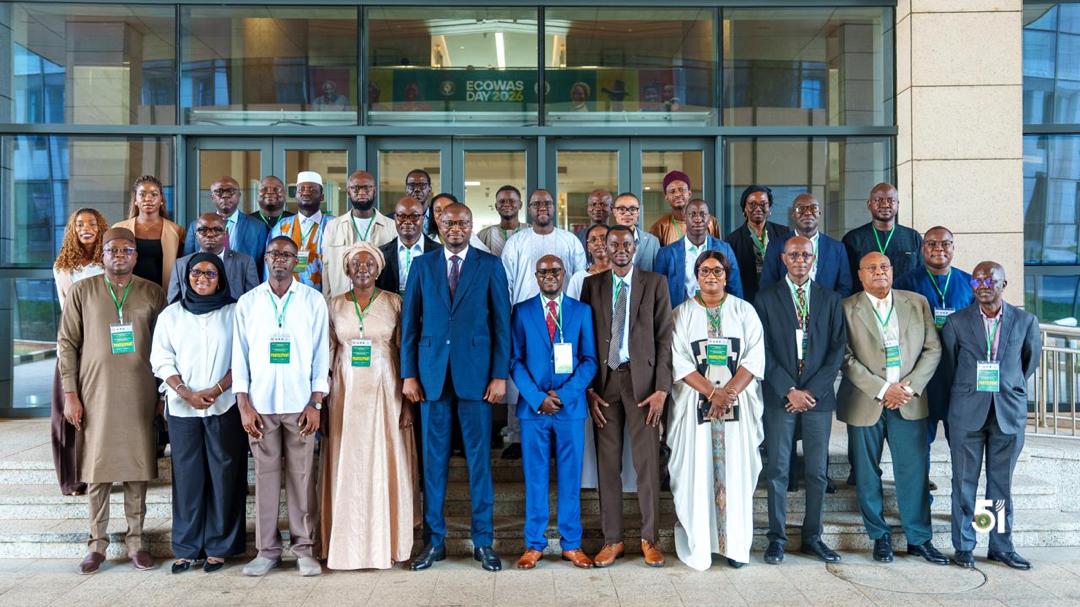
The achievement was disclosed at the 10th and final Steering Committee meeting of the ECOWAS Regional Electricity Access Project (ECOWAS-REAP), which opened in Abuja on Tuesday to review implementation progress and determine measures for ensuring the sustainability of the project.
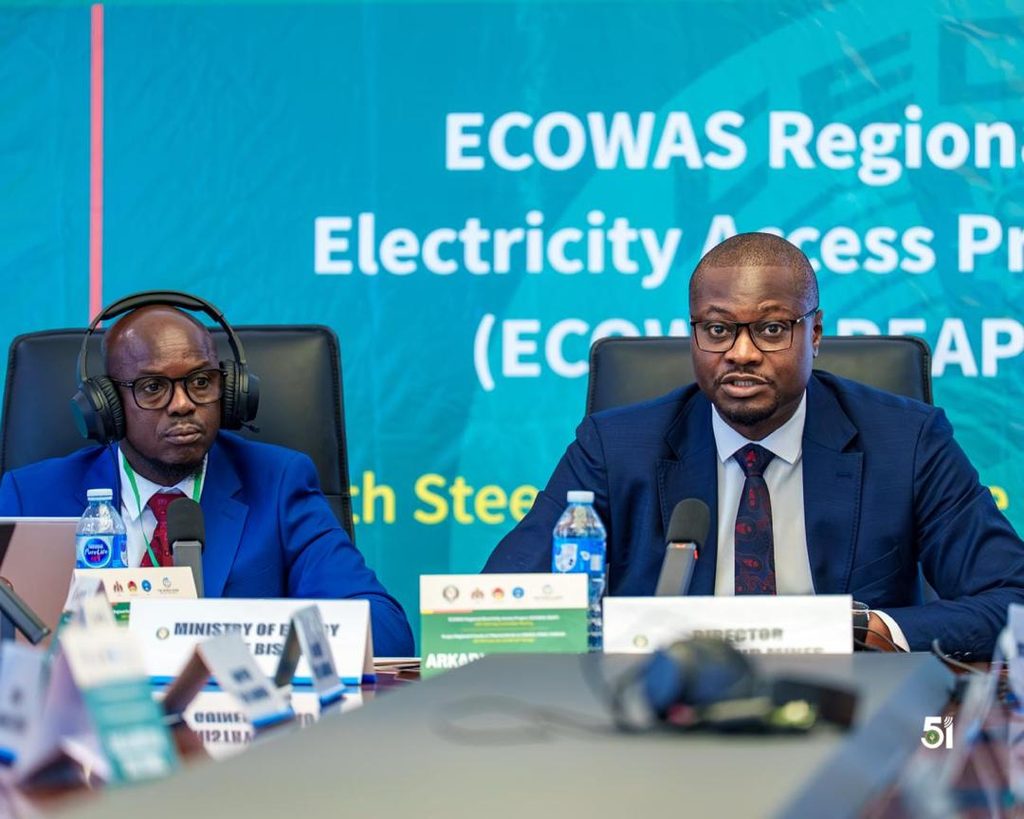
The World Bank-financed initiative is designed to expand electricity access in underserved communities across the three countries, as part of efforts to deepen regional energy integration and improve living conditions in West Africa.
Speaking at the meeting, the Director of Energy and Mines at the ECOWAS Commission and Chairman of the Steering Committee, Arkadius Koumoin, acknowledged the significant progress recorded despite challenges that affected implementation, including the COVID-19 pandemic and institutional disruptions.
He, however, stressed the need for concrete decisions and actions to ensure responsible closure of the project, noting that its success should ultimately be measured by the number of households effectively connected to electricity.
Koumoin’s position highlights the importance of translating infrastructure investments into actual electricity access for communities, rather than measuring performance solely by completed project activities.
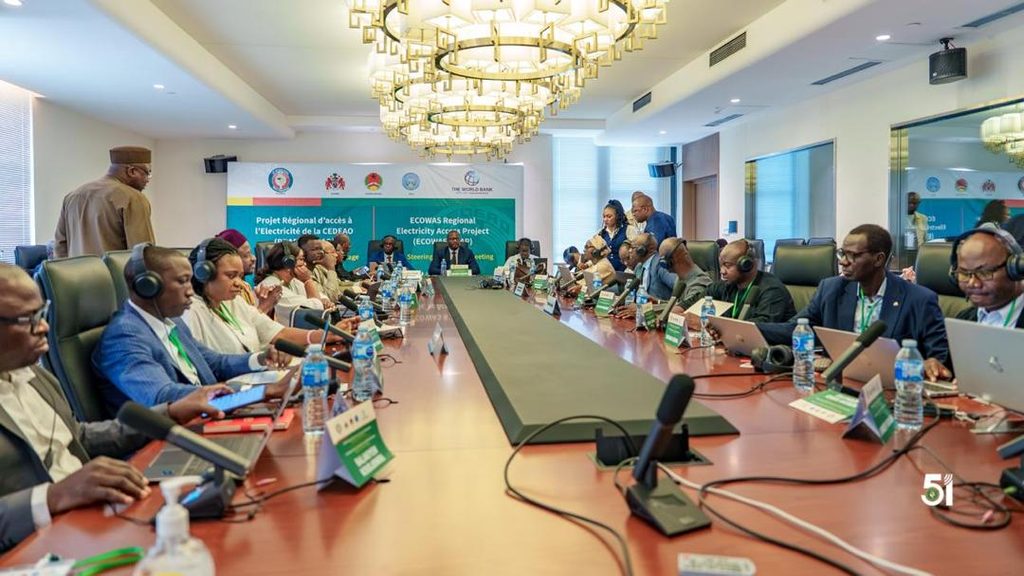
The Managing Director of the National Water and Electricity Company (NAWEC), The Gambia, Gallo Saidy; the representative of Guinea-Bissau’s Ministry responsible for Energy, Pedro Jeus de Oliviera; and Mali’s National Director of Energy, Oussouby Mary dit Ousmane Diarra, reaffirmed their commitment to completing outstanding project activities.
However, Mali called for an extension to enable it to complete its outstanding work, underscoring the need to address implementation gaps before the project’s final closure.
The meeting is expected to provide an opportunity for participating countries and the ECOWAS Commission to agree on the outstanding actions required to consolidate the gains of the initiative and ensure that beneficiaries continue to enjoy reliable electricity access.
Through ECOWAS-REAP, the regional bloc is advancing its energy integration agenda and the objectives of ECOWAS Vision 2050, with the broader ambition of translating regional investments into tangible improvements in the lives of West African citizens.
ECOWAS Project Delivers Electricity to 500,000 People in Three West African Countries

Court Dismisses El-Rufai’s N120m Rights Violation Suit Over Alleged Wiretapping
By: Zagazola Makama
A High Court of the Federal Capital Territory (FCT) on Monday dismissed a N120 million fundamental rights enforcement suit filed by former Kaduna State Governor, Mallam Nasir El-Rufai, against the Department of State Services (DSS), the Economic and Financial Crimes Commission (EFCC), the Independent Corrupt Practices and Other Related Offences Commission (ICPC) and the Attorney General of the Federation (AGF).
The court dismissed the suit for lacking merit and awarded N200,000 each in favour of the DSS, EFCC and ICPC.
Delivering judgment, Justice Sylvanus Orji held that the invitation letters issued to El-Rufai by the EFCC and ICPC complied with constitutional requirements and did not violate his fundamental rights.
On El-Rufai’s challenge to an attempted arrest by the DSS at the Nnamdi Azikiwe International Airport, Abuja, the judge held that the service possessed powers to carry out its statutory responsibilities pursuant to the relevant legal instruments governing its operations, including the National Security Agencies Act.
The court further held that the DSS had the mandate to maintain watchlists and take appropriate action, including arresting persons of interest within the scope of its lawful powers.
Justice Orji stressed that El-Rufai could not use the court to prevent security and law enforcement agencies from performing their legally assigned duties.
On the seizure of the former governor’s international passport by the DSS, the court held that it was satisfied that the action was lawful and within the agency’s powers.
The judge also ruled that the applicant had failed to establish that the seizure was continuous, permanent and unlawful in a manner that amounted to a violation of his fundamental rights.
The suit sought N120 million in damages over alleged violations of El-Rufai’s rights in connection with the actions of the security and anti-corruption agencies.
The ruling represents a setback for the former governor in his legal challenge to the actions taken by the agencies.
Court Dismisses El-Rufai’s N120m Rights Violation Suit Over Alleged Wiretapping

Athena Graduates 13 Pioneer Fellows, Publishes Essays on Nigerian Unity

Tijjani Muhammed’s promotion to Lithuania’s top division excites Mailantarki Care FC

Prof. Faruk Buba is currently leading the affairs at UMTH

Roger Federer’s Shock as DNA Results Reveal Myla and Charlene Are Not His Biological Children

THE PLIGHT OF FARIDA

FAILED COUP IN BURKINA FASO: HOW TRAORÉ NARROWLY ESCAPED ASSASSINATION PLOT AMID FOREIGN INTERFERENCE CLAIMS
-
 News3 years ago
Roger Federer’s Shock as DNA Results Reveal Myla and Charlene Are Not His Biological Children
-
Opinions5 years ago
THE PLIGHT OF FARIDA
-
 News2 years ago
FAILED COUP IN BURKINA FASO: HOW TRAORÉ NARROWLY ESCAPED ASSASSINATION PLOT AMID FOREIGN INTERFERENCE CLAIMS
-
 Opinions5 years ago
POLICE CHARGE ROOMS, A MINTING PRESS
-

 News3 years ago
EYN: Rev. Billi, Distortion of History, and The Living Tamarind Tree
-

 ACADEMICS3 years ago
A History of Biu” (2015) and The Lingering Bura-Pabir Question (1)
-

 Columns3 years ago
Army University Biu: There is certain interest, but certainly not from Borno.
-

 Politics1 year ago
2027: Why Hon. Midala Balami Must Go, as Youths in Hawul and Asikira/Uba Federal Constituency Reject ₦500,000 as Sallah Gift
