
News
NDLEA Intercepts Cocaine Hidden in Dry Fish Heads, Seizes Fentanyl, Meth in UK-Bound Shipments

NDLEA Intercepts Cocaine Hidden in Dry Fish Heads, Seizes Fentanyl, Meth in UK-Bound Shipments
By: Michael Mike
Operatives of the National Drug Law Enforcement Agency (NDLEA) have dismantled a suspected international drug trafficking network after intercepting cocaine concealed inside the heads of imported dry stock fish in Lagos, while also seizing dangerous narcotics hidden in parcels bound for the United Kingdom.
A statement by the spokesman of the anti-narcotics agency, Femi Babafemi on Sunday, stated that the operation, which followed weeks of intelligence gathering on a transnational trafficking ring, culminated in a sting carried out by officers of the agency’s Strategic Command at the Murtala Muhammed International Airport in Lagos.
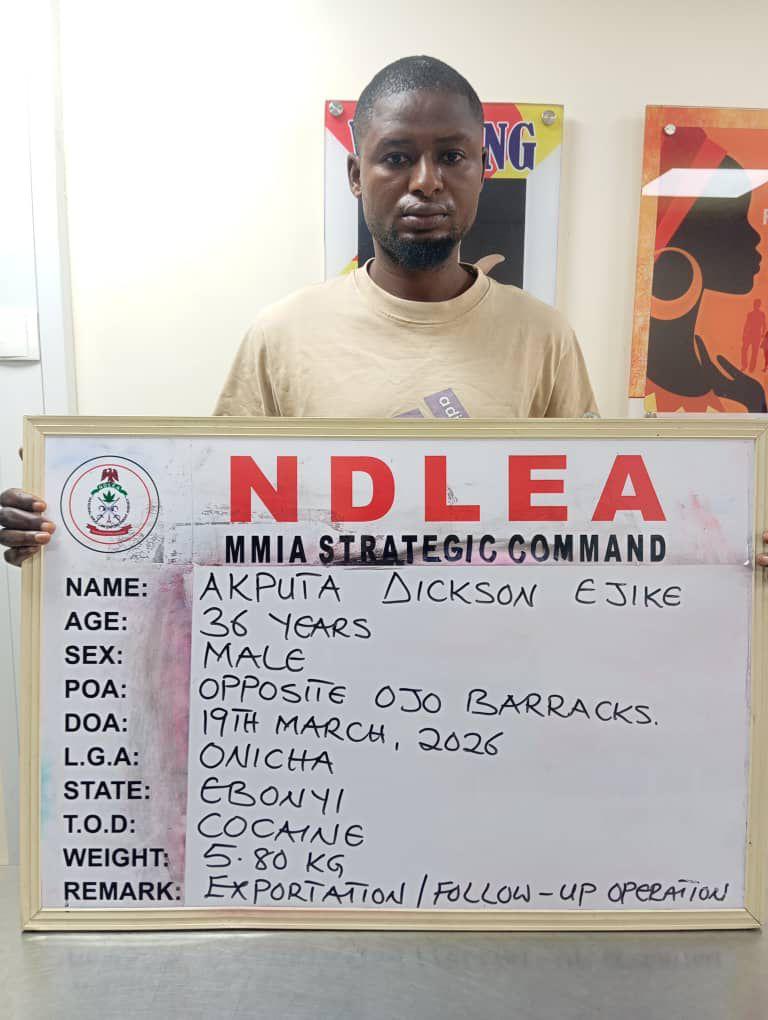
Babafemi said during the raid conducted in the Ojo area of the state, operatives arrested a 36-year-old suspect, Akputa Ejike, believed to be a key member of the syndicate responsible for exporting illicit drugs to several countries, particularly India.
He said a search of three large bags in his possession led to the discovery of 237 wraps of cocaine carefully hidden inside the heads of imported dry stock fish, popularly known as “Okporoko.” The concealed drugs weighed a total of 5.8 kilogrammes and were allegedly destined for Delhi, India.
In a related operation in Lagos, operatives from the agency’s Directorate of Operations and General Investigation intercepted two suspicious consignments heading to the United Kingdom through a courier service.
One of the shipments, which originated from Cotonou in the neighbouring Republic of Benin, contained 1.9 kilogrammes of methamphetamine hidden inside automobile filters. Another parcel was found to contain 40 ampoules of morphine sulphate and nine ampoules of fentanyl, both highly controlled substances.
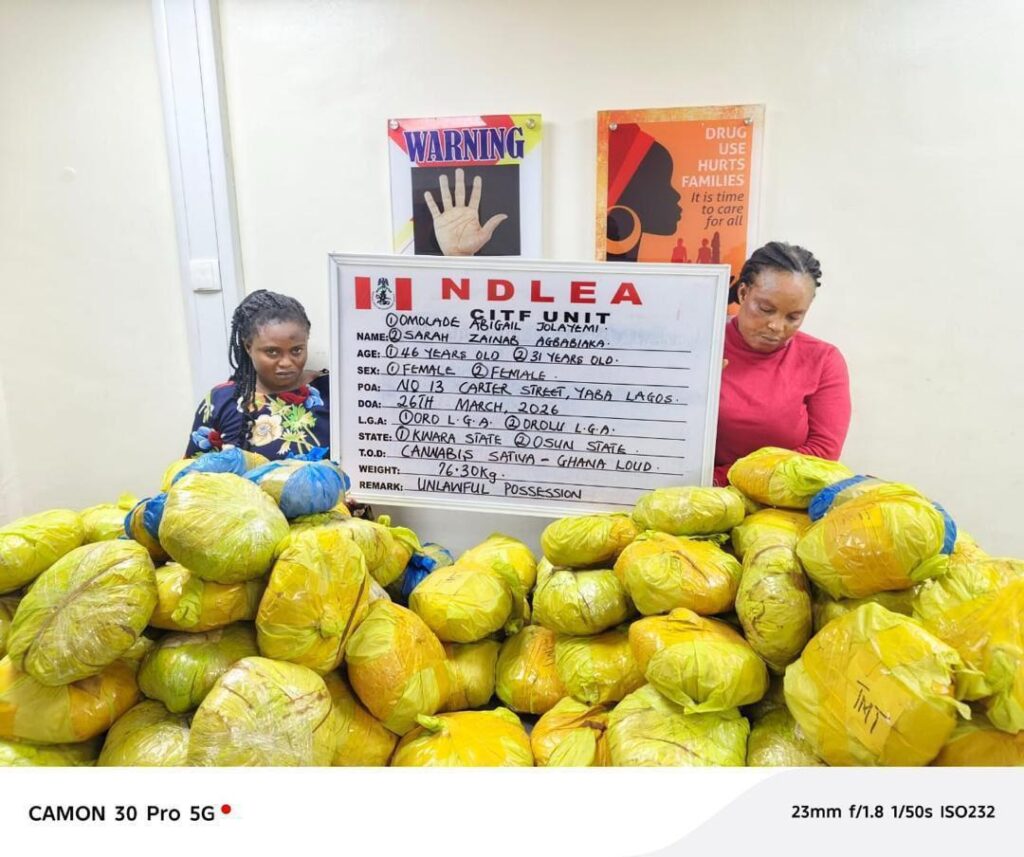
The agency also recorded a major breakthrough following a raid on a residence at Carter Street in the Yaba area of Lagos, where officers arrested a suspected drug syndicate leader, Omolade Jolayemi, aged 46, popularly known as “Iya Ghana.”
Jolayemi was arrested alongside her sales assistant, Sarah Agbabiaka, aged 31. Babafemi said during the operation, officers recovered 135 blocks of “Ghana Loud,” a potent strain of cannabis weighing 76.3 kilogrammes.
He said Jolayemi operated a local fabric business as a cover while allegedly coordinating a cannabis distribution network linking Nigeria and Ghana.
On the same day, operatives of the agency’s Special Operations Unit arrested another suspect, Anayo Ohabiro, aged 39, at Doyin bus stop in Surulere, Lagos, where 78 blocks of Ghana Loud weighing 41 kilogrammes were seized.
According to Babafemi, the crackdown extended to other parts of the country. In Ekiti State, NDLEA operatives arrested an 80-year-old man, Oke Samuel, during a raid at Mosafuneto Camp along Erinmo Road in Efon-Alaaye. Officers recovered 2.2 kilogrammes of skunk and 1.8 grammes of methamphetamine from him.
In neighbouring Ondo State, officers raided an uncompleted building in Ogbese in Akure North Local Government Area, leading to the seizure of 894.72 kilogrammes of skunk from a suspect identified as Enuwa Kingsley, aged 37.
Additional seizures were recorded in other states. In Benue State, a raid in Pevi village in Guma Local Government Area led to the arrest of Saater Nyam, aged 35, and the recovery of 116.7 kilogrammes of skunk.
In Edo State, operatives uncovered a warehouse in Ekpoma in Esan West Local Government Area, resulting in the arrest of Felix Donald, aged 25, and the seizure of 576.5 kilogrammes of skunk along with 36 bottles of codeine-based cough syrup.
In Taraba State, NDLEA officers acting on intelligence intercepted a truck marked DUT 457 ZB transporting 100 blocks of compressed skunk weighing 135 kilogrammes concealed inside bags of animal feed along a route from Garbachede to Gombe State. Two suspects, Osama Mamuda, aged 21, and Auwal Umar, aged 22, were arrested in connection with the seizure.
Meanwhile, the agency’s War Against Drug Abuse advocacy campaign continued across several states with sensitisation programmes held in schools including Community Secondary School in Itigidi, Cross River State; Government Girls Secondary School in Yola, Adamawa State; Islamic High School in Igbeti, Oyo State; Gidan Sarki Primary School in Kano State; and Royal Legends Academy in Ibeshe, Ikorodu in Lagos State.
Commending the officers involved in the recent operations, Chairman and Chief Executive Officer of the NDLEA, Buba Marwa, praised commands in Lagos, Ekiti, Ondo, Benue, Edo and Taraba states for their vigilance and professionalism.
He also applauded other state commands across the country for maintaining a balance between efforts to reduce the supply of illicit drugs and programmes aimed at preventing drug abuse through public awareness campaigns.
NDLEA Intercepts Cocaine Hidden in Dry Fish Heads, Seizes Fentanyl, Meth in UK-Bound Shipments


Troops arrest two suspects, recover suspected stolen goods in Plateau
By: Zagazola Makama
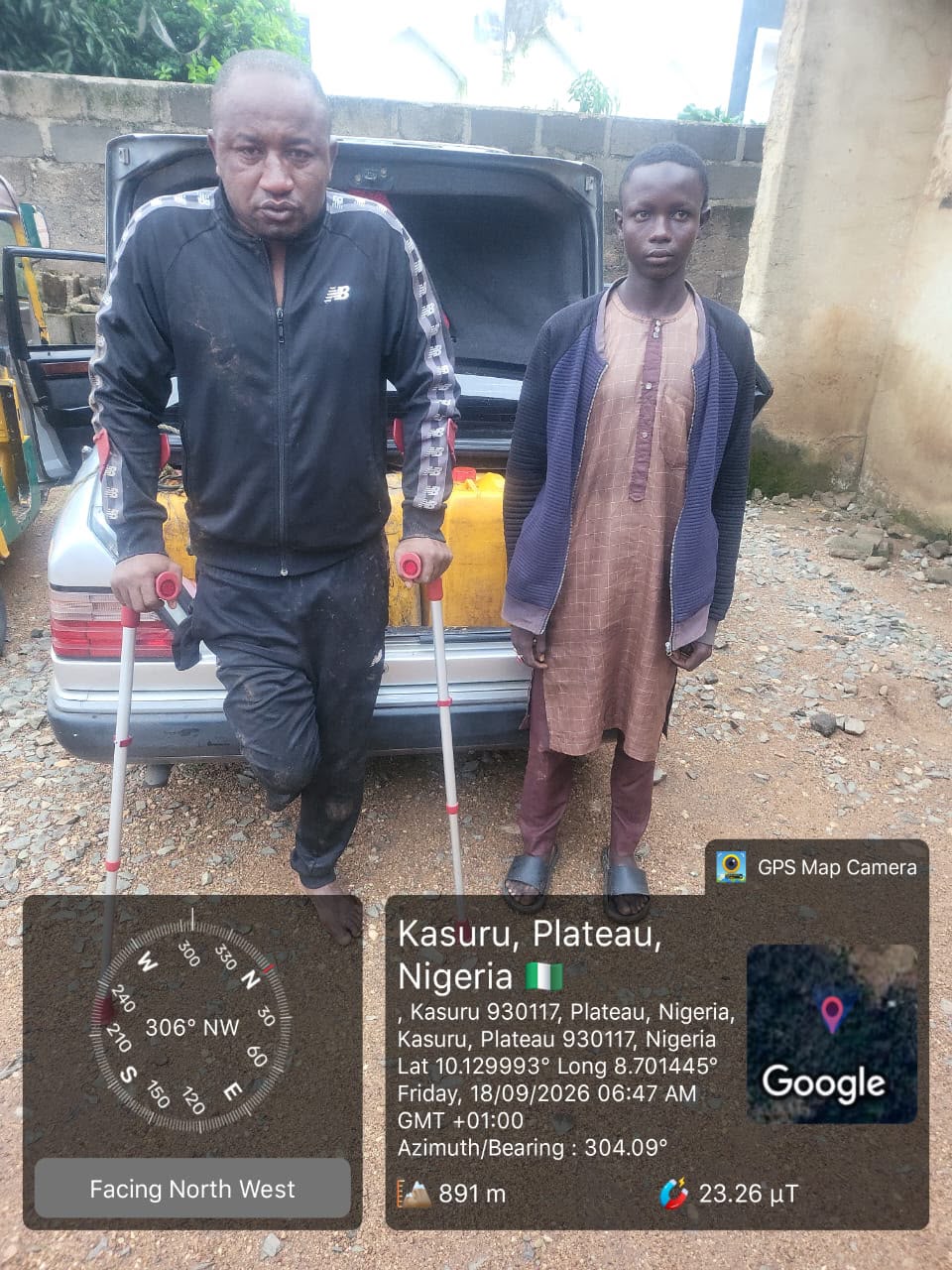
Troops of Sector 1, Operation Enduring Peace, have arrested two suspected criminals and recovered a vehicle loaded with suspected stolen items at Berger Junction, Mista-Ali, in Bassa Local Government Area of Plateau State.
The suspects were arrested at about 4:00 a.m. on September 18, 2026, following information about suspected criminals allegedly offloading stolen goods at the location.
The troops, acting on the report, swiftly mobilised to the area and arrested two suspects identified as Ibrahim Sulaiman, 33, and Ibrahim Husaini, 23.
The troops also recovered a Mercedes-Benz E220 vehicle allegedly loaded with suspected stolen items.
The recovered items included eight 25-litre containers of palm oil, four 4-litre containers of palm oil, two 50kg bags of rice, one 50kg bag of sugar, one carton of Maggi seasoning and an empty 25-litre jerrycan.
The suspects and recovered items were subsequently handed over to the Keystone Mista-Ali Outpost for further investigation and appropriate legal action.
Security sources said the arrest followed sustained intelligence gathering and patrol operations aimed at disrupting criminal activities and recovering stolen property in the area.
Troops arrest two suspects, recover suspected stolen goods in Plateau
GOC 3 Division engages Bokkos stakeholders over farmer-herder conflicts
By: Zagazola Makama
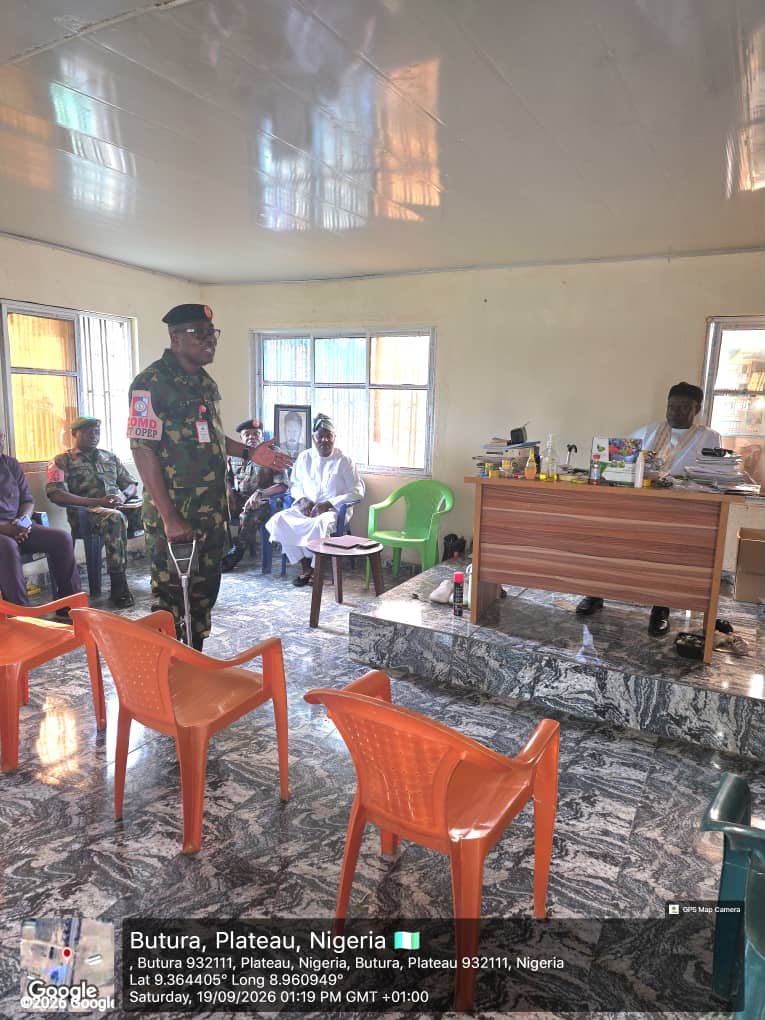
The General Officer Commanding 3 Division and Commander, Operation Enduring Peace, Maj. Gen. W.M. Dangana, has engaged district heads and other stakeholders in Bokkos Local Government Area of Plateau State as part of efforts to address recurring farmer-herder conflicts in the area.
Maj. Gen. Dangana arrived at the headquarters of Sector 5, Operation Enduring Peace, in Bokkos at about 1:00 p.m. on September 19, 2026, where he was received by the Sector Commander.
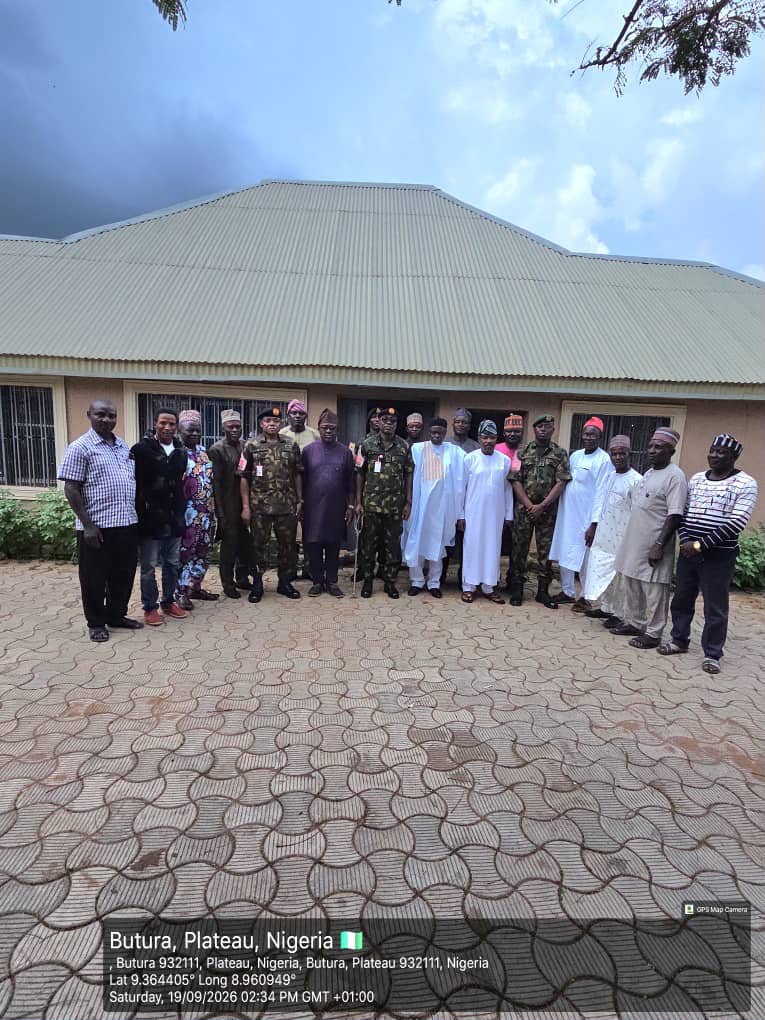
The GOC thereafter proceeded to the Palace of the Saf Bokkos, where he held an engagement meeting with district heads and other stakeholders from across the local government area.
The engagement formed part of ongoing non-kinetic efforts by the military and other stakeholders to address the underlying tensions between farming and herding communities and promote peaceful coexistence.
Discussions with traditional leaders and community stakeholders are expected to support the identification of local grievances, strengthen communication with security agencies and help prevent disputes from escalating into violence.
The engagement was conducted peacefully and without any incident.
GOC 3 Division engages Bokkos stakeholders over farmer-herder conflicts
Troops neutralise suspected terrorist in Kaduna, others flee with gunshot wounds
By: Zagazola Makama
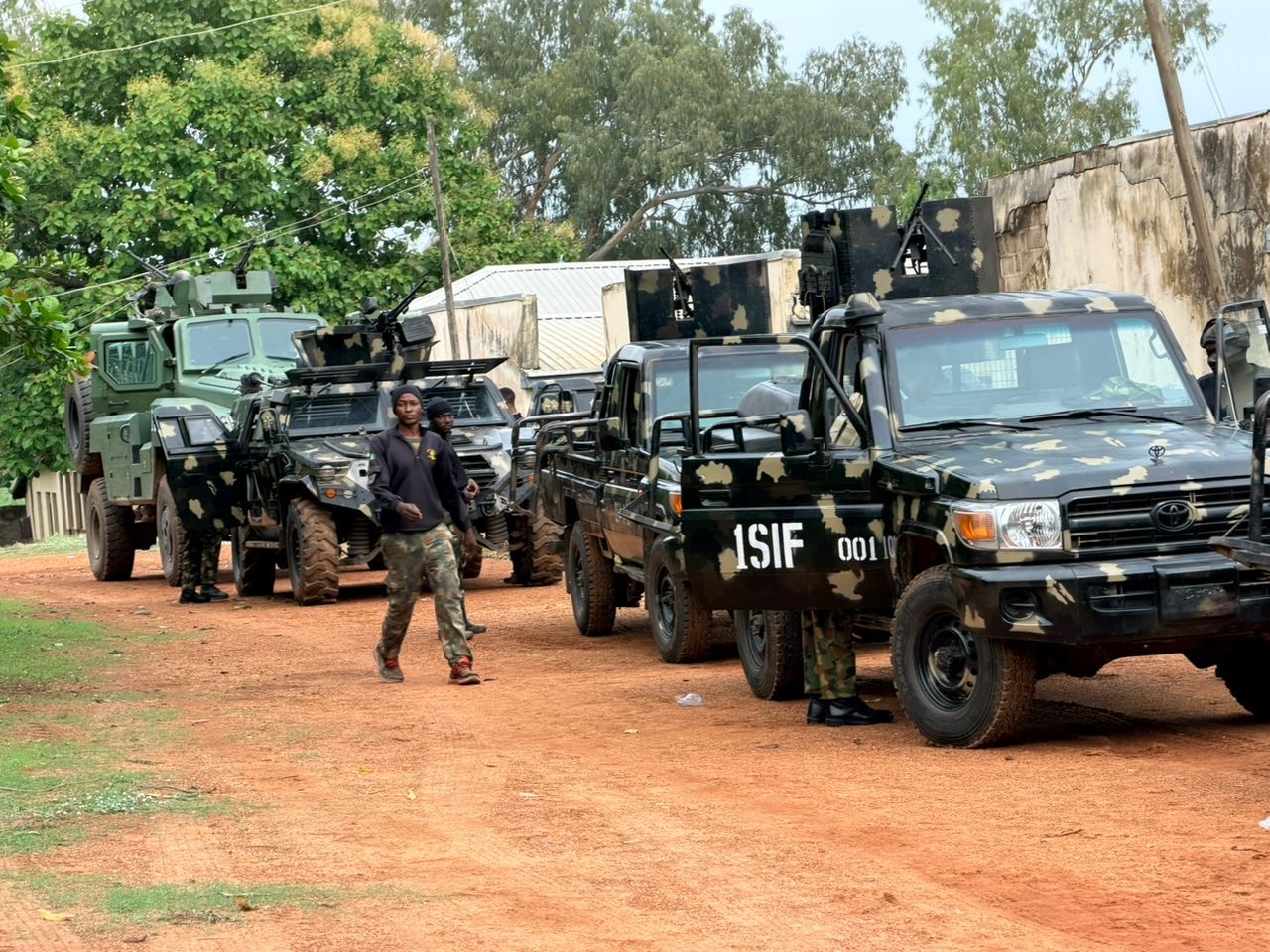
Troops of Sector 7, Sub-Sector 71 Sanga, have neutralised a suspected terrorist during an offensive operation at Ungwan Nungu village in Sanga Local Government Area of Kaduna State.
The operation was conducted at about 8:00 p.m. on September 18, 2026, after troops deployed at Ungwan Nungu responded to intelligence on the activities of suspected terrorists operating from a hideout in the community.
Upon arrival at the location, the troops made contact with the criminals, resulting in a gun battle during which one of the suspects, identified as Bashir Mohammed, was neutralised.
Other members of the group reportedly fled the scene with possible gunshot wounds sustained during the encounter.
Troops have commenced efforts to track and apprehend the fleeing suspects, while operations continue in the area to prevent the criminals from regrouping and further terrorising surrounding communities.
Troops neutralise suspected terrorist in Kaduna, others flee with gunshot wounds

2027: Tinubu’s trip to America puts an end to the chatter about his supposed inability to enter the United States.

Troops arrest two suspects, recover suspected stolen goods in Plateau

GOC 3 Division engages Bokkos stakeholders over farmer-herder conflicts

Roger Federer’s Shock as DNA Results Reveal Myla and Charlene Are Not His Biological Children

THE PLIGHT OF FARIDA

FAILED COUP IN BURKINA FASO: HOW TRAORÉ NARROWLY ESCAPED ASSASSINATION PLOT AMID FOREIGN INTERFERENCE CLAIMS
-
 News3 years ago
Roger Federer’s Shock as DNA Results Reveal Myla and Charlene Are Not His Biological Children
-
Opinions5 years ago
THE PLIGHT OF FARIDA
-
 News1 year ago
FAILED COUP IN BURKINA FASO: HOW TRAORÉ NARROWLY ESCAPED ASSASSINATION PLOT AMID FOREIGN INTERFERENCE CLAIMS
-

 News3 years ago
EYN: Rev. Billi, Distortion of History, and The Living Tamarind Tree
-
 Opinions5 years ago
POLICE CHARGE ROOMS, A MINTING PRESS
-

 ACADEMICS3 years ago
A History of Biu” (2015) and The Lingering Bura-Pabir Question (1)
-

 Columns3 years ago
Army University Biu: There is certain interest, but certainly not from Borno.
-

 Politics1 year ago
2027: Why Hon. Midala Balami Must Go, as Youths in Hawul and Asikira/Uba Federal Constituency Reject ₦500,000 as Sallah Gift
