
News
NDLEA is Central to Africa’s Action Plan on Drug Control, Crime Prevention- AU Commission

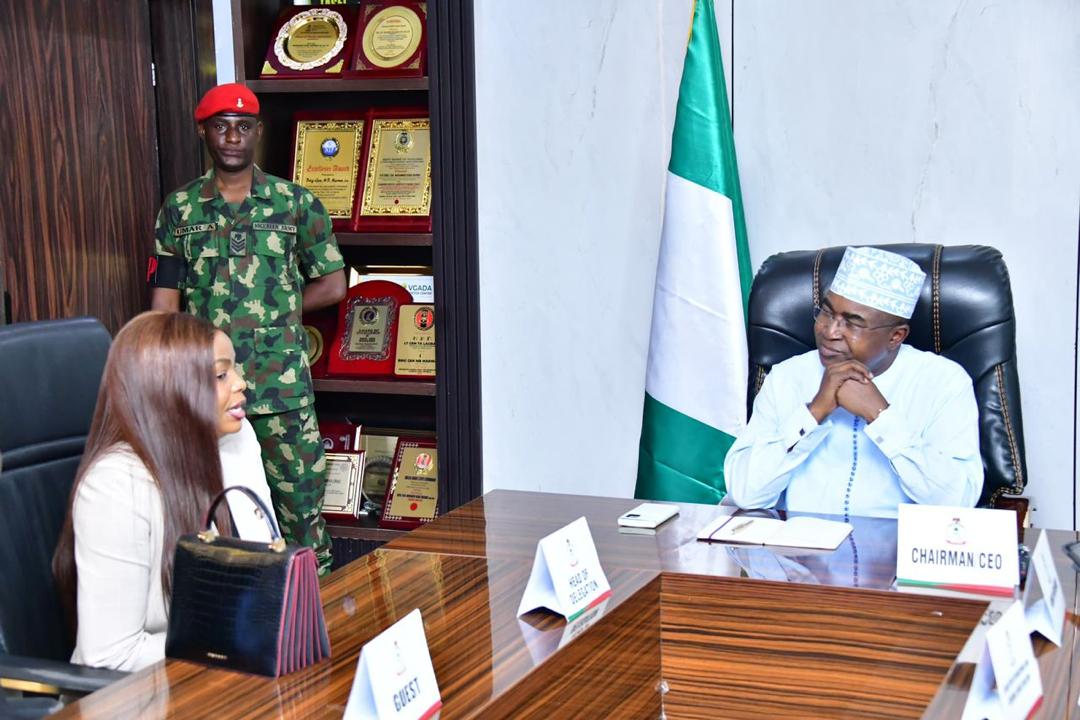
NDLEA is Central to Africa’s Action Plan on Drug Control, Crime Prevention- AU Commission
By: Michael Mike
The Commission of the African Union has said the formulation of new action plan on drug control and crime prevention on the African continent would not be complete without inputs from the National Drug Law Enforcement Agency (NDLEA) because of its central role in law enforcement on the continent.

The AU Commission stated this on Monday during an assessment visit to the NDLEA’s National Headquarters in Abuja by a three-member delegation including the team lead Dr. Olubusayo Akinola, Head of Social Welfare, Drug Control and Crime Prevention; Dr. Abiola Olaleye, Senior Drug Epidemiology and Research Officer; and Prof. Johan Strijdom, Senior Drug Control Consultant.
The visit was to evaluate the African Union Plan of Action on Drug Control and Crime Prevention (2019-2025).
Akinola said: “We are here to understand the status of implementation of this continental action plan on drug control and crime prevention. We are in the process of re-evaluating and starting another continental action plan that will take us from 2026 to 2030. So, we have identified a few countries to understand how this action plan was actually implemented in the member states. And if there are gaps and the new and current emerging trends that we can include.
“So, we understand very well the work of NDLEA and we believe that the formulation of the new action plan will not be finalized and concluded until we have inputs from NDLEA Nigeria, because you are basically on the forefront when it comes to law enforcement on the entire continent.”
The AU Commission delegation commended the NDLEA for its sustained provision of critical and policy-relevant data, which has significantly informed and shaped the work of the Commission over the years. The visit, according to the delegation, aimed to obtain a comprehensive update on the current status of implementation of national drug control strategies, identify operational and institutional gaps, and explor#####eiiii#ehue#pp7l#######el#e7l77#e7l7#wlAfrican##wle potential areas for technical assistance, particularly in relation to capacity development, forensic science capabilities, canine detection units, and other strategic enablers of drug control efforts.
Welcoming the delegation, Chairman/Chief Executive Officer of NDLEA, Brig. Gen. Buba Marwa (Rtd), emphasized the importance of the mission, stating that he considered it imperative to receive the team personally due to the strategic relevance of their engagement.

He said: “We are particularly pleased that the African Union is giving due weight to the implementation of the continental action plan, not merely as a theoretical exercise, but by undertaking direct field consultations with national counterparts. This grounded, evidence-informed approach will undoubtedly result in a more pragmatic and responsive framework for implementation.”
Marwa highlighted the urgency of addressing the continent’s growing drug challenge, adding that while global projections estimate a 10–11% rise in drug use prevalence, Africa is expected to experience a surge of up to 40%. “This disparity signals a looming crisis that demands coordinated and accelerated action. We deeply appreciate the AU’s leadership in this space and commend your proactive efforts,” he added.
NDLEA is Central to Africa’s Action Plan on Drug Control, Crime Prevention- AU Commission


News
Olugbode Olugbode: IJAP Raises Alarm over Abuse of Ex-Parte Orders, Seeks Tougher Sanctions for Judges

Olugbode Olugbode: IJAP Raises Alarm over Abuse of Ex-Parte Orders, Seeks Tougher Sanctions for Judges
…ActionAid backs judicial accountability drive, says misuse of interim relief threatens access to justice and public confidence
By: Michael Mike
The Independent Judicial Accountability Panel (IJAP) has called for stronger disciplinary measures against judicial officers who abuse ex-parte orders, warning that their improper use threatens fair hearing, public confidence in the judiciary and the integrity of Nigeria’s justice system.
The panel urged the National Judicial Council (NJC) to take a more proactive approach to disciplining judges who improperly issue such orders and recommended that judicial officers known to misuse ex-parte orders, or with pending disciplinary complaints, should not be appointed to election petition tribunals.
Meanwhile, ActionAid Nigeria has backed the reform initiative, stressing that a credible, accessible and accountable justice system is essential to protecting citizens’ rights, particularly those of poor and marginalised communities.
The positions were highlighted in discussions surrounding a specialised seminar on judicial officers’ application of the rules of court, organised by the Federal Ministry of Justice under the theme, “Strengthening Procedural Practice and Effective Interim Relief”.
In a goodwill message delivered at the seminar, ActionAid Nigeria’s Governance Specialist, Mrs Vivian Efem Bassey, said justice must be treated as a right available to every citizen rather than a privilege reserved for a few.
She said the organisation’s engagement with communities, particularly women, young people and people living in poverty and exclusion, had reinforced the importance of a justice system that protects human dignity, equality and sustainable development.
“Where courts are fair, transparent, and accountable, citizens are protected; where they are not, the burden falls most heavily on the poor and the marginalised,” Bassey said.
She described the seminar as an important opportunity for judicial officers, legal practitioners and other justice sector stakeholders to strengthen procedural practice and promote public confidence in the administration of justice.
Bassey said ActionAid Nigeria was proud to support the work of the Federal Judicial Sector Reform Coordinating Committee (FJSRCC) and IJAP, noting that the two bodies, despite their distinct mandates, shared a commitment to advancing justice and accountability in Nigeria.
While the FJSRCC coordinates reform efforts across the justice sector, IJAP comprises retired Court of Appeal justices, academics, media executives, civil society representatives and legal practitioners who review judicial pronouncements, public-interest litigation and legal frameworks to develop recommendations for improving judicial processes.
According to her, their work reflects a common objective of building a justice system that is transparent, credible and responsive to the needs of Nigerians.
The specialised seminar follows growing concerns about the request, processing and grant of ex-parte orders and interim reliefs in Nigeria’s judicial system.
The issue featured prominently at the 2025 National Network Conference of Justice Sector Actors and in IJAP’s deliberations on judicial accountability.
The panel’s recommendations included a call for the NJC to strengthen disciplinary action against judges who misuse ex-parte orders, particularly given the potential consequences for parties who may be affected by court decisions made without first being heard.
However, Bassey cautioned against treating the engagement as an exercise in fault-finding, saying the problem was not necessarily the absence of applicable rules but the difficulty of applying them consistently under considerable time and procedural pressure.
She also stressed that responsibility for the proper use of ex-parte orders did not rest solely on judges.
“It is also a shared responsibility, one that rests not only upon those who grant such orders, but equally upon those who request, advise on, and process them,” she said.
Ex-parte orders are generally granted without first hearing the opposing party and may be necessary where urgent intervention is required to prevent imminent harm or preserve the subject matter of a dispute.
However, their use raises concerns when procedural safeguards are ignored, reliefs are granted without sufficient justification or affected parties are denied a timely opportunity to respond.
Interim reliefs can also be necessary to protect rights pending the final determination of a case. Their proper application requires courts to balance urgency against the constitutional guarantees of fair hearing and due process.
Bassey said the seminar would provide an opportunity to deepen participants’ understanding of the legal basis, scope and limitations of such orders, examine the circumstances in which they were appropriate and identify safeguards against abuse.
She added that the discussions should promote consistency in applying court rules, strengthen oversight mechanisms and address the implications of improper orders for access to justice and public confidence in the judiciary.
“Central to our discussions is the constitutional principle that the urgency of interim relief must at all times be balanced against the guarantees of fair hearing and due process,” she said.
The seminar is expected to culminate in a communiqué setting out key observations, recommendations and proposed actions arising from the deliberations.
The document is intended to support sustained engagement with judicial institutions, including the NJC, on improving procedural safeguards, promoting consistency in judicial practice and strengthening accountability.
Bassey commended the Federal Ministry of Justice for convening the engagement as part of its ongoing court rules reform process and acknowledged the contributions of the FJSRCC, IJAP and other partners.
She urged participants to engage candidly and constructively, stressing that meaningful reform required collective commitment from judicial officers, lawyers and other actors involved in the administration of justice.
ActionAid Nigeria, she said, remained committed to supporting the process.
Beyond ex-parte applications, IJAP has advanced a broader set of recommendations aimed at strengthening judicial accountability, improving electoral dispute resolution and promoting transparency in Nigeria’s justice and governance systems.
The panel proposed restructuring the office of the Chief Justice of Nigeria to reduce the concentration of powers, introducing greater transparency in judicial appointments and allowing citizens to scrutinise proposed appointees.
It also recommended improved recruitment and continuous training for judicial staff, an upward review of judges’ remuneration and retirement benefits, and an online platform through which citizens could report judicial misconduct.
Other proposals include electronic recording or live coverage of court proceedings, exchange programmes for judicial officers, stronger public communication by the judiciary and more expeditious determination of cases involving constitutional interpretation and other matters of national importance.
The panel further called for more effective accountability mechanisms, including extending the application of the Code of Conduct Bureau Act to post-tenure accountability for judges.
A substantial part of IJAP’s recommendations concerns electoral disputes, which have repeatedly tested Nigeria’s judicial institutions and shaped public perceptions of the electoral process.
The panel called for pre-election cases to be determined before elections wherever practicable, arguing that timely decisions would promote fairness, reduce multiple lawsuits and improve election administration.
It proposed reducing the period for determining election petitions from 180 days to a maximum of 120 days.
IJAP also recommended reviewing the appellate structure for election disputes. Under its proposal, appeals concerning House of Representatives, Senate and governorship elections would generally end at the Court of Appeal, while presidential pre-election matters would begin at the Court of Appeal and terminate at the Supreme Court.
The panel further called for courts to prioritise substantial justice over technicalities in pre-election matters, citing the Supreme Court decision in Ahmed v. Machina (2023).
Following its review of provisions of the Electoral Act 2026, IJAP identified what it described as ambiguities concerning electronic transmission of election results.
It raised concerns about the wording of Section 60(3), particularly the phrase “shall at all times”, arguing that it could generate differing interpretations regarding the relationship between electronic transmission and the use of polling-unit result forms.
The panel proposed amending the provision to require election officials to electronically transmit results to a public portal immediately after the prescribed forms have been signed and stamped by officials and countersigned by candidates or polling agents, where available. It recommended that transmitted results should be used to verify and confirm other results before collation.
IJAP also called for greater clarity in Sections 60 and 62 on the method and destination of results transmission, as well as the correction of an apparent cross-referencing error.
Other proposed electoral reforms include restricting certain former INEC political appointees and directorate-level staff from engaging in partisan politics for at least five years after leaving the commission, introducing independent candidacy under the Constitution and providing a constitutional basis for public-interest litigation by citizens challenging breaches of the Electoral Act and the Constitution.
The panel’s recommendations also address human rights protection and government compliance with judicial decisions.
It expressed concern over Nigeria’s reported failure to comply with the July 2024 judgment of the ECOWAS Court of Justice in Obianuju Catherine Udeh and two others v. Federal Republic of Nigeria, a case arising from the October 2020 #EndSARS protests and the Lekki shooting.
According to IJAP, failure to implement the judgment, which awarded monetary compensation to the applicants, risks damaging Nigeria’s international reputation and reinforcing perceptions that the country does not respect judicial decisions.
The panel urged Nigerian courts to adopt liberal interpretations of constitutional and human rights provisions, drawing on the African Charter on Human and Peoples’ Rights, to encourage the resolution of rights disputes within the domestic legal system.
It also called on the government to discourage the use of the military and other armed personnel to disperse protests and urged the Attorney-General of the Federation to ensure credible investigations into allegations of human rights violations by federal government agents, alongside appropriate punishment and reparations where violations are established.
On constitutional governance, IJAP said the National Assembly should use an ascertainable record of votes, rather than voice votes, on constitutional matters requiring a specified majority.
The panel said implementation of its recommendations would require commitment from the Attorney-General of the Federation and cooperation among judicial institutions, policymakers, electoral bodies, civil society organisations, development partners, the media and citizens.
It maintained that strengthening judicial accountability, ensuring credible electoral dispute resolution and safeguarding the rule of law were essential to restoring public confidence and consolidating Nigeria’s constitutional democracy.
[10/13, 5:06 PM] Olugbode Olugbode: IJAP Raises Alarm over Abuse of Ex-Parte Orders, Seeks Tougher Sanctions for Judges
…ActionAid backs judicial accountability drive, says misuse of interim relief threatens access to justice and public confidence
(Refreshed)
The Independent Judicial Accountability Panel (IJAP) has called for stronger disciplinary measures against judicial officers who abuse ex-parte orders, warning that their improper use threatens fair hearing, public confidence in the judiciary and the integrity of Nigeria’s justice system.
The panel urged the National Judicial Council (NJC) to take a more proactive approach to disciplining judges who improperly issue such orders and recommended that judicial officers known to misuse ex-parte orders, or with pending disciplinary complaints, should not be appointed to election petition tribunals.
Meanwhile, ActionAid Nigeria has backed the reform initiative, stressing that a credible, accessible and accountable justice system is essential to protecting citizens’ rights, particularly those of poor and marginalised communities.
The positions were highlighted in discussions surrounding a specialised seminar on judicial officers’ application of the rules of court, organised by the Federal Ministry of Justice under the theme, “Strengthening Procedural Practice and Effective Interim Relief”.
In a goodwill message delivered at the seminar, ActionAid Nigeria’s Governance Specialist, Mrs Vivian Efem Bassey, said justice must be treated as a right available to every citizen rather than a privilege reserved for a few.
She said the organisation’s engagement with communities, particularly women, young people and people living in poverty and exclusion, had reinforced the importance of a justice system that protects human dignity, equality and sustainable development.
“Where courts are fair, transparent, and accountable, citizens are protected; where they are not, the burden falls most heavily on the poor and the marginalised,” Bassey said.
She described the seminar as an important opportunity for judicial officers, legal practitioners and other justice sector stakeholders to strengthen procedural practice and promote public confidence in the administration of justice.
Bassey said ActionAid Nigeria was proud to support the work of the Federal Judicial Sector Reform Coordinating Committee (FJSRCC) and IJAP, noting that the two bodies, despite their distinct mandates, shared a commitment to advancing justice and accountability in Nigeria.
While the FJSRCC coordinates reform efforts across the justice sector, IJAP comprises retired Court of Appeal justices, academics, media executives, civil society representatives and legal practitioners who review judicial pronouncements, public-interest litigation and legal frameworks to develop recommendations for improving judicial processes.
According to her, their work reflects a common objective of building a justice system that is transparent, credible and responsive to the needs of Nigerians.
The specialised seminar follows growing concerns about the request, processing and grant of ex-parte orders and interim reliefs in Nigeria’s judicial system.
The issue featured prominently at the 2025 National Network Conference of Justice Sector Actors and in IJAP’s deliberations on judicial accountability.
The panel’s recommendations included a call for the NJC to strengthen disciplinary action against judges who misuse ex-parte orders, particularly given the potential consequences for parties who may be affected by court decisions made without first being heard.
However, Bassey cautioned against treating the engagement as an exercise in fault-finding, saying the problem was not necessarily the absence of applicable rules but the difficulty of applying them consistently under considerable time and procedural pressure.
She also stressed that responsibility for the proper use of ex-parte orders did not rest solely on judges.
“It is also a shared responsibility, one that rests not only upon those who grant such orders, but equally upon those who request, advise on, and process them,” she said.
Ex-parte orders are generally granted without first hearing the opposing party and may be necessary where urgent intervention is required to prevent imminent harm or preserve the subject matter of a dispute.
However, their use raises concerns when procedural safeguards are ignored, reliefs are granted without sufficient justification or affected parties are denied a timely opportunity to respond.
Interim reliefs can also be necessary to protect rights pending the final determination of a case. Their proper application requires courts to balance urgency against the constitutional guarantees of fair hearing and due process.
Bassey said the seminar would provide an opportunity to deepen participants’ understanding of the legal basis, scope and limitations of such orders, examine the circumstances in which they were appropriate and identify safeguards against abuse.
She added that the discussions should promote consistency in applying court rules, strengthen oversight mechanisms and address the implications of improper orders for access to justice and public confidence in the judiciary.
“Central to our discussions is the constitutional principle that the urgency of interim relief must at all times be balanced against the guarantees of fair hearing and due process,” she said.
The seminar is expected to culminate in a communiqué setting out key observations, recommendations and proposed actions arising from the deliberations.
The document is intended to support sustained engagement with judicial institutions, including the NJC, on improving procedural safeguards, promoting consistency in judicial practice and strengthening accountability.
Bassey commended the Federal Ministry of Justice for convening the engagement as part of its ongoing court rules reform process and acknowledged the contributions of the FJSRCC, IJAP and other partners.
She urged participants to engage candidly and constructively, stressing that meaningful reform required collective commitment from judicial officers, lawyers and other actors involved in the administration of justice.
ActionAid Nigeria, she said, remained committed to supporting the process.
Beyond ex-parte applications, IJAP has advanced a broader set of recommendations aimed at strengthening judicial accountability, improving electoral dispute resolution and promoting transparency in Nigeria’s justice and governance systems.
The panel proposed restructuring the office of the Chief Justice of Nigeria to reduce the concentration of powers, introducing greater transparency in judicial appointments and allowing citizens to scrutinise proposed appointees.
It also recommended improved recruitment and continuous training for judicial staff, an upward review of judges’ remuneration and retirement benefits, and an online platform through which citizens could report judicial misconduct.
Other proposals include electronic recording or live coverage of court proceedings, exchange programmes for judicial officers, stronger public communication by the judiciary and more expeditious determination of cases involving constitutional interpretation and other matters of national importance.
The panel further called for more effective accountability mechanisms, including extending the application of the Code of Conduct Bureau Act to post-tenure accountability for judges.
A substantial part of IJAP’s recommendations concerns electoral disputes, which have repeatedly tested Nigeria’s judicial institutions and shaped public perceptions of the electoral process.
The panel called for pre-election cases to be determined before elections wherever practicable, arguing that timely decisions would promote fairness, reduce multiple lawsuits and improve election administration.
It proposed reducing the period for determining election petitions from 180 days to a maximum of 120 days.
IJAP, whose position was presented by Professor Jummai Audi, also recommended reviewing the appellate structure for election disputes. Under its proposal, appeals concerning House of Representatives, Senate and governorship elections would generally end at the Court of Appeal, while presidential pre-election matters would begin at the Court of Appeal and terminate at the Supreme Court.
The panel further called for courts to prioritise substantial justice over technicalities in pre-election matters, citing the Supreme Court decision in Ahmed v. Machina (2023).
Following its review of provisions of the Electoral Act 2026, IJAP identified what it described as ambiguities concerning electronic transmission of election results.
It raised concerns about the wording of Section 60(3), particularly the phrase “shall at all times”, arguing that it could generate differing interpretations regarding the relationship between electronic transmission and the use of polling-unit result forms.
The panel proposed amending the provision to require election officials to electronically transmit results to a public portal immediately after the prescribed forms have been signed and stamped by officials and countersigned by candidates or polling agents, where available. It recommended that transmitted results should be used to verify and confirm other results before collation.
IJAP also called for greater clarity in Sections 60 and 62 on the method and destination of results transmission, as well as the correction of an apparent cross-referencing error.
Other proposed electoral reforms include restricting certain former INEC political appointees and directorate-level staff from engaging in partisan politics for at least five years after leaving the commission, introducing independent candidacy under the Constitution and providing a constitutional basis for public-interest litigation by citizens challenging breaches of the Electoral Act and the Constitution.
The panel’s recommendations also address human rights protection and government compliance with judicial decisions.
It expressed concern over Nigeria’s reported failure to comply with the July 2024 judgment of the ECOWAS Court of Justice in Obianuju Catherine Udeh and two others v. Federal Republic of Nigeria, a case arising from the October 2020 #EndSARS protests and the Lekki shooting.
According to IJAP, failure to implement the judgment, which awarded monetary compensation to the applicants, risks damaging Nigeria’s international reputation and reinforcing perceptions that the country does not respect judicial decisions.
The panel urged Nigerian courts to adopt liberal interpretations of constitutional and human rights provisions, drawing on the African Charter on Human and Peoples’ Rights, to encourage the resolution of rights disputes within the domestic legal system.
It also called on the government to discourage the use of the military and other armed personnel to disperse protests and urged the Attorney-General of the Federation to ensure credible investigations into allegations of human rights violations by federal government agents, alongside appropriate punishment and reparations where violations are established.
On constitutional governance, IJAP said the National Assembly should use an ascertainable record of votes, rather than voice votes, on constitutional matters requiring a specified majority.
The panel said implementation of its recommendations would require commitment from the Attorney-General of the Federation and cooperation among judicial institutions, policymakers, electoral bodies, civil society organisations, development partners, the media and citizens.
It maintained that strengthening judicial accountability, ensuring credible electoral dispute resolution and safeguarding the rule of law were essential to restoring public confidence and consolidating Nigeria’s constitutional democracy.
Olugbode Olugbode: IJAP Raises Alarm over Abuse of Ex-Parte Orders, Seeks Tougher Sanctions for Judges

Troops Arrest Bar Owner, Recover Five Guns in Anambra Arms Racketeering Investigation
By: Zagazola Makama
Troops of the 82 Division/JTF South-East Operations have arrested a bar owner and recovered five firearms during a follow-up investigation into an alleged arms racketeering case in Ihiala Local Government Area of Anambra State.
Security sources said the operation followed the arrest of Cpl Ibrahim Mustapha of the 185 Battalion and one Mr Odera over alleged arms racketeering.
During interrogation, the soldier reportedly disclosed that the weapons were kept in the custody of the owner of Prince Bar, located in Azia community, Ihiala LGA.

Acting on the information, troops immediately stormed the location and arrested the bar owner, identified as 31-year-old Mr Ikenna Oklie, popularly known as Big Star.
A preliminary interrogation of the suspect reportedly led to the recovery of three pump-action guns and two locally fabricated firearms.
The soldier and the other suspects are currently in the custody of the 302 Artillery Regiment for further investigation.
The operation forms part of ongoing efforts by security forces to dismantle illegal arms networks and trace the sources and custodians of illicit weapons in the South-East.
Troops Arrest Bar Owner, Recover Five Guns in Anambra Arms Racketeering Investigation
News
Africa’s Climate Promises Face Funding Test as Nigeria Defends Sustainable Oil, Gas Development

Africa’s Climate Promises Face Funding Test as Nigeria Defends Sustainable Oil, Gas Development
…Experts seek private capital, affordable climate finance as FG targets lower emissions, domestic refining
By: Michael Mike
Africa’s climate commitments risk remaining unfulfilled without increased private-sector investment, affordable financing and stronger government accountability, stakeholders warned on Tuesday as the Africa Climate Forum 2026 opened in Abuja, with the Federal Government insisting that sustainable petroleum development must remain part of Nigeria’s energy transition.
The government said Nigeria was pursuing a pragmatic pathway that would allow it to harness its vast oil and gas resources for economic development while reducing emissions, curbing gas flaring and progressively diversifying towards cleaner energy sources.
The position, presented by the Permanent Secretary, Federal Ministry of Petroleum Resources, through the Deputy Director, Midstream and Downstream Department, Emmanuel Okon, highlighted the challenge facing African countries seeking to reconcile climate commitments with energy security, industrialisation, poverty reduction and the need to expand access to affordable energy.
The development comes as stakeholders at the fourth edition of the Africa Climate Forum called for stronger public-private partnerships to translate climate pledges into projects capable of protecting livelihoods, improving energy access and strengthening the continent’s resilience to climate change.
The two-day forum, organised by the Global Centre for Law, Business and Economy at the Shehu Musa Yar’Adua Centre, Abuja, has as its theme, “Implementing in Lockstep: Public-Private Action for Green Outcomes.”
In his remarks on Nigeria’s approach to sustainable petroleum development, Okon said the country was not seeking to abandon its petroleum resources but to develop them responsibly while progressively reducing their environmental impact.
“Nigeria is not approaching the energy transition by abandoning its petroleum resources. Rather, we are pursuing a responsible and pragmatic pathway in which our natural resources are developed sustainably while we progressively reduce their environmental footprint and use their revenues and capabilities to accelerate the transition to a cleaner and more diversified energy system,” he said.
He said Nigeria’s petroleum resources remained critical to national development but insisted that their value should increasingly be assessed by the environmental responsibility of their production and the economic benefits generated for Nigerians.
According to him, Nigeria had approximately 37.01 billion barrels of proven and probable crude oil and condensate reserves and 215.19 trillion cubic feet of proven and probable natural gas reserves as of January 1, 2026.
He said the Federal Government was strengthening the regulatory and investment environment under the Petroleum Industry Act while pursuing higher production, improved asset integrity, transparency and more sustainable operations.
Nigeria’s crude oil and condensate production reached approximately 1.68 million barrels per day in August 2026, he added, describing the figure as evidence of improving operational performance.
However, Okon said sustainable petroleum development must go beyond increasing production to include emissions reduction, improved gas utilisation, technological innovation and greater domestic value addition.
He said the government was strengthening efforts to address methane emissions and greenhouse gases, with the upstream petroleum regulator directing operators towards measurement-based emissions reporting and credible measurement, reporting and verification systems.
He also identified gas development as a major component of Nigeria’s energy strategy, noting that the resource could support electricity generation, industrial production, liquefied petroleum gas, compressed natural gas, liquefied natural gas and petrochemicals.
According to him, better utilisation of natural gas could help Nigeria reduce waste, support industrialisation and progressively move towards a lower-carbon energy system.
On gas flaring, Okon said the Nigerian Gas Flare Commercialisation Programme was designed to attract technically and commercially viable projects that would convert gas otherwise wasted through flaring into productive economic assets.
He said the approach would generate economic value while improving environmental outcomes in oil-producing communities.
The government also highlighted domestic refining as part of its strategy to retain more value from petroleum resources within Nigeria.
Okon disclosed that approximately 53.7 million barrels of crude oil were supplied to local refiners in the second quarter of 2026, representing 97.4 per cent performance against the applicable supply framework.
He said strengthening domestic crude supply would support the transition from an economy that exports crude oil and imports refined products to one that increasingly refines, manufactures and adds value locally.
The government, he added, was also pursuing investment and regulatory reforms to unlock additional production and attract capital into the sector.
Nigeria recently launched its 2026 oil and gas licensing round, offering 40 blocks, according to Okon, who said new investments must increasingly be accompanied by environmental responsibility, technological innovation, efficiency and measurable benefits for the population.
He stressed that the government could not achieve sustainable petroleum development without collaboration among businesses, investors, financial institutions, research institutions, host communities and development partners.
“Government must provide clear policy, predictable regulation and appropriate incentives. Industry must deploy capital, technology and best practices. Financial institutions must develop instruments capable of financing transition,” he said.
He also called for a just and orderly energy transition that reflected Africa’s development circumstances, arguing that the continent should have sufficient room to use its natural resources responsibly while expanding access to reliable and affordable energy.
“Africa must also be allowed the development space to utilise its resources responsibly. Our transition must be just, orderly and fit for our circumstances. A sustainable energy future for Africa cannot be one in which millions of people remain without reliable and affordable energy,” he said.
Okon maintained that the petroleum industry could contribute to climate solutions through methane reduction, reduced gas flaring, carbon management, improved efficiency and gradual diversification, even as the environmental consequences of hydrocarbons remained a concern.
“Our destination is a more prosperous, secure and lower-carbon Nigeria,” he said, urging government, industry, finance, technology and development partners to translate the ambition into investment and measurable results.
In a goodwill message, the Founder and Executive Chair of Avocado Holdings, Dr Oge Funlola Modie, urged African governments, businesses and development partners to move beyond climate declarations and establish clear responsibilities and accountability mechanisms to ensure that commitments translate into tangible benefits.
Modie, who was represented by Mrs Chioma Ikenna-Ibeh, Head of Business, Radah Media Company, commended the Director of the Global Centre for Law, Business and Economy, Prof. George Nwangwu, and his team for sustaining the forum over the past four years, said Africa’s challenge was no longer simply to formulate climate policies but to implement them in ways that improved people’s lives.
She described climate action as fundamentally a development issue, with implications for reliable energy, food security, resilient infrastructure, economic opportunities and the well-being of communities.
“While these efforts have been important, the true measure of progress lies in our ability to translate them into tangible outcomes,” she said.
According to her, effective climate action requires governments to provide clear policy direction and an enabling environment, the private sector to bring investment and innovation, development partners to facilitate access to finance and expertise, and communities to participate meaningfully in decisions affecting their lives.
She cautioned, however, that collaboration must go beyond bringing stakeholders together, insisting that shared priorities, clearly defined responsibilities and accountability for results were essential to effective implementation.
Modie also highlighted strategic communication as a frequently overlooked component of climate action, saying policies and interventions could fail without public understanding, institutional trust and community participation.
Speaking through the goodwill message, she said the experience of The Radah Media Company, a media partner of the forum, reinforced the importance of integrating communication and stakeholder engagement into implementation from the outset.
“Communication is not merely how we report progress. It is one of the ways we make progress possible,” she said.
She argued that communication connects policies with the people they are intended to serve, builds confidence in institutions and enables communities to contribute to developing practical solutions.
Modie urged participants to focus on how proposed interventions would be delivered, who would be responsible for them and how their success would be measured.
“Africa does not lack ambition, ideas or capable people. What we must strengthen is our ability to align our efforts, sustain partnerships and deliver results,” she said.
She expressed hope that the forum would be remembered not only for the quality of its discussions but also for the partnerships strengthened and the actions that followed.
“Ultimately, the credibility of our climate commitments will not be determined by what we promise together, but by what we deliver together,” she said.
The petroleum ministry’s position came against the backdrop of wider calls at the forum for increased private-sector investment to close Africa’s climate financing gap.
The Convener, George Nwangwu said the continent’s participation in international climate negotiations and the development of national climate commitments had yet to translate sufficiently into tangible improvements for vulnerable communities.
He identified inadequate financing, high borrowing costs, currency risks, regulatory uncertainty, poor project preparation and limited access to long-term capital as major obstacles preventing viable climate projects from attracting investment.
Public expenditure and development assistance alone, he said, could not provide the resources required to address the continent’s climate challenges.
He therefore called for a coordinated approach in which governments establish credible policies and effective institutions, businesses provide capital and innovation, and development finance institutions help reduce investment risks.
Investments, he said, should target resilient infrastructure, affordable and reliable electricity, clean cooking, climate-smart agriculture, sustainable cities and green industries capable of creating opportunities for African enterprises.
“To implement is to move from aspiration to execution, from promises to projects, and from declarations to delivery,” the Convener said.
He added that the true measure of climate ambition was not the number of commitments made but the outcomes delivered.
To advance implementation, the organisers have structured the forum around four platforms: policy dialogue, inve
Africa’s Climate Promises Face Funding Test as Nigeria Defends Sustainable Oil, Gas Development

Olugbode Olugbode: IJAP Raises Alarm over Abuse of Ex-Parte Orders, Seeks Tougher Sanctions for Judges

Troops Arrest Bar Owner, Recover Five Guns in Anambra Arms Racketeering Investigation

Africa’s Climate Promises Face Funding Test as Nigeria Defends Sustainable Oil, Gas Development

Roger Federer’s Shock as DNA Results Reveal Myla and Charlene Are Not His Biological Children

THE PLIGHT OF FARIDA

FAILED COUP IN BURKINA FASO: HOW TRAORÉ NARROWLY ESCAPED ASSASSINATION PLOT AMID FOREIGN INTERFERENCE CLAIMS
-
 News3 years ago
Roger Federer’s Shock as DNA Results Reveal Myla and Charlene Are Not His Biological Children
-
Opinions5 years ago
THE PLIGHT OF FARIDA
-
 News1 year ago
FAILED COUP IN BURKINA FASO: HOW TRAORÉ NARROWLY ESCAPED ASSASSINATION PLOT AMID FOREIGN INTERFERENCE CLAIMS
-

 News3 years ago
EYN: Rev. Billi, Distortion of History, and The Living Tamarind Tree
-
 Opinions5 years ago
POLICE CHARGE ROOMS, A MINTING PRESS
-

 ACADEMICS3 years ago
A History of Biu” (2015) and The Lingering Bura-Pabir Question (1)
-

 Columns3 years ago
Army University Biu: There is certain interest, but certainly not from Borno.
-

 Politics1 year ago
2027: Why Hon. Midala Balami Must Go, as Youths in Hawul and Asikira/Uba Federal Constituency Reject ₦500,000 as Sallah Gift
