
News
Nigeria Anticipates Contribution of Livestock Industry to GDP in Ten Years to Hit $94 billion

Nigeria Anticipates Contribution of Livestock Industry to GDP in Ten Years to Hit $94 billion
By: Michael Mike
The Federal Government has said in the next ten years the contribution to the nation’s Gross Domestic Product (GDP) from the livestock industry may reach $94 billion.
The industry according to the government is currently contributing over $32 billion to the nation’s GDP, with great impact on national food security, job creation, and rural income generation.
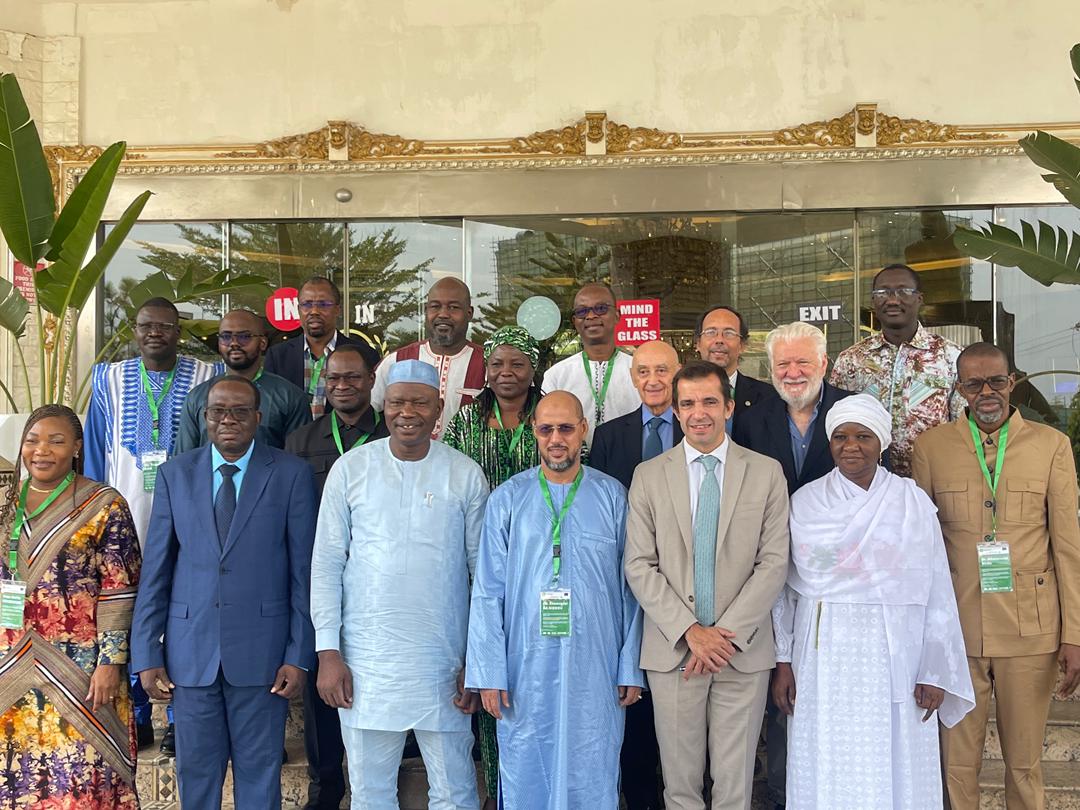
The Minister of Livestock Development, Idi Mukhtar Maiha, speaking at the Policy Dialogue Workshop for the Valuation of PRISMA Project Results in the Regional Agricultural Priorities of West Africa and the Sahel, organised by the Economic Community of West African States (ECOWAS)’s Regional Agency for Agriculture and Food (ARAA) on Thursday in Abuja, said that Nigeria’s strategic plan for the livestock sector in the next ten years aims to increase its GDP contribution from the current $32 billion to between $74 billion and $94 billion.
The Minister, who was represented by the
Director, Technical Office of the Permanent Secretary, Federal Ministry of Livestock Development, Mr. Peter Alike, stated that
the government recognises livestock as a national imperative that cannot be ignored.
He noted that the creation of a dedicated Ministry of Livestock Development by President Bola Tinubu reflects government’s deliberate action towards strengthening the livestock sub-sector and driving national development.
He stated the importance of collaboration between Nigeria, ECOWAS, and other regional actors in achieving shared agricultural and food security goals.
He said: “I have told you already that we have a strategic plan which is going to run from 2025 to 2030. And we have a basket of livestock contribution to GDP which is currently about $32 billion.
“And our mission is, in the next 10 years, we want to take, there is a baseline, a base anticipation of $74 billion and then of course a high expectation of about $94 billion.
“We believe that if you actually look at the entire valuation of livestock in Nigeria here today, we are far even in excess of that.
“In Nigeria, we have over 50 million cattle in the hands of rural dwellers, and these are animals that must be fed. So, for us, feed and indeed food is a national imperative that we cannot even live for tomorrow. It is indeed an emergency because the tangential effect of not being able to provide the necessary feed and food for our animals has a direct effect on our very existence, rural livelihood, and human peace. So, for us, it is a matter of survival.
“This is the time for three things to be done. The first thing to be done is collaboration. The second thing to be done is collaboration. And the third thing to be done is collaboration. This is the time that we need each other the most.”
He cautioned against allowing the PRISMA policy dialogue to become just another routine event without tangible outcomes.
He however cautioned against excluding Nigeria in regional projects.
He said: “We don’t want this to end up as one of those workshops because it doesn’t make sense,” that the ministry is fully committed to ensuring that discussions translate into real progress for livestock development across Nigeria and the ECOWAS region.
He noted that: “If you have a project of this magnitude and you exclude Nigeria, then you are not likely to succeed. Especially, I don’t know of any other country in West Africa and the Sahel that has a dedicated Ministry of Livestock Development.”
On his part, the Acting Executive Director of the Regional Agency for Agriculture and Food (ARAA), Mr. Konlani Kanfitin, reaffirmed ECOWAS’ commitment to advancing livestock development and research collaboration in the region.
He expressed appreciation to the European Union (EU) and the Spanish Cooperation Agency (AECID) for co-financing the PRISMA Project (Research and Innovation for Productive, Resilient, and Healthy Agro-Pastoral Systems in West Africa), which promotes climate-adapted, research-based innovations in the livestock sector.
He said the PRISMA Project aligns with ECOWAS’ regional agricultural policy (ECOWAP), which seeks to transform agricultural and food systems across the region.
Kanfitin emphasised the importance of policy dialogue as a lever for coherence, strategic orientation, participatory governance, and regional integration.
He said: “The livestock sector occupies a central place in the economies of our member states. It contributes to food security, job creation, and the income of millions of rural households.
“This policy dialogue workshop constitutes a key moment for reflection and collective action; it is intended as a space for discussions and decision-making to improve the policy environment for research and innovation to increase the productivity and resilience of agro-pastoral systems in West Africa and the Sahel,” he noted.
In his remarks, Agricultural Engineer and PRISMA Researcher, Dr. Fernando Escribano, highlighted the project’s focus on tackling aflatoxins in livestock feed.
He described aflatoxins as metabolic byproducts of fungi and bacteria that can grow in the field and during storage when high moisture and temperature conditions allow, stressing the need for standard methods to control their presence in livestock feed.
“This is the scenario that we had when we started this project. We decided to focus because aflatoxins don’t have borders. Environmental impact doesn’t have borders. So, we decided to go with a harmonization exercise. We need to harmonize and define what is equality,” Dr. Escribano explained.
“We need to avoid the presence of aflatoxins in our feeds. We need to know how to sample to detect aflatoxins. We need to know how to measure aflatoxins in a relatively simple way, but in a way that we all agree to be done,” he added.
The PRISMA policy dialogue workshop was organized under the framework of ECOWAS’s regional agricultural policy (ECOWAP) and hosted in Abuja, Nigeria, with active participation and support from the Federal Ministry of Livestock Development.
The event was co-financed and technically supported by the European Union (EU), the Spanish Agency for International Development Cooperation (AECID), Luxembourg Cooperation, Belgian Cooperation, and Spanish Cooperation, highlighting a strong partnership between regional bodies, national authorities, and international development partners.
Nigeria Anticipates Contribution of Livestock Industry to GDP in Ten Years to Hit $94 billion



Troops foil IED threat on Dikwa–Gajibo road, safely detonate explosive
By Zagazola Makama
Troops of Operation Hadin Kai have discovered and safely detonated an improvised explosive device (IED) planted along the Dikwa–Gajibo road in Borno State, preventing what could have been a deadly attack on security personnel and commuters.
Intelligence sources told Zagazola Makama that the device was discovered at about 10:10 a.m. on July 27 by troops of the 81 Division Task Force Battalion while conducting a routine picketing patrol along the Dikwa–Gajibo axis.

The sources said the patrol team immediately secured the area and alerted the Explosive Ordnance Disposal (EOD) team, which responded promptly and carried out a controlled detonation of the IED at the scene.
No casualties or damage were recorded during the operation.
Military sources described the successful detection and neutralisation of the explosive as part of ongoing efforts to counter the use of improvised explosive devices by Boko Haram and Islamic State West Africa Province (ISWAP) terrorists targeting troops and civilian traffic in the North-East.
The operation underscores the continued vigilance of security forces in maintaining the safety of key supply routes and denying insurgents the opportunity to disrupt military and civilian movement across the theatre of operations.
Security sources added that the general security situation across the theatre remains calm but unpredictable, with troops maintaining high morale and operational readiness.
Troops foil IED threat on Dikwa–Gajibo road, safely detonate explosive

Zulum Commends UMTH over Proposed Partnerships and Support to two Medical Centers in the State
By: Bodunrin Kayode
Borno State Governor, Professor Babagana Zulum, has commended the decision by the University of Maiduguri Teaching Hospital (UMTH) to support two comprehensive health centres in Rumirgo and Baga communities before he leaves office.
The Governor in a recent visit to UMTH also assured that the state government would provide the required infrastructure and facilities before the outgoing hospital management completes its tenure, paving the way for the partnership to commence.
“Before you leave office, we shall do everything possible to ensure that the required facilities are on the ground so that the partnership will be implemented. I also commend those working with you because, without the support of the staff, such achievements cannot be made,” Zulum said
While touring the hospital, the Governor reiterated his administration’s commitment to strengthening its partnership with the UMTH to improve healthcare delivery, particularly in resettled communities across the state.
During the visit, to inspect drugs, medical equipment, and consumables donated to UMTH from the United States, which were transported to Maiduguri with support from the Borno State Government at the Stroke Center of the Teaching Hospital, the governor said he was impressed with the development.
Zulum disclosed that discussions are underway with UMTH and development partners to replicate the initiative across 20 general hospitals in the state, including the 10 newly constructed facilities, by attracting more medical equipment and healthcare interventions.
He commended the outgoing Chief Medical Director of the Hospital, Professor Ahmed Ahidjo, for what he described as remarkable achievements that have transformed the institution despite limited resources even as he thanked the Chief Adviser on Sustainable Development Goals, Dr. Mairo Mandara, for facilitating the connection with the United States.
“We have witnessed phenomenal growth and development in this teaching hospital since you assumed duty. I want to assure you that posterity will judge you positively for all the good works that you have done for us in Borno State and indeed in Nigeria,” he added.
Responding the Chief Medical Director of the University of Maiduguri Teaching Hospital (UMTH), Professor Ahmed Ahidjo, also commended Governor Zulum for the N500 million intervention following the 2024 flood disaster and other invaluable support to the hospital.
He said that N75 million out of the amount was used to ship the donated equipment, which includes state-of-the-art endoscopy and ultrasound machines, ICU beds, theatre beds, incubators, monitors, dental chairs, and other critical medical supplies.
“Part of the N500 million you gave us, precisely N75 million, was used in shipping these donated items from the United States. All these items came at no cost to the hospital apart from the shipping expenses, and today they are worth hundreds of millions of naira.
“We have over 20 modern ICU beds, advanced diagnostic equipment, and many other medical facilities that will be distributed across our departments. We believe Borno State can also benefit from similar donations through this same partnership,” noted the CMD.
According to the CMD, the hospital’s standalone Stroke Centre, is the only dedicated stroke facility in the country, noting that the centre currently has nearly 100 patients on admission, most of them receiving specialised treatment for stroke, significantly improving healthcare delivery in the region.
Professor Ahmed Ahidjo would be leaving office this year after a successful two term tenure as CMD of the premier hospital in the North East country axis of the country.
He will be remembered as the first CMD in the history of the hospital to transform the infrastructure of the facility by building centres for easy access of services for both Nigerians and visitors from neighboring foreign countries.
Zulum Commends UMTH over Proposed Partnerships and Support to two Medical Centers in the State
News
Notorious bandit commander Iliya Mai Rasha killed in Guga battle as death toll among attackers rises
Notorious bandit commander Iliya Mai Rasha killed in Guga battle as death toll among attackers rises
By Zagazola Makama
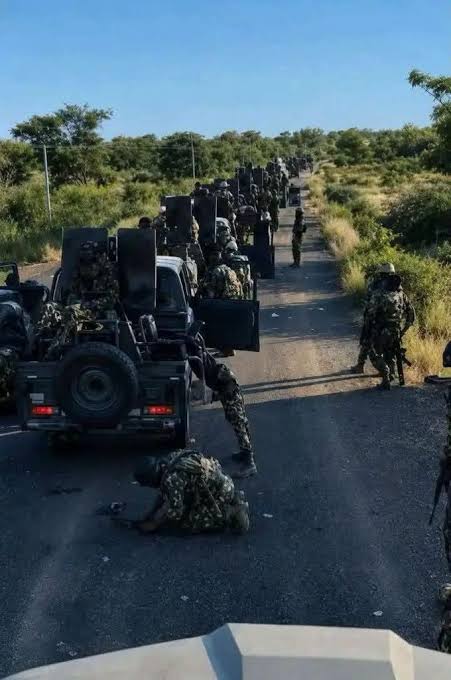
One of the notorious bandit commanders neutralised during Sunday’s fierce gun battle between security forces and armed bandits in Guga Village, Bakori Local Government Area of Katsina State, has been identified as Iliya Mai Rasha, a notorious criminal linked to several deadly attacks in Tsafe Local Government Area of Zamfara State.
Intelligence sources told Zagazola Makama that Mai Rasha was among the senior bandit commanders who joined the assault on Guga at the invitation of notorious kingpin Idi Abasu Aiki.
The sources said the attack, which occurred at about 5:40 p.m. on July 26, involved more than 200 heavily armed bandits drawn from criminal networks operating across Katsina and neighbouring Zamfara State.
However, a combined force of local hunters, the Katsina State Community Watch Corps (KSCWC), and troops of the Nigerian Army’s 17 Brigade mounted a coordinated response, engaging the attackers in a prolonged gun battle that forced them to retreat with heavy losses.
Security sources said more than 40 bandits were neutralised during the encounter, including at least eight senior commanders, while Idi Abasu Aiki reportedly sustained life-threatening gunshot wounds.
The killing of Iliya Mai Rasha is considered a significant operational success, as he had long been linked to violent attacks, kidnappings and other criminal activities in Tsafe and adjoining communities in Zamfara State.
The operation, according to the sources, has dealt a major blow to the criminal network operating across the Katsina–Zamfara axis, with follow-up clearance operations continuing to recover abandoned weapons and pursue fleeing bandits.
Five members of the hunters’ team were, however, killed during the operation after they were caught outside the frontline, highlighting the heavy sacrifice made by local security volunteers in defending their communities. Military authorities and the Katsina State Government have continued to commend the courage of the troops, hunters and community watch personnel who repelled the attack and restored calm to the affected area.
Notorious bandit commander Iliya Mai Rasha killed in Guga battle as death toll among attackers rises

Wanted Boko Haram spy arrested in Monguno over Cross Kauwa attack, kidnappings

Three suspected ISWAP fighters surrender to troops in Damasak after fleeing sustained bombardment

Troops foil IED threat on Dikwa–Gajibo road, safely detonate explosive

Roger Federer’s Shock as DNA Results Reveal Myla and Charlene Are Not His Biological Children

THE PLIGHT OF FARIDA

FAILED COUP IN BURKINA FASO: HOW TRAORÉ NARROWLY ESCAPED ASSASSINATION PLOT AMID FOREIGN INTERFERENCE CLAIMS
-
 News2 years ago
Roger Federer’s Shock as DNA Results Reveal Myla and Charlene Are Not His Biological Children
-
Opinions4 years ago
THE PLIGHT OF FARIDA
-
 News1 year ago
FAILED COUP IN BURKINA FASO: HOW TRAORÉ NARROWLY ESCAPED ASSASSINATION PLOT AMID FOREIGN INTERFERENCE CLAIMS
-

 News2 years ago
EYN: Rev. Billi, Distortion of History, and The Living Tamarind Tree
-
 Opinions5 years ago
POLICE CHARGE ROOMS, A MINTING PRESS
-

 ACADEMICS2 years ago
A History of Biu” (2015) and The Lingering Bura-Pabir Question (1)
-

 Columns2 years ago
Army University Biu: There is certain interest, but certainly not from Borno.
-

 Politics1 year ago
2027: Why Hon. Midala Balami Must Go, as Youths in Hawul and Asikira/Uba Federal Constituency Reject ₦500,000 as Sallah Gift
