
Uncategorized
Nigeria Leads Call for Just, Inclusive Climate Transition in Africa

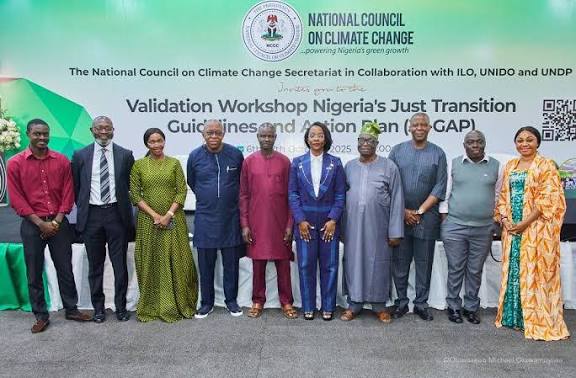
Nigeria Leads Call for Just, Inclusive Climate Transition in Africa
By: Michael Mike
Nigeria has renewed its call for African nations to unite under a comprehensive Climate Compact aimed at harmonising carbon markets, enhancingj transparency, and amplifying the continent’s collective influence on the global climate stage.
The call underscores Africa’s commitment to driving a just, inclusive, and sustainable transition that leaves no one behind.
The appeal was made at the Africa Climate Forum (ACF) 2025, held under the theme “Bolder, Greener, and Better Steps: Closing Transition Gaps in Africa.” A theme which reflects the urgent need for African countries to move from lofty commitments to concrete, actionable steps that close existing transition gaps.
It also emphasises coordinated efforts to accelerate green innovation, energy diversification, and resilience, ensuring that Africa’s climate agenda delivers tangible social and economic outcomes.
Representing Nigeria at the forum, the Director of Energy, Transportation, and Infrastructure at the National Council on Climate Change (NCCC) Mr. Michael Ivenso, who stood in for the Director-General, Mrs. Omotenioye Majekodunmi reaffirmed Nigeria’s leadership role in fostering regional cooperation, policy alignment, and enhanced climate data transparency as foundations of the continent’s green transformation.
Ivenso stressed the need for African nations to move from ambition to measurable outcomes, saying that the time had come to match vision with implementation.
He said “The theme of this year’s forum, ‘Bolder, Greener, and Better Steps,’ captures an urgent call for Africa to transcend rhetoric and transform climate commitments into impactful, concrete actions.
“Our continent stands at a pivotal moment where the success of our climate agenda depends not only on ambition but on delivering real, inclusive solutions that address our economic vulnerabilities, promote diversification, and strengthen resilience to climate impacts. It is imperative that no sector or community is left behind in this transition.”
He noted that Nigeria is already setting an example through decisive policies and sectoral reforms aimed at achieving net-zero emissions by 2060.
He said: “Nigeria, under the leadership of President Bola Ahmed Tinubu, has taken decisive steps to close our transition gaps and advance the climate agenda.
“We have enacted the Climate Change Act and strengthened the National Council on Climate Change to ensure climate policies are implemented across all sectors.
“Through our Energy Transition Plan, Nigeria is charting a clear path to net-zero emissions by 2060, expanding renewable energy access and reducing reliance on fossil fuels. In the aviation sector, we are committed to sustainable transformation—aligning with ICAO’s target of net-zero carbon emissions by 2050, developing Sustainable Aviation Fuels, and implementing energy-efficient systems that earned Lagos Airport the Level 2 Airport Carbon Accreditation, a first in the subregion.”
Ivenso called for a unified approach across Africa to ensure the climate transition is inclusive and just.
He said: “As we gather here, let us commit to taking steps that are bolder in ambition by setting measurable, enforceable targets; greener in innovation by embracing renewable energy and circular economy models; and better in collaboration by closing finance, policy, and technology gaps through strong partnerships.
“Africa’s climate transition must be inclusive and just ensuring that communities, women, and youth all share in the opportunities of a greener economy. Nigeria reaffirms its unwavering commitment to climate action not as an obligation but as an opportunity to build resilience, create green jobs, and secure a sustainable future.”
Also speaking, the Honourable Minister of Aviation and Aerospace Development, Festus Keyamo, delivered a goodwill message urging Africa to bridge critical gaps in its climate transition framework.
He described the moment as a defining one for the continent. “Africa is richly endowed with natural beauty, human capital, and biodiversity, but also profoundly vulnerable to the disruptions of climate change,”
“Gaps in finance, technology, capacity, policy, and access have for too long held us back from matching ambition with implementation.
“Closing these gaps is an urgent imperative not just to meet our obligations under the Paris Agreement or the SDGs, but to secure the lives, livelihoods, and future of our people,” he said.
The Minister of Federal Labour and Employment, Muhammadu Maigari Dingyadi, echoed similar sentiments, calling for inclusive and innovation-driven responses to the global climate challenge.
He said: “As we navigate the complexities of climate change, it is essential to acknowledge that our response must be both innovative and inclusive,” he said. “The challenges we face today demand not only courageous leadership but also collaboration across sectors and communities.”
Dingyadi noted that the labour and employment sector remains central to achieving climate goals through the creation of decent green jobs and empowering workers with new skills for the transition economy.
In his words he said “The labour and employment sector plays a crucial role in achieving our climate goals, ensuring that we do not leave anyone behind,” he said. “As we embark on this critical transition towards a greener economy, we must recognise the potential for job creation in sustainable practices, renewable energy, and environmental conservation,”
Kenya’s Ambassador to Nigeria, Isaac Parashina, offered a powerful reflection on Africa’s climate reality, asserting that the crisis now extends beyond environmental concerns to issues of sovereignty, security, and development.
“Africa does not lack vision; it lacks cohesion between aspiration, institutions, and the resources necessary to sustain them.
“The pressing question is no longer what Africa needs but what Africa will decisively choose to do differently. Climate change is no longer merely an environmental issue,it’s now a question of sovereignty, security, and development.”
Parashina called for continental solidarity and decisive leadership, urging African nations to move from aspiration to action as the continent positions itself to lead the global conversation on just and sustainable climate transformation.
Nigeria Leads Call for Just, Inclusive Climate Transition in Africa



Troops Rescue Kidnapped Victim After Ambush in Edo
By Zagazola Makama
Troops of the Nigerian Army’s 195 Battalion, in conjunction with the Edo State Security Corps (ESSC), have rescued a kidnapped victim during a counter-kidnapping operation in Etsako West Local Government Area of Edo State.
Zagazola Makama reports that the operation was conducted at about 4:30 a.m. on Aug. 21, 2026, when the troops laid an ambush at Powerline, Uzairue, along the Afawosa-Iyora road.
Sources said the troops, while occupying the ambush position, observed the movement of suspected kidnappers in the area and immediately engaged them.
The engagement forced the kidnappers to abandon their captive and flee into the surrounding forest, leaving the victim behind.
The rescued victim was identified as Mr. Mohammed Oboarekpe, 35, a resident of South Ibie.
Preliminary debriefing revealed that Oboarekpe was abducted from his residence in South Ibie on Aug. 20, 2026, before being held by the kidnappers.
Following the successful operation, the victim was reunited with his family.
The troops expended six rounds of 7.62mm Special ammunition during the encounter.
The latest operation is part of ongoing efforts by security forces in Edo State to disrupt kidnapping networks and prevent criminal elements from establishing footholds along major routes and vulnerable communities.
Security sources said troops and other security agencies would sustain coordinated operations across the area to deny criminal groups freedom of action and ensure the safety of residents and commuters.
Troops Rescue Kidnapped Victim After Ambush in Edo

US: Nigeria, Kenya Lose $286m Annually to Uncollected Music Revenue
…U.S. Patent and Trademark Office says stronger copyright systems could unlock billions for Africa’s creative economy
By: Michael Mike
Nigeria and Kenya are losing an estimated $286 million in recorded-music revenue every year because of weaknesses in copyright collection and enforcement, the United States Patent and Trademark Office (USPTO) has disclosed.
The revelation came as the United States intensified its campaign for stronger intellectual-property protection across Africa, warning that weak copyright systems are preventing artists and other creative-sector players from fully benefiting from the continent’s rapidly expanding global entertainment market.
Speaking during a U.S. Department of State Africa Regional Media Hub briefing, Katherine Hiner, USPTO Intellectual Property Attaché for Sub-Saharan Africa, said the enormous revenue gap demonstrated how much economic value was being left on the table in African creative industries.
According to Hiner, data presented during recent workshops in Lagos and Johannesburg showed that Nigeria and Kenya alone leave $286 million in recorded revenue uncollected annually.
“The talent and demand is there, element one, but the value is slipping through the gap,” she said.
Hiner said the situation was particularly concerning given the rapid expansion of Africa’s music industry, with the International Federation of the Phonographic Industry (IFPI) reporting that Sub-Saharan African music markets had recorded double-digit growth for five consecutive years.
She said the U.S. initiative, known as IP for Growth, was designed to demonstrate how effective intellectual-property protection could transform Africa’s creative industries into stronger engines of jobs, investment, exports and economic growth.
The year-long initiative began with a discussion at the World Intellectual Property Organization (WIPO) General Assemblies in Geneva before moving to practical workshops involving government officials, musicians, producers, entertainment lawyers, industry executives and other stakeholders in Lagos and Johannesburg.
Hiner identified three major areas requiring urgent attention across African creative markets: greater transparency and accountability in revenue collection, increased public education on intellectual-property rights, and stronger enforcement against piracy.
She stressed that merely having copyright protection on paper was insufficient if creators lacked practical mechanisms to enforce their rights.
“Having a copyright in your work means little if there’s no practical means of enforcing your rights,” she said.
She also called for stronger and more effective Collective Management Organisations (CMOs), which help creators manage their rights and facilitate licensing where individual, work-by-work licensing is impractical.
Hiner urged African governments to invest not only in legislation but also in the institutions responsible for administering and enforcing intellectual-property laws.
“Strong IP systems” require both up-to-date laws and the political will to fully implement them, she said, adding that governments must commit to sustained investment in personnel, enforcement and dialogue with rights holders.
The U.S. official said America’s experience demonstrated the economic benefits of sustained investment in intellectual property.
She cited the latest USPTO analysis using 2024 data, which found that industries that intensively use at least one form of intellectual property contributed $11.4 trillion to U.S. gross domestic product, representing about 44 per cent of private-sector GDP.
The industries also supported 65.8 million jobs, equivalent to about 44 per cent of private-sector employment, while accounting for approximately $1.58 trillion in commodity exports.
Hiner said copyright-intensive industries—including sound recording, film and video production, software publishing, broadcasting and performing arts—had produced particularly significant economic returns.
Workers in those industries earned, on average, 130 per cent more than workers in non-IP-intensive industries, according to the data she cited.
She said the earnings premium had increased by 30 per cent between 2014 and 2024, demonstrating that the economic value of copyright was increasing rather than declining in the digital era.
“Music isn’t just a mood or a vibe. It is a business,” she said.
US urges adoption of international digital copyright rules
Hiner identified ratification and implementation of the WIPO Copyright Treaty and the WIPO Performances and Phonograms Treaty (WPPT) as important steps African countries could take to strengthen protection for creators in the digital economy.
She explained that the treaties provide legal frameworks supporting technological protection measures and rights-management information, mechanisms that have become increasingly important as music distribution moves toward streaming and digital downloads.
According to her, effective implementation of these frameworks could enable African artists to reach international markets and monetise their works more effectively.
She also stressed the importance of cross-border cooperation in combating online piracy.
Hiner cited work involving the U.S. Homeland Security Investigations unit and international partners, including an operation during the World Cup that resulted in the takedown of about 1,000 websites allegedly involved in copyright infringement.
She said such operations were important not only for protecting artists and other rights holders but also because illicit proceeds from piracy could contribute to organised criminal activity.
Beyond copyright and the music industry, Hiner disclosed that the USPTO had signed its first Accelerated Patent Grant Agreement (APG) with an African intellectual-property office, Ghana’s, on the margins of the WIPO General Assemblies in Geneva in July.
Under the arrangement, a rights holder who has already secured a U.S. patent can request that the Ghanaian intellectual-property office grant a corresponding patent based on the existing U.S. right.
Hiner said the mechanism could streamline patent examination in countries with limited numbers of examiners while also providing training and cooperation between intellectual-property offices.
She said the USPTO was open to similar cooperation with other African markets.
On artificial intelligence, Hiner acknowledged that the rapid development of AI had created complex copyright and policy questions across jurisdictions.
She said established legal principles, including fair use and fair dealing, would remain important in balancing the interests of creators and innovators.
“Fact-based inquiries will help resolve those questions via established legal processes,” she said.
Hiner said the U.S. would continue working with African governments, creative-industry stakeholders and international institutions to strengthen intellectual-property systems and ensure that Africa’s creative boom translates into tangible economic benefits for creators.
The IP for Growth initiative is expected to culminate in December with a final event at the WIPO Standing Committee on Copyright and Related Rights in Geneva.
For Nigeria, where Afrobeats has become a major global cultural export, the disclosure of $286 million in annual uncollected recorded-music revenue alongside the U.S. push for stronger copyright enforcement underscores the potentially enormous economic stakes in closing gaps in royalty collection, rights administration and anti-piracy enforcement.
US: Nigeria, Kenya Lose $286m Annually to Uncollected Music Revenue
Uncategorized
Ogwashi-Uku Palace: Izediunor Faction Has Lost At Every Court Level, Including Supreme Court
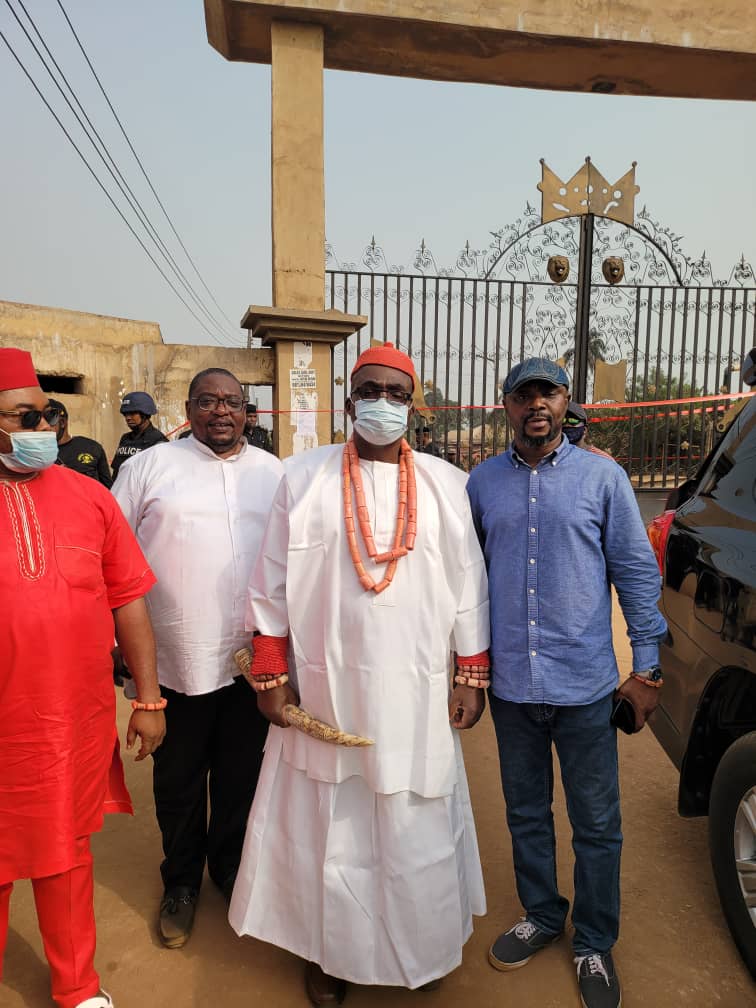
Ogwashi-Uku Palace: Izediunor Faction Has Lost At Every Court Level, Including Supreme Court
Ogwashi-Uku, Delta State — The Palace of the Obi of Ogwashi-Uku, HRM Obi (Dr.) Ifechukwude Aninshi Okonjo II, has dismissed as misleading a recent petition sent to Delta State Governor, Rt. Hon. Sheriff Oborevwori, by four individuals identified as Onyenor Ogwu, Pius Izediunor, Nodu Izediunor and PC Izediunor, describing it as an attempt to reopen a matter that has already been decided with finality by the Supreme Court of Nigeria.
The petitioners, who described themselves as representatives of an “Umu Obi Izediunor Royal Family” and an “Obi Dieyi Royal Family,” had alleged that buildings were demolished, fences erected and access to some properties restricted at Ogbenti-Obi Quarters in Ogwashi-Uku, and urged the Governor to intervene.
Responding on behalf of the Palace, Prince Onyema Okonjo, Chief of Staff to the Obi of Ogwashi-Uku, described the petitioners as recalcitrant serial losers who have refused to accept defeat despite losing the case at every level of the Nigerian judicial system, including twice at the Supreme Court. According to Prince Onyema Okonjo, “They are delusional and in denial and have refused the accept the reality of their situation.”
“This is not a fresh or unresolved dispute,” Prince Okonjo said. “The Delta State High Court ordered this same faction to vacate the Palace premises as far back as 2007. That judgment went to the Court of Appeal, which affirmed it. It went to the Supreme Court, which affirmed it. It went to the Supreme Court a second time, and was affirmed again. There is nothing left to litigate. What we are dealing with is a recalcitrant faction of serial litigants who have lost this case repeatedly and simply refuse to accept it.”
According to Prince Okonjo, rather than comply with the 2007 judgment, members and supporters of the Izediunor faction spent the years that followed selling portions of the ancestral Palace land to third parties and erecting structures on it, in defiance of the subsisting court order.
It was not until February 2021, he said, after all avenues of appeal had been exhausted, that court bailiffs, accompanied by police officers, moved in to execute the judgment and evict the occupants. A Certificate of Possession was subsequently issued to the Obi of Ogwashi-Uku, formally confirming legal title and possession of the premises.
“Even after the eviction and the issuance of the certificate of possession, some individuals refused to leave and continued to occupy parts of the grounds,” Prince Okonjo said. “What has now happened is that the Palace completed the fencing of its own premises and cleared illegal structures that had no business being there, on land it has held a valid court judgment and certificate over for years. That is not demolition in the sense the petition suggests. That is a property owner enforcing a Supreme Court judgment on his own land.”
The Palace also linked the recent petition to an ongoing criminal trial before the Federal High Court, Asaba Division, in Charge No. FHC/ASB/18C/2024, in which individuals connected to the Izediunor faction — including Mike Nwaukoni and Francis Okolie, also known as “Mayor” — are standing trial on charges of terrorism, attempted murder, attempting to force their way into the Palace which led to security official being attacked, waging communal war, and destruction of police vehicles. The prosecution has closed its case in that trial, and the defence is expected to open shortly. It is as a result of this incident that the Palace premises needed to be further secured and fortified.
Prince Okonjo further noted that the security works at the premises were carried out with police presence sanctioned by the Inspector-General of Police and the Commissioner of Police for Delta State, and questioned why a matter already settled by the Supreme Court, and enforced with the knowledge of the police high command, should require executive intervention.
“The Obi of Ogwashi-Uku recovered his ancestral Palace grounds through the courts, all the way to the Supreme Court, twice,” he said. “He showed patience by allowing some occupants time on the premises rather than enforcing his rights immediately and fully. That patience is now being repaid with a petition asking the Governor to look again at a case the highest court in the country has already closed.”
“We understand that some people find it difficult to move on after losing at the Supreme Court, but that difficulty cannot be turned into a licence to keep dragging a settled matter back to the public square. Furthermore, there is no Izediunor who was ever a legitimate Obi of Ogwashi-Uku. The courts have already made that clear. They are illegitimate usurpers and were illegal occupants of the Palace premises” Prince Okonjo said. “This case is closed. What remains is for the law to be respected.”
Efforts to reach the petitioners for further comment were not immediately successful as at the time of filing this report.
Ogwashi-Uku Palace: Izediunor Faction Has Lost At Every Court Level, Including Supreme Court
Troops Arrest Five Suspected Terrorist Logistics Suppliers in Borno

Troops Arrest Two Suspected Terrorists, Recover Weapons in Adamawa

Scholarship or Trap? Why Northern Nigerian Youth Must Verify Foreign Opportunities

Roger Federer’s Shock as DNA Results Reveal Myla and Charlene Are Not His Biological Children

THE PLIGHT OF FARIDA

FAILED COUP IN BURKINA FASO: HOW TRAORÉ NARROWLY ESCAPED ASSASSINATION PLOT AMID FOREIGN INTERFERENCE CLAIMS
-
 News2 years ago
Roger Federer’s Shock as DNA Results Reveal Myla and Charlene Are Not His Biological Children
-
Opinions5 years ago
THE PLIGHT OF FARIDA
-
 News1 year ago
FAILED COUP IN BURKINA FASO: HOW TRAORÉ NARROWLY ESCAPED ASSASSINATION PLOT AMID FOREIGN INTERFERENCE CLAIMS
-

 News2 years ago
EYN: Rev. Billi, Distortion of History, and The Living Tamarind Tree
-
 Opinions5 years ago
POLICE CHARGE ROOMS, A MINTING PRESS
-

 ACADEMICS2 years ago
A History of Biu” (2015) and The Lingering Bura-Pabir Question (1)
-

 Columns2 years ago
Army University Biu: There is certain interest, but certainly not from Borno.
-

 Politics1 year ago
2027: Why Hon. Midala Balami Must Go, as Youths in Hawul and Asikira/Uba Federal Constituency Reject ₦500,000 as Sallah Gift
