
Uncategorized
NRM Presidential Aspirant Faduri Declares 2027 Ambition, Vows To Rescue Nigeria From ‘Political Elites’

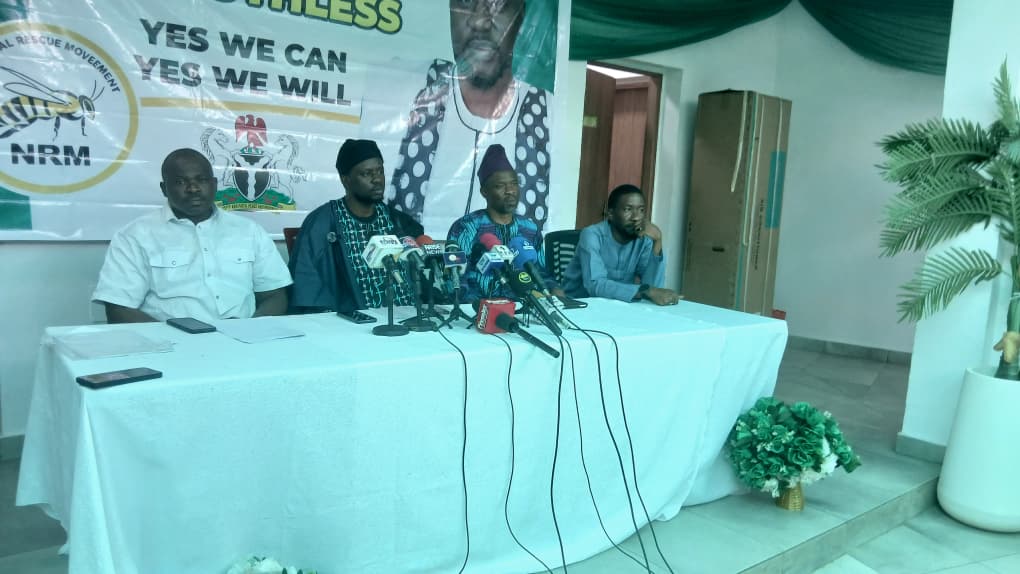
NRM Presidential Aspirant Faduri Declares 2027 Ambition, Vows To Rescue Nigeria From ‘Political Elites’
By: Our Reporter
Faduri Oluwadare Joseph, popularly known as Fadojoe, has formally declared his intention to contest the 2027 presidential election under the platform of the National Rescue Movement (NRM), promising what he described as “people-first leadership” to pull Nigeria back from economic decline and insecurity.
In a speech announcing his ambitionnon Wednesday, the sociologist and US-based healthcare executive said Nigeria was “bleeding” and required urgent rescue from years of corruption, mismanagement and what he called recycled political leadership.
Faduri, who hails from Ipetu-Ijesha in Osun State, recounted his early life struggles, revealing that he lost his father at the age of four and his mother at fourteen.
A graduate of Ambrose Alli University, Ekpoma, Edo State, Faduri also stated that he is a licensed nurse in New York, United States, and currently serves as CEO of F Planet Group USA, with interests spanning healthcare, consulting, foundation work and film production.
Referencing Nigeria’s founding leaders—Nnamdi Azikiwe, Abubakar Tafawa Balewa and Obafemi Awolowo—the presidential hopeful said the country had drifted far from the ideals of a true republic envisioned at independence.
According to him, Nigeria has degenerated into a nation where poverty, youth unemployment, insecurity and currency depreciation have replaced the prosperity and unity of earlier decades.
Faduri blamed Nigeria’s challenges on systemic corruption and leadership failure, arguing that personal interests have consistently been placed above national interest.
He questioned the continued dysfunction of state assets such as refineries and the Ajaokuta Steel project, asking why thousands of workers are still paid in non-functional institutions while the country depends heavily on private interests and foreign services.
The NRM aspirant disclosed that he previously joined the Labour Party ahead of the 2023 elections and contributed to building the platform that produced Mr. Peter Obi as presidential candidate, but stepped down in the interest of unity.
Quoting American civil rights leader Martin Luther King Jr., he said leadership must be measured by courage in times of crisis, insisting that Nigeria now needs decisive and people-driven governance.
Faduri said he would contest under the National Rescue Movement, symbolised by the honeybee, adding that it was time to return Nigeria “to her honey days.”
If elected, he promised to prioritise economic stability, strengthen the naira, revive local refining capacity, and address energy costs. He also pledged to make primary and secondary education compulsory, strengthen vocational training, and ensure lecturers’ salaries are paid promptly.
He further promised to rebuild public hospitals to world-class standards and vowed that no government official, including himself, would seek medical treatment abroad at public expense.
Other priorities listed include decentralising electricity supply, reforming and strengthening the military and police, and promoting local manufacturing, including the use of locally produced vehicles for official purposes.
Framing the 2027 election as “the people versus the political class,” Faduri called on Nigerians at home and in the diaspora to join what he termed a “rescue mission” to rebuild the country.
The statement reads in part; “When the founding fathers of this nation came together in the struggle for independence—great leaders like Nnamdi Azikiwe, Abubakar Tafawa Balewa, and Obafemi Awolowo—they fought for a Republic. A true Republic—if we can keep it.
“A Republic where government would be kind to its people. A Republic where life would be dignified, where food would be affordable, where citizens would love one another, and where love of country would supersede love of self. A Republic where leaders would create an enabling environment for prosperity through the proper use of our vast human and natural resources.
“A Republic where citizens would collaborate with government to build a society we can all be proud of. A Republic where morality, decency, and the fear of God would guide leadership. Above all, a Republic where people would feel safe in their own land. Today, my fellow Nigerians, we must admit that what we have falls far short of that vision.
“We now live in a nation that resembles a jungle—where survival of the fittest has replaced shared prosperity. A nation plunged into poverty by leaders who once enjoyed the best of Nigeria in their youth but have failed to preserve it for future generations.
“While the rest of the world is discussing artificial intelligence and technological breakthroughs, we are still campaigning with rice, noodles, onions, and ₦42,000 handouts on election day. What a tragedy.
“There was a time when the Nigerian passport was among the most respected in the world. Our naira was strong. Education was free and qualitative. Jobs awaited graduates even before graduation. Housing schemes met population growth. Hospitals functioned. Rural health centres served communities. You could travel safely from Lagos to Sokoto or from Port Harcourt to Maiduguri without fear.
“We lived as brothers and sisters—hopeful, united, and prosperous. But what do we have today? One of the highest youth unemployment rates in the world. Rising insecurity. A struggling economy. A free-falling currency. A passport that no longer commands respect. A nation once united now divided by suspicion and fear. A country once flowing with opportunity now burdened by poverty, hunger, kidnapping, and corruption.
“My fellow Nigerians, how did we get here? How did we descend to this level where our citizens flee daily as though escaping a war zone? We got here through years of systemic corruption, mismanagement, and policies that moved our country from boom to doom. We got here because leaders placed personal interest above national interest.
“Even those in the diaspora, who struggle daily abroad, still carry the burden of families back home. Many of our health workers abroad—once undervalued here—now treat Nigerian leaders overseas for ailments that should be handled in our own hospitals. Enough is enough.
“It is time to fight for the soul of our nation. I am not here merely to recount our problems. I am here to declare that Nigeria is fixable. It is not rocket science. What we have lacked is sincere, courageous, and people-centred leadership. What happened to our refineries? What happened to Ajaokuta Steel? Why do we continue to pay thousands of workers in non-functional institutions? Why must we depend on private individuals for what government should provide?
“Corruption has become normalized. Public funds meant for national development are diverted. Absurd excuses are given for missing money, yet there are no consequences. Poverty has no tribe. Hunger has no ethnicity. Insecurity affects us all. If we fail to rescue Nigeria now, we risk becoming slaves in our own land—not chained by colonial masters, but controlled by political elites who care only for themselves. This is why I offer myself for service.
In 2022, ahead of the 2023 presidential election, I joined the Labour Party and contributed to building the LP that produced Mr. Peter Obi. I stepped down in the interest of unity. However, leadership must be measured by resilience and responsibility, especially in times of crisis. As Martin Luther King Jr. once said, “The ultimate measure of a man is not where he stands in moments of comfort, but where he stands at times of challenge and controversy.
“Nigeria needs resolute, decisive, and people-driven leadership—not desperation or recycled political coalitions. The 2027 election will be the people versus the political class. And the people’s coalition shall prevail. I will be contesting under the National Rescue Movement (NRM), symbolized by the honeybee. It is time to return Nigeria to her honey days. If given the mandate, our government will be People First. Nation First.
“We will prioritize: Restoring economic stability and strengthening the naira; Revitalizing local refining capacity and addressing energy costs; Investing massively in education—making primary and secondary education compulsory and strengthening technical and vocational training; Ensuring lecturers’ salaries are never delayed.
“Rebuilding and equipping our hospitals to world-class standards. No government official—including myself—will seek medical treatment abroad at public expense. Decentralizing and stabilizing electricity supply. Reforming and strengthening the military and police to restore law and order.
“Encouraging local manufacturing, including the use of locally produced vehicles for official purposes. We will build a nation of law and order—a nation of reward and accountability. This is a generational call—a call for a shift from recycled leadership to visionary leadership. It is not a time for convenience. It is time to rebuild Nigeria.
“Our slogan says it clearly: “A Nation That Has Everything, Yet Lacks Everything.” Together, we will change that narrative. Join me in this rescue mission. Let us combine the best of Nigerians at home and abroad to build a new Republic—one we can keep,” the statement added.
NRM Presidential Aspirant Faduri Declares 2027 Ambition, Vows To Rescue Nigeria From ‘Political Elites’


Uncategorized
West Africa’s Child Protection Laws Under Scrutiny as ECOWAS Lawmakers Confront “Implementation Failure”
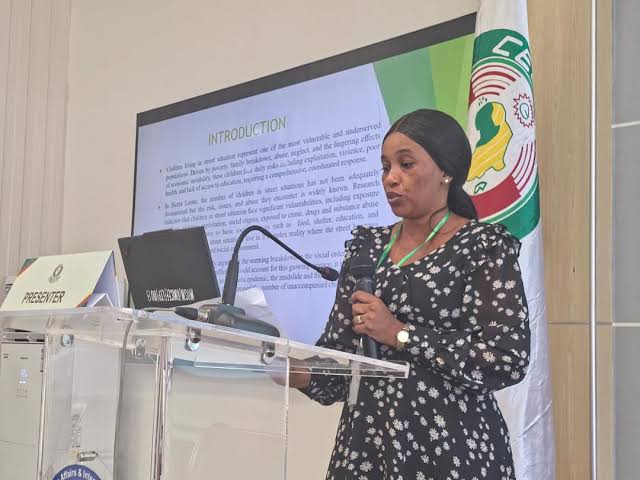
West Africa’s Child Protection Laws Under Scrutiny as ECOWAS Lawmakers Confront “Implementation Failure”
By: Michael Mike
A growing disconnect between policy promises and real-life protection for vulnerable children has come under sharp scrutiny as lawmakers across West Africa begin high-level deliberations in Freetown.
The ECOWAS Parliament on Wednesday opened a five-day Joint Committee Meeting aimed at tackling what officials increasingly describe as an “implementation crisis” in child protection systems across the region.
While West African governments have, over the years, adopted multiple frameworks to safeguard children—including the ECOWAS Child Policy and Strategic Plan of Action (2019–2030)—parliamentarians say the reality on the ground tells a different story.
Across major cities and border communities, the number of children forced into street life continues to rise, driven by poverty, displacement, family breakdown, and weak social safety nets.
In many cases, these children operate in legal blind spots—exposed to exploitation, trafficking networks, forced labour, and abuse—despite the existence of laws meant to protect them.
“The issue is no longer about absence of frameworks, but the failure to make them work,” a delegate at the session noted, underscoring the urgency of shifting focus from policy adoption to enforcement.
The meeting, hosted in Freetown, brings together multiple parliamentary committees to examine how gaps in legislation, enforcement, and cross-border coordination continue to undermine child protection efforts.
Particular attention is being paid to the challenges posed by regional mobility. With children frequently moving across borders—either independently or through informal networks—differences in national laws and weak data-sharing systems have created loopholes that traffickers and exploiters readily exploit.
Officials say this has made child protection not just a national concern, but a regional security and human rights issue.
The choice of Sierra Leone as host country reflects its recent legislative reforms, including the revised Child Rights Act (2025), which is being positioned as a benchmark for aligning domestic laws with international standards.
Delegates are expected to closely examine Sierra Leone’s approach, particularly its efforts to strengthen coordination between institutions, expand rehabilitation services, and improve data systems for tracking vulnerable children.
Beyond conference rooms, lawmakers will engage directly with affected communities through field visits to areas where children in street situations congregate, as well as centres providing care and reintegration services.
The aim, according to organisers, is to ground policy discussions in lived realities and ensure that future legislation reflects the complexity of challenges on the ground.
Civil society organisations and frontline practitioners are also playing a central role, using a public hearing platform to highlight persistent gaps in service delivery, including shortages in shelter, limited access to education, and weak family reunification systems.
The ECOWAS Commission is expected to provide regional policy briefings, offering data and insights to guide legislative reforms and strengthen coordination among Member States.
By the end of the session, parliamentarians are expected to adopt a set of actionable recommendations focused on tightening legal frameworks, improving oversight of child protection institutions, and enhancing cross-border collaboration.
These outcomes will be forwarded to the plenary of the ECOWAS Parliament and subsequently to the Council of Ministers for policy action.
For many observers, however, the stakes go beyond policy alignment.
With West Africa facing mounting socio-economic pressures, the ability—or failure—of governments to protect their most vulnerable citizens is increasingly seen as a test of governance itself.
“If these systems cannot protect children,” one stakeholder warned, “then the credibility of the entire framework is in question.”
West Africa’s Child Protection Laws Under Scrutiny as ECOWAS Lawmakers Confront “Implementation Failure”
Michael Olugbode in Abuja
A growing disconnect between policy promises and real-life protection for vulnerable children has come under sharp scrutiny as lawmakers across West Africa begin high-level deliberations in Freetown.
The ECOWAS Parliament on Wednesday opened a five-day Joint Committee Meeting aimed at tackling what officials increasingly describe as an “implementation crisis” in child protection systems across the region.
While West African governments have, over the years, adopted multiple frameworks to safeguard children—including the ECOWAS Child Policy and Strategic Plan of Action (2019–2030)—parliamentarians say the reality on the ground tells a different story.
Across major cities and border communities, the number of children forced into street life continues to rise, driven by poverty, displacement, family breakdown, and weak social safety nets.
In many cases, these children operate in legal blind spots—exposed to exploitation, trafficking networks, forced labour, and abuse—despite the existence of laws meant to protect them.
“The issue is no longer about absence of frameworks, but the failure to make them work,” a delegate at the session noted, underscoring the urgency of shifting focus from policy adoption to enforcement.
The meeting, hosted in Freetown, brings together multiple parliamentary committees to examine how gaps in legislation, enforcement, and cross-border coordination continue to undermine child protection efforts.
Particular attention is being paid to the challenges posed by regional mobility. With children frequently moving across borders—either independently or through informal networks—differences in national laws and weak data-sharing systems have created loopholes that traffickers and exploiters readily exploit.
Officials say this has made child protection not just a national concern, but a regional security and human rights issue.
The choice of Sierra Leone as host country reflects its recent legislative reforms, including the revised Child Rights Act (2025), which is being positioned as a benchmark for aligning domestic laws with international standards.
Delegates are expected to closely examine Sierra Leone’s approach, particularly its efforts to strengthen coordination between institutions, expand rehabilitation services, and improve data systems for tracking vulnerable children.
Beyond conference rooms, lawmakers will engage directly with affected communities through field visits to areas where children in street situations congregate, as well as centres providing care and reintegration services.
The aim, according to organisers, is to ground policy discussions in lived realities and ensure that future legislation reflects the complexity of challenges on the ground.
Civil society organisations and frontline practitioners are also playing a central role, using a public hearing platform to highlight persistent gaps in service delivery, including shortages in shelter, limited access to education, and weak family reunification systems.
The ECOWAS Commission is expected to provide regional policy briefings, offering data and insights to guide legislative reforms and strengthen coordination among Member States.
By the end of the session, parliamentarians are expected to adopt a set of actionable recommendations focused on tightening legal frameworks, improving oversight of child protection institutions, and enhancing cross-border collaboration.
These outcomes will be forwarded to the plenary of the ECOWAS Parliament and subsequently to the Council of Ministers for policy action.
For many observers, however, the stakes go beyond policy alignment.
With West Africa facing mounting socio-economic pressures, the ability—or failure—of governments to protect their most vulnerable citizens is increasingly seen as a test of governance itself.
“If these systems cannot protect children,” one stakeholder warned, “then the credibility of the entire framework is in question.”
West Africa’s Child Protection Laws Under Scrutiny as ECOWAS Lawmakers Confront “Implementation Failure”
Uncategorized
AT NATIONAL POLICE DAY: President Tinubu Unveils Investment In Modern Law Enforcement Systems
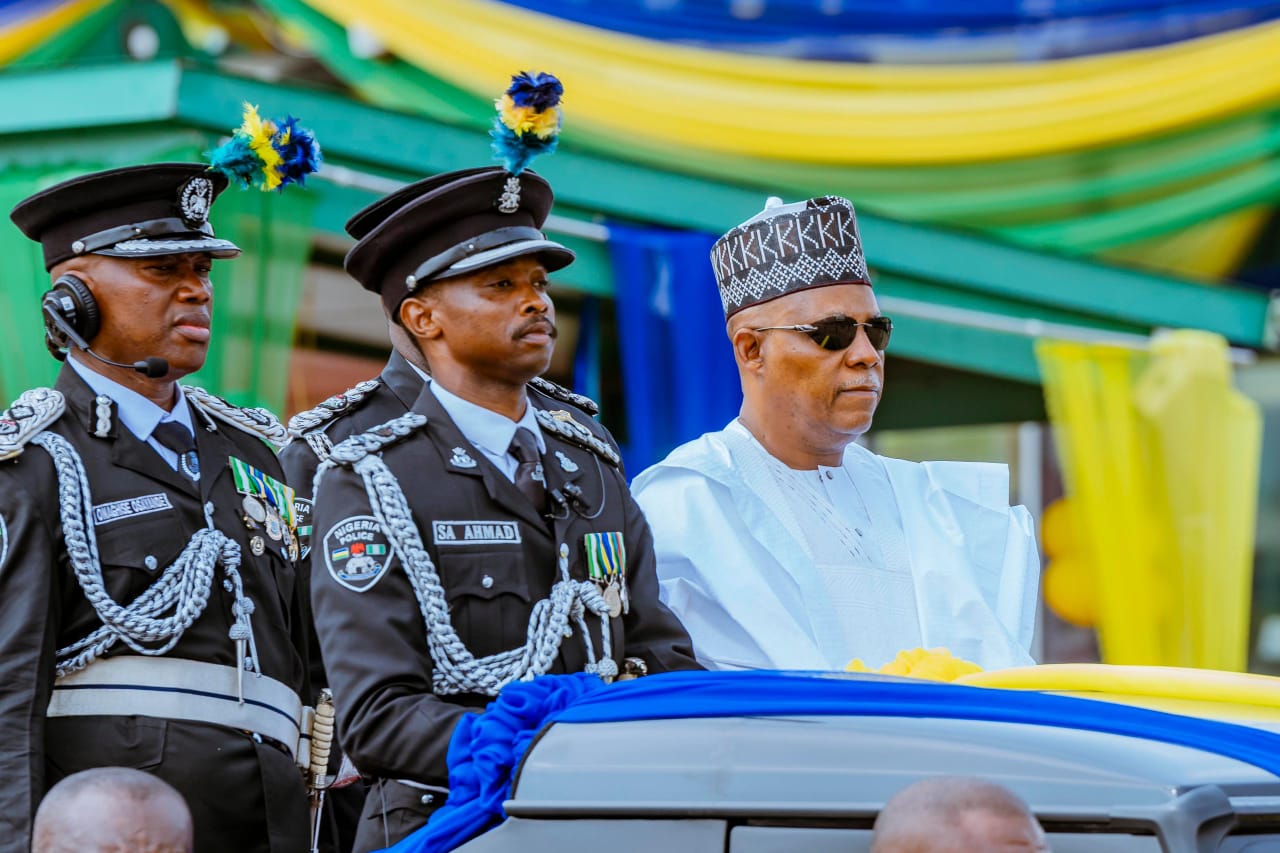
AT NATIONAL POLICE DAY: President Tinubu Unveils Investment In Modern Law Enforcement Systems
Says, to make meaningful progress, Nigeria must strengthen those protecting the nation
By: Our Reporter
President Asiwaju Bola Ahmed Tinubu has disclosed plans to deepen investment in police training, intelligence gathering, and modern law enforcement systems, as part of a broader plan to transform the Nigeria Police Force (NPF) into a world-class institution.
He said the Nigerian state owes a permanent moral duty to empower its security agencies, as the nation’s peace is only as secure as the men and women who keep vigil over its citizens.
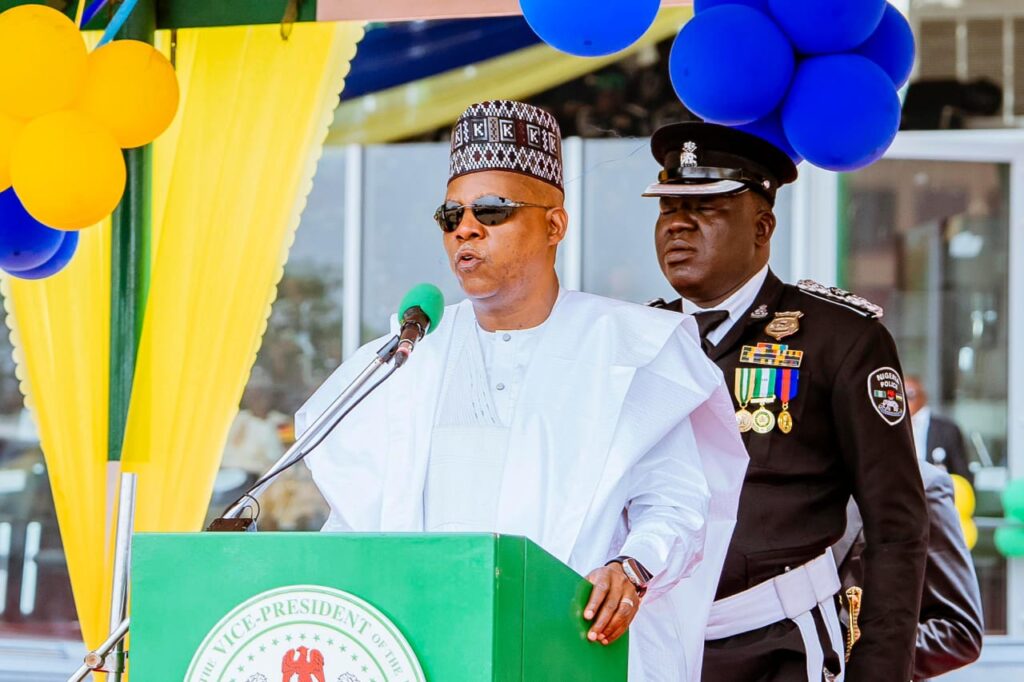
Speaking on Tuesday at the National Police Day Grand Parade and Procession in Abuja, President Tinubu, who was represented by his deputy, Vice President Kashim Shettima , maintained that no nation can make meaningful progress without a secure social environment.
Accordingly, he declared that the Federal Government would deepen investments in training, intelligence gathering and modern policing infrastructure as part of his administration’s ongoing reform agenda.
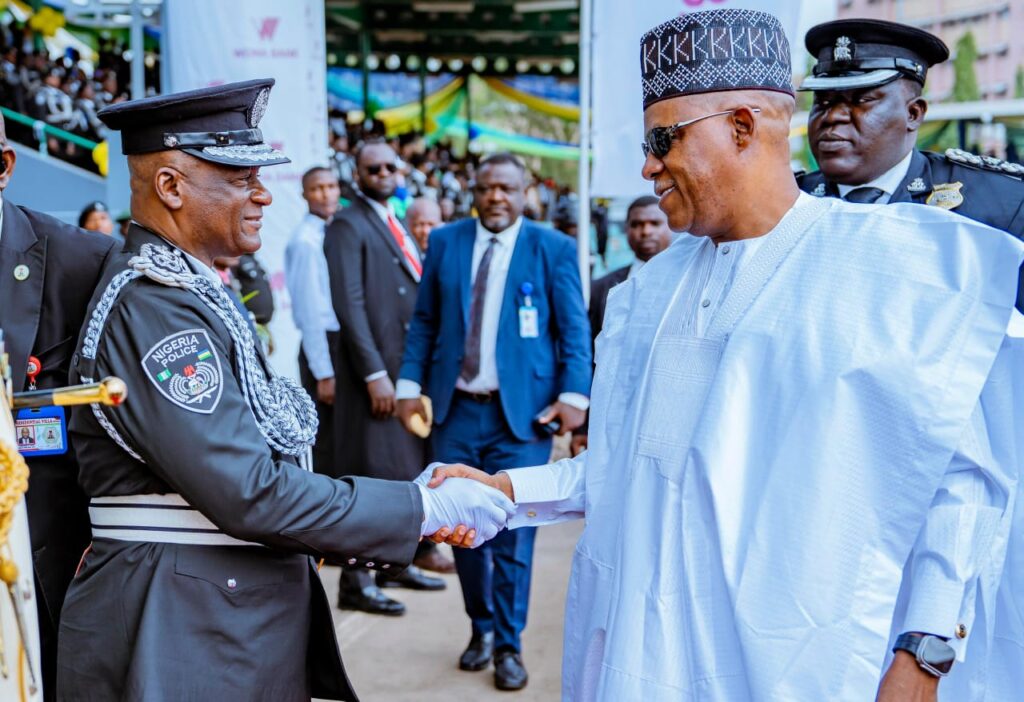
“We will continue to support these reforms through sustained investment in training and capacity development, modern equipment and technology, improved intelligence and investigative capabilities, and better welfare and working conditions for police personnel.
“We are determined to build a Police Force that is well equipped, well trained, and well-motivated to confront the complex security challenges of our time,” the President stated
The Nigerian leader observed that while history chooses to reward certain professions with applause, there are others which civilisation depend on to survive, “even when their labour is too often repaid with silence.”
He acknowledged the burden of sacrifice being shouldered by the police force, stressing that the country cannot afford to take such a sacrifice for granted because “every nation is only as safe as those who keep vigil while others sleep.”
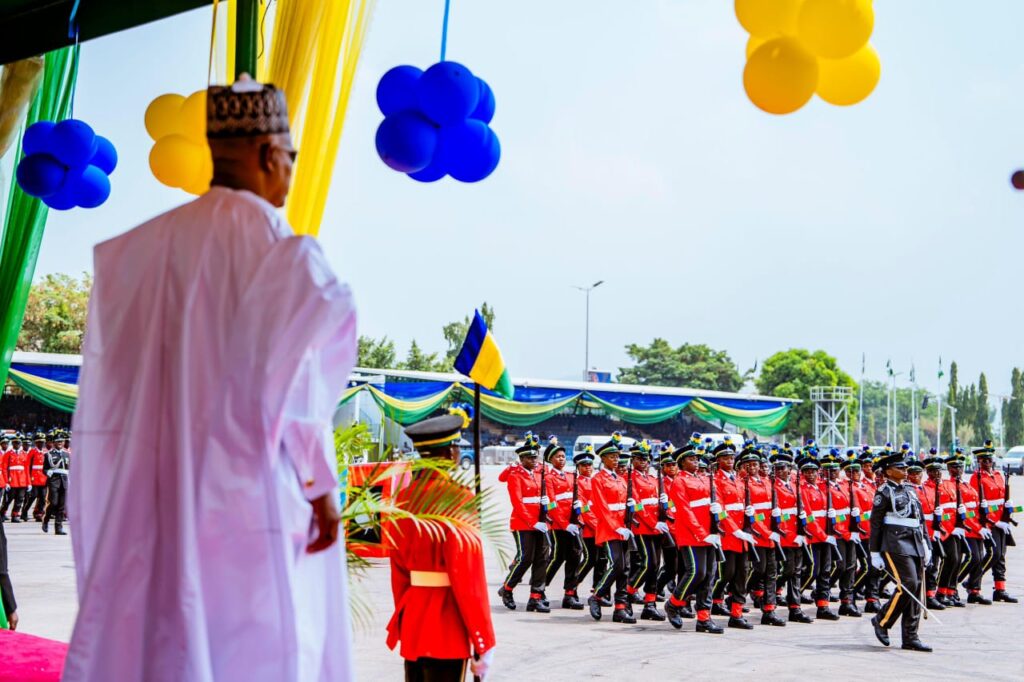
Underscoring the need to empower the force, President Tinubu said, “Nigeria must strengthen those who protect the nation. Security is not simply the defence of territory or the prevention of crime. It is the first currency of progress.”
He noted that the observance of National Police Day, institutionalised last year, reflects the Federal Government’s deliberate recognition of the sacrifices made by police officers, adding that the administration remains resolute in strengthening the Police through concrete policy actions and sustained investment.
The President paid tribute to officers who lost their lives in the line of duty, describing their sacrifice as part of the nation’s enduring moral inheritance.
His words: “Their sacrifice is written into the conscience of our country. Their memory must remain a lamp to those who wear this uniform today and to those who will wear it tomorrow. To their families, I extend the profound gratitude of a grateful nation.”
The Nigerian leader commended serving officers for their resilience and dedication in maintaining law and order across the country, often under difficult and dangerous conditions.
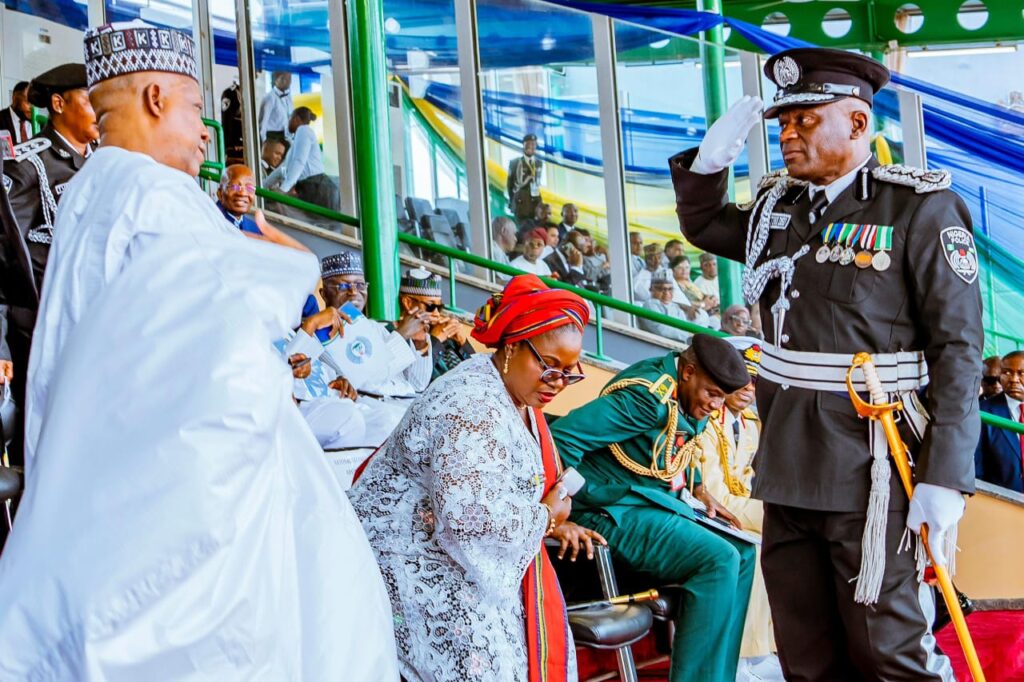
He further charged officers to uphold the highest standards of professionalism, fairness and fidelity to the rule of law.
“The uniform you wear is not a licence for arbitrariness; it is a covenant of service. The badge on your chest is not an ornament of power; it is a reminder of duty,” President Tinubu declared, even as he demanded stronger collaboration between citizens and law enforcement agencies
Observing that effective policing must be rooted in trust and community partnership, he said, “When citizens and law enforcement stand on opposite sides of suspicion, insecurity thrives. This is why community-centred policing is a democratic necessity.”
The President reaffirmed the administration’s vision of building a police institution that embodies excellence, accountability, courage and service, while restoring public confidence in law enforcement.
In his address, the Inspector General of Police (IGP), Olatunji Disu, said the police force, under his command, is deeply aware of expectations and concerns by the Nigerian people, stating that the approval of President Tinubu’s for the commemoration of the National Police Day is a commitment to the service of fallen and serving officers.
He acknowledged the risks, sacrifices and commitment of police officers nationwide, urging the NPF to rise above indiscipline, misconduct and every action that tarnishes the image and reputation of the force.
IGP Disu pledged that the leadership of the force, under him, will stand firmly with every officer that follows the rules, serving with dignity, just as he assured the public of a more disciplined, accountable and professional police force, standing with the Nigerian people.
The IGP noted that the current management of the police force is building an institution that is not only intelligence led but committed to professionalism in all ramifications.
In seperate goodwill messages, the representatives of Wema Bank and Premium Trust Bank, paid glowing tributes to the police force for its contributions to safety and security, pledging their support for the delivery of professional policing services across the country, through their platforms and services.
The grand finale of the 2026 National Police Day celebration featured march past, procession and tactical displays by various police units and cadets of the Police Academy.
Also present at the event were the Deputy Governors of Nasarawa and Ebonyi States; representatives of the Senate President and Speaker of the House of Representatives; service chiefs; former IGPs, Ogbonnaya Onovo, Mohammed Abubakar, Kayode Egbetokun, Suleiman Abba, Usman Alkali Baba; President of the Police Officers Wives Association (POWA) and members of the association; senior government officials, and members of the diplomatic corps, among others.
AT NATIONAL POLICE DAY: President Tinubu Unveils Investment In Modern Law Enforcement Systems
Troops arrest suspect with 75 live cartridges in Awka, Anambra
By: Zagazola Makama
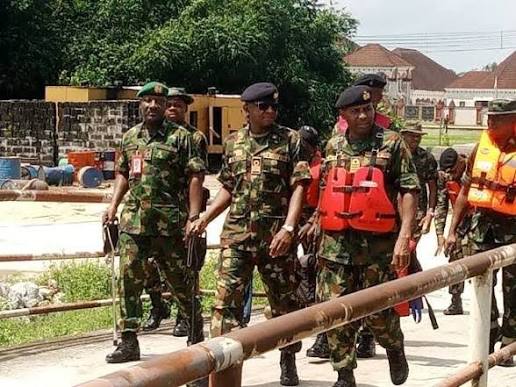
Troops of Sector 5 Operation UDO KA have arrested a suspected criminal in Awka, Anambra State, and recovered 75 live cartridges in his possession.
Security sources said the arrest was made at about 7:00 a.m. on April 5, 2026, during a routine operation in the state capital.
The suspect was allegedly found with the ammunition concealed in his bag at the time of arrest.
During preliminary questioning, the suspect claimed he received the cartridges from a friend, while efforts are ongoing to identify and track the source of the consignment.
Authorities said the suspect is currently in custody as investigations continue.
Troops arrest suspect with 75 live cartridges in Awka, Anambra

Zulum Rolls Out 20 Electric Buses to Cushion Petrol Price Hike

Youth Exclusion Could Derail Development Goals, UN Issues Urgent Warning

West Africa’s Child Protection Laws Under Scrutiny as ECOWAS Lawmakers Confront “Implementation Failure”

Roger Federer’s Shock as DNA Results Reveal Myla and Charlene Are Not His Biological Children

THE PLIGHT OF FARIDA

FAILED COUP IN BURKINA FASO: HOW TRAORÉ NARROWLY ESCAPED ASSASSINATION PLOT AMID FOREIGN INTERFERENCE CLAIMS
-
 News2 years ago
Roger Federer’s Shock as DNA Results Reveal Myla and Charlene Are Not His Biological Children
-
Opinions4 years ago
THE PLIGHT OF FARIDA
-
 News12 months ago
FAILED COUP IN BURKINA FASO: HOW TRAORÉ NARROWLY ESCAPED ASSASSINATION PLOT AMID FOREIGN INTERFERENCE CLAIMS
-

 News2 years ago
EYN: Rev. Billi, Distortion of History, and The Living Tamarind Tree
-
 Opinions4 years ago
POLICE CHARGE ROOMS, A MINTING PRESS
-

 ACADEMICS2 years ago
A History of Biu” (2015) and The Lingering Bura-Pabir Question (1)
-

 Columns2 years ago
Army University Biu: There is certain interest, but certainly not from Borno.
-

 Opinions2 years ago
Tinubu,Shettima: The epidemic of economic, insecurity in Nigeria
