
News
NSCDC Reiterates Commitment to Protect Schools


NSCDC Reiterates Commitment to Protect Schools
By: Our Reporter
The Commandant General of the Nigeria Security and Civil Defence Corps (NSCDC), Dr Ahmed Audi has assured that its operatives will continue to provide the needed schools’ security to enhance a safe teaching and learning environment in the country.
He gave the assurance at a one-day stakeholders workshop organised by the Corps, with the theme, “Ensuring Schools Security For Sustainable National Development”, at the Corps National Headquarters, Abuja.
The CG hinted that participants were carefully selected from various MDAs who are co-stakeholders in the Safe Schools Initiative programme such as Ministries of Finance and Education, the Nigeria Police, Department of State Services (DSS), National Orientation Agency (NOA), the Nigeria Governors’ Forum among others.
He stated that the workshop will provide a forum for stakeholders to thoroughly examine the draft Standard Operating Procedure (SOP) document for the purpose of validation and full national implementation.
Represented by the Assistant Commandant General in charge of Operations, ACG Philip Ayuba, the CG described the Safe Schools Programme of the Federal Government as laudable, reiterating that, it will bring an end to series of attacks on schools and kidnapping of school children in the country.
According to Audi, the workshop also seek to harvest inputs, welcome suggestions and process the various contributions of other stakeholders towards the commencement of Safe Schools Operations in Nigeria.
He pointed out that as the lead agency in the programme, the NSCDC in May 2021, conducted a vulnerability survey of all schools in the country and have published the statistics obtained of all vulnerable schools for necessary action.
The Corps helmsman maintained that in continuation with its resolve to ensure security in schools, the NSCDC with assistance from the Federal Ministry of Finance, flagged off the National Safe School Response Coordination Centre on the 13th of February, 2023 to commence the national implementation of the programme.
He expressed optimism that at the end of workshop, participants will come up with a carefully and thoroughly examined SOP that will serve as a blueprint for the program’s implementation.
The representative of the Minister of Finance and Coordinator of National Safe Schools Programme, Hajiya Halima Iliya, commended the NSCDC for prioritising schools security and also leading in setting up of a Coordination Centre for the Safe Schools Programme at the NSCDC National Headquarters.
She pledged on behalf of the Minister to facilitate the funding of the programme before end of the present administration, as efforts are underway to ensure releases of necessary funds before the government of the day winds off.
In the same vein, the Chairman of the SOP drafting committee, Prof Tyoor Terhemba, expressed confidence in the composition of the participants for the workshop and encouraged them to make the best use of the technical session for useful contibutions to the draft policy document.
Tyoor said the document will be produced, published and made available to key actors who would be trained to carry out major response activities.
NSCDC Reiterates Commitment to Protect Schools


NAPTIP raises alarm over digital sex predators, sextortion
…Agency reports 2,779 victims rescued, 43 convictions; warns of AI-generated sexual images, online stalking as 16 Days of Activism begins
By: Michael Mike
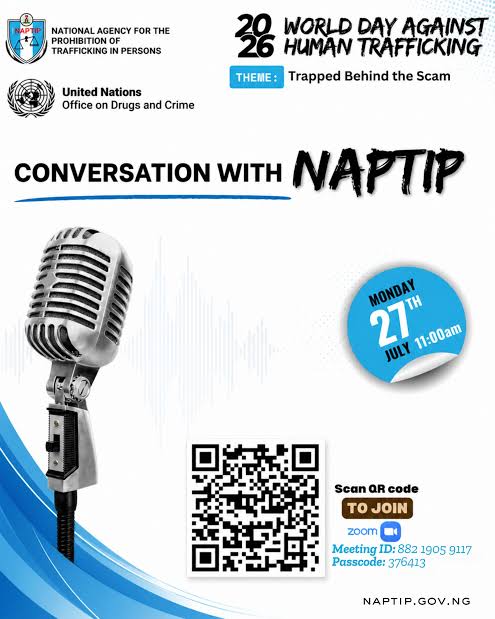
The National Agency for the Prohibition of Trafficking in Persons (NAPTIP) has warned perpetrators of sexual and gender-based violence (SGBV) that it will intensify prosecution and enforcement efforts, raising fresh alarm over the growing threat of technology-facilitated abuse, sextortion and digital exploitation of women, girls and young people.
The agency disclosed that it had rescued 2,779 victims from various stages of exploitation and danger zones since its inception and secured 43 convictions against perpetrators, while hundreds of other cases remained pending before courts across the country.
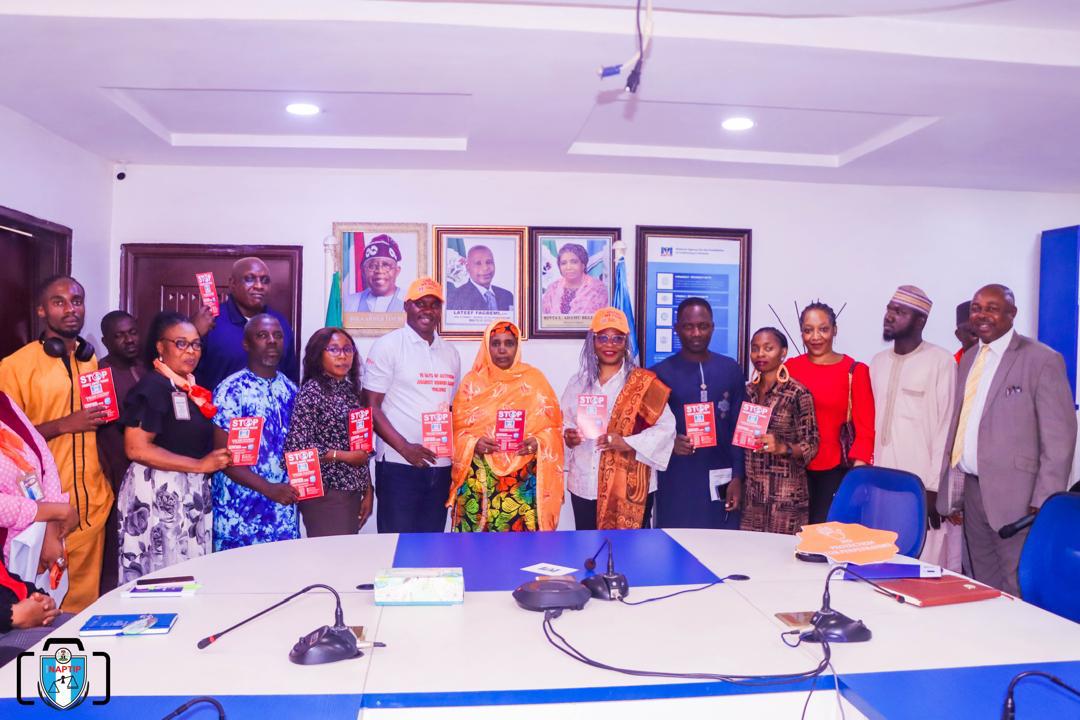
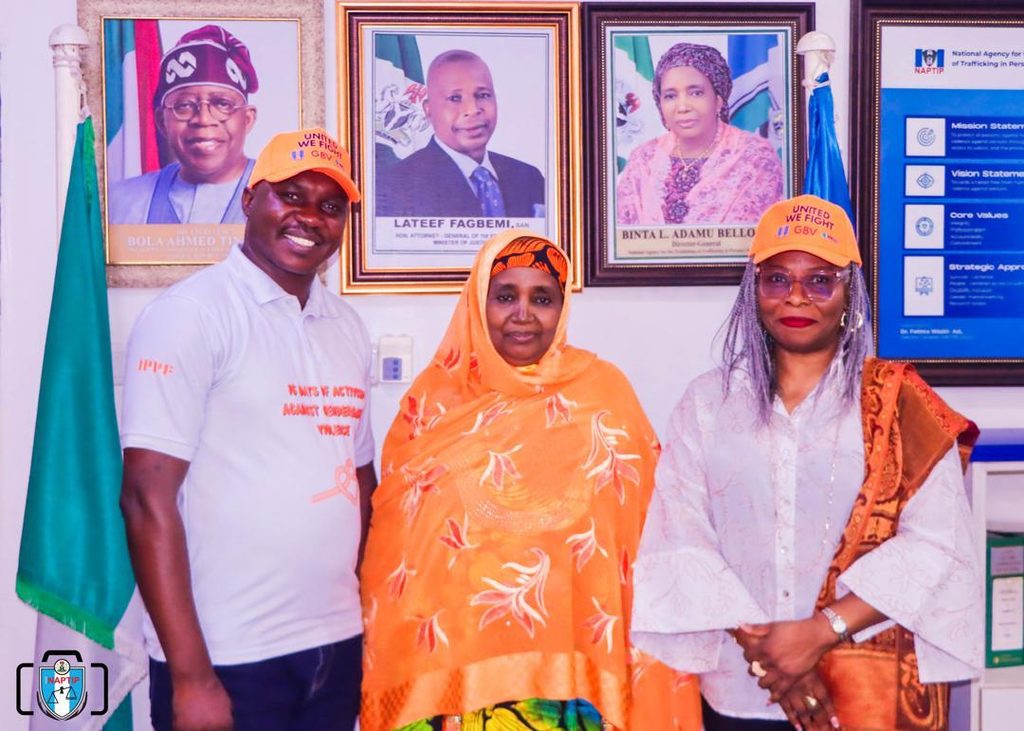
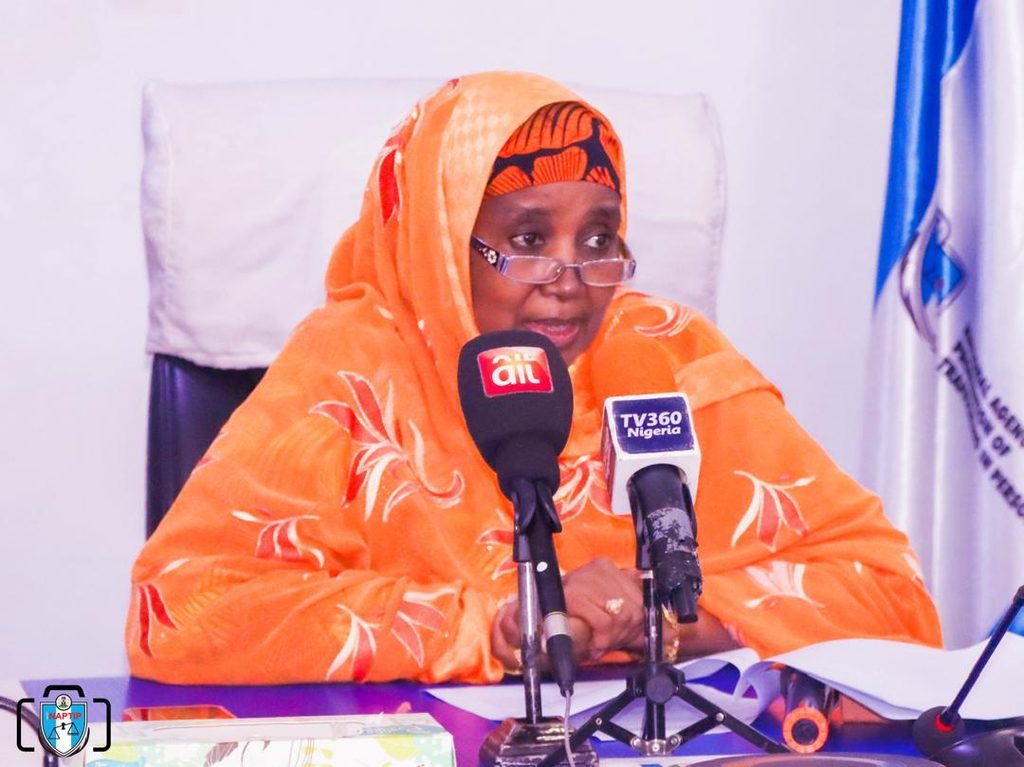
NAPTIP Director-General, Hajiya Binta Bello, made the disclosure on Wednesday in Abuja at a press conference to flag off the 2026 edition of the 16 Days of Activism Against Gender-Based Violence, warning that emerging digital platforms were increasingly being weaponised by perpetrators to exploit, intimidate and sexually abuse victims.
The campaign, which runs from November 25 to December 10, is themed, “UNiTE to End Violence Against Women and Girls: Ensure Justice, Protect Survivors, End Impunity.”
Bello said the theme challenged institutions, communities and justice actors to move beyond rhetoric towards ensuring justice for survivors, protecting victims and ending impunity in both physical and digital spaces.
She said NAPTIP, as the statutory agency responsible for enforcing the Violence Against Persons (Prohibition) Act in the Federal Capital Territory and coordinating national responses, remained committed to ensuring that perpetrators of gender-based violence were held accountable.
According to her, true deterrence would only be achieved when survivors were shielded from stigma, supported to recover and when offenders understood that no individual was above the law.
The Director-General said the agency had recorded notable progress in implementing the VAPP Act through grassroots sensitisation, school advocacy programmes and sustained media engagements, which she said had helped millions of Nigerians understand offences covered by the law, including spousal battery, rape, female genital mutilation, economic abuse, harmful traditional practices and emotional violence.
She said the growing awareness was gradually breaking the culture of silence surrounding gender-based violence, encouraging victims and affected persons to seek help and report abuses.
Bello said NAPTIP’s rapid response squads, working with community surveillance networks and sister security agencies, had intervened in distress situations to rescue women, men and vulnerable children from domestic abuse, unlawful confinement and sexual exploitation.
She said the agency had also strengthened referral mechanisms linking survivors to Sexual Assault Referral Centres, medical facilities, psychosocial counsellors and pro bono legal services to ensure that victims received comprehensive support beyond rescue.
The Director-General attributed the increasing number of reported SGBV cases to growing public confidence in the agency’s integrity, confidentiality and zero-tolerance stance, arguing that the surge reflected greater willingness by Nigerians to speak out against abuse.
She said NAPTIP had expanded survivor rehabilitation programmes through shelters and empowerment partnerships, providing trauma-informed counselling, vocational training, educational support and economic reintegration assistance to prevent survivors from returning to abusive environments out of financial dependence.
On prosecution, Bello said the agency’s legal team had secured landmark convictions, including life sentences for child defilement and rape, while pursuing dozens of ongoing cases in courts across the country.
However, she said the agency was increasingly confronted with technology-facilitated sexual and gender-based violence, as perpetrators exploit smartphones, social media platforms, encrypted messaging applications and artificial intelligence to stalk, harass, dox, impersonate and abuse victims.
She described the psychological and social consequences of digital violence as devastating, noting that non-consensual intimate images, deepfakes and cyberbullying could leave lasting consequences for victims even after the abuse had occurred.
According to her, survivors often suffer depression, anxiety, social stigma and loss of livelihoods, with some cases resulting in suicidal thoughts.
Bello also expressed concern over sextortion, in which perpetrators lure young people and adults into sharing intimate images or videos under the guise of romance, mentorship or employment opportunities before using the materials to blackmail victims for money, further sexual favours or silence.
She warned that sextortion and image-based sexual abuse were criminal offences and said NAPTIP was collaborating with cybercrime units, telecommunications regulators and digital platforms to identify, track and prosecute perpetrators.
The Director-General also cautioned Nigerians, particularly young people, against falling victim to abusive relationships and online deception, urging them to exercise caution in choosing romantic, intimate and business partners.
She advised Nigerians to verify the identities of people they engage with online, establish personal and digital boundaries and resist pressure to share compromising photographs or sensitive personal information.
Bello warned that behaviours such as excessive control, jealousy, isolation from family and disregard for personal boundaries could serve as early warning signs of abuse and should not be ignored.
She acknowledged the support of the Federal Ministry of Justice, other government agencies, development partners, international organisations, civil society groups and state governments in the fight against gender-based violence, particularly International IDEA, UN Women and Blue North Initiative Against Human Trafficking.
She also commended the media for its role in exposing abuses, amplifying awareness campaigns and promoting implementation of the VAPP Act, describing journalists as strategic partners in the campaign against gender-based violence.
As the 16 Days of Activism begins, Bello warned perpetrators and enablers that the agency would not relent in enforcing the law, rescuing vulnerable persons, supporting survivors and pursuing offenders until justice was served.
She urged members of the public to report cases of sexual and gender-based violence and human trafficking through NAPTIP’s 24-hour toll-free short code 627, its emergency lines or any of its commands nationwide.
NAPTIP raises alarm over digital sex predators, sextortion
NHRC flags off 16 Days of Activism, reports 2,141 child sexual abuse cases in October
…Commission calls for justice, survivor protection, accountability as dashboard exposes scale of gender-based violence
By: Michael Mike
The National Human Rights Commission (NHRC) has raised fresh concerns over the scale of gender-based violence and violations of children’s rights in Nigeria, reporting 2,141 cases of child sexual abuse and 2,093 cases of child forced marriage recorded in October 2026 alone.
The Commission also recorded 1,873 complaints of domestic violence, 376 cases of forced marriage, 339 cases of trafficking involving women and 632 cases of women denied access to their children during the same month, underscoring what it described as the urgent need for stronger prevention, protection, justice and accountability mechanisms.
The Executive Secretary of the NHRC, Chief Tony Ojukwu, disclosed the figures on Wednesday in Abuja while formally flagging off the Commission’s nationwide activities to mark the 2026 16 Days of Activism Against Gender-Based Violence.
The campaign, being observed globally, is themed, “UNITE to End Violence Against Women and Girls: Ensure Justice, Protect Survivors, End Impunity.”
Ojukwu said violence against women and girls was not merely a social problem but a fundamental human rights violation that undermined dignity, equality and freedom, denying victims the right to live without fear, discrimination and abuse.
He said the campaign required more than public declarations, stressing the need for effective access to justice, survivor-centred protection, responsive institutions and accountability for perpetrators.
According to him, the NHRC’s Monthly Human Rights Situation Dashboard recorded more than 2.5 million complaints across its 36 state offices and the Federal Capital Territory between January and October 2026.
The October figures also showed 2,581 cases of denial of children’s access to education and 1,681 cases of child trafficking, further highlighting the vulnerabilities facing children across the country.
Ojukwu said the figures represented serious violations of fundamental rights, including the rights to life, dignity, equality, freedom from discrimination and protection from exploitation and abuse.
He said the Commission was intensifying interventions through advocacy, monitoring, institutional reforms, partnerships and direct protection of vulnerable persons in response to the growing challenges.
Among its interventions in 2026, the NHRC conducted grassroots engagements on women’s rights, sexual and gender-based violence and children’s rights in Bwari and across the six Area Councils of the FCT, as well as through its state offices nationwide.
The Commission also participated in the review and amendment of the Child Rights Act, 2003, while supporting stakeholder engagements on Nigeria’s implementation and domestication of the Maputo Protocol on Women’s Rights in Africa.
Ojukwu said the NHRC had also reviewed its Standing Orders and Rules of Procedure in partnership with International IDEA under the European Union-supported programme on Ending Sexual and Gender-Based Violence, with the aim of improving complaint handling and access to remedies for victims.
He added that the Commission, in collaboration with SOS Children’s Villages, developed and adopted a child safeguarding policy, while also working with stakeholders to establish a workplace sexual harassment policy.
As part of efforts to strengthen child protection mechanisms, the NHRC inaugurated the Child and Youth Ombuds Desk in collaboration with SOS Children’s Villages Nigeria, with support from the European Union, to provide children with a child-friendly platform to report violations and seek redress.
The Commission also documented 180 cases of sexual and gender-based violence involving displaced persons between May and June 2026, drawing attention to the protection challenges faced by vulnerable populations in displacement settings.
Ojukwu further disclosed that the Commission had secured the release of 12 detained youths in Benue State through community monitoring mechanisms, prevented the forced marriage of a 14-year-old girl in Adamawa State and ensured the imprisonment of a political office holder in Jos for defiling a child.
He said the Commission also secured the imprisonment of a man who committed sodomy with a boy in Kaduna, rescued children from hawking and child labour in Cross River and Adamawa states, and reached more than 56,000 people through human rights and gender-based violence prevention campaigns.
Other interventions, he said, included reuniting estranged families, returning abused child domestic workers to their parents outside Abuja, providing temporary shelter to survivors of domestic violence and rescuing a child from a mother with a mental health challenge before handing the child over to social welfare authorities.
The NHRC Executive Secretary said the Commission had strengthened partnerships with organisations including BAOBAB for Women’s Human Rights, the University of Pretoria and the National Institute for Legislative and Democratic Studies.
He also disclosed that the Commission recently signed a memorandum of understanding with the National Human Rights Commission of India to promote capacity building, training, research and exchange of expertise in handling human rights violations, including domestic violence and sexual and gender-based violence.
As part of the 16 Days campaign, the Commission said it had lined up nationwide engagements across its 36 state offices and the FCT, involving civil society organisations, the Nigerian Bar Association, the International Federation of Women Lawyers (FIDA), traditional rulers, religious leaders, lawmakers, judges, women and youth groups.
The engagements will include advocacy roadshows, consultations with community and religious leaders, judicial and legislative advocacy, school-based human rights outreach, health-sector accountability visits and media and civil society parley.
The Commission said the activities would also assess the capacity of health facilities to respond to sexual and gender-based violence cases, including the availability of post-exposure prophylaxis, medical care and other essential survivor-support services.
It added that findings from the engagements would be consolidated into recommendations and a national communiqué, alongside activities to commemorate International Human Rights Day on December 10 across the country.
Looking ahead to 2027, Ojukwu said the Commission would prioritise strengthening data and monitoring, expanding state-level interventions, advancing legislative implementation, protecting vulnerable and displaced populations, strengthening survivor-centred services, building institutional capacity and promoting accountability.
He called on families, traditional and religious institutions, schools, the media, law enforcement agencies, the judiciary, civil society and Nigerians generally to take collective responsibility for ending gender-based violence.
“We must challenge harmful practices, reject victim-blaming, educate our boys, empower our girls and create an environment where survivors can report violations without fear, stigma or discrimination,” he said.
Ojukwu formally declared the 2026 nationwide activities of the NHRC and its partners in the 36 states and the FCT open, urging stakeholders to unite in ensuring justice, protecting survivors and ending impunity.
NHRC flags off 16 Days of Activism, reports 2,141 child sexual abuse cases in October
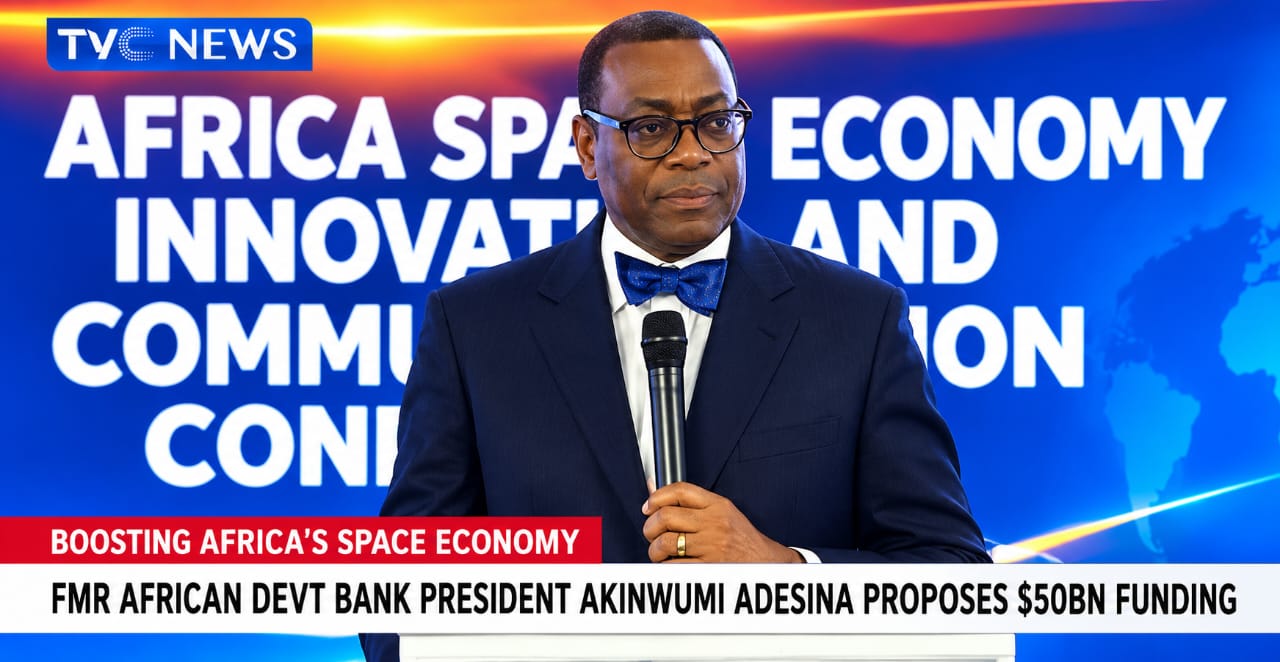
Adesina urges Tinubu to lead $50bn Africa space investment drive
By: Michael Mike
Former President of the African Development Bank (AfDB), Dr. Akinwumi Adesina, has urged President Bola Tinubu to spearhead a $50 billion continental investment drive to transform Africa’s space economy, warning that the continent risks missing out on the enormous wealth and technological opportunities of the emerging global space industry.
Adesina proposed the establishment of a $50 billion Africa Space Future Fund, with an initial capitalisation target of $5 billion, to finance satellite infrastructure, scientific research, indigenous technology development and space-related enterprises across the continent.
He called on Tinubu, alongside Rwandan President Paul Kagame and Egyptian President Abdel Fattah el-Sisi, to provide founding political leadership for the initiative by convening a presidential summit to secure investment commitments and establish an institutional framework for the proposed continental programme.
The former AfDB president made the proposal on Tuesday in Abuja while delivering a keynote address titled, “Financing Africa’s Space Future: Mobilising Capital for Space Science, Innovation and Technology,” at the Africa Space Economy, Innovation and Communication Conference organised by the Nigerian Space Research and Development Agency (NASRDA).
The conference attracted leaders of space agencies, astronauts, representatives of space businesses and other stakeholders in the global space ecosystem to explore investment opportunities, innovation, technological advancement and international cooperation.
Making a case for a coordinated continental investment strategy, Adesina said Africa’s commercial space industry was gradually emerging, with 321 active commercial space companies operating across 36 African countries and generating approximately $373 million in revenue in 2024, but warned that the continent’s ambitions were not matched by the scale of investment required to compete globally.
He cited the approximately $24.4 billion funding approved for the United States National Aeronautics and Space Administration (NASA) in 2026, compared with about $828 million in combined government space allocations across Africa, noting that although the figures were not directly comparable, they illustrated the enormous investment deficit confronting the continent.
According to him, NASA alone received almost 30 times Africa’s combined public space allocation, underscoring the urgency of mobilising capital to develop the infrastructure, research and technological capabilities required to compete in the global space economy.
Adesina argued that Africa could not expect to compete meaningfully in an increasingly lucrative global space industry while investing comparatively little in the infrastructure and technologies that would determine who captures its value, insisting that the continent must move beyond fragmented national programmes to build an integrated and commercially viable space ecosystem.
In a direct appeal to Tinubu, he commended the President’s ambition to build a $1 trillion Nigerian economy and his approval of four new Nigerian satellites, describing the decision as a powerful demonstration of the administration’s recognition of science, technology and innovation as critical drivers of economic transformation.
“I particularly commend your commitment to Nigeria’s space programme. Your approval of four new Nigerian satellites sends a powerful message. It demonstrates your conviction that science, technology and innovation must drive our economic transformation,” he said.
Adesina expressed confidence in Nigeria’s economic prospects under Tinubu’s leadership, stressing that continuity, consistency and a bold vision would be critical to sustaining economic reforms, achieving broad-based prosperity and strengthening the country’s global standing.
“I have no doubt that, under your leadership, and with continuity, consistency and a bold vision for the future, Nigeria will achieve sustained economic growth, broad-based prosperity and a position of greater strength and influence in the global community.
“Knowing you, Mr. President, I am confident that you will sustain and drive this vision forward.
“Let there be renewed hope on the ground, and renewed hope in space as well!” he said.
At the centre of his proposal is the Africa Space Future Fund, which he said would mobilise up to $50 billion in cumulative investments over 10 to 15 years, bringing together African governments, sovereign wealth funds, development finance institutions, pension funds, insurance companies, private investors, international partners and the African diaspora.
The proposed fund would prioritise commercial space infrastructure, including satellite communications, low-Earth orbit broadband capabilities, Earth observation, ground stations, gateways and data infrastructure, while also supporting scientific missions, university research, advanced technologies and international research partnerships.
It would equally invest in African startups, satellite component manufacturers, artificial intelligence, robotics, sensors and emerging space businesses, with particular emphasis on African ownership, intellectual property development, technology transfer, indigenous innovation and local manufacturing capacity.
Adesina said the investments would help Africa develop the technological capabilities, enterprises and industrial ecosystems necessary to generate and retain economic value from the global space economy, create skilled employment and build globally competitive businesses.
He stressed that the fund must operate under independent governance, professional investment management, rigorous due diligence and transparent accountability to prevent political patronage and ensure that investments deliver sustainable returns.
“This is not a request for charity. It is an investment proposition,” he declared, arguing that Africa’s growing demand for connectivity, agricultural intelligence, climate information, geospatial services and digital infrastructure presented commercially viable opportunities capable of attracting substantial private and institutional capital.
According to him, governments must deploy public investment strategically to unlock private capital, while commercially viable projects, long-term service contracts and sustainable revenue streams would make space infrastructure attractive to investors.
To provide political direction for the initiative, Adesina proposed that Tinubu, Kagame and el-Sisi convene a Founding Presidential Summit on Financing Africa’s Space Future to secure political endorsement, mobilise initial investment commitments and establish the institutional framework required to implement the programme.
He said the proposed partnership could draw on Nigeria’s ambition and growing commitment to space technology, Rwanda’s experience in technology-driven development and innovation, and Egypt’s established space infrastructure and role as host of the African Space Agency.
He stressed that the initiative must move beyond declarations of goodwill to secure concrete commitments, strategic partnerships and an actionable implementation roadmap, proposing the establishment of a high-level continental task force working with the African Union and the African Space Agency to develop the legal, institutional and financial framework for the fund, identify founding investors and prepare a roadmap for mobilising the initial $5 billion.
A central component of the proposed fund, he said, would be Africa Link, a flagship continental programme designed to aggregate demand across African markets, develop shared ground infrastructure and establish strategic partnerships with international satellite operators to expand affordable and reliable satellite connectivity across the continent.
Adesina said pooling demand and coordinating infrastructure investments would enable African countries to achieve economies of scale, reduce costs and expand access to satellite services, while strengthening their participation in the global space economy.
However, he cautioned against a future in which Africa remained entirely dependent on satellite networks owned and controlled by foreign companies, insisting that international partnerships must facilitate technology transfer, skills development and greater African participation in satellite network operations and management.
“We must move from renting the infrastructure of the digital future to owning a meaningful share of it,” he said, adding that Africa did not need to immediately replicate existing global satellite constellations but must begin building the capacity to compete, collaborate and secure a meaningful stake in the emerging space economy.
“AFRICA MUST HAVE ITS OWN AFRICA LINK!” he declared.
Adesina further highlighted the enormous potential of space technology to transform agriculture, food security, telecommunications, climate resilience, disaster management, infrastructure development and natural resource management, drawing on his experience as Nigeria’s Minister of Agriculture in 2012 to illustrate the practical benefits of satellite technology.
He recalled how satellite imagery, remote sensing and vegetation data helped the government assess the impact of devastating floods and develop a national dry-season agricultural programme that helped avert a predicted food crisis, explaining that space-generated information enabled evidence-based decisions at a critical moment.
He said the experience demonstrated how investment in space technology could protect livelihoods, strengthen food security, improve economic stability and support effective public policy, calling for a fundamental transition from fragmented national space programmes to an integrated continental space economy in which countries pool resources, develop complementary capabilities and share infrastructure.
Greater regional coordination, he argued, would help African countries overcome the limitations of individual national markets, reduce duplication and create the scale required to attract global investment.
Adesina maintained that Africa’s ambition must extend beyond launching satellites to building industries, businesses and technological capabilities that would generate long-term economic value from space, identifying satellite manufacturing, sensors, communication equipment, ground systems, artificial intelligence, robotics, software development and data analytics as strategic areas in which African companies must develop indigenous capabilities.
He said deliberate investments in research, innovation, advanced manufacturing and intellectual property development were necessary to ensure that the economic benefits of Africa’s growing space economy translated into industrial growth, skilled employment and new business opportunities.
To finance the transformation, he advocated blended finance, African Space Bonds, public-private partnerships, venture capital and international development finance, arguing that governments should deploy public capital strategically to unlock private investment while long-term contracts for agricultural monitoring, disaster management and connectivity services could create predictable demand and make space infrastructure projects commercially viable.
Adesina said the ultimate objective was to build a competitive African space industry capable of developing technologies, creating globally competitive enterprises and exporting space-related products and services to international markets.
In a stirring appeal to Tinubu, he urged the Nigerian President to extend his ambition and bold vision to Africa’s aspirations in space science, technology and innovation, drawing inspiration from former United States President John F. Kennedy’s historic commitment to landing a man on the Moon.
“Mr. President, like John F. Kennedy, dare to dream big,” he said.
He concluded with an appeal to Tinubu to take Nigeria’s ambitions beyond terrestrial economic transformation and embrace the opportunities presented by space technology.
“Mr. President, you conquered the Atlantic! With your vision and boldness, why stop there? Now, Mr. President, conquer space!”
Adesina expressed optimism that an African would one day walk on the Moon, adding that he hoped the historic achievement would be made by a Nigerian, and called for sustained investments in universities, scientific research institutions, young innovators and technological infrastructure to develop a globally competitive African space industry.
He said Africa must move beyond consuming space technology to creating space wealth, beyond importing technologies to developing and exporting them, and beyond fragmented national programmes to building an integrated continental space economy.
He encapsulated the ambition in three words: “OWN. CREATE. EXPORT.”
“The sky must be our starting point,” Adesina declared, insisting that the time for Africa to invest, collaborate and build its future in space was now.
I will maintain this continuous, integrated narrative structure in your news reports, without inserting subheadings that break the flow of the story.
Adesina urges Tinubu to lead $50bn Africa space investment drive

Illegal Miners Attack Soldier as Troops Shut Down Mining Site in Plateau

Tinubu vows to rescue abducted Askira-Uba schoolchildren, assures Borno of lasting peace

NAPTIP raises alarm over digital sex predators, sextortion

Roger Federer’s Shock as DNA Results Reveal Myla and Charlene Are Not His Biological Children

THE PLIGHT OF FARIDA

FAILED COUP IN BURKINA FASO: HOW TRAORÉ NARROWLY ESCAPED ASSASSINATION PLOT AMID FOREIGN INTERFERENCE CLAIMS
-
 News3 years ago
Roger Federer’s Shock as DNA Results Reveal Myla and Charlene Are Not His Biological Children
-
Opinions5 years ago
THE PLIGHT OF FARIDA
-
 News2 years ago
FAILED COUP IN BURKINA FASO: HOW TRAORÉ NARROWLY ESCAPED ASSASSINATION PLOT AMID FOREIGN INTERFERENCE CLAIMS
-
 Opinions5 years ago
POLICE CHARGE ROOMS, A MINTING PRESS
-

 News3 years ago
EYN: Rev. Billi, Distortion of History, and The Living Tamarind Tree
-

 ACADEMICS3 years ago
A History of Biu” (2015) and The Lingering Bura-Pabir Question (1)
-

 Columns3 years ago
Army University Biu: There is certain interest, but certainly not from Borno.
-

 Politics1 year ago
2027: Why Hon. Midala Balami Must Go, as Youths in Hawul and Asikira/Uba Federal Constituency Reject ₦500,000 as Sallah Gift
