
News
Over Four Million Available for Nigerians with Special Tech Skills, Says Experts


Over Four Million Available for Nigerians with Special Tech Skills, Says Experts
By: Michael Mike
There is urgent need to improve digital skills across the country in order to build the nation’s Gross Domestic Product (GDP), experts in technology have advised.
The experts said by leveraging digital connectivity, providing high-quality tech education, and fostering a supportive community, this new initiative will undoubtedly open up job market opportunities not only for the local population but also on a global scale.
Speaking at the inauguration of a tech incubation hub in the nation’s capital Abuja, experts said over four million jobs remain available for citizens with special tech skills.
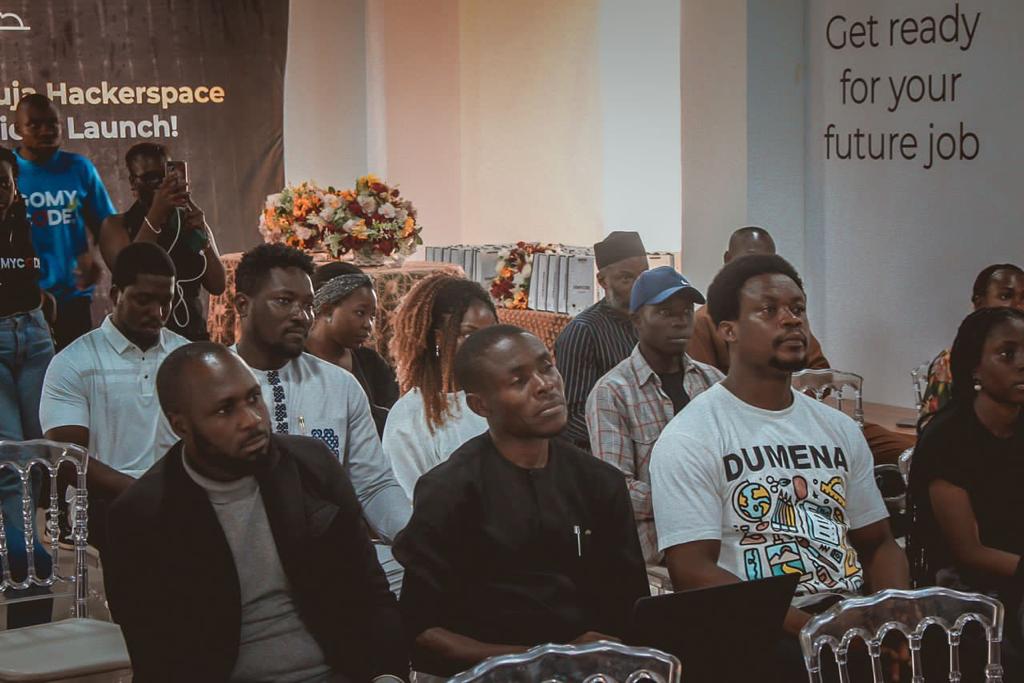
The Country Director of GoMyCode, Babatunde Olaifa, said: “We are thrilled with the Nigerian Government’s visionary mission to address youth unemployment through skills development. At GoMyCode, we firmly believe that by investing in tech education, this plays a critical role in shaping the future workforce.”
Olaifa added that: “We are inaugurating our space in Abuja. It is about how to create jobs and values that would contribute to GDP growth, not just in Nigeria but across Africa continent.”
He said: “We have network of schools, four in Lagos, one in Abuja. We train people in digital skills, people that want to transit into the tech space, our mission as a company is to accelerate Africa transition to digital economy.”
He disclosed that GoMyCode has an impressive track record of empowering 20,000 students across various disciplines, equipping them with the necessary skills to excel in the digital landscape in nine countries namely; Tunisia, Nigeria, Morocco, Senegal, Algeria, Kenya, Jordan, Côte d’Ivoire and Egypt, noting that the company is on a revolutionary mission to democratise education by empowering individuals with the skills needed to thrive in the current digital age, insisting that with a formidable extensive network of hackerspaces; GoMyCode currently has five physical spaces in Nigeria; Yaba, Ikeja, Festac, Lekki; in Lagos with Abuja being the latest of its accomplishments.
He said the move into Abuja aims to further address the pressing issue of unemployment, both locally and globally, by leveraging digital connectivity and empowering individuals, particularly women and children, stating that with its innovative approach, GoMyCode’s initiative holds great promise in transforming the job market and enhancing economic development in Nigeria.
He said this is coming at the best of tomes when Nigerian Government is embarking on a visionary plan to provide ample employment opportunities for over one million Nigerian youth, disclosing that GoMyCode seeks to play a significant role by training young individuals to become skilled professionals and invaluable assets to society through digital connectivity.
The keynote speaker at the inauguration, Mr. Inyene Ibanga, the Lead, Corporate and Communications officer of the Office for National Digital Innovation (ONDI) who represented the Director General of National Information Technology Development Agency (NITDA) Mr. Kashifu Inuwa Abdullahi, said: “By training and empowering the Nigerian youth, we will be enabling them to turn their potential into reality, while further bolstering economic growth, and fostering a culture of innovation.”
While emphasising the importance of Hackerspaces to improve the economy of Nigeria, he lauded the team’s approach for opening physical spaces where individuals from diverse backgrounds can have access to information and facilitators, he said: “This brings to the mind several crucial factors as to why the Abuja launch was important.
He noted that: “Firstly, technology over the years has become an integral part of every industry on and offline, and those equipped with digital skills are more likely to find employment opportunities than those without. By offering a dedicated space for learning and upskilling, GoMyCode will be bridging the existing skill gap by providing individuals with the expertise needed to thrive in the digital era. Secondly, the hackerspace serves as a community for aspiring tech professionals, entrepreneurs, and freelancers, offering them an environment conducive to collaboration, innovation, and networking. This sense of community propels knowledge sharing, industry partnerships, and the creation of new job opportunities.”
GoMyCode, is a renowned technology education platform, founded in the Netherlands by Yahya Bouhlel a Tunisian citizen and his brother Amine Bouhlel, GoMyCode strives to enhance not just the digital skills of an adult but encourage and groom the innate knowledge of children who are technically motivated to create and grow as valuable members of society.
Over Four Million Available for Nigerians with Special Tech Skills, Says Experts


Borno: Federal lawmaker supports farmers with 12, 000 bags of fertiliser
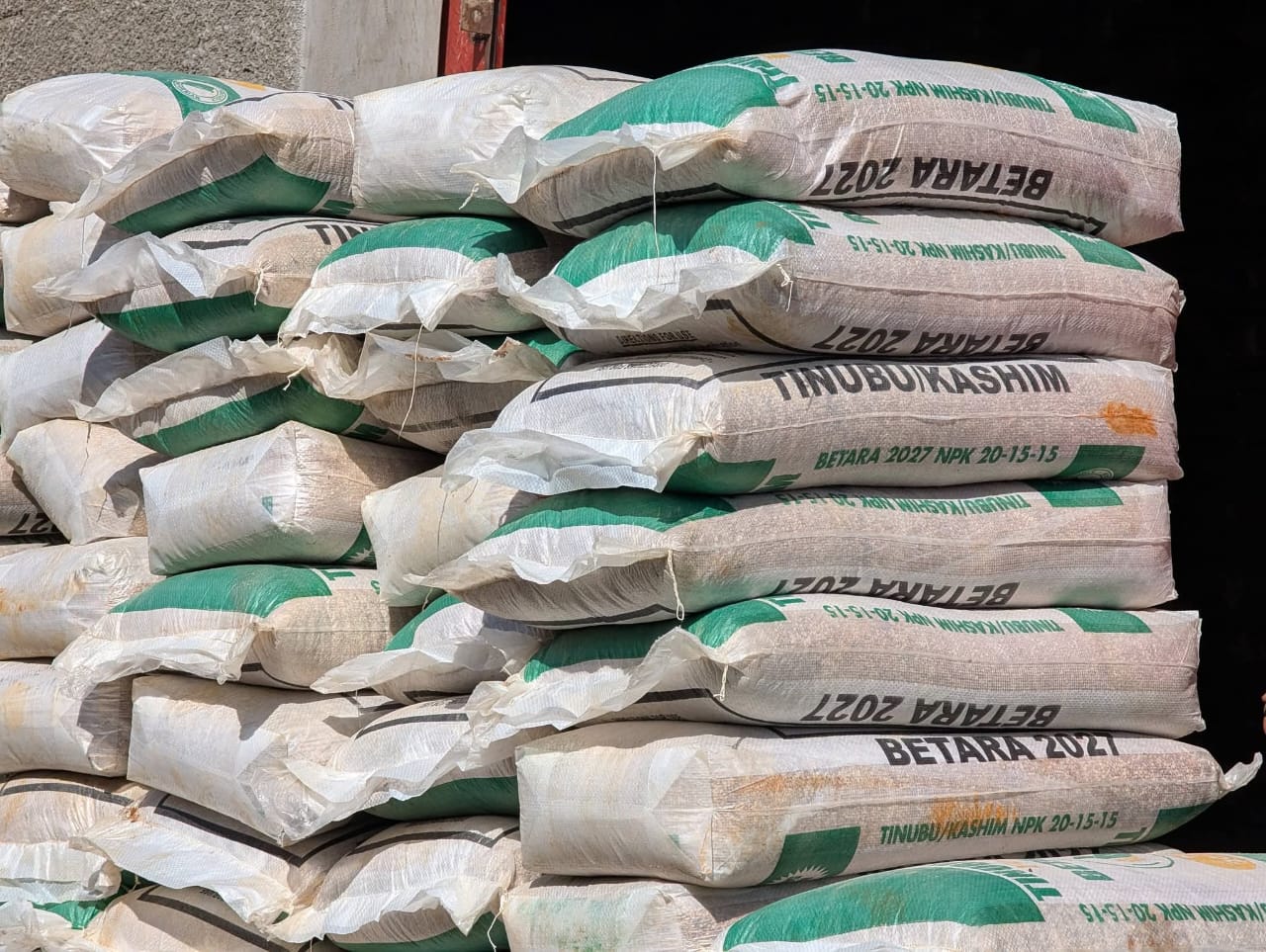
Hon. Aliyu Betara, representing Biu/Bayo/Kwaya-Kusar/ Shani Federal Constituency in Borno has distributed 12, 000 bags of NPK fertiliser to farmers in his constituency.
The distribution of the free fertiliser was inaugurated in Kwaya-Kusar on Saturday and the commodity was distributed to farmers across the constituency.
Mr Yamta Gur, the leader of Betara Free Fertiliser Distribution Committee who performed the exercise on behalf of Betara said it was part of his annual support to farmers.
Gur said that the support reaffirmed the federal lawmaker’s unwavering commitment to improving agricultural productivity and enhancing the livelihoods of farmers throughout the constituency.
“This intervention is aimed at empowering smallholder farmers and boosting agricultural productivity during the 2026 rainy season.
“This reflects Mr Betara’s strong commitment to improving the livelihoods of his constituents through sustained support for agriculture and other sectors,” he said.
He urged the beneficiaries to make judicious use of the fertiliser to ensure a successful farming season, emphasising that the intervention was designed to boost food production, strengthen food security, and improve household incomes.
Gur who is also the Coordinator of Political Affairs in the constituency, conveyed Betara’s assurance of greater dividends of democracy while reaffirming his dedication to people-centred representation and sustainable development across the constituency.
He said that the commodity was also distributed to clubs and associations as well as opposition political parties in Biu Local Government Area.
Some of the farmers and beneficiaries who spoke to the News Agency of Nigeria (NAN) expressed their appreciation to the lawmaker, describing the gesture as a timely and vital support for the rainy season.
They commended the lawmaker’s consistent concern for the welfare of ordinary people and his dedication to agricultural development and rural livelihood support.
Borno: Federal lawmaker supports farmers with 12, 000 bags of fertiliser
HOMEF Pushes Agroecology as Alternative to GMOs, Warns of Risks to Nigeria’s Food Sovereignty
By: Michael Mike
The Health of Mother Earth Foundation (HOMEF) has intensified its campaign against the adoption of genetically modified organisms (GMOs) in Nigeria, warning that increasing dependence on genetically engineered seeds could undermine the country’s indigenous crop varieties, erode biodiversity and weaken farmers’ control over food production.
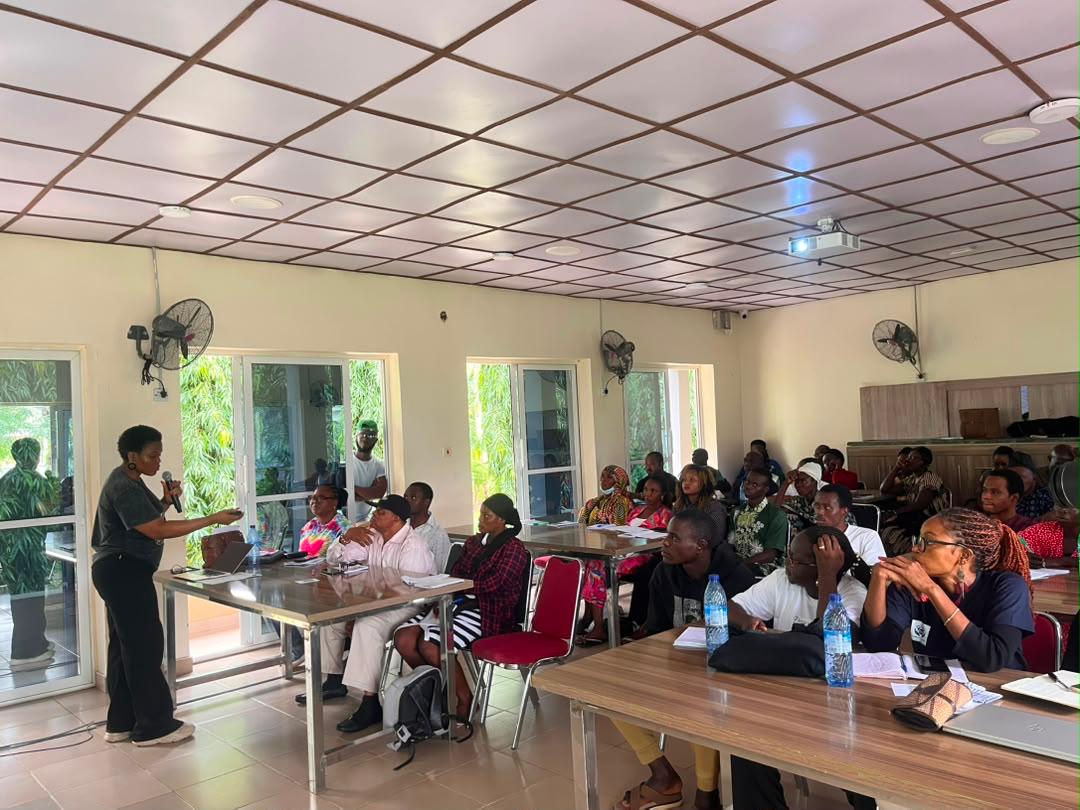
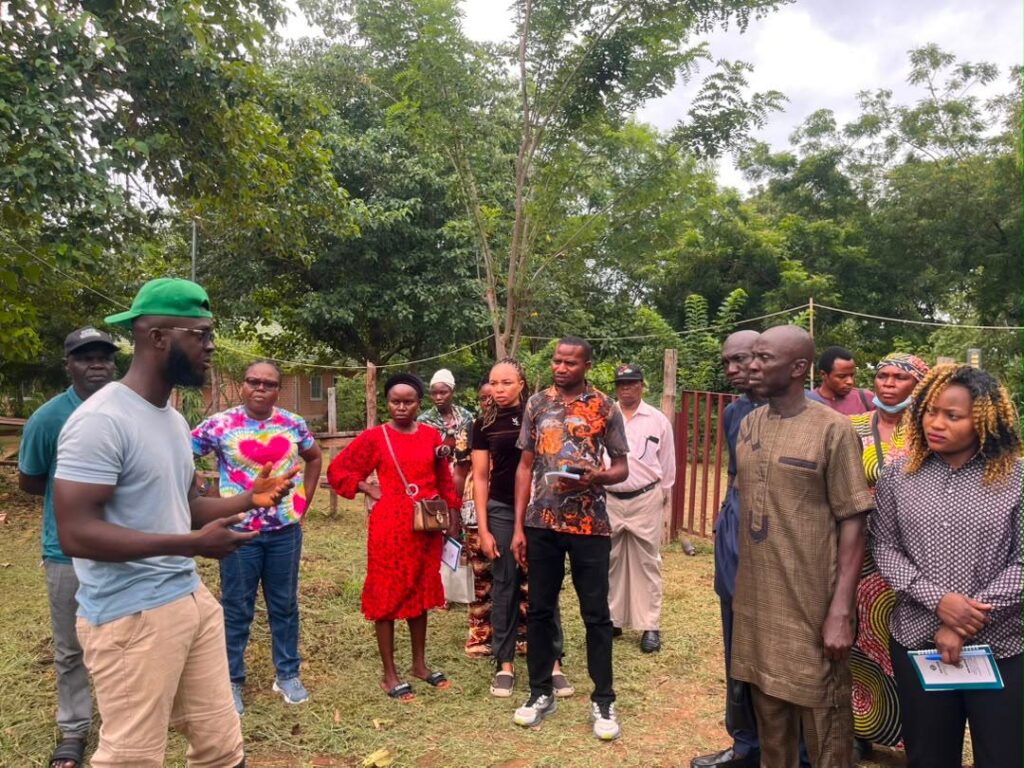
The environmental advocacy organisation made the call on Thursday during a one-day farmers’ training on agroecology held at the Be The Help Foundation Farm in Dama-Kusa Village, Kwali Area Council of the Federal Capital Territory (FCT), where farmers were introduced to sustainable farming techniques designed to improve productivity without reliance on genetically modified seeds or synthetic agricultural chemicals.
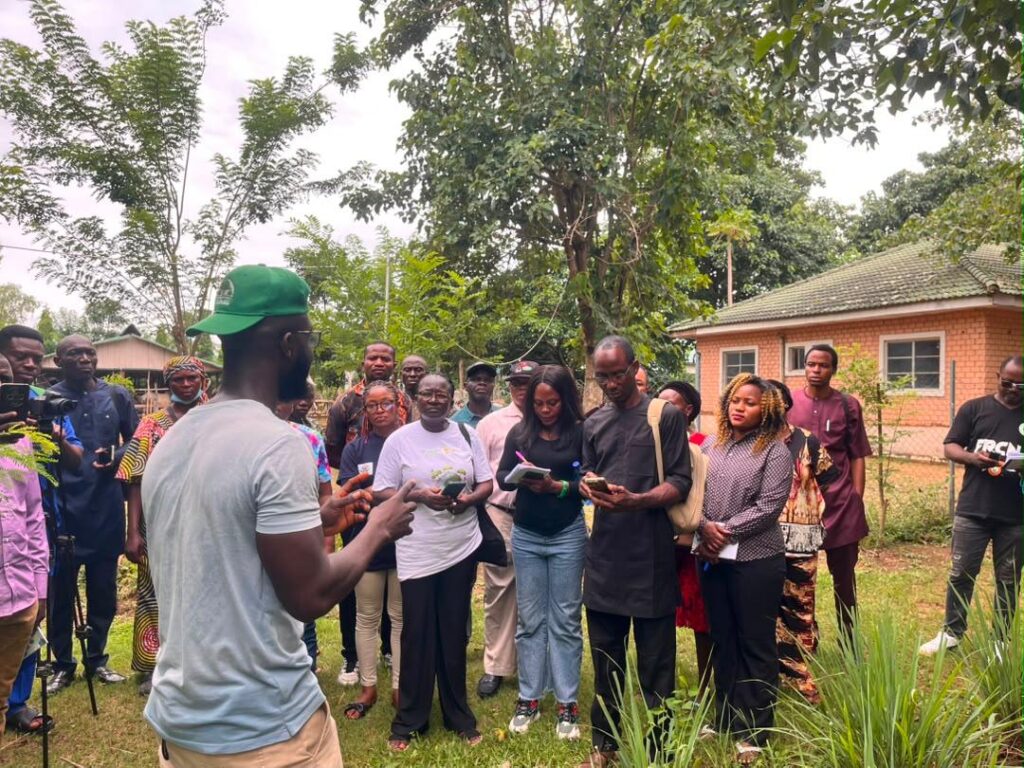
The training formed part of HOMEF’s broader advocacy for agroecology, which promotes environmentally friendly farming practices, biodiversity conservation and the preservation of farmers’ rights to save, exchange and replant indigenous seeds.
Speaking with journalists after the training, HOMEF’s Director of Programmes, Joyce Brown, said the organisation sought to demonstrate that sustainable agricultural productivity could be achieved through ecological farming systems rather than through genetically modified crops.
She warned that one of the greatest dangers posed by GMOs is the gradual contamination and possible disappearance of Nigeria’s indigenous crop varieties through gene flow during pollination.
“One of the major implications that GMOs pose for Nigeria is the risk of losing our indigenous crop varieties. Through pollination and other mechanisms, genes can transfer from GMOs to our local crops, and in the long run we risk losing our own varieties. The loss of biodiversity is also a major implication,” she said.
Brown argued that although GMOs are often promoted as a solution to food insecurity, they fail to address the structural problems confronting agriculture in Nigeria, including inadequate extension services, climate change and insufficient government support for smallholder farmers.
According to her, what farmers require is access to sustainable farming knowledge, climate-resilient production systems and policies that empower local food producers rather than dependence on expensive technologies.
“We brought farmers here to see for themselves that there are alternatives to GMOs and synthetic pesticides. The agroecological system being practised here shows that we do not need GMOs to increase food productivity. What farmers need is greater support, better extension services and climate-resilient farming practices,” she stated.
Brown also criticised what she described as weak regulatory oversight of genetically modified products in Nigeria, urging the Federal Government to adopt a clearer policy direction on biotechnology.
“There is an agency established to regulate GMOs, but other agencies are bypassing it to approve these products. Nigerians are not assured of the safety of what they are eating. Government must take a definitive position and increase support for farmers instead,” she added.
She further noted that several countries across the world have imposed restrictions on the cultivation or importation of specific genetically modified crops in order to protect indigenous farming systems and biodiversity, urging Nigeria to formulate policies that reflect its own agricultural realities and food security priorities.
Also speaking, the Chief Executive Officer of the Be The Help Foundation, Samuel Kwasari, described agroecology as a practical pathway towards achieving sustainable agriculture, environmental restoration and long-term food security.
Kwasari, who identified himself as the foundation’s “Chief Farmer,” explained that the organisation operates a regenerative agriculture model built around agroforestry, integrating crop cultivation with tree planting to restore degraded landscapes while improving farmers’ incomes.
“Our practice is regenerative agriculture through agroecology, using agroforestry as our major model. We want to produce food sustainably without harming the environment or human health. What you eat is what you are, so food should be safe and free from synthetic chemicals,” he said.
He explained that the farming model incorporates soil restoration, water conservation, nutrient recycling and carbon sequestration through carefully selected tree species that not only improve ecological health but also provide economic benefits from timber, firewood and carbon credits.
Kwasari described agroecology as a fusion of scientific knowledge and traditional farming practices adapted to local ecological conditions, stressing that sustainable agriculture must work with nature rather than against it.
He also drew a distinction between food sufficiency and food sovereignty, insisting that true food security extends beyond having enough food to include the freedom of farmers to determine what they cultivate and consume.
“Food sufficiency means you have food to eat. Food sovereignty means you have food and choice. It means you control what you grow, how you grow it and what you eat. Agroecology helps us achieve that because farmers remain in control of their seeds and production systems,” he explained.
According to him, Nigeria’s recurring food shortages are largely the result of inadequate planning and years of neglect of local food producers despite the country’s rapidly expanding population.
“We have had food production deficits for years. Government needs policies that enable local and indigenous food growers to produce for domestic consumption first. Let people grow their food, eat it first, and export only the surplus,” he said.
Kwasari maintained that HOMEF’s opposition to GMOs is rooted in practical demonstrations rather than theory, noting that the foundation has spent seven years proving that agroecology and agroforestry can deliver sustainable agricultural productivity.
“For seven years we have demonstrated that agroecology and agroforestry work. One of our greatest concerns with GMOs is that farmers lose control of their seeds. Once you lose seed sovereignty, you lose food sovereignty because someone else begins to determine what you plant and how you farm,” he said.
On pest management, he explained that the farm relies on integrated ecological approaches rather than chemical pesticides, maintaining biodiversity to naturally regulate pest populations while producing organic bio-fertilisers on-site to nourish crops.
“We intentionally design the farm so that insects and other organisms have their place within the ecosystem. We don’t focus on killing pests; we manage them. We also produce our own local bio-fertilisers on the farm, and those are what we use to nourish our crops,” he added.
While HOMEF reiterated its opposition to GMOs during the training, it is worth noting that supporters of genetically modified crops, including several scientific and regulatory bodies, argue that approved GM crops can increase yields, improve resistance to pests and climate stresses, and are considered safe when subjected to established regulatory assessments. The debate over GMOs therefore remains one of the most contested issues in agricultural policy, balancing food security objectives, environmental concerns, farmers’ rights and scientific evidence.
HOMEF Pushes Agroecology as Alternative to GMOs, Warns of Risks to Nigeria’s Food Sovereignty
Youth Must Shape Nigeria’s Democratic Future Through Peaceful 2027 Polls, NHRC Charges
By: Michael Mike
With less than a year to Nigeria’s 2027 general elections, the National Human Rights Commission (NHRC) has issued a strong call to the nation’s youth to take ownership of the country’s democratic future by participating actively, peacefully and responsibly in the electoral process, warning that credible elections remain the cornerstone of national stability, accountable leadership and sustainable development.
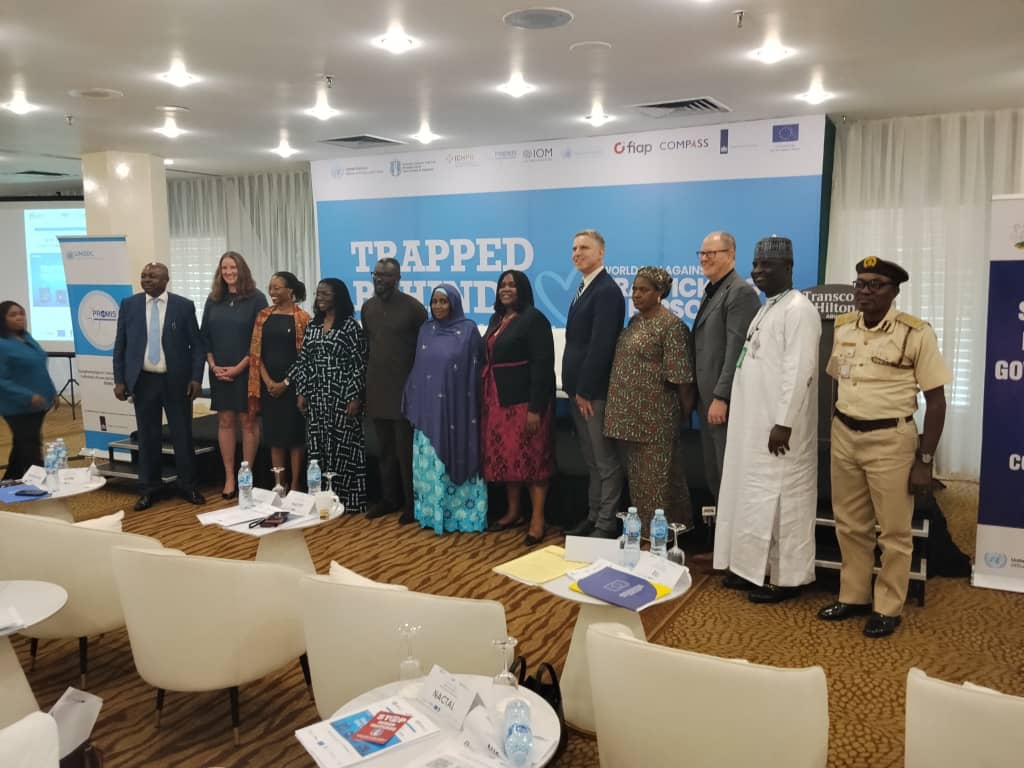
The charge came from the Executive Secretary of the NHRC, Chief Tony Ojukwu, who delivered the keynote address at the 6th National Leadership and Youth Stakeholders Conference in Abuja, themed: “2027 Elections: From Voices to Votes – Process, Participation, Security and National Stability Beyond 2027.”
Addressing a gathering of youth leaders, policymakers and civil society stakeholders, Ojukwu described young Nigerians as the country’s most powerful force for democratic transformation, urging them to move beyond social media activism and public discourse to meaningful civic engagement through the ballot box.
He stressed that voting and contesting for elective office are fundamental rights guaranteed under Nigeria’s Constitution and insisted that the success of the 2027 elections would depend on the willingness of citizens, particularly young people, to reject violence, hate speech, voter intimidation, misinformation, discrimination and the growing menace of vote-buying.
According to him, democracy can only flourish where citizens are free to participate without fear and where elections reflect the genuine will of the people.
“Peaceful and credible elections are indispensable to national stability, good governance and sustainable development,” Ojukwu said, noting that protecting electoral integrity is a collective responsibility involving citizens, political parties, security agencies, electoral officials and civil society organisations.
He reaffirmed the Commission’s determination to ensure that the 2027 elections are firmly anchored on respect for human rights through intensified election monitoring, investigation of electoral rights violations, voter education and strategic collaboration with the Independent National Electoral Commission (INEC), security agencies and other key stakeholders before, during and after the polls.
The NHRC boss said the Commission was building on the successes of its Mobilising Voters for Election (MOVE) Project, implemented during the 2023 general elections, which promoted voter education, peaceful participation and increased inclusion of youths, women and other traditionally underrepresented groups.
He explained that the lessons from the project are already shaping the Commission’s advocacy and preparations for the next electoral cycle, with greater emphasis on protecting voters’ rights and expanding civic participation.
Beyond elections, Ojukwu argued that strengthening democracy also requires addressing the socio-economic challenges confronting millions of young Nigerians.
He called for greater investment in entrepreneurship, innovation, skills acquisition and youth empowerment programmes to tackle poverty and unemployment, warning that economic hardship leaves many young people vulnerable to political exploitation and electoral violence.
He further advocated leadership founded on integrity, transparency, accountability and respect for the rule of law, insisting that democratic governance can only thrive where human rights are protected and public institutions enjoy the confidence of the people.
Reaffirming the Commission’s commitment to advancing rights-based governance, Ojukwu said the NHRC would continue to deepen partnerships with youth organisations, government institutions, civil society groups and development partners to strengthen civic education, promote peaceful coexistence and safeguard the rights of every Nigerian.
He concluded with a rallying call to the country’s youth to become active custodians of Nigeria’s democracy.
“The future of Nigeria depends on informed, active and responsible citizens. Your voices are important, but your votes give those voices democratic legitimacy. Together, let us build a Nigeria where elections are peaceful, leaders are accountable, and human rights remain the foundation of democratic governance,” he said.
With political activities expected to intensify in the coming months, the Commission urged Nigerians to embrace peaceful participation and uphold democratic values, saying the choices made in 2027 will have far-reaching implications for national unity, security and the country’s democratic trajectory.
Youth Must Shape Nigeria’s Democratic Future Through Peaceful 2027 Polls, NHRC Charges

Borno: Federal lawmaker supports farmers with 12, 000 bags of fertiliser

HOMEF Pushes Agroecology as Alternative to GMOs, Warns of Risks to Nigeria’s Food Sovereignty

ECOWAS, UNDP, Nigeria Unite to Break Barriers Against Women’s Political Leadership in West Africa

Roger Federer’s Shock as DNA Results Reveal Myla and Charlene Are Not His Biological Children

THE PLIGHT OF FARIDA

FAILED COUP IN BURKINA FASO: HOW TRAORÉ NARROWLY ESCAPED ASSASSINATION PLOT AMID FOREIGN INTERFERENCE CLAIMS
-
 News2 years ago
Roger Federer’s Shock as DNA Results Reveal Myla and Charlene Are Not His Biological Children
-
Opinions4 years ago
THE PLIGHT OF FARIDA
-
 News1 year ago
FAILED COUP IN BURKINA FASO: HOW TRAORÉ NARROWLY ESCAPED ASSASSINATION PLOT AMID FOREIGN INTERFERENCE CLAIMS
-

 News2 years ago
EYN: Rev. Billi, Distortion of History, and The Living Tamarind Tree
-
 Opinions5 years ago
POLICE CHARGE ROOMS, A MINTING PRESS
-

 ACADEMICS2 years ago
A History of Biu” (2015) and The Lingering Bura-Pabir Question (1)
-

 Columns2 years ago
Army University Biu: There is certain interest, but certainly not from Borno.
-

 Politics1 year ago
2027: Why Hon. Midala Balami Must Go, as Youths in Hawul and Asikira/Uba Federal Constituency Reject ₦500,000 as Sallah Gift
