
Uncategorized
Plateau Governor: Stop the Hypocrisy – Face the Root of the Crisis

Plateau Governor: Stop the Hypocrisy – Face the Root of the Crisis
By: Zagazola Makama
So now, Governor Caleb Mutfwang and his government have suddenly discovered that soldiers are no longer effective, and that mobile police officers yes, the same overstretched MOPOL will magically solve what years of denial and silence have failed to address. How convenient.
Let’s be blunt: the security situation in Plateau State is not failing because soldiers are stationed in the wrong locations. It is failing because the state government, past and present, has consistently refused to tackle the root causes of the crisis, particularly the unending farmer-herder conflict as well as the ethno religious that continues to fester like an open wound.
The government always finds its voice when one side of the conflict suffers, calling press conferences, rushing to burnt villages, and shedding crocodile tears for the cameras. Yet when violence is meted out in retaliation often after provocative attacks, land disputes, or extrajudicial killings as well as the mass killings of livestock, the same government goes mute, acting as though nothing happened. What is this if not a dangerous double standard?
Let’s talk facts. Most of these attacks are a sad cycle that has been allowed to spiral because no one is ever held accountable. Communities are sacked, women raped, children slaughtered, yet nobody is arrested, tried, or punished. There is never compensation for victims, no justice, no closure. Just empty condemnations and useless rhetorics.
If you’re serious about peace, Governor Mutfwang, then start by ending the conspiracy of silence. Acknowledge all victims. And stop the killings orchestrated by the state armed militias and vigilante on the other side. Until the government begins to treat both sides of the conflict with equal sincerity, until justice is served without bias, then spare us the hypocrisy of blaming soldiers or hailing mobile policemen as saviours.
This crisis will not be solved with knee-jerk rotations or media pity parades. It will only end when you stop pretending to be shocked by the consequences of your own government’s negligence and failures. Engage in sincere dialogue, listen to all stakeholders, and most importantly, end the extrajudicial killings and selective outrage.
Until then, blaming the military is nothing but a cheap excuse.
Zagazola Makama is a Counter Insurgency Expert and Security Analyst in the Lake Chad Region
Plateau Governor: Stop the Hypocrisy – Face the Root of the Crisis


Uncategorized
ACBF, Gates Foundation Urge African Governments to Invest in Leadership for Sustainable Reforms

ACBF, Gates Foundation Urge African Governments to Invest in Leadership for Sustainable Reforms
…Say technical expertise alone cannot transform public institutions
By: Michael Mike
The African Capacity Building Foundation (ACBF) and the Bill & Melinda Gates Foundation have called for increased investment in leadership development across Africa’s public sector, saying technical expertise, sound policies and institutional systems alone cannot deliver sustainable reforms.
They made the call on Thursday at a webinar organised by ACBF on “Leading Public Sector Transformation in Africa: Leadership Lessons from the LEAPS Programme,” where participants examined how leadership capacity could help governments overcome resistance, strengthen public financial management (PFM) and translate reforms into measurable institutional results.
Executive Secretary of ACBF, Mr. Mamadou Biteye, said public-sector reform was rarely constrained by a shortage of good ideas, but more often by the ability to lead change, build trust, bring stakeholders together, overcome resistance and sustain momentum.
He said African governments were undertaking ambitious PFM reforms aimed at mobilising domestic resources, improving public investment, strengthening budgeting and enhancing expenditure management.
However, he noted that progress remained uneven, with leadership, coordination and implementation continuing to rank among the continent’s major capacity challenges.
According to him, this was the rationale behind the establishment of the Leadership Excellence for Africa’s Public Sector (LEAPS) programme by ACBF, with support from the Gates Foundation.
Biteye said the programme was founded on the recognition that while technical expertise was essential, it was insufficient to deliver complex institutional reforms.
“Reform leaders must do more than understand systems; they must inspire people, build trust, navigate competing interests, manage resistance, and sustain momentum when reforms become difficult,” he said.
He explained that LEAPS moves beyond conventional training by combining structured leadership learning with self-assessment, personal development plans, individual and group coaching, peer learning, technical seminars and case-based application to real PFM challenges.
Senior Programme Officer, Development Policy and Finance at the Gates Foundation, Mr. Adil Ababou, said the experience of working with ACBF on LEAPS had reinforced three major lessons about public-sector reform.
He said the first was that institutions and systems do not reform themselves; people lead reforms.
Ababou said many of the most difficult challenges facing public finance officials were not purely technical, but involved building consensus around difficult reforms, managing resistance, working across institutional boundaries and sustaining momentum when political or economic circumstances changed.
He said this was particularly important for public finance because the decisions of ministries of finance, revenue authorities, treasuries and other public institutions ultimately determine governments’ ability to fund schools, healthcare, social protection and other services.
“In the context of abrupt aid cuts, government finance is now, more than ever, the backbone of sustained and nationally owned development,” he said.
Ababou identified ownership as the second major lesson from the LEAPS experience, explaining that the programme was deliberately designed not to impose predetermined reforms or solutions on participating countries.
Instead, he said, the approach begins by understanding the capacity needs of participating institutions, after which participants receive sustained coaching while retaining responsibility for defining the problems they want to address and the objectives they want to achieve.
He said this was increasingly important as African countries placed greater emphasis on sovereignty, policy ownership and defining their own development priorities.
His third lesson was that leadership could not remain an individual capability.
“Successful reform requires teams, institutions and networks of officials who are able to work across the administrative silos that often characterise government,” he said.
Ababou noted that individual reformers could have much greater impact when their institutions gave them the space to act, senior leaders supported them and they were able to build coalitions around change.
“That is when individual leadership can start generating institutional momentum,” he said.
The LEAPS programme, a six-month executive leadership development initiative delivered through ACBF’s Ubora Academy, has enrolled more than 295 participants across eight African countries since its launch in 2024.
The countries reached are Côte d’Ivoire, The Gambia, Ghana, Kenya, Nigeria, Senegal, Tanzania and Zimbabwe.
The programme combines self-paced online learning with live facilitated sessions, executive coaching, group mentoring, technical seminars and peer exchange.
Its five modules cover African leadership paradigms; self-awareness and emotional intelligence; leading high-performing and inclusive teams; driving strategic organisational change; and engaging stakeholders and driving systemic transformation.
Biteye said early evidence from the first cohort showed that participants were translating their leadership development into institutional improvements.
In Kenya, participants demonstrated how people-centred leadership could complement technical expertise in advancing digital PFM reforms and securing stakeholder alignment.
In Senegal, leadership development contributed to stronger delegation, participatory management and communication, including efforts to make budget information more accessible to citizens.
In Ghana, coaching strengthened accountability, goal-setting and collaboration between finance and audit institutions, while in Zimbabwe, reflective and empathetic leadership practices helped officials navigate complex reforms under difficult institutional and resource constraints.
“These are not simply training outcomes; they are examples of leadership changing how institutions work,” Biteye said.
Ababou similarly said experiences from the first cohort were showing consistent changes, including greater delegation, improved communication, more participatory management, stronger cross-institutional collaboration and more deliberate listening and empathy.
He disclosed that an external evaluation of the programme was currently ongoing.
The impact of the programme was also reflected in testimonials from alumni, including Dr. Oluwole Olutola, Deputy Director at the Budget Office of the Federation, Ministry of Finance, Nigeria.
Olutola said LEAPS had changed his understanding of leadership from one centred on position and title to one based on shared responsibility.
“My understanding of leadership is shared leadership, collaborative leadership. It is no longer about position. It is no longer about title. It is no longer about office. It is about collective decision and collective responsibility,” he said.
He added that he now held regular meetings with his teams and ensured that members contributed to decisions.
Ana Awotwe Bosumafi, Assistant Auditor General of the Ghana Audit Service, said the programme made her realise that she still had considerable room for leadership growth.
Priscilla Maina, Director of Audit at Kenya’s Office of the Auditor General, said LEAPS helped her overcome her tendency to do everything herself and learn to trust others.
Lou Drinan Sylvie Epse Dah of Côte d’Ivoire’s Public Treasury said the programme strengthened her ability to manage her emotions, remain calm and show respect and consideration for colleagues.
The webinar also marked the formal launch of the LEAPS Change Story, titled Advancing Leadership Excellence in Africa’s Public Sector: Insights from the LEAPS First Cohort.
The publication documents participants’ leadership journeys, institutional outcomes and lessons across three cohorts and eight African countries.
It seeks to move beyond activity reporting by documenting what changed for individual leaders, how their institutions responded and what evidence exists on leadership development as a driver of public-sector reform.
Biteye said the experiences demonstrated the importance of developing leaders who could strengthen PFM institutions and improve public-sector delivery.
The event further marked the launch of the LEAPS Executive Leadership Programme, an expanded version of the initiative designed to make the programme available to public-sector and regional-body professionals across Africa.
The programme will provide a structured leadership journey incorporating online modules, live facilitated sessions, group coaching and mentoring, technical seminars, learning materials and an ACBF certificate.
According to ACBF, the programme represents an effort to expand access to continent-designed executive leadership development and build a sustainable pipeline of African public-sector leaders.
The programme is grounded in African leadership paradigms and case studies and is delivered in English and French.
Biteye said the next challenge was to ensure that leadership development did not remain an isolated opportunity for selected individuals.
He identified three priorities for the future: institutionalising leadership development; moving from individual transformation to institutional transformation; and sustaining and scaling what works.
He said LEAPS graduates should become mentors, reform champions and catalysts for wider changes in institutional culture.
The ACBF chief stressed that the Foundation was committed through LEAPS and the Ubora Academy to building a pipeline of African public-sector leaders who were technically competent, ethically grounded, collaborative and capable of leading change in complex environments.
Ababou similarly urged stakeholders to ensure that the gains made by individual participants were embedded in teams and institutions.
Biteye said the issue ultimately came down to the central role of people in reform.
“Systems do not reform themselves; budgets do not implement themselves; digital platforms do not transform institutions by themselves; and policies do not deliver results by themselves. People do,” he said.
He added that when people were equipped, inspired and supported, institutions could change.
ACBF, a specialised agency of the African Union established in 1991, has worked for more than three decades across more than 50 African countries to strengthen human and institutional capacity in areas including governance, public financial management, economic policy and leadership.
Through LEAPS, the Foundation is seeking to move leadership development from an individual training intervention into a broader institutional and continental reform strategy.
ACBF, Gates Foundation Urge African Governments to Invest in Leadership for Sustainable Reforms
Uncategorized
NSCDC, TETFund Partner to Strengthen Security in Nigerian Tertiary InstitutionsMichael Olugbode in Abuja

NSCDC, TETFund Partner to Strengthen Security in Nigerian Tertiary Institutions
Michael Olugbode in Abuja
By: Michael Mike
The Nigeria Security and Civil Defence Corps (NSCDC) has partnered with the Tertiary Education Trust Fund (TETFund) and the International Academy for Gender and Peace (IAGP) to strengthen security management across tertiary institutions in the country.
The partnership was unveiled in Abuja on Tuesday as NSCDC Commandant General, Prof. Ahmed Audi, opened a four-day specialised workshop on Campus Security Management (CSM) for 600 Chief Security Officers (CSOs) drawn from tertiary institutions across the 36 states and the Federal Capital Territory (FCT).
Audi said the initiative had become necessary amid growing security threats confronting campuses, including cultism, violent extremism, kidnapping, gender-based violence, cybercrime, drug abuse and campus unrest.
He warned that the security challenges affecting the wider society were increasingly finding their way into academic environments, stressing that some individuals who later became involved in serious crimes such as banditry and kidnapping had begun their criminal activities while on campuses.
The NSCDC boss therefore charged the participating CSOs to adopt proactive approaches to campus security and continuously update their knowledge to meet emerging threats.
He urged them to remain vigilant and committed to protecting lives and property while respecting the fundamental human rights of students and staff.
The Course Director and President of IAGP, Prof. Frederick Tyoor, said the workshop was designed to re-tool campus security personnel with modern skills for identifying and addressing vulnerabilities before they develop into major security incidents.
Tyoor emphasised the importance of intelligence gathering and effective utilisation of security information, saying proactive intelligence could help neutralise threats before they materialise.
Representing TETFund Executive Secretary, Arc. Sunny Echono, Dr. Yusuf Gamawa reaffirmed the fund’s commitment to initiatives aimed at creating safe and conducive learning environments in tertiary institutions.
A goodwill message was also delivered by Prof. Bilyaminu Muhammed, Professor of Demography and Industrial Sociology at Nasarawa State University, Keffi.
The four-day workshop brings together experts from academia and security agencies to train participants on contemporary approaches to campus security management.
The initiative is expected to strengthen the capacity of Chief Security Officers to anticipate, prevent and respond effectively to security threats across Nigeria’s tertiary institutions.
NSCDC, TETFund Partner to Strengthen Security in Nigerian Tertiary Institutions
Michael Olugbode in Abuja
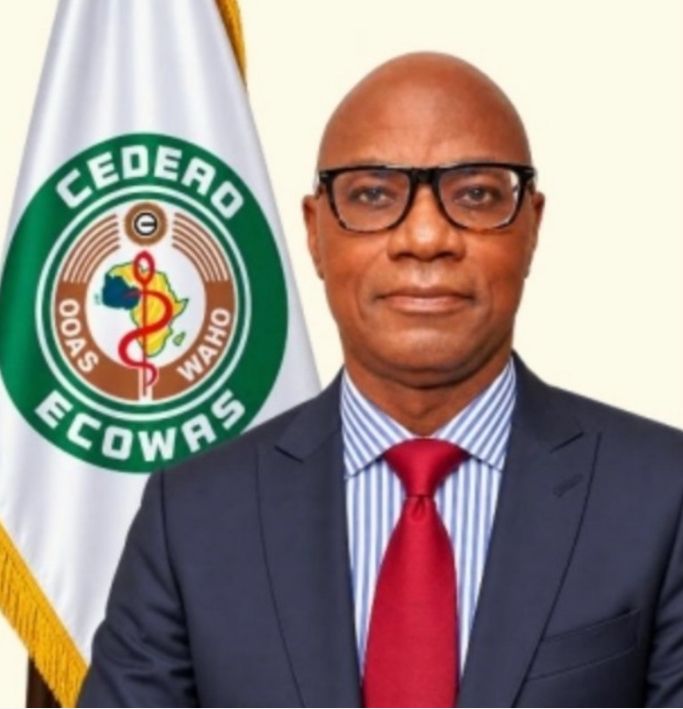
Togolese Public Health Expert Takes Charge of West Africa’s Health Agency
By: Michael Mike
The West African Health Organisation (WAHO), the specialised health institution of the Economic Community of West African States (ECOWAS), has entered a new leadership era with the assumption of office of Togolese public health expert, Professor Palokinam Pitché, as its Director-General.
Professor Pitché formally took over the leadership of the regional health body on Tuesday, September 1, 2026, with a mandate to strengthen health cooperation and support efforts to improve the wellbeing of populations across the ECOWAS region.
His emergence places a seasoned physician, public health specialist, academic and health-programme administrator at the helm of an institution responsible for promoting regional cooperation on health matters.
The ECOWAS Authority of Heads of State and Government had approved Pitché’s appointment for the 2026–2030 mandate at its 69th Ordinary Session in Lungi, Sierra Leone, in July. The final communiqué of the summit specifically listed Dr Palokinam Pitche of Togo as the new Director-General of WAHO.
Pitché comes to the regional position with more than 25 years of experience spanning public health administration, health-programme management, health-system strengthening and professional training.
Before his appointment, he served as National Coordinator of Togo’s National AIDS Control Programme between 2007 and 2012. In 2012, he became head of the Permanent Secretariat of Togo’s National Council for the Fight against AIDS and Sexually Transmitted Infections, a multisectoral structure attached to the Togolese Presidency.
His experience extends beyond Togo. Since 1996, he has undertaken consultancy assignments for major international health and development institutions, including the World Health Organisation (WHO), UNAIDS, USAID, WAHO, UNDP and UNFPA.
His assignments have included the development of health policies and strategic plans, resource mobilisation and efforts to harmonise HIV treatment protocols and postgraduate training curricula across ECOWAS countries.
The new WAHO chief is also a career academic.
A Professor of Dermatology and Venereology under CAMES since 2007, Pitché obtained his Doctor of Medicine degree from the University of Lomé and became an Associate Professor of Medicine in 2002.
His specialised training has covered dermatology and venereology, epidemiology, HIV, parasitology and tropical medicine, as well as immunology, vaccinology and biotechnology applied to infectious diseases. His training and professional development included institutions such as Université Paris-Sud, Johns Hopkins/CDC and the WHO in Geneva.
He has taught at the Faculty of Health Sciences of the University of Lomé since 1997 and has also served as head of the Dermatology and Venereology Department at CHU Sylvanus Olympio in Lomé since 2015.
His academic record is equally substantial. He is credited with more than 250 scientific publications and four books, particularly in the fields of dermatology, sexually transmitted infections, HIV/AIDS and sexual health.
Pitché assumes the WAHO leadership at a time when health security remains a major regional concern, with West African countries continuing to face infectious diseases, public-health emergencies and the need for stronger and more coordinated health systems.
His extensive experience working across governments, international organisations, development partners and community institutions could therefore prove significant as WAHO seeks to deepen regional health cooperation.
His appointment is also part of a broader renewal of ECOWAS institutions for the 2026–2030 cycle. Alongside Pitché’s appointment, the regional bloc approved new leadership for several key institutions, including the Inter-Governmental Action Group against Money Laundering in West Africa (GIABA).
For WAHO, however, the immediate challenge is translating Pitché’s extensive technical and managerial experience into stronger regional coordination and measurable improvements in health outcomes.
With a career that combines clinical medicine, public health administration, academia, international consultancy and scientific research, the Togolese professor takes charge of WAHO with a profile closely aligned with the complex demands of West Africa’s health landscape.
His four-year tenure is expected to place renewed emphasis on strengthening regional health systems and advancing cooperation among ECOWAS member states in pursuit of better health outcomes for their populations.
Togolese Public Health Expert Takes Charge of West Africa’s Health Agency

Troops gun down kidnapper, recover locally fabricated rifle made in Plateau

Mailantarki table tennis camp opens in Abuja

Nigeria Condemns Fresh Houthi Attacks on Saudi Arabia

Roger Federer’s Shock as DNA Results Reveal Myla and Charlene Are Not His Biological Children

THE PLIGHT OF FARIDA

FAILED COUP IN BURKINA FASO: HOW TRAORÉ NARROWLY ESCAPED ASSASSINATION PLOT AMID FOREIGN INTERFERENCE CLAIMS
-
 News2 years ago
Roger Federer’s Shock as DNA Results Reveal Myla and Charlene Are Not His Biological Children
-
Opinions5 years ago
THE PLIGHT OF FARIDA
-
 News1 year ago
FAILED COUP IN BURKINA FASO: HOW TRAORÉ NARROWLY ESCAPED ASSASSINATION PLOT AMID FOREIGN INTERFERENCE CLAIMS
-

 News2 years ago
EYN: Rev. Billi, Distortion of History, and The Living Tamarind Tree
-
 Opinions5 years ago
POLICE CHARGE ROOMS, A MINTING PRESS
-

 ACADEMICS3 years ago
A History of Biu” (2015) and The Lingering Bura-Pabir Question (1)
-

 Columns3 years ago
Army University Biu: There is certain interest, but certainly not from Borno.
-

 Politics1 year ago
2027: Why Hon. Midala Balami Must Go, as Youths in Hawul and Asikira/Uba Federal Constituency Reject ₦500,000 as Sallah Gift
